 by
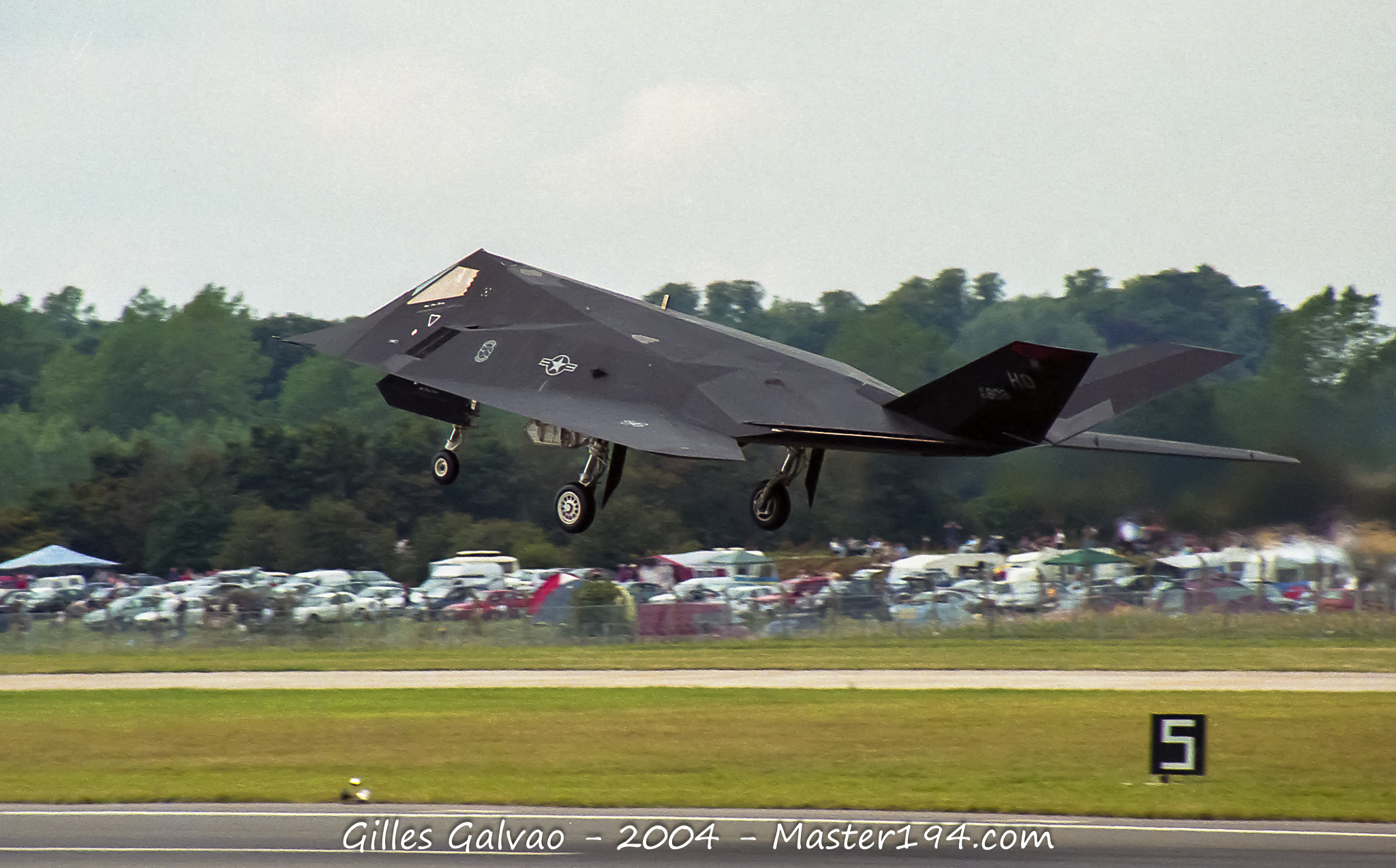
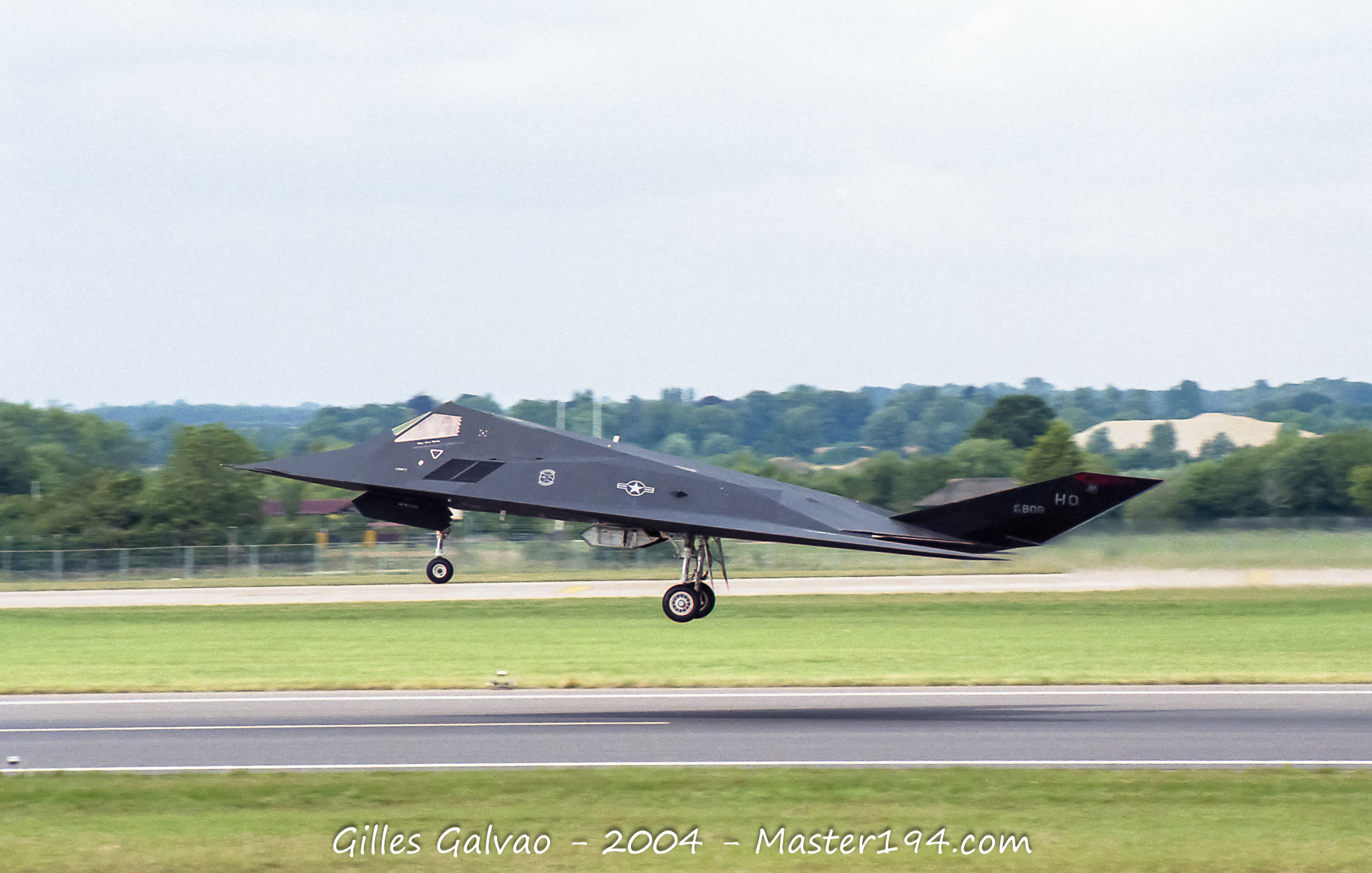
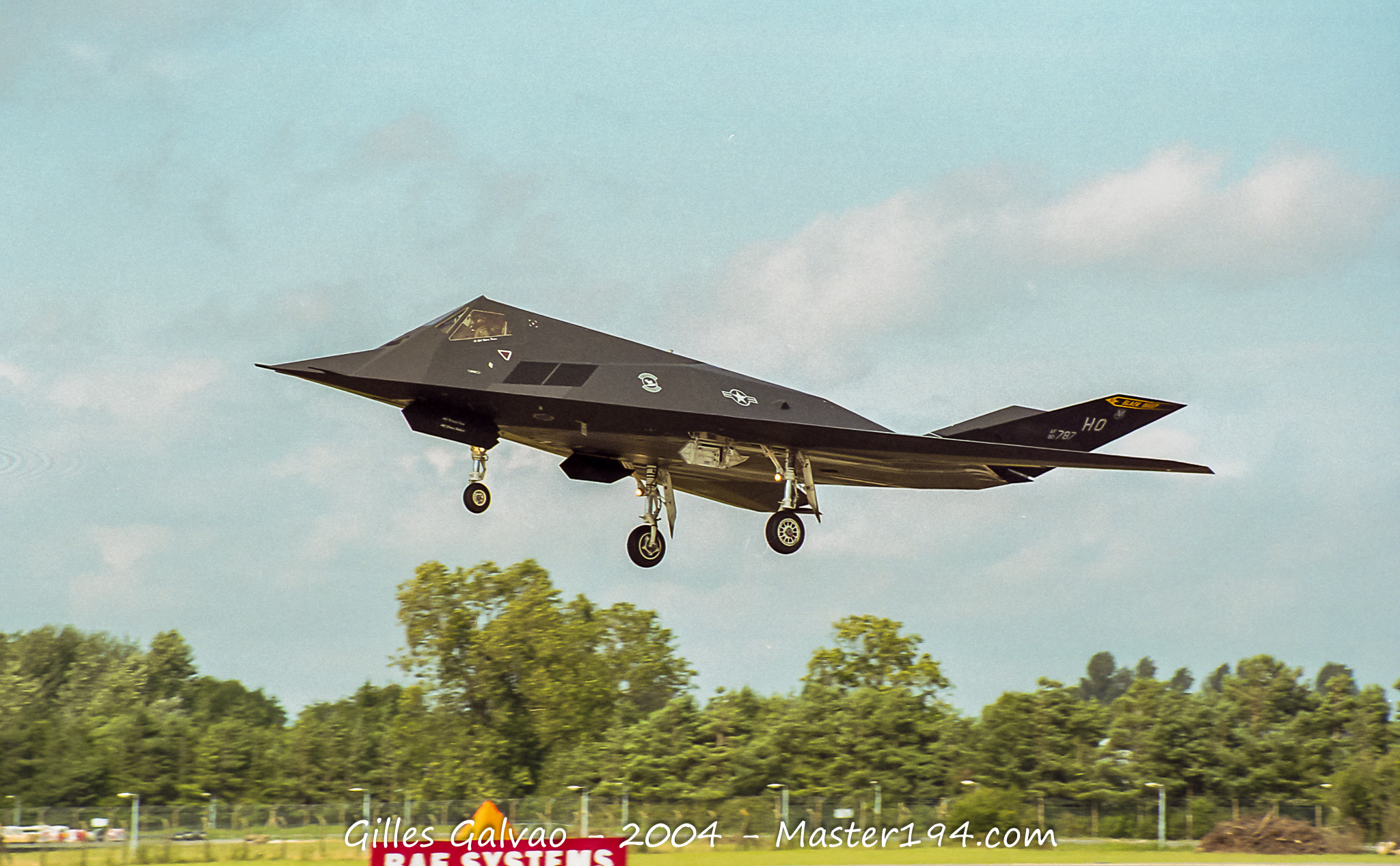
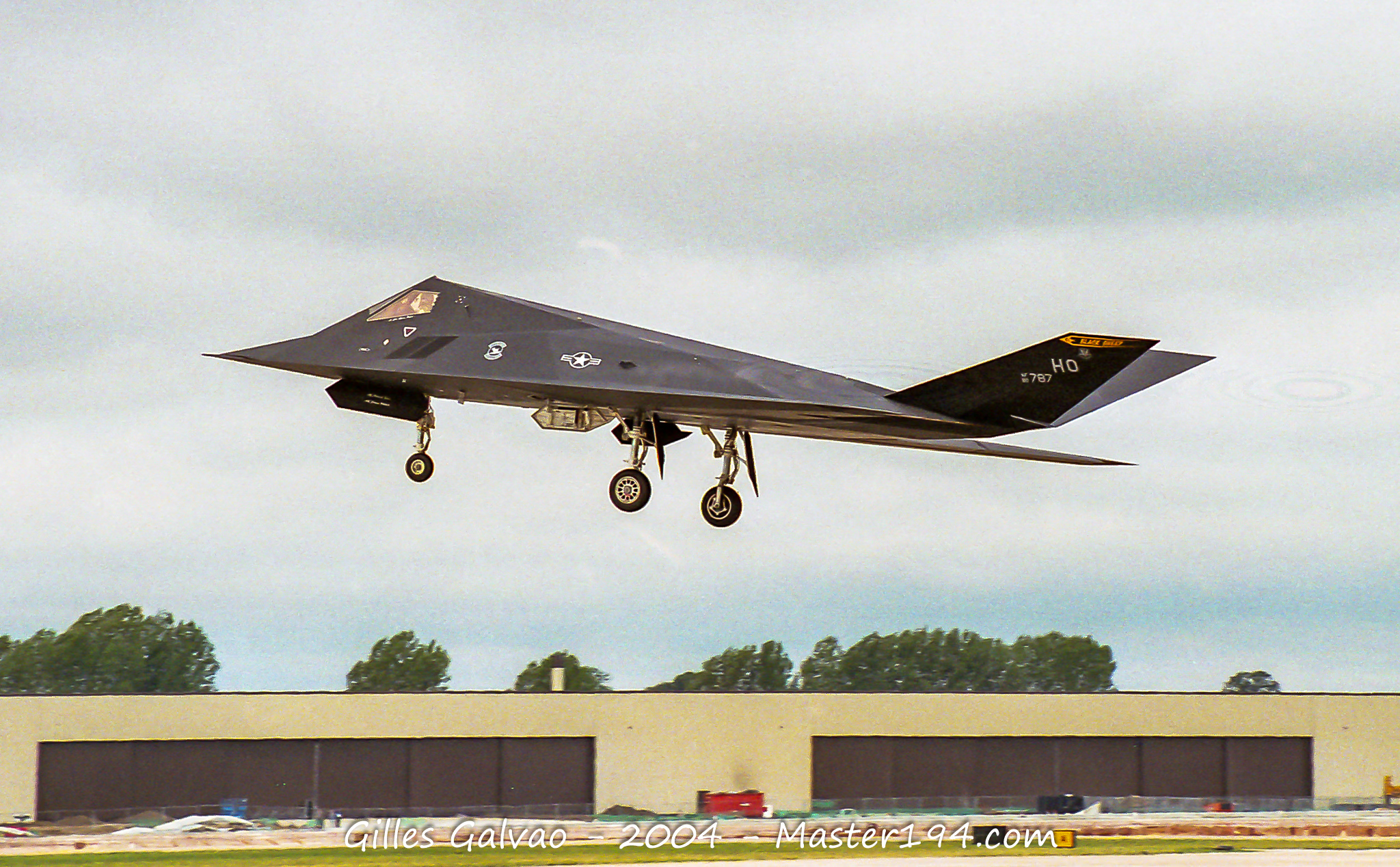
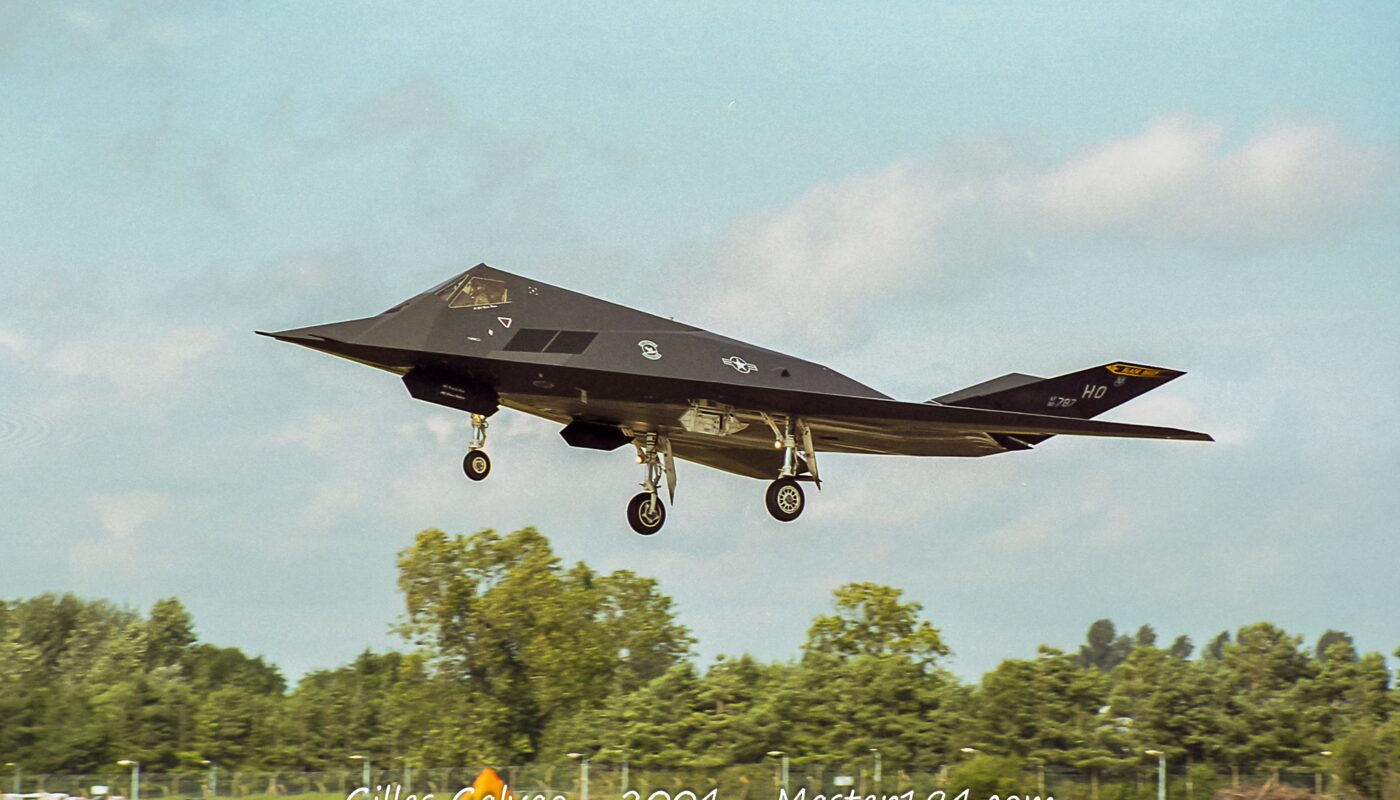
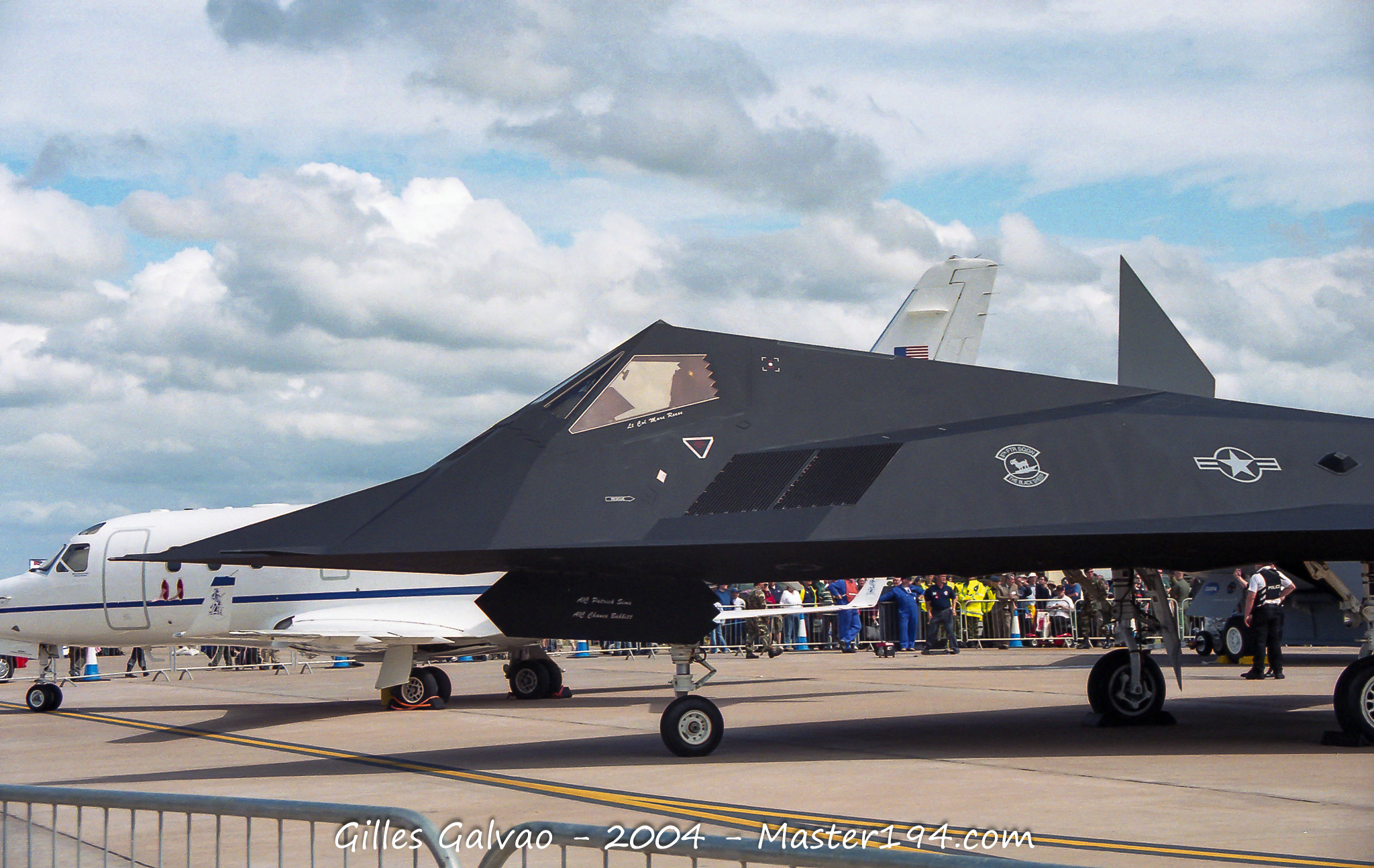
The 2004 Royal International Air Tattoo, held at RAF Fairford in the UK, featured one of the final European appearances of the Lockheed F-117A Nighthawk. This iconic US Air Force stealth aircraft represents the pinnacle of first-generation stealth technology.
Film Photography and Military Aviation: A Look Back at 2004
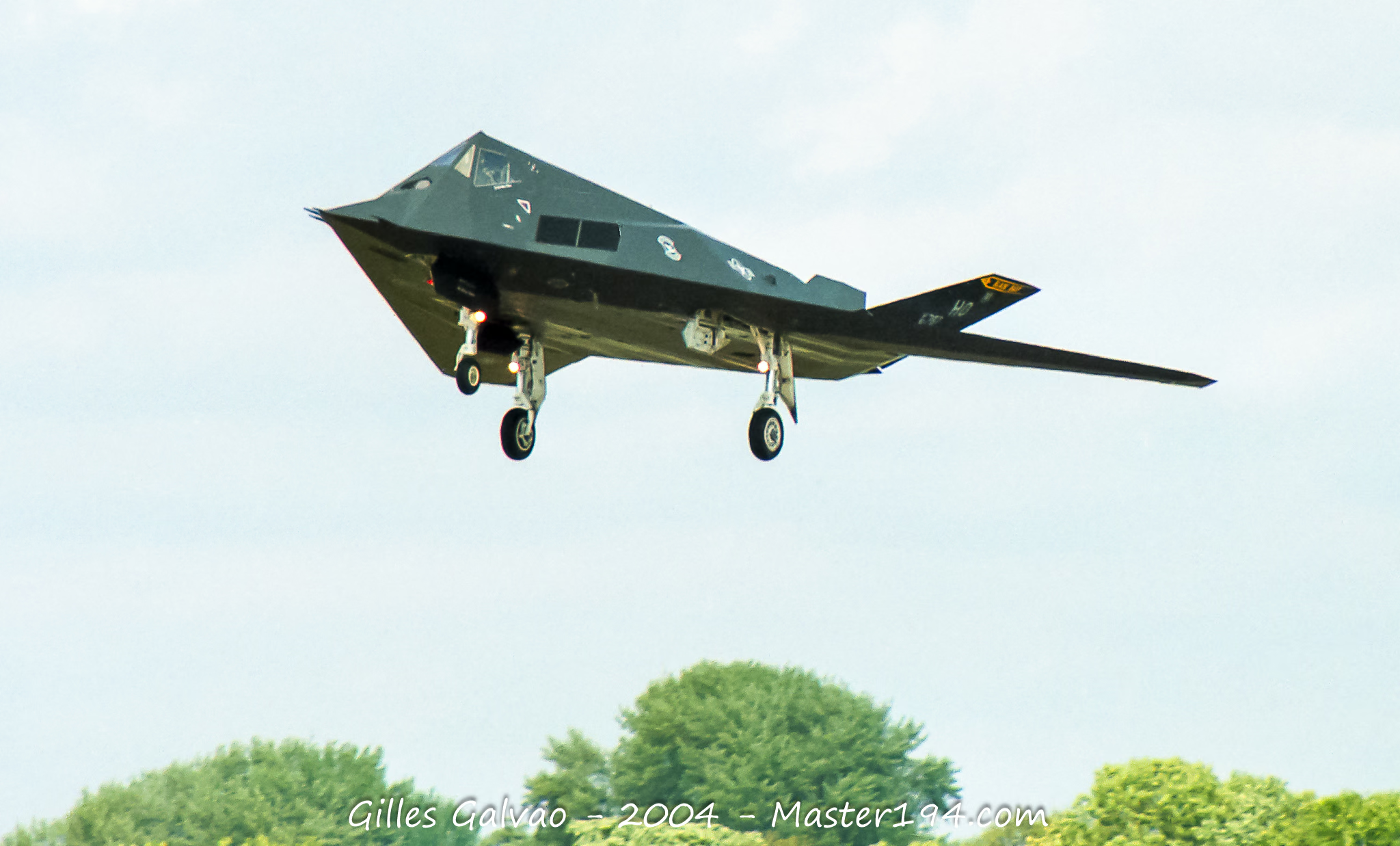
In today’s era of ultra-high-definition digital photography, looking back at film shots from 2004 reminds us of a different way of capturing military aircraft. Without lightning-fast autofocus or high-resolution sensors, every shot required anticipation, precision, and… a bit of luck!
The film grain, limited dynamic range, and occasional motion blur paradoxically enhance the mysterious atmosphere of the Nighthawk—an aircraft designed to operate at night and remain invisible to radar.
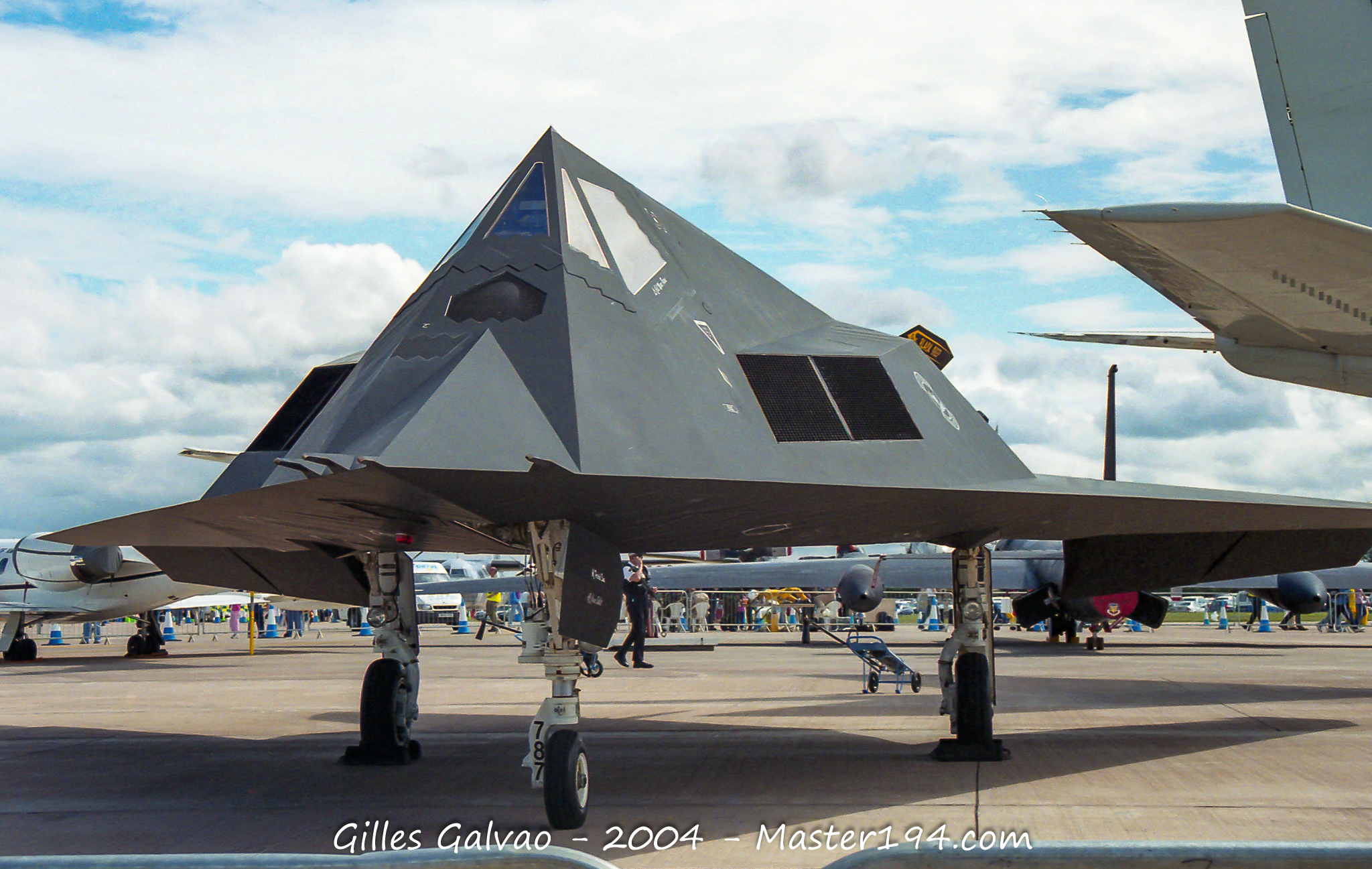
The Lockheed F-117A Nighthawk: Design and Stealth Technology
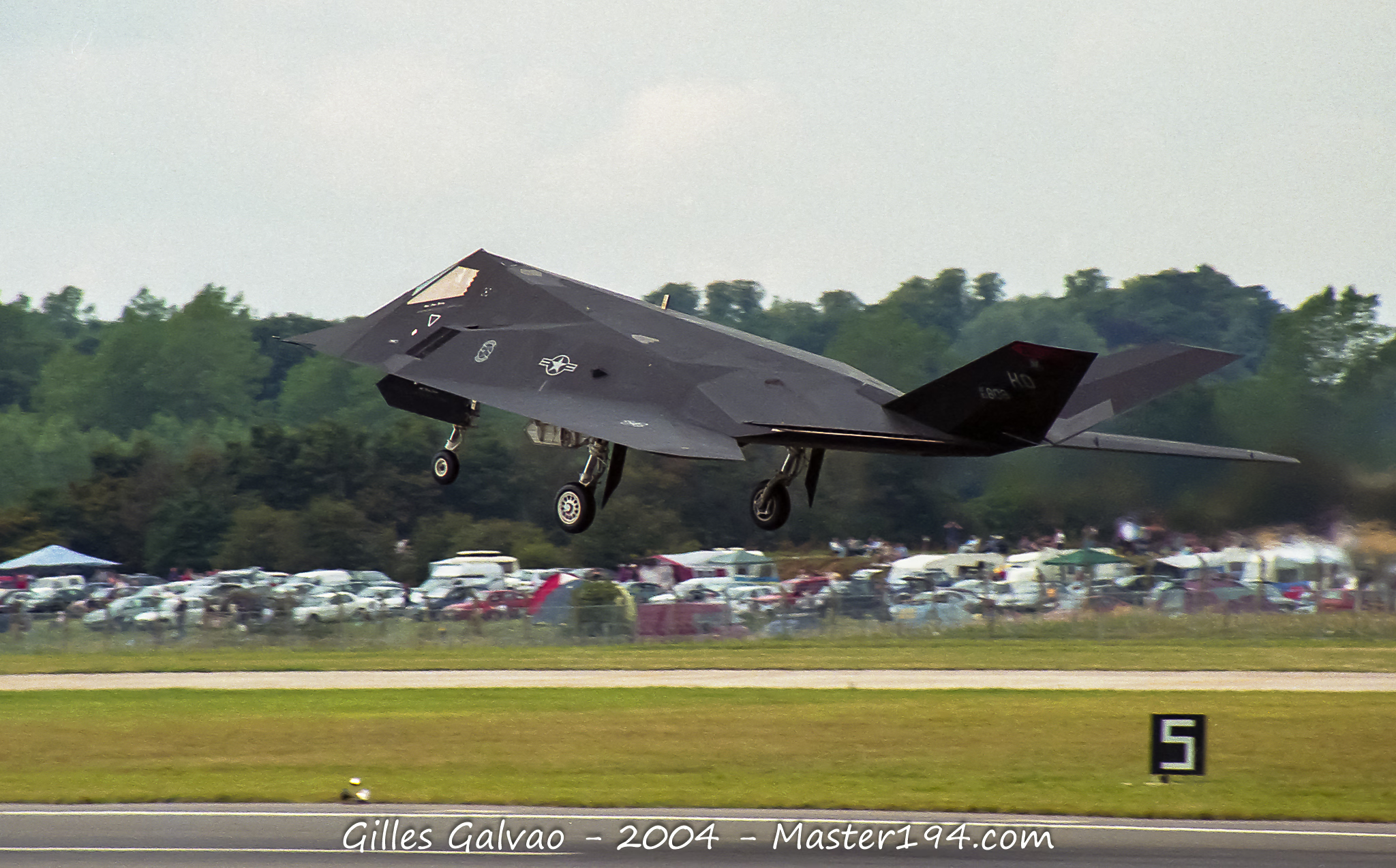
As the first operational aircraft designed entirely around radar stealth, the F-117 adopted a radical architecture:
- Faceted airframe to scatter radar waves.
- Shielded air intakes and buried engines.
- Flat “platypus” exhaust nozzles to reduce infrared signature.
- Internal weapons bay only (carrying laser-guided bombs).
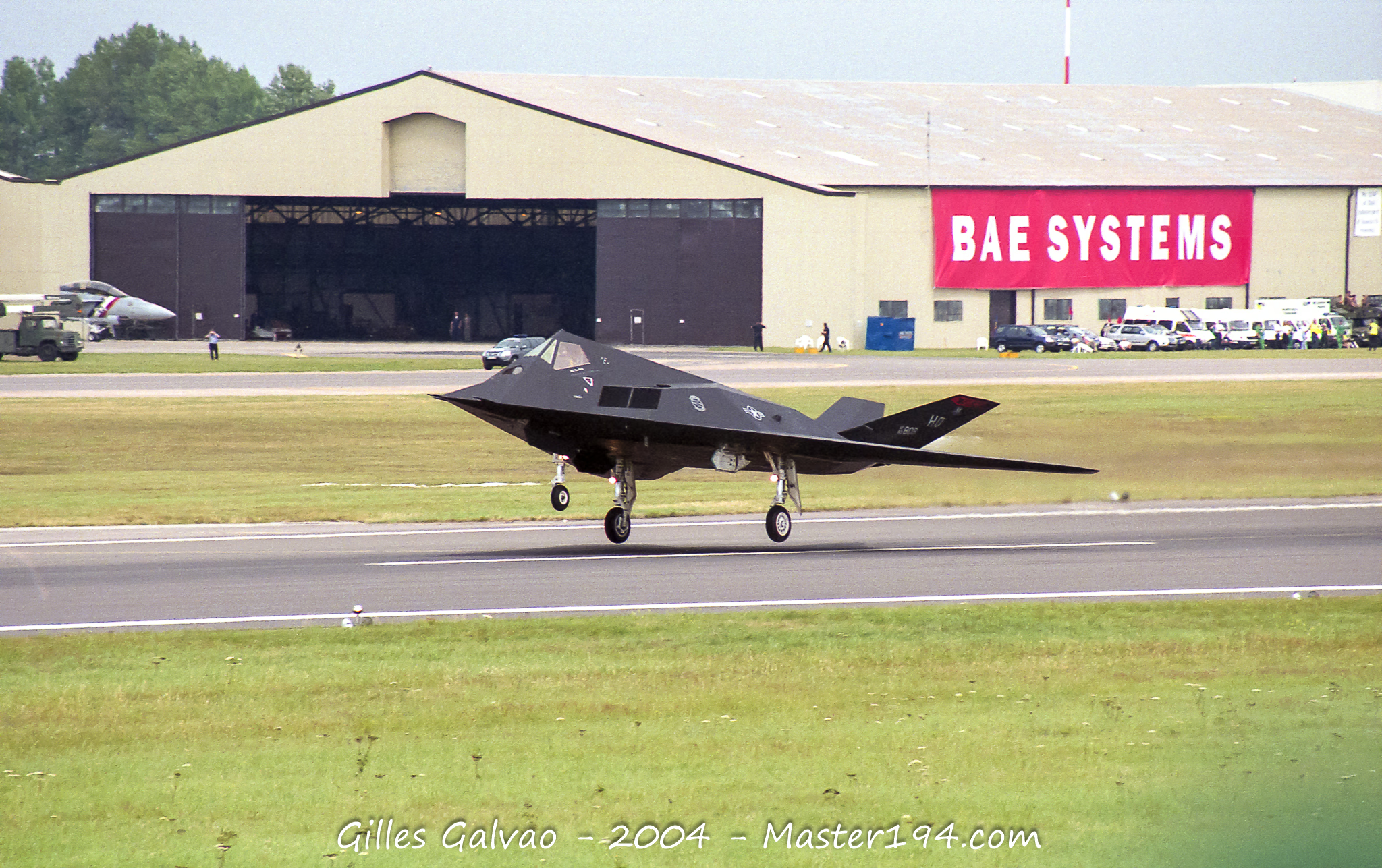
Unlike conventional fighters, the F-117 is neither supersonic nor highly maneuverable. Its mission relies on discrete penetration of enemy airspace at night with extreme precision. Due to its shape, the F-117A is aerodynamically unstable and impossible to fly manually. To compensate, it is equipped with a quadruple-redundant digital fly-by-wire system. The pilot’s commands are never sent mechanically to the control surfaces; instead, they are intercepted by digital computers that interpret the intended flight path and coordinate real-time adjustments.
Skunk Works: The Shadow Behind the Nighthawk
While the F-117 is a product of Lockheed’s Skunk Works, it was not the work of its legendary founder, Clarence “Kelly” Johnson. In the late 1970s, Kelly Johnson was skeptical of a concept that sacrificed nearly all aerodynamic performance for stealth and relied entirely on electronics for stability.
It was his successor, Ben Rich, who championed the project. A pragmatic yet bold engineer, Rich understood that computer technology and digital flight controls had reached a level capable of making an “unflyable” aircraft viable.
Ben Rich and the Birth of the F-117
Ben Rich relied on three major technological bets:
- Radar scattering theory (based on the work of Soviet scientist Pyotr Ufimtsev).
- Digital fly-by-wire controls to stabilize an inherently unstable airframe.
- A culture of absolute secrecy, allowing for experimentation without external pressure.
The “Have Blue” demonstrator, which first flew in 1977, validated these choices. Despite the loss of two prototypes, the concept was promising enough to lead to the operational F-117A.
When the F-117 Defied the Hawk Missiles
In his book “Skunk Works: A Personal Memoir of My Years at Lockheed” (1994), Ben Rich tells a striking anecdote:
In 1979, the secret Have Blue project faced its ultimate test to silence critics: “surviving” against the powerful tracking system of the Hawk missile (capable of detecting a live hawk riding thermals from thirty miles away). To prove the effectiveness of stealth, Ben Rich even provided the exact flight plan to the gunners. If the radar locked onto the aircraft, the program was dead. To maintain secrecy, the military crews believed they were testing an electronic jamming system (a “black box”), unaware that the aircraft’s very shape made it invisible.
The Story by Ben Rich:
I check my watch. Eight in the morning. The temperature is already over 90 degrees and headed for 120. Have Blue should be well into the radar range, heading toward us. A few moments later, I spot a distant speck growing in the milky blue sky. I follow Have Blue through binoculars as it flies at 8,000 feet. The chase T-38, which usually flies alongside in case of trouble, is staying miles behind for this test.
The radar antenna atop the van isn’t moving, as if the power were off. The missiles, which would normally pivot on their launchers to lock onto the target, are pointing aimlessly at distant mountains.
The young sergeant stares in disbelief at these blind missiles, then gasps as the diamond-shaped craft streaks directly overhead.
— “God Almighty,” he exclaims, “whatever that thing is, sir, that black box is powerful. You’ve totally jammed us!”
— “Seems so,” I say, grinning with satisfaction.
I head into the command van, greeted by a blast of air conditioning. The Marine crew is still sitting before their screens with stoic determination. The screen is blank. They are waiting. To them, nothing has entered their net yet.
Suddenly, a blip appears. It is moving fast from west to east, exactly at the predicted coordinates for Have Blue.— “Target acquired, sir,” the radar operator announces to the young captain in charge.
For a moment, I jump. I see a blip that shouldn’t be there. And it’s big—impossible to miss.
— “Looks like a T-38, sir,” says the operator.I exhale in relief. It’s the chase T-38 that their radar just detected. The operator has no idea there should be two planes on his screen—not just one—and that he never picked up Have Blue as it passed right over him.
— “Sorry, sir,” the young captain says to me with a smug smirk. “Looks like your gadget isn’t working very well.”Had we been in a combat situation, the stealth fighter could have used laser-guided precision bombs against that van, and that arrogant captain would never have known what hit him.
The van door opens and the young sergeant walks into the dark cool, looking like someone who just had a hallucination in the desert heat—having seen with his own eyes a strange diamond-shaped apparition that his missiles could never lock onto.
« Captain, » he begins, « you’re not going to believe me… »
Key Dates of the F-117 Program
Pour situer le F-117 dans son époque, quelques repères essentiels :
- 1975 – Beginning of stealth studies based on Pyotr Ufimtsev’s theoretical work.
- 1977 – First flight of the Have Blue demonstrator.
- 1981 – First flight of the F-117A in total secrecy in Nevada.
- 1983 – Initial Operational Capability (IOC).
- 1988 – The Pentagon officially acknowledges the F-117’s existence.
- 1991 – Massive engagement during the Gulf War.
- 2008 – Official retirement from active service.
Focus on the Protagonists: 787 and 808
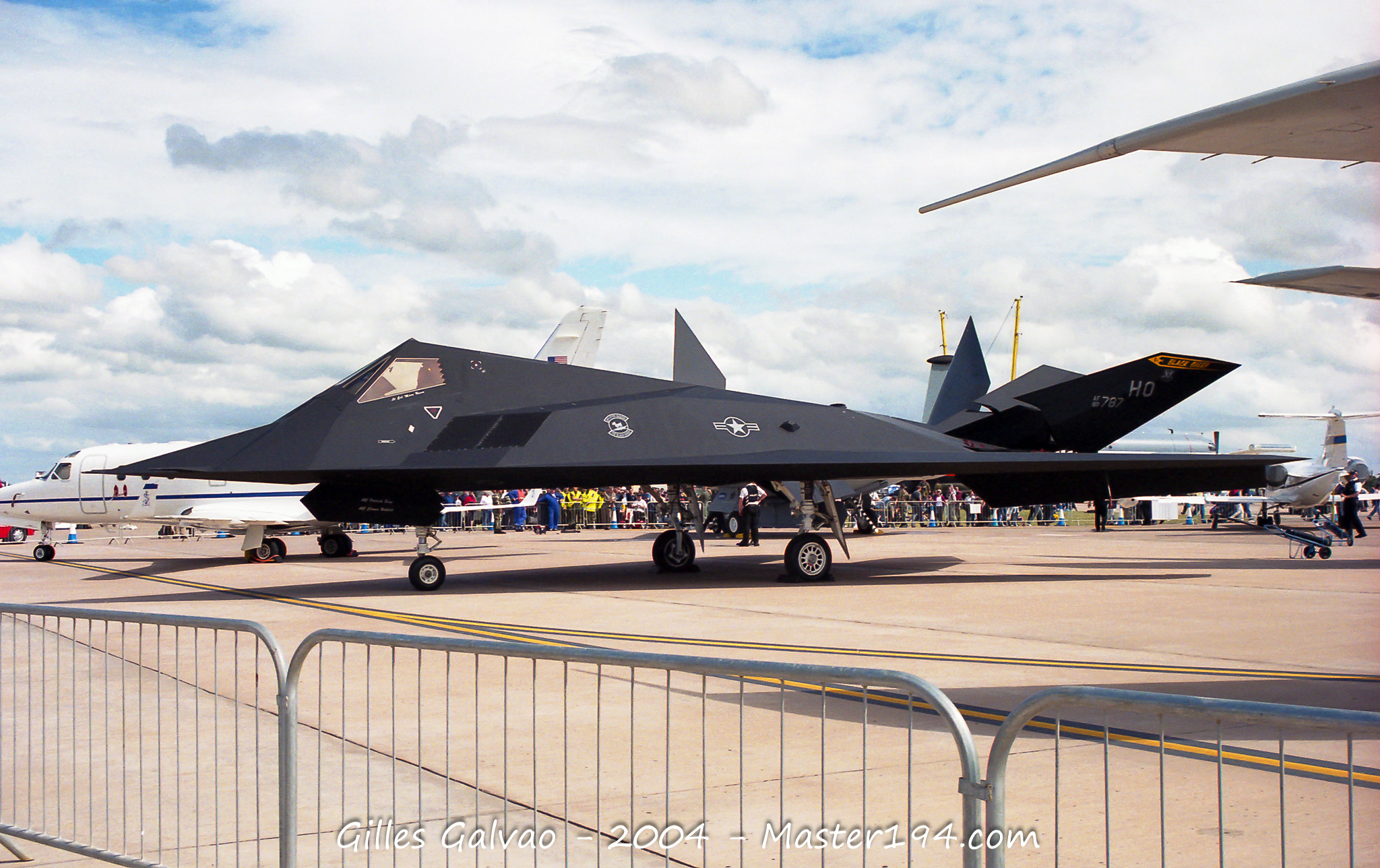
F-117A #81-0787: The Veteran in the Shadows
This aircraft is a true piece of history. It belongs to the second production batch (‘Lot 2’) and is among the oldest operational airframes in the program.
- Identity: Lockheed Article 787.
- War Callsign: “Toxic Avenger” (Desert Storm).
- Service History: One of the oldest operational airframes. It flew secret night missions out of Tonopah before the program was declassified.
- It participated in Operation Just Cause (Panama, 1989)
- It flew 28 combat missions during the Gulf War.
- At RIAT 2004: On static display, allowing photographers a close look at the matte, grainy texture of its RAM (Radar Absorbent Material).
- Fate: Currently preserved at Tonopah Test Range, Nevada, as part of the flyable reserve.
F-117A #84-0808: The Ghost of the Show
The ‘808’ joined the fleet later as part of ‘Lot 6’. As a later production model, it benefited from mid-life upgrades, particularly regarding its onboard computers.
- Identity: Lockheed Article 808.
- War Callsign: “Spooky”.
- Service History:
- A pillar of the 416th TFS “Ghost Riders” during the Gulf War
- Known for surgical strikes on Baghdad command centers.
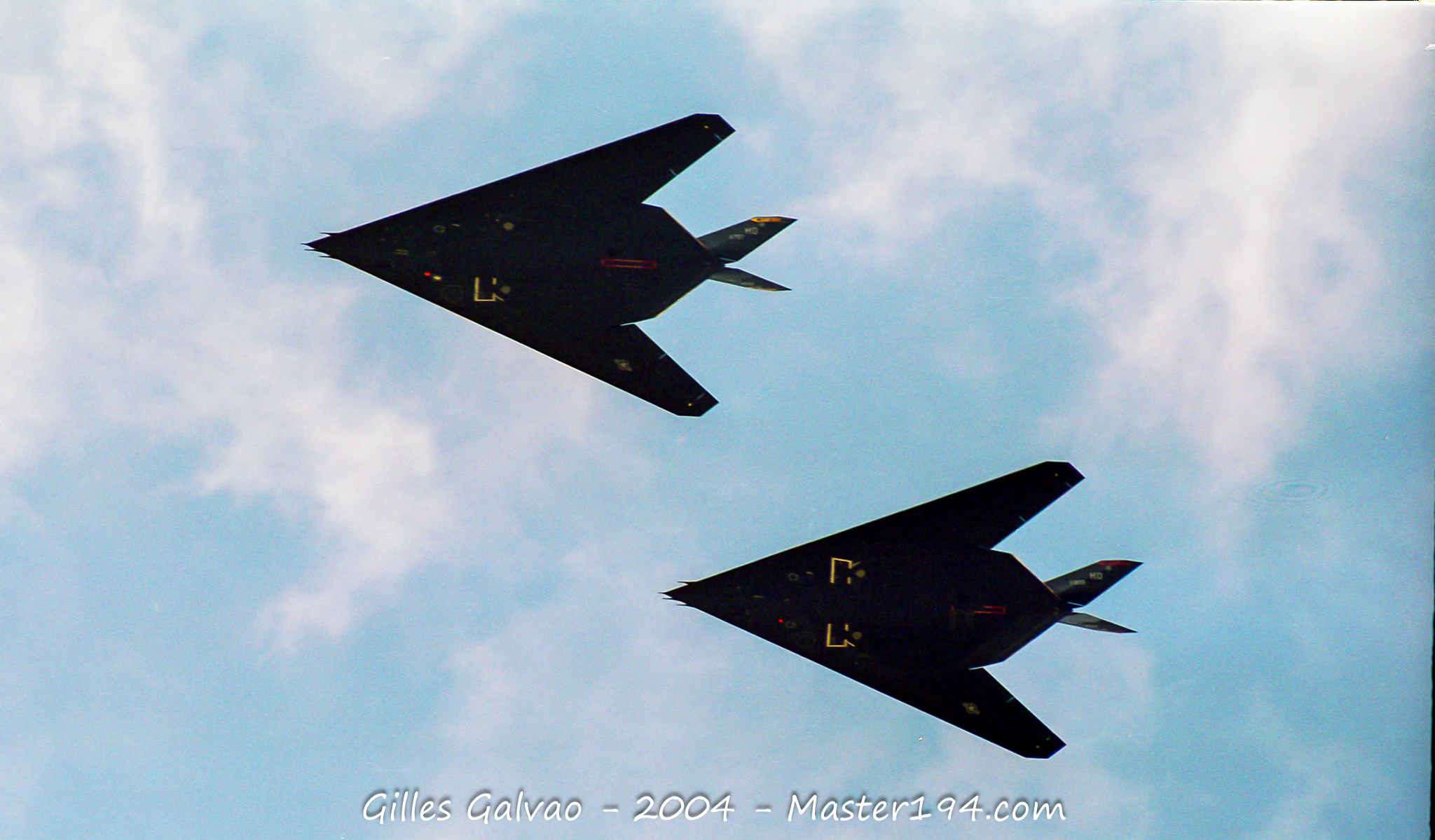
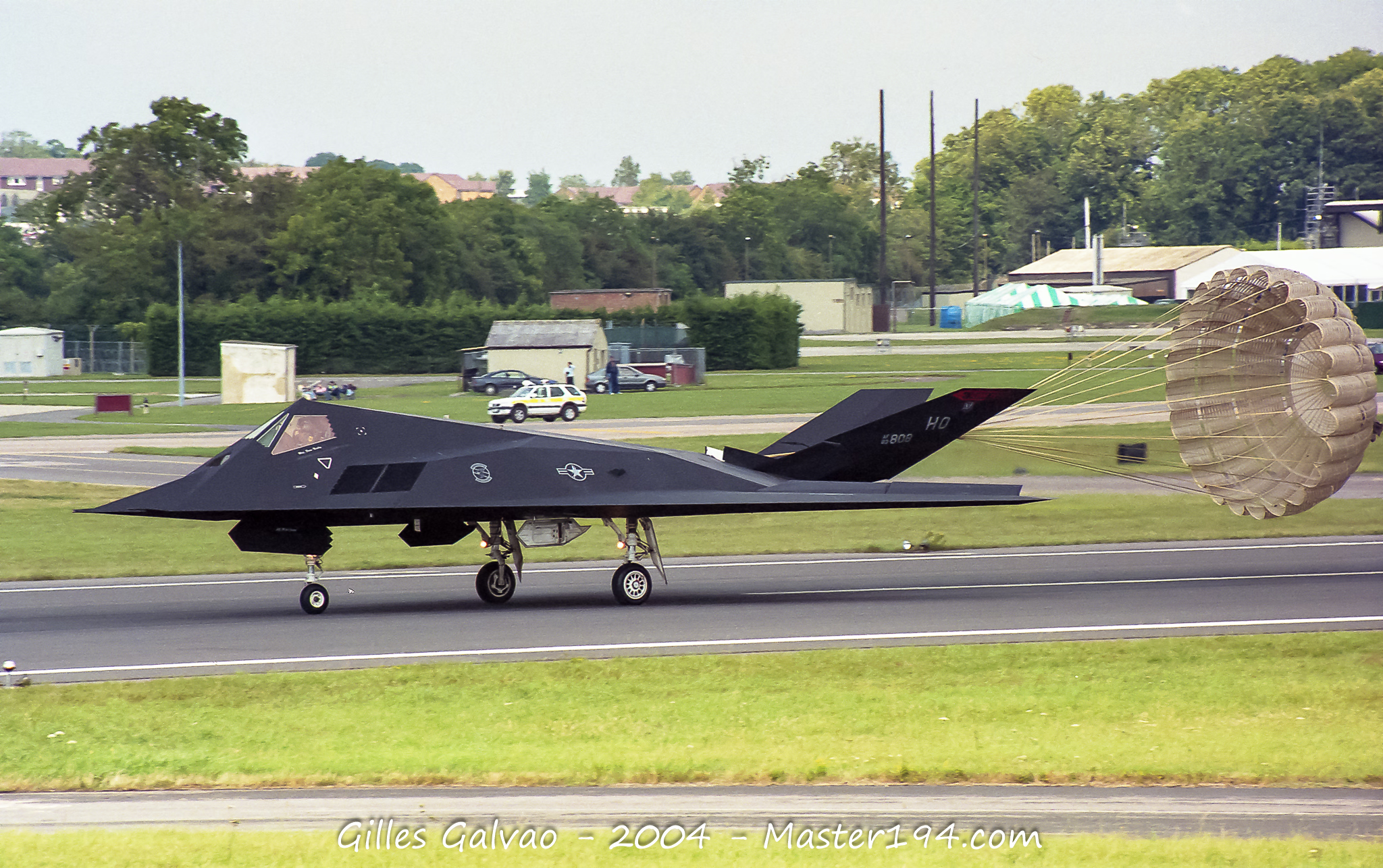
- At RIAT 2004: This was the flight demonstration aircraft.
- Fate: Permanently displayed on a pedestal at Loudermilk Park, Florida, since 2020.
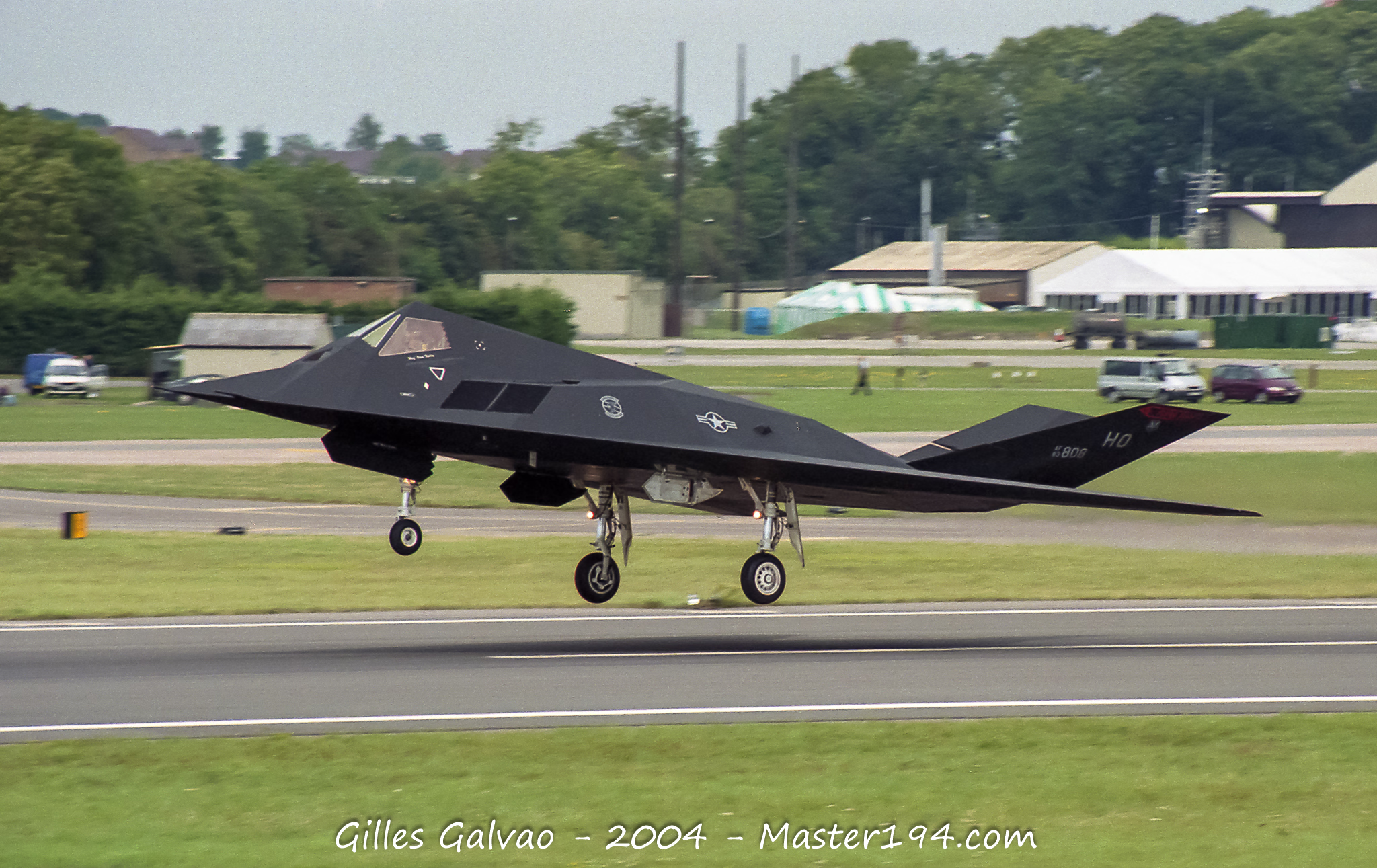
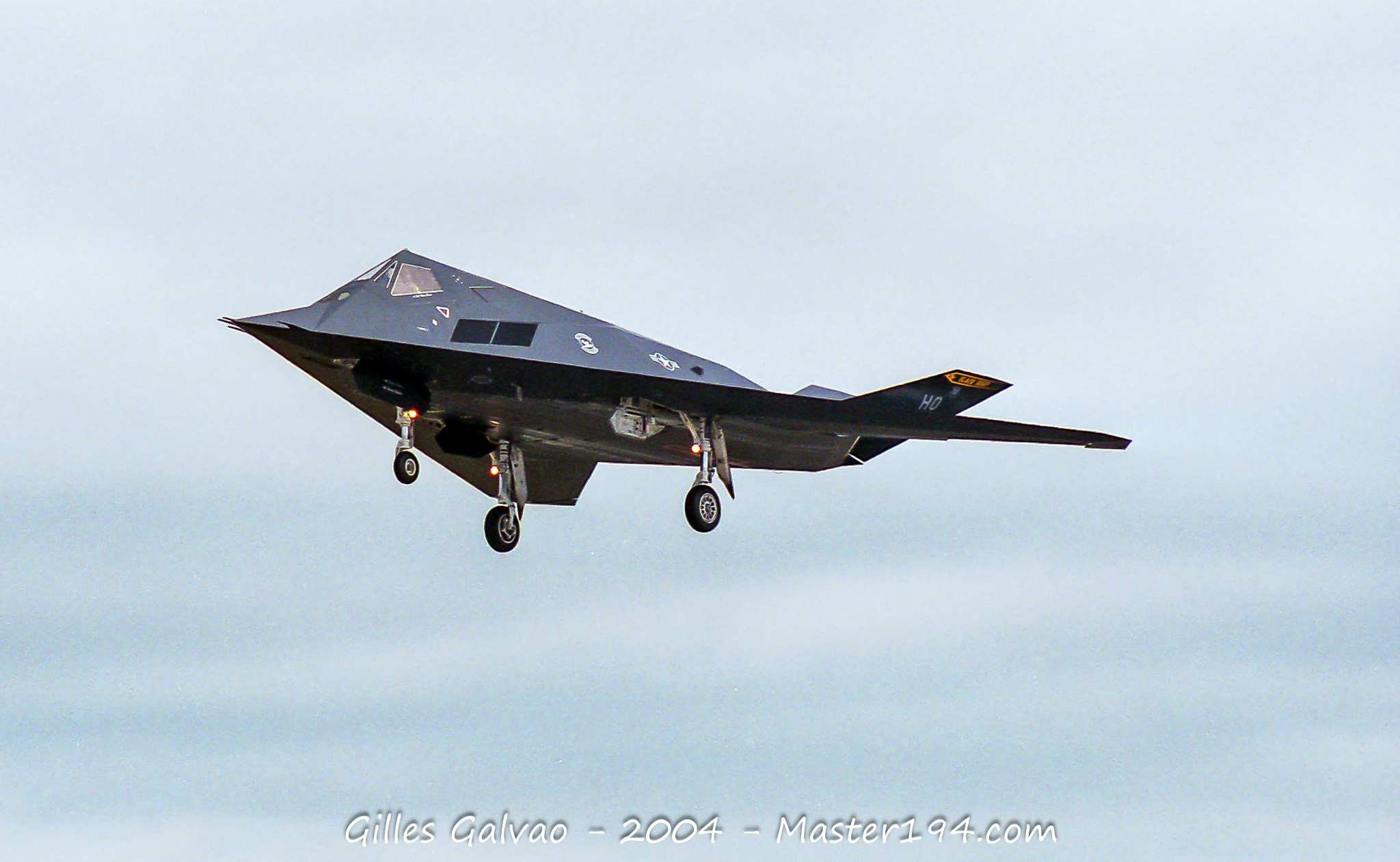
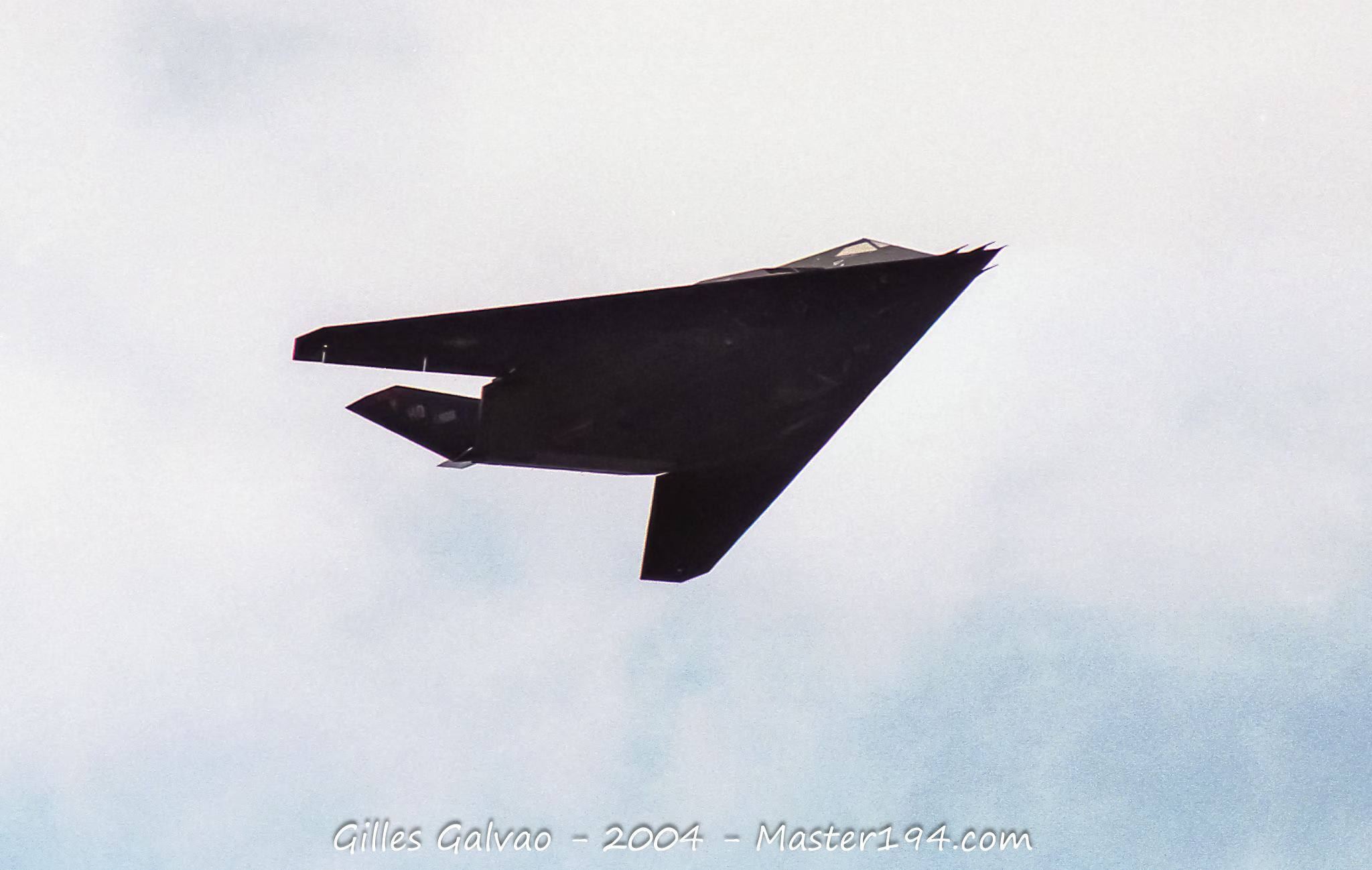
The F-117 in flight is spectacular, with a silhouette that looks almost extraterrestrial.
There’s nothing like a short video to appreciate the sound and flight of this “strange” aircraft!
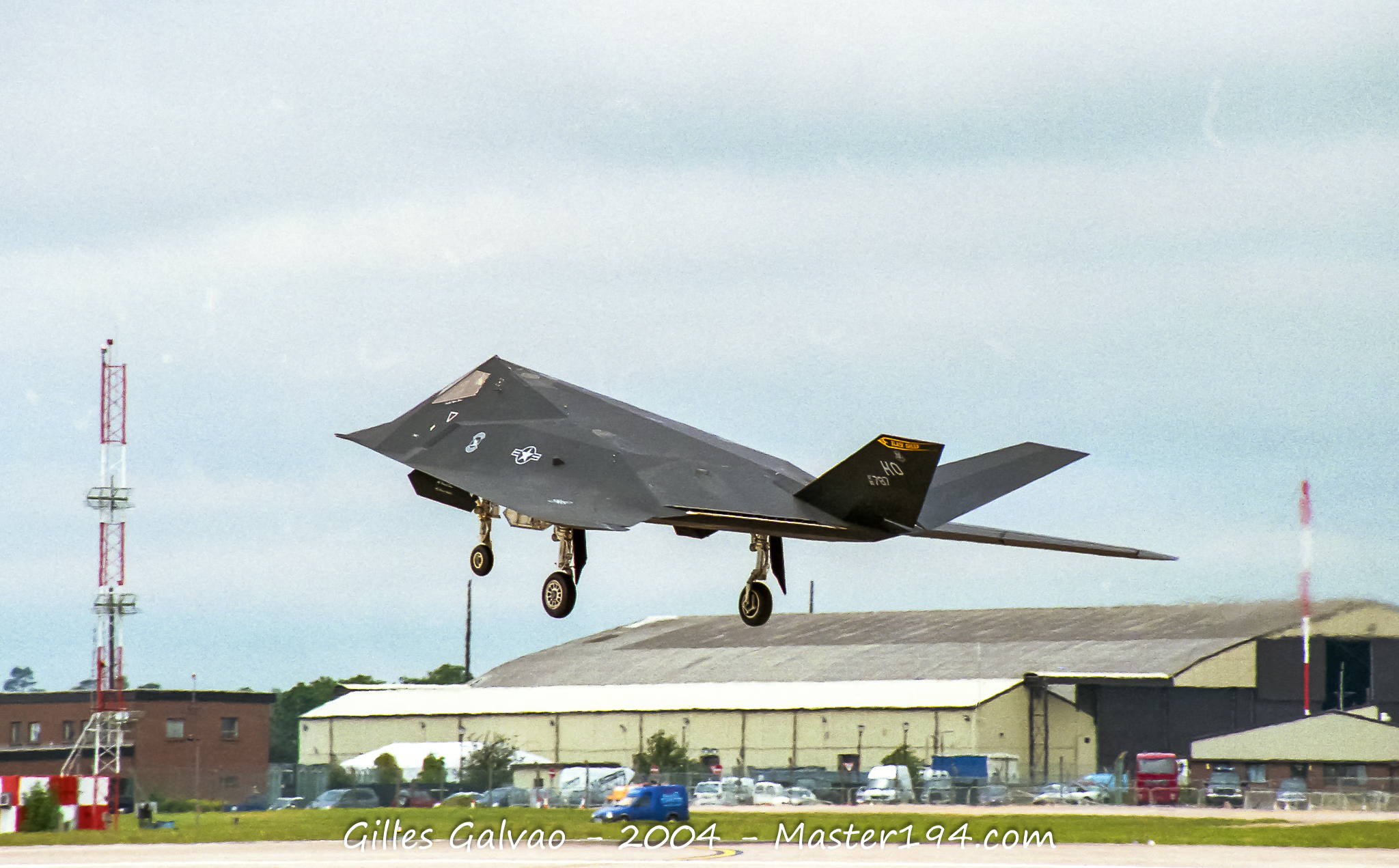
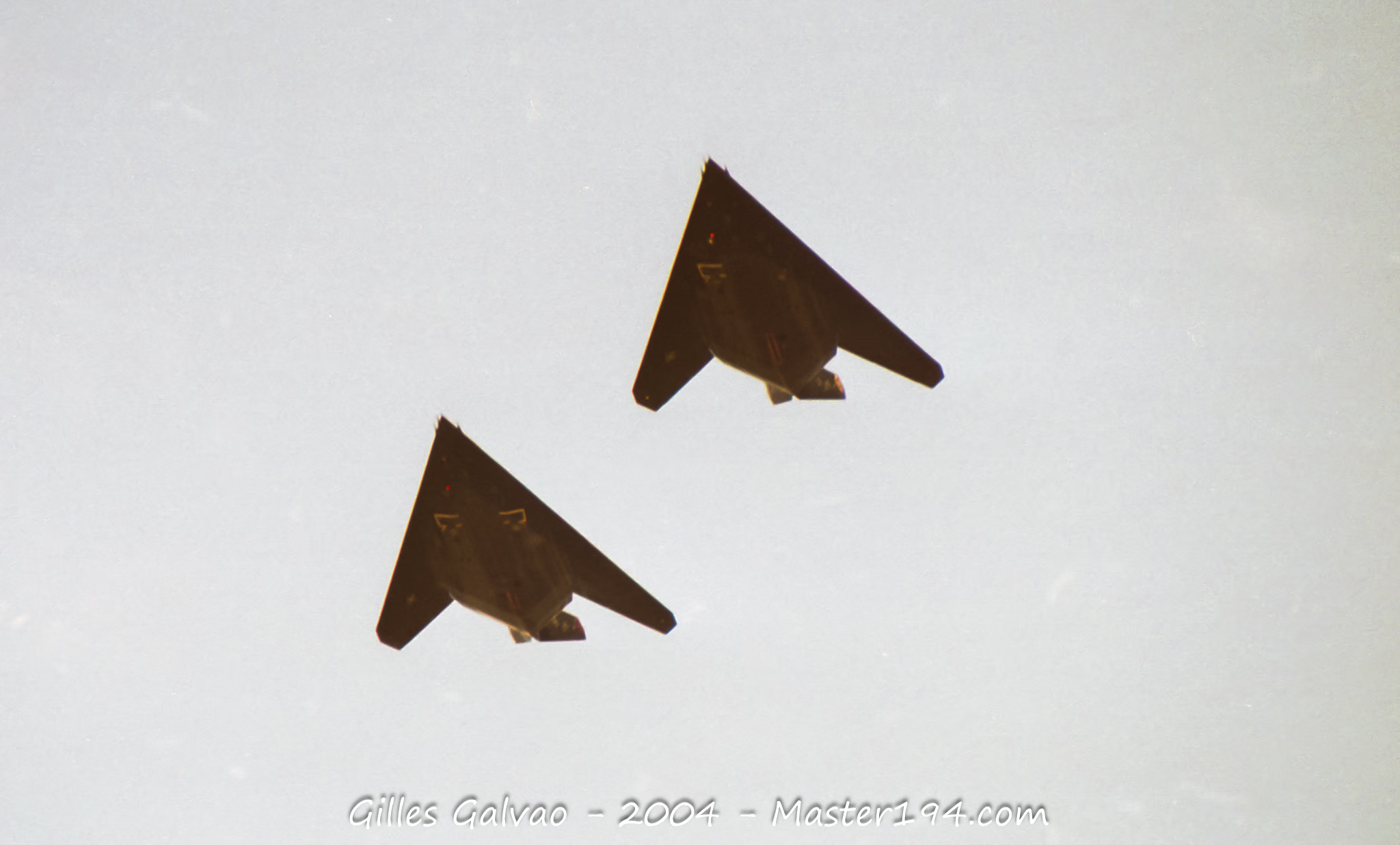
It is powered by two General Electric F404-GE-F1D2 engines (similar to the F/A-18 Hornet). The sound is unique—a high-pitched whine caused by the air passing through the intake grilles and out through the flat exhausts.
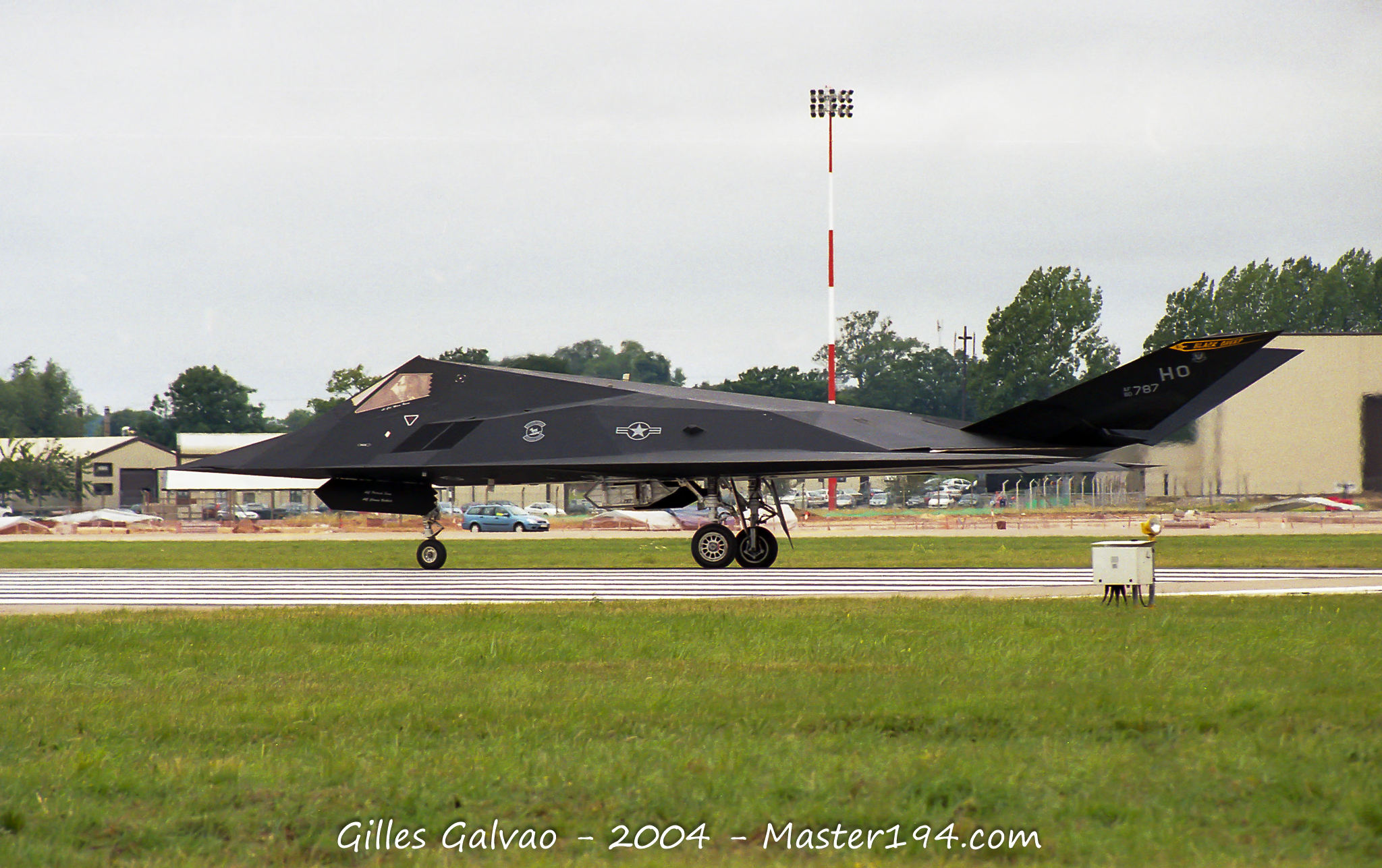
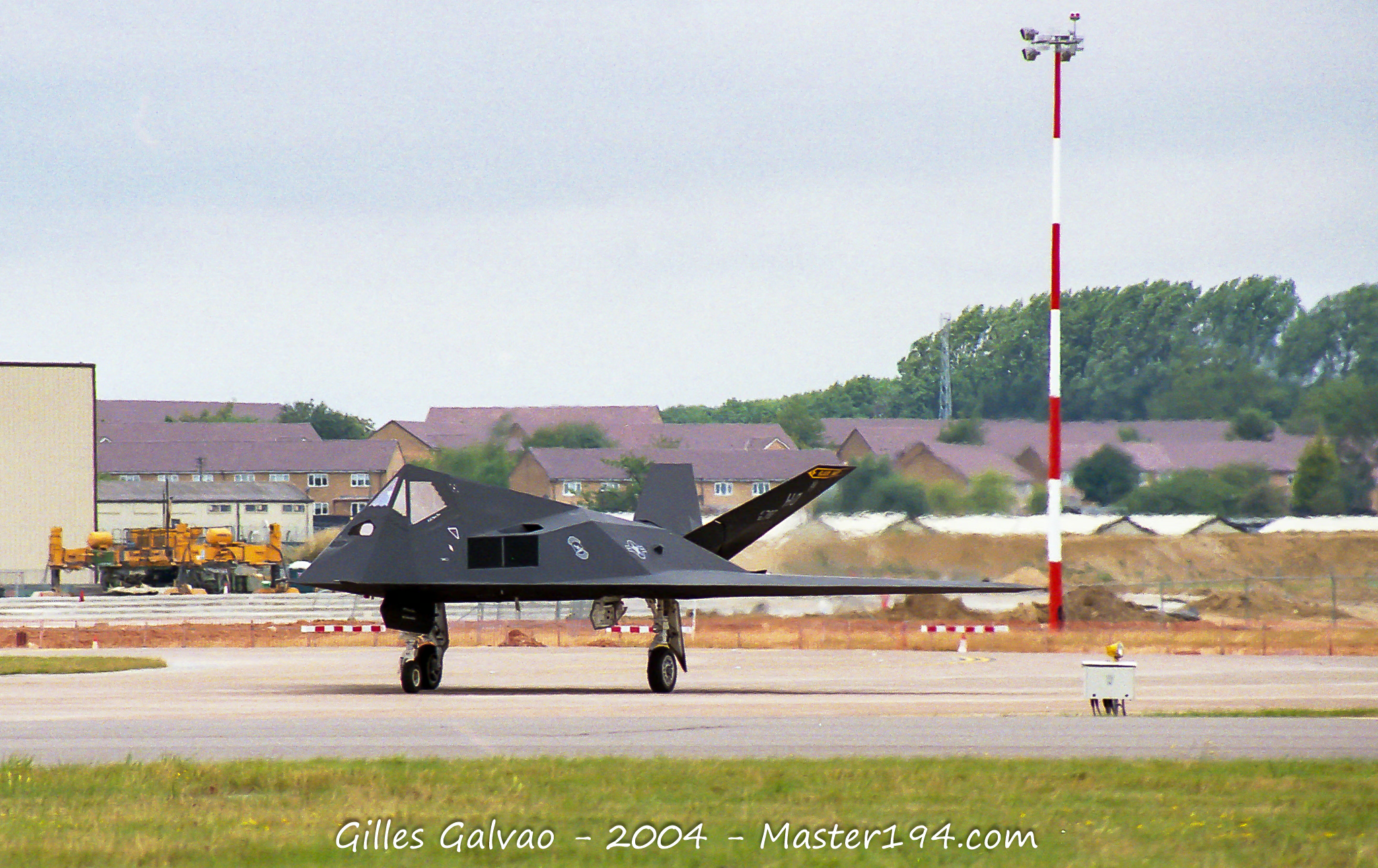
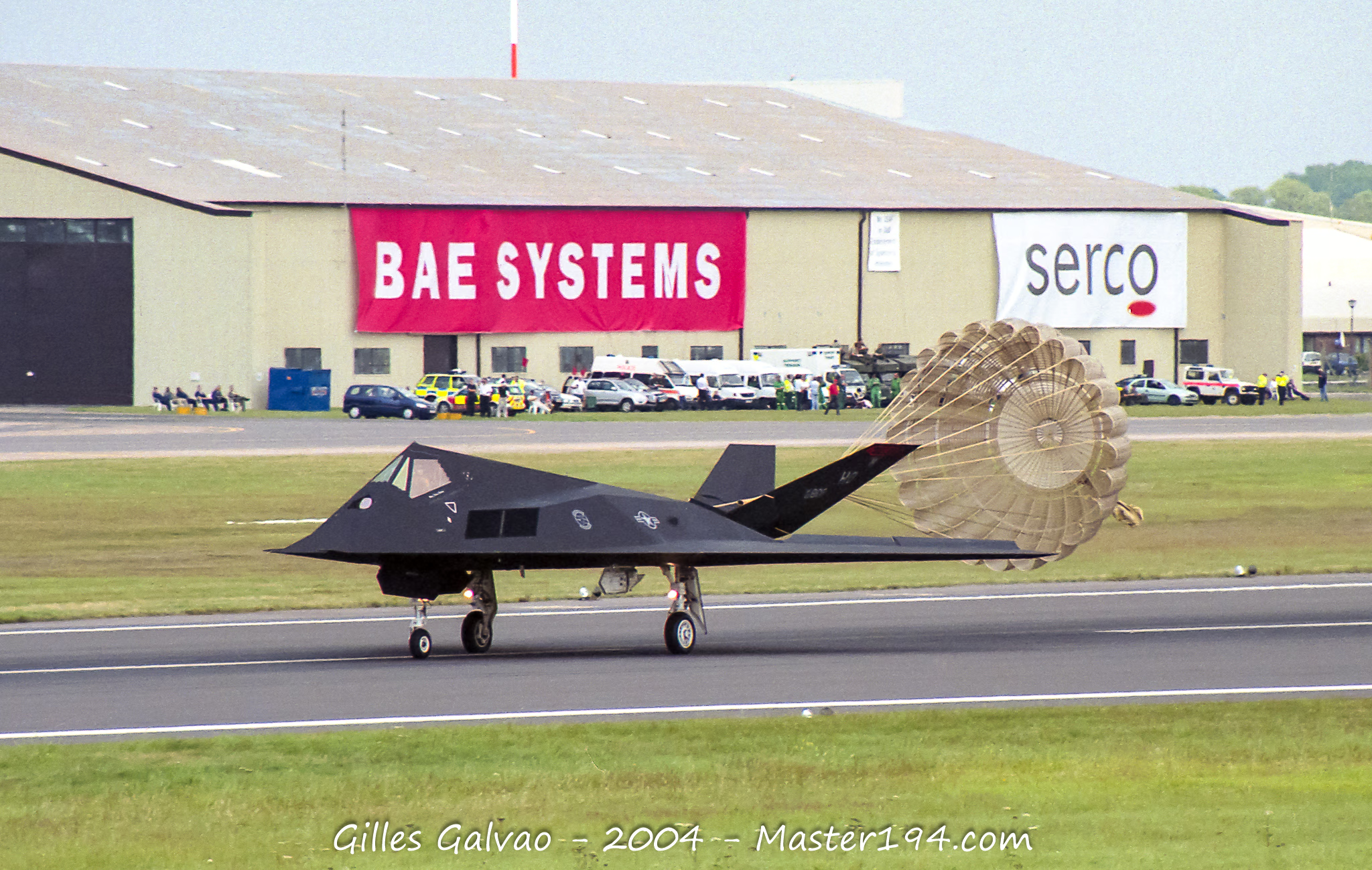
The F-117 landing and its drag chute, often used on short or wet runways.
The F-117’s Retirement and Stealth Legacy
Retired in 2008, the Nighthawk paved the way for modern stealth programs like the F-22 Raptor and F-35 Lightning II. These photographs from RIAT 2004 capture the end of an era and a major turning point in aviation history.
Despite the imperfections of my film shots, I am thrilled to have witnessed this mythical aircraft in flight and to have immortalized these memories through these frames.