
An undisputed ruler of the skies for over four decades, the McDonnell Douglas F-15 Eagle stands as an icon of air superiority engineering and modern military aviation. Originally developed to counter increasingly capable Soviet fighter aircraft, the F-15 quickly established absolute aerial dominance through its extraordinary thrust-to-weight ratio, high maneuverability, long-range pulse-Doppler radar, and versatile beyond-visual-range (BVR) and dogfight engagement capabilities.
Entering active service with the United States Air Force in the mid-1970s, the Eagle built an unprecedented operational combat record. Initially specialized in pure air-to-air superiority with the single-seat F-15A and F-15C variants, the airframe subsequently evolved into a potent long-range interdiction and deep-strike platform with the dual-role F-15E Strike Eagle. Continuous modernizations and advanced export iterations ensure the F-15 lineage remains a formidable component of global airpower today.
Deployed extensively across combat theaters in the Middle East—notably during US operations in the Persian Gulf, Afghanistan, and Iraq—the F-15 firmly established itself as one of the most effective fighters of its generation. Its air-to-air engagement history heavily reinforces this reputation, boasting an extraordinary record of confirmed aerial victories with zero combat losses for US Air Force F-15s in air-to-air combat.
The success of the F-15 program quickly extended far beyond American borders. Israel, Japan, Saudi Arabia, South Korea, Singapore, and Qatar became key operators, while the latest advanced iterations continue to push the platform’s capabilities with the F-15SA, F-15QA, and the newest F-15EX Eagle II.
More than fifty years after its maiden flight, the F-15 remains a frontline combat aircraft. Its exceptional service life illustrates how a airframe engineered in the 1970s can continuously adapt to meet the demands of modern air warfare.
Whether you are a military aviation enthusiast, a historian, or a scale modeler searching for precise technical references, this central guide consolidates our core F-15 Eagle resources: development history, major variants, operational careers, international operators, high-definition photo walkarounds, and scale model build reviews.
This guide continues to expand as additional high-resolution photography, historical archives, and kit references are processed.
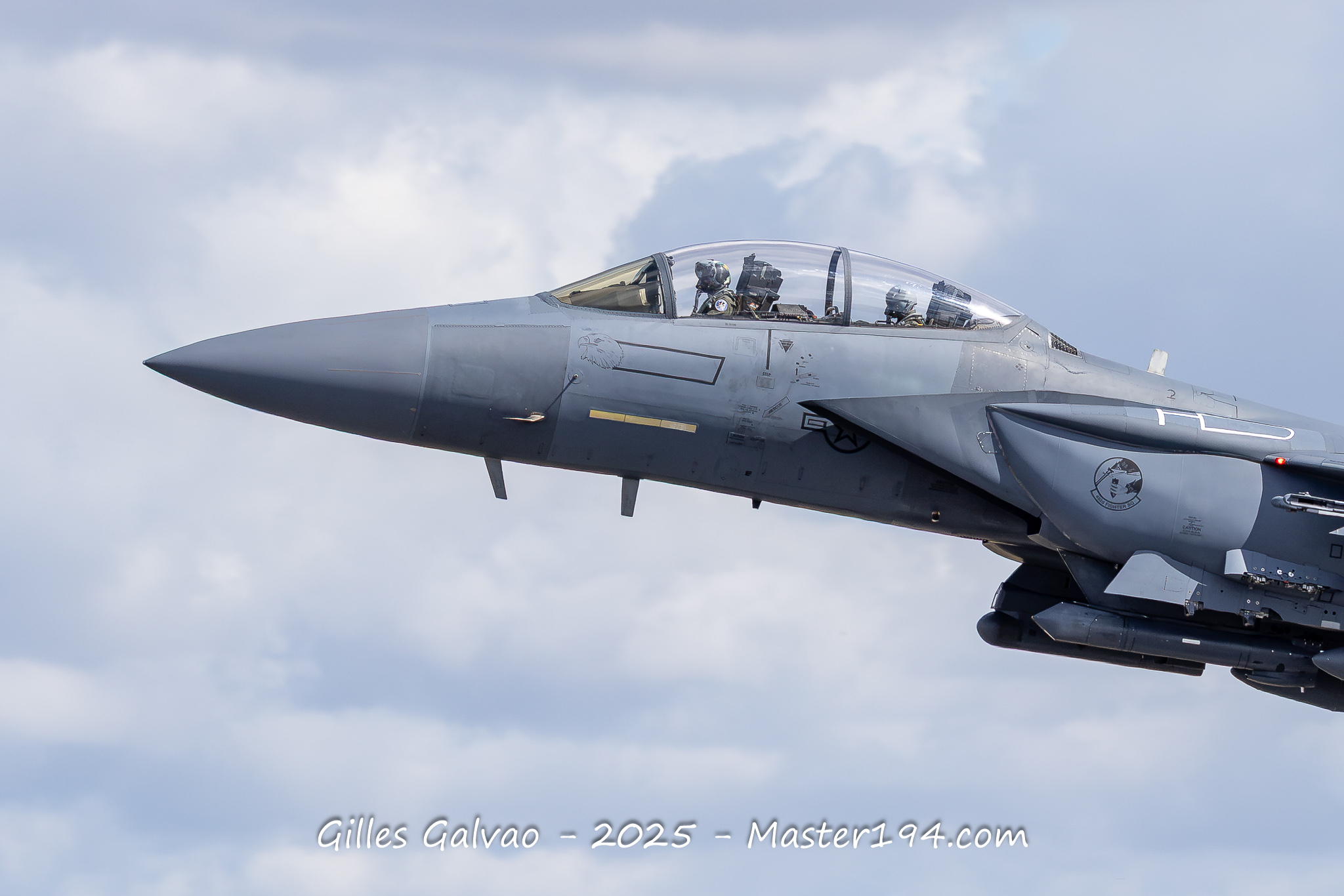
Genesis and Concept of the McDonnell Douglas F-15 Eagle
In the late 1960s, the US Air Force sought to develop a new fighter aircraft capable of regaining absolute air superiority in response to the rapid advancement of Soviet aviation. The impressive capabilities of the MiG-25 Foxbat, combined with critical tactical lessons learned during the Vietnam War, prompted the United States to completely rethink its approach to air combat. Future American fighters had to be capable of detecting and engaging adversaries at beyond-visual-range, while maintaining exceptional maneuverability during close-range dogfights.
The US Air Force’s FX (Fighter Experimental) program ultimately led to the selection of McDonnell Douglas’s design. The objective was ambitious: build a dedicated air superiority fighter capable of outmatching any opposing aircraft, placing absolute priority on performance and air-to-air combat effectiveness.
The prototype YF-15A completed its maiden flight on July 27, 1972.
The new airframe adopted an immediately recognizable architecture featuring twin vertical stabilizers, variable-geometry side air intakes, and two powerful Pratt & Whitney F100 turbofan engines. Its large wing area combined with an outstanding thrust-to-weight ratio provided unprecedented flight performance.
The F-15 was engineered around a clear tactical premise: gain the upper hand over an opponent before visual contact, while retaining enough agility to dominate any close-in engagement. Its high-power radar, scalable avionics, and heavy air-to-air missile payload turned it into the ultimate interception platform, built upon a robust airframe ready for decades of continuous evolution.
The first production F-15A was delivered to the US Air Force in 1974, entering active operational service in 1976. From its inception, the Eagle set new benchmark standards for air superiority fighters.
Principal Variants of the F-15 Eagle
Throughout its long operational career, the F-15 underwent continuous evolution. The initial variants, engineered strictly for air superiority, gradually paved the way for multirole strike platforms, while specialized configurations were developed for foreign operators.
Detailed block improvements, structural upgrades, and specific equipment configurations are analyzed within dedicated individual articles. This core breakdown outlines the major F-15 families and their historic role in the program.
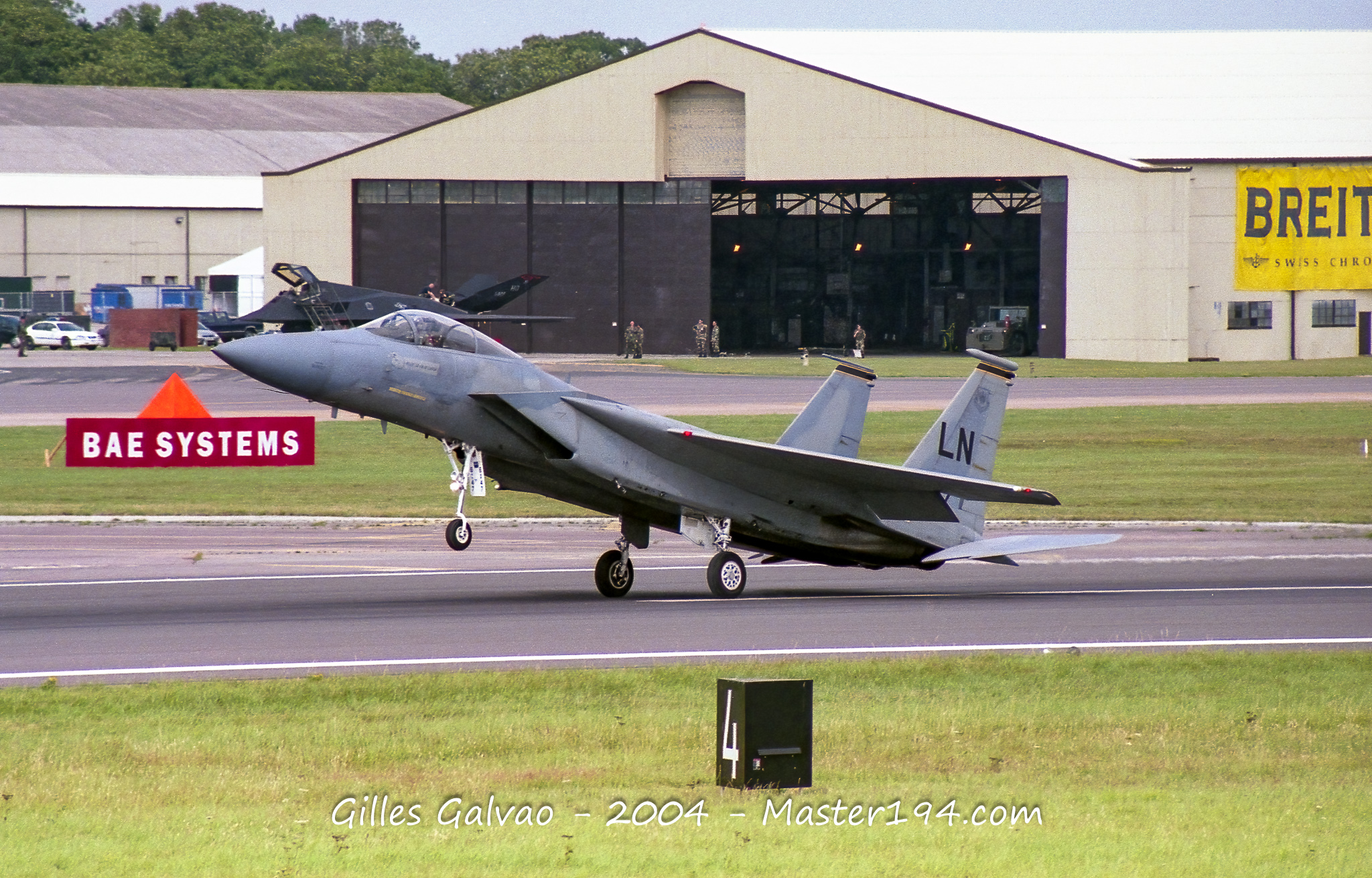
F-15A and F-15B: the first-generation Eagles
The F-15A represented the initial single-seat operational version of the Eagle, designed primarily for air superiority and high-altitude interception.
The F-15B served as the two-seat variant. Primarily intended for operational conversion and crew training, it retained nearly all combat capabilities of the single-seater. These early variants enabled the US Air Force to deploy a fighter specifically tailored to secure air dominance against Soviet tactical aviation.
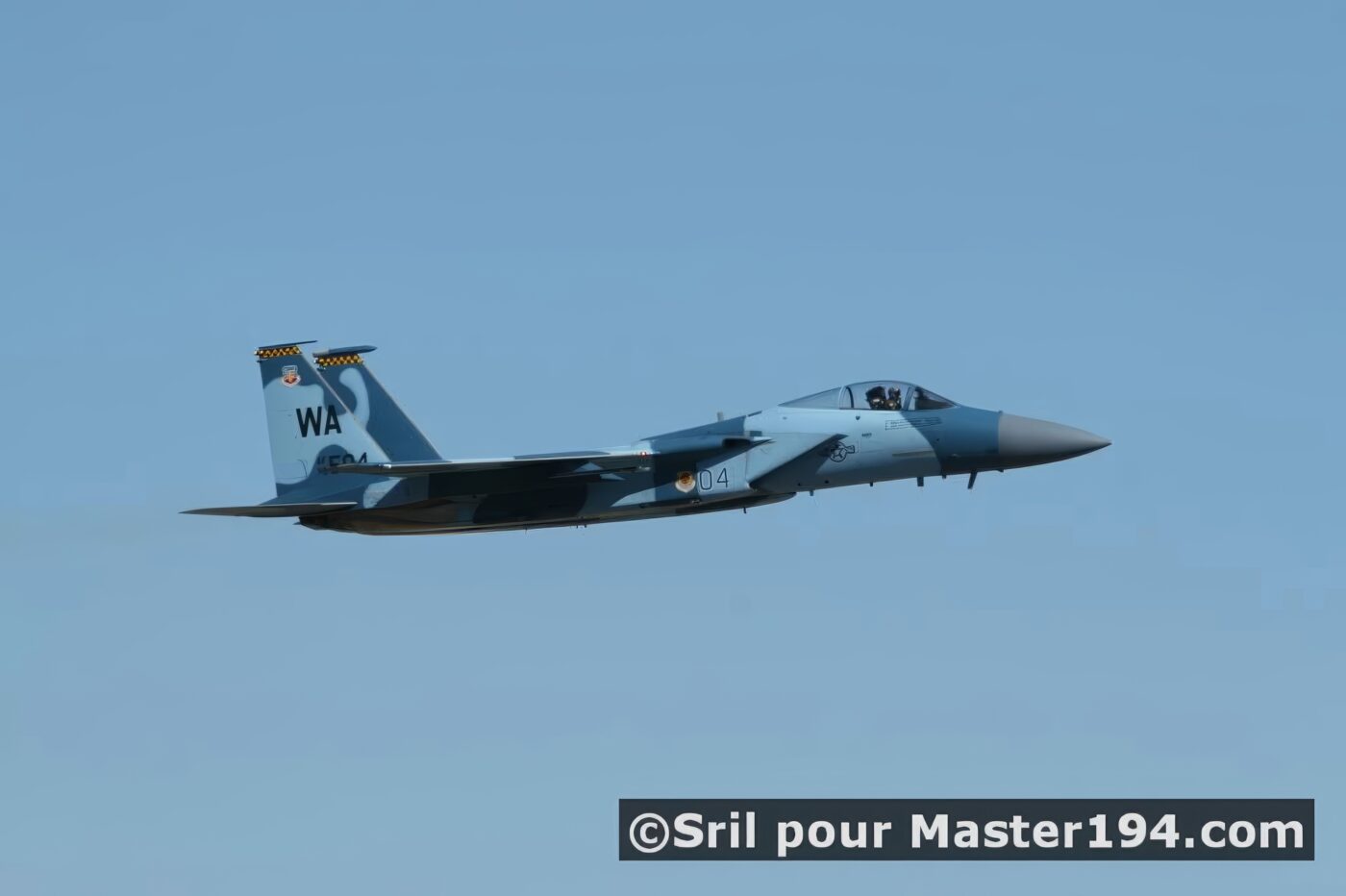
F-15C and F-15D: maturation of the air superiority fighter
The F-15C marked a major evolution of the original design, featuring increased internal fuel capacity, FAST Pack conformal fuel tanks compatibility, and significant upgrades to its radar and avionics suite.
The F-15D is the corresponding two-seat conversion platform.
These variants rapidly became the backbone of the US Air Force’s air superiority fleet and served as the primary baseline for subsequent modernization programs (including MSIP upgrades).
The F-15C/D variants also saw extensive international operational careers, notably with the Israeli Air Force (Baz), the Japan Air Self-Defense Force (F-15J/DJ), and the Royal Saudi Air Force, customized with specific electronic warfare and weapons suites.
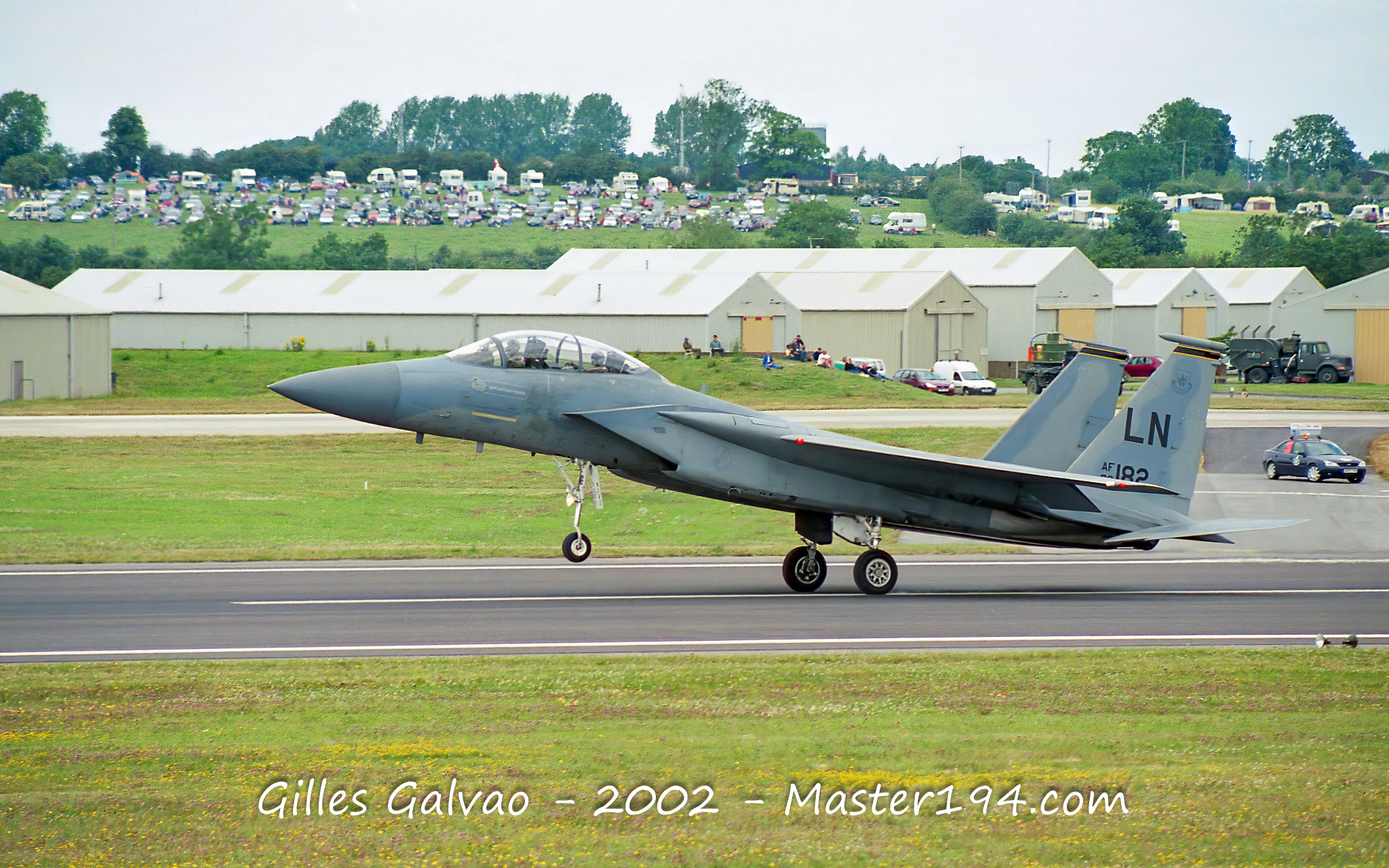
F-15E Strike Eagle: the fighter goes multirole
The arrival of the F-15E Strike Eagle marked a fundamental turning point in the history of the program.
Engineered as a dedicated long-range interdictor, the F-15E retained the core air-to-air combat performance of the original Eagle while receiving deep structural and avionics modifications for air-to-ground strike missions.
The two-seat aircraft was built with a significantly increased payload capacity and received advanced navigation and targeting pods (LANTIRN system), allowing all-weather precision strikes by day or night.
The F-15E thus evolved into a true multirole combat aircraft, seamlessly blending air superiority capability with deep strike power. This robust architecture subsequently served as the baseline for several advanced export derivatives (F-15I, F-15K, F-15SG, and F-15SA).

F-15E Strike Eagle “Statue of Liberty”: Walkaround and in-flight references.

USAF F-15E Strike Eagle: Paris Air Show (Le Bourget) 2007 Walkaround
The F-15I, F-15K, F-15SG, and international derivatives
The operational success of the F-15E Strike Eagle led to tailored adaptations for several key international air forces.
Israel operates the F-15I Ra’am (Thunder), a heavily customized variant optimized for long-range precision strike missions, equipped with indigenous electronic warfare suites and weapons integration.
South Korea deploys the F-15K Slam Eagle, featuring advanced sensor fusion, expanded weapons compatibility, and GE F110 or Pratt & Whitney F100 engines. Singapore flies the F-15SG, incorporating active electronically scanned array (AESA) radar technology and sophisticated targeting integration.
Saudi Arabia operates multiple generations of the platform, ranging from early air superiority versions to the advanced F-15SA (Saudi Advanced) and subsequent upgrade standards, cementing the Strike Eagle architecture as a global benchmark for multirole heavy fighters.

These international airframes build upon the proven Strike Eagle architecture while integrating tailored avionics, sensors, and weapons suites adapted to specific operational requirements.
F-15EX Eagle II: A new generation
While the F-15 appeared slated for gradual replacement by fifth-generation stealth fighters, the program experienced a major resurgence with the F-15EX Eagle II.
Derived from the advanced airframes developed for late-generation export versions, the F-15EX incorporates a modernized digital cockpit, fly-by-wire flight controls, the EPAWSS electronic warfare suite, and an open mission systems architecture designed to integrate cutting-edge weaponry.
Its massive payload capacity remains a primary tactical asset. Capable of carrying a heavy loadout of air-to-air missiles or standoff air-to-ground ordnance, the F-15EX complements stealth platforms like the F-35 by acting as a high-capacity weapons magazine. Over 50 years after the prototype’s maiden flight, the Eagle continues to evolve to meet US Air Force operational demands.
The F-15 in International Service
While its distribution remained more selective than lighter American export fighters like the F-16, the F-15 achieved significant international operational success.
Israel: The First Major Foreign Customer
Israel became a primary foreign operator and played a pivotal role in the Eagle’s combat heritage. Israeli F-15A/C variants (Baz) were deployed primarily for air superiority and interception, while the F-15I (Ra’am) was optimized for long-range strike missions. The Israeli fleet has undergone extensive domestic modernization programs to extend airframe life and capabilities.
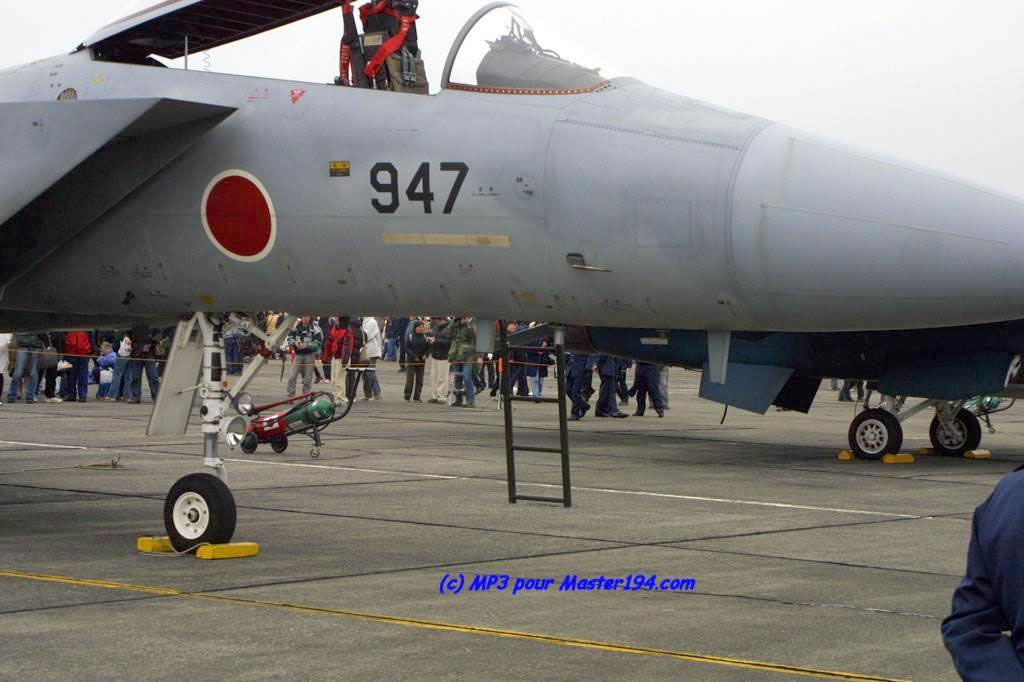
Japan: The Mitsubishi F-15J
Japan became one of the platform’s largest operators with the F-15J, a localized derivative of the F-15C built under license by Mitsubishi Heavy Industries. The Japan Air Self-Defense Force (JASDF) operates a large fleet of single-seat F-15Js and two-seat F-15DJs. These aircraft have received successive modernization packages (JMSIP) to maintain operational readiness in East Asia.
Saudi Arabia: Multi-Generational F-15 Operations
Saudi Arabia stands as a major foreign operator of the F-15, deploying multiple generations of the airframe over four decades.
Following initial deliveries of early air superiority variants, the Royal Saudi Air Force (RSAF) acquired the F-15S—a tailored export derivative of the F-15E Strike Eagle. The fleet subsequently underwent a significant technological leap with the introduction of the F-15SA (Saudi Advanced), alongside modernizing existing airframes to the F-15SR standard.
The Saudi fleet offers a comprehensive operational timeline of the F-15 program, tracing its transformation from Cold War air dominance interceptors to current-generation multirole strike platforms.

Royal Saudi Air Force F-15SA Eagle: Technical walkaround and in-flight photography.
South Korea & Singapore
South Korea selected the F-15K Slam Eagle to significantly enhance its long-range strike capabilities and air defense posture in East Asia.
Similarly, Singapore acquired the F-15SG, a heavily customized Strike Eagle derivative tailored specifically to the operational requirements of the Republic of Singapore Air Force (RSAF).
Both aircraft highlight the airframe’s versatility in adapting to vastly different geographical constraints and strategic defense environments.
Qatar: The Advanced F-15QA
Qatar subsequently joined the Eagle operator community with the F-15QA (Ababil), representing one of the most advanced iterations of the Strike Eagle architecture. The F-15QA introduces next-generation glass-cockpit avionics, modern fly-by-wire flight control systems, state-of-the-art sensor suites, and expanded weapon stations.
This variant stands as a major technological bridge between late-model Strike Eagles and the US Air Force’s latest F-15EX Eagle II platform.

F-15QA Ababil (QEAF): Photos and videos of flight displays at RIAT 2024 (Royal International Air Tattoo).
An Exceptional Combat Record: The F-15 Operational History
The operational history of the F-15 is intrinsically tied to major American and Israeli military engagements since the late 1970s. Engineered primarily for air superiority, the Eagle experienced its baptism by fire in IAF service before becoming the backbone of US Air Force air dominance and precision strike operations across the Middle East. Its world-renowned legacy rests on an unmatched combat record with zero air-to-air losses against enemy fighters.
Israel: The Eagle’s Baptism by Fire
Israel became the first international customer to blood the F-15 in combat. Receiving its initial airframes (Baz) in the late 1970s, the Israeli Air Force quickly deployed them into action. Israeli Eagles engaged Syrian fighters over Lebanon, achieving decisive air-to-air victories while establishing instant air dominance. Early IAF operations also demonstrated the platform’s multirole potential through tactical ground attack missions, culminating in the deployment of the long-range F-15I Ra’am (Thunder) strike fighter.
Operation Desert Storm: Air Superiority & Deep Strike
The 1991 Gulf War marked the largest operational deployment of the USAF F-15 fleet. F-15C air superiority fighters established total air supremacy over Iraq, claiming the vast majority of fixed-wing aerial victories. Concurrently, the newly deployed F-15E Strike Eagle made its combat debut, conducting high-priority night interdiction, Scud-hunting missions, and precision strikes against fortified ground targets.
Middle East Operations & Southern Watch
Following Desert Storm, USAF Eagles maintained a continuous presence in the region. F-15Cs and F-15Es enforced the Iraqi No-Fly Zones during Operations Southern Watch and Provide Comfort throughout the 1990s, later supporting the 2003 invasion of Iraq (Operation Iraqi Freedom) with close air support (CAS) and offensive counter-air (OCA) missions.
Afghanistan: Long-Endurance Strike Operations
Beginning in 2001 with Operation Enduring Freedom, the F-15E Strike Eagle became a critical asset over Afghanistan. Operating from forward bases, Strike Eagles utilized their exceptional payload capability, long loiter time, and advanced targeting pods to deliver precision-guided munitions in support of allied ground forces in mountainous terrain.
Operation Inherent Resolve & Modern Conflicts
From 2014 onward, USAF and coalition F-15 variants were heavily committed to counter-ISIS operations across Iraq and Syria. Utilizing Joint Direct Attack Munitions (JDAMs) and advanced sensor fusion, the Strike Eagle demonstrated its endurance and relevance in asymmetric modern warfare.
A Continuing Legacy
Decades after its maiden flight, the F-15 remains actively engaged in front-line combat. Through continuous upgrades—including AESA radar integration, advanced electronic warfare suites, and modernized glass cockpits—the Eagle architecture ensures operational supremacy alongside fifth-generation platforms.
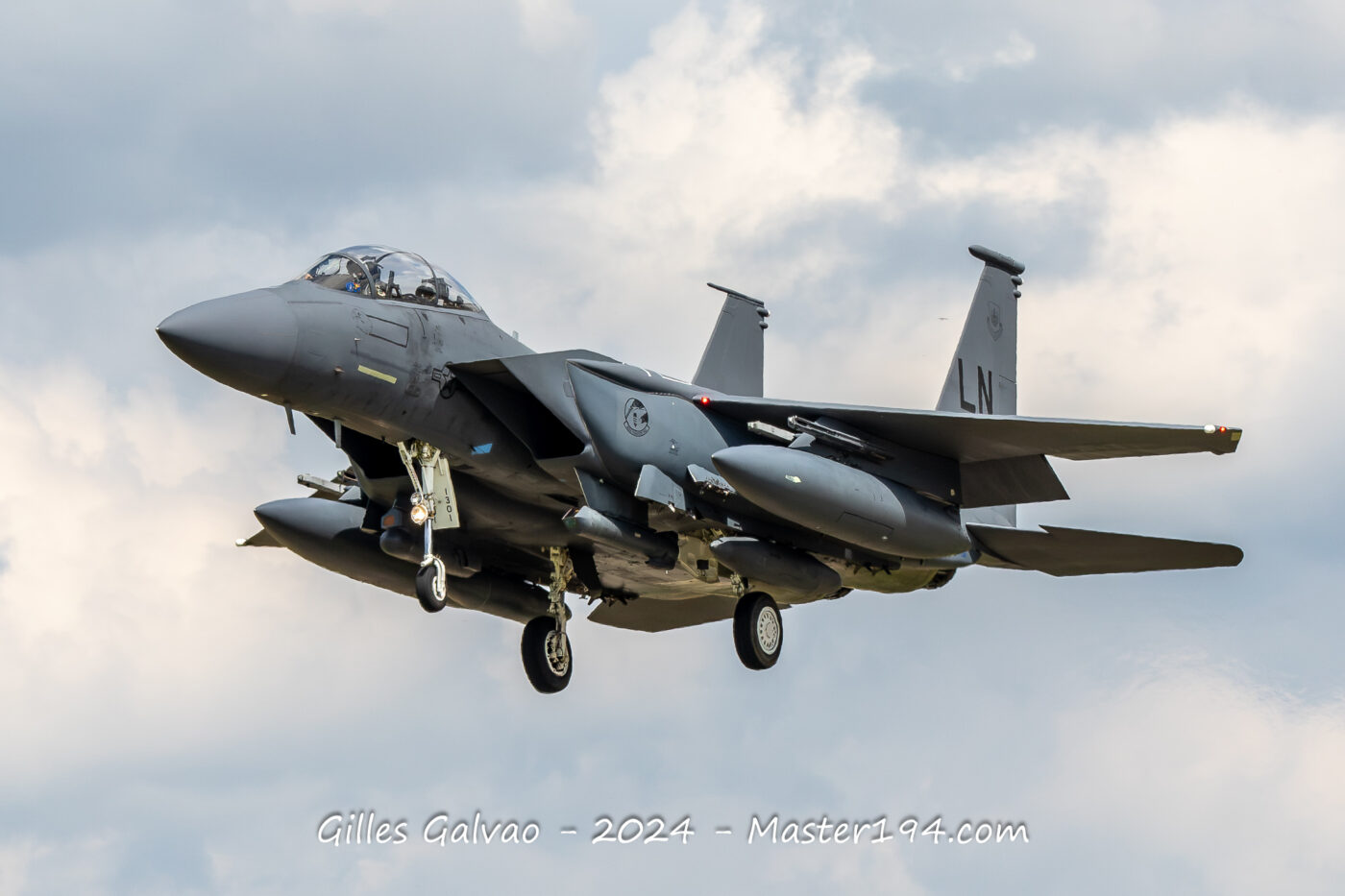
The F-15 Eagle in Scale Modeling
The F-15 Eagle remains an essential subject for scale modelers. Its four-decade operational service, extensive variant lineup, and wide range of international operators offer endless building possibilities.
The primary challenge lies in selecting the exact kit matching your targeted airframe. Structural and avionics differences between early F-15A/B, upgraded F-15C/D, and dual-role F-15E Strike Eagles—as well as customized export variants—are substantial. Modelers must also account for mid-life update (MLU) programs, shifting camouflage schemes, and antenna configurations across different service eras.
Key F-15 Model Kits by Scale
1/72 Scale
The 1/72 scale offering has expanded with exceptional modern Tooling:
- Great Wall Hobby (GWH): Widely regarded as the ultimate benchmark, offering unmatched surface detail, crisp panel lines, and high accuracy.
- FineMolds: Offers outstanding recent tooling with superb engineering and fit.
- Academy: Provides very solid, accessible alternatives with good overall detail.
- Hasegawa: Long considered the standard, legacy Hasegawa kits remain relevant for their vast catalog of special markings, despite older tooling.
1/48 Scale
The quarter-scale market offers extensive choices across price points:
- Great Wall Hobby (GWH): Dominates the premium tier. While high-priced, their kits deliver unbeatable detail, exceptional fit, and accurate intakes.
- Revell: Their classic F-15E Strike Eagle kit remains a legendary contender. Though older, its superb accuracy and low price point make it an unbeatable budget alternative to GWH.
- Academy: Budget-friendly option, though criticized by accurate modelers for intake inaccuracies and assembly.
- Hasegawa: Legacy kits now largely surpassed by modern GWH toolings.
1/32 Scale
For large-scale builders, several impressive kits exist:
- Tamiya: The F-15C and F-15E kits remain large-scale benchmarks. Despite their age, Tamiya’s molding quality, structural stability, and engineering hold up remarkably well.
- Revell: Provides a 1/32 F-15E Strike Eagle offering solid value for money for large-scale projects on a budget.
Accurate photo documentation and detailed walkarounds remain essential to verify individual airframe antennas, cockpit displays, and weapons loadouts.
An Eagle Built for Long-Term Air Dominance
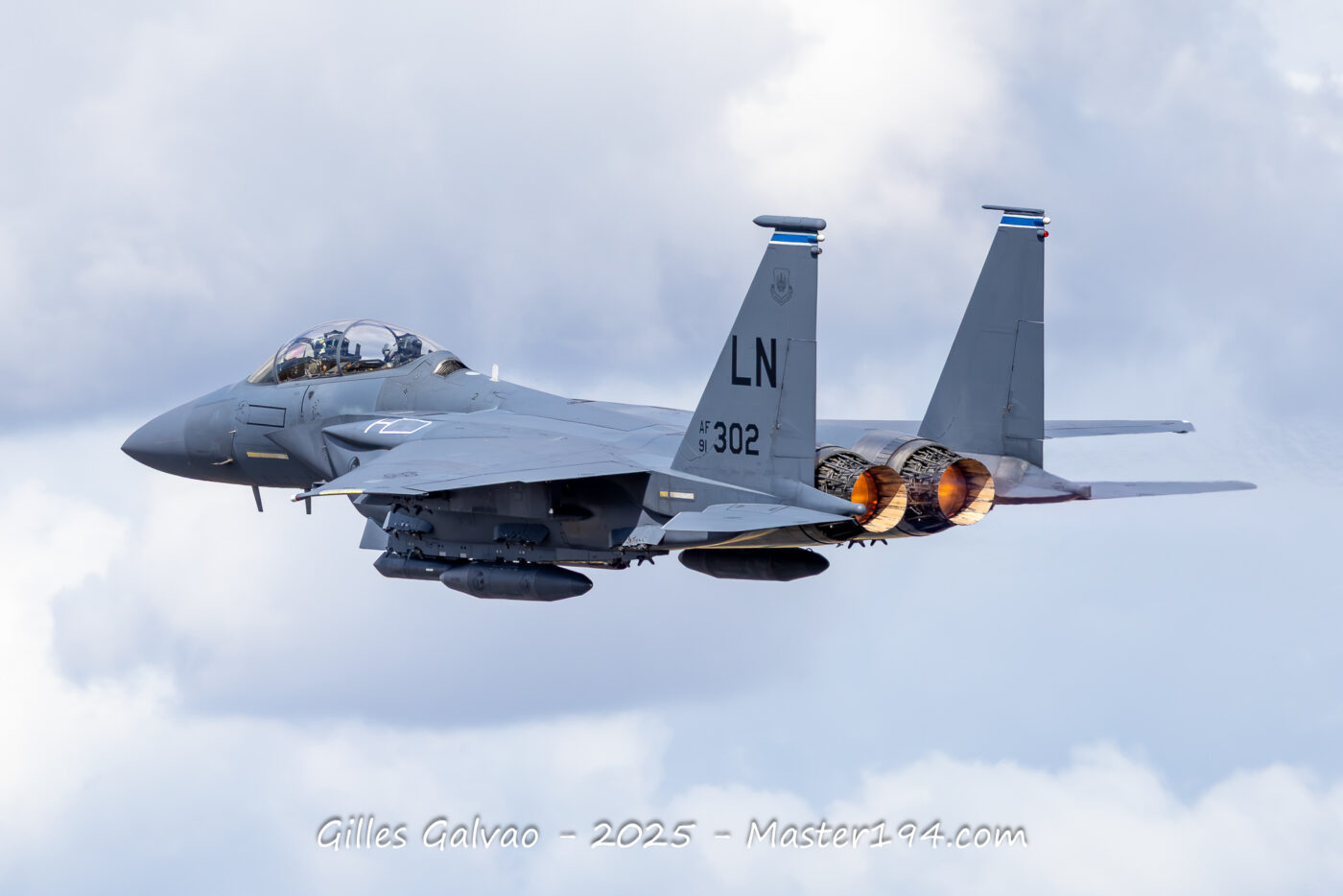
More than fifty years after its maiden flight, the McDonnell Douglas F-15 Eagle remains one of the most remarkable success stories in the history of American military aviation. Originally designed as a pure air superiority fighter with the motto “not a pound for air-to-ground,” the platform evolved into a comprehensive family of multirole aircraft capable of performing fleet defense, long-range interception, deep interdiction, and all-weather precision strike missions.
Its flawless combat record, structural robustness, and unmatched adaptability have enabled the F-15 to stay relevant across multiple technological generations. More than half a century separates the early F-15A from the modern F-15EX Eagle II. Yet, the foundational architecture remains instantly recognizable: twin powerful turbofan engines, high-aspect-ratio swept wings, iconic dual vertical stabilizers, and a heavy-payload airframe designed for maximum weapons integration.
Deployed by the air forces of the United States, Israel, Japan, Saudi Arabia, and multiple partner nations, the F-15 has played a pivotal role in major global conflicts of the late 20th and early 21st centuries. Its distinctive silhouette—characterized by twin vertical tails and slight wing-anhedral geometry—has left a permanent mark on military aviation heritage.
Today, the Eagle continues to adapt. As stealthy fifth-generation platforms assume core roles in modern air fleets, the F-15 maintains an indispensable complementary posture—delivering unmatched speed, extended combat radius, and heavy ordnance carrying capacity. The F-15 Eagle stands as far more than a Cold War relic; it is one of the rare combat platforms to span over 50 years of evolution while preserving its front-line dominance.