
A heavy, tri-engine helicopter jointly developed by the United Kingdom and Italy, the AgustaWestland AW101 (originally designated EH101) stands as one of the most ambitious rotary-wing projects of its generation.
Engineered from its inception to satisfy distinct yet complementary military requirements, the AW101 matured into a versatile family of operational platforms. Today, it executes a broad range of critical missions worldwide, including:
- Maritime Surveillance and Airborne Early Warning and Control (AEW&C)
- Anti-Submarine Warfare (ASW) and Anti-Surface Warfare (ASuW)
- Tactical Troop and Cargo Transport
- Search and Rescue (SAR) and Combat Search and Rescue (CSAR)
- Personnel Recovery and Special Operations Support
Initially designated EH101 before being rebranded as the AW101 following the creation of AgustaWestland, the helicopter is today produced and marketed under the Leonardo banner. In British service, the platform is universally recognized as the Merlin, whereas other international operators employ distinct service designations reflecting specific mission profiles and airframe configurations.
This operational adaptability has earned the AW101 a distinguished global service record. From Royal Navy maritime warfare variants and Italian Air Force units to Danish Search and Rescue (SAR) configurations and Japanese airborne mine countermeasures (AMCM) platforms, the airframe has been tailored to survive and perform across demanding operational environments.
Whether you are a military aviation historian, an airshow photographer, or a scale modeler seeking precise reference material, this portal serves as a centralized hub for our AW101 Merlin archive: program development history, variant breakdowns, operator profiles, combat deployments, high-resolution walkarounds, event photo galleries, and scale kit builds.
This living documentation hub is updated continuously. Additional photographic archives, walkaround galleries, and technical references will be integrated as new material is processed.
Genesis and Development of the EH101
In the late 1970s, the United Kingdom and Italy sought to develop a new heavy naval and transport helicopter capable of replacing several aging airframes in their respective inventories.
The Royal Navy was specifically looking to replace its fleet of Westland Sea Kings in the Anti-Submarine Warfare (ASW) role, while Italy required a modern platform for naval operations, utility transport, and maritime surveillance.
This shared requirement led to a joint venture between Westland Helicopters in the UK and Agusta in Italy. The goal was to engineer a standardized, flexible airframe adaptable to widely differing operational needs.
The emerging project was designated EH101. Its design relied on an ambitious architectural layout for the era: a large-capacity airframe powered by a tri-engine configuration, delivering extended range, high payload capacity, and single-engine safety margins essential for long-range overwater missions.
The prototype completed its maiden flight on October 9, 1987. Subsequent flight testing with multiple pre-production airframes validated various military and naval configurations.
Program management evolved over the decades: following the merger that created AgustaWestland, the helicopter was rebranded as the AW101. Following the structural reorganization of Finmeccanica into Leonardo, the airframe is currently produced and marketed under Leonardo’s rotary-wing division.
This modular architecture remains the cornerstone of the AW101 program, allowing the airframe to be tailored with specialized ASW equipment, Search and Rescue (SAR) suites, tactical transport ramps, or Airborne Early Warning (AEW) radars.
One Airframe, Multiple Mission Profiles
Designed from inception as a true multirole platform, the AW101’s tri-engine powerplant provides significant power reserves and lifting capability for demanding operational environments. Its spacious cabin can be rapidly reconfigured for troops, cargo, or specialized mission consoles.
Throughout its operational career, the AW101 has been deployed across a broad spectrum of military and government missions:
- Anti-Submarine Warfare (ASW) and Anti-Surface Warfare (ASuW)
- Tactical Troop and Cargo Transport
- Search and Rescue (SAR)
- Combat Search and Rescue (CSAR) and Personnel Recovery
- Special Operations Support
- Maritime Surveillance and EEZ Patrol
- Medical Evacuation (MEDEVAC)
- Airborne Mine Countermeasures (AMCM)
- Airborne Early Warning and Control (AEW&C)
- VIP and VVIP Head-of-State Transport
Major Variants and Operational Configurations
Because the AW101 has been tailored to specific customer specifications, designations and avionics fits vary significantly between operating nations.
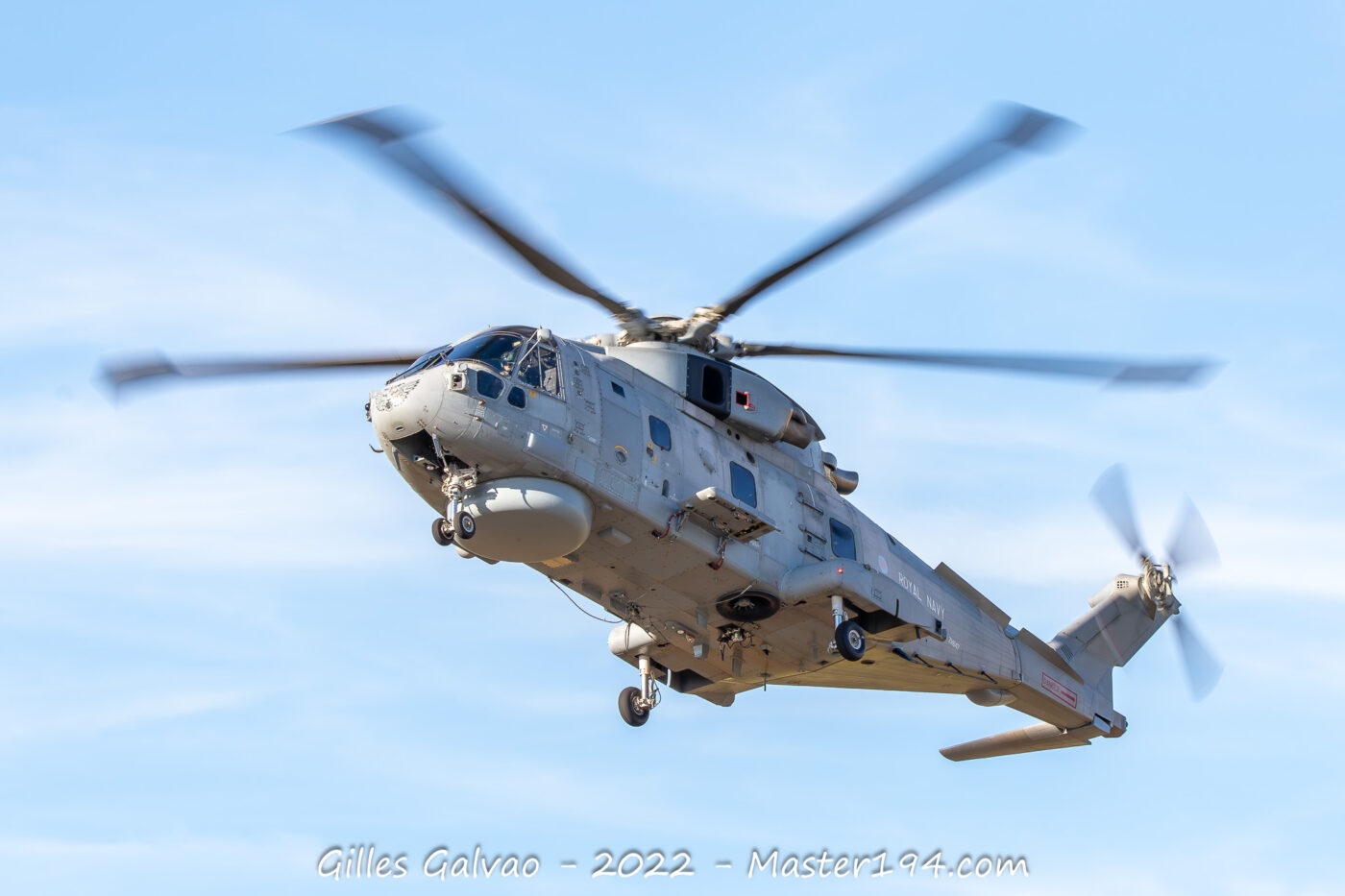
Merlin HM.1 & HM.2: The Anti-Submarine Warfare Specialist
The Merlin HM.1 represented the initial operational naval variant for the UK Royal Navy. Engineered primarily for Anti-Submarine and Anti-Surface Warfare, it incorporated an advanced acoustic processing suite, dipping sonar, and search radar to detect, track, and engage underwater and surface threats.
The HM.1 became the backbone of the Royal Navy’s shipborne rotary-wing force, operating from frigates, destroyers, and aviation training ships.
A comprehensive mid-life upgrade program resulted in the Merlin HM.2. This standard introduced a fully digitized glass cockpit, upgraded tactical mission computers, enhanced radar capabilities, and revised tactical displays, significantly extending its operational lifespan.
Today, the Merlin HM.2 remains a critical component of British naval power projection, providing active ASW screening and airborne surveillance for the Queen Elizabeth-class aircraft carrier strike groups.
Merlin HC.3 and HC.4: Tactical Support and Amphibious Assault
The United Kingdom also developed dedicated tactical transport variants of the platform.
The Merlin HC.3 was initially fielded by the Royal Air Force (RAF) for tactical troop transport, battlefield logistics, and combat support in demanding operational theaters. Deployments in Iraq and Afghanistan clearly demonstrated the AW101’s payload capability and range in hot-and-high conditions, contrasting with its maritime origins.
These airframes were subsequently transferred to the Royal Navy’s Fleet Air Arm to support the Royal Marines Commandos. Upgraded and designated Merlin HC.4/4A, the fleet features folding main rotor blades and a folding tail boom for shipboard stowage, optimized for amphibious assault operations. The HC.4 program highlights the airframe’s inherent flexibility to transition between land-based and maritime roles throughout its service life.
Merlin Crowsnest: Airborne Early Warning for the Carrier Strike Group
One of the most specialized adaptations of the British Merlin is the Crowsnest system.
This configuration transforms the Merlin HM.2 into an Airborne Early Warning and Control (AEW&C) platform. Equipped with a deployable Thales Searchwater radar scanner and integrated mission consoles, the aircraft provides long-range air and surface surveillance, tracking, and threat detection.
The Merlin Crowsnest serves as the primary organic early warning asset for the Royal Navy’s Carrier Strike Groups, providing critical air defense coverage for the Queen Elizabeth-class aircraft carriers.
It thus stands as a particularly compelling example of a multirole platform originally engineered for Anti-Submarine Warfare (ASW) being successfully transformed into an Airborne Early Warning and Control (AEW&C) system.

Italian AW101 Fleet
Italy stands as one of the principal historical partners in the program, operating the AW101 across widely diverse operational frameworks:
- Marina Militare (Italian Navy): Operates the AW101 in primary Anti-Submarine Warfare (ASW) and Anti-Surface Warfare (ASuW) roles, as well as amphibious assault support and utility transport.
- Aeronautica Militare (Italian Air Force): Utilizes specialized AW101 variants (designated HH-101A Caesar) engineered for Personnel Recovery, Combat Search and Rescue (CSAR), and Special Operations Support.
The Italian fleet offers scale modelers a fascinating spectrum of configurations, airframe modifications, and sensor suites that differ significantly from British Merlin standards.
Search and Rescue (SAR) Configurations
The AW101 has established itself as an exceptional long-range Search and Rescue (SAR) platform. Its combination of cabin volume, operational speed, range, and multi-engine reliability enables all-weather operations across challenging maritime environments:
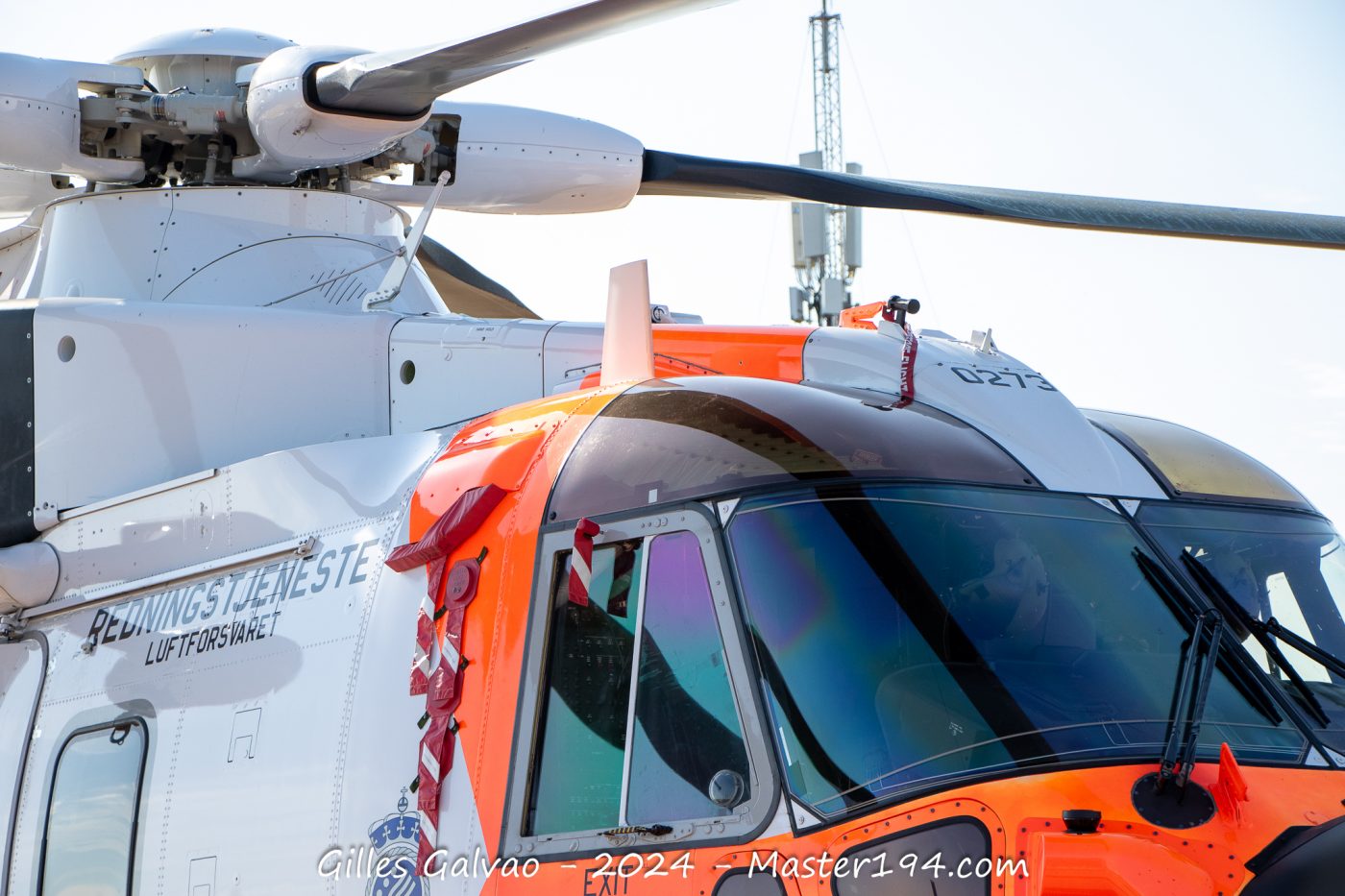
Norway: Selected the AW101 (designated NAWSARH) to replace its Sea King fleet, equipping its airframes with advanced all-weather SAR suites, modern mission radars, and dual hoists engineered for extreme Arctic environments.particulièrement exigeants.
Denmark: Operates EH101 variants tailored for tactical transport and long-range offshore SAR.
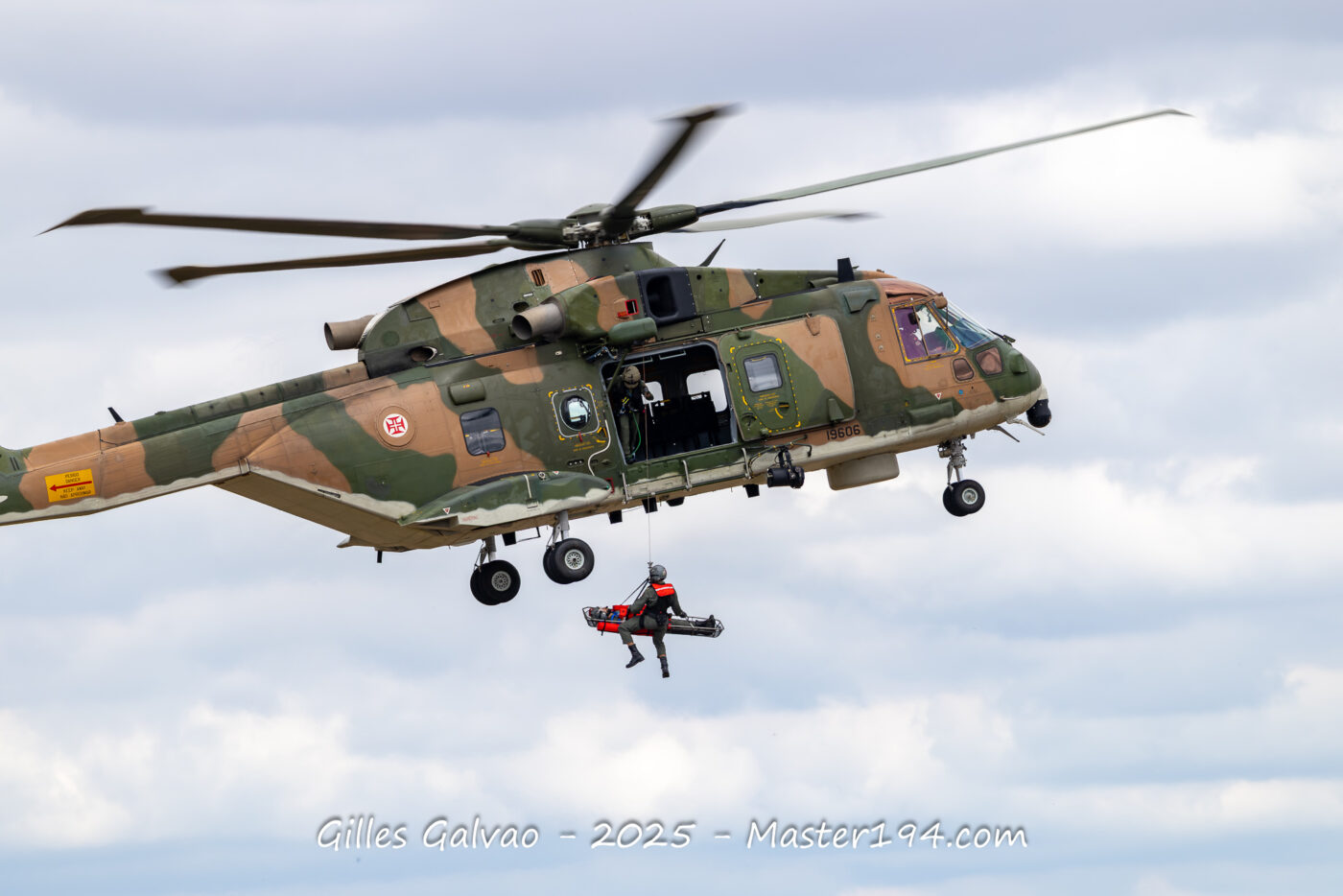
Portugal: Deploys the AW101 across vast Atlantic maritime search zones, including the Azores and Madeira archipelagos.
MCH-101: The Japanese Airborne Mine Countermeasures Specialist
Japan operates a highly specialized variant of the AW101 platform under the designation MCH-101.
Flown by the Japan Maritime Self-Defense Force (JMSDF), the MCH-101 is tailored primarily for Airborne Mine Countermeasures (AMCM) and specialized transport duties. It is equipped to deploy advanced airborne mine detection, sweeping, and neutralization systems, providing critical force protection for sea lanes and naval task groups.
This unique operational role stands out within the global AW101 family, further highlighting the airframe’s structural adaptability and payload capacity.
While Japan also employs CH-101 variants for Antarctic support and transport missions,
A Distinguished Operational Record
The operational career of the AW101 is defined not by a single conflict, but by a continuous succession of combat deployments, amphibious operations, and high-risk Search and Rescue (SAR) missions in extreme environments.
The Balkans and Kosovo
British Merlins saw their initial operational baptism of fire during peacekeeping and stability operations in the Balkans in the late 1990s and early 2000s. Deployments to Bosnia and Kosovo validated the airframe’s tactical transport capabilities and all-weather availability in complex mountainous terrain.
Operations in Iraq
Following initial naval and tactical fielding, Royal Air Force Merlin HC.3s were heavily deployed during Operation Telic in Iraq. Operating in harsh desert conditions, the aircraft performed troop transport, medical evacuations, and tactical supply missions, accumulating vital operational data that fed directly into fleet durability upgrades.
Deployment to Afghanistan
Afghanistan represented one of the most demanding operational environments in the Merlin’s service history. Deployed to Helmand Province under Operation Herrick, the Merlin HC.3 fleet operated in extreme “hot and high” conditions, utilizing its significant engine power margins to transport personnel and heavy payloads where lesser airframes struggled.
Maritime Operations off Libya (2011)
In 2011, during Operation Ellamy (NATO Operation Unified Protector) off the coast of Libya, Royal Navy Merlin HM.1s deployed aboard amphibious assault ships and frigates. The aircraft executed maritime surveillance, naval gunfire support coordination, and expeditionary transport missions directly from sea-based platforms.
Shipborne Carrier Strike Group Operations
Despite its land-based transport success, blue-water maritime operations remain the primary mission for the Royal Navy’s Merlin fleet.
Originally fielded as the HM.1 and currently operated as the modernized Merlin HM.2, the airframe forms the anti-submarine shield for Royal Navy surface task groups. Operating from frigates, destroyers, and RFA support ships, it provides advanced dipping sonar acoustic tracking, search radar coverage, and torpedo delivery capabilities.
With the commissioning of the Queen Elizabeth-class aircraft carriers, the Merlin HM.2 occupies the central rotary-wing role within the UK Carrier Strike Group (CSG). Operating in tandem, ASW-configured HM.2s secure the underwater battlespace while Merlin Crowsnest platforms project long-range Airborne Early Warning and Control (AEW&C) radar coverage over the fleet.
Operational Operators and International Success
The AW101 has achieved widespread global success across military and government sectors.
While the United Kingdom and Italy represent the founding industrial partners and launch operators, the airframe’s multirole adaptability has led to its adoption by numerous international armed forces and coast guards:
- United Kingdom: Royal Navy (Merlin HM.2 & Crowsnest) and Royal Marines Commandos (Merlin HC.4/4A).
- Italy: Marina Militare (ASW/ASuW/Amphibious) and Aeronautica Militare (HH-101A Caesar CSAR/Special Ops).
- Denmark: Royal Danish Air Force (EH101 TTT and offshore SAR).
- Portugal: Portuguese Air Force (Esquadra 751 “Pumas” – SAR and CSAR).
- Norway: Royal Norwegian Air Force (NAWSARH – Extreme Arctic all-weather SAR).
- Japan: Japan Maritime Self-Defense Force (MCH-101 AMCM and CH-101 Antarctic transport).
- Canada: Royal Canadian Air Force (designated CH-149 Cormorant, dedicated long-range SAR platform).
- Poland: Polish Naval Aviation (AW101 ASW/CSAR configured for Baltic Sea operations).
In addition to these major military operators, several international government and head-of-state transport fleets deploy specialized AW101 variants for VVIP transport and utility support. This broad operator base underscores the platform’s capacity to execute radically different mission profiles.
The British Case: A True Merlin Family
The United Kingdom remains perhaps the most iconic user of the AW101. The Royal Navy, the Royal Air Force, and subsequently the Royal Marines have operated various iterations of the aircraft, progressively covering a particularly broad spectrum of missions.
The British Merlin thus evolved from a specialized anti-submarine warfare (ASW) naval helicopter into a comprehensive family comprising:
- Merlin HM.1
- Merlin HM.2
- Merlin HC.3
- Merlin HC.4
- Merlin Crowsnest
This evolution explains the wide diversity of external configurations seen on British airframes. For the scale modeler, precisely identifying the specific version and operational timeframe is essential: differences in equipment fits, antenna layouts, sensor suites, and external hardware can be significant.
Modeling the AW101
The AW101 is a fascinating subject for scale modelers, though available kits are far less abundant than for major combat jets.
The primary challenge stems not only from kit availability but also from the sheer variety of airframe variants. A British Merlin HM.1, a modernized Merlin HM.2, a tactical transport HC.3, an Italian AW101, or a Japanese MCH-101 feature substantial differences in exterior hardware and sensor suites. Comprehensive photographic documentation is therefore essential prior to starting a build.
1/72 Scale: The Most Accessible Option
In 1/72 scale, Italeri offers a kit dedicated to the AW101 Merlin HM.1. The brand also released an AW101 boxing tied to the aircraft featured in the James Bond film Skyfall. While these kits allow modelers to depict a British Merlin, careful attention must be paid to the exact airframe configuration and timeline chosen. Nevertheless, the Italeri tooling remains the primary mainstream reference in 1/72 scale for anyone building a modern AW101.
1/48 Scale: A Highly Limited Choice
Despite being hugely popular for military aircraft, 1/48 scale is poorly represented for the AW101. The Airfix kit is the sole injection-molded option in this scale, but it is long out of production (OOP), with no reissue currently planned.
1/32 Scale: No Injection-Molded Kit
There is no mass-produced plastic kit available in 1/32 scale. Modelers aiming for this large scale must rely on scratchbuilding and 3D printing.
A Unique Helicopter in European Aviation History
The AW101 holds a distinct place in modern European aviation history. Born from a joint venture between two major European manufacturers, it evolved into a truly global platform while retaining a strong British and Italian identity.
Its three-engine architecture, substantial payload capacity, and impressive endurance allowed it to be adapted to a broad array of operational roles—ranging from anti-submarine warfare (ASW) and tactical transport to search and rescue (SAR), airborne mine countermeasures (AMCM), and airborne early warning (AEW).
This versatility best defines the AW101. Far more than a mere successor to the Sea King, the Merlin family has proven capable of adapting to evolving operational requirements over decades. From Royal Navy Merlins to Italian Navy AW101s, Scandinavian SAR platforms, and Japanese MCH-101s, the AW101 represents a multi-role asset tailored to highly diverse operational environments.
Today, the AW101 remains one of the most recognizable European military helicopters. Its massive silhouette, five-bladed main rotor, and signature three-engine configuration give it an unmistakable identity. For aviation enthusiasts and scale modelers alike, this rich diversity of versions, roles, and configurations makes the AW101 a exceptionally rewarding subject. offre une richesse documentaire considérable et fait de l’AW101 Merlin un sujet particulièrement intéressant à explorer.