
 by
From feathers to aluminum, it is a single step that aeronautical engineers have been taking for over a century. The identity of our aircraft remains deeply rooted in the observation of the sky’s apex predators. Military nomenclature is not merely a matter of prestige; it pays tribute to the aerodynamic mastery and deadly precision of these birds of prey.
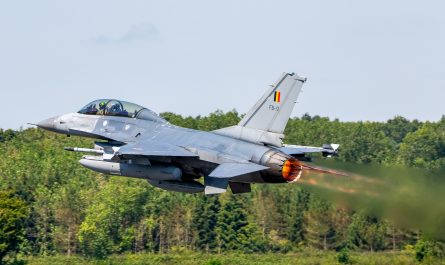
From the General Dynamics F-16 Fighting Falcon to the McDonnell Douglas F-15 Eagle, by way of the Sud-Ouest SO-4050 Vautour, or even night-flying technologies inspired by the stealth and capabilities of the owl. The Heinkel He 219, one of the most formidable night fighters of World War II, was officially nicknamed ‘Uhu’ (the German name for the Eurasian eagle-owl).
The bird remains the ultimate reference.
All photos are available in high resolution to fully appreciate the details—simply click on them!


Check this link to get more informations about F-16 Fighting Falcon : F-16 Fighting Falcon: Technical Reference, Walkarounds & Photo Dossiers
Why Aircraft Bear the Names of Birds of Prey
Since the dawn of military aviation, designers have sought to embody instantly recognizable qualities in their aircraft: speed, power, precision, and dominance of the skies. In this quest, birds of prey emerged as an obvious choice.
A falcon evokes speed and diving attacks; an eagle symbolizes power and mastery of the airspace; while owls represent stealth and effectiveness in night-time conditions. These associations are by no means accidental: they reflect actual capabilities that aeronautical engineering has long sought to replicate or match.
Beyond the symbolism, these names also serve an operational purpose. They facilitate aircraft identification, boost the image of the platform among aircrews, and foster squadron culture. A name like ‘Eagle’ or ‘Falcon’ does more than describe an aircraft; it suggests a philosophy of combat.
Ultimately, this tradition is part of a broader history where humanity, for centuries, has observed the natural world to understand flight. From ancient falconry to modern fighter jets, the link between birds of prey and aviation remains deeply rooted—both in our collective imagination and in technological reality.
Through this photo report, I invite you to immerse yourself in the roots of flight—where the ancient art of falconry meets the aesthetics and performance of the predators that gave their names to our most iconic machines.
Photo Context
All the photographs in this feature were captured on-site at the Château de Talmont-Saint-Hilaire. The castle’s courtyard hosts a seasonal falconry display put on by the talented team from Les Géants du Ciel. During my visit, three falconers—Sacha, Mazarine, and Adriane—delivered a spectacular performance showcasing these magnificent birds.
A Quick Side Note and Fun Fact:
I originally used the feminine French term ‘fauconnières‘ when referring to Sacha, Mazarine, and Adriane… Shame on me! As it turns out, Sacha gently called me out during the proofreading stage with this comment:
“The term fauconnier (falconer) does not have a feminine form in French—a fauconnière actually refers to the hawking bag used to carry the meat.”

Falconry
Practiced for over 4,000 years, falconry originated in Central Asia before spreading through the Middle East, Europe, and as far as Japan. Equal parts hunting art and discipline of observation, it relies on a profound understanding of the behavior and capabilities of birds of prey—the falcon’s diving speed, the eagle’s endurance, the owl’s stealth.
During the Middle Ages, it became a symbol of prestige reserved for the elite, with each bird associated with a specific social rank. Today, inscribed on UNESCO’s Representative List of the Intangible Cultural Heritage of Humanity, falconry perpetuates a know-how where humans do not dominate the bird, but rather collaborate with it. This philosophy aligns in many ways with that of aviation: to observe, to adapt, and to maintain a pilot/machine pairing perfectly tailored to the mission..

While falconry is historically an art of hunting and prestige, it now finds an unexpected modern application in bird control (or bird abatement). This technique involves using birds of prey—falcons, hawks, or eagles—to deter other birds from sensitive areas such as airports, industrial sites, or landfills. Unlike audio or visual deterrents, which often lose effectiveness over time, the physical presence of a real predator triggers a deeply rooted survival instinct in the targeted species. At numerous airfields and military airbases, falconers operate daily to mitigate the risk of bird strikes—a well-known and critical hazard in modern aviation. In a very concrete way, the raptor once again becomes a vital ally of the skies.


To get more informations about F-15 Eagle, check this link : McDonnell Douglas F-15 Eagle: Technical Reference & Walkarounds
And now, let the images speak for themselves—enjoy these magnificent birds of prey..
Justin, the Griffon Vulture
It is an imposing, massive bird—averaging 9 kg (20 lbs) with a 2.5-meter (8.2 ft) wingspan—and, much like the French aircraft of the same name, it is a scavenger (feeding on carcasses it did not hunt itself). However, unlike the SNCASO SO-4050 Vautour, the Griffon vulture is an outstanding glider!
The vulture possesses a very wide field of vision and good visual acuity, though it is not quite as razor-sharp as that of a falcon.


Vultures and Gliders: Masters of Motorless Flight
The undisputed masters of soaring flight, vultures exploit updrafts—or thermics—with remarkable efficiency to cover vast distances barely flapping their wings. By carving wide circles within these columns of warm air, they gain altitude before gliding effortlessly toward the next thermal, optimizing every ounce of energy.
This strategy is directly comparable to that of glider pilots, who utilize the exact same atmospheric phenomena to extend their flight and sometimes travel several hundred kilometers without an engine. Where the vulture instinctively refines its flight path by reading the terrain and air masses, the glider pilot relies on experience, instruments, and a sharp analysis of aerology. In both cases, it is a matter of ‘reading the sky’ to transform an invisible resource into sustainable performance
Brisby, the Harris’s Hawk
Much smaller than ‘Justin,’ the Harris’s hawk has a wingspan of just over one meter (3.3 ft). These birds hunt in small social packs, primarily targeting rodents and reptiles.
The hawk is endowed with excellent visual acuity (though still second to that of the falcon) and its sight is incredibly sensitive to the slightest movements on the ground. Meet Brisby!


Urgo, the Bald Eagle
The ultimate symbol of a fighter? He is the one who inspired the name of the F-15 Eagle, and he stands as the proud emblem of the United States… Yet, he is actually a sea eagle (pygargue) and not a true eagle. He is a fish-eating raptor rather than a land-based predator like the true eagle. Furthermore, unlike eagles, a sea eagle’s feathers do not extend all the way down to its talons!
He also possesses excellent visual acuity, enhanced specifically by a sharp ability to perceive contrasts, allowing him to easily detect fish beneath the water’s surface.


Winglets: When Aircraft Correct the Invisible Losses of Flight
Winglets are those small vertical extensions located at the tips of modern aircraft wings. Their role is discreet yet essential: to mitigate the wingtip vortices that form at the edge of the wing, which cause a loss of energy and an increase in fuel consumption.
By reducing these vortices, they directly enhance the aircraft’s aerodynamic efficiency, extend its range, and stabilize its cruise performance. On a large scale, this gain becomes substantial for long-haul flights.
This principle mirrors what nature has long optimized in soaring birds. Raptors like vultures, as well as certain migratory birds, continuously adjust their wing shape and the splay of their feathers to reduce wingtip turbulence and optimize their soaring flight. Where the bird naturally ‘corrects’ energy losses, aeronautical engineering has translated this phenomenon into a structural solution: winglets.
Today, these devices can be found on many modern aircraft, where they contribute directly to reducing fuel burn and optimizing cruise efficiency.

Falk, the Saker Falcon
This little falcon possesses incredible speed and agility! Capturing him on camera is a true test of skill…
He is also the ultimate champion of visual acuity, boasting one of the sharpest eyesights in the entire animal kingdom.


Take a close look at Falk’s talons: prey captured!


Night Hunters
Flying at night and striking prey—thanks to technology, mankind can now achieve this, but once again, owls excel at it naturally.
In fact, it is no coincidence that in the French Navy (Marine Nationale), naval aviators qualified for night carrier landings are nicknamed ‘Owls’ (Hiboux). This qualification remains one of the rarest and most demanding challenges in aviation.
Barn owls and Eurasian eagle-owls possess less sharp vision than diurnal raptors in broad daylight, but their sight is outstanding in low-light conditions. Another major asset is their hyper-developed hearing! This is particularly true for the barn owl, whose facial disc shape acts as a radar, channeling sound directly to its ears.
Finally, they share a genuinely silent flight: a serrated leading edge on their wings, a downy texture on their feathers, and a frayed trailing edge.
Margot, the Spotted Eagle-Owl
With a wingspan of 1 to 1.40 meters (3.3 to 4.6 ft), this remains a medium size for the owl family.


Altai, the Siberian Eagle-Owl
A head rotation of over 180 degrees (typically 270 degrees)—surely a dream for many a fighter pilot? For Altai, as with all owls, it is completely natural!
The Siberian eagle-owl is a massive bird, boasting a wingspan of up to 2 meters (6.6 ft). It is also bulkier than other owls of its size, an evolutionary necessity to combat the extreme cold.

Altai landing on Adriane’s arm…


Owls and Stealth: The Art of Unstable Approach and Low-Observable Flight
For owls, discretion is not just an advantage; it is a condition for survival. Their flight is rendered virtually silent thanks to a unique combination: a finely serrated leading edge on the wings that breaks up turbulence, incredibly soft downy feathers that absorb sound, and a frayed trailing edge that reduces air friction. The result is a nearly inaudible movement, even at very close range.
This mastery of silence directly echoes the pursuit of stealth in military aeronautics, where the goal is no longer just to fly fast, but to minimize one’s signature—be it acoustic, radar, or infrared. While an aircraft like the Lockheed F-117 Nighthawk owes its stealth to faceted, angular shapes and radar-absorbent materials, the underlying principle remains the same: avoid detection to maintain the upper hand. Where the owl hunts in the shadows without being heard, the stealth aircraft aims to strike without appearing on radar screens—two different approaches, but the exact same logic: dominate without being seen or perceived.
Capucine, the Barn Owl
The barn owl is the absolute gold standard for stealth and detection! Despite her small size—with a wingspan of 80 to 95 cm (2.6 to 3.1 ft)—she remains a formidable predator of small rodents.


It is worth noting that many falconry techniques are actively used in wildlife rehabilitation centers to rebuild the muscle strength of injured birds before releasing them back into the wild. Ultimately, presenting a raptor to the public raises awareness about habitat conservation far more effectively than any book ever could.
I hope you enjoyed this brief detour into the animal kingdom. Personally, I am truly awed by the beauty and sheer capabilities of these birds. Through these photographs, I really wanted to share their grace with you and shine a light on the dedication, hard work, and deep bond that unites these raptors with their handlers.
If you would like to learn more about falconry, or better yet, experience it in person, I highly invite you to visit their website :

And for history buffs and heritage enthusiasts, be sure to stop by the Château de Talmont to visit the keep, and take in the incredible view from the top!
A huge thank you to Sacha, Mazarine, and Adriane, who were kind enough to grant me their time and make my photo shoots so much easier.
Thank you, Sacha, for your valuable help and the time dedicated to writing this article.