 by
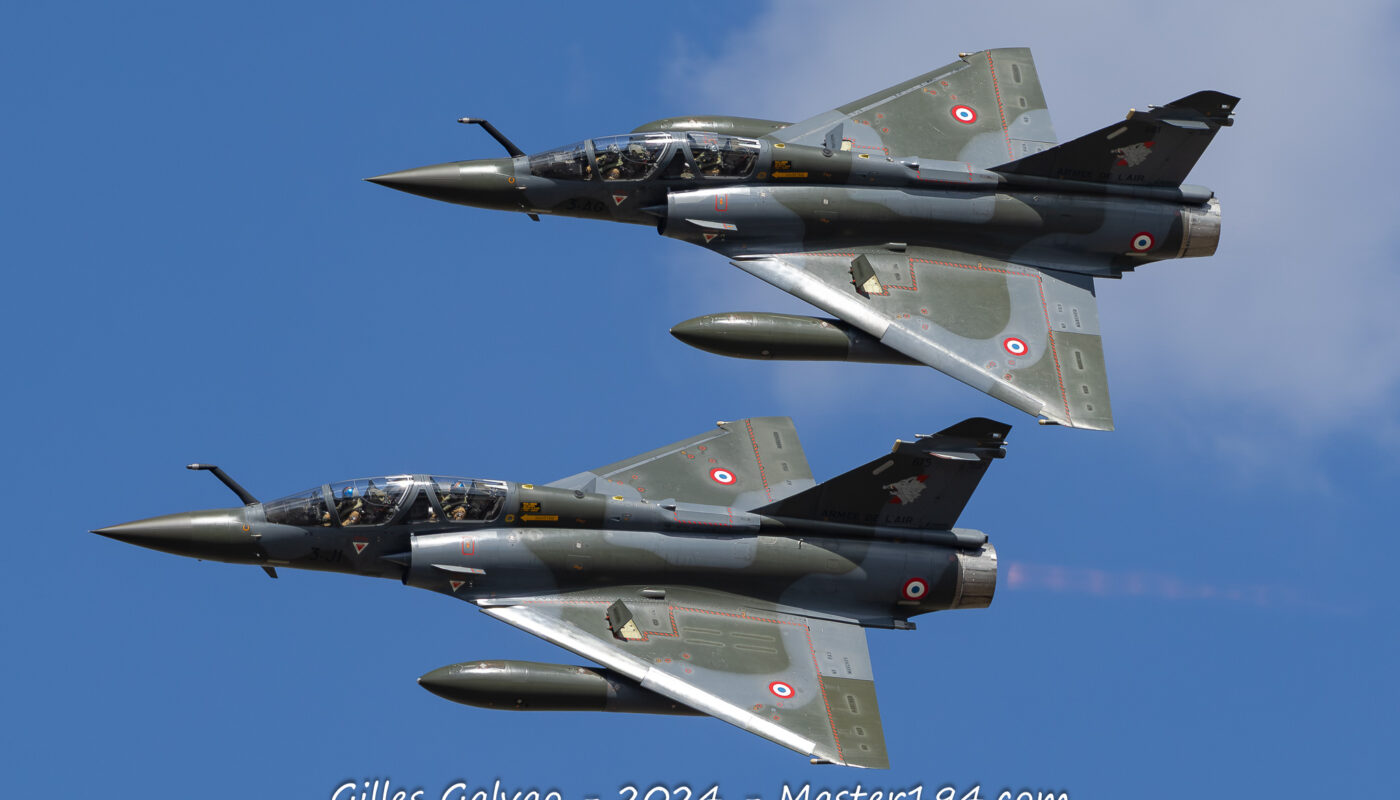
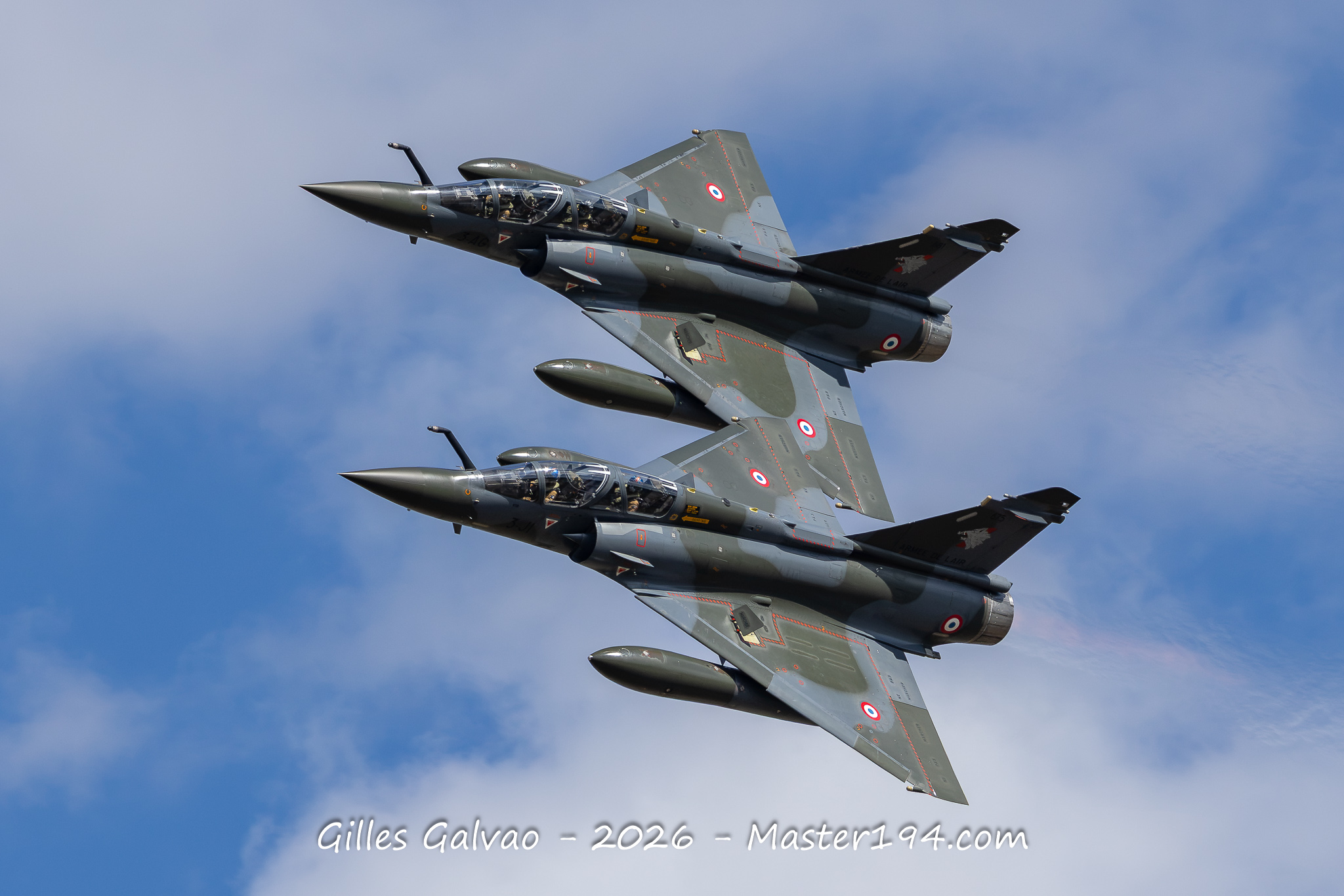
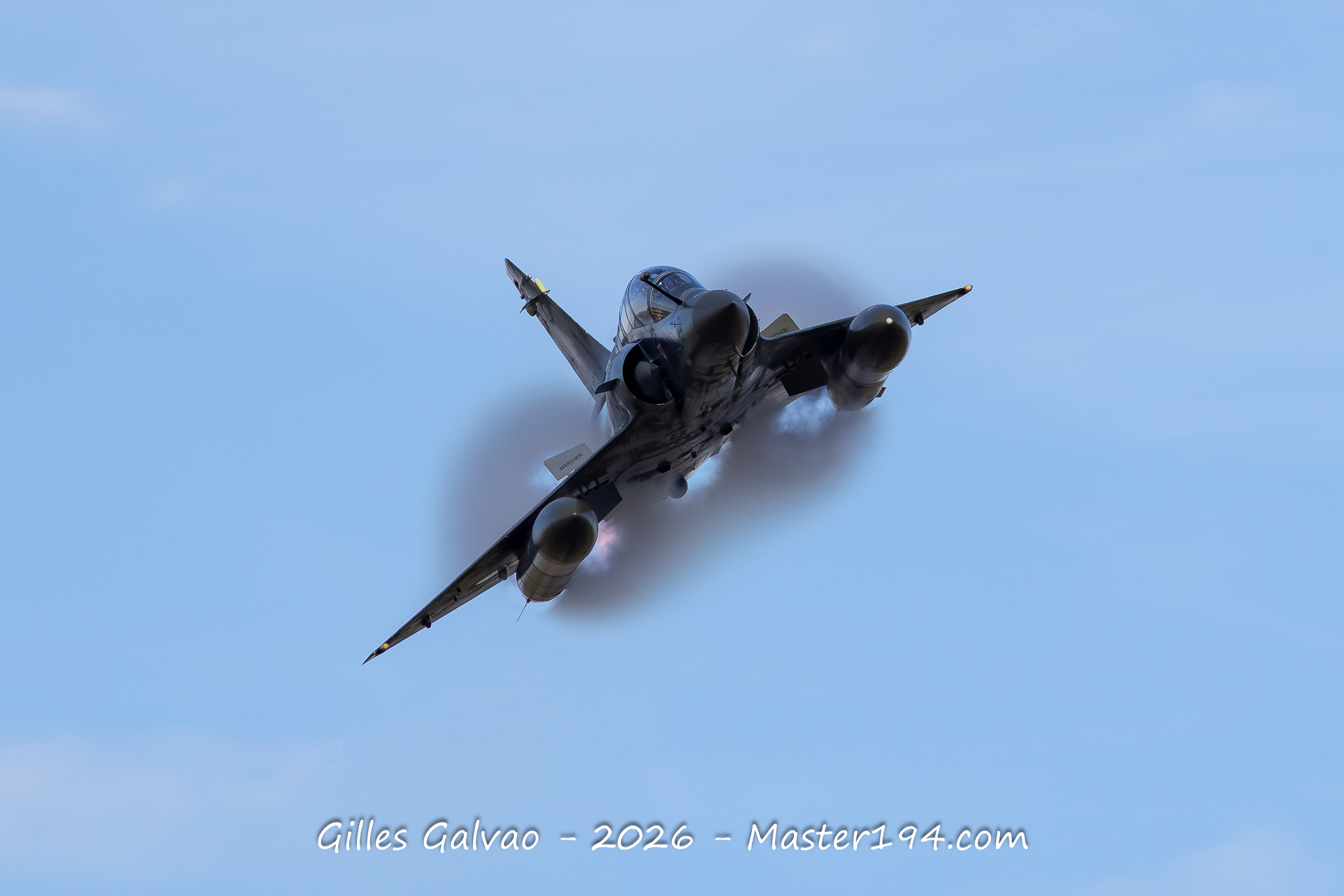
Heir to a long French tradition of strike and ground-attack operations, the Couteau Delta tactical display team represents one of the most distinctive aerial demonstrations in the French Air and Space Force (Armée de l’Air et de l’Espace). Operating two Mirage 2000D strike fighters, the team does not aim to perform traditional aerobatics; instead, its mission is to showcase the operational tactics and skills of the crews from the 3rd Fighter Wing (3e Escadre de chasse) based at Nancy-Ochey.
Flying in a two-ship Lead-Wingman configuration, Couteau Delta demonstrates the tactical scenarios encountered by strike fighter crews in combat: low-level penetration, simulated ground attack, show of force, defensive breaks, split maneuvers, and rejoins. The value of the demonstration lies as much in the individual trajectories of the two Mirage 2000Ds as in the tight, continuous coordination maintained between the two aircraft.
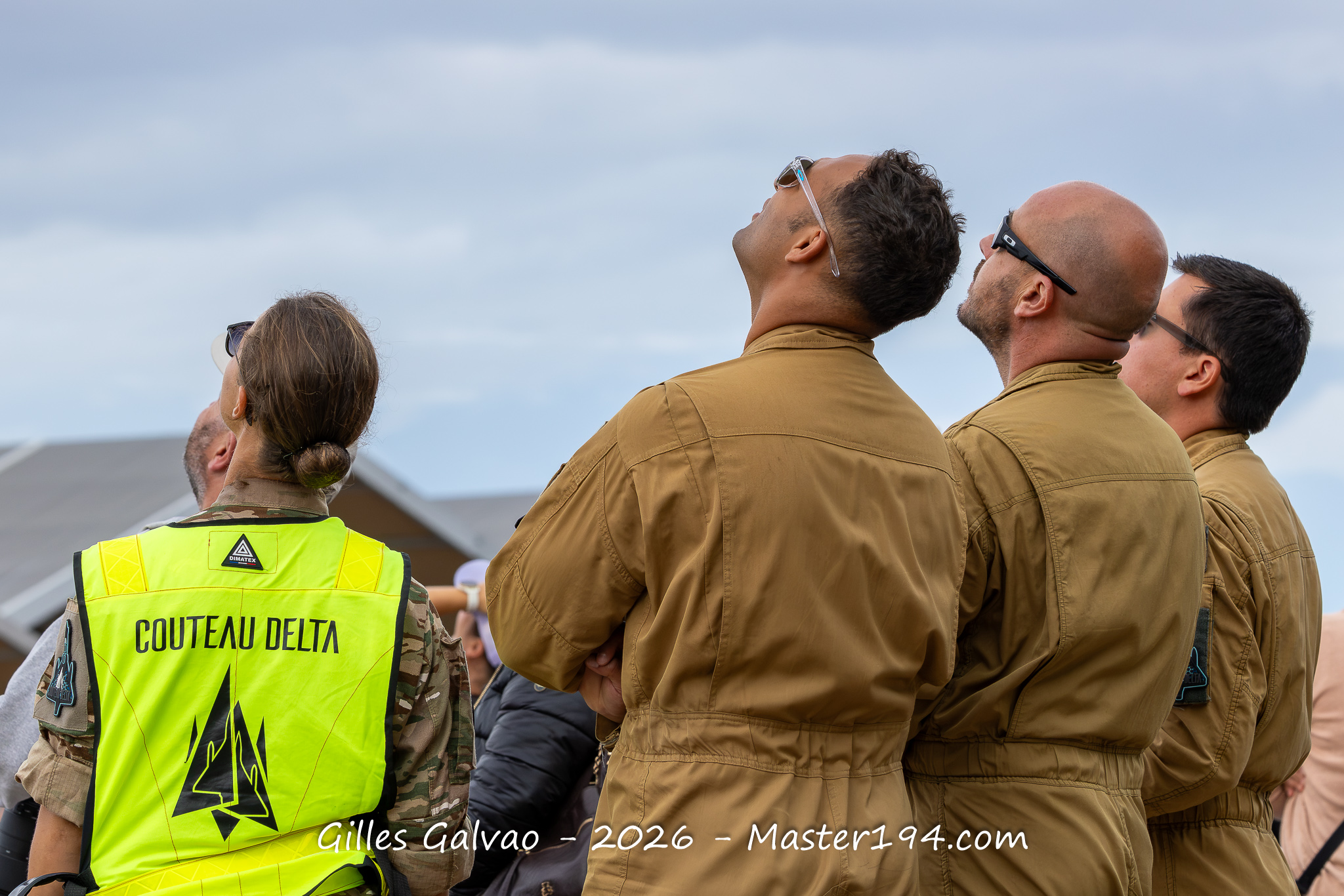
This year, I had the opportunity to see them perform at both Air Legend and the BA 113 Saint-Dizier Open House. It was a great occasion to speak directly with team members and learn more about this remarkable display.
History and Legacy
The Legacy of the Ramex Delta
Tactical demonstrations featuring ground-attack fighters were long embodied by the Ramex Delta, a two-ship display team operating the Mirage 2000N from Fighter Squadron 2/4 (Escadron de chasse 2/4 “La Fayette”). Initially formed within EC 3/4 “Limousin”, the team continued its display operations under EC 2/4 “La Fayette” following the squadron’s relocation from Luxeuil to Istres Air Base in 2011.
The Ramex Delta completed their final display season in 2016, as EC 2/4 began its transition to the Rafale B and the nuclear-strike Mirage 2000N approached the end of its operational service life.

The Birth of Couteau Delta
It was in 2017 that the torch was officially passed at Air Base 133 in Nancy-Ochey. Under the new designation Couteau Delta, aircrews operating the Mirage 2000D took over to demonstrate the interdiction and close air support (CAS) capabilities of French fighter aviation to the public.
To learn more about the history, origin, and other aerial displays, feel free to explore our dedicated feature on Ambassadors and Aerial Displays: The Art of Flight Demonstration.
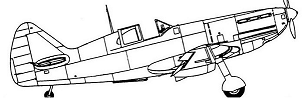
The name Couteau Delta combines two key references to the identity of Nancy-Ochey and the Mirage family. “Couteau“ (Dagger) revives a callsign historically associated with the airbase and previously used by a display team flying the Mirage III. “Delta“ naturally refers to the delta wing planform of the Mirage 2000 while maintaining a symbolic connection to the Ramex Delta.
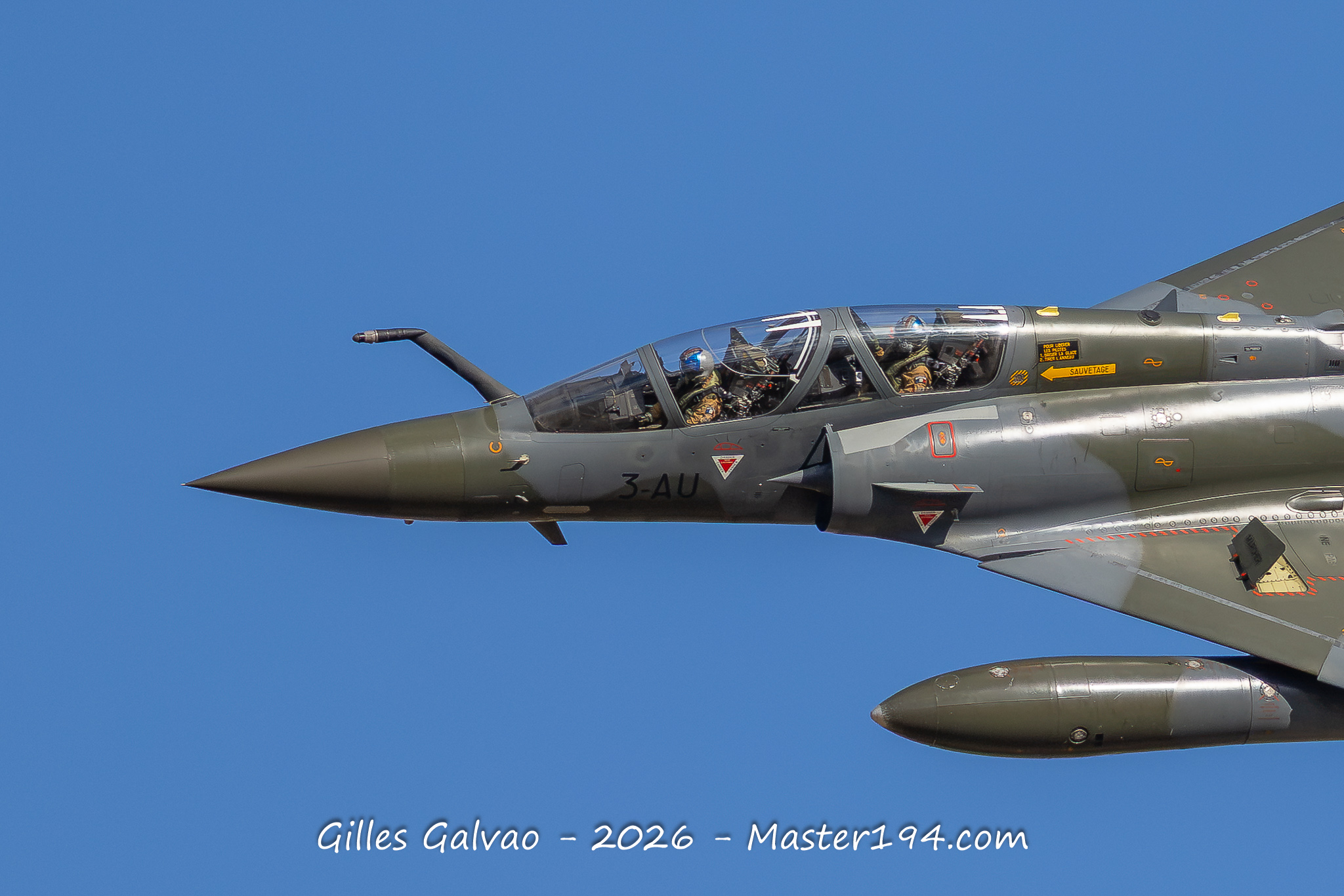
The Concept: A Tactical Display, Not an Aerobatic Routine
The philosophy behind Couteau Delta differs radically from traditional aerobatic displays or solo performances focused purely on pushing the aircraft’s envelope to its absolute limits. Instead, its objective is to demonstrate the real-world operational capabilities of frontline combat squadrons to the general public.
Operating in a two-ship Lead–Wingman formation, Couteau Delta showcases various phases of a tactical mission: low-level penetration, simulated ground attack, defensive breaks, splits, and rejoins. The true interest of the demonstration lies as much in the individual flightpaths of the two Mirage 2000Ds as in the close tactical coordination between them.
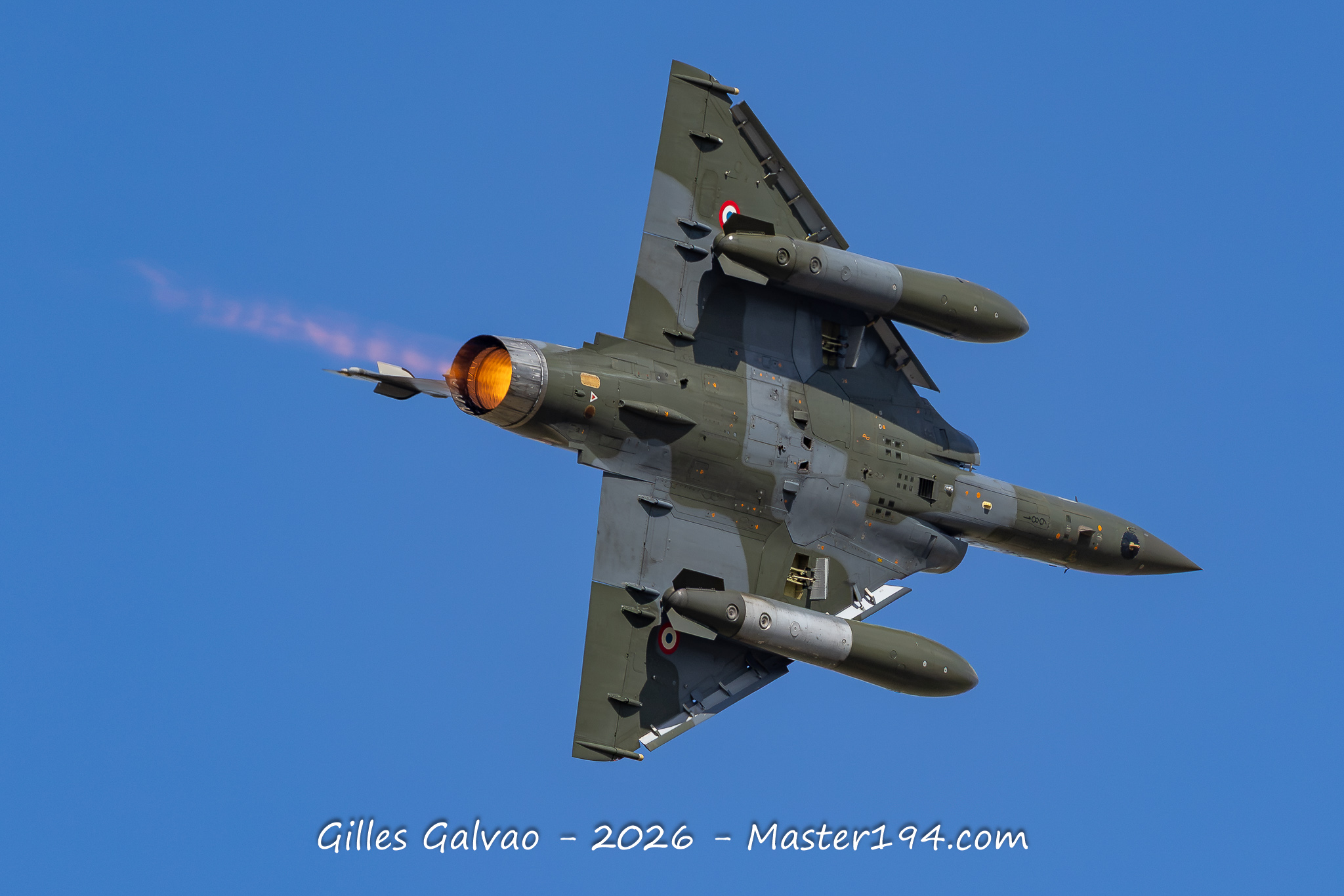
The display aircraft, the Mirage 2000D, remains a cornerstone of French conventional strike capabilities. The aircraft flown by the Couteau Delta tactical display team are drawn directly from the operational fleet of the 3e Escadre de Chasse. For the 2026 season, the demonstration notably features mid-life upgraded Mirage 2000D RMV (Rénovation Mi-Vie) aircraft. These are not dedicated airshow birds: the airframes used by the team belong to active operational units based at Nancy-Ochey.
Operational aircraft, not dedicated display jets
Unlike some demonstration teams that operate specially assigned aircraft, Couteau Delta flies Mirage 2000D fighters drawn directly from the operational fleet of the 3e Escadre de Chasse. These airframes are not reserved for the display team: they maintain their standard frontline commitments within combat squadrons. This setup highlights the unique nature of the display—behind those few minutes inside the display box, the four crew members remain, above all, active operational personnel based at Nancy-Ochey.
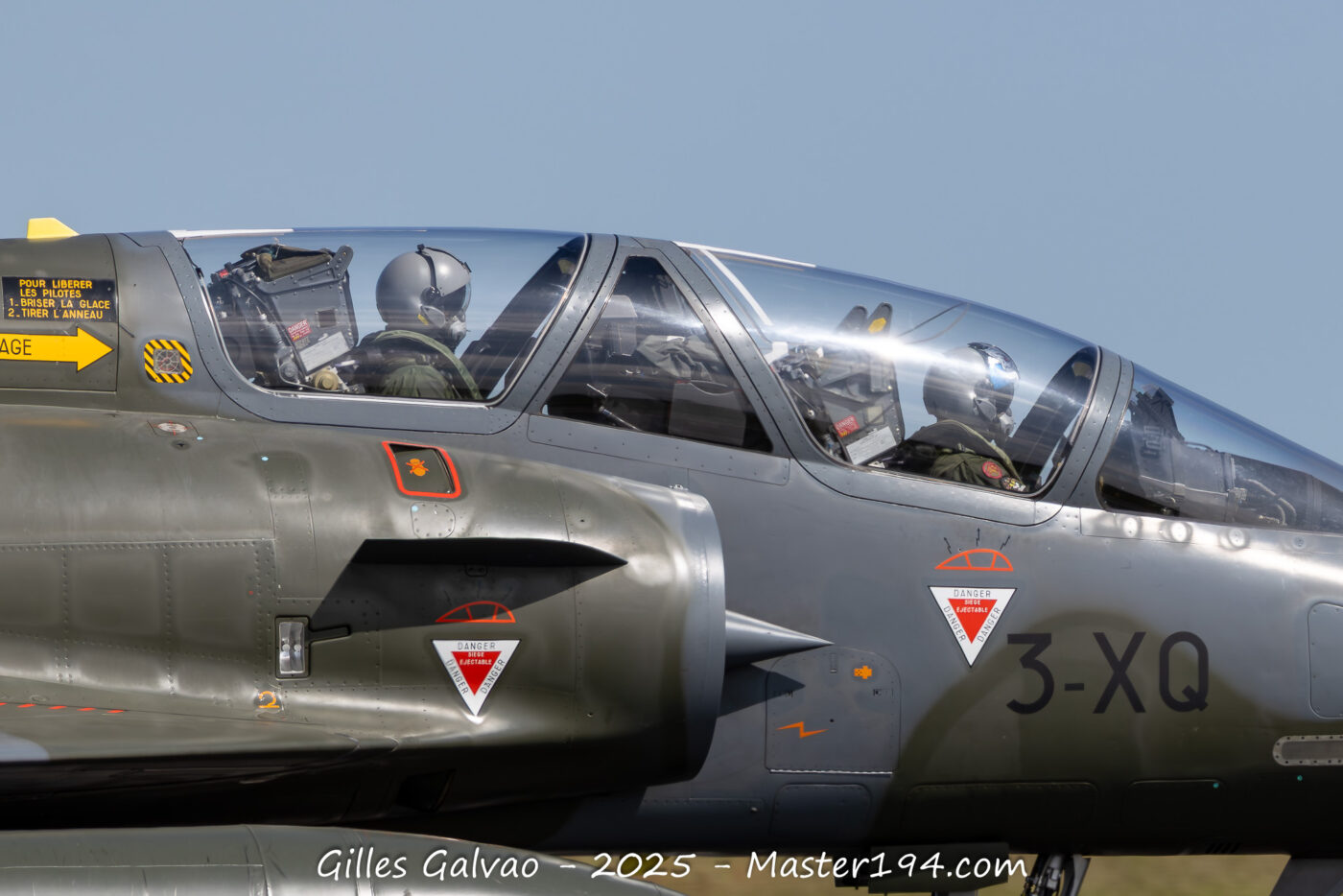
Aircrew Composition and Ground Support: Behind the Scenes with Couteau Delta
The execution of the display relies on an extremely rigorous human and technical structure, seamlessly divided between the aircrew in the cockpit and ground support personnel
Aircrew (PN): A Season-Long Commitment
Joining the Couteau Delta tactical display team is, first and foremost, a voluntary process. Aircrew members from the squadrons based at Air Base 133 Nancy-Ochey individually submit their application files. Crew pairings are not established prior to applying; instead, they are formed once the candidates have been selected.
This setup relies heavily on standardized training and working procedures across the fleet, ensuring each member can operate seamlessly with any other selected crewmate. Nevertheless, trust remains fundamental—particularly in an aerial demonstration where precise trajectories and tight coordination between the two aircraft leave zero margin for error.
Beyond the thrill of the display itself, motivations are varied. For the aircrew, it offers the technical challenge of flying an airshow routine, alongside the opportunity to engage with the public and promote the French Air and Space Force (Armée de l’Air et de l’Espace).
Selection entails a heavy personal commitment alongside standard operational duties. Throughout the display season, selected personnel must balance training flights and airshow appearances with their ongoing responsibilities within their frontline combat squadrons.
The team fields two aircraft in the display, backed by a reserve (spare) aircraft:
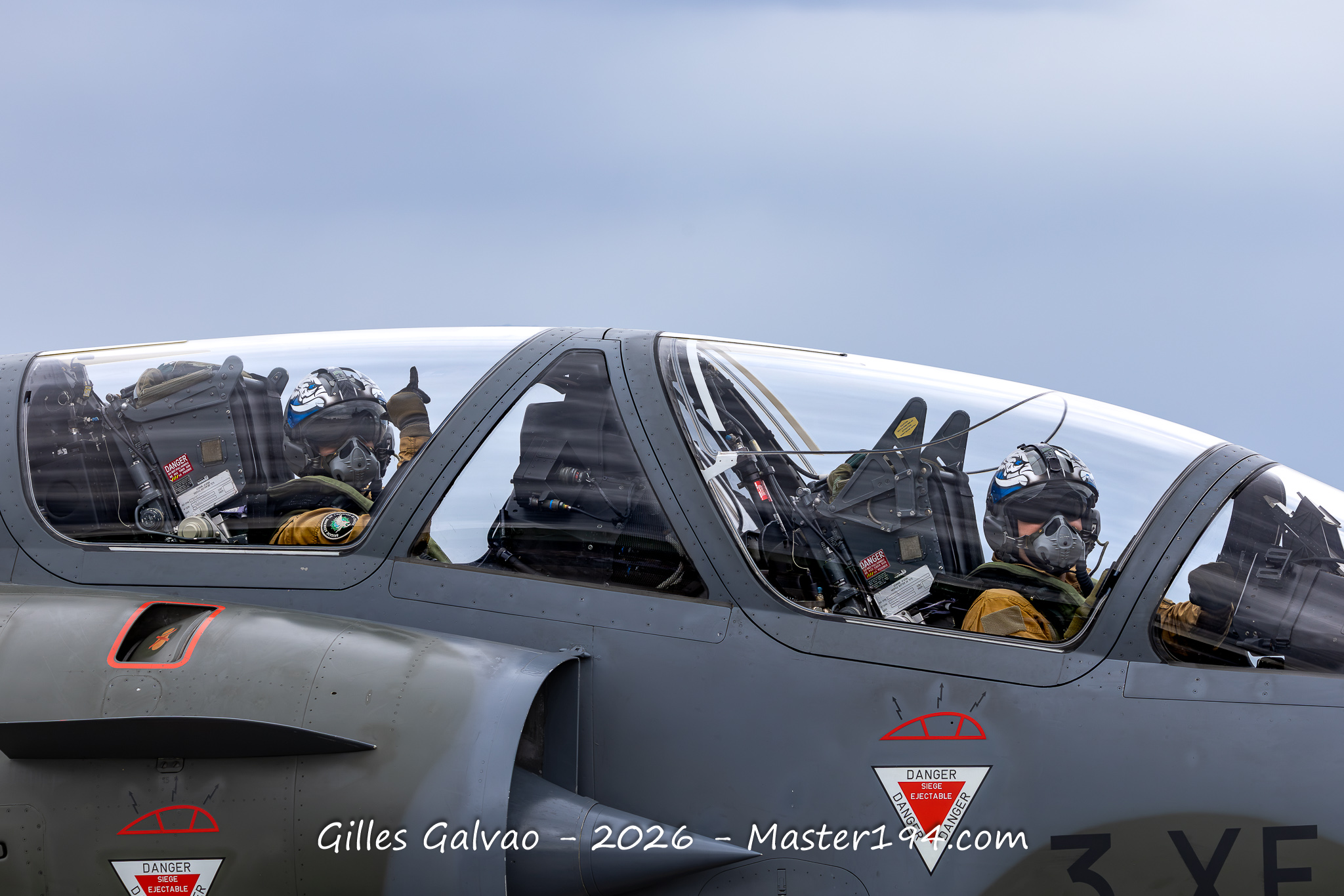
- The Lead Crew: Composed of Lead Pilot “Couac²” and Lead Weapons Systems Officer (WSO / NOSA) “Chris”. They manage overall trajectory, timing, and flight parameters throughout the display routine.
- The Wingman Crew: Composed of Wingman Pilot “Toolong” and Wingman WSO “Meg”. The wingman’s role is vital: far from simply trailing the leader, they form the second element of a tactical pair. Relative positions, formation changes, splits, and head-on passes give the demonstration a distinct tactical dimension directly inspired by two-ship operational doctrine.
- The Coach and Spare Management: The coach acts as the team’s third set of eyes during the routine. Stationed on the ground, the coach knows the display by heart and monitors its progress with a level of detachment impossible for crews locked into their flight parameters. Their primary duty is safety oversight: monitoring surrounding airspace, tracking potential bird strikes or unauthorized drones along planned flight paths, assessing weather changes, or reporting any factor that could impact the flight. In the event of a mechanical failure or emergency, the coach provides real-time advice to assist the aircrew.
The role continues after touchdown, as the coach actively participates in the post-flight debriefing, offering essential ground-based feedback to refine future performances.
During transit flights to airshow sites, the coach flies in the back seat of the spare aircraft. Because the Mirage 2000D strictly requires a qualified aircrew member in the rear cockpit to conduct the flight, ferry missions with the spare always demand a second rated aircrew member.
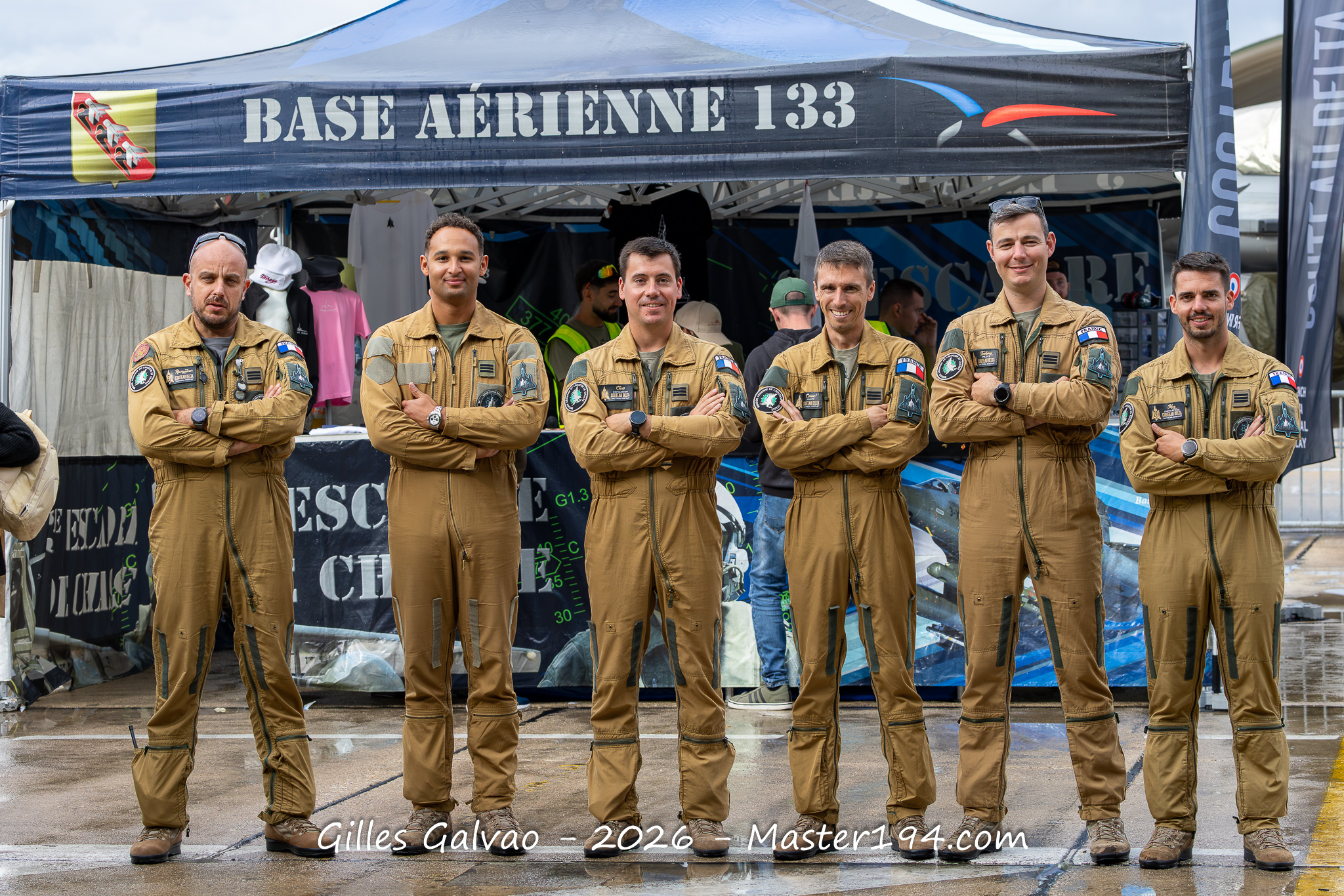
Note: The 2026 team lineup underwent a mid-season adjustment. The initial coach was selected to join the Patrouille de France, requiring a replacement during the display campaign.
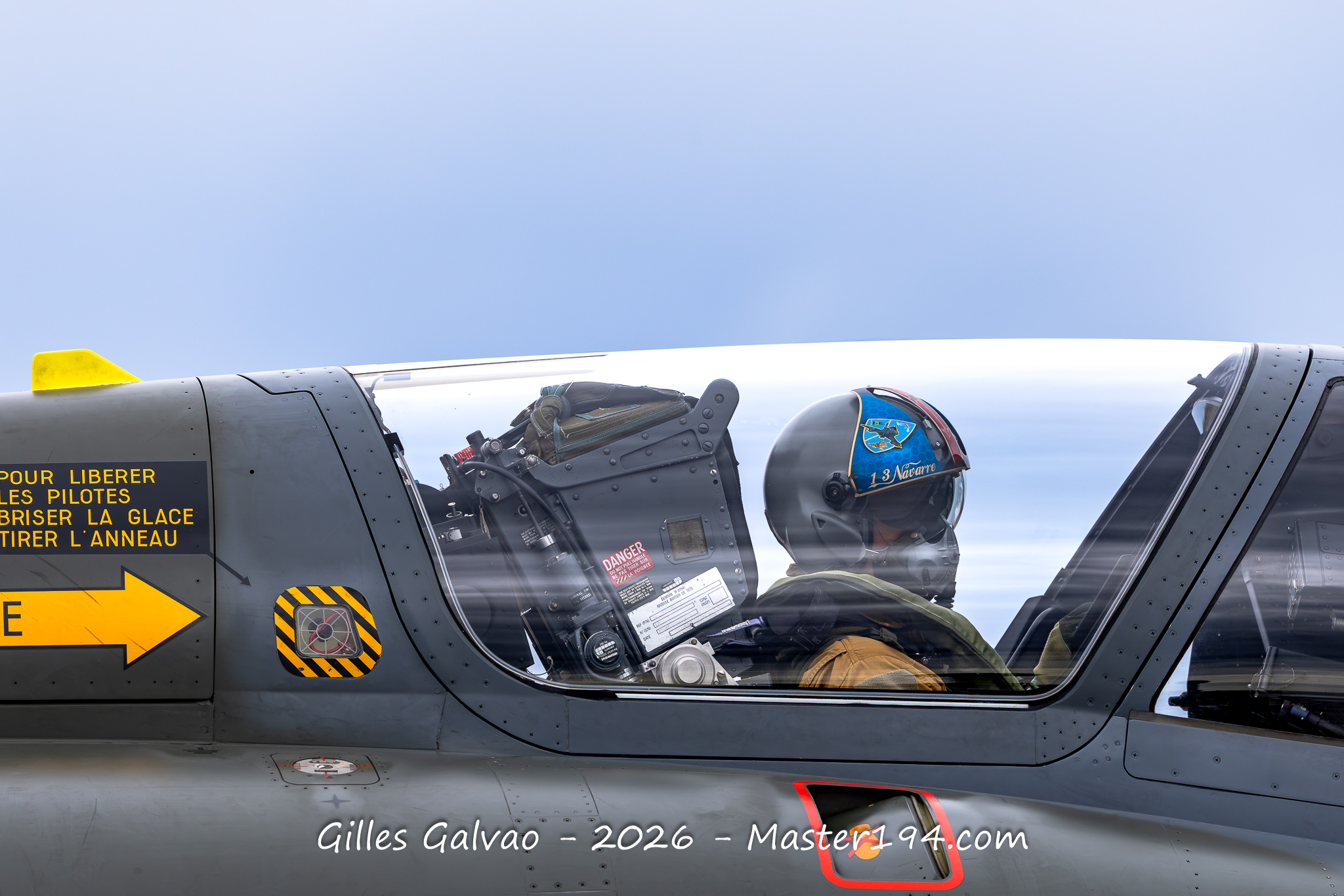
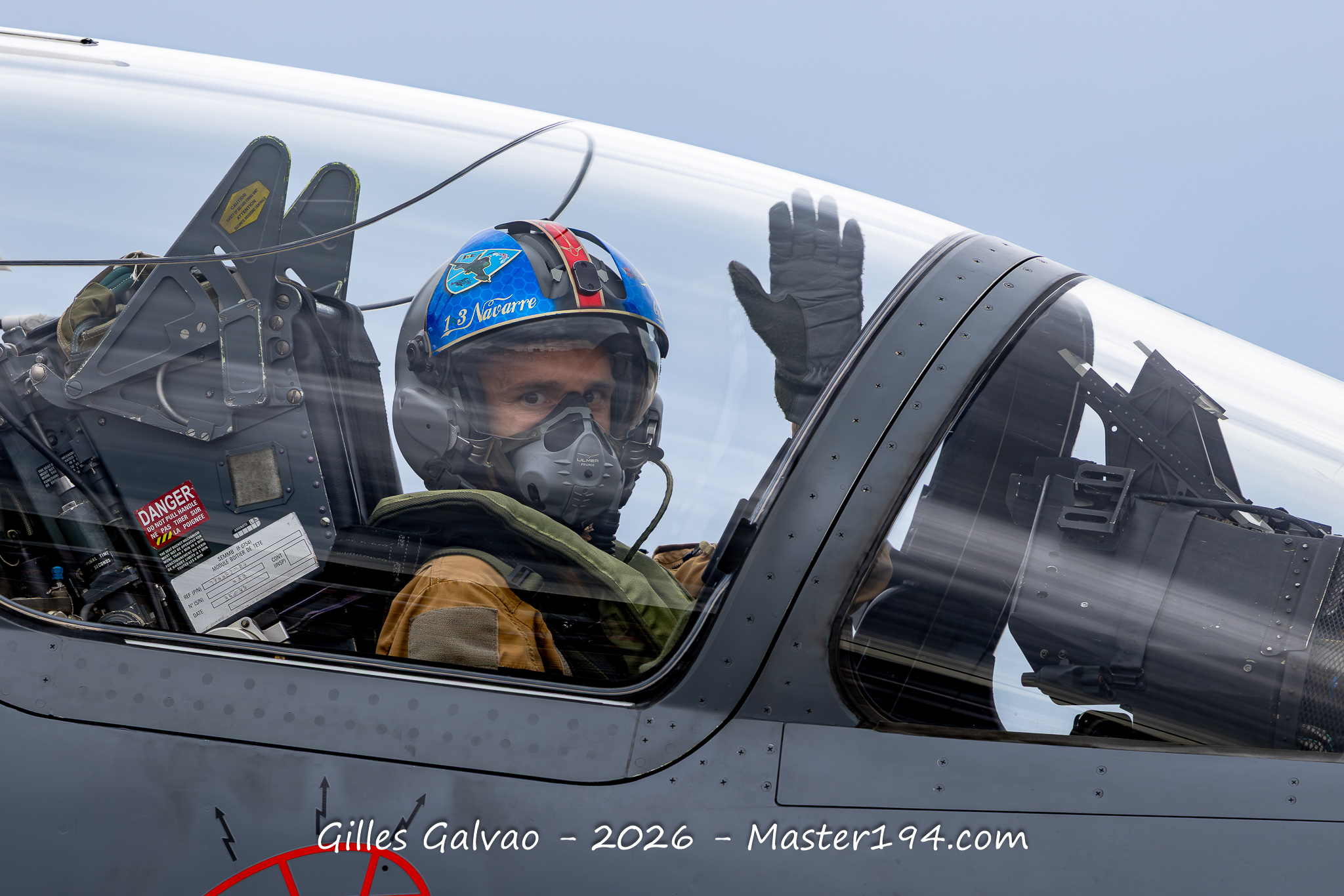
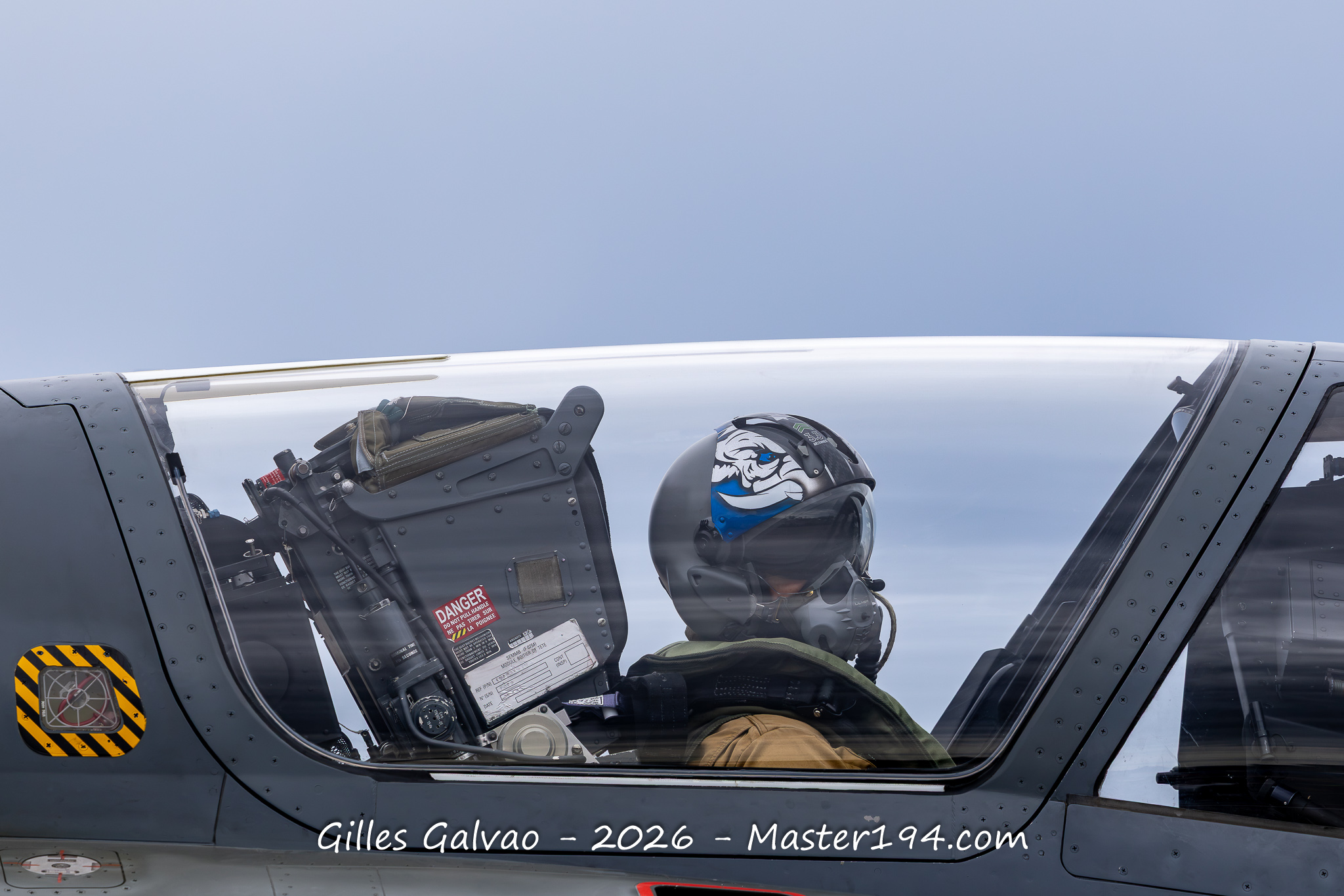
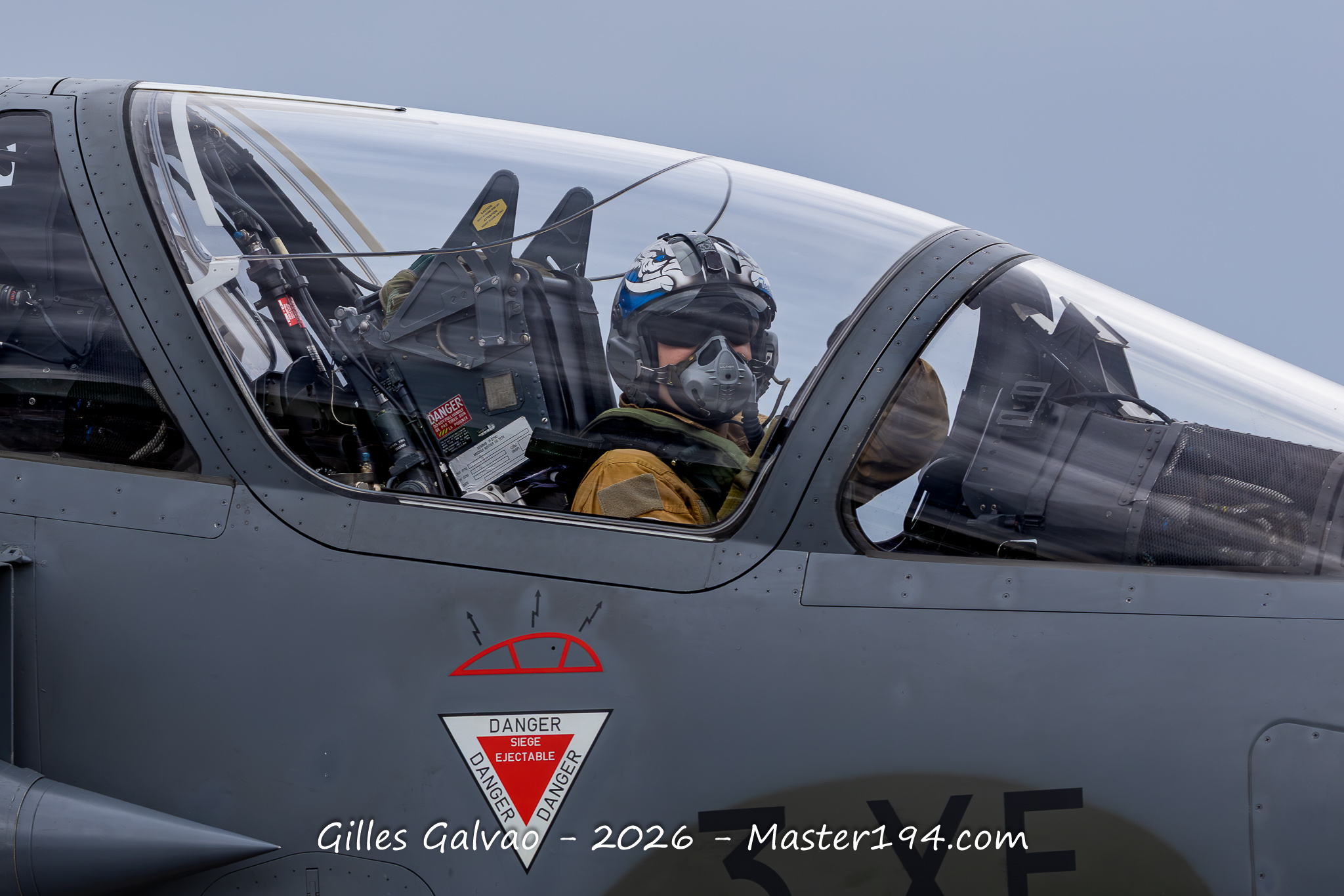
The WSO: A Fully-Fledged Crewmember
Before addressing their role in the Couteau Delta demonstration, it is worth recalling that the WSO (Weapons Systems Officer / NOSA) is an essential, full-fledged member of the Mirage 2000D operational crew. Seated in the rear cockpit, they participate directly in mission planning and execution, navigation, systems management, and weapons employment.
The key characteristic of display flying lies in workload sharing between both crew members. While the pilot focuses on immediate trajectory and flight parameters, the WSO monitors medium-term sequence management. They can prompt the pilot on upcoming maneuvers, specific parameters, or display cues. This allows the pilot to maintain focus without looking down at kneeboard notes.
This setup perfectly illustrates crew complementarity: each has a dedicated area of focus while working continuously on the same flight sequence. In a demonstration where flight paths are tightly timed and coordinated, this task distribution directly ensures overall precision.
Ground Support Crew: Roster Management and Rotations
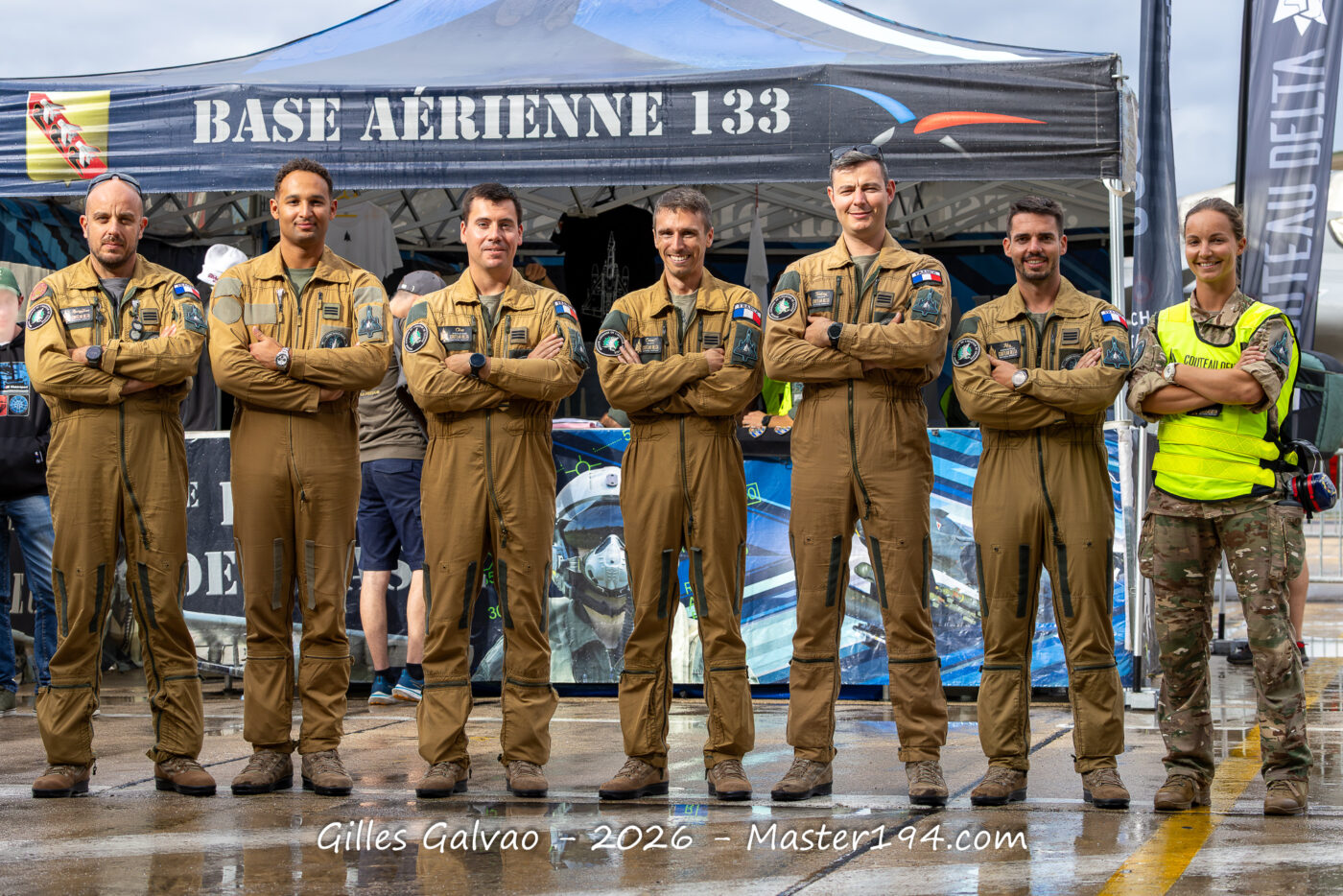
Essential to every airshow demonstration, the ground crew is managed by the team’s Chief Engineer, Malo. She organizes the support chain and defines detachment compositions for off-base deployments.
Chief Engineer Malo oversees ground ops and coordinates detachment schedules with aircrew display slots. While team mechanics rotate between deployments to involve as many personnel as possible, a core framework remains fixed—including a Lead Armorer (“pétaf”), a Lead Avionics Technician, and a Lead Crew Chief (Vecteur). This structure allows various unit specialists to participate while retaining key focal points to guarantee mission success.
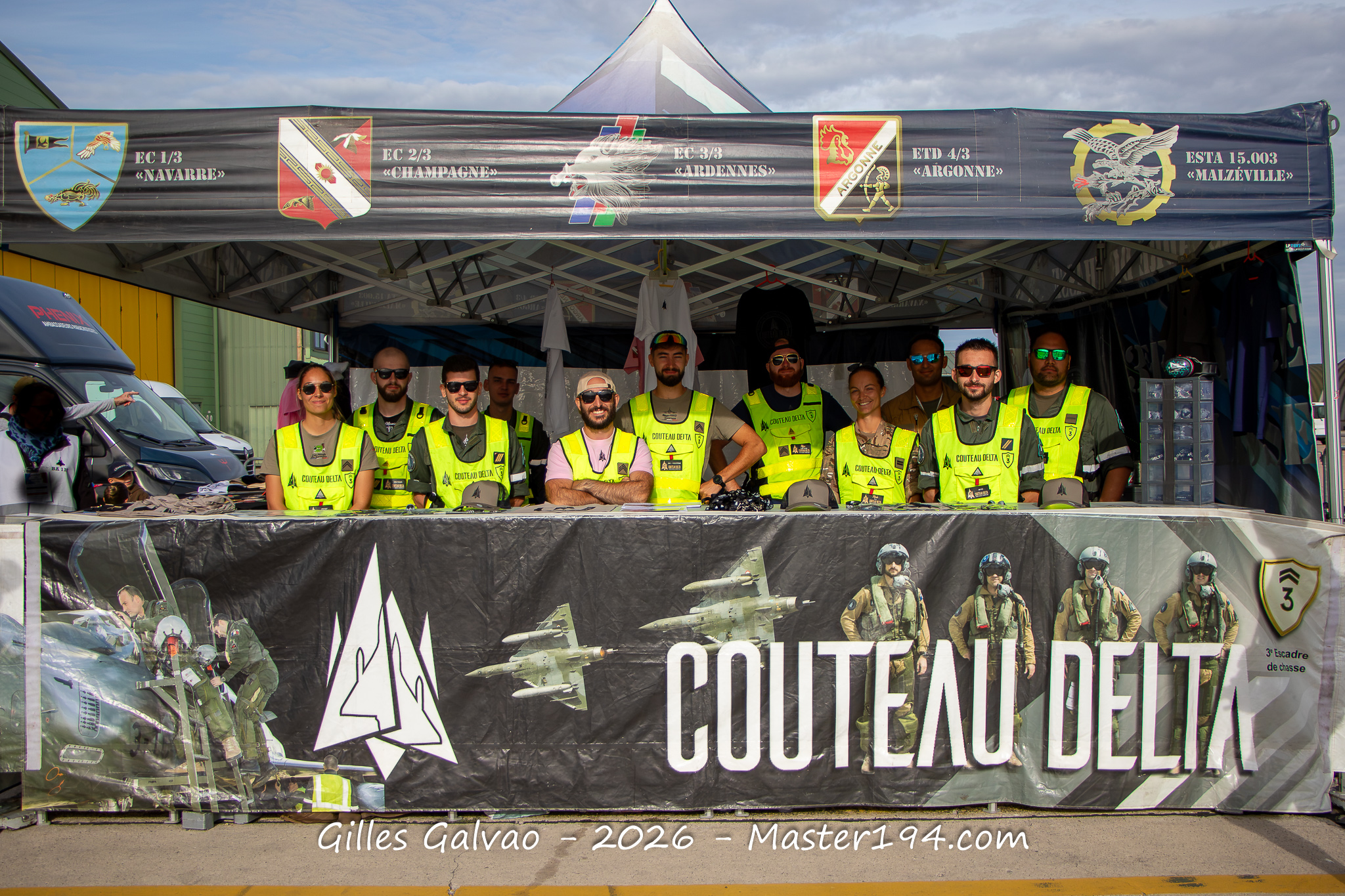
The 2026 ground support detachment comprises:
- Two Avionics Specialists: Responsible for the electrical, electronic, and avionics systems of the Mirage 2000D and their operational readiness. One of them serves as the Lead Avionics Technician, maintaining a fixed focal point within the detachment.
- Four Cell/Engine Specialists (Vecteurs) and Crew Chiefs: Including one Flightline Chief (Chef de ligne). They handle aircraft departure and recovery ops. The Lead Crew Chief (Chef vecteur), who also acts as Flightline Chief, is responsible for “signing off” (vendre) the aircraft to the aircrew—briefing them on airframe status and systems readiness before taxiing.
- One Propulsion Specialist: Specialized in the Snecma M53 turbofan engine and associated maintenance procedures.
- Two Ordnance Specialists (“pétaf”): Even when flying unarmed display routines, explosive items remain active on board—specifically for the ejection seat systems. One serves as Lead Armorer (Chef pétaf), representing a permanent technical reference for the team.
- Two Oxygen Systems Specialists: Handling liquid oxygen servicing for environmental control and breathing systems. While the Mirage 2000D is equipped with an On-Board Oxygen Generating System (OBOGS / convertisseur embarqué), dedicated support procedures remain mandatory.
This roster brings together eleven mechanics and technical specialists, coordinated by Chief Engineer Malo to lead ground ops.
A Two-Day Airshow… and Several Days of Hard Work
The mission of Malo and her ground support detachment naturally extends far beyond the few minutes of the aerial display itself. For a two-day public event, the team is typically deployed on-site for four days or more.
The deployment begins with transit flights for the aircraft, transport for the ground crew, and setting up at the host base. This is followed by aircraft turnarounds, pre-flight checks, rehearsal flights, and display area setup—alongside assembling the official team booth, where the public can meet the crew and purchase official Couteau Delta merchandise.
During my visit to Saint-Dizier, I naturally picked up a few souvenirs! Although the physical booth is no longer on-site, the official online store remains accessible online:
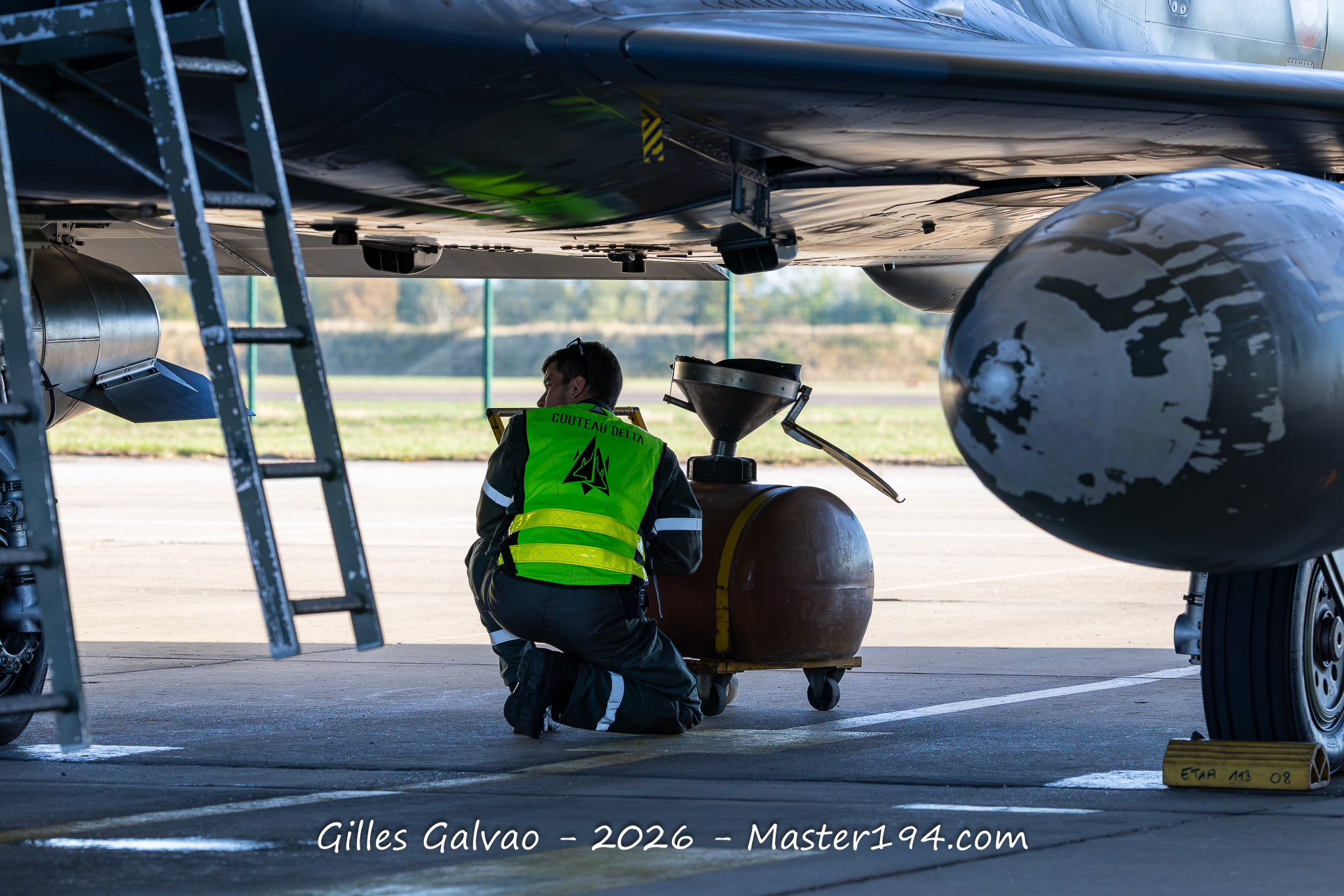
During airshow days, the ground crew must simultaneously maintain the aircraft and prepare them for each display sortie. Once the crowds leave, the work is far from over: the display setup must be dismantled, aircraft readied for departure, and return ferry flights managed.
This operational reality was particularly evident when I passed the team by bus on Monday around 12:15 PM. All aircraft had already departed, and the long display weekend was officially over. Yet, the mechanics were still hard at work, addressing a technical issue on one of the three airframes deployed for the event.
This scene perfectly summarizes the reality of a Couteau Delta detachment and the daily life of a combat squadron: the aerial demonstration is merely the most visible part of their mission, anchored in a much longer chain of preparation, support, and maintenance.
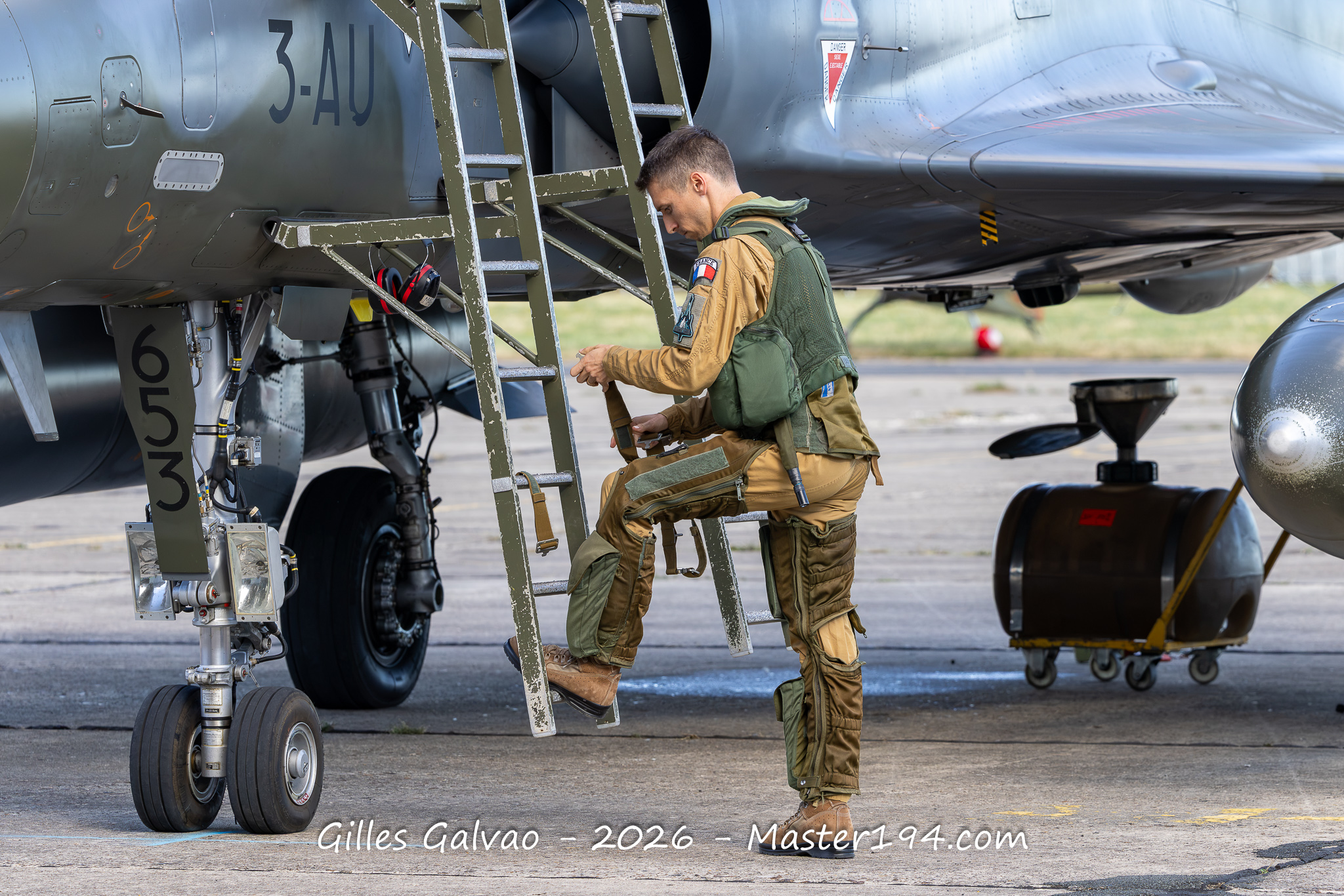
Pre-Flight: Final Checks
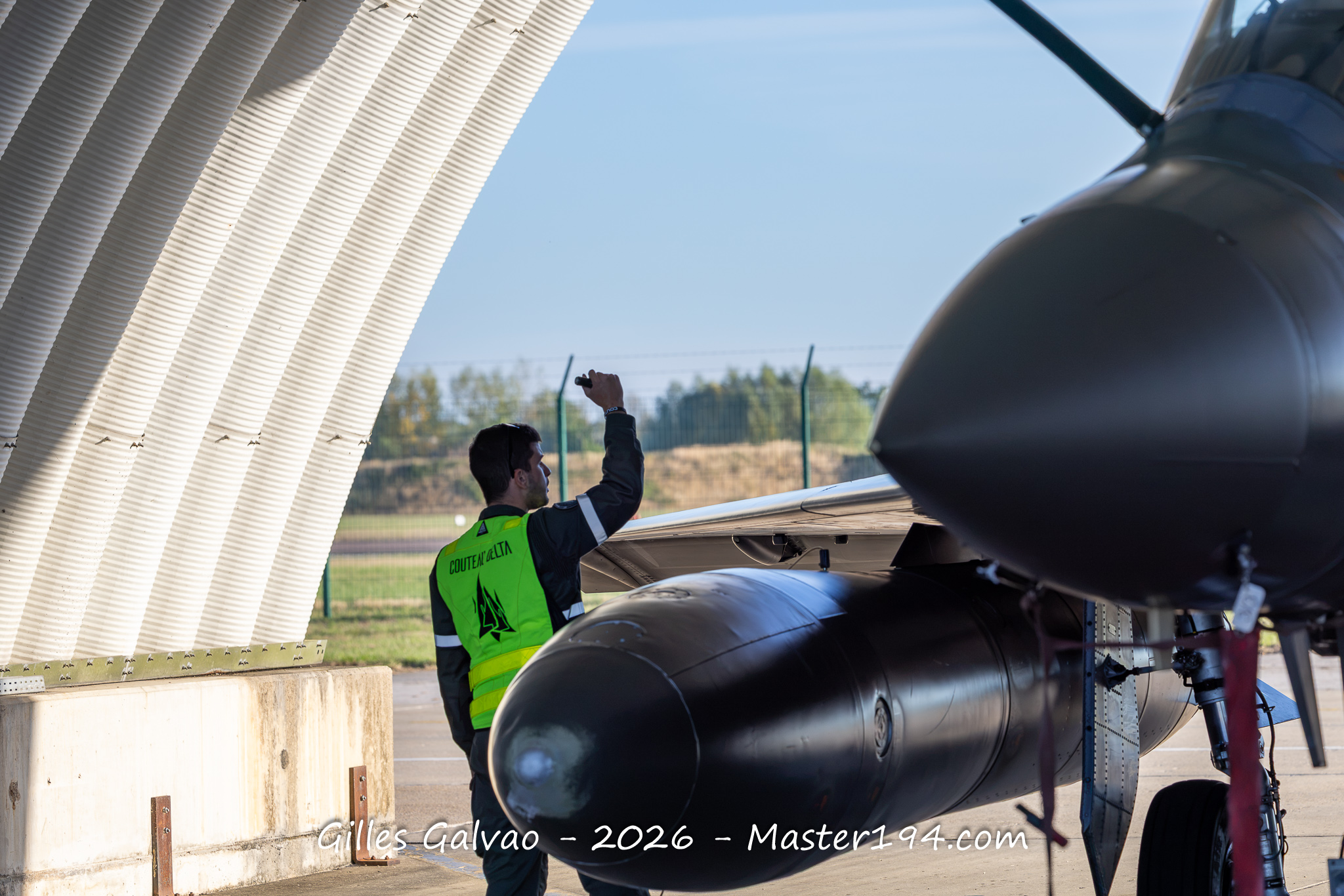
Before the Mirage 2000D takes off for its display, the ground crew executes all mandatory procedures to get the aircraft and crew flight-ready.
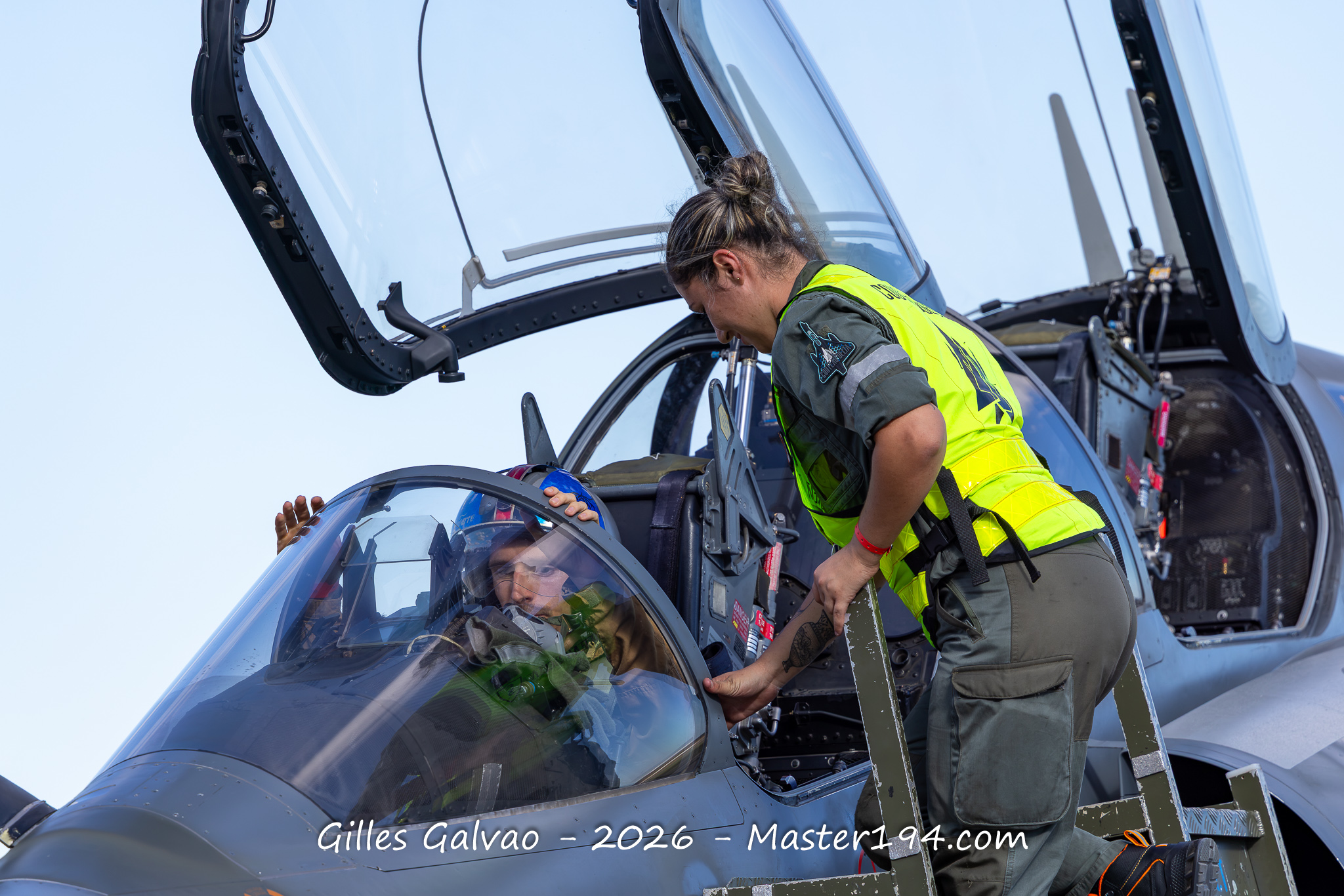
Following initial airframe preparation, tasks include exterior walkarounds, cockpit checks, crew station setup, and ejection seat arming/safety operations. The team then marshals the crew through engine start, performing final pre-taxi checks and ground signaling.
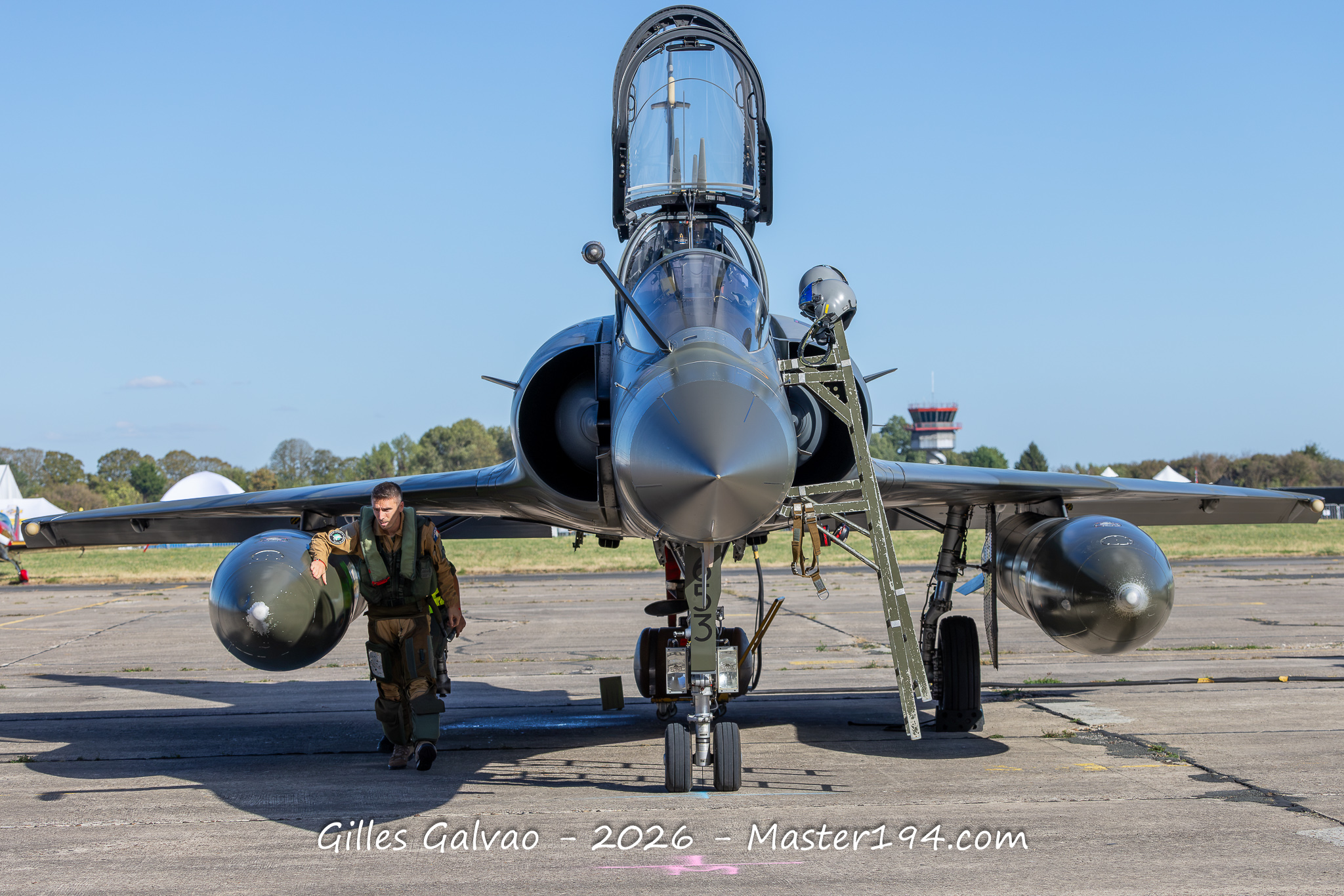
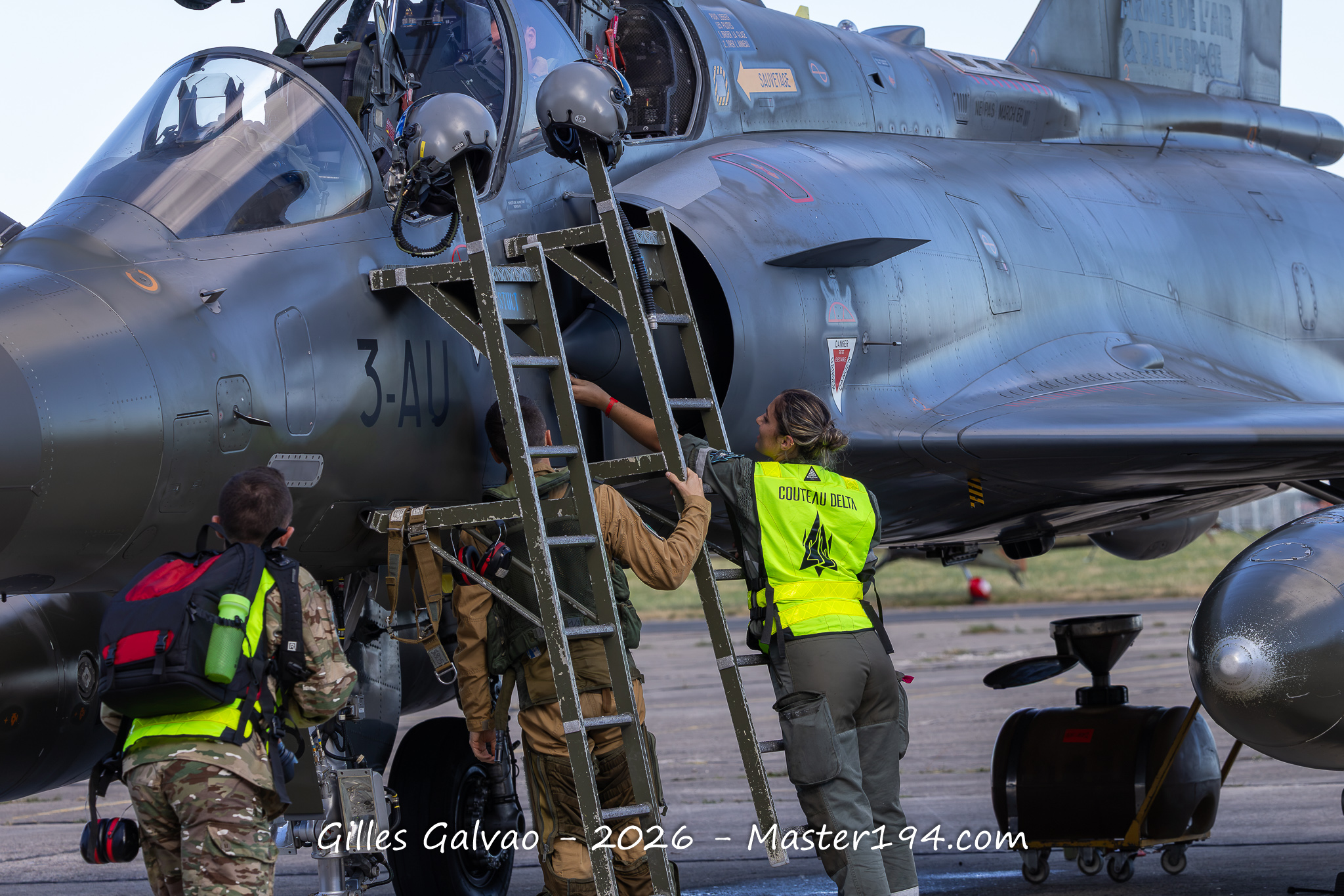
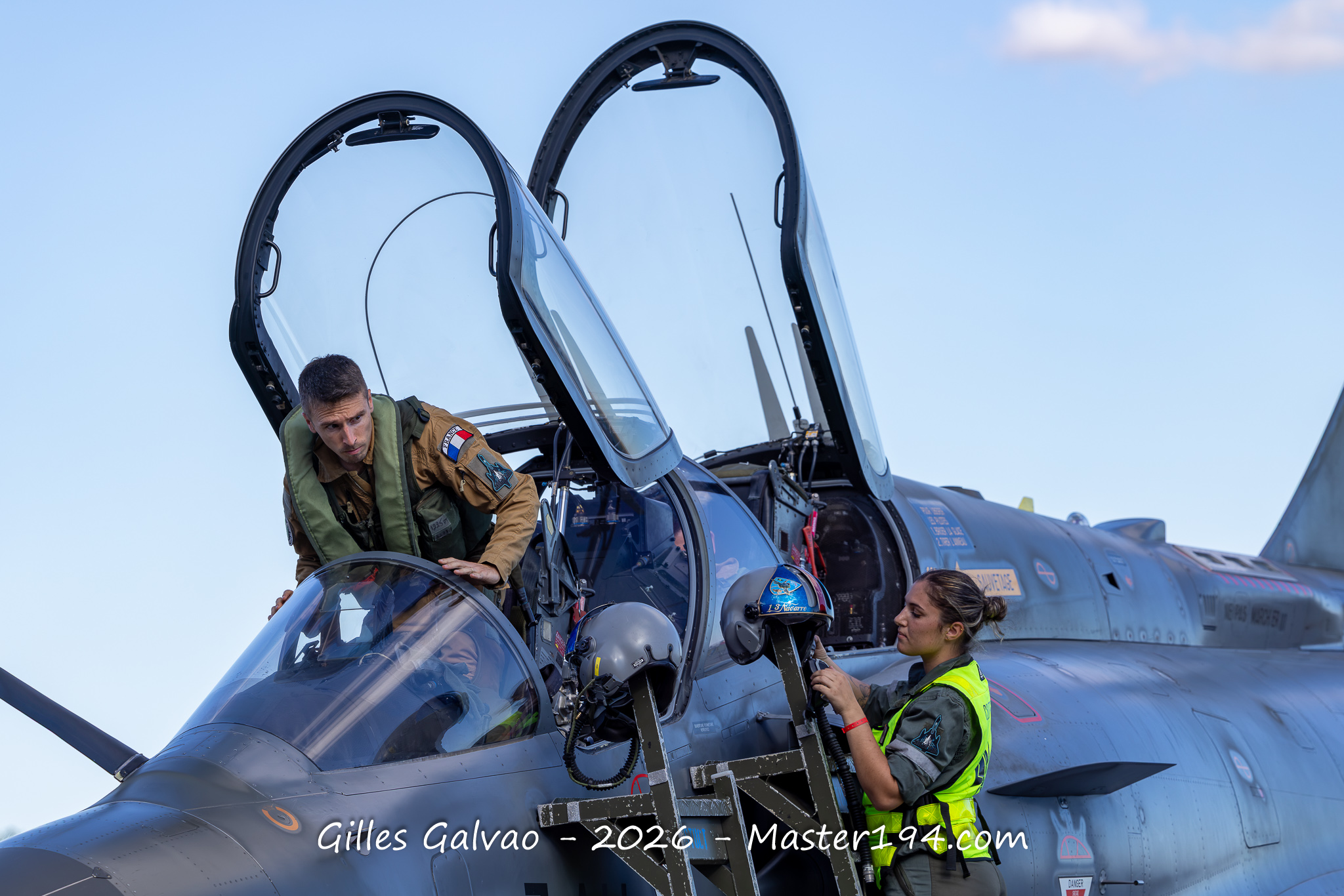
This pre-flight sequence, often unseen by the public, forms an integral part of the display. A Mirage 2000D does not transition directly from the ramp to the airshow box: every flight is preceded by a strict sequence of technical procedures and safety checks ensuring the crew reaches the display axis in optimal condition.
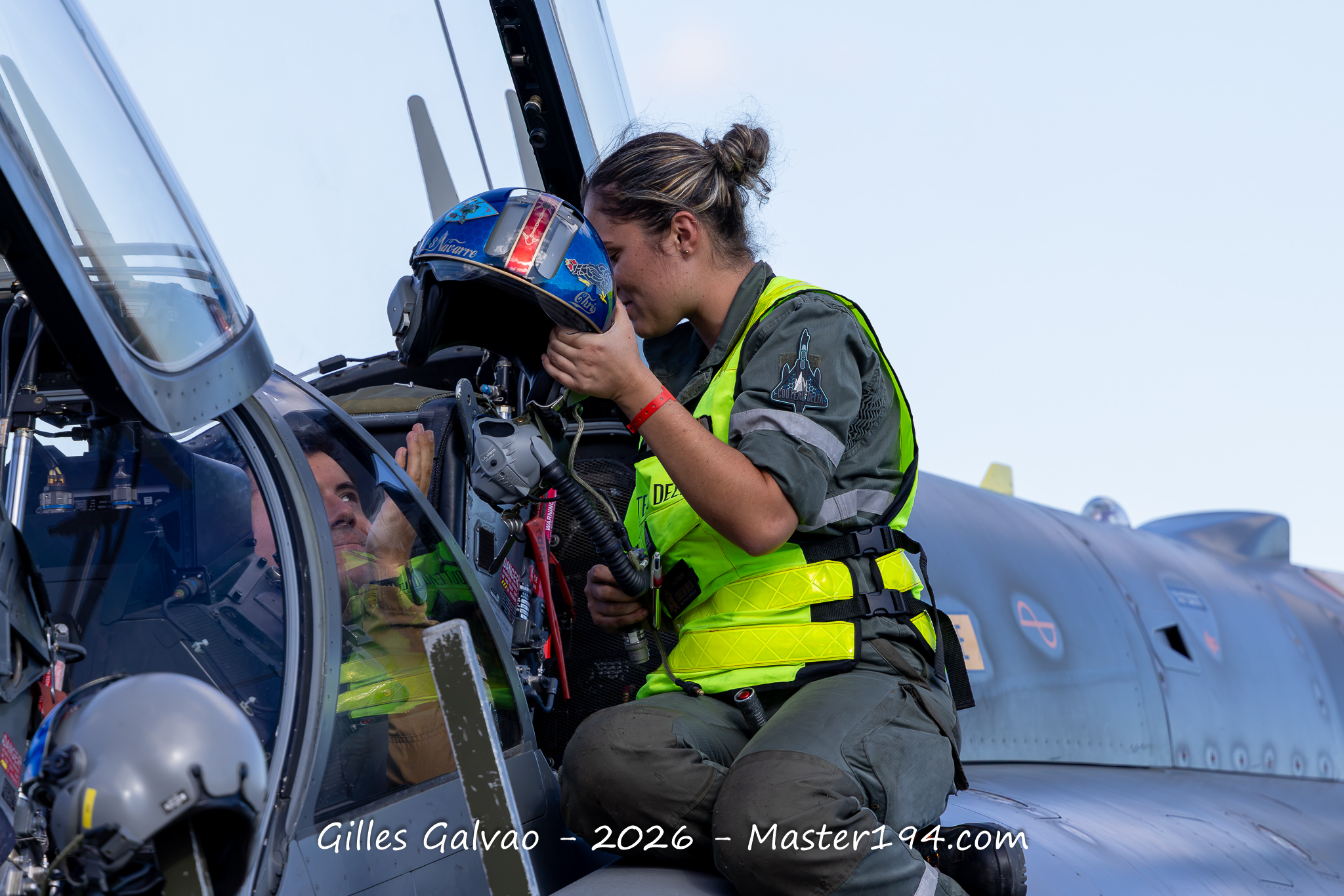
In the video below, this complete pre-flight sequence is captured in full prior to the display: Lead Mirage 2000D crew Couac² and Chris are marshaled on the ground by Maélys.
Watch in HD with full sound!
The Display Routine: A Demonstration Structured Like a Tactical Mission
The Couteau Delta display follows a precise timeline, where each maneuver and formation change is part of a thoroughly prepared and rehearsed sequence. Rather than a series of standalone aerobatic figures, the aircrews transition between configurations following a tactical logic that reflects the various phases of a strike mission.
Following takeoff, the two Mirage 2000Ds join up before entering the display sequence proper.
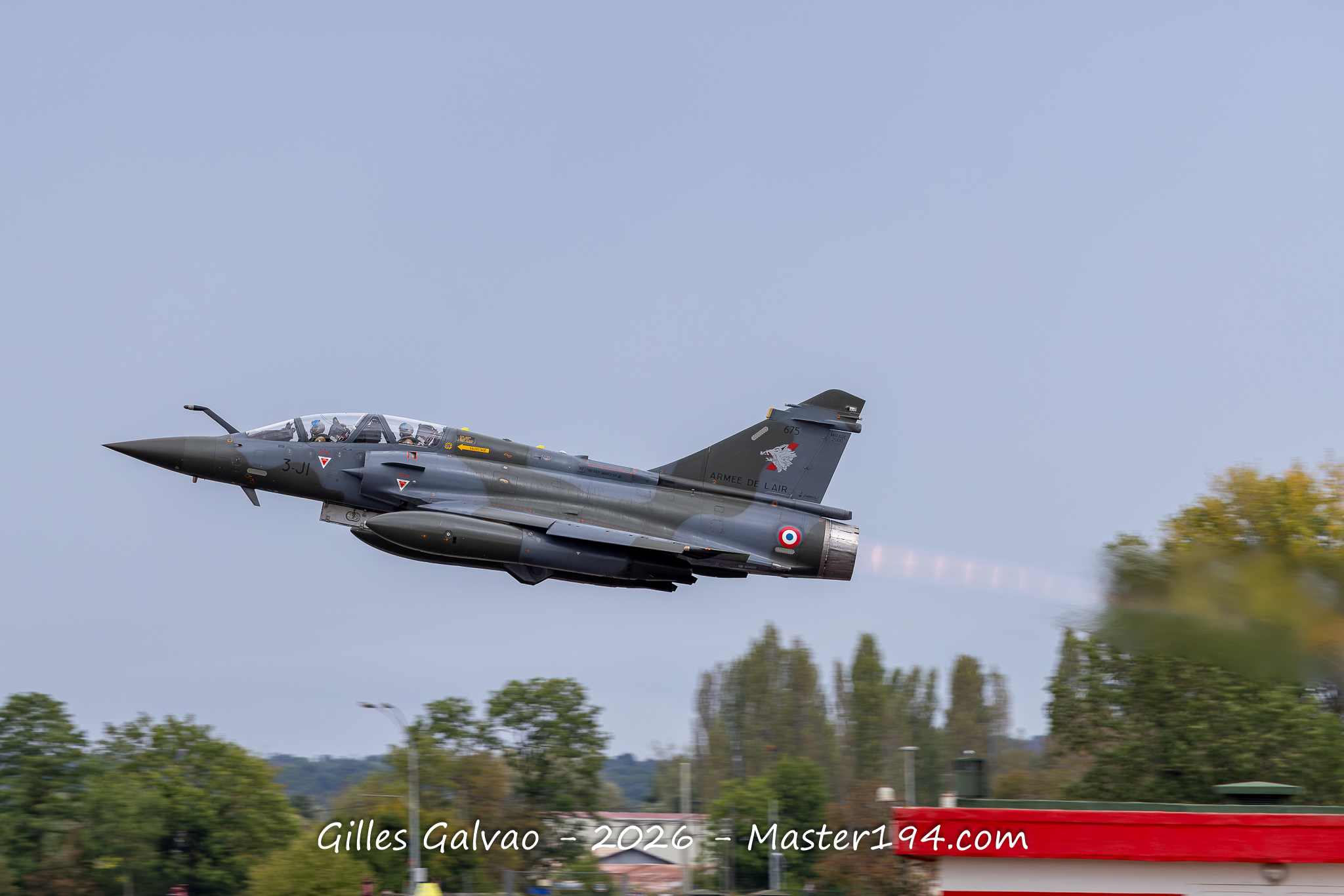
Takeoff and Join-Up: Both aircraft leave the ground and rendezvous to form the initial element.
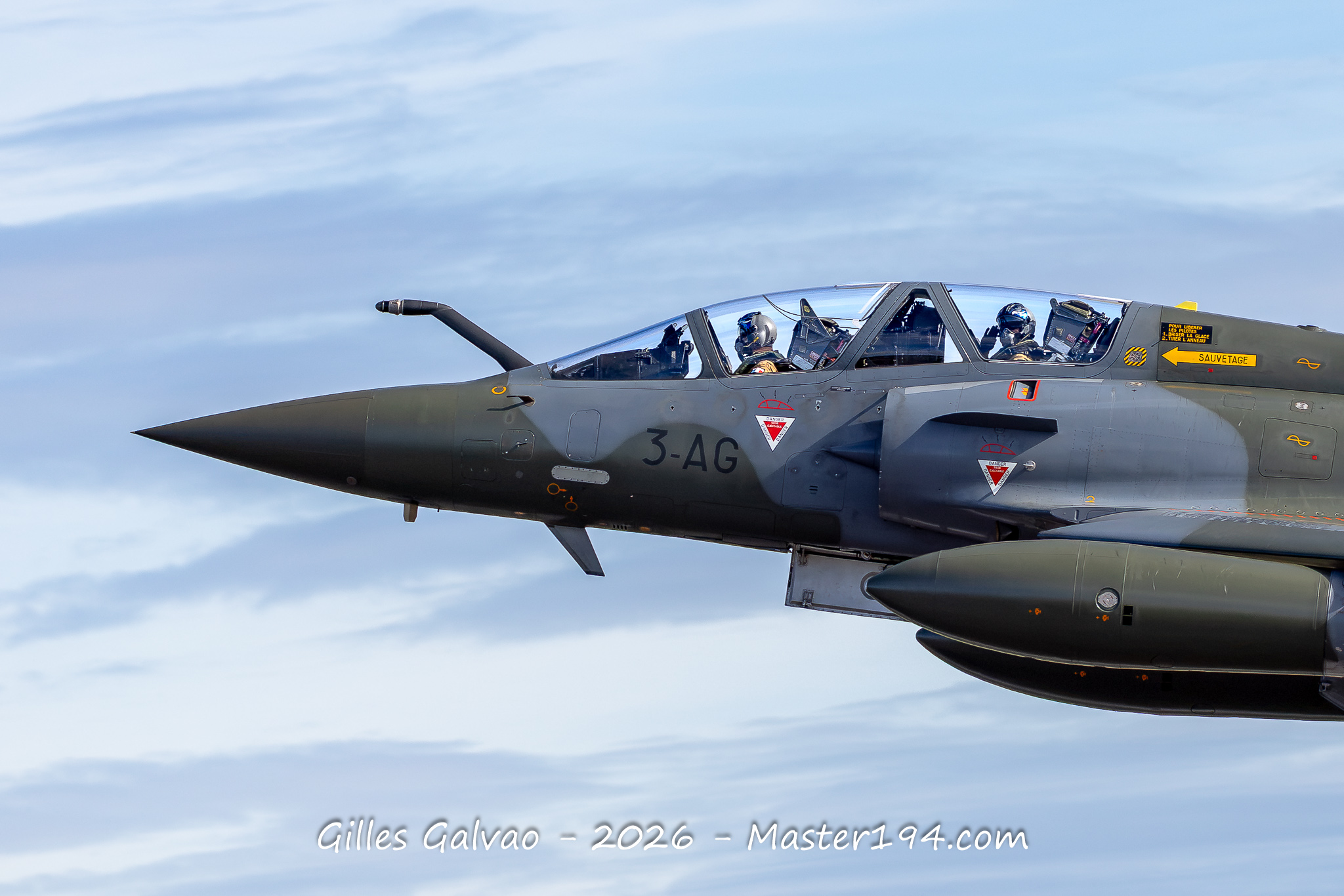
Head-On Battle Formation Entry:
The Mirage 2000Ds approach the crowd line in Battle formation, pull up along the display axis, and execute a left wingover. This opening sequence presents both aircraft head-on before transitioning to the core display.
Banked Pass in Close Formation:
Following a rejoin, the two Mirage 2000Ds perform a banked pass (passage à l’anglaise) in Close Formation (PS) with afterburners (reheat) and airbrakes deployed. The tight proximity of the two jets combined with these high-energy parameters makes for a striking visual.
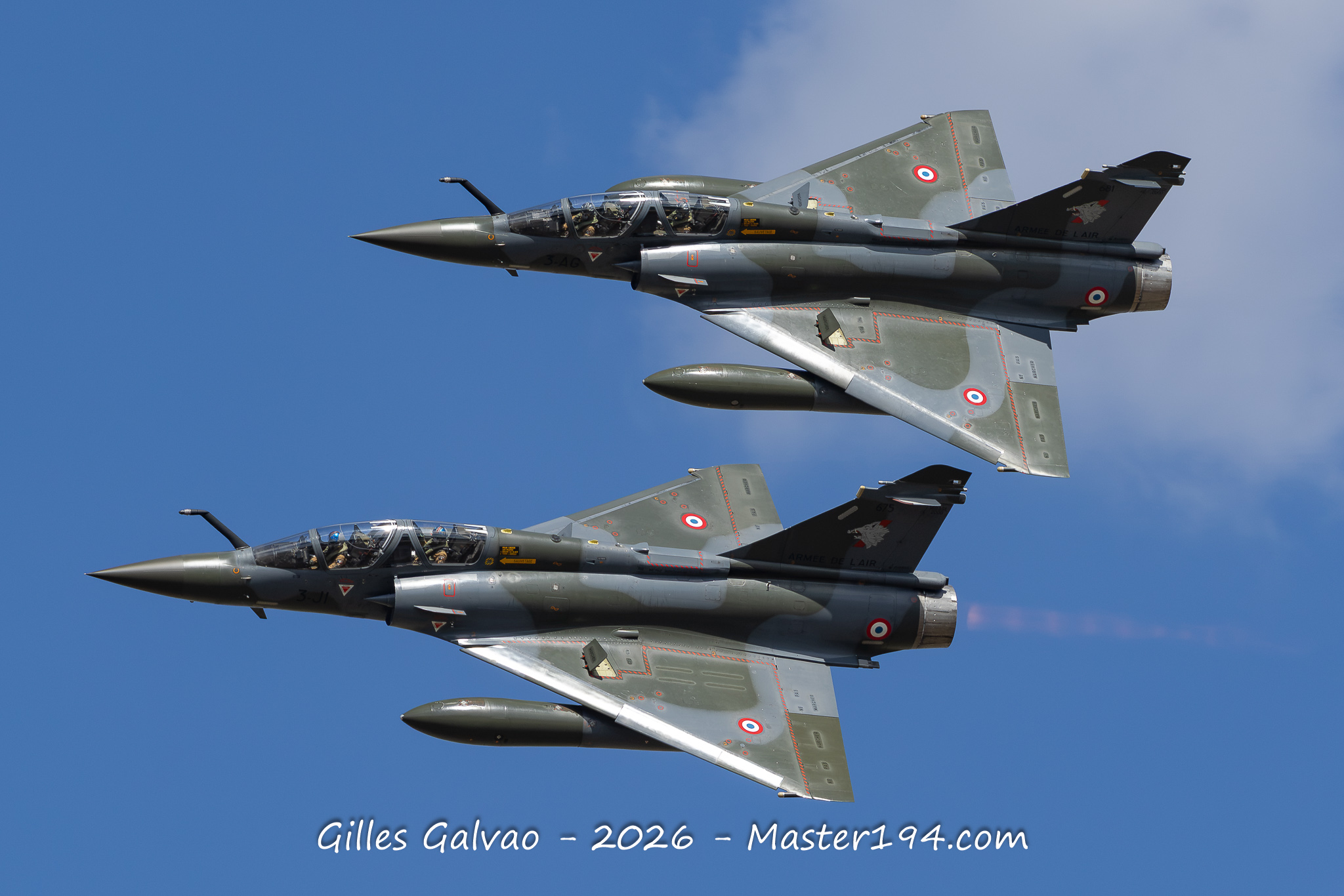
Reconnaissance and Split:
The aircraft execute a right teardrop turn (oreille) before making a low Reconnaissance (Recce) pass. The two jets then split before rejoining into Close Formation.
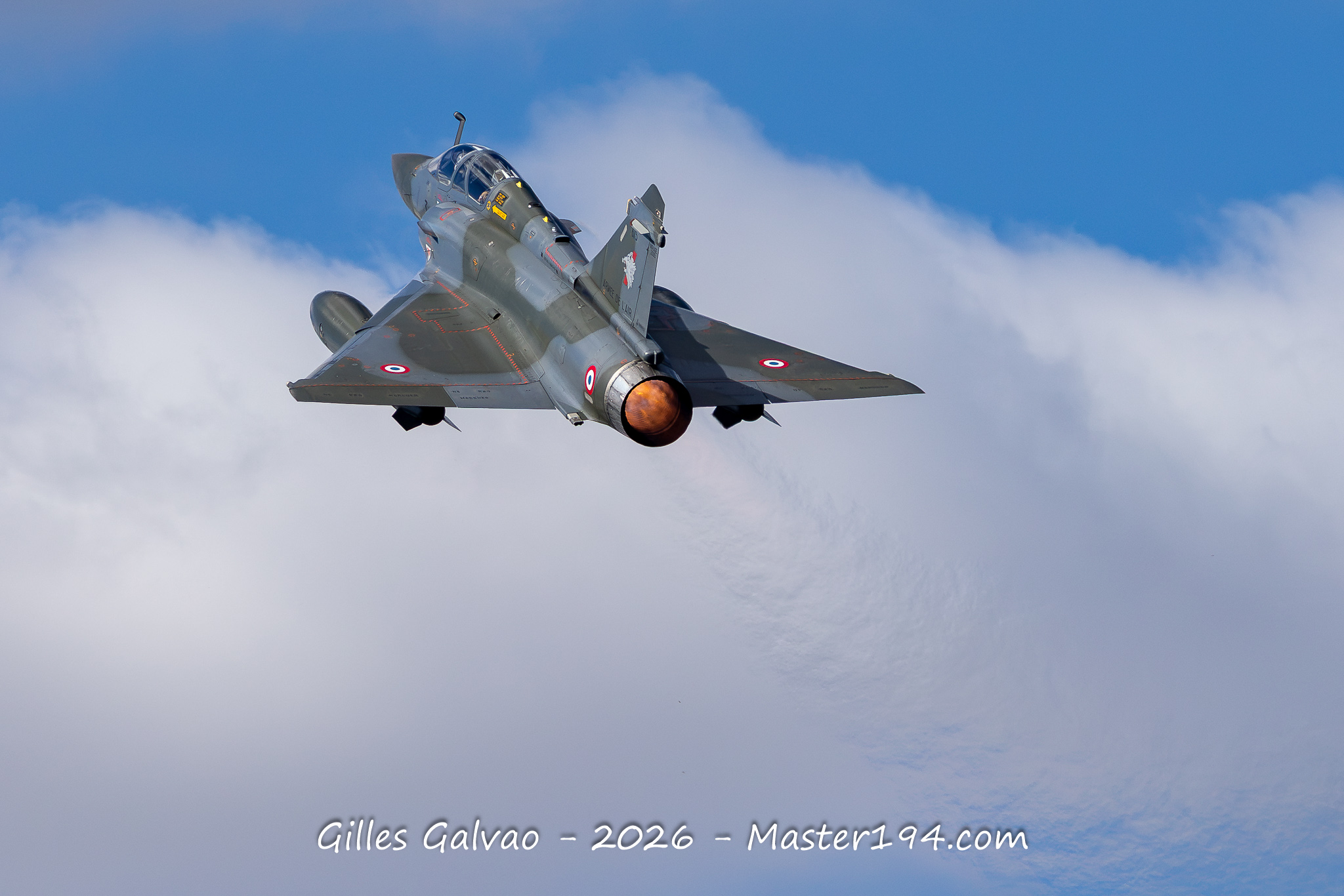
Gear-Down Pass and Formation Change:
The display continues with a Close Formation pass with landing gear extended, followed by a go-around/touch-and-go power application. The jets then transition geometry into a line-ahead/column formation while continuing their climb.
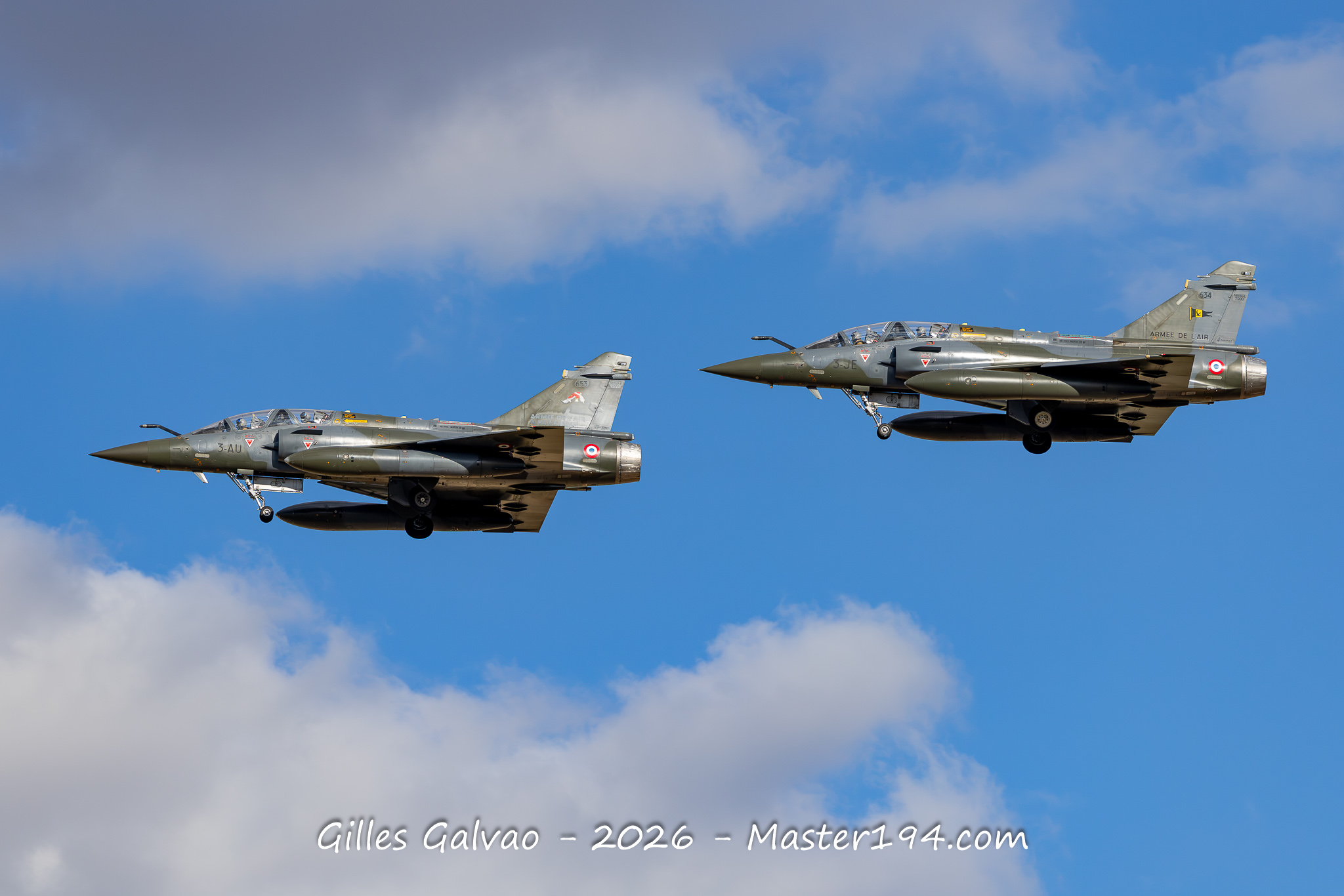
Dive Attack and Evasive Break:
Flying in trail formation, the two Mirage 2000Ds simulate a steep dive attack. The sequence concludes with an evasive break executed inverted to the crowd line, illustrating the egress phase following an ordnance delivery.
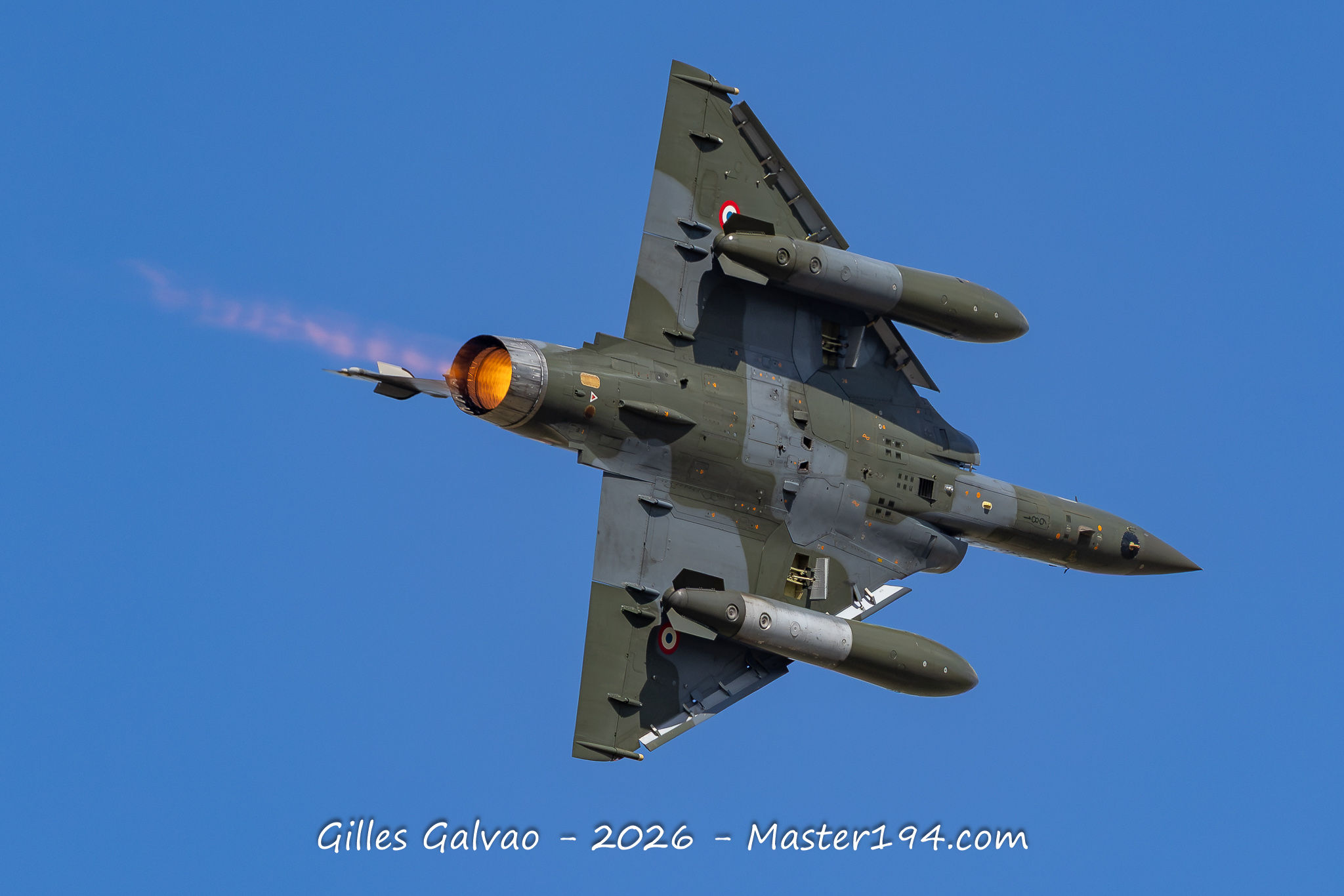
Strafe Pop-Up and Split:
The aircraft adopt an offensive formation for a strafe pop-up profile. The pop-up maneuver involves a rapid altitude gain from low level to set up a simulated attack run, immediately followed by defensive break maneuvers. The two aircraft then split.
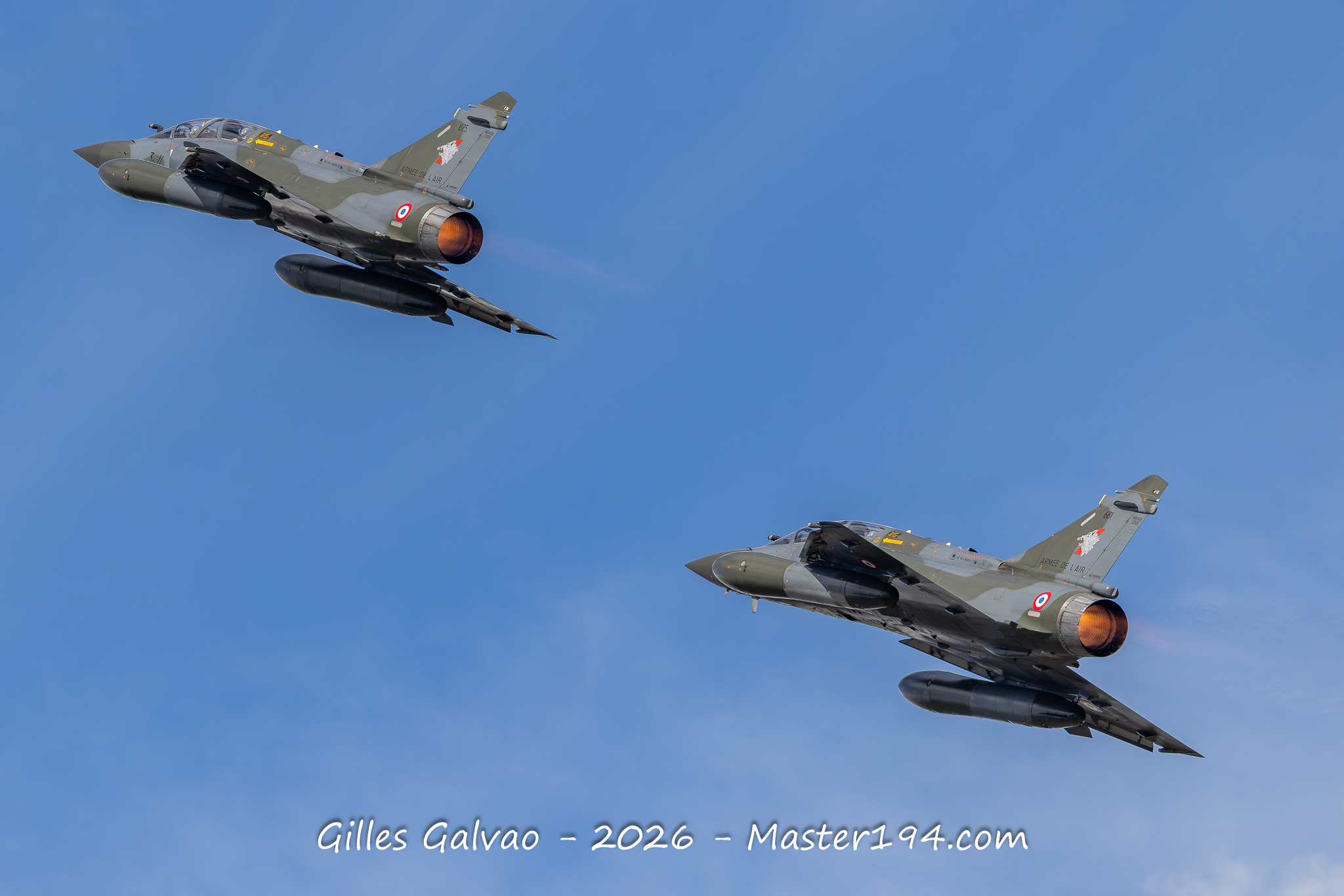
Show of Force and Lead Strafe Pass:
The Wingman Mirage 2000D performs a low-level Show of Force at approximately 150 ft and 550 kt, followed by the Lead executing a simulated gun strafe pass. Both aircraft then rejoin for the final sequence.
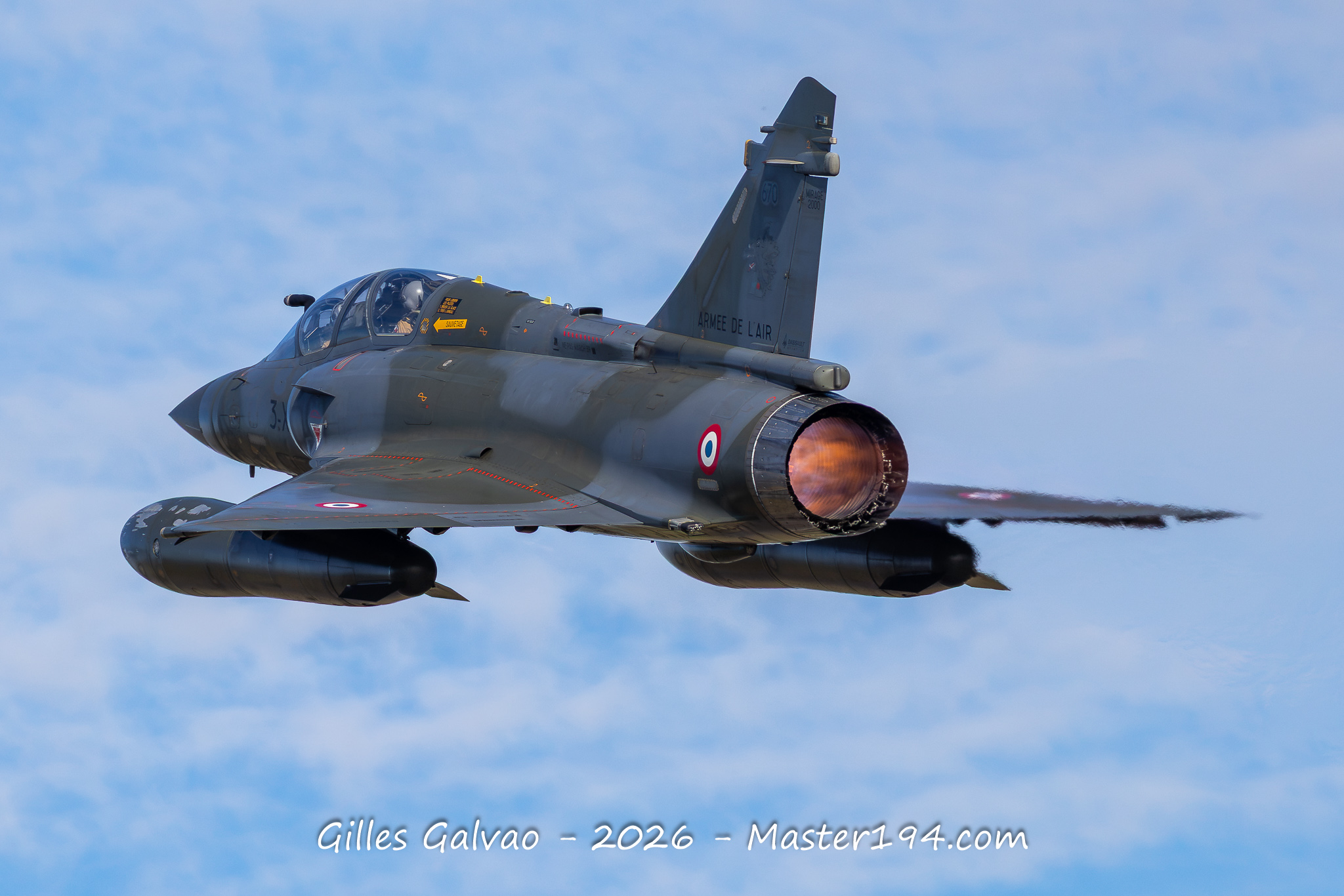
A few seconds of video to capture the raw sound: 150 ft, 550 kt… viewed from the flightline, the sensation is always impressive!
Final Show of Force and Tactical Break:
The demonstration concludes with a combined Show of Force by both Mirage 2000Ds, again at approximately 150 ft and 550 kt. The jets execute a left teardrop turn into the downwind leg for the tactical break and landing sequence.
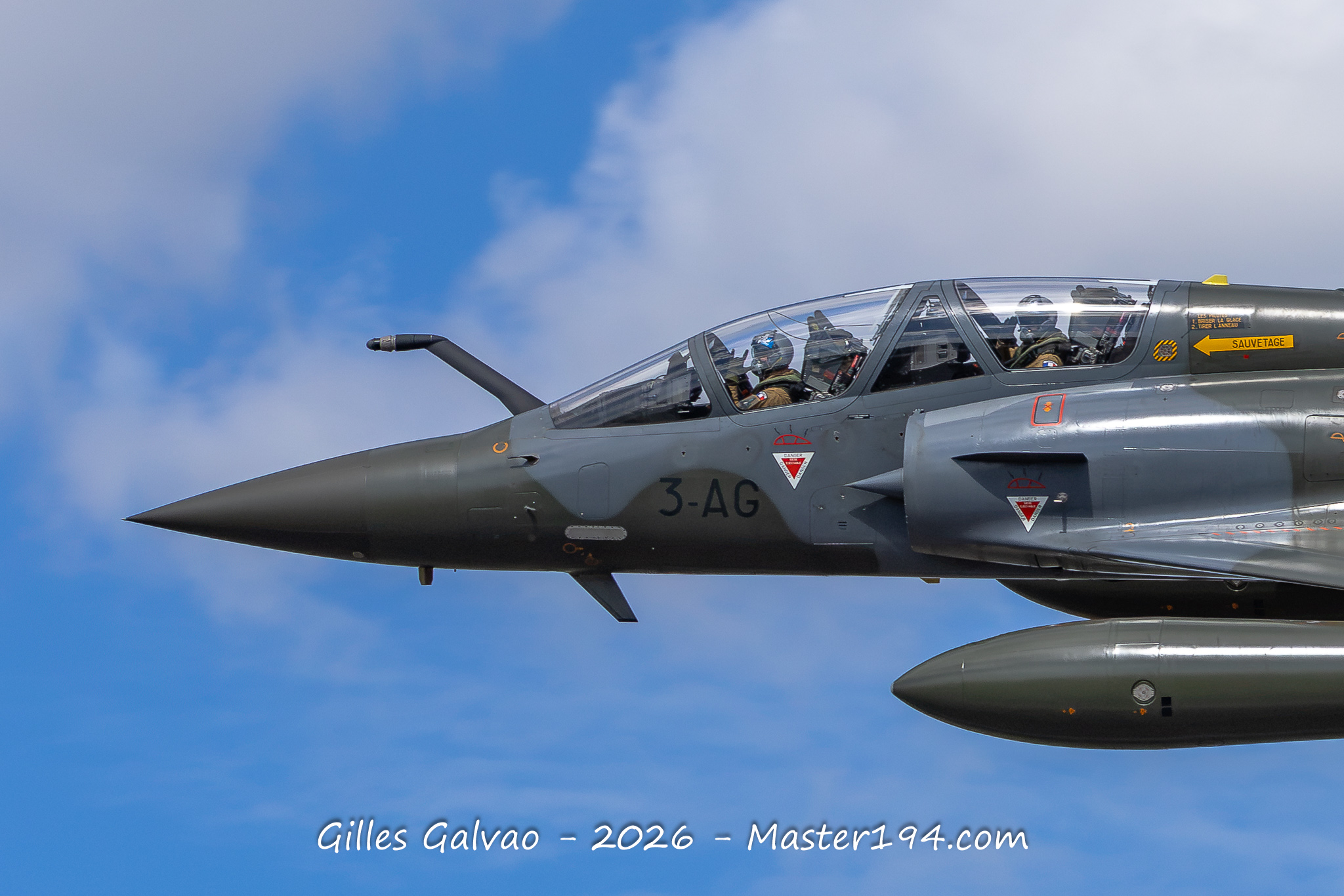
The result is a remarkably structured demonstration: rejoins, formation changes, simulated attack runs, defensive breaks, splits, and rejoins follow one another seamlessly.
What may appear from the ground as a succession of breathtaking maneuvers is, in reality, a meticulously timed display routine where each crew must know not only their own trajectory, but that of the other Mirage 2000D at all times.
Acknowledgments
I would like to extend my warmest thanks to the entire Couteau Delta team for their hospitality, availability, and time spent answering my many questions.
Special thanks go to Malo, who took considerable time to explain the organization and workload of the ground support crew and reviewed this article; to Maélys, for her availability and kindness at Melun; and to “Toolong“, who patiently answered my numerous technical questions and also assisted in proofreading this feature.
Thank you all for the warm welcome and for sharing a glimpse of your daily operations with me, far beyond the few minutes of display routine seen from the flightline.