
 by
Inside the Belly of the Sub-Hunter
Resting today in the quiet halls of the Musée de l’Aéronautique Navale de Rochefort, the Lockheed P2V-7 Neptune BuNo 144688 seems frozen in time. Yet, every line of its silhouette tells the story of an era when the sea was an invisible battlefield—a time when the hunt relied on echoes, magnetism, and human endurance.
The Neptune was not an elegant aircraft; it was a tool, built to last, to fly low, and to flush out what did not want to be seen.
🇫🇷 Français :
🌍 Cet article est désormais disponible en deux langues ! Pour la version française, suivez ce lien :
https://master194.com/2026/02/25/p2v-7-neptune-marine-nationale-walkaround/
Genesis of a Maritime Predator
The Neptune was born from the urgency of World War II. In 1941, the US Navy asked Lockheed for an aircraft capable of extended oceanic patrols, far exceeding the capabilities of the PV-2 Harpoon.
The concept was simple on paper but formidable in practice: remain over the ocean for long durations, locate a submarine, track it, and then coordinate its destruction.
The prototype first took to the skies on May 17, 1945. It was too late for that war, but just in time for the next. The Cold War imposed a new tempo: that of silent deterrence. The Neptune would go on to become one of the first true modern submarine hunters.
An Evolution Dictated by the Threat
Originally, the P2V was a pure propeller-driven aircraft. However, operational constraints soon emerged: short runways, high gross weights, and the need for bursts of speed.
Lockheed adopted a bold transitional solution: hybrid propulsion.
The P2V-7 version, the ultimate evolution of the lineage (later redesignated as the P-2H), embodied this technical maturity. This was the version that France began operating in 1958, and which can be found today in Rochefort
The Neptune in the French Naval Aviation (Aéronavale)
LThe French Navy received its first Neptunes in 1953, starting with the P2V-6, to replace the Lancasters inherited from the World War.
The P2V-7 marked a decisive leap in capability: increased range, advanced sensors, and enhanced versatility. France received 33 aircraft between 1958 and 1961.
For more than twenty-five years, the French Neptune:
- Monitored maritime approaches,
- Tracked Warsaw Pact submarines,
- Took part in operations related to the Algerian War,
- Maintained a constant presence over the Atlantic and the Mediterranean.
It was not retired from service until 1984, replaced by the Breguet Atlantic (ATL1), the direct heir to its operational philosophy.
A machine built to endure… and to suffer
Extraordinary propulsion
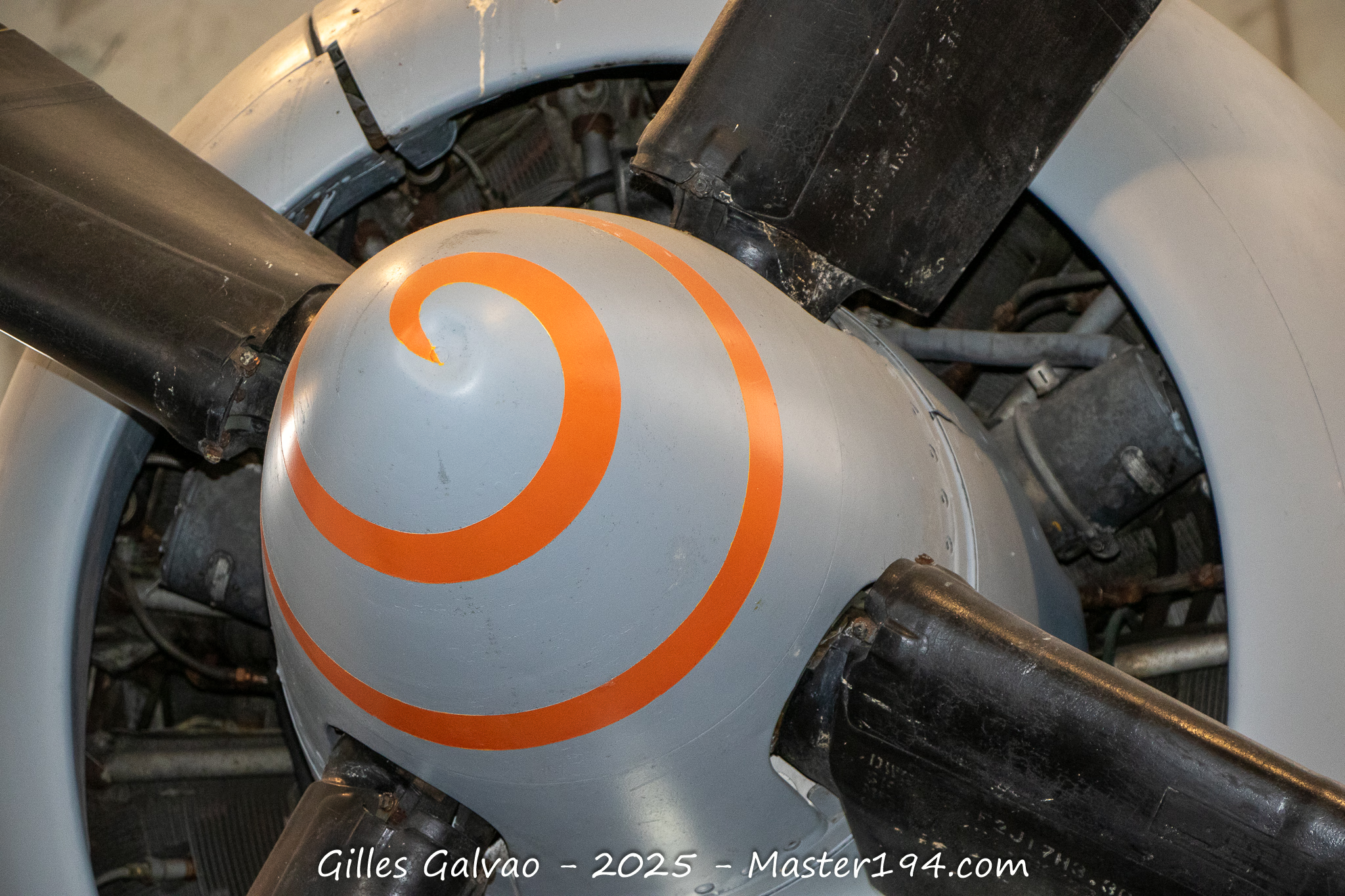
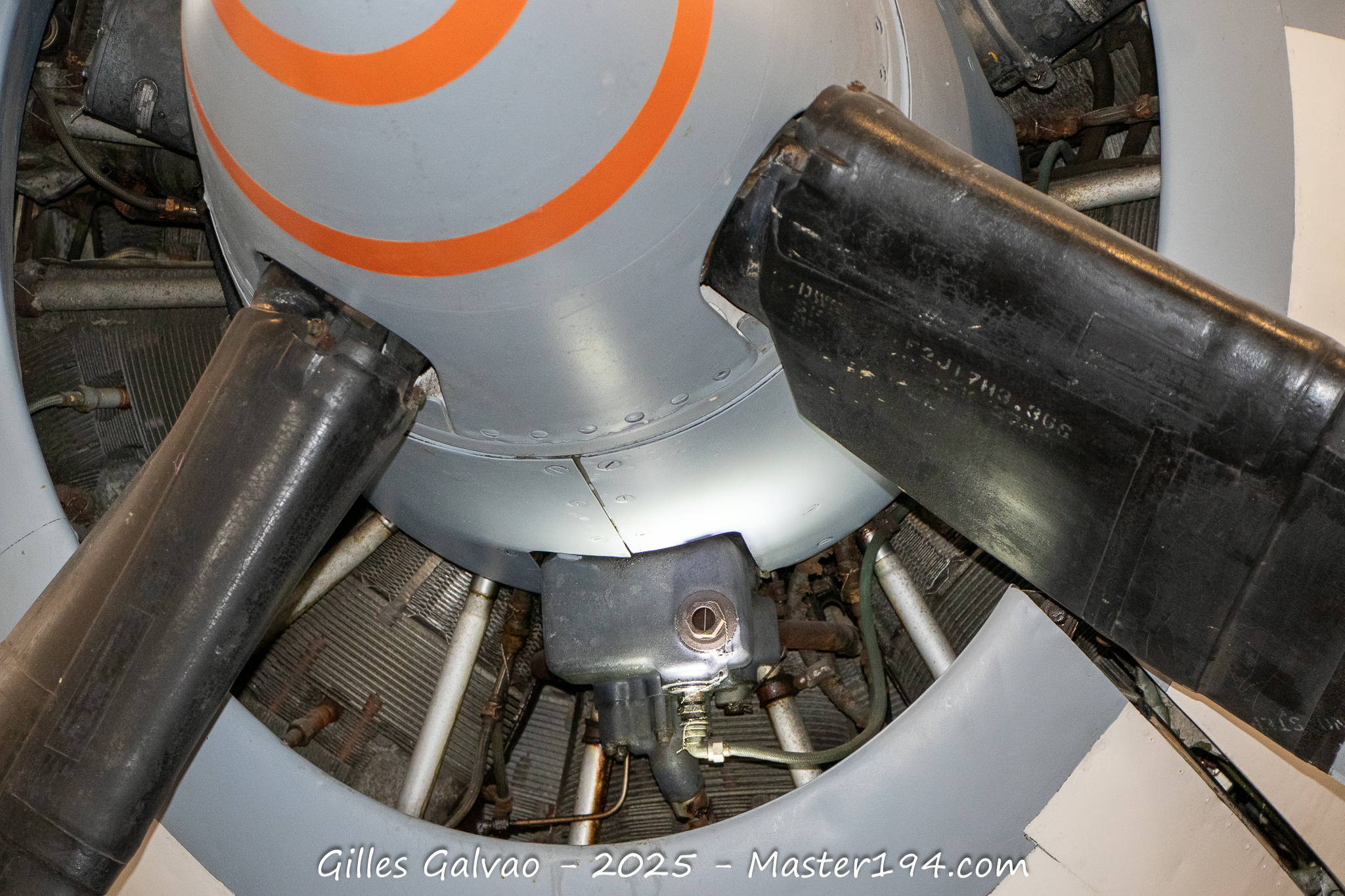
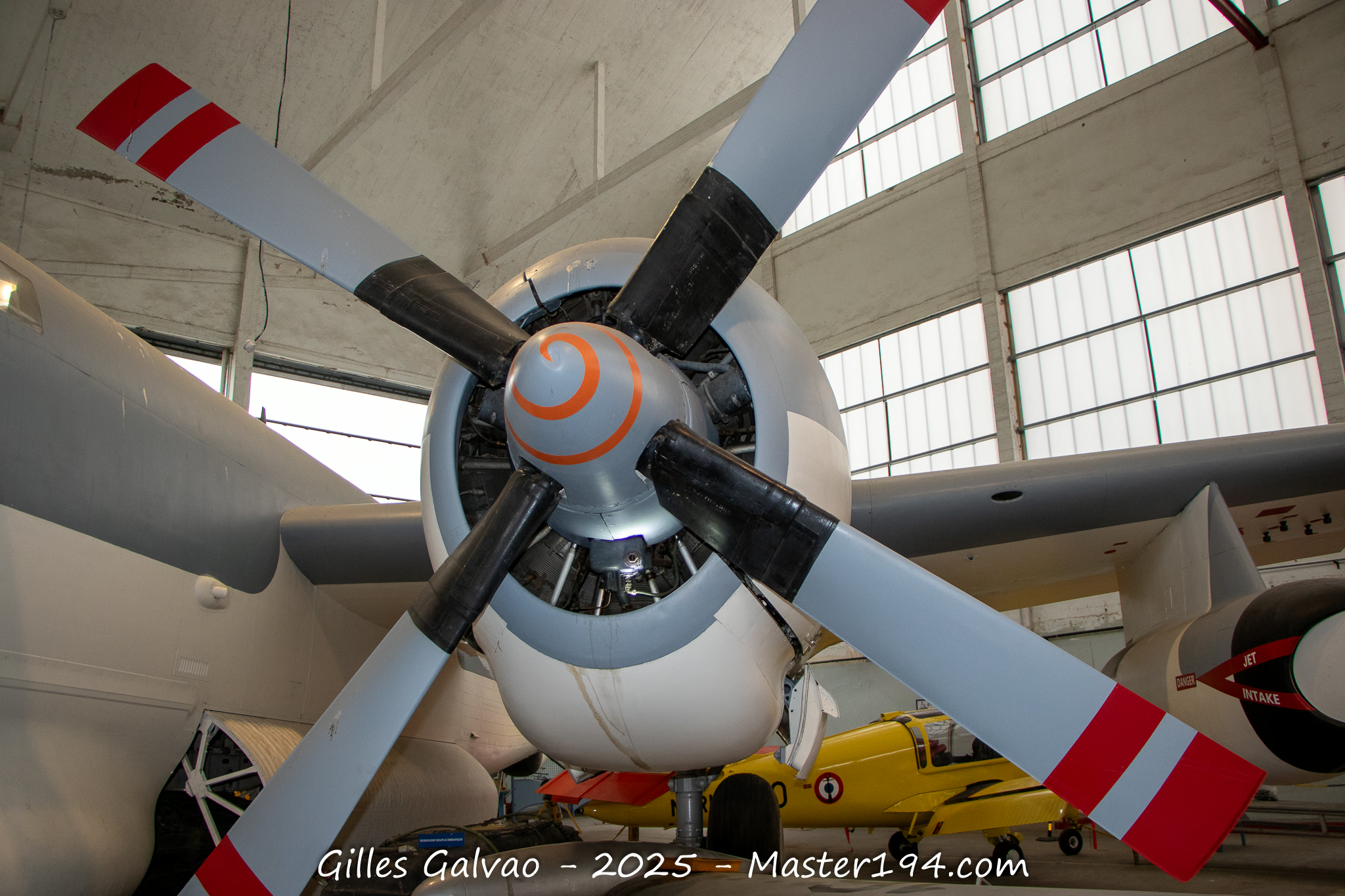
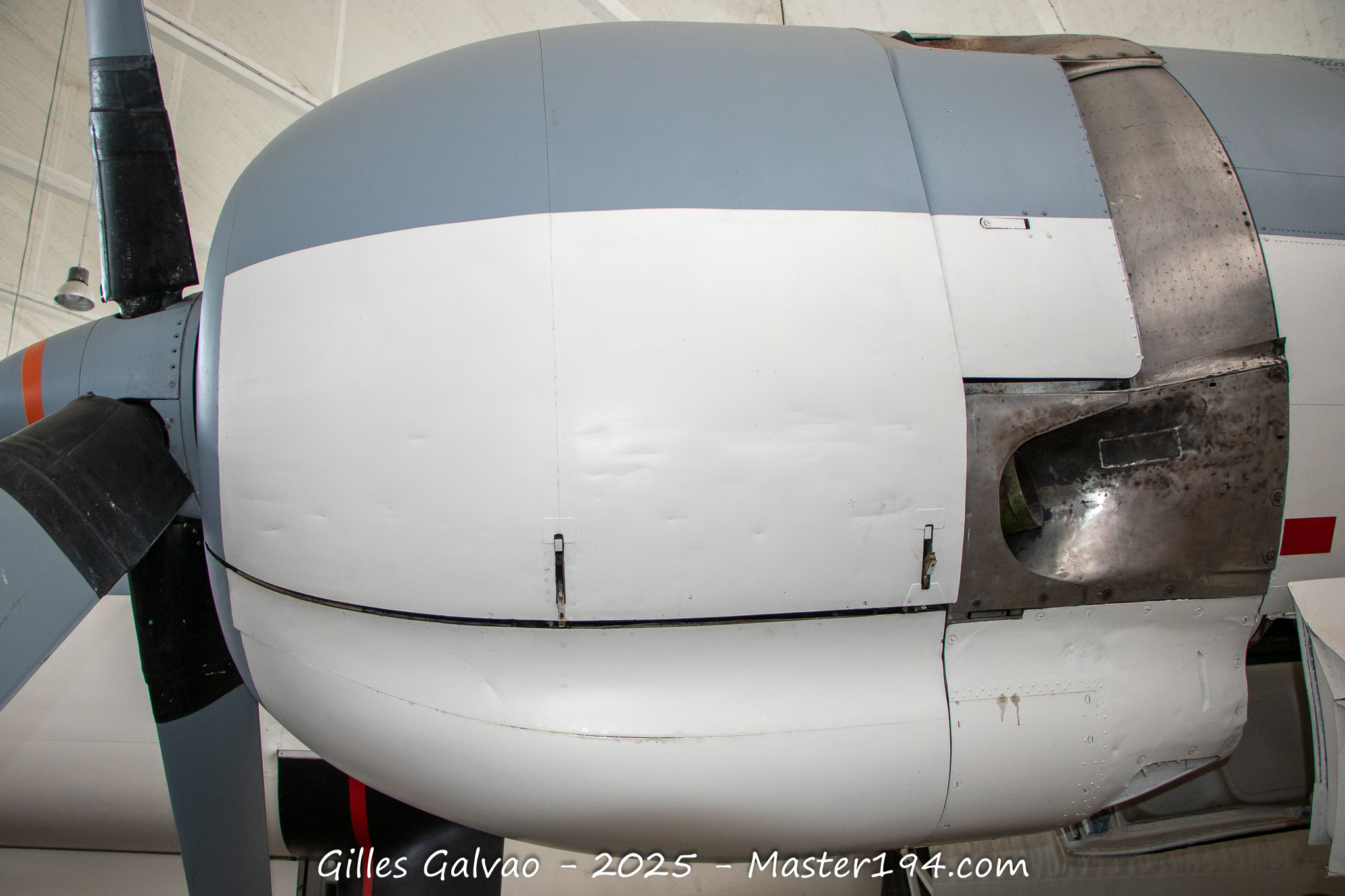
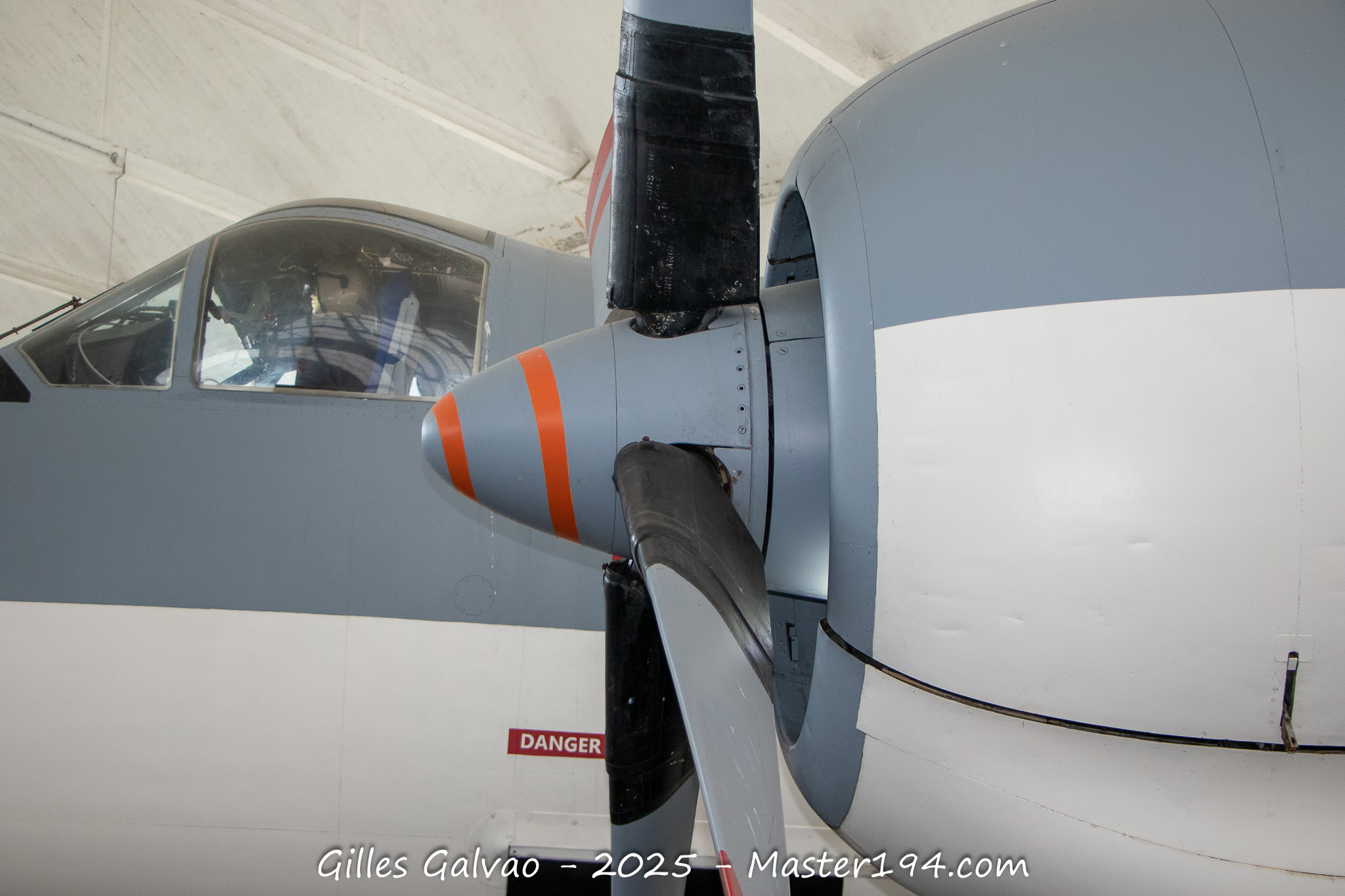
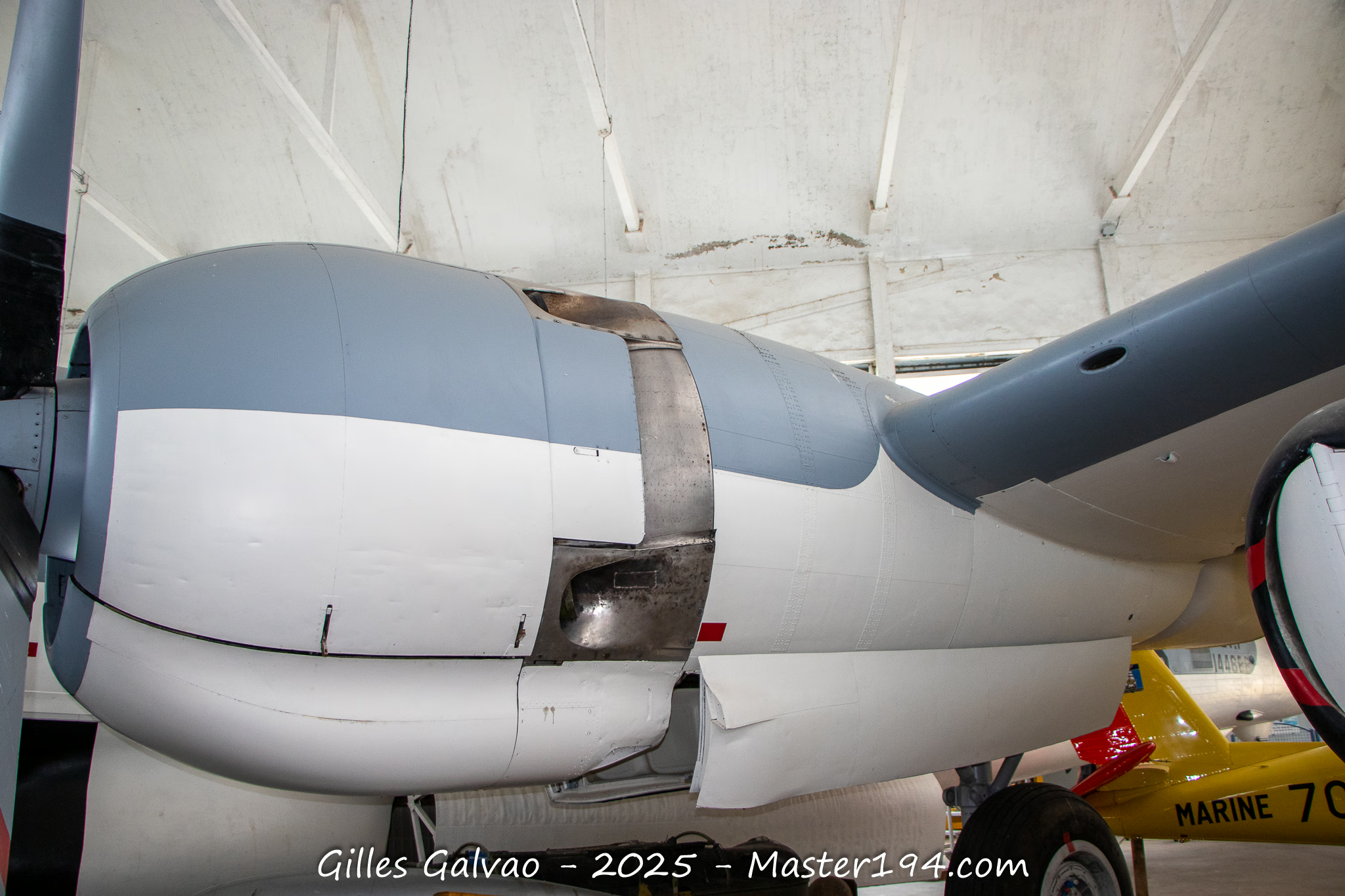
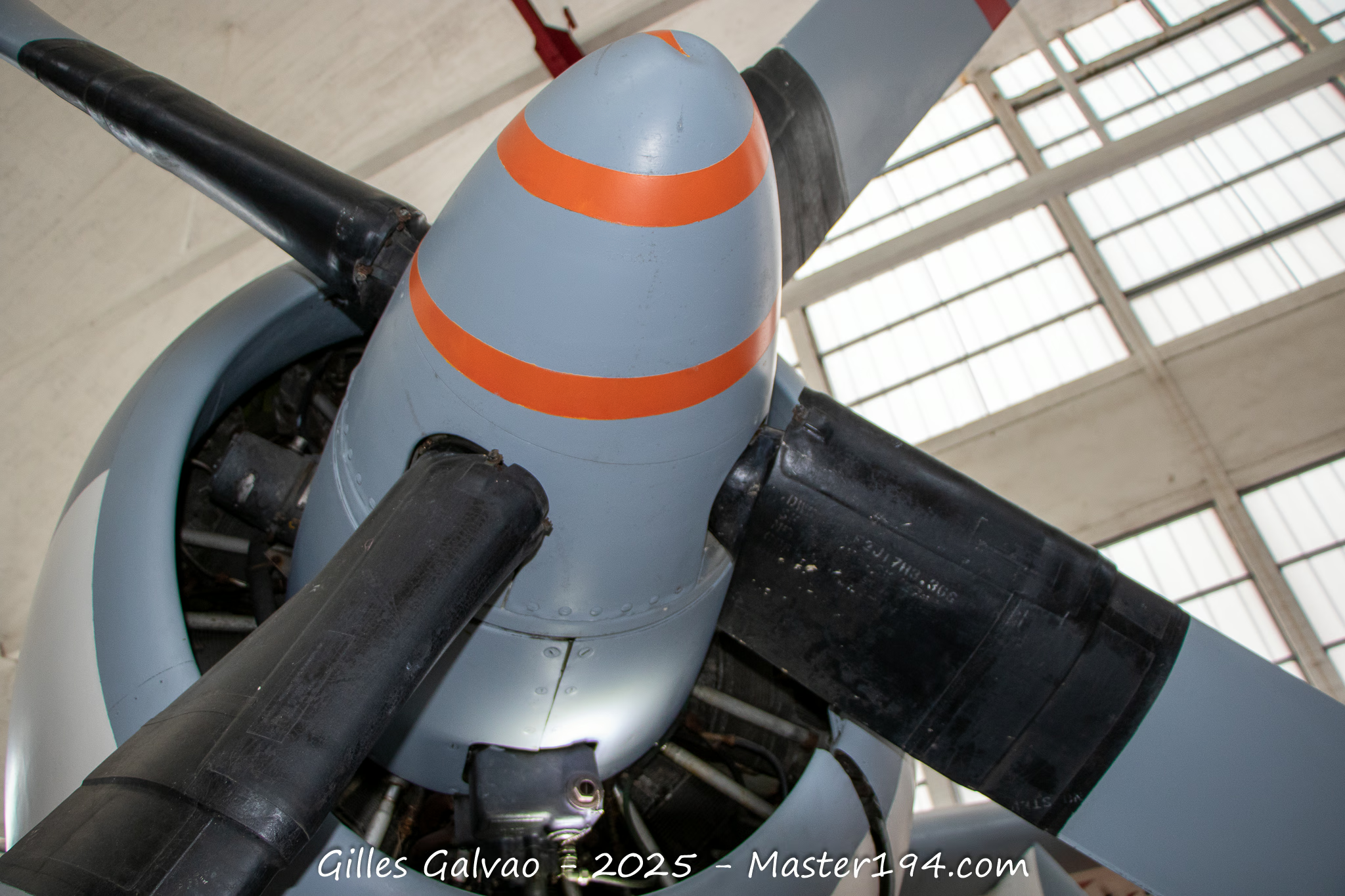
The heart of the Neptune relies on two Wright R-3350-32W Cyclone engines, producing 3,700 horsepower each. These massive radial piston engines were built for endurance, capable of keeping the aircraft airborne for more than ten hours.
However, during heavy take-offs—loaded with fuel, weapons, and sensors—this was not enough.
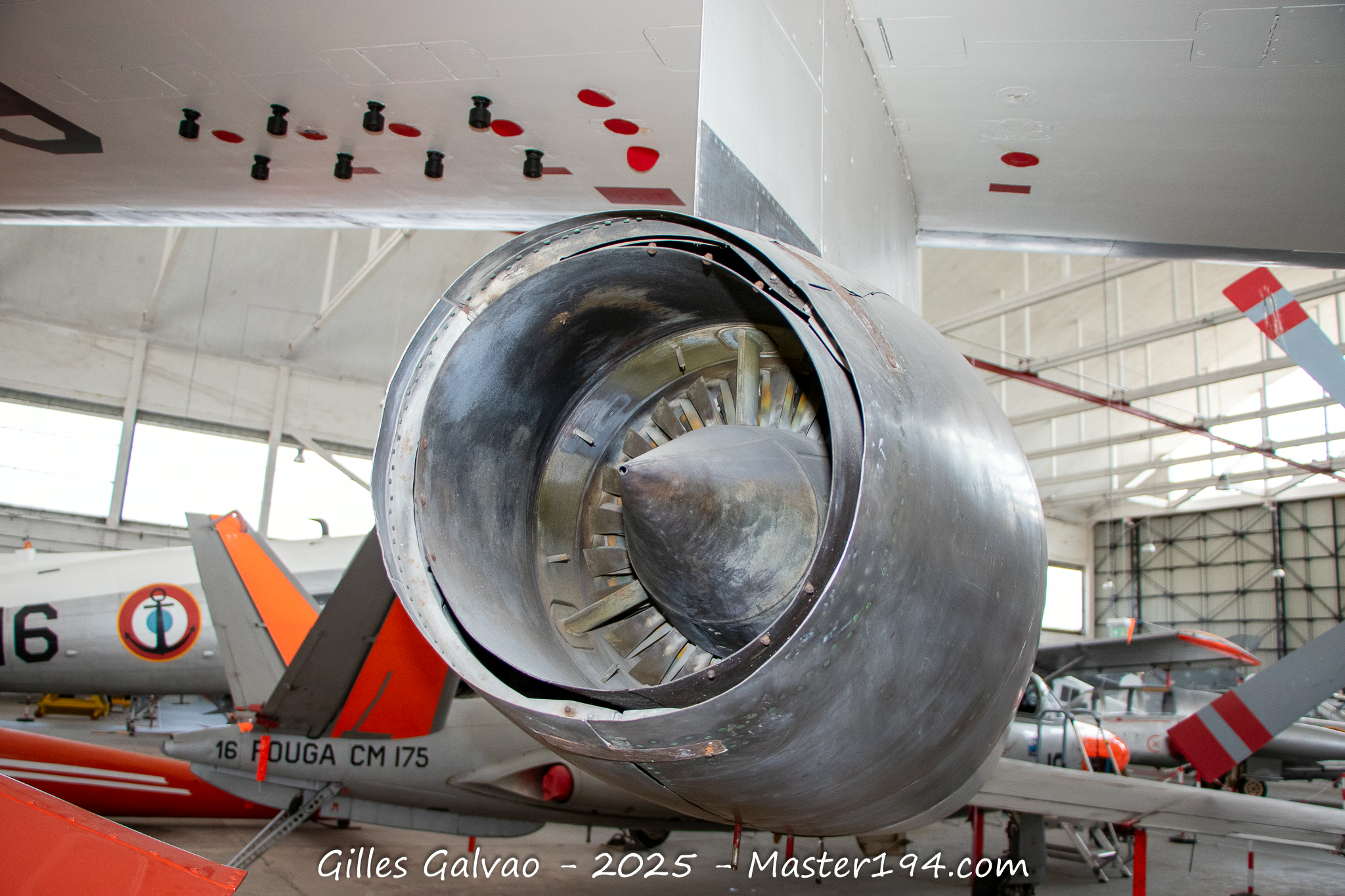
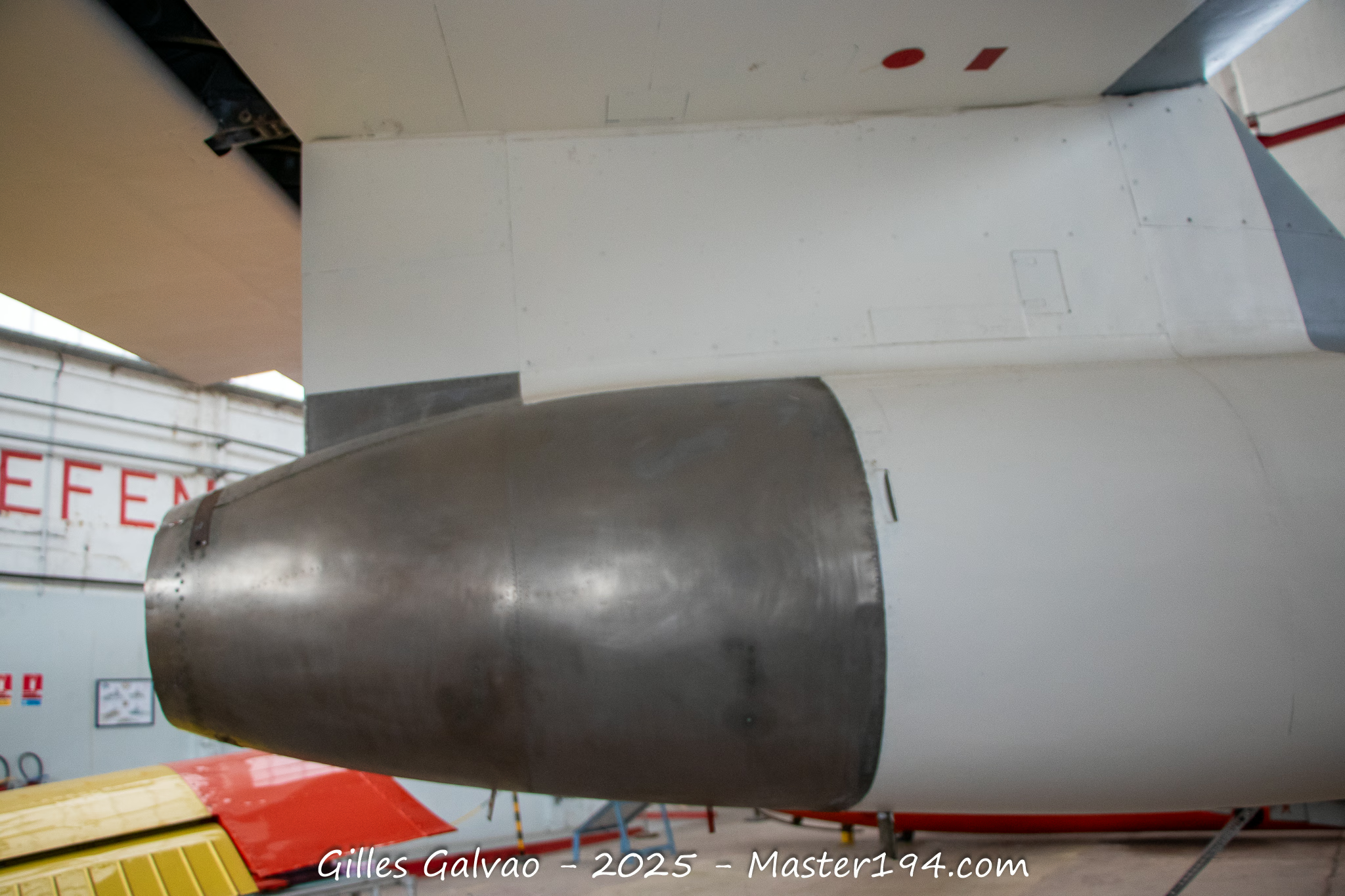
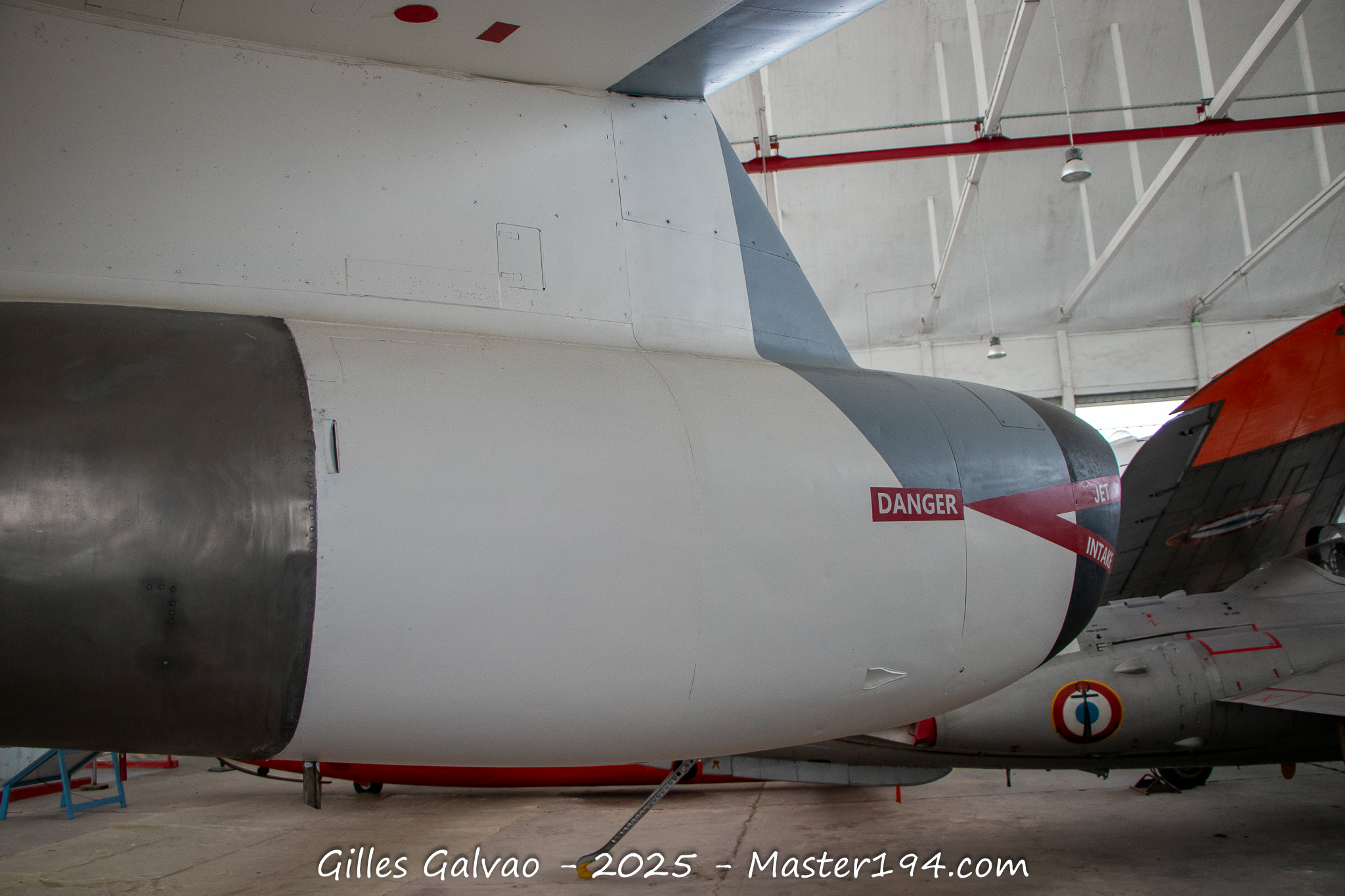
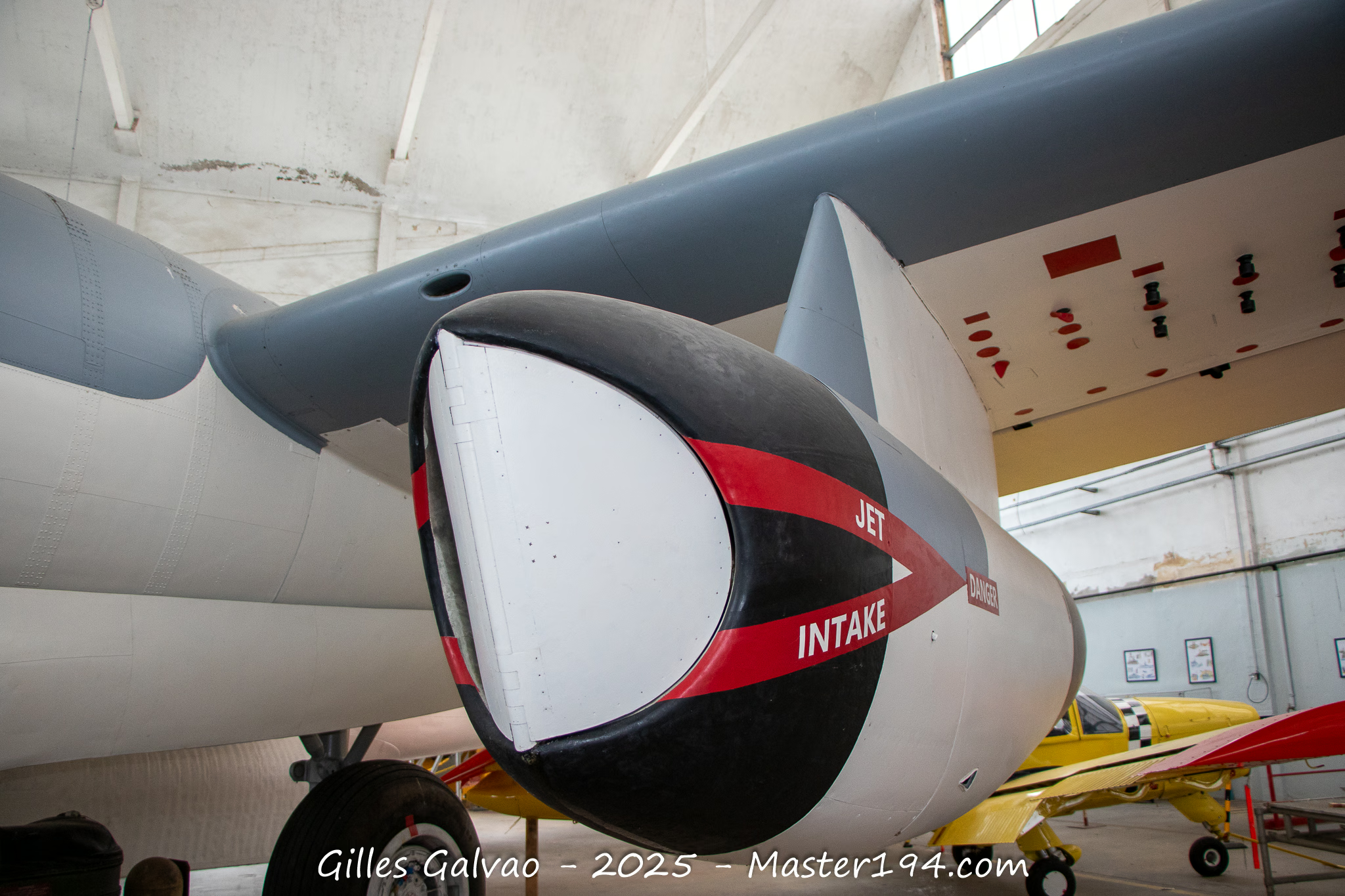
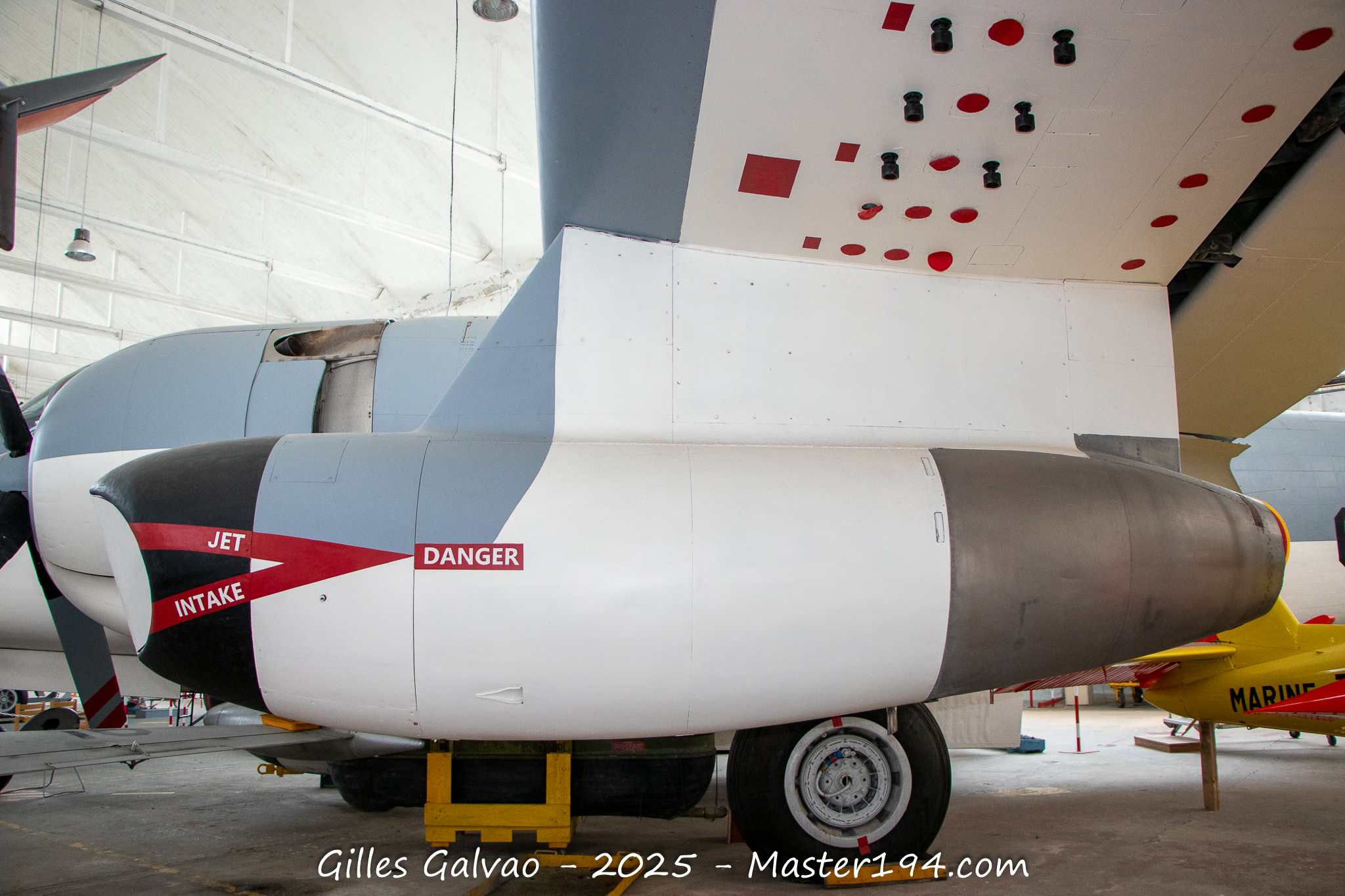
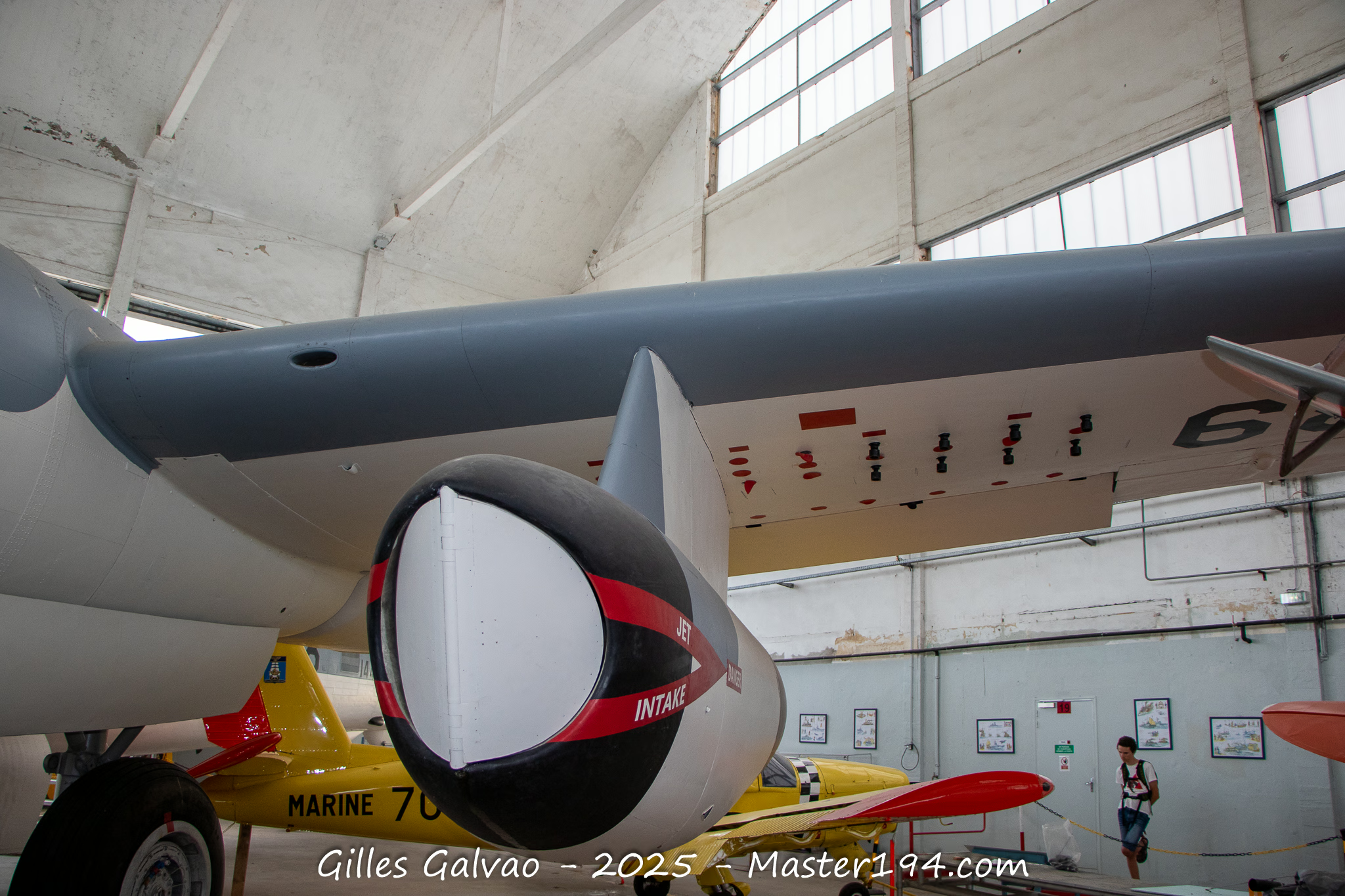
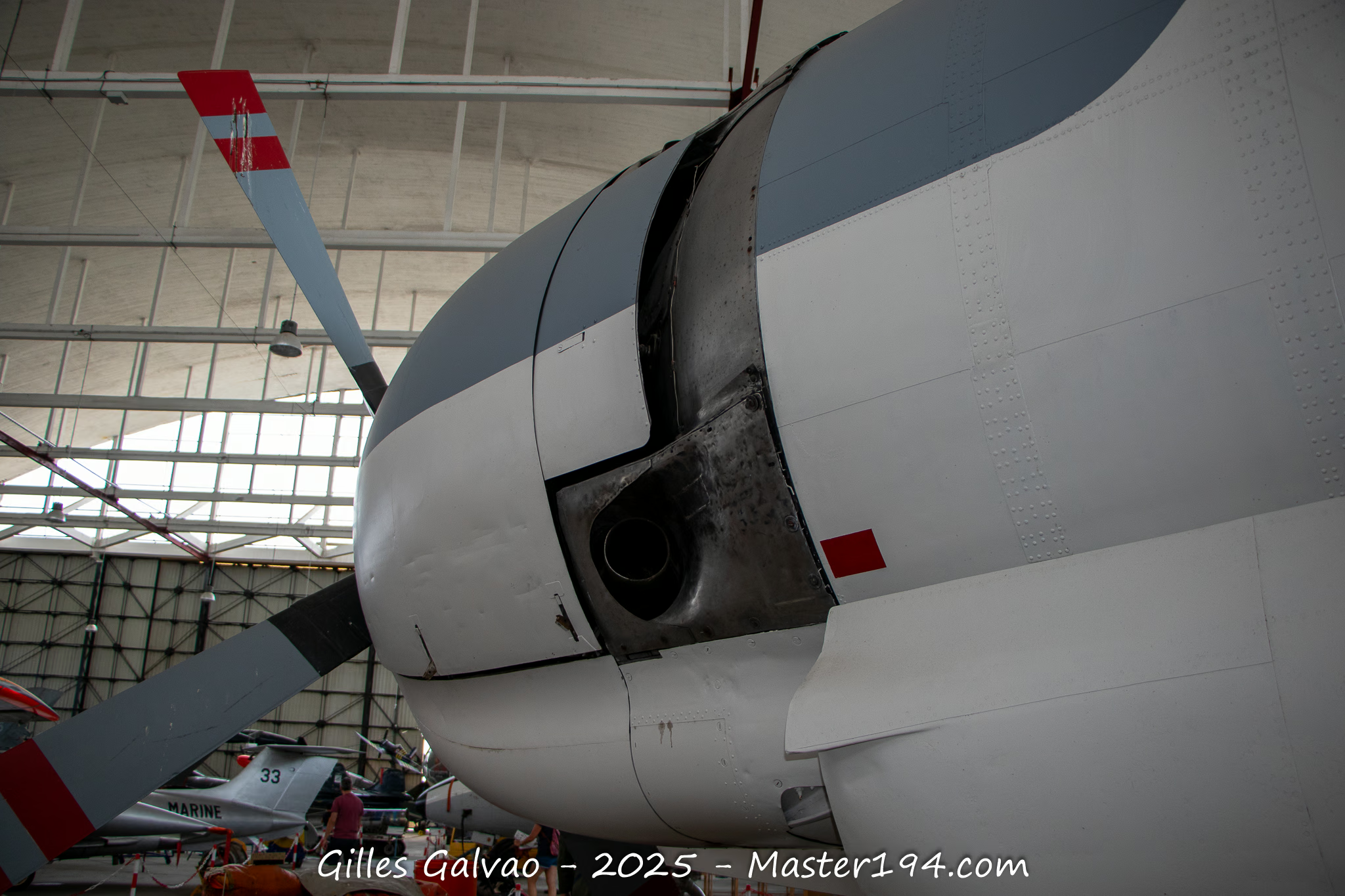
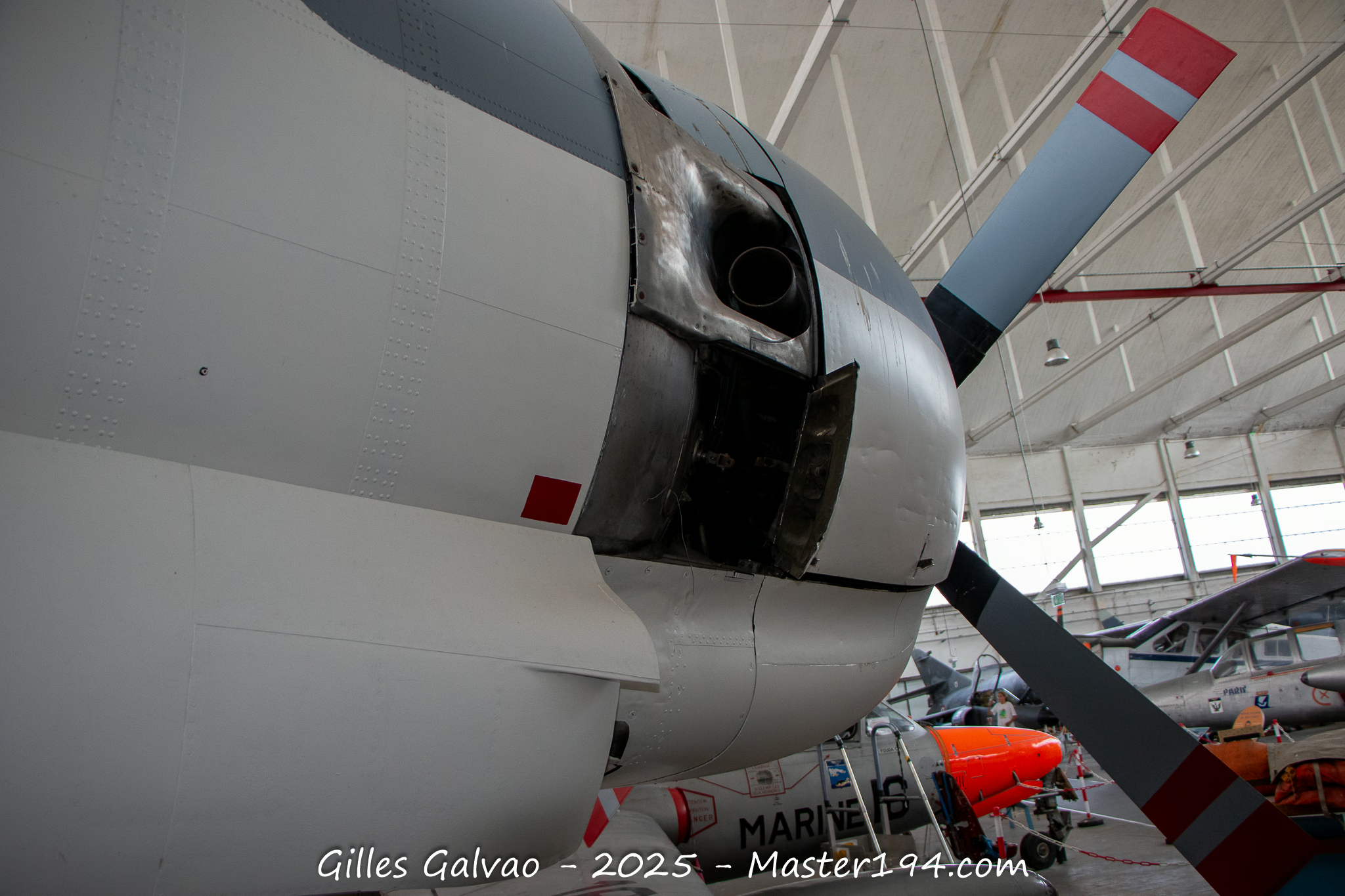
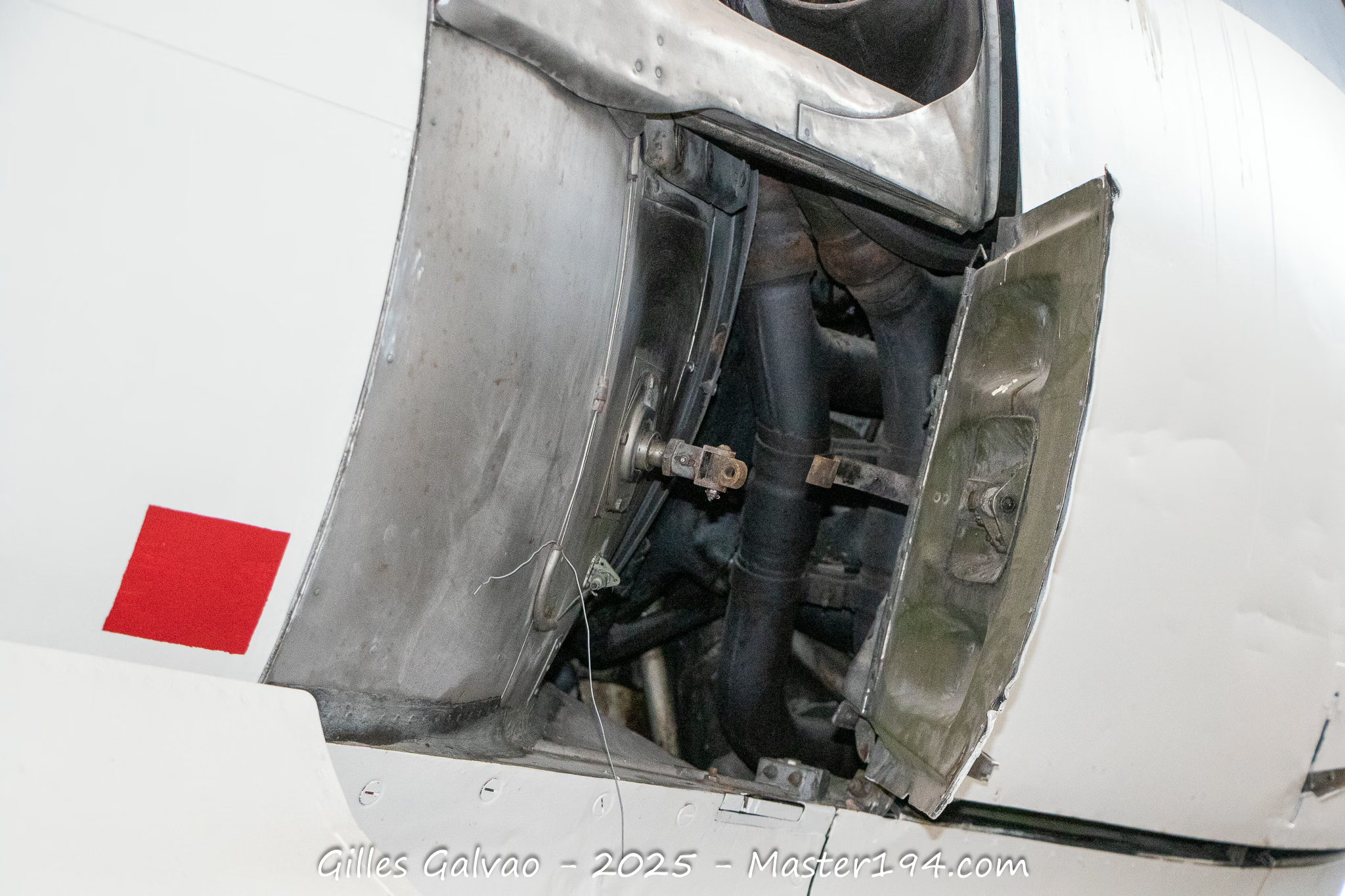
To compensate, two Westinghouse J34 turbojets were installed under the wings. These turbines, fueled by Avgas, were used neither for cruising nor for fuel economy, but for a specific purpose: to tear the Neptune’s 36 tons off the runway or to provide a burst of tactical speed. It was a raw, effective solution, typical of the 1950s.
Walkaround of the port (left) engine.
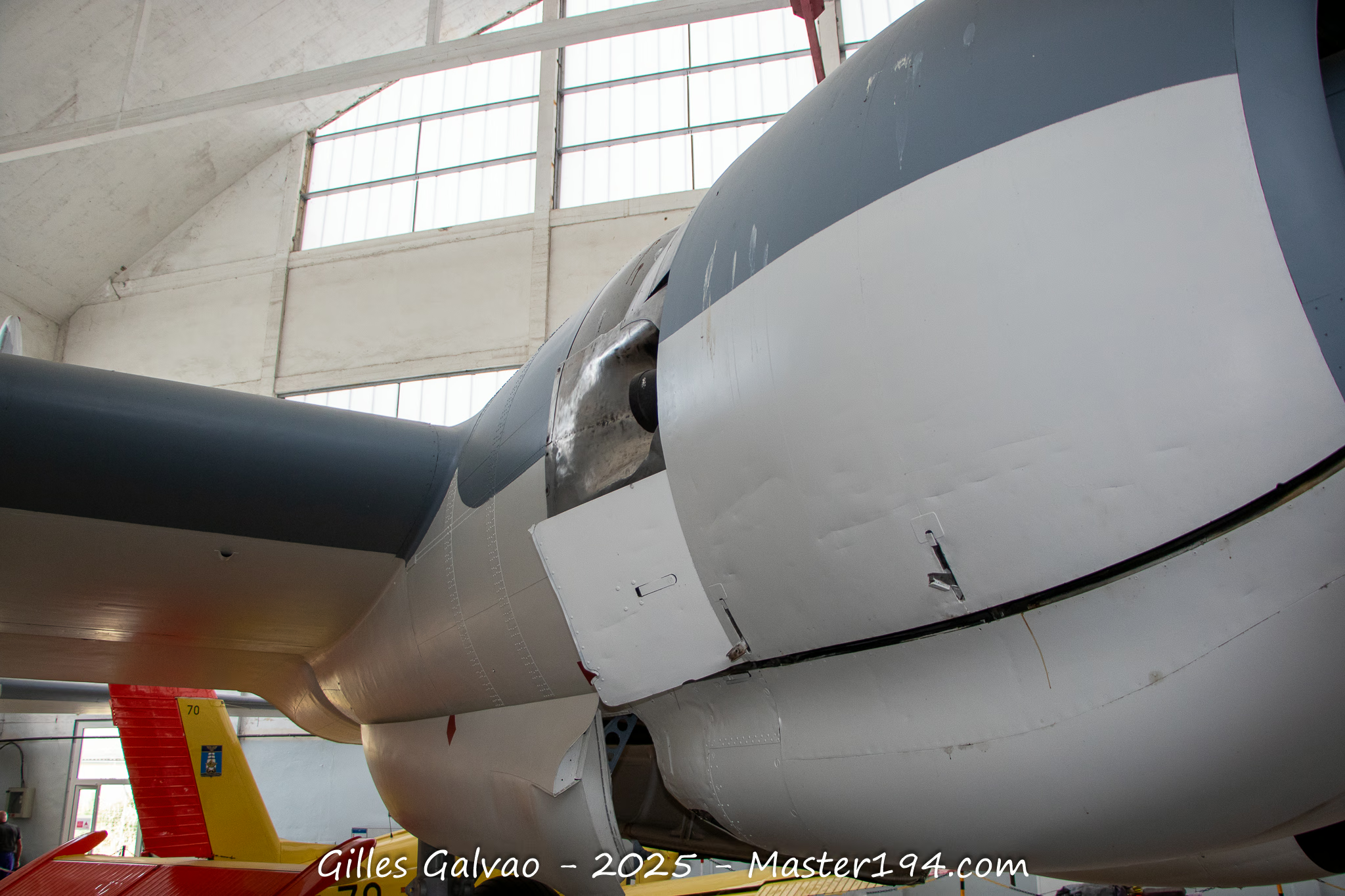
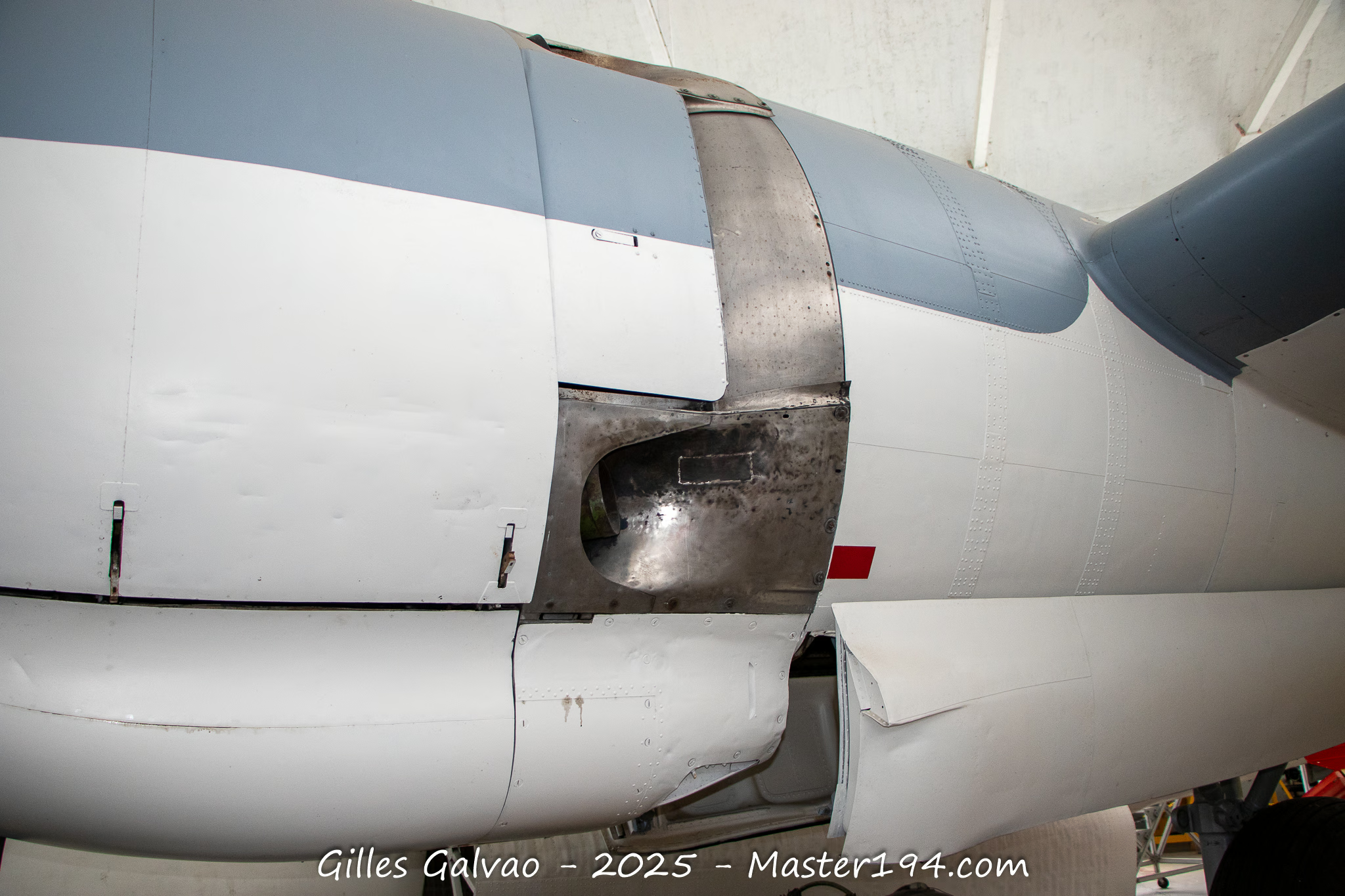
Starboard (right) turbojet walkaround.