 by
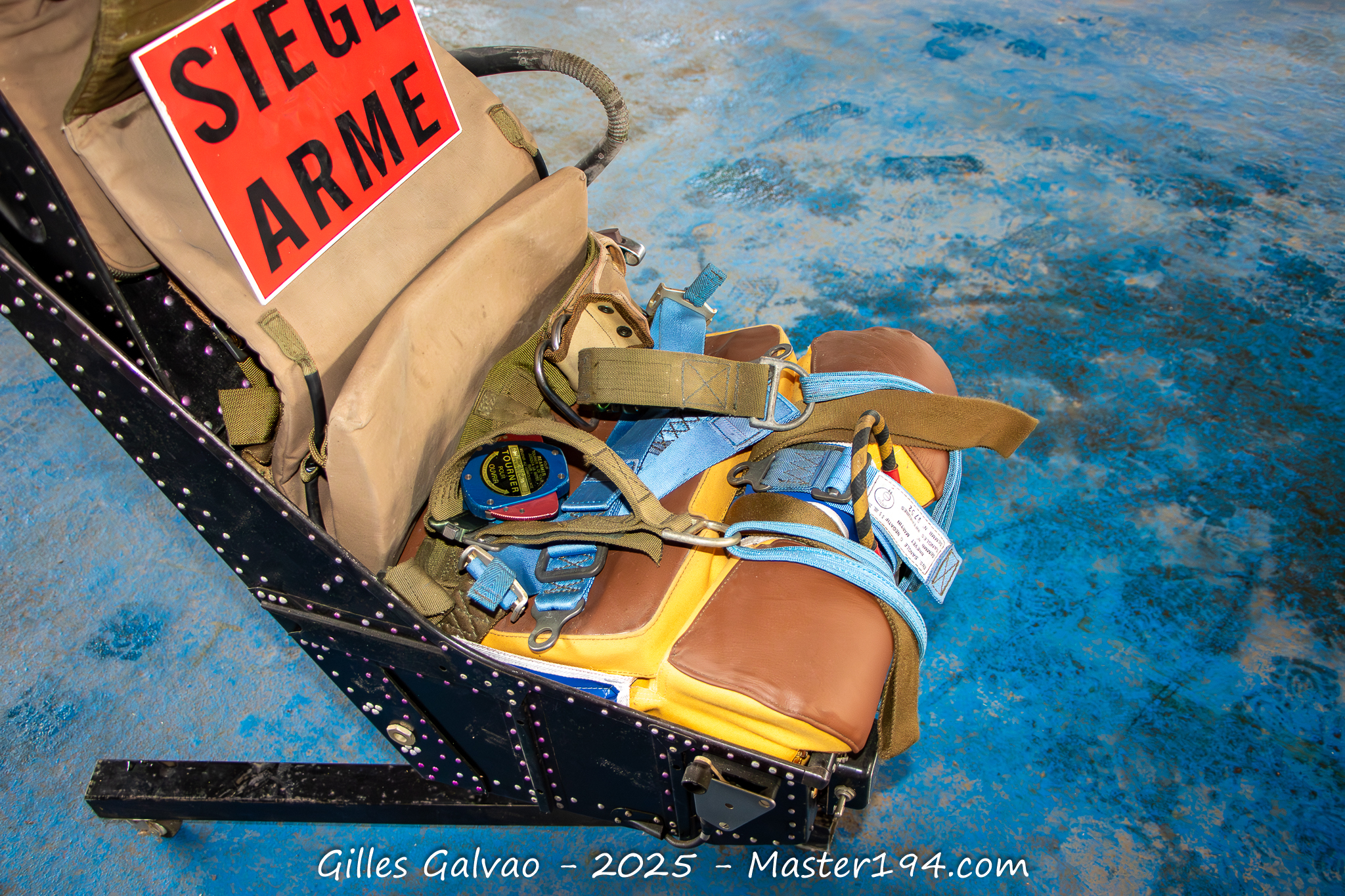
The Martin-Baker Mk.4 seat was developed in the early 1950s and equipped many aircraft, including French airplanes such as the Jaguar, Mirage F1, Mystère IV, Super Mystère B2, as well as certain Fouga Magister and Flamant models.
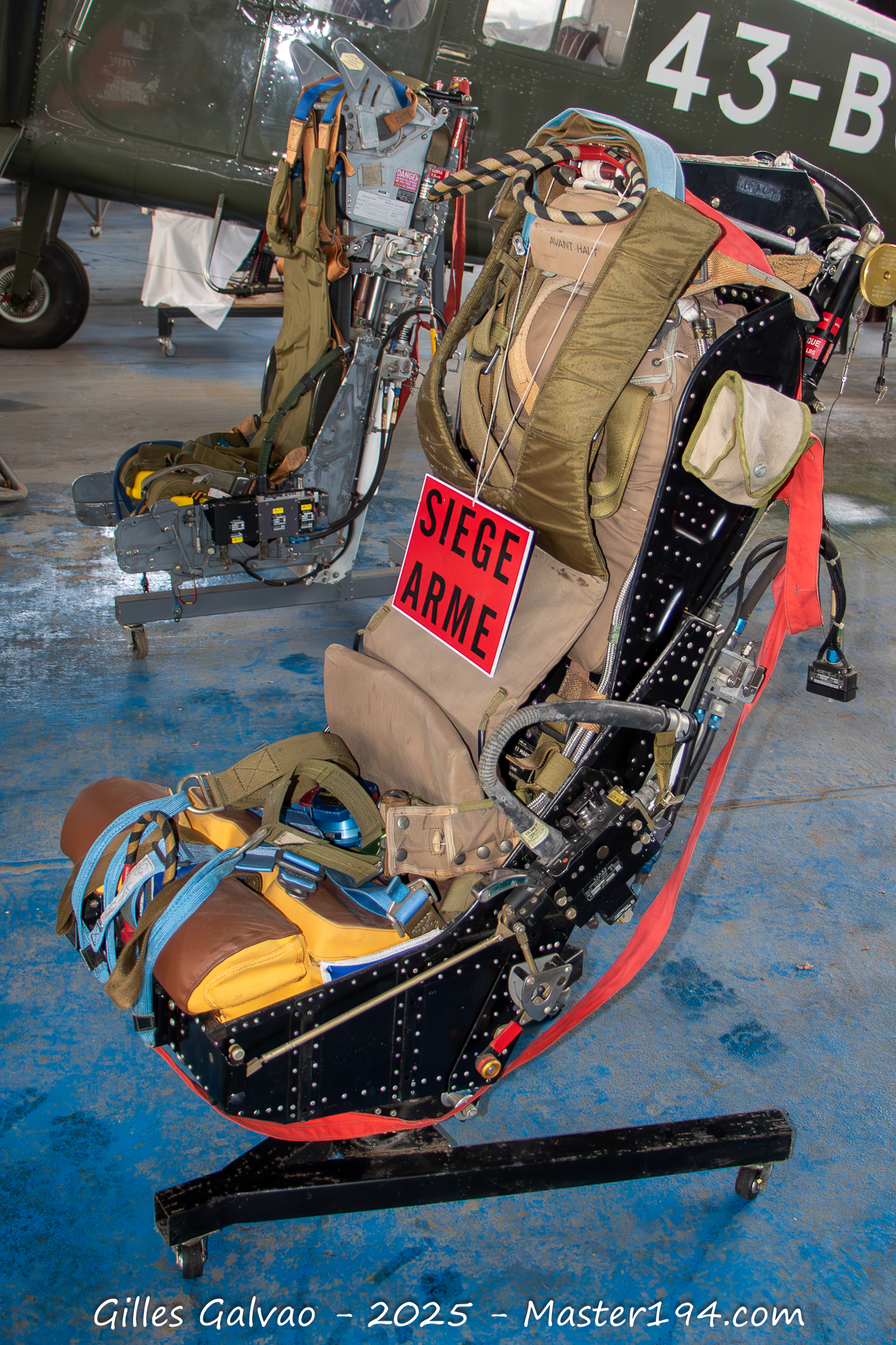
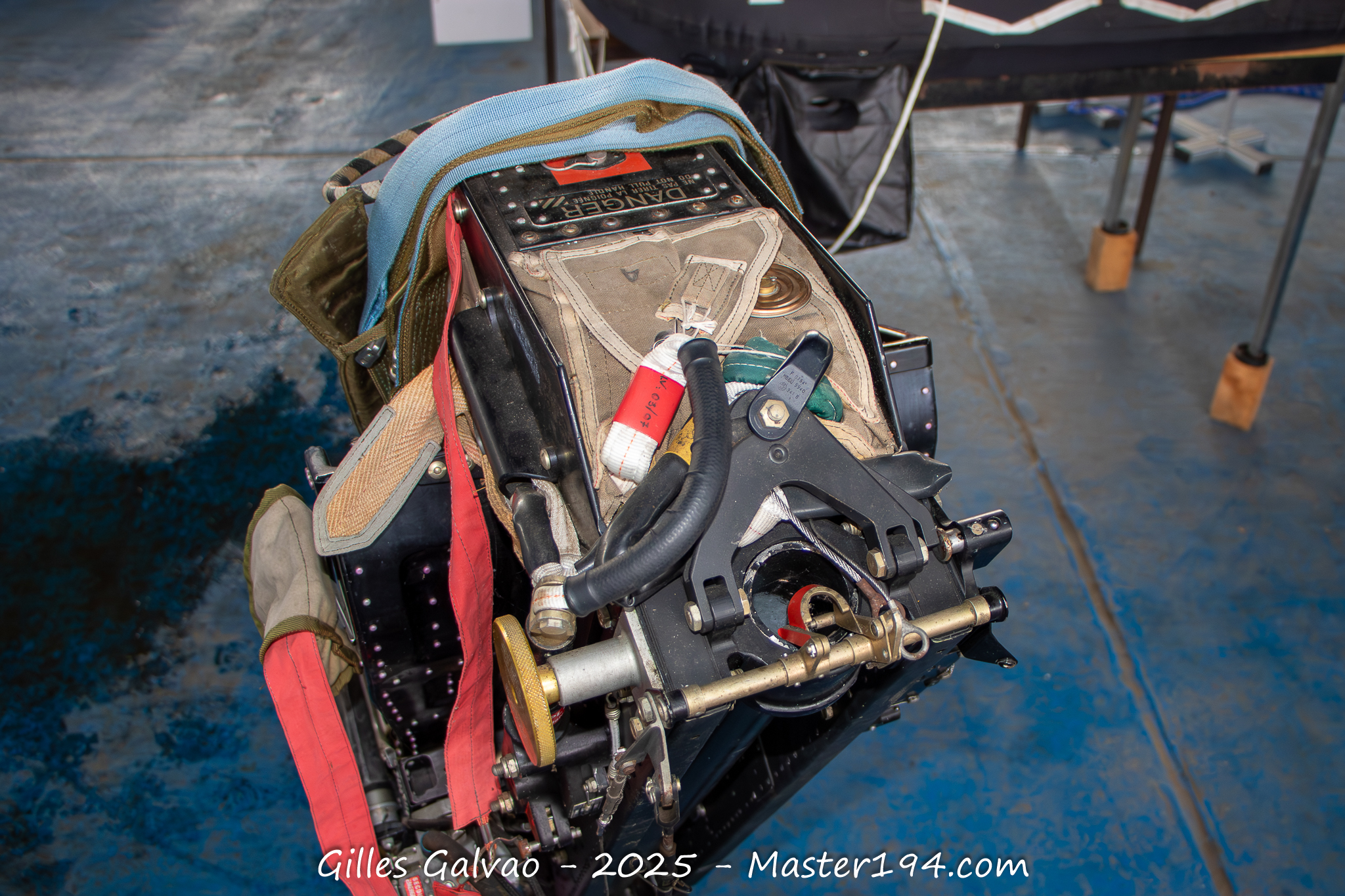
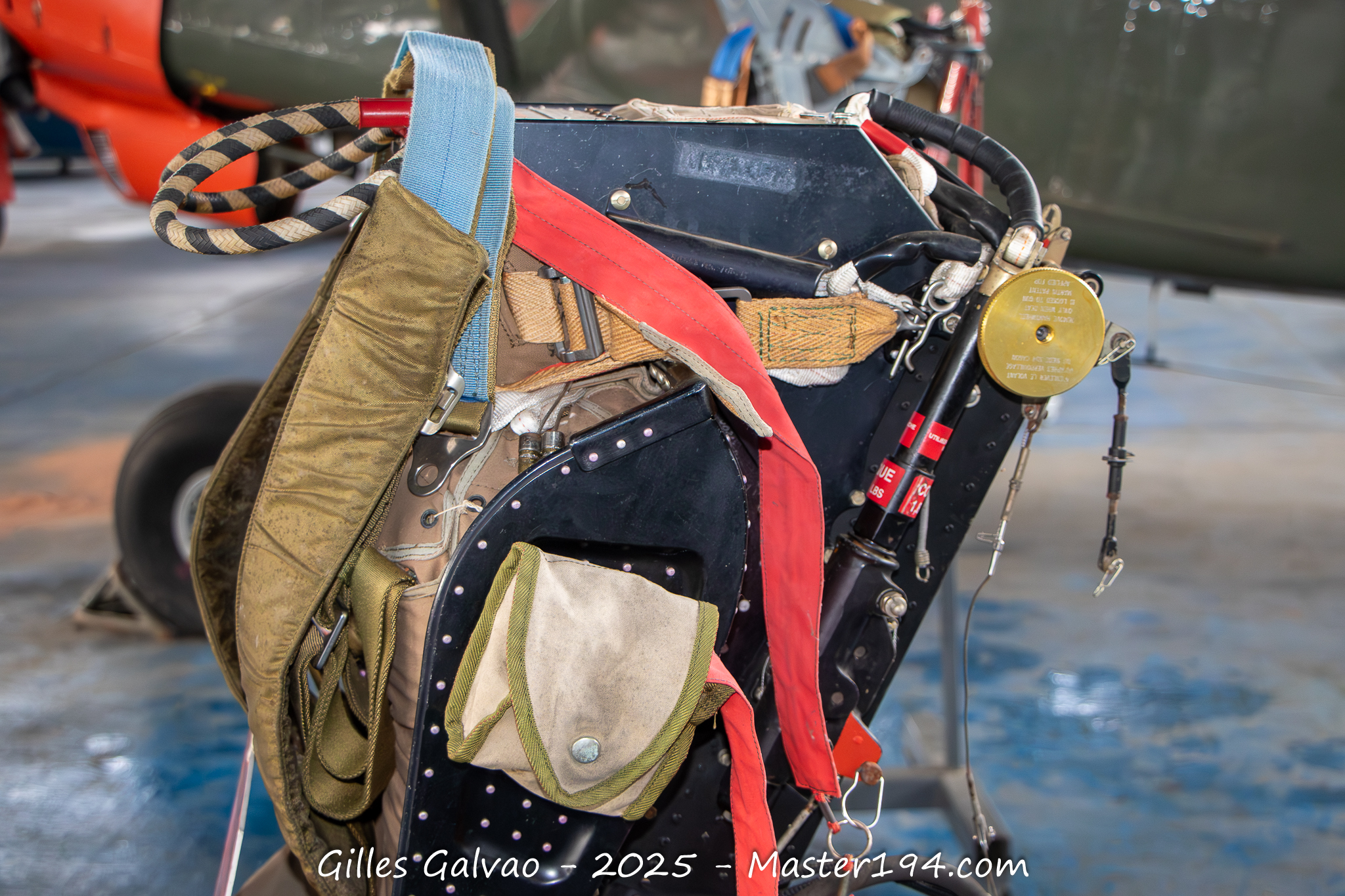
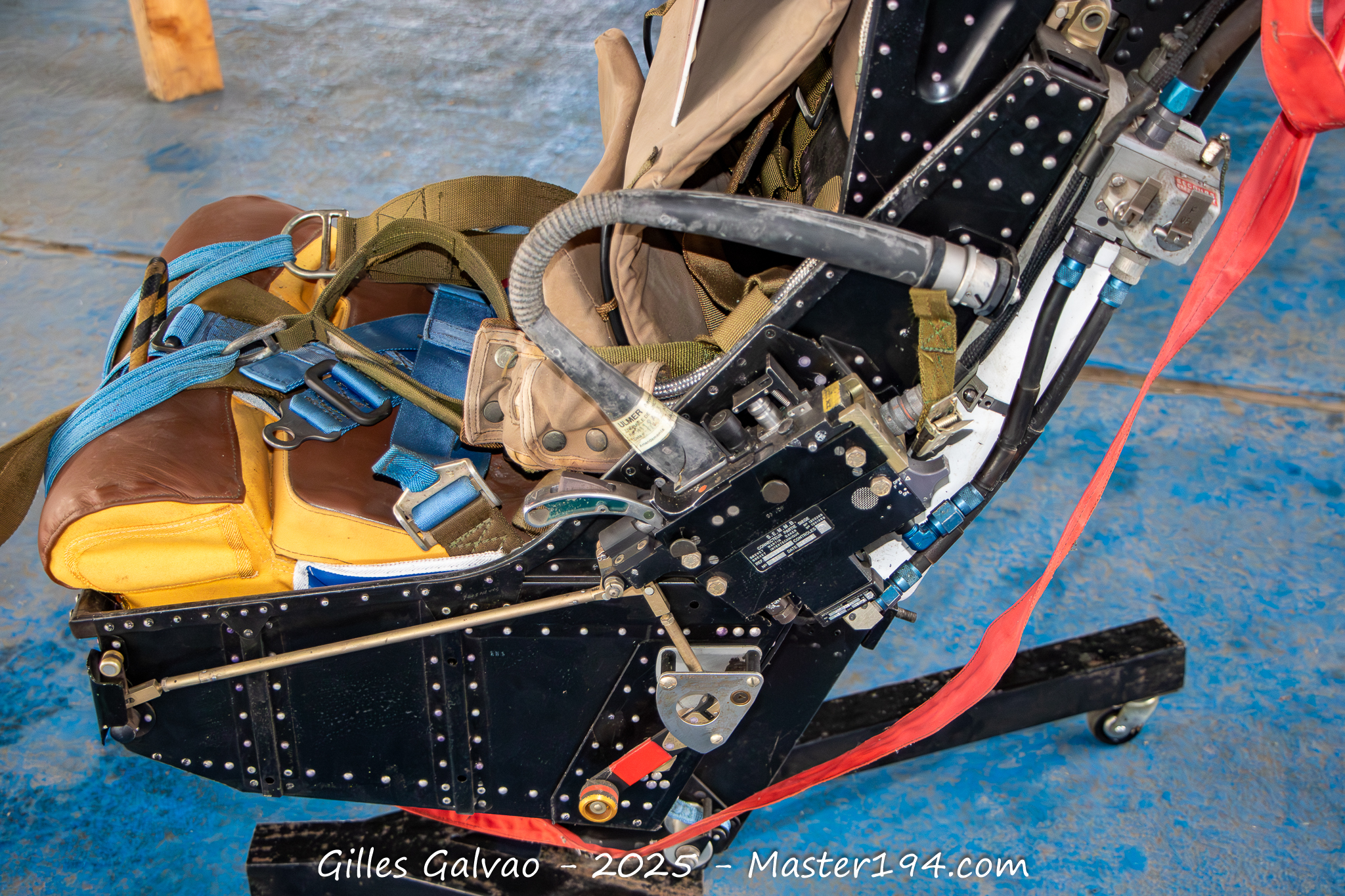
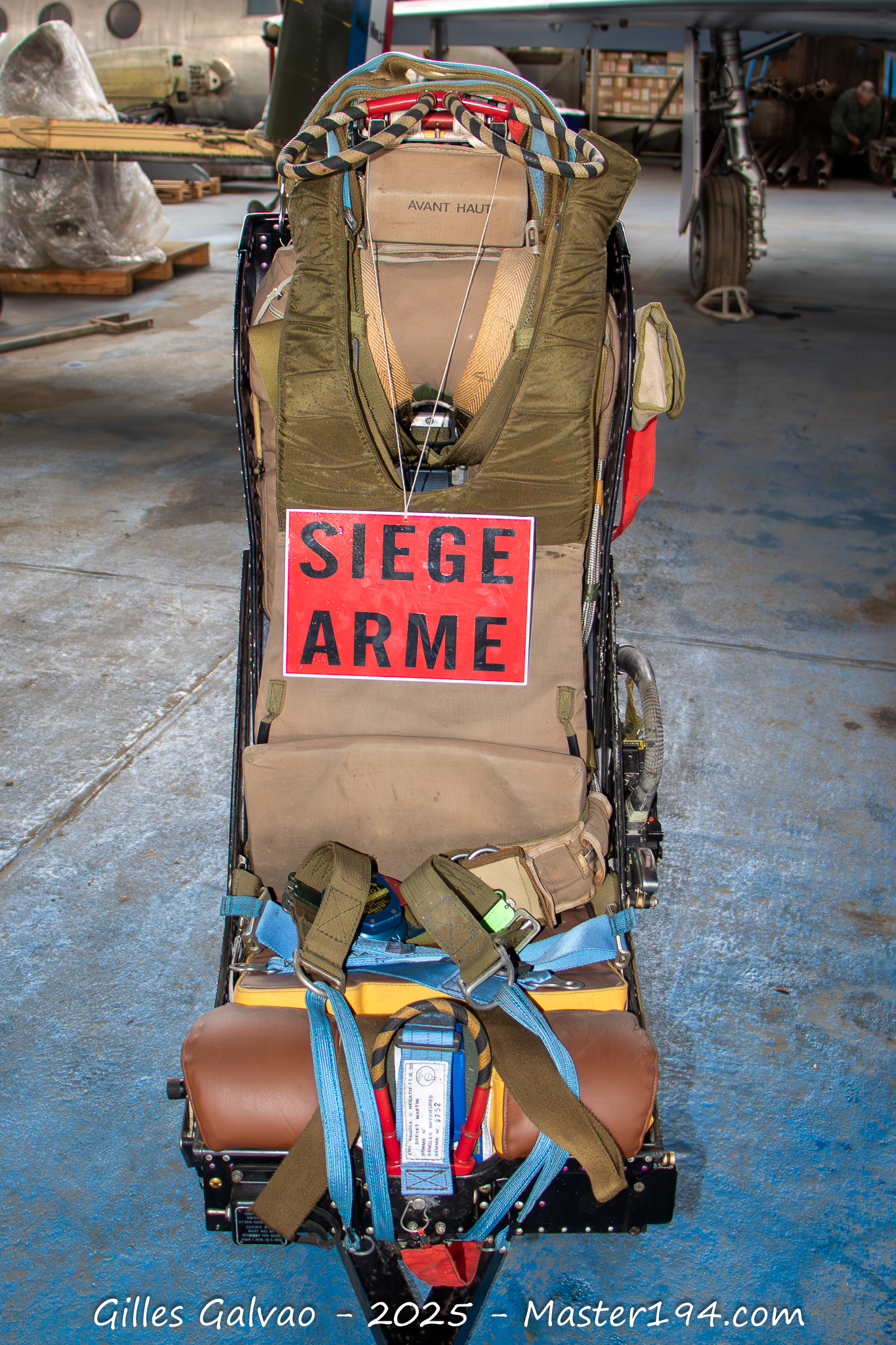
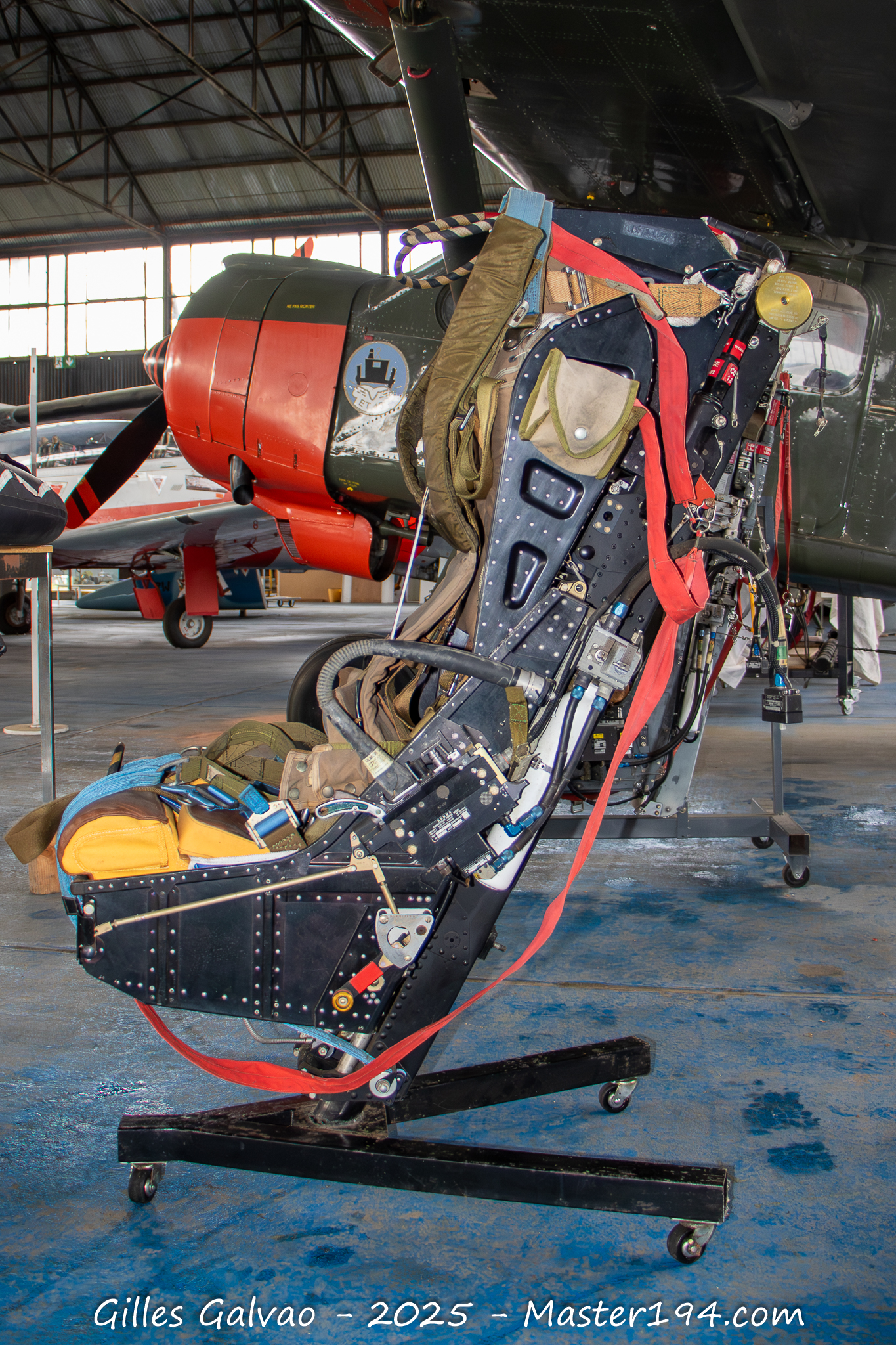
During a visit to the CANOPEE conservatory in Châteaudun, I made a photoscope of a Martin-Baker Mk.4. But before getting into the details, a few general points about the ejection seat are necessary, as it’s clear that leaving an aircraft in an emergency is no trivial matter, and many parameters come into play to maximise the pilot’s chances of survival.
The complexity and dangers of an ejection:
- Eject the pilot as quickly as possible and high enough so that he does not strike the aircraft’s tail and so that the parachute has time to deploy to cushion the fall:
- this requires a significant vertical acceleration.
- Above the pilot is a canopy:
- so it must either be jettisoned as quickly as possible or pierced through.
- Limit the risk of injuries during ejection:
- even though the peak acceleration during ejection is very brief, the vertical direction is extremely violent physiologically, and the load on the spine is enormous. The spine is the site of the most frequent injuries during an ejection.
- Once outside the aircraft, the pilot is exposed to the relative wind, several hundred km/h: at certain speeds, injuries such as dislocations or fractures can occur, among others…
- Once the pilot is ejected, his survival must be ensured:
- depending on the altitude, oxygen may be absent.
- The violence of the ejection or the relative wind can cause the pilot to lose consciousness, even though he must separate from the seat and deploy his parachute.
The ejection seat, a true concentration of technology
To take all this into account and maximise a pilot’s chances of survival, the work performed by an ejection seat is therefore far more complex than it may appear!
- Before activating the pyrotechnic systems that will propel the seat and its pilot out of the cockpit, the seat forces the pilot into the best possible posture:
- a system tightens the harnesses to press the pilot firmly against the seatback in the straightest possible posture so that the spine can withstand the vertical acceleration without injury.
- a leg-retraction system pulls the pilot’s legs back against the seat to prevent them from hitting the instrument panel, and to keep them in a proper position relative to the airflow so the pilot does not suffer a leg-spread injury (risk of severe dislocations or multiple fractures).
- the seat also sends a command to jettison the canopy or activates an explosive cord to weaken it.
- the rockets or telescopic gun (depending on the seat type) then propel the seat and pilot out of the aircraft, high and fast enough to avoid hitting the tail and to allow time for parachute deployment. The pilot must therefore withstand a certain number of g in the vertical axis, briefly — around 20 to 23 g for the Mk.4.
- now the descent must be managed: first a drogue chute is deployed, then the main parachute to slow down the seat and pilot, then the pilot must be separated from the seat, and finally the pilot’s personal parachute must open so he can land as gently as possible.
- As long as the pilot is attached to the seat, he is protected from the airflow and receives oxygen (with limited autonomy). The seat measures altitude (barometric probe) and waits for the right moment to separate the pilot: low enough for him to breathe on his own.
- At separation, the pilot’s parachute deploys.
Between the moment the pilot pulls the ejection handle and the moment he is out of the aircraft, less than one second has passed!
A few points are therefore critical, in particular:
- having sufficient airspeed for the drogue chute to be effective
- having sufficient altitude so that the seat–pilot separation and the deployment of the parachute allow for a survivable landing.
Each generation of seat has therefore brought its own improvements:
- automation of all sequences: an unconscious pilot relies entirely on these automatic systems
- protections for the pilot: leg-retraction systems have evolved and the harnessing has been simplified
- reduced minimum altitudes and minimum speeds
The revolution of the Martin-Baker Mk.4:
In fact, the Martin-Baker Mk.4 brings major advancements on many levels compared to previous generations:
- the power of its gun and its drogue-chute system allows ejection from almost zero altitude
- the sequencer and automatic systems make ejection possible for an injured or unconscious pilot
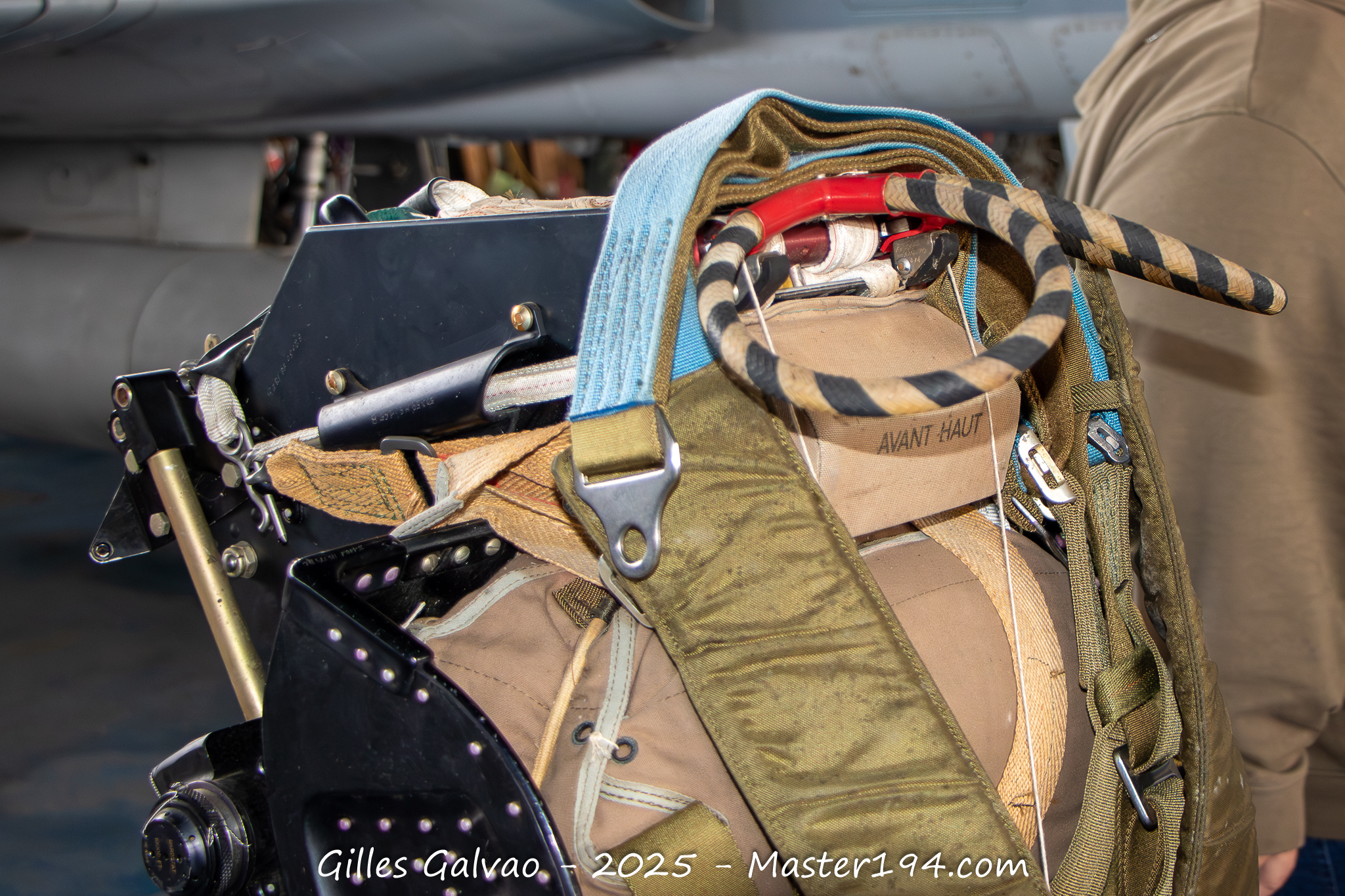
- a dual control handle: a primary upper handle with a protective mask curtain for the head and face, ensuring a better posture, and a lower handle reachable under high g-forces if the upper one is inaccessible
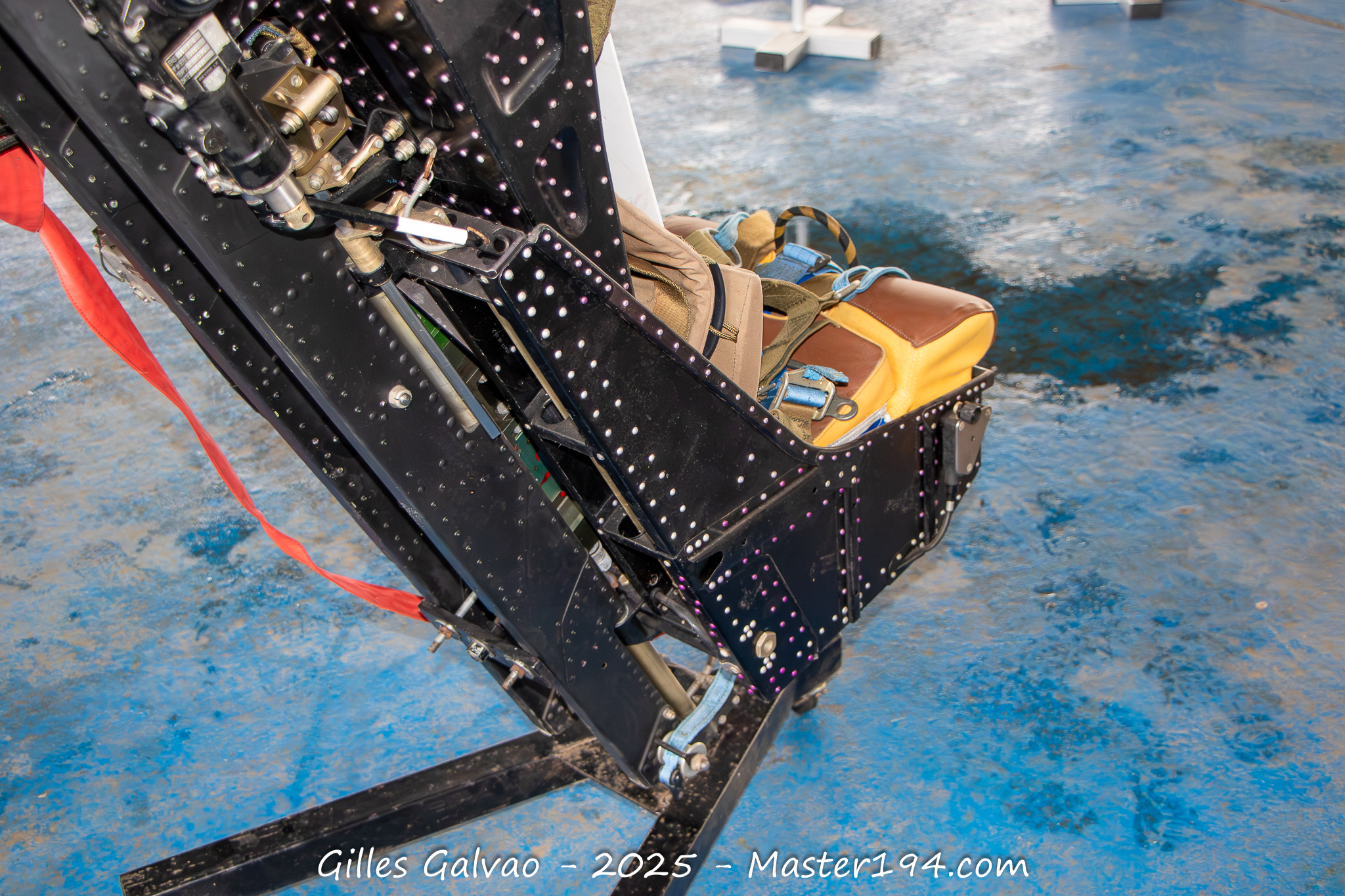
- automatic harness tightening and effective leg-retraction systems
- compatibility with through-canopy designs (faster sequences compared to jettisonable canopies)
- the first seat truly suitable for high altitude: the sequencer ensures the pilot is not left hanging under his parachute at 15,000 m and descends faster while remaining attached to the seat and supplied with oxygen
- an effective stabilization system preventing spins and correctly orienting the seat
What it still lacks:
- real “zero-zero” capability (altitude 0 – speed 0). A minimum speed of 90 kt is still required for the drogue chute and stabilization to be effective
- a less violent ejection
- the safety of ejection at speeds above 1,200 km/h: the pilot can survive but will be injured (impact from the relative wind, inability to control limbs, stabilization issues, etc.)
The main characteristics of the Martin-Baker Mk.4 seat:
- Pilot weight: between 70 and 101 kg
- Ejection by two-cylinder telescopic gun (double charge)
- Minimum ejection altitude: 0
- Minimum ejection speed: 90 kt
- Maximum ejection speed: 600 kt
- Stabilization, separation, and parachute deployment sequence: automatic
The Martin-Baker Mk.4 in France:
The Mk.4 seat was assembled in France under license by the Société d’Exploitation des Matériels Martin Baker (SEMMB), which later became SMBF (Safran Martin-Baker France). Critical parts and main subassemblies were designed, manufactured, and certified by Martin-Baker UK. SEMMB could assemble certain production lots at the end of the line, integrate French variants (Mk.4F, Mk.4FR, Mk.4A), perform heavy maintenance, and certify the seats for the French armed forces.
It is clear that there are as many Martin-Baker Mk.4 variants as there are aircraft it equipped: the way the canopy is handled (ejection / explosive cord), the power of the pyrotechnic elements, the automatic harnesses, survival kits (land/sea), cockpit adaptations (rails, angles, heights).
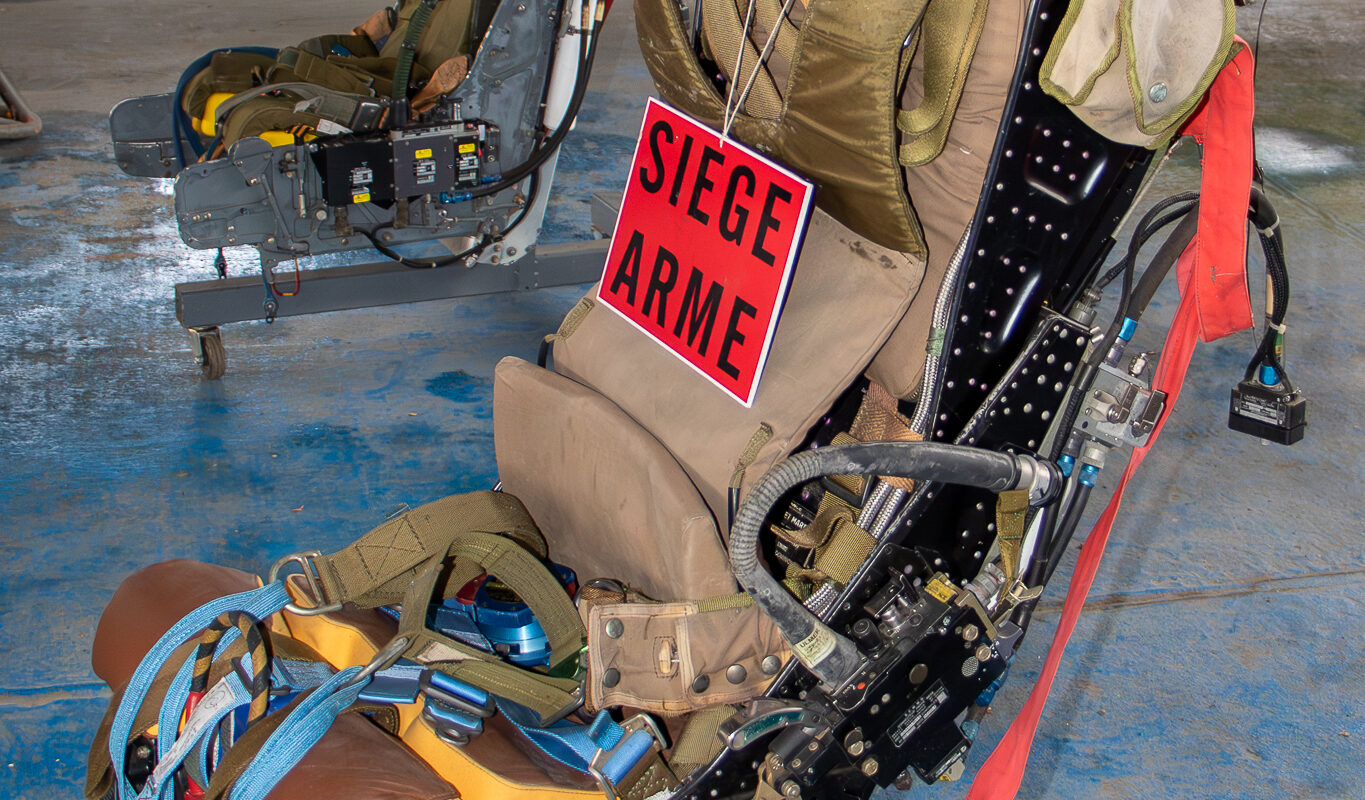
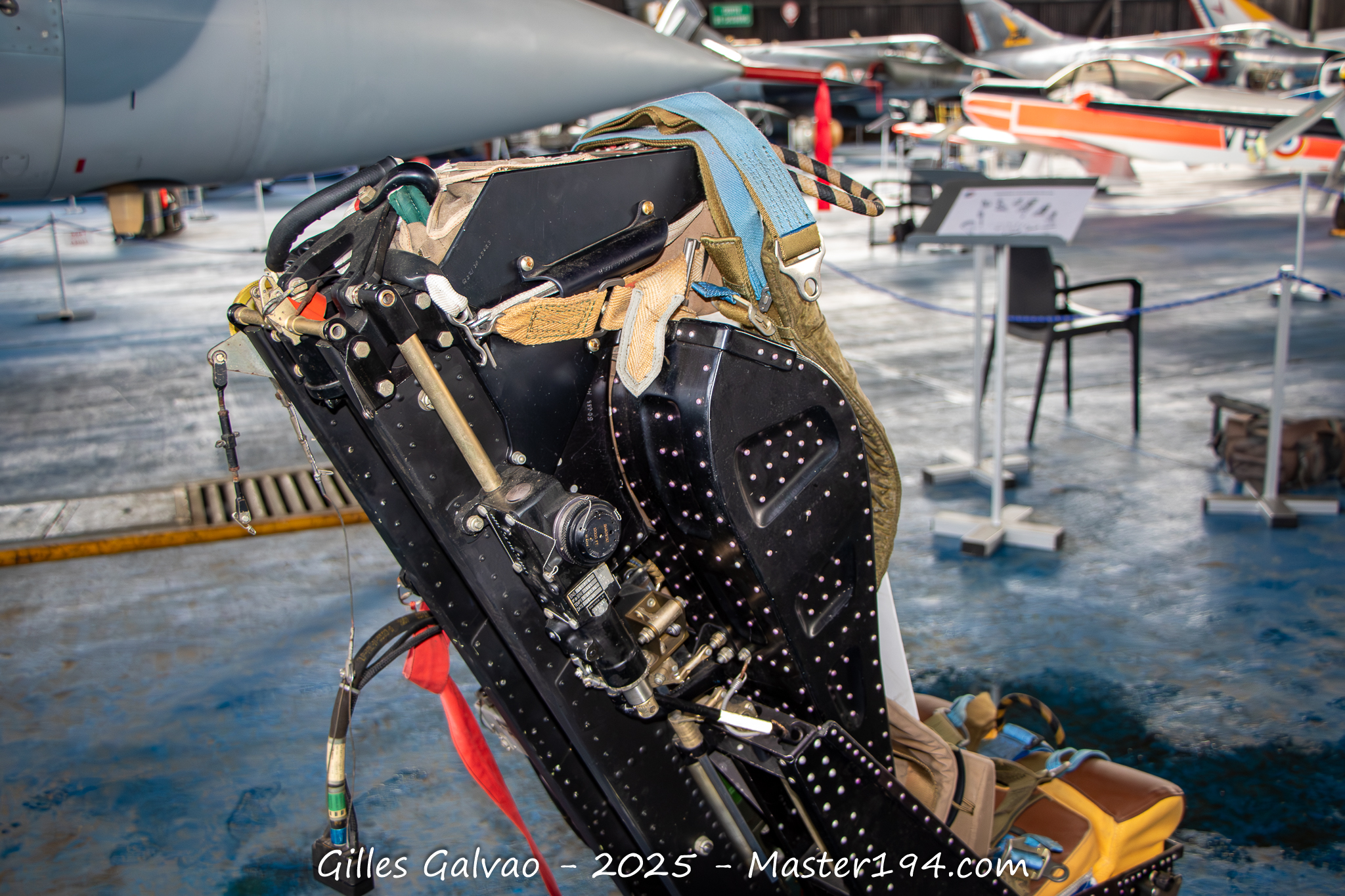
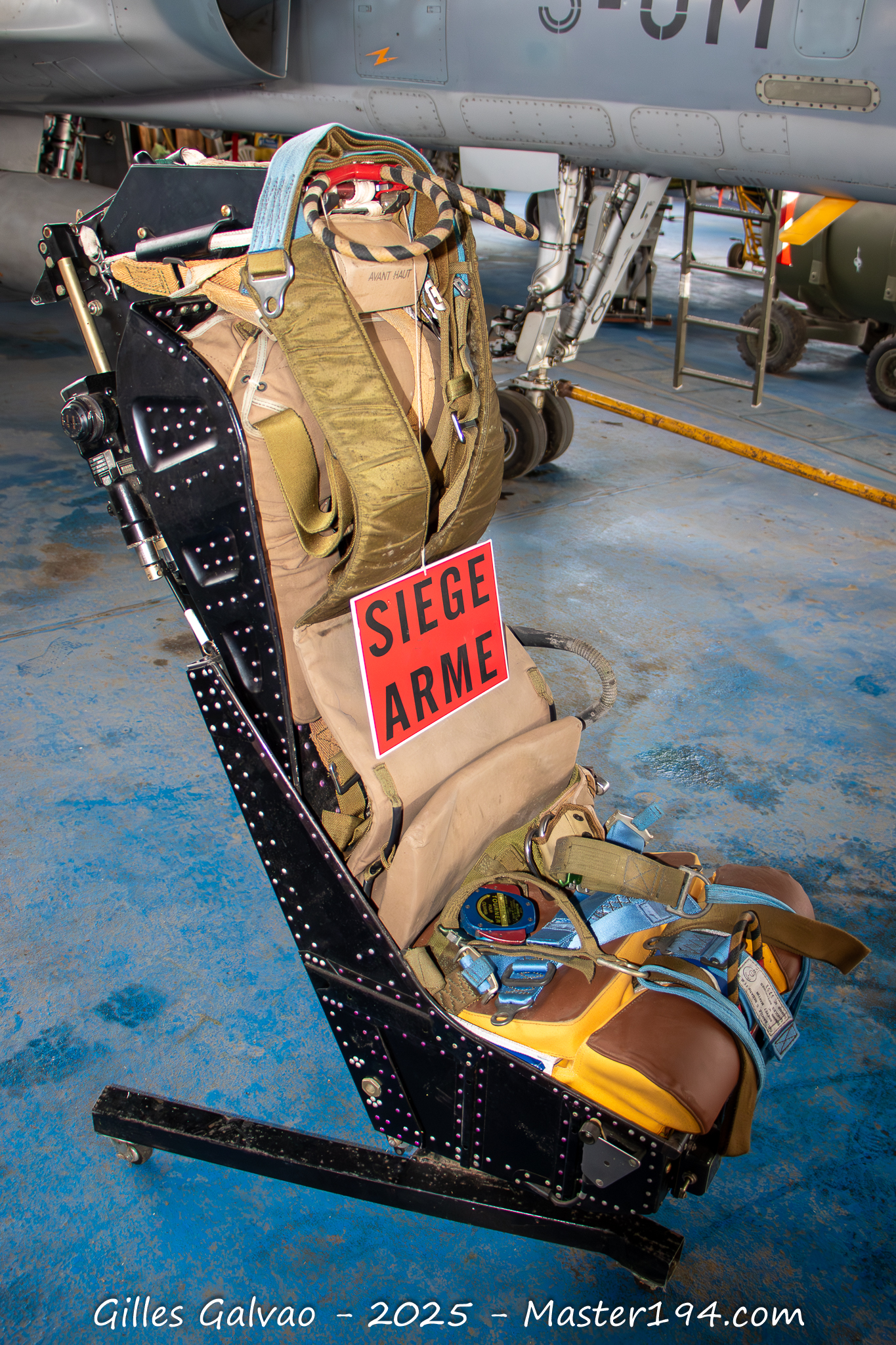
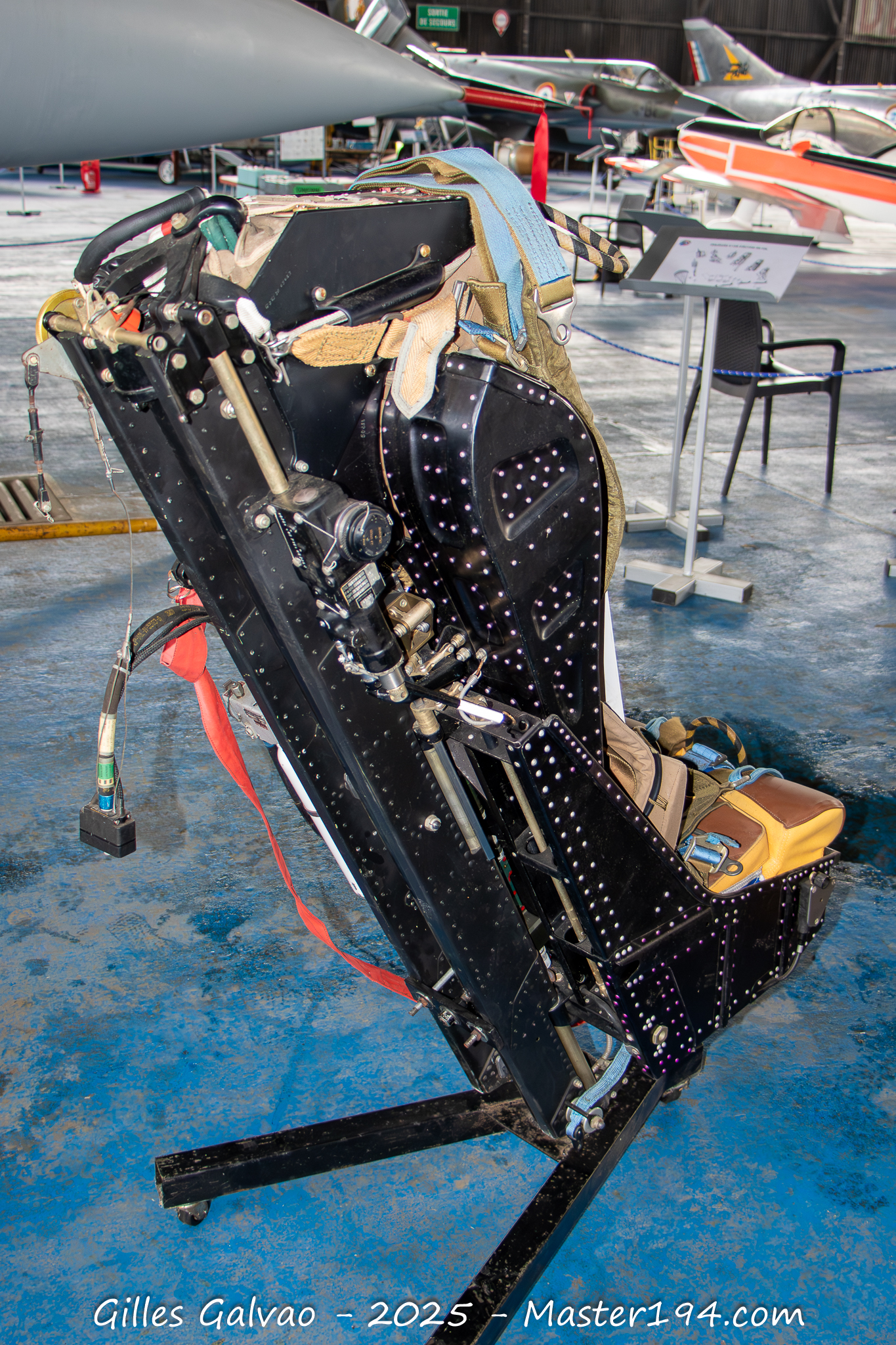
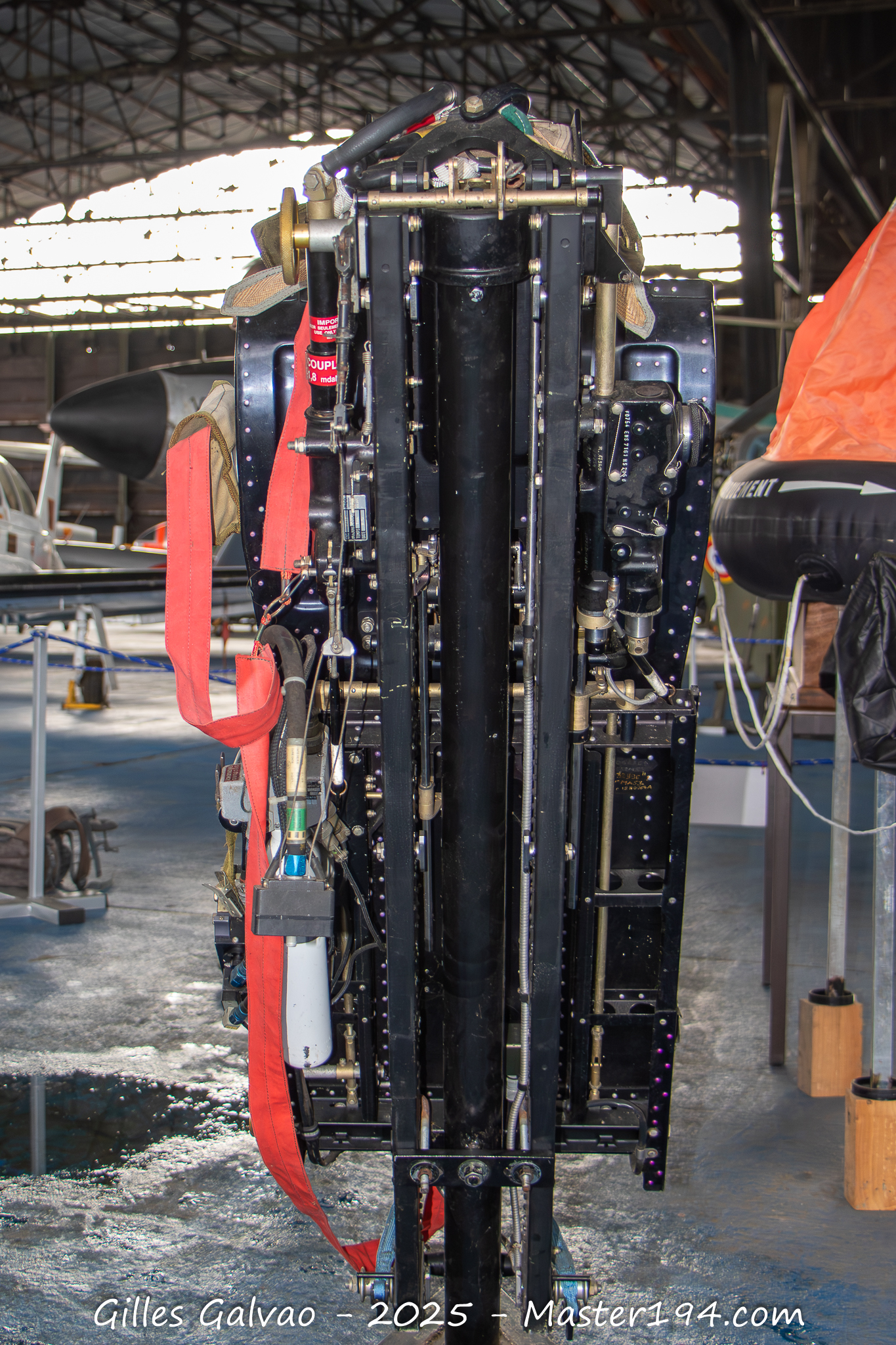
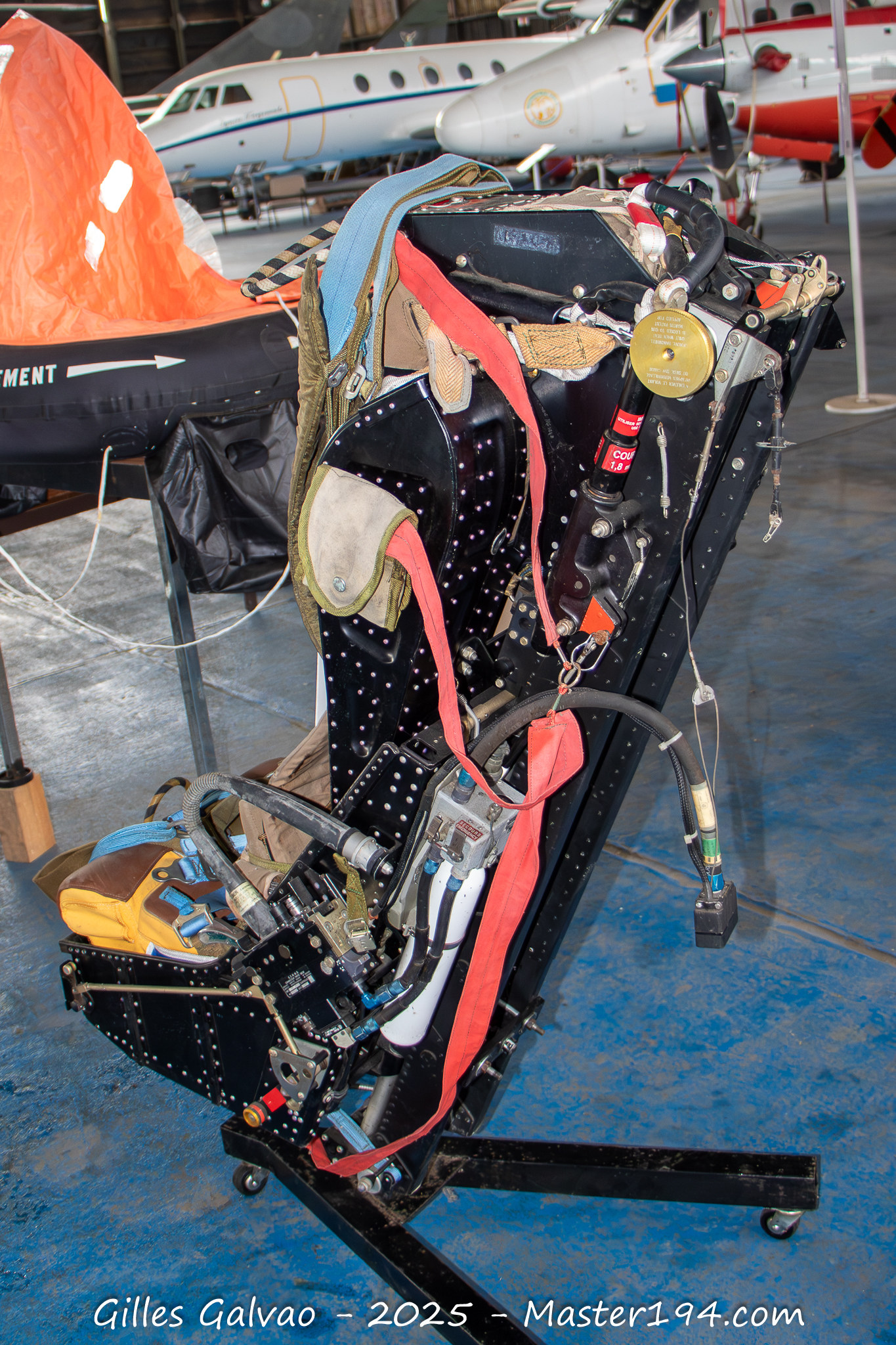
The MB Mk.4 will therefore display visual differences depending on its version and the aircraft it equips: single or double upper handle, differing straps, wider or narrower seatback, etc.
Photoscope / walkaround of a Martin-Baker Mk.4 ejection seat from a Mirage F1.
My thanks to the entire Canopée team, and especially to Francis, for this “lecture” on ejection seats!