
 by
I had the pleasure of visiting the Naval Aviation Museum (Musée de l’Aéronautique Navale), managed by the A.NA.M.A.N. association, in Rochefort, Charente-Maritime. For those who don’t know, the bond between Rochefort and the Navy is a story several centuries old, offering many beautiful sites and museums to explore.
The museum’s location itself is steeped in history. In 1916, the French Navy decided to establish a Maritime Balloon Center there, which quickly evolved by 1920 into the ‘Naval Aviation School Center’ (CEAN). This hub brought together ballooning facilities, an officers’ school, flight instruction squadrons for both aircraft and seaplanes, as well as schools for aviation mechanics, photography, and meteorology. In 1933, the newly formed French Air Force also established its apprentice mechanics’ school on-site, cohabiting with the Navy
In 1981, the French Air Force left the site for Saint-Agnant, followed twenty years later by Naval Aviation, making way for the National Gendarmerie School.
The roots of the association date back to 1988 with the creation of the ANAMTAN. On November 1st, 1990, it became the ANAMAN (Association of Friends of the Naval Aviation Museum), before ultimately evolving into the National Association of the Naval Aviation Museum (ANaMAN).
In 2009, the Charente-Maritime department took ownership of the 11.5-hectare site, including the Dodin and Saint-Trojan hangars, as well as the control tower. The Saint-Trojan hangar—named after the town on Oléron Island that hosted a maritime aviation center during WWI—was built in 1983. Today, it houses the aircraft restoration workshops. While these workshops are not typically open to the public, I was fortunate enough to be granted a visit, and I believe it is essential to share what happens behind those doors.
Aircraft Restoration
When visiting a museum, we don’t always realize the immense work required behind the scenes to prepare an aircraft for display. Highlighting this workshop is a way to shine a light on the labor and the people who make it possible.
During my visit, the workshop was a hive of activity: one person was draining the oil from a T-6 engine, another was perched in the cockpit of a Flamant restoring the instrument panel, while someone else was hand-filing a plexiglass sheet to recreate a missing porthole. Nearby, in an office, another volunteer was busy fabric-covering flight control surfaces…
While many are former military personnel or aviation professionals, others are simply enthusiasts offering their skills or just a helping hand. A carpenter works on the plexiglass, while a biologist handles the fabric-covering. Despite their diverse backgrounds and careers, they all share one thing in common: they are dedicated, passionate volunteers.
The aircraft arrive in various conditions, ranging from mere wrecks to planes in flyable condition that simply land one last time to join the collection.
Before displaying an aircraft, the ANAMAN must sometimes simply drain and clean it, or go as far as dismantling, stripping, repainting, or completely rebuilding entire sections. This requires extensive documentation and, of course, spare parts. And when parts are missing? They simply recreate them! Using ‘Système D’ (resourcefulness), 3D printing, and more…
So, next time you visit a museum, take a moment to think of all these unsung heroes who worked in the shadows to achieve such a result.
After this behind-the-scenes tour, I headed back to the public area, starting with the ticket office where you can buy this 42-page booklet for €5. I highly recommend it for two reasons: first, obviously, because the purchase helps fund the association, and second, quite simply, because it is exceptionally well-made and packed with information!

The Dodin Hangar: The Exhibition Space
Built in 1929 and spanning nearly 3,500 square meters, this hangar houses the main museum open to the public.
It contains nearly thirty aircraft, but also a vast array of equipment: tractors, engines, avionics, ejection seats, models, and more. Some rooms are dedicated to specific themes, such as the ‘Avionics’ room:


There are several ‘Model Rooms’ featuring aircraft, helicopters, and even ships (with over 1,500 models, most of them in 1/72 scale). This area also houses various artifacts, such as flight suits and uniforms (here are two examples):


Every exhibit is a piece of history, and some are truly exceptional! Among them are the Jaguar M05—the unique prototype of the carrier-based version; the ‘Crouze’ (Crusader) sporting its special ‘last flight’ livery; and the entire rear section of Étendard IVP No. 115.
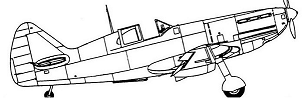
This specific aircraft was brought back to the Clemenceau by its pilot, Lieutenant Commander Pierre Clary, despite the tail being severely damaged by a missile. You will also find one of only three Dewoitine D.520s preserved in France…


There is so much to see: from the internal structures of helicopter blades to engines, missiles, and more. These photos are just a small glimpse of everything you will discover there…


You can explore the interior of several aircraft and even take a seat in the cockpit of a Super Étendard, all under the expert eye of… a former Super Étendard pilot!
On that note, we took advantage of an excellent guided tour for just an extra €2 per person (bringing the total entry fee to €10). Our guide, Jean-Philippe, was outstanding. Whether you are a complete novice or a seasoned aviation enthusiast, his explanations, tone, and anecdotes ensure you learn a lot and have an incredible time!
A quick side note about our guide, Jean-Philippe ‘JEX’: a former mechanic with the ALAT (French Army Light Aviation). After training in Saint-Maixent and Bourges, he went on to accumulate 1,100 flight hours on the Alouette II and III, Gazelle 341 and 342 HOT, as well as the L-19, Broussard, and Puma. His career took him through Dax, Freiburg, Chad, Djibouti, and Compiègne.
He also played a very active role in the restoration of the H-21 in Dax, known as the ‘BEJ’. You can read an article about it here: https://www.museehelico-alat.com/index.php/les-restaurations/restauration-du-h-21
I honestly think you could visit three times and he would still have new things to teach you!
In any case, I missed plenty of details that my wife picked up on—she didn’t miss a thing!—while I was busy taking walkaround photos, made much easier thanks to the help of Jean-Claude, a former Jaguar mechanic.

The hangar is packed to the rafters with incredible items, some of them truly exceptional. Given the ongoing restoration projects that deserve to be displayed and preserved, one of ANAMAN’s next big challenges is securing a new hangar. However, it’s a complex puzzle: the land belongs to the Department, the area is under the strict oversight of France’s heritage architects (Bâtiments de France), it’s a flood zone, and of course, there’s the construction cost. Let’s hope a solution is found that satisfies everyone, allowing us all to admire the equipment and aircraft that are currently inaccessible due to lack of space!
The gift shop concluded our visit, and we couldn’t resist picking up a few things (there’s something for every budget)—combining business with pleasure by helping to fund the association.
To conclude, if you are anywhere near Rochefort, don’t hesitate to make a detour, but be sure to check the visiting days. At the time of writing, they are Tuesday (morning and afternoon) and Saturday afternoon. Children are particularly well-welcomed, with a specific activity booklet that is both fun and educational.
My sincere thanks to:
- Jacques, for putting us in touch.
- Jean-Philippe, for organizing the workshop visit and for being a “5-star guide” all afternoon.
- Jean-Claude, for his invaluable help with the walkaround photos and for taking the time to answer all my questions.
- Pierre, for the tour of the C-47.
- Philippe, our Super Étendard “instructor.”
- Michel, President of the Association.
- All the volunteers hard at work in the workshop, who took the time to show and explain what they were doing.
- And all the other “invisible” heroes working behind the scenes to preserve our aviation heritage.
Click on the image below to visit the association’s official website: