 by
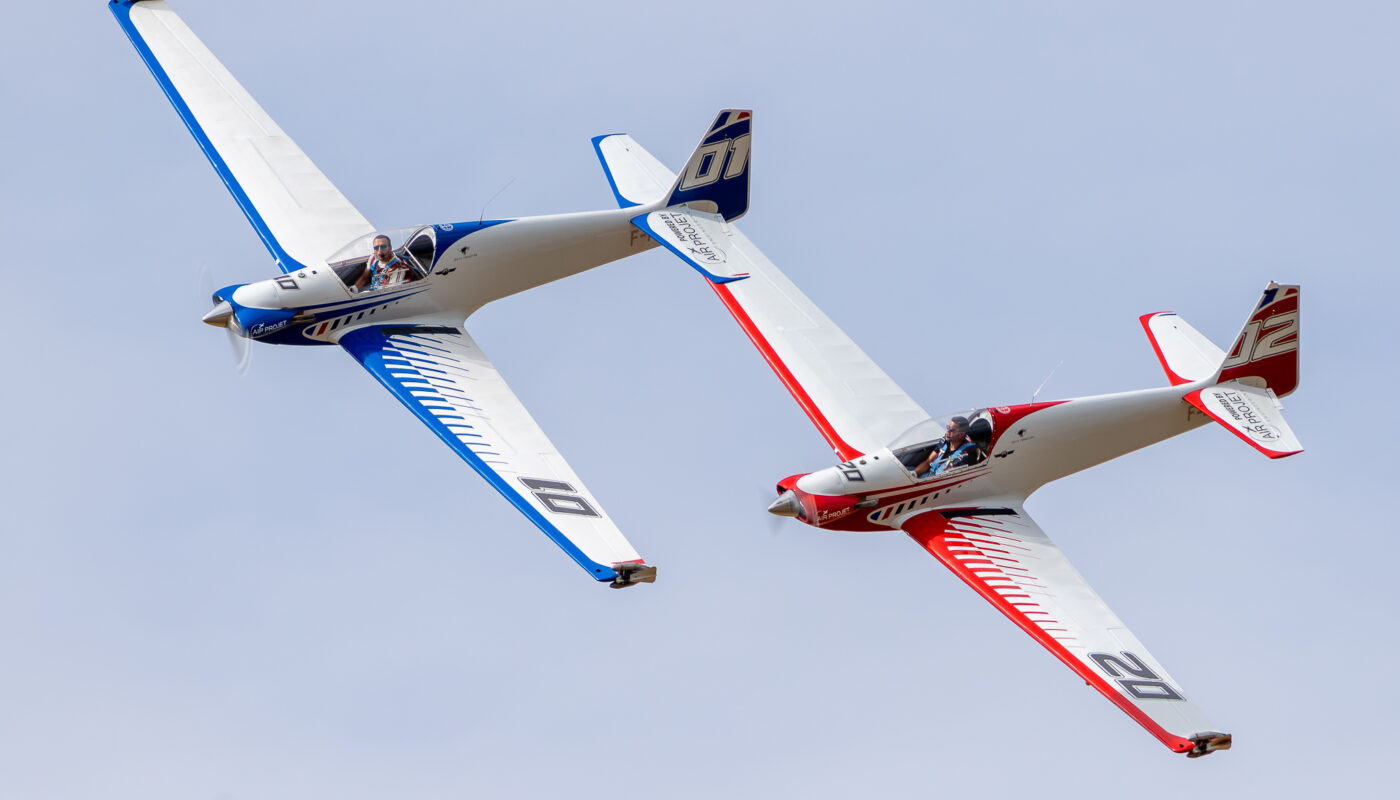
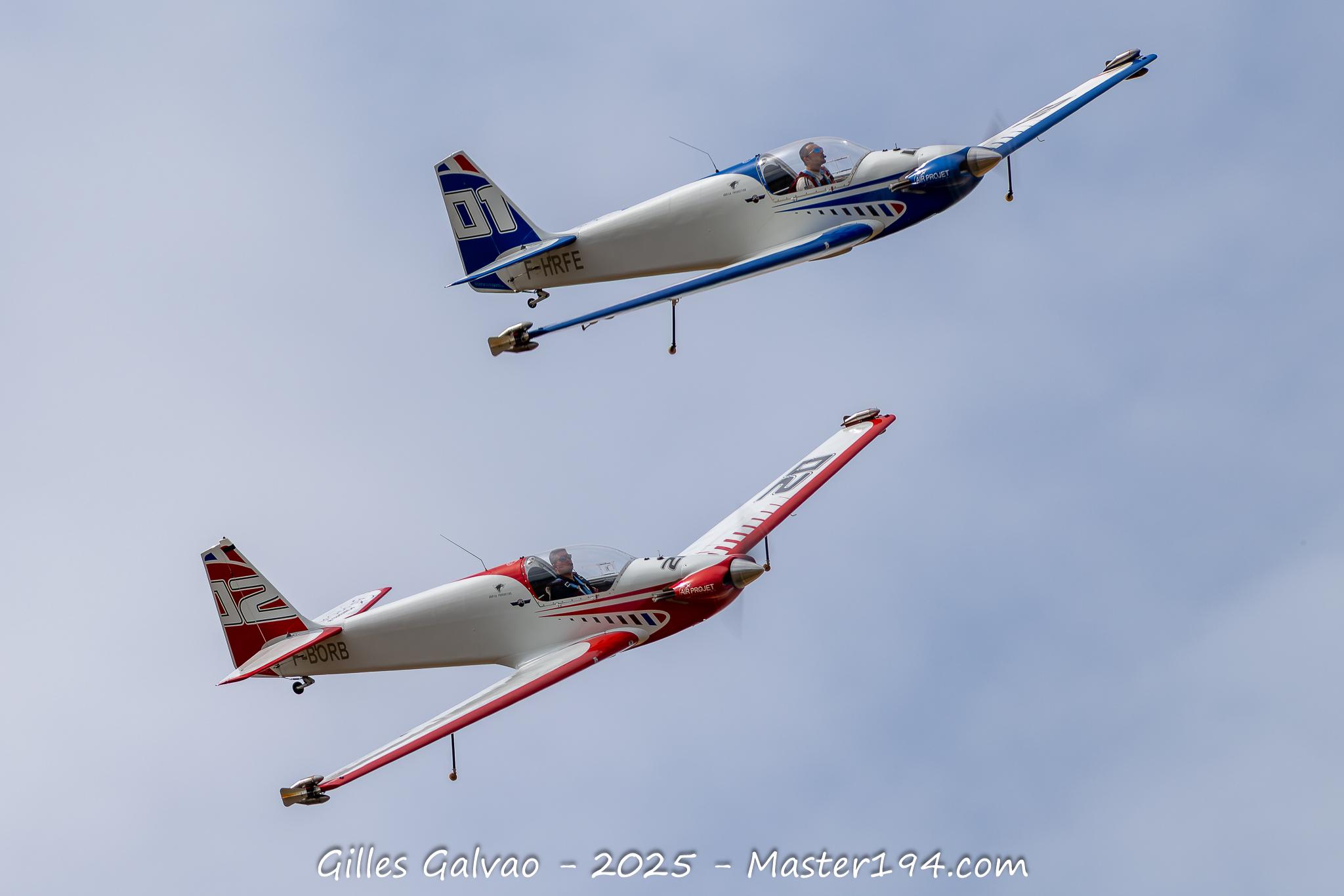
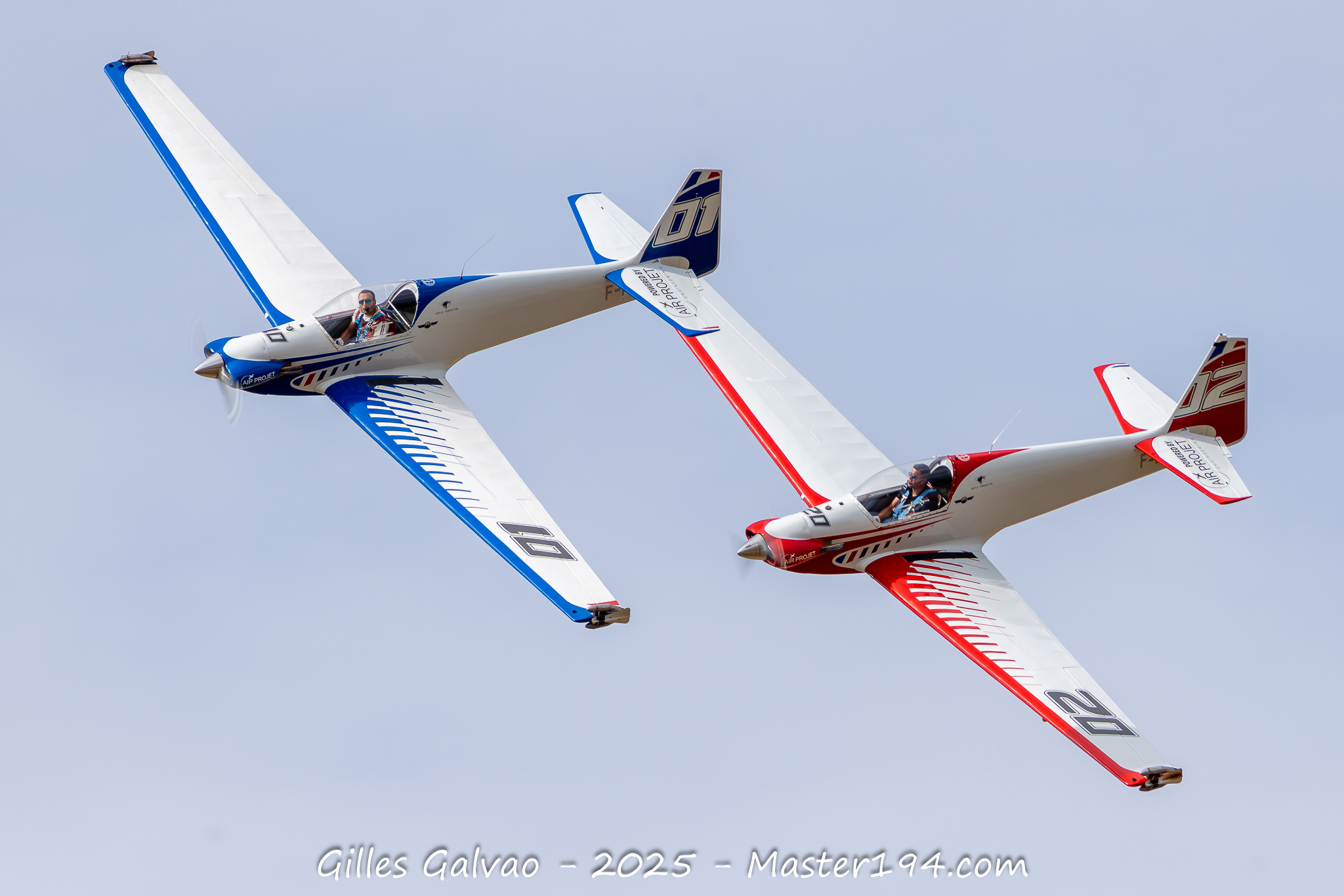
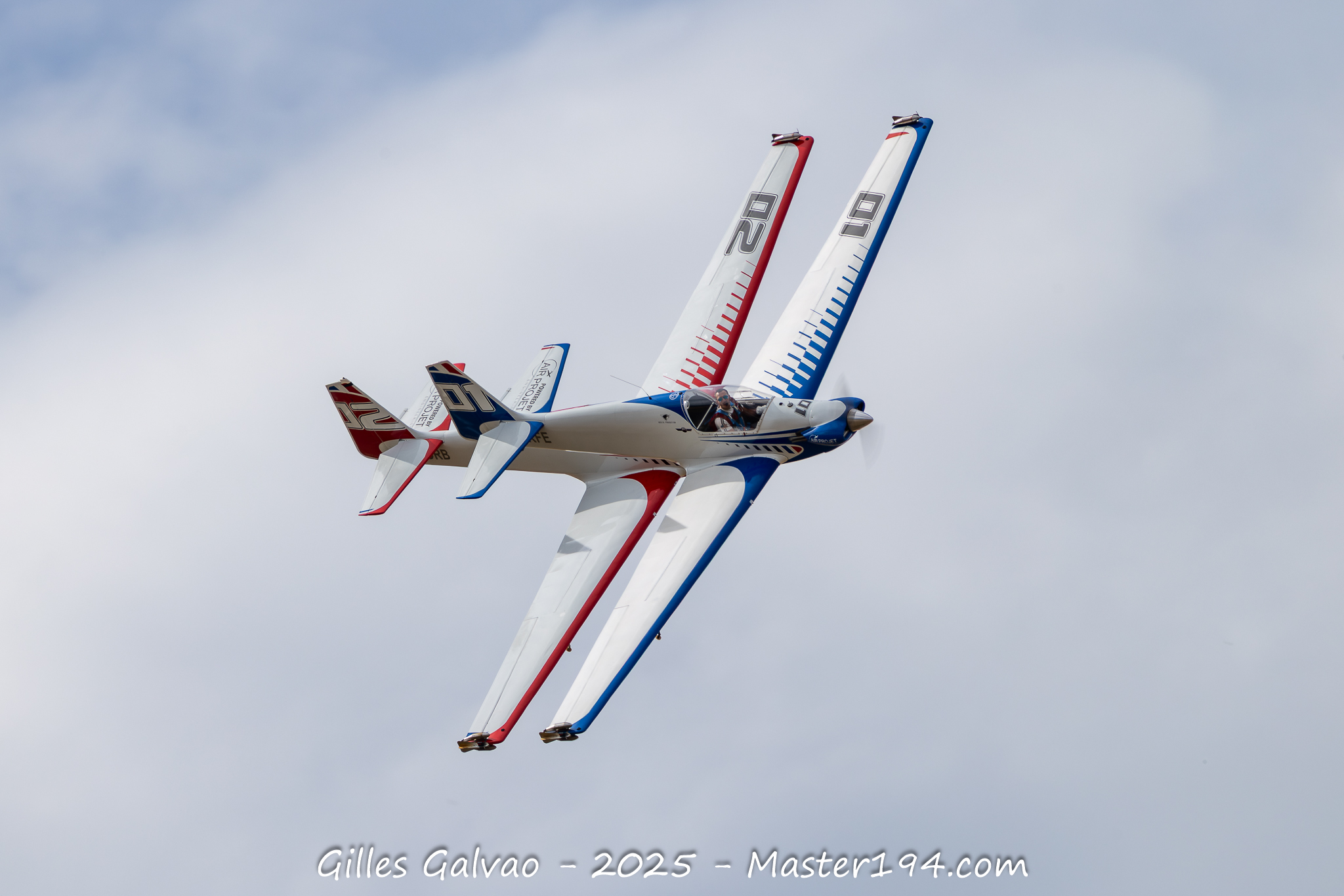
Alternative Duo is a unique French aerobatic display team, blending technical precision with ‘visual poetry.’ Based at the Dijon-Darois airfield (LFGI), the team performs an aerial ballet set to music, featuring two Fournier RF4D lightweight glider aircraft (not motor gliders—more on that below).
📷 HD– All photos in this article are clickable to view in high definition.
Who is Alternative Duo?
The Duo:
- The Leader: Benoit David, 32, an airline pilot who has been flying since his early youth.
- The Wingman: Anthony Bezard, 40, CEO of a light aviation company (Air Projet), with 1,800 flight hours and 13 years of airshow display experience.
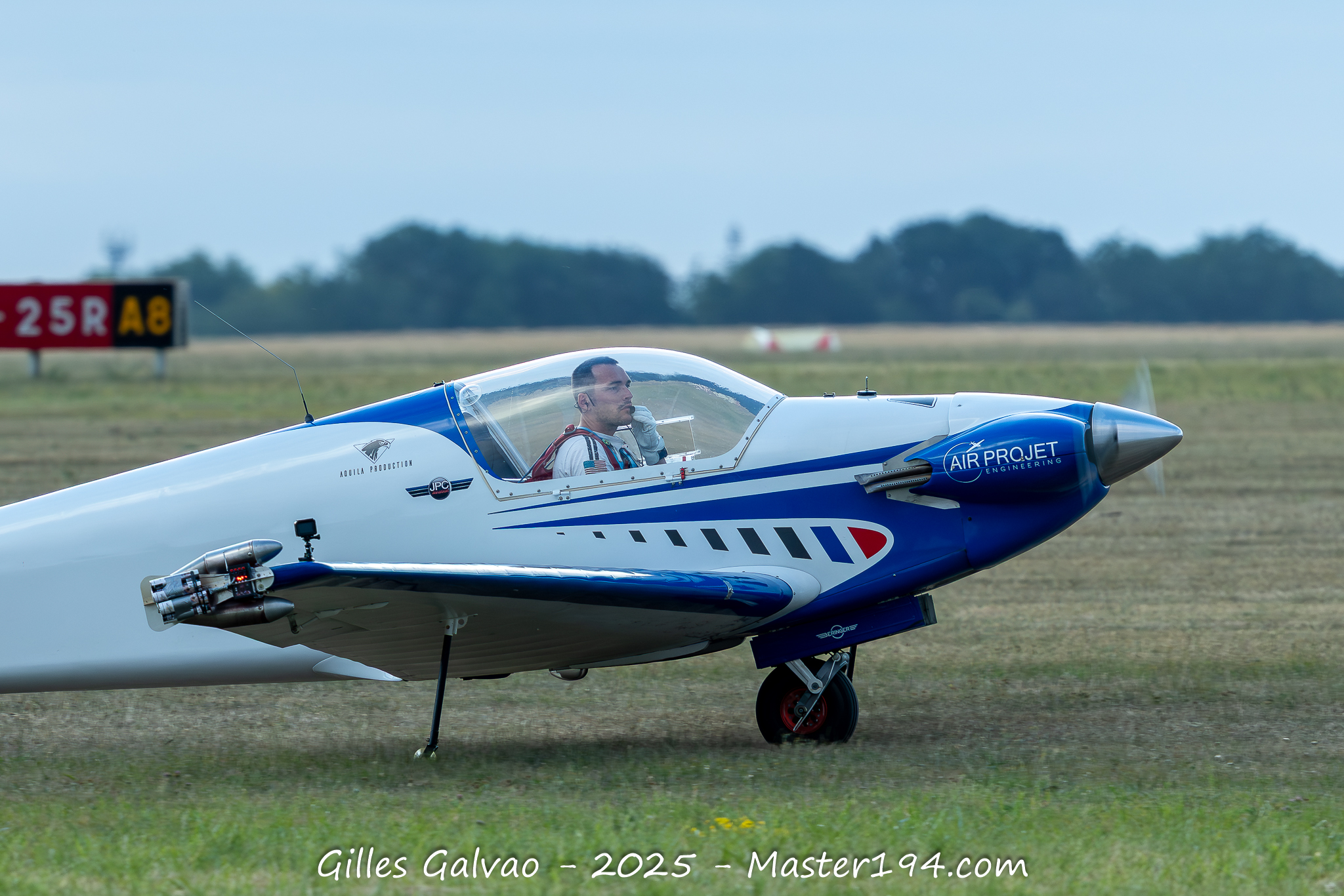
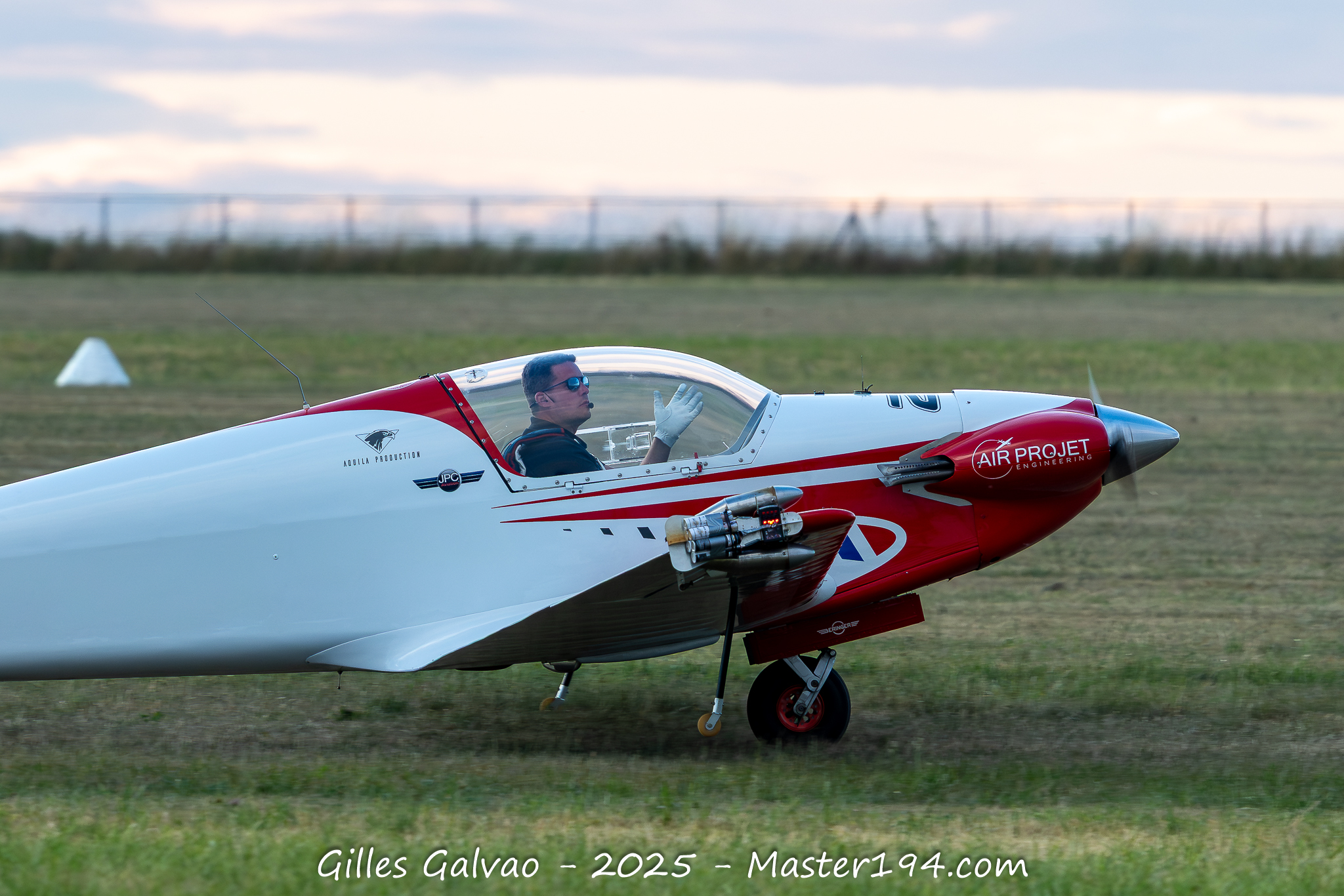
The Birth of the Display Team
Their work at Air Projet often led them to fly in formation during aircraft ferry missions. In 2019, they decided to present their two Jodels at the Dinan Airshow. This sparked a new passion for formation flying, fueled by a shared memory: videos of the 1980s British display team, the Skyhawks, who flew two (and later three) aircraft in the 90s… all on Fournier RF4Ds!
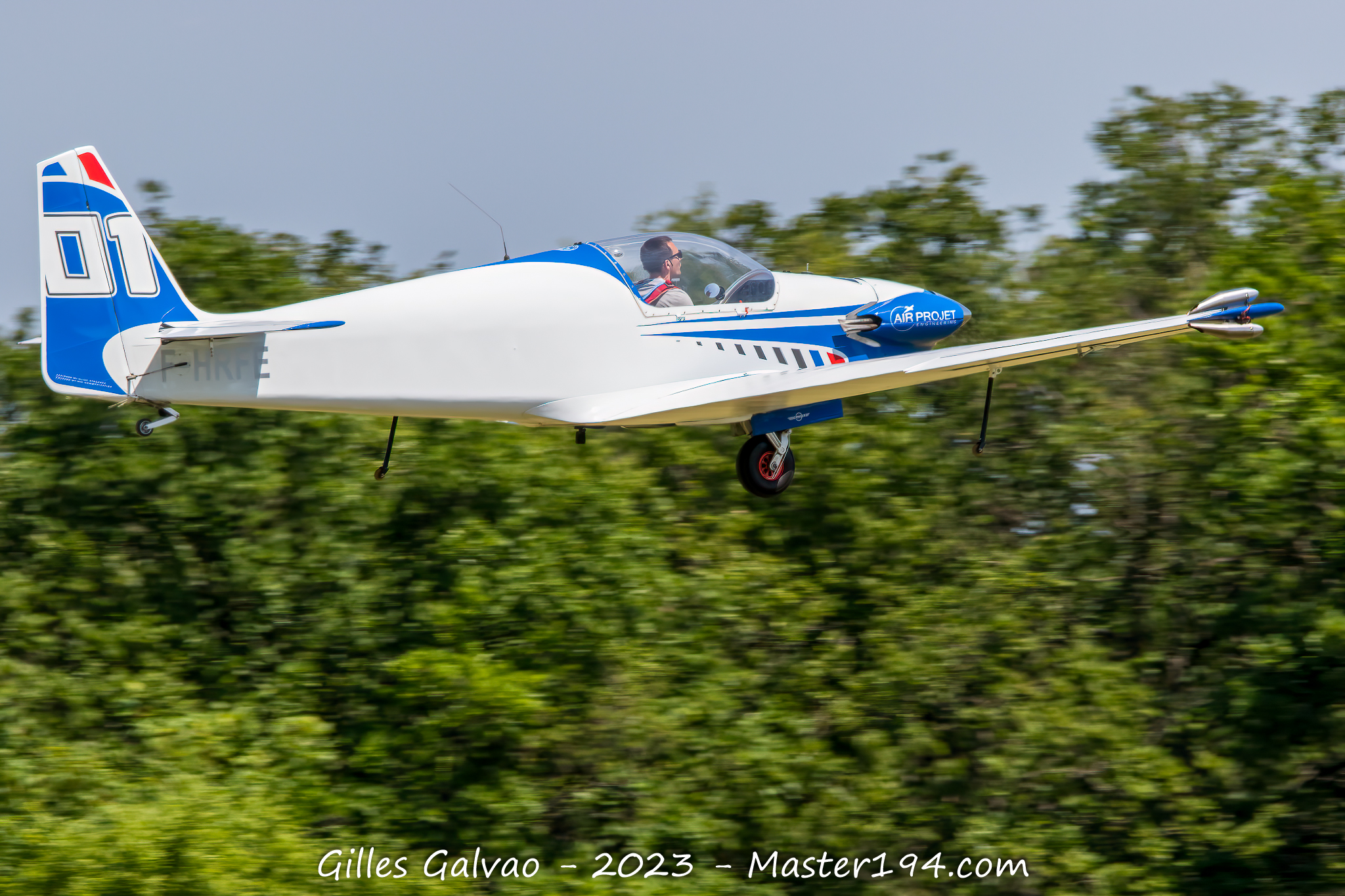
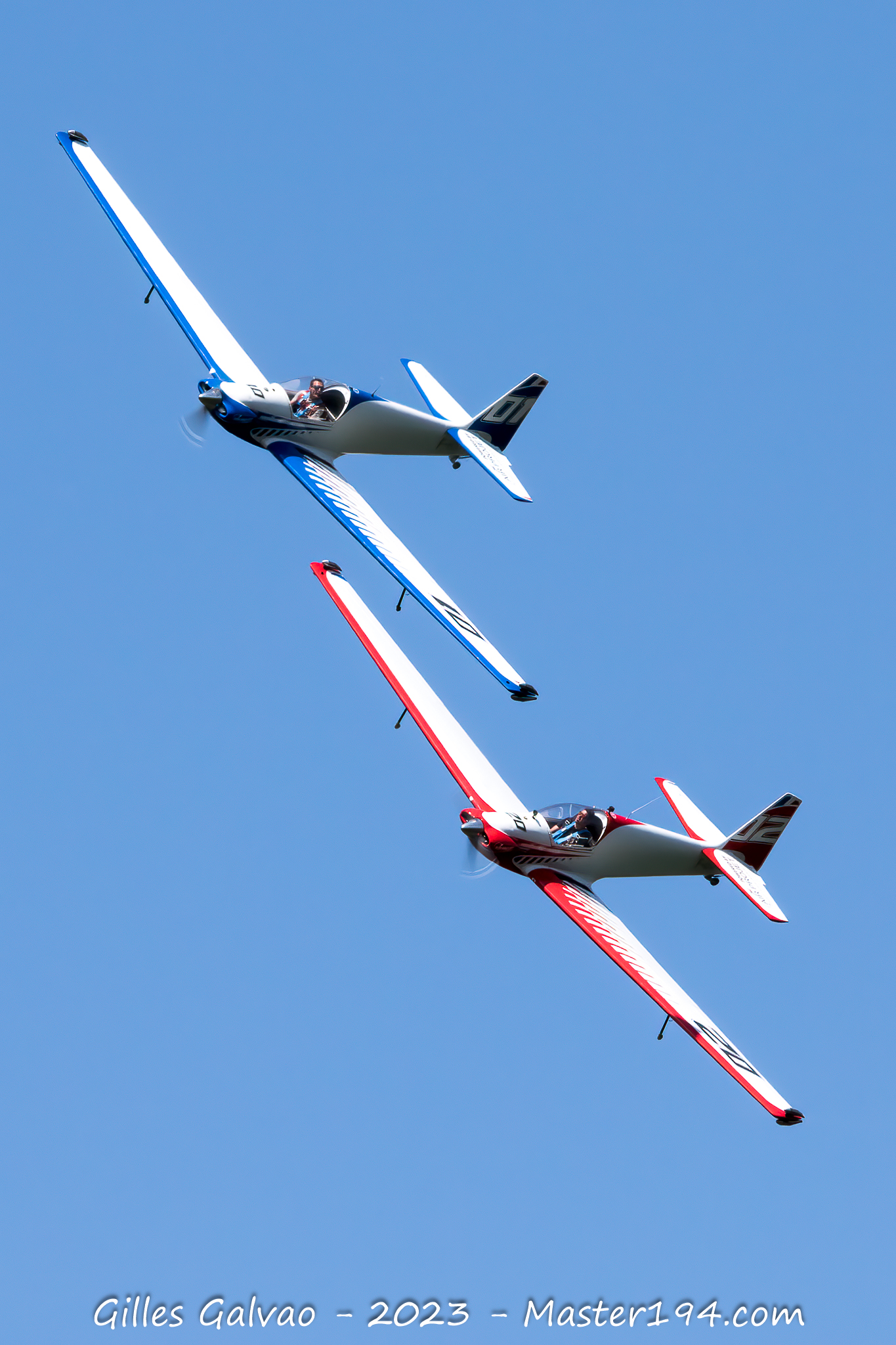
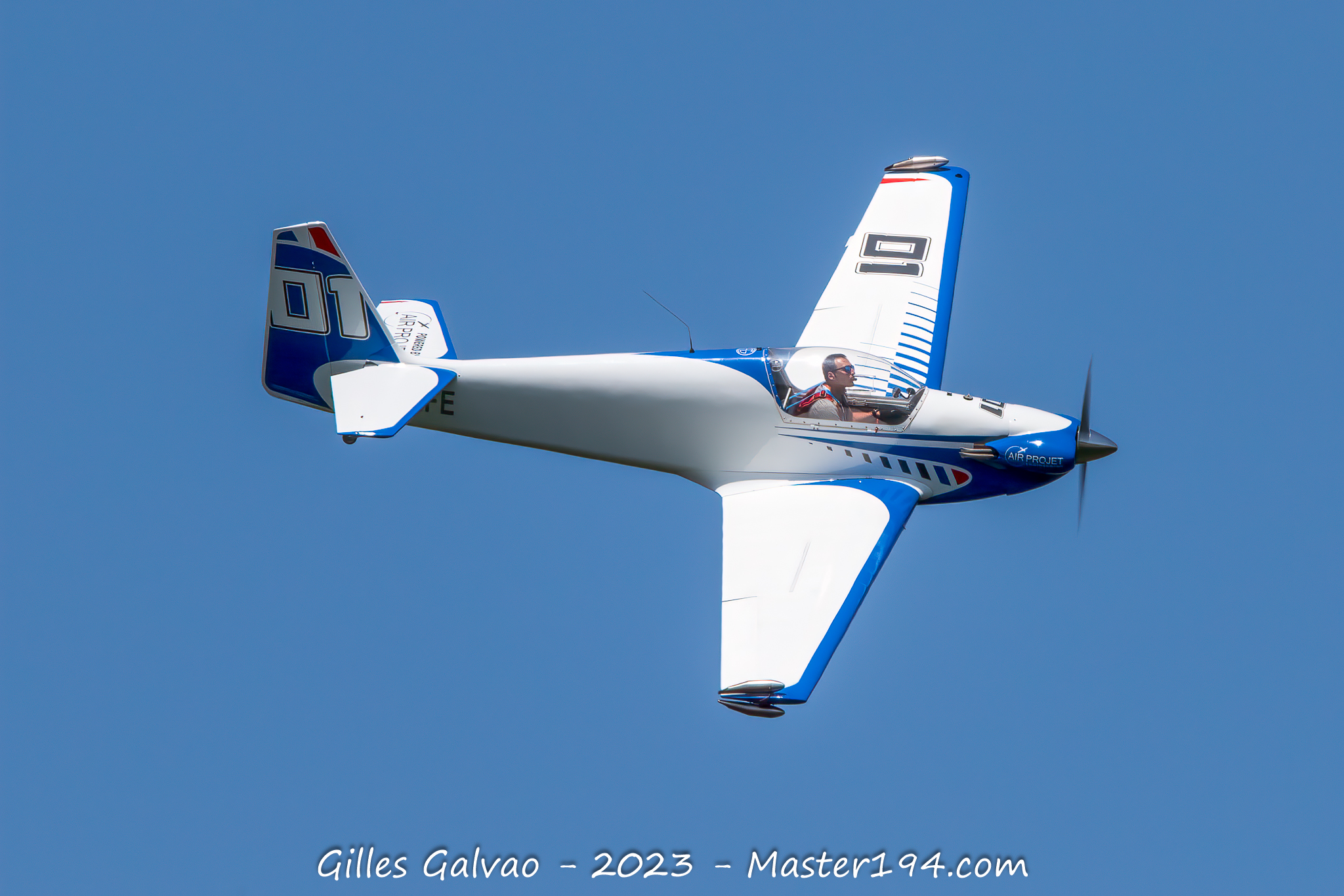
Anthony began searching for a Fournier RF4D and came across an ad for an aircraft that turned out to be the former leader of that very British team! He bought it and restored it; it is now the ’01 Blue.’ Shortly after, a second Fournier RF4D was acquired. Following a complete nine-month restoration, the second aircraft took to the skies in September 2022: the ’02 Red.’ Their first flight as a duo took place under the watchful eye of René Fournier himself. ‘Alternative Duo’ was born, launching its first official season in 2023!
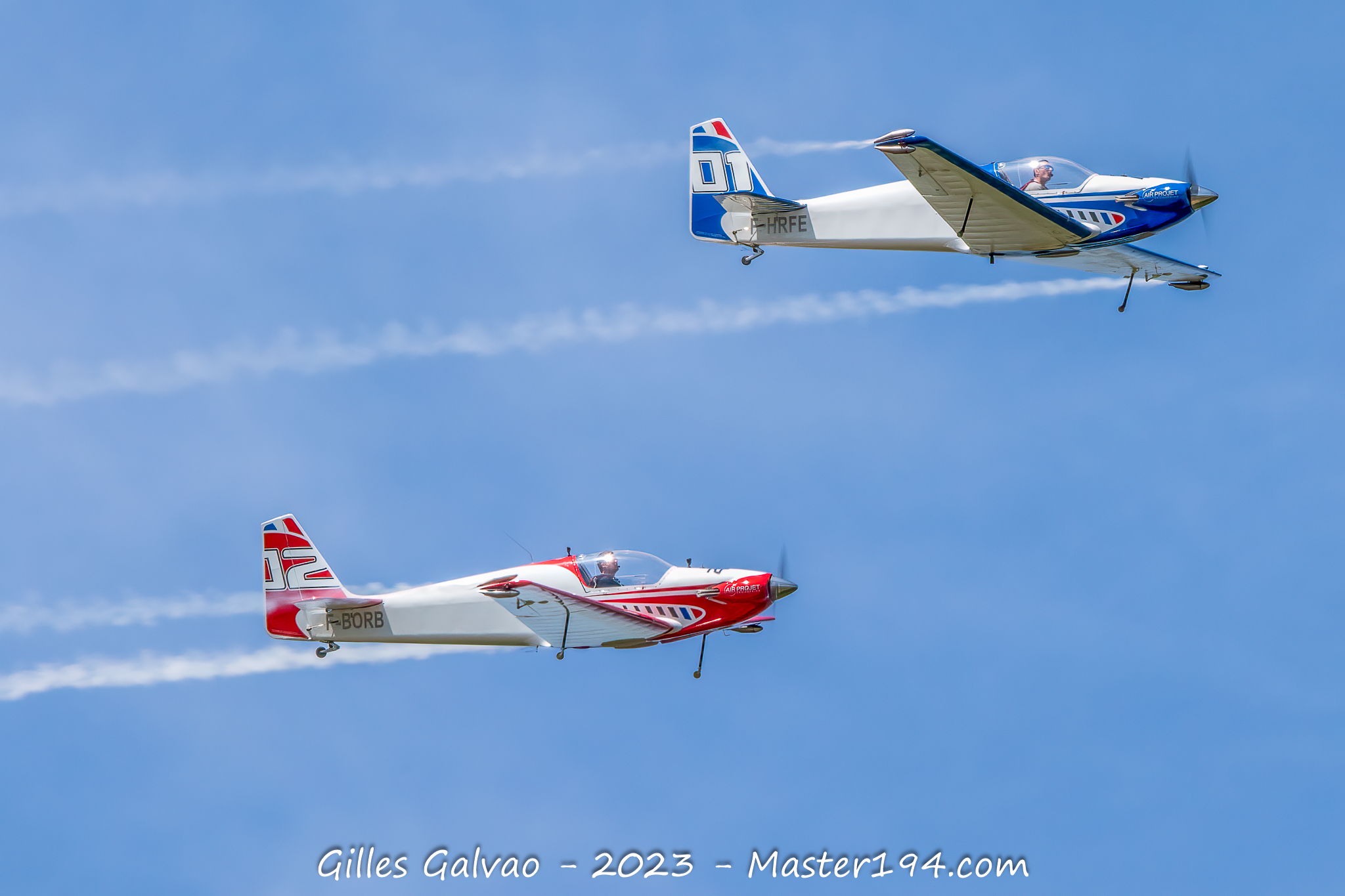
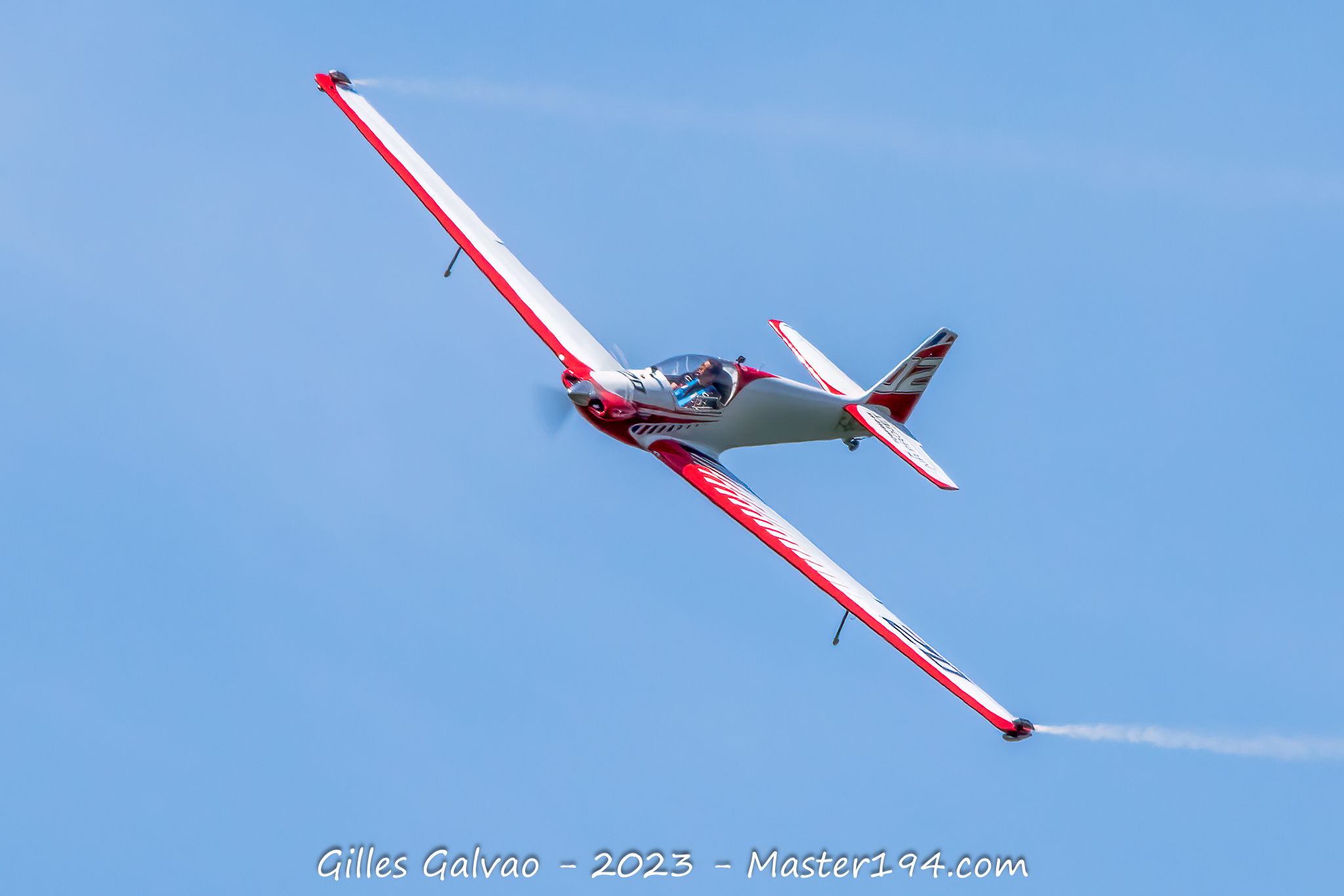
Memories from their 2023 display at Le Temps des Hélices
The collective keeping Alternative Duo in the air
The name ‘Alternative Duo’ naturally evokes the pair of pilots and their aircraft, but it also reflects the originality of their display and the type of aircraft they fly. A duo, certainly—but only in the skies!
Behind Alternative Duo’s spectacular performances lies a non-profit association (Association loi 1901) driven by a truly dedicated and passionate team.
Among them are Tommy and Benjamin, who assist with aircraft maintenance and specialize primarily in engine work. Alice handles communications, while Laurent manages the website.
Benoit David notes:
There are also pilots who help with aircraft positioning and logistics at airshows (Emile, Nicolas, Olivier, Alan, and others), along with everyone who has contributed or participated in one way or another… It is difficult to name them all without leaving someone out!
Not forgetting Claire & Mélanie (our partners), as well as Séverine, our treasurer and faithful pilot of the logistics aircraft!
The association also receives support from Air Projet: the company provided hangar space, tools, and technical expertise, as well as access to their network of subcontractors and suppliers. This allowed the team to restore the aircraft during their free time. Air Projet also worked on developing specific modifications (more on that later). In total, the restoration of both aircraft took two years!
The team is also supported by other sponsors: AGC Assurances, Aquila Production, and JPC Aviation.
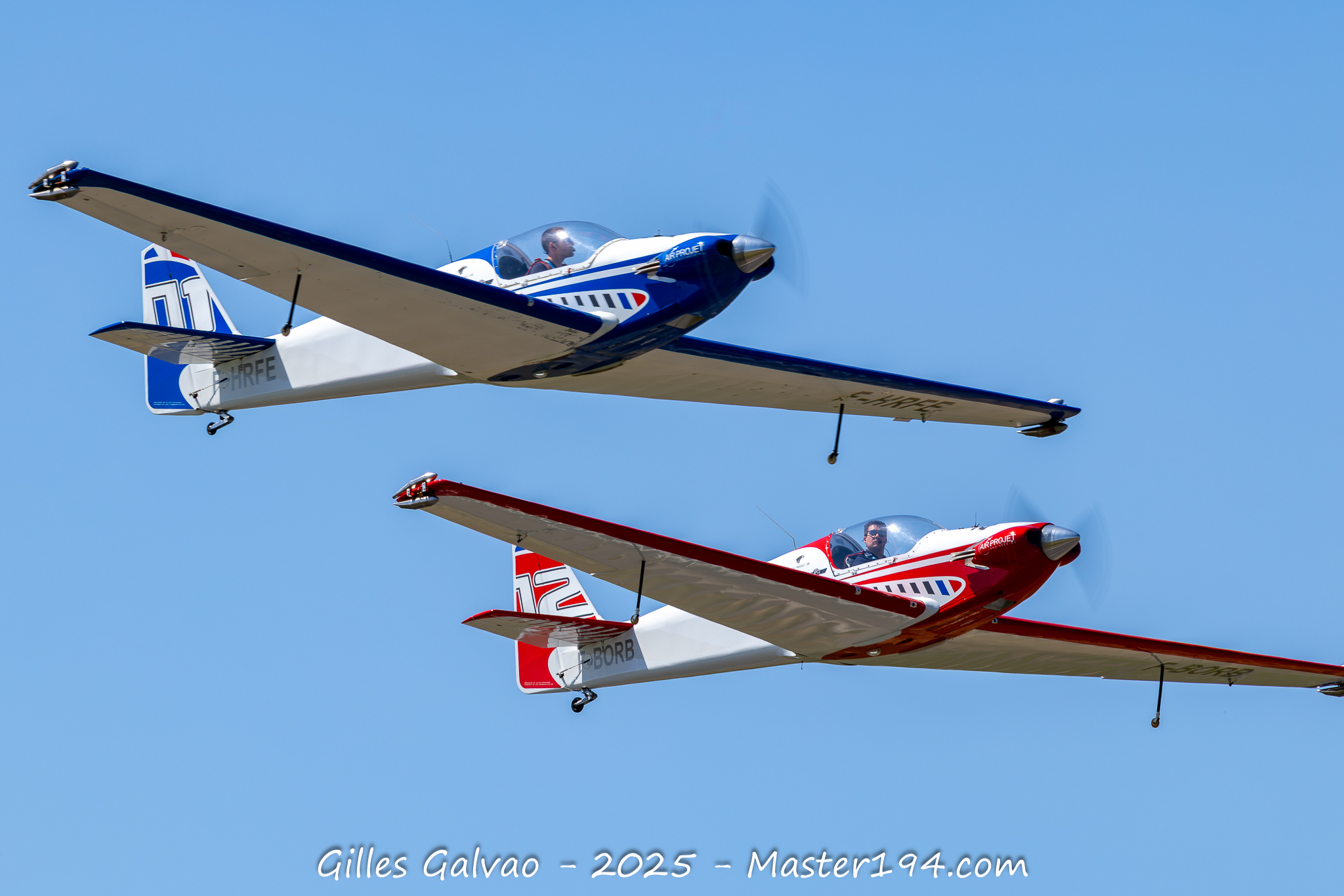
The Fournier RF4D aircraft used by Alternative Duo
The Fournier RF4D, designed by René Fournier in the 1960s, is commonly referred to as a lightweight powered ‘motor glider.’ However, Benoit David clarifies:
It is truly a ‘glider-aircraft.’ The concept was to fly (as an airplane) affordably, using a low-power engine (a 39hp Volkswagen) on an airframe inspired by gliders. Without intending to, René Fournier invented the formula that would later be known as the ‘motor glider.’ The key difference, however, is that on the early Fourniers (the RF3 and RF4), you cannot shut down the engine in flight and feather the propeller.
It belongs to a family of lightweight, high-performance aircraft designed for training, leisure, and ‘gentle’ aerobatics. It combines a light wood-and-fabric structure with a compact engine, offering both exceptional maneuverability and fuel efficiency.
🛠 Technical Specifications
- Type: Single-seat or two-seat powered motor glider (depending on the version).
- Engine: RECTIMO 4 AR 1200 (39 hp).
- Empty Weight: Approximately 280 kg.
- Cruise Speed: ~165 km/h.
- Never Exceed Speed (VNE): ~250 km/h.
- Wingspan: 11 m.
- Construction: Wood and fabric; slim aerodynamic profile for low drag.
- Load Factor: +6.0 g / -3.0 g, suitable for light aerobatics and close formation flying.
- Landing Gear: Monowheel gear with outriggers.
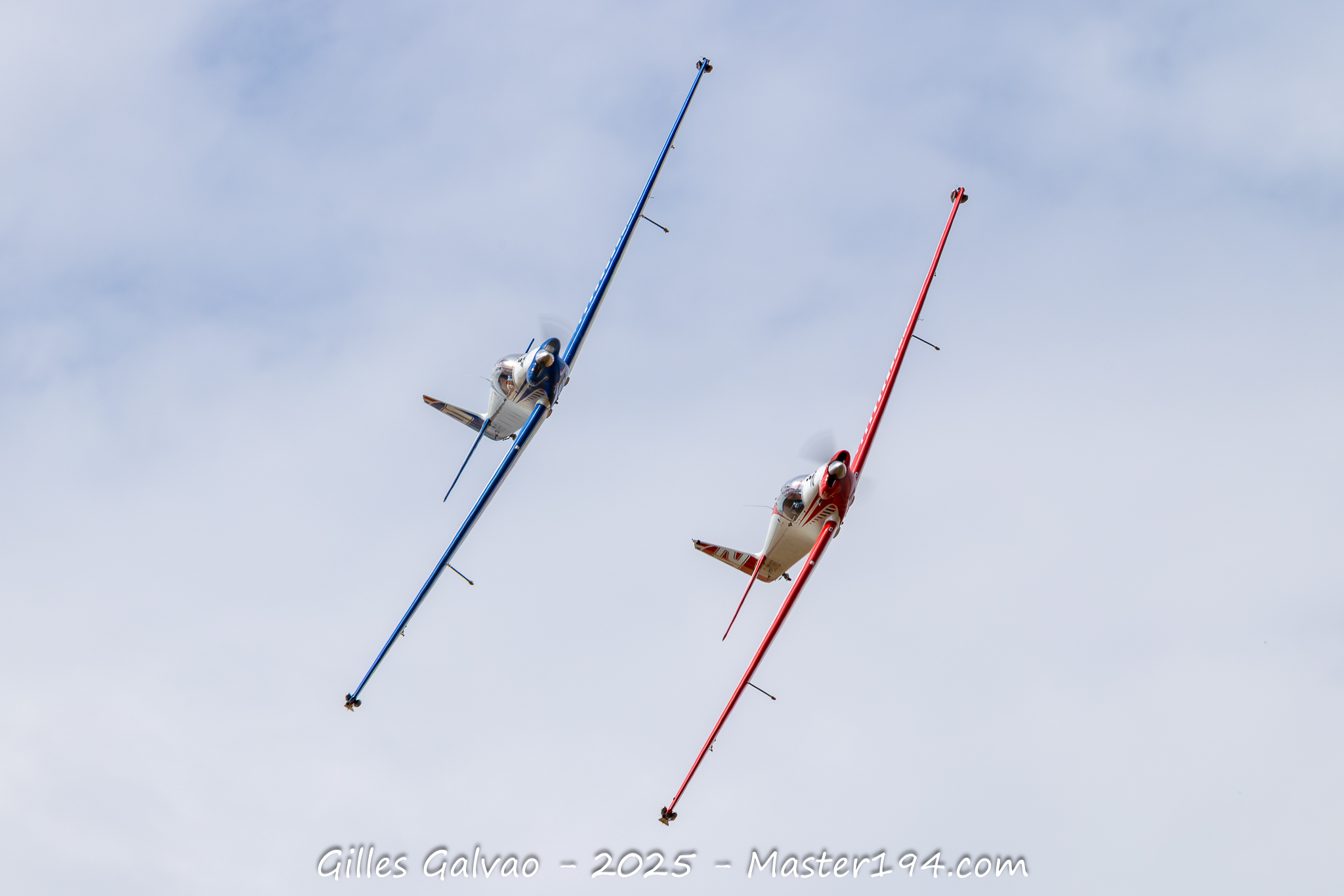
Technical Enhancements for Alternative Duo
I mentioned the restoration of the two aircraft (which were completely overhauled after purchase, including new fabric covering, paint, etc.), but they also underwent several specific adaptations:
- Hydraulic Braking System:
- The original braking system was upgraded to a hydraulic system featuring a parking brake position. This is a vital safety improvement for hand-propping the engine (starting the propeller by hand), especially when the pilot is operating alone. It also eliminates the need to carry and use heavy wheel chocks. Improved Ground Handling: The new system provides greater reliability and precision during taxiing and formation take-offs, where synchronization between the two aircraft is essential.
- Relocated Brake Lever: The brake control has been moved directly onto the control stick for better ergonomics and more intuitive handling.
- Wing-Tip Effects:
- Addition of a smoke system and pyrotechnic mounts at the wingtips to enhance the visual spectacle during displays.
These two modifications were developed and certified by Air Projet’s design office (you can find detailed information about the braking system on the Air Projet website: https://airprojet.fr/modifications-disponibles-a-la-vente )
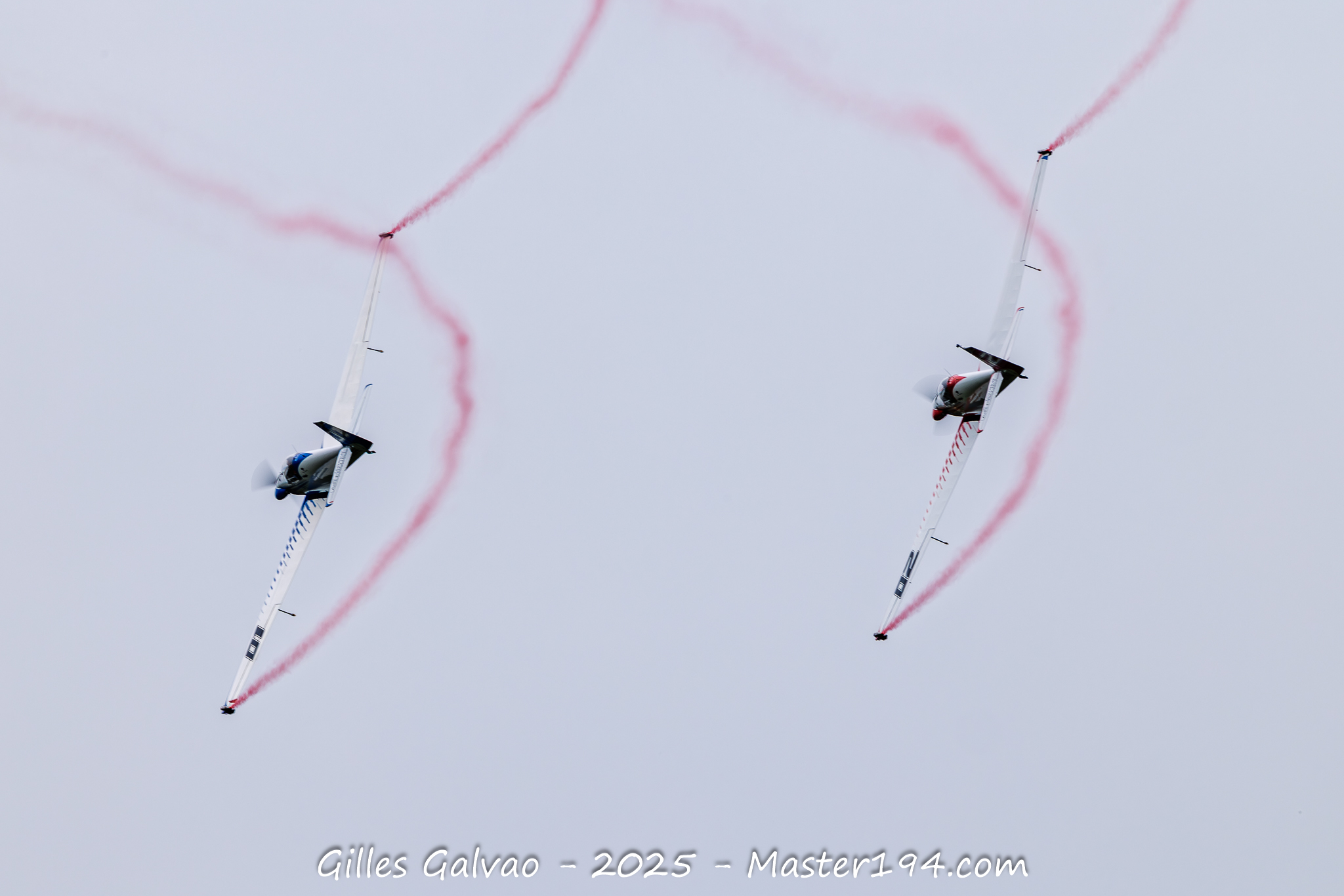
Formation Flying: The Technical Challenge
While the aircraft is exceptionally well-designed, with incredibly low fuel consumption—a full display consumes just 6 liters of fuel for both aircraft combined—flying vintage machines from 1967 in formation aerobatics presents its own set of challenges:
- ositive G-Load Management: Since the engines are not equipped with inverted fuel or oil systems, the duo cannot perform negative-G maneuvers. The pilots must be extremely vigilant during every figure to ensure the aircraft remains under positive G-load at all times to keep the engines running.
- Energy Management: Although the airframe is rated for +6.0 g (with a structural breaking point at 14 g), display maneuvers are strictly limited to 4 g.
- The Wingman’s Challenge: Maintaining a tight formation is a constant battle for the wingman:
- With only 39 hp available, “adding power” to close a gap requires immediate anticipation.
- Conversely, slowing down is equally difficult because of the aircraft’s glider-like efficiency. While the RF4D is equipped with airbrakes, they are not used during formation flying for two critical reasons:
- Ergonomics: Deploying them requires the pilot to take their hand off the throttle to reach the airbrake lever.
- Stability: Their deployment causes a significant pitch change (pitch trim upset), which would instantly disrupt the precision of the formation.
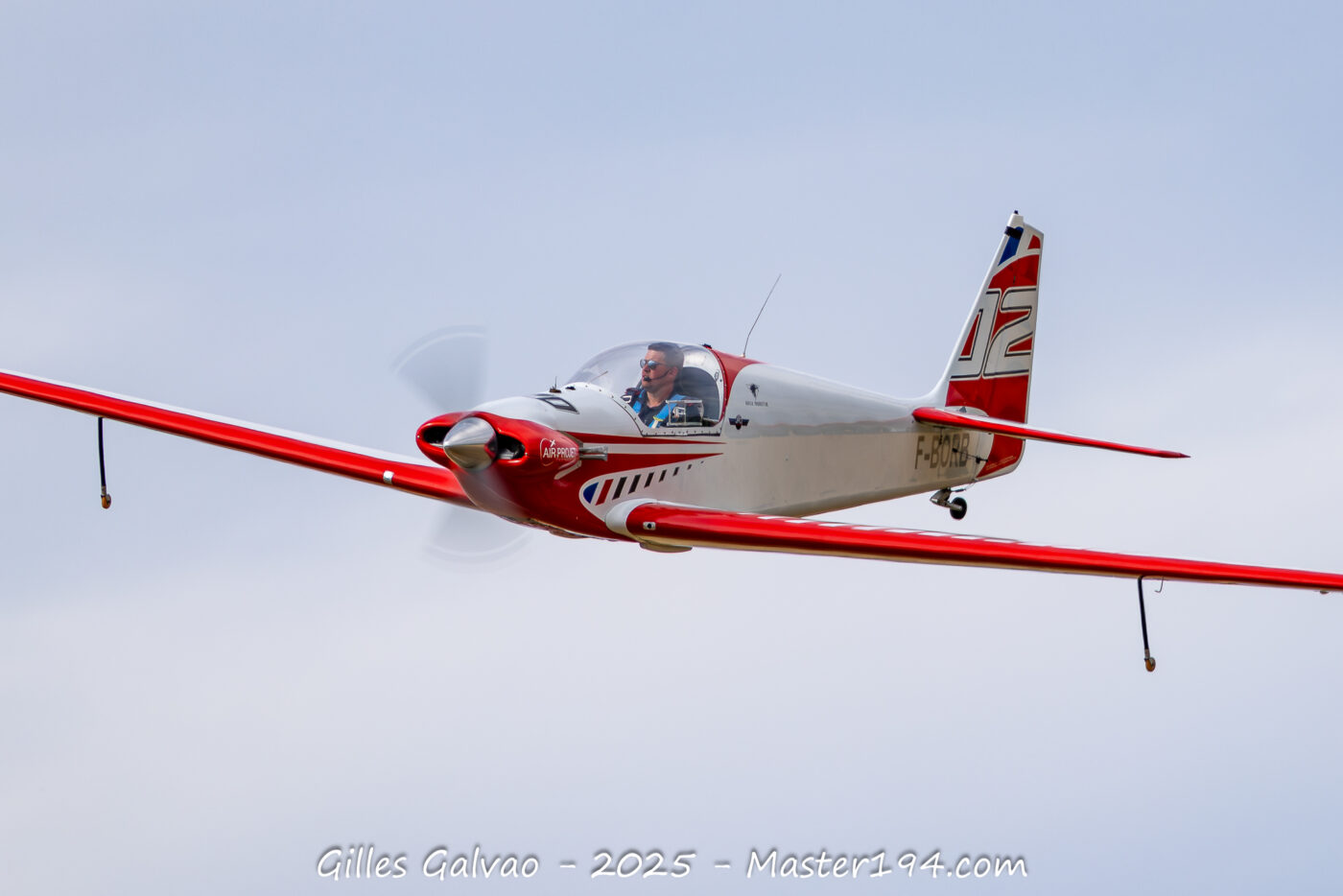
One quickly realizes that flying these aircraft for an aerobatic display is anything but simple. Every maneuver requires meticulous anticipation, and exploring the flight envelope to build their routine took countless hours of practice. Some maneuvers remain strictly impossible, such as an echelon turn to the outside: the lack of power makes the position impossible to maintain.
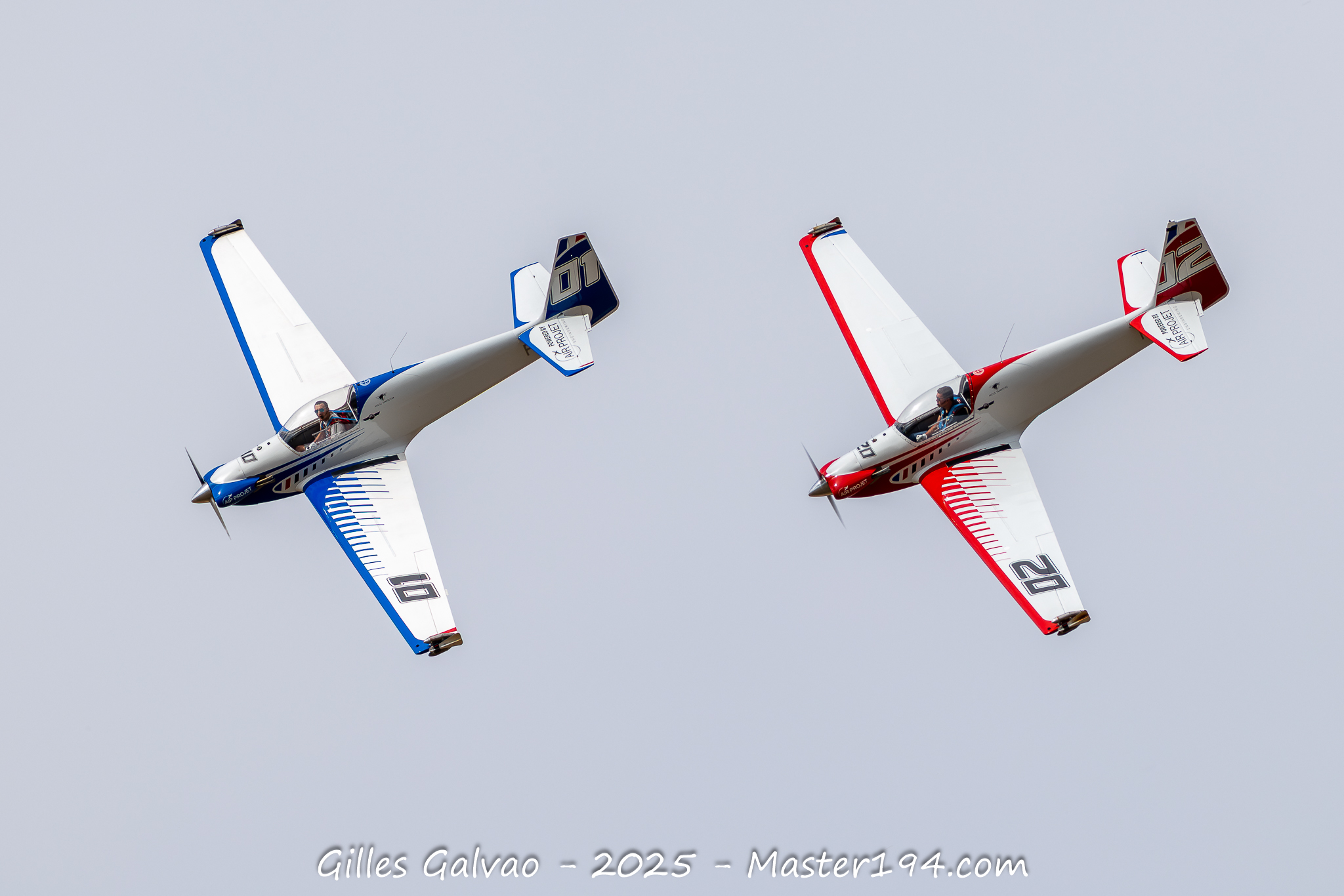
“Backstage: The final preparations before flight…
Before the flying displays begin, everything starts with a general pilot briefing, led by the Flight Director.”
Then comes the meticulous preparation of the aircraft:
- Oil level check and walk-around: A thorough pre-flight inspection to ensure airworthiness.
- Charging avionic batteries: Since the Fournier RF4D is not equipped with an electrical generator (alternator), the batteries must be fully charged beforehand.
- Cleaning and refueling: Wiping down the airframe and topping off the fuel tanks if necessary.
- Loading the smoke system: Installing the smoke cartridges into the dedicated pods.
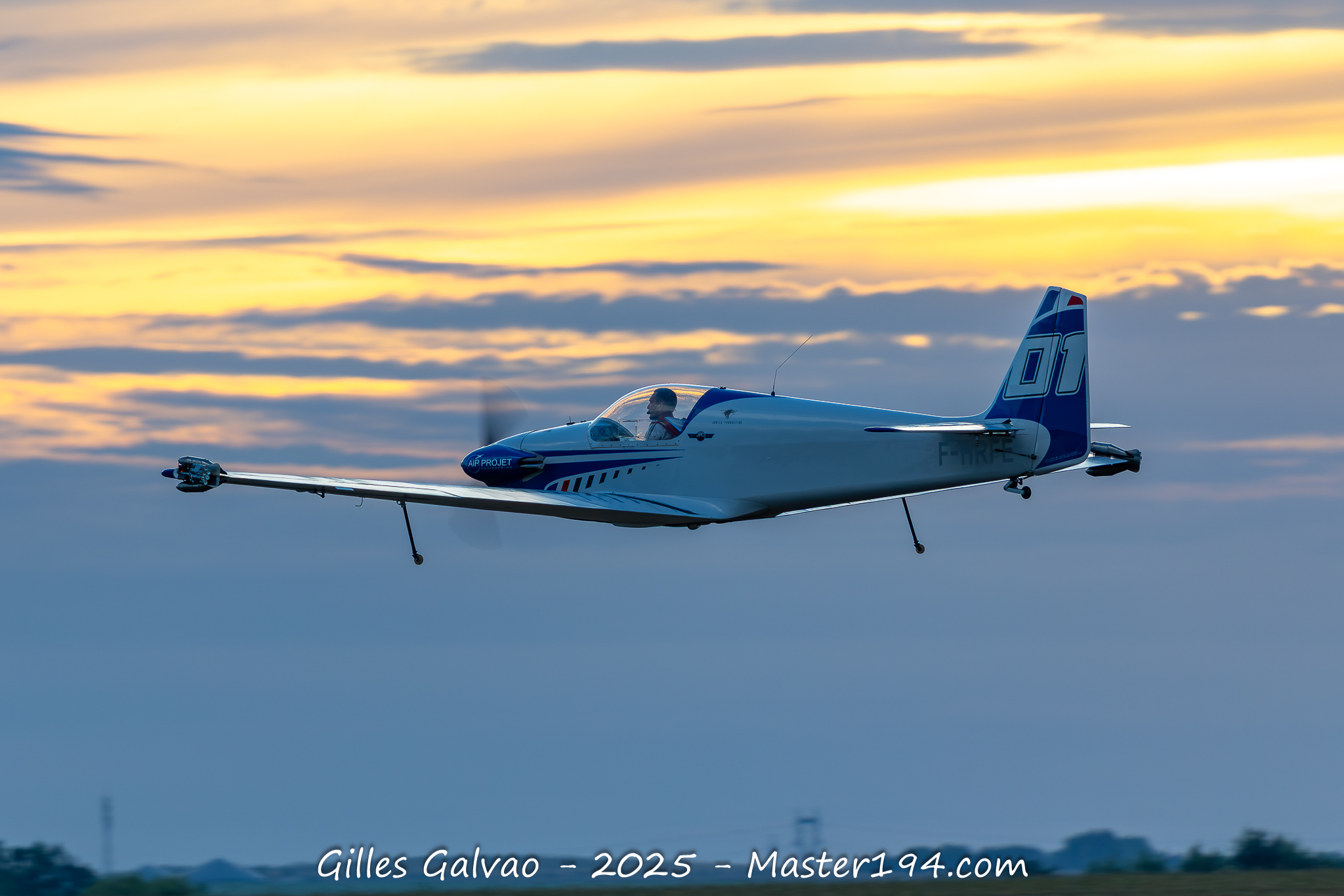
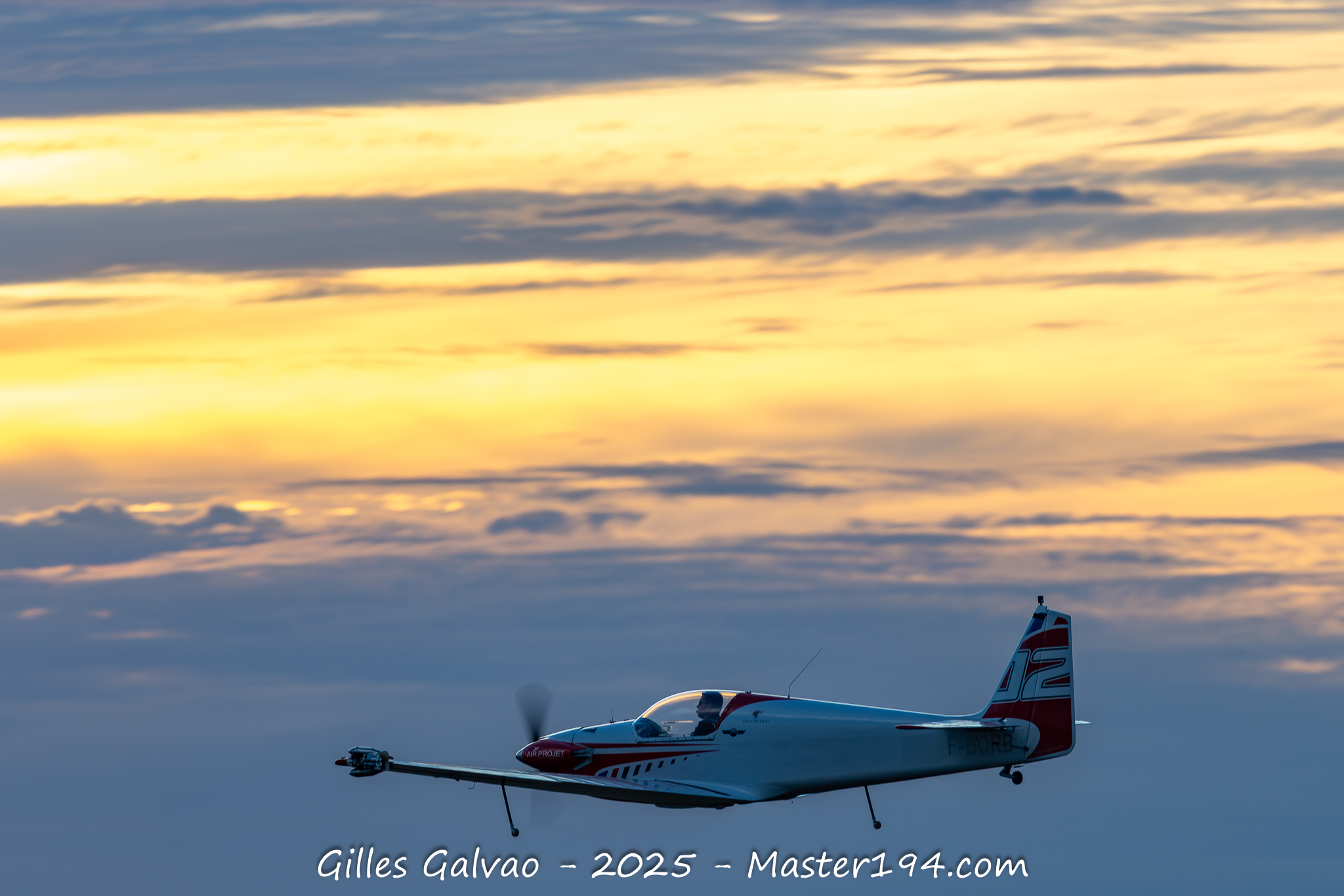
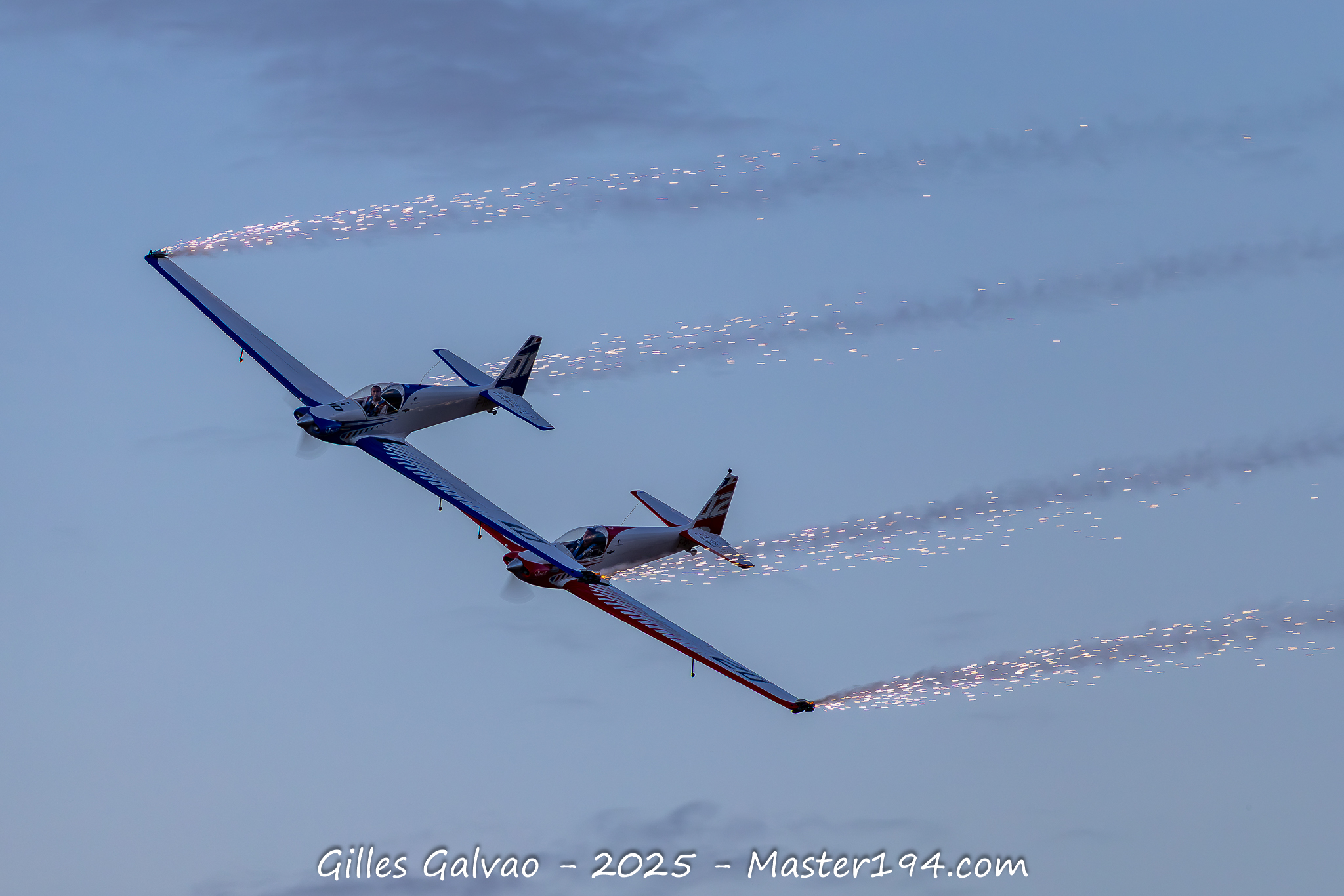
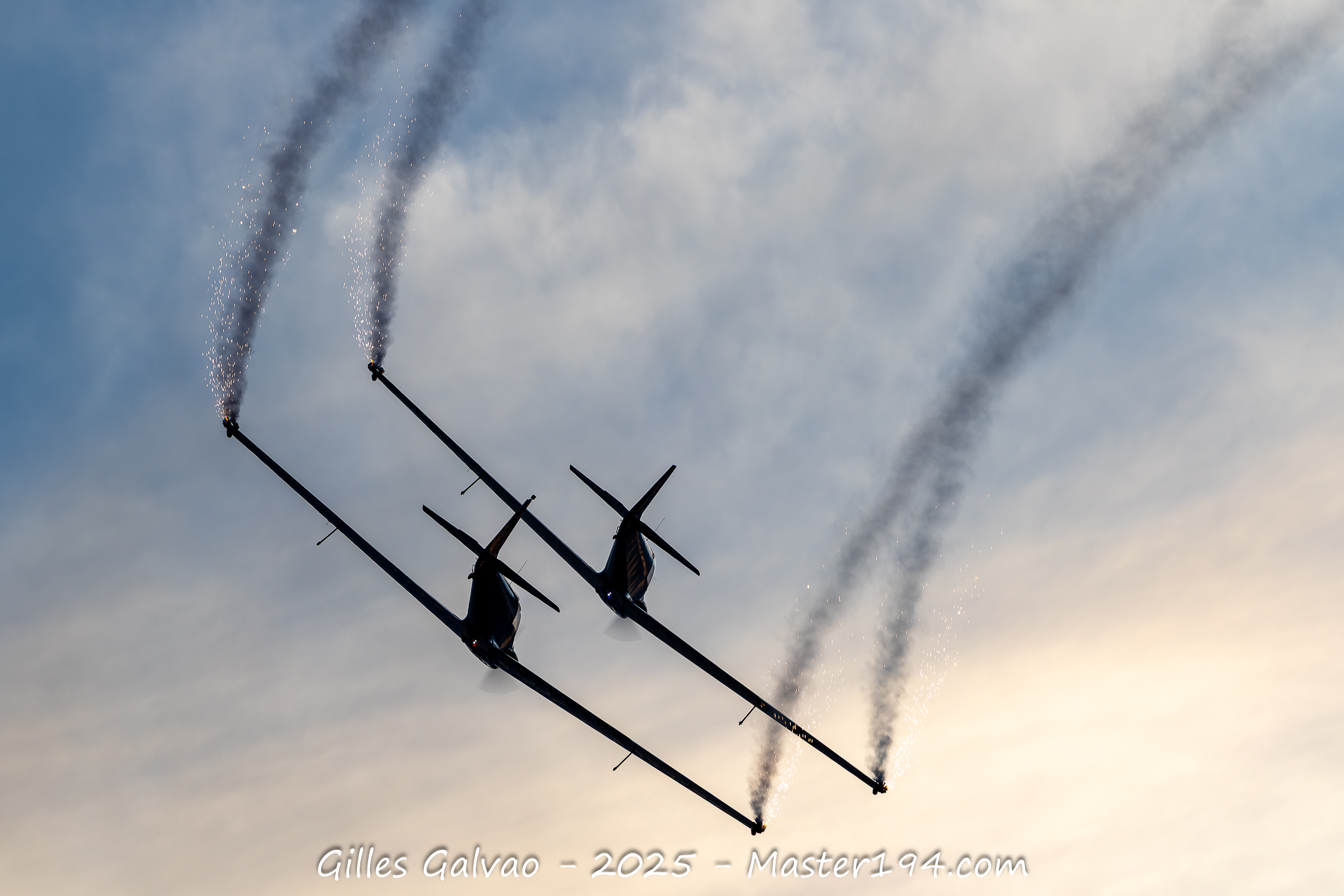
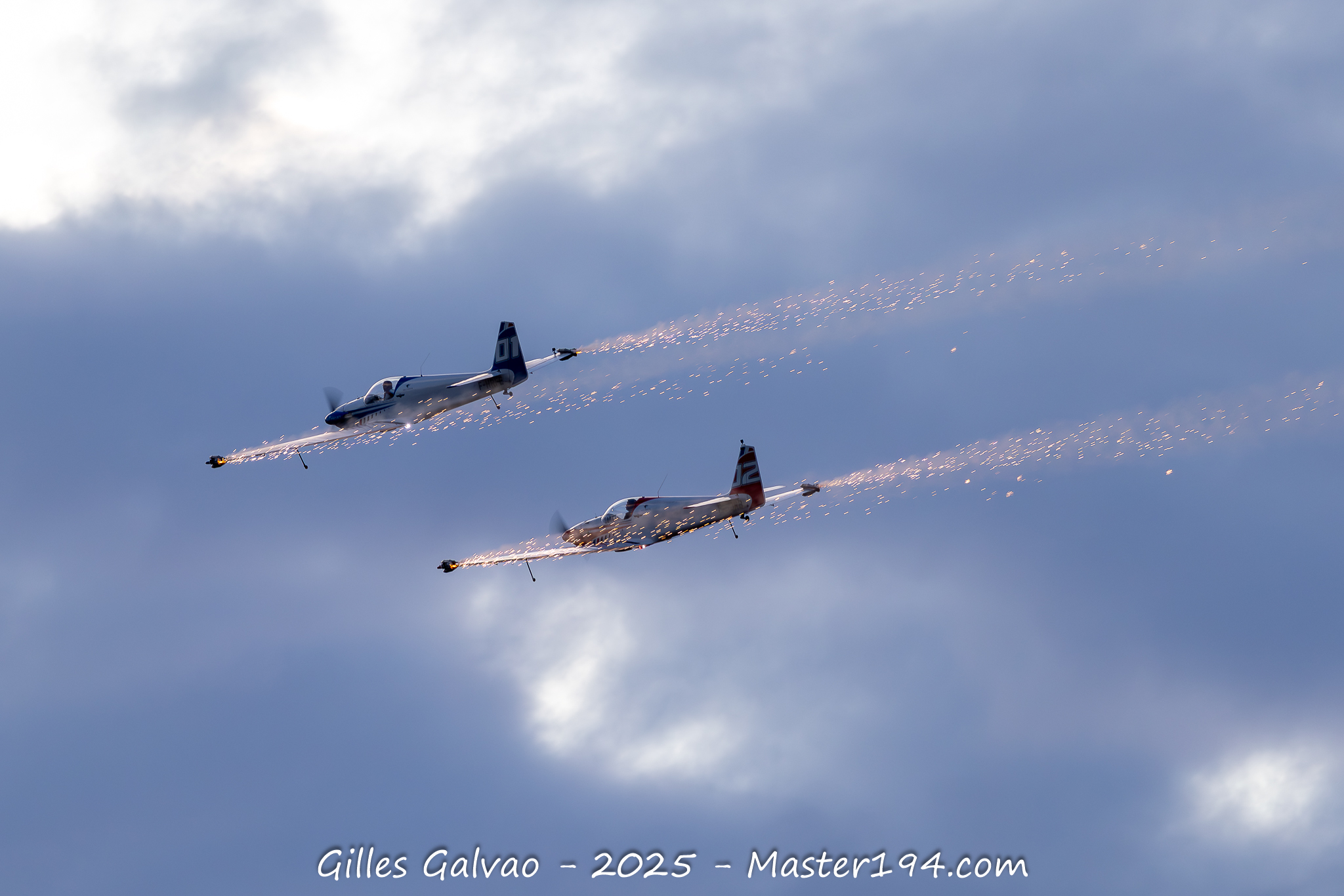
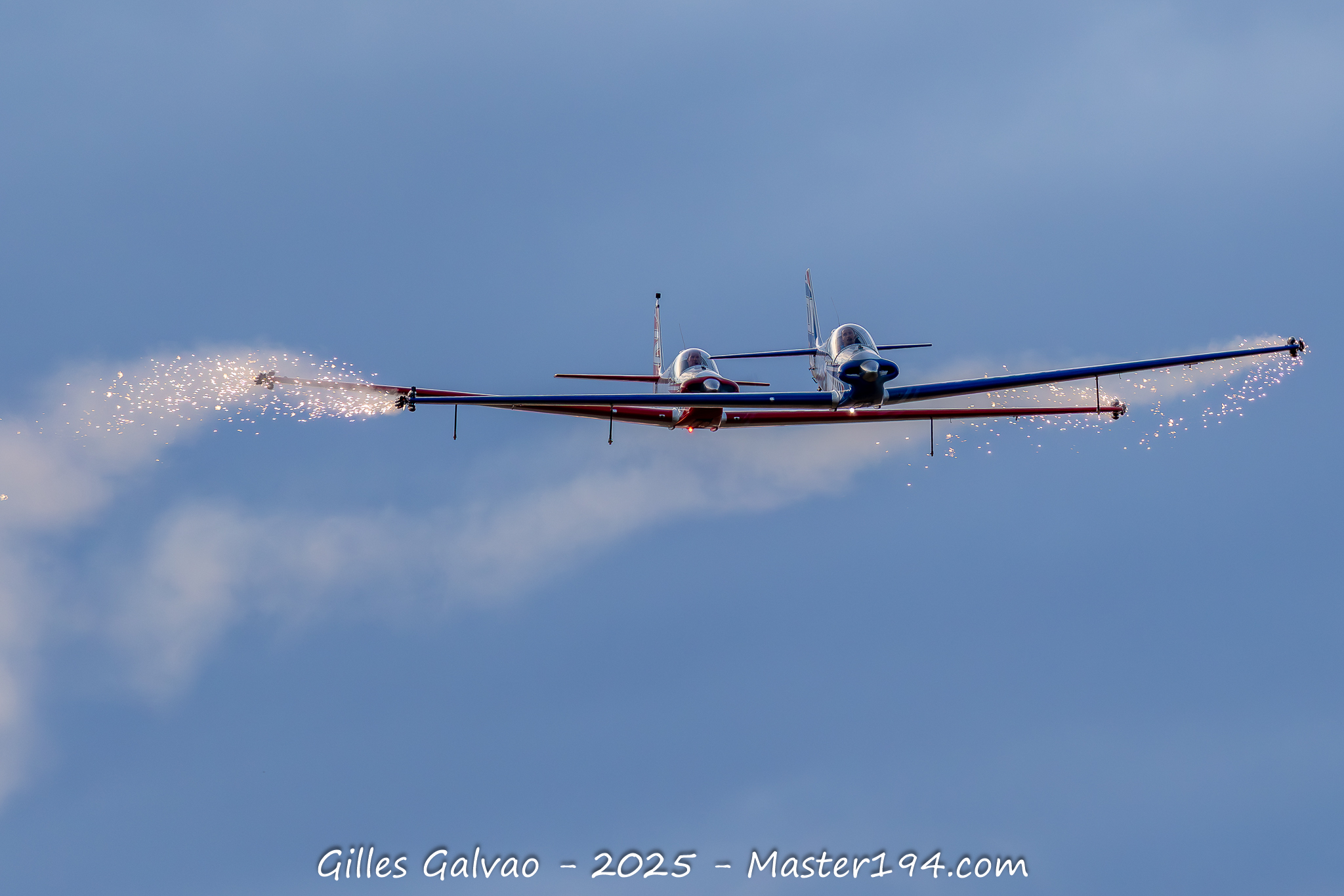
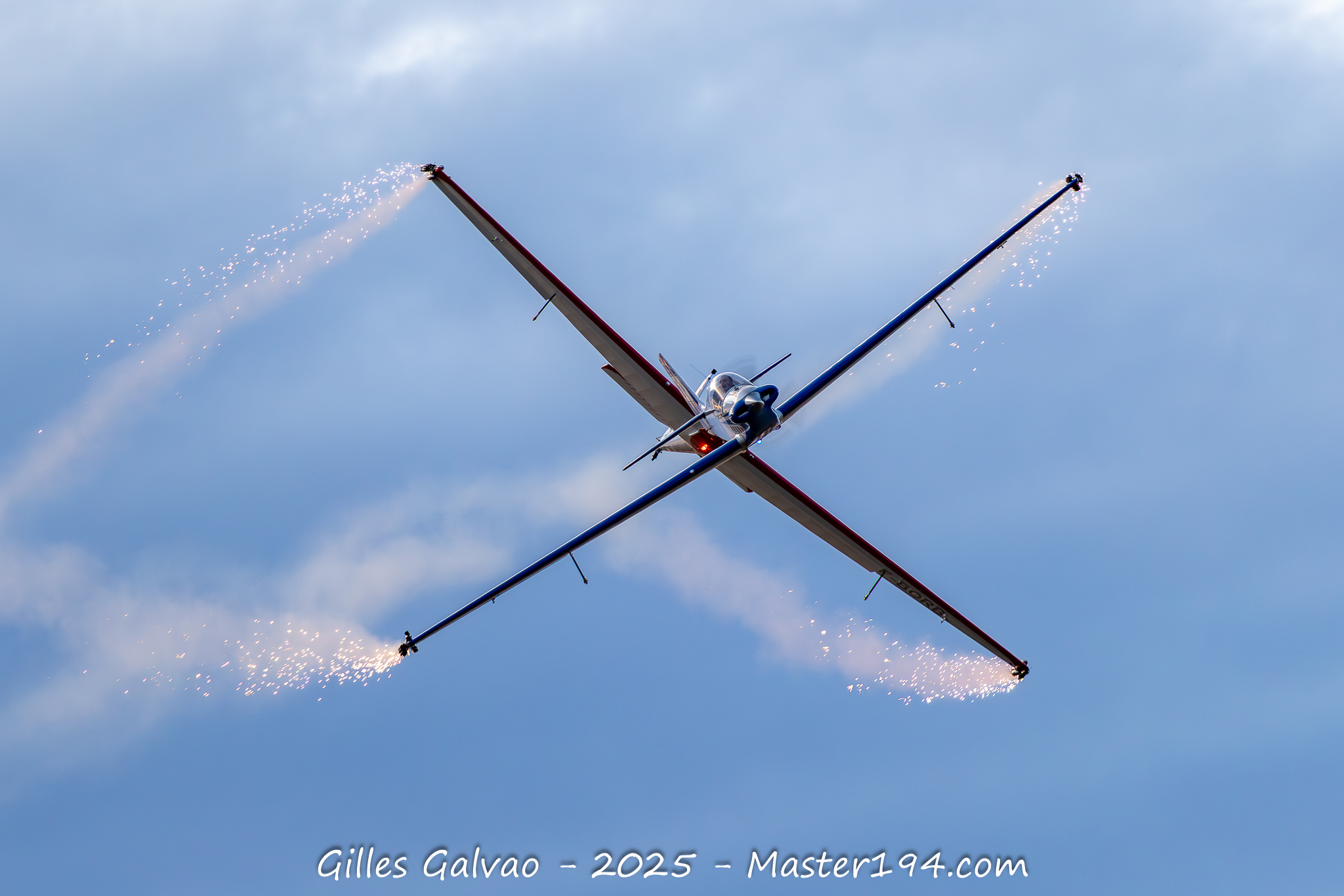
- Sunset flight preparation: For evening displays, spark-generating pyrotechnic cartridges are added in addition to the smoke—a time-consuming and delicate operation.
Just before the display:
- Final weather update: A last check of the wind conditions—a critical factor for positioning the performance relative to the crowd and the display center-point.
- The “Music” / Final Briefing: The two pilots conduct their final briefing, often referred to as “the music,” where they mentally rehearse the entire routine together.
Then comes the long-awaited moment..
Starting the engines… by hand, as there is no electric starter!
After strapping in, the pilots taxi toward the runway and… take off for the display.
The Display
The routine is built around the technical capabilities of the two aircraft, but also their positioning relative to the crowd. Being relatively slow, these planes can remain within a tight display area, eliminating any ‘dead time’ between figures. The maneuvers generally follow a top-down energy flow: the starting altitude must be high enough to complete the sequence safely, but low enough to remain perfectly visible to the spectators.
In short, the margins for error are slim, and every movement must be meticulously calculated. Weather conditions also play a crucial role, as Benoit David explains:
Broadly speaking, in poor weather, we replace vertical maneuvers (like loops) with flat turns. The biggest constraint is the wind… we’ve already performed with 25 knots of headwind—that’s a third of our average flying speed—which requires constant correction. That day, the hardest part was actually taxiing the aircraft to the runway without getting blown away!
Between 2023 and 2024, the team reworked many elements of the display to make it more compact and dynamic. No significant changes were made in 2024 or 2025—and for good reason:
We don’t do this professionally, and our training windows are limited… we have to stay reasonable!
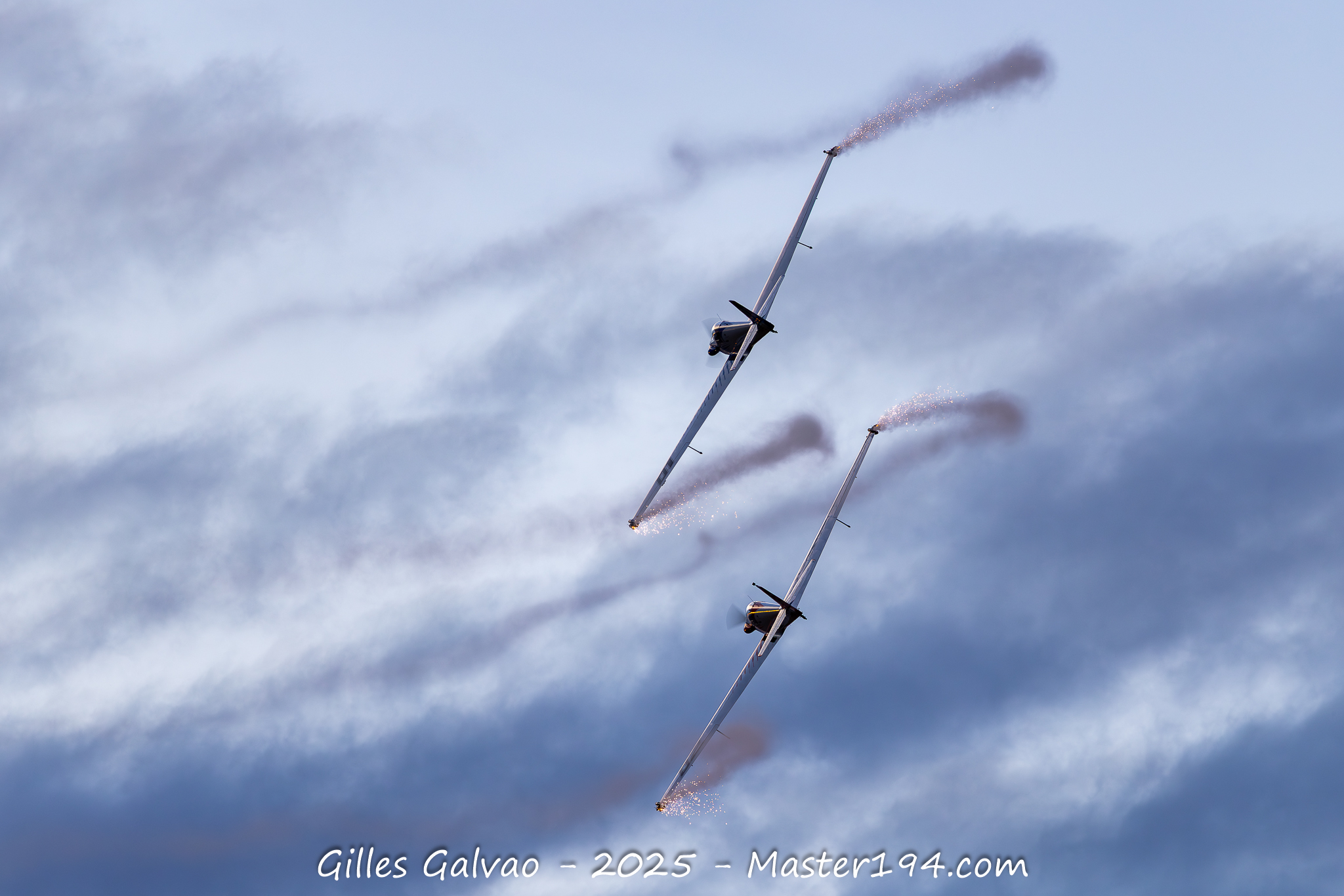
In any case, the 2025 display is a true delight: the way they marry flight with music, with maneuvers highlighted by smoke trails (and pyrotechnics during sunset), brings a genuine touch of poetry—always tasteful and perfectly balanced.
To catch Alternative Duo in flight, the best way is to keep an eye on their social media announcements (click the link to access their pages): Facebook, Instagram)
When you ask them, ‘Which air show is on your bucket list?‘, this is what they say:
To keep the original spirit of adventure alive, the idea would be to take part in an air show that requires either a very long ferry flight or—more likely—disassembling the aircraft, loading them into containers or a cargo plane, and reassembling them on-site (much like what we used to do for the Red Bull Air Race).
So, why not Oshkosh, Bahrain…?
This is a massive project in itself, which would require major partners and dedicated sponsors to make it a reality.
As you will have gathered, Alternative Duo is a display team that is particularly close to my heart, ever since the first time I saw them perform in 2023 at ‘Le Temps des Hélices’ in La Ferté-Alais. Since then, the magic happens every single time, and I can only encourage you to go and discover them in flight for yourselves!
I would like to express my gratitude to Benoit David for his availability and for providing such detailed insights into the team’s operations.