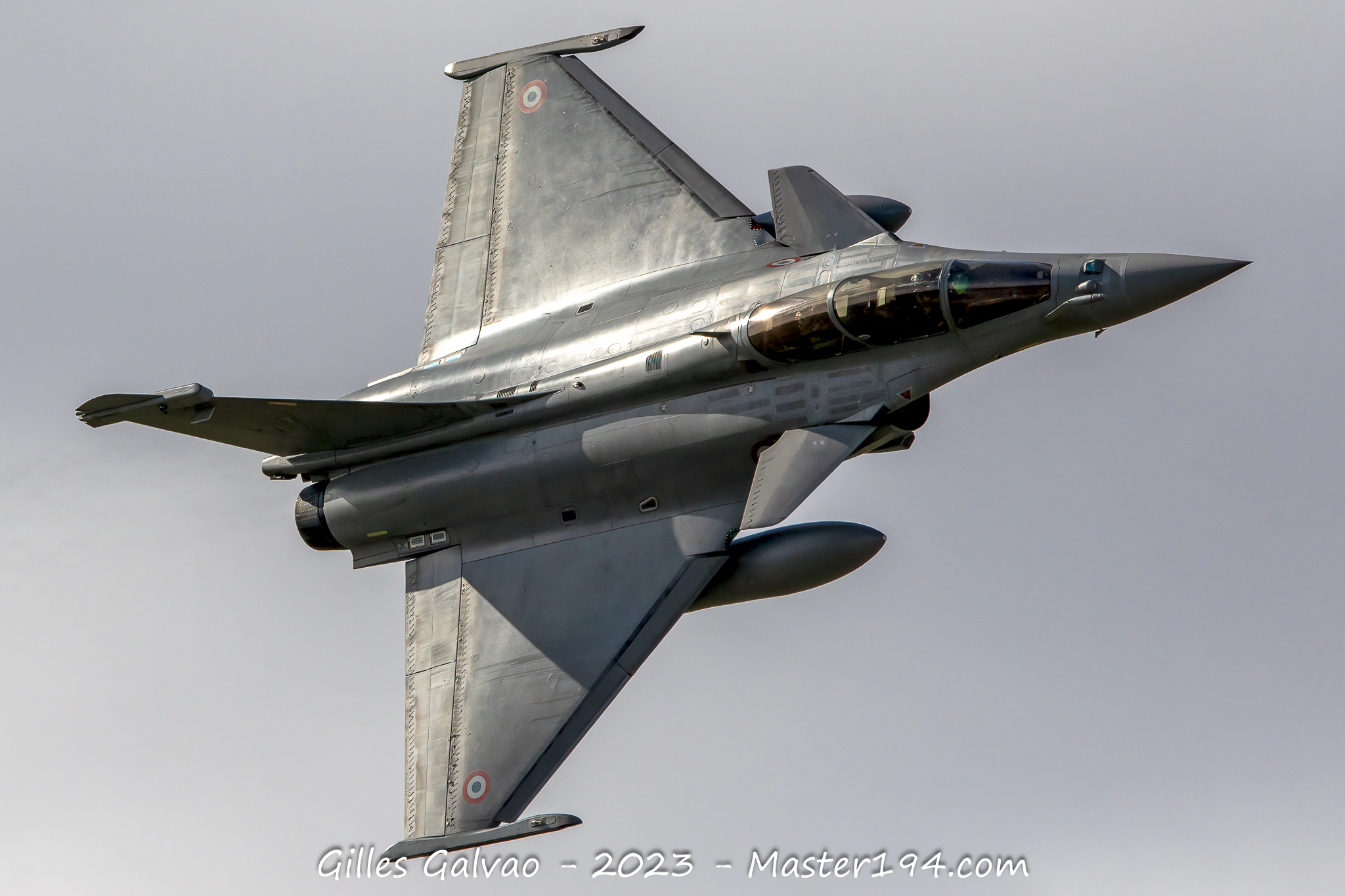
Designed as an omnirole fighter to single-handedly replace multiple generations of French combat aircraft, the Dassault Rafale is today one of the most iconic platforms of French military aviation. Operated by both the French Air and Space Force (Armée de l’Air et de l’Espace) and French Naval Aviation (Aéronautique navale), it is capable of executing missions as diverse as air defense, ground attack, reconnaissance, nuclear deterrence, and long-range precision strike.
AD
First deployed in combat in Afghanistan, and subsequently in Libya, the Sahel region, and the Middle East, the Rafale has progressively established itself as France’s premier combat aircraft. Its export success has also transformed the program: from Egypt to India, and from Greece to the United Arab Emirates, the Rafale now flies under multiple international roundels and continues its technological evolution through the F3-R and F4 standards.
Whether you are a military aviation enthusiast, an aviation history buff, or a scale modeler seeking precise technical references, this hub centralizes all our resources dedicated to the Rafale: program history, variants, operational career, foreign operators, high-definition photo walkarounds, event reports, and scale model builds.
This page is designed to expand continuously over time. New photographs, archives, and technical documents dedicated to the Rafale will be progressively added to enrich this comprehensive guide.
Genesis and Design Concept of the Dassault Rafale
In the early 1980s, the French armed forces began planning the gradual replacement of a fleet comprising several generations of specialized combat aircraft. The Mirage F1, Mirage 2000, Jaguar, Super Étendard, and Crusader fulfilled vastly different operational roles while France sought to define its next-generation fighter.
The initial project was part of a European collaborative effort. France participated in launching a joint program to develop a new European combat aircraft, but divergences quickly emerged among partner nations regarding operational requirements and design specifications. France notably sought a lighter airframe capable of carrier operations and tailored to its specific industrial and defense requirements.
France ultimately chose to pursue the development of the Rafale independently. This decision enabled Dassault Aviation to design an aircraft precisely tailored to French military requirements, utilizing a common airframe architecture for both the French Air and Space Force (Armée de l’Air et de l’Espace) and the French Navy (Marine nationale).
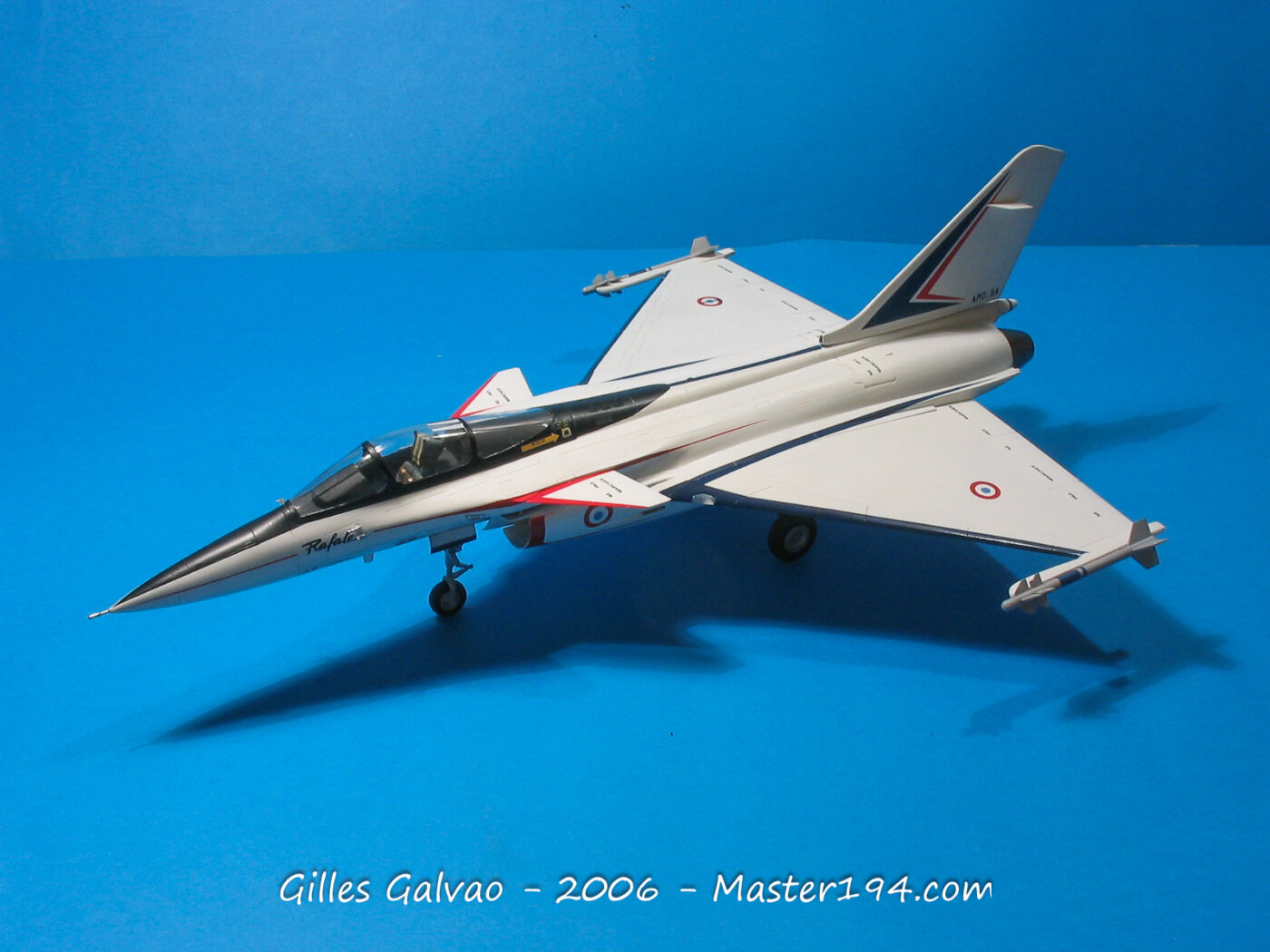
In 1985, Dassault Aviation unveiled the Rafale A technology demonstrator. Built to validate the aerodynamic and technological core of the future fighter, it made its maiden flight on July 4, 1986, with Guy Mitaux-Maurouard at the controls.
The Rafale A represented a critical milestone in the program’s development. It validated the aircraft’s general configuration—characterized by a delta wing combined with active close-coupled canards—as well as digital fly-by-wire flight control systems and modern systems integration.
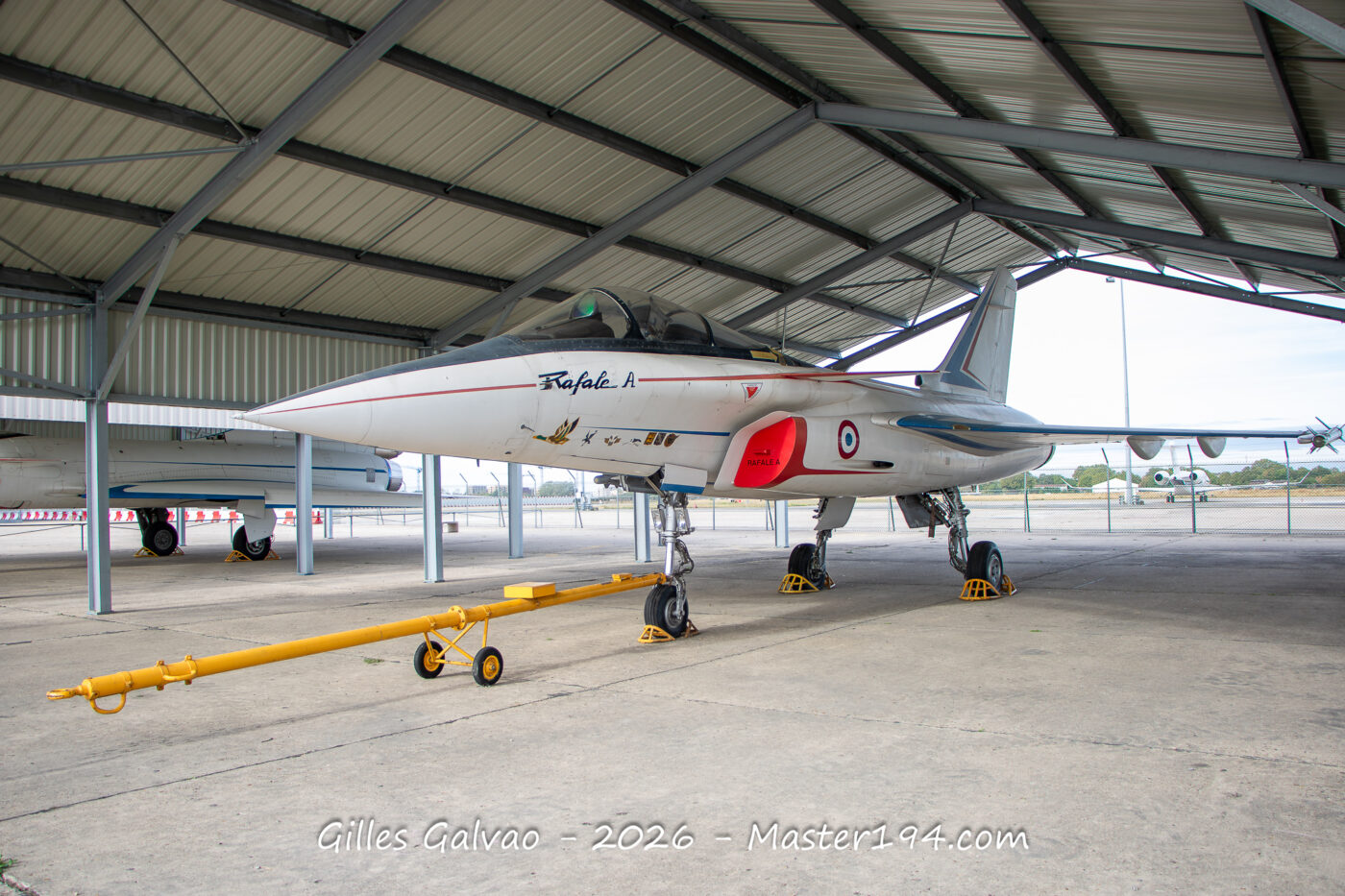
The demonstrator was initially powered by two General Electric F404 engines pending the arrival of the Snecma M88 turbofan, which was specifically developed in France for the new fighter.
From its inception, the Rafale was envisioned as a true “omnirole” aircraft, capable of switching between different mission profiles during a single sortie. This versatility remains a cornerstone of the program.
Thanks to its fly-by-wire system, aerodynamic design, and digital flight controls, the Rafale combines exceptional agility with a heavy payload capacity. Its weapons system, radar, and sensor suite continuously evolve through successive aircraft standards.
Unlike previous generations, the goal was no longer to build specialized airframes for each mission, but rather to operate a unified platform capable of executing air defense, conventional strike, reconnaissance, nuclear deterrence, and long-range precision strike operations.
This philosophy enabled the Rafale to progressively replace multiple legacy aircraft within the French armed forces, streamlining the fleet and reducing the operational costs associated with maintaining numerous specialized platforms.
Variants of the Rafale
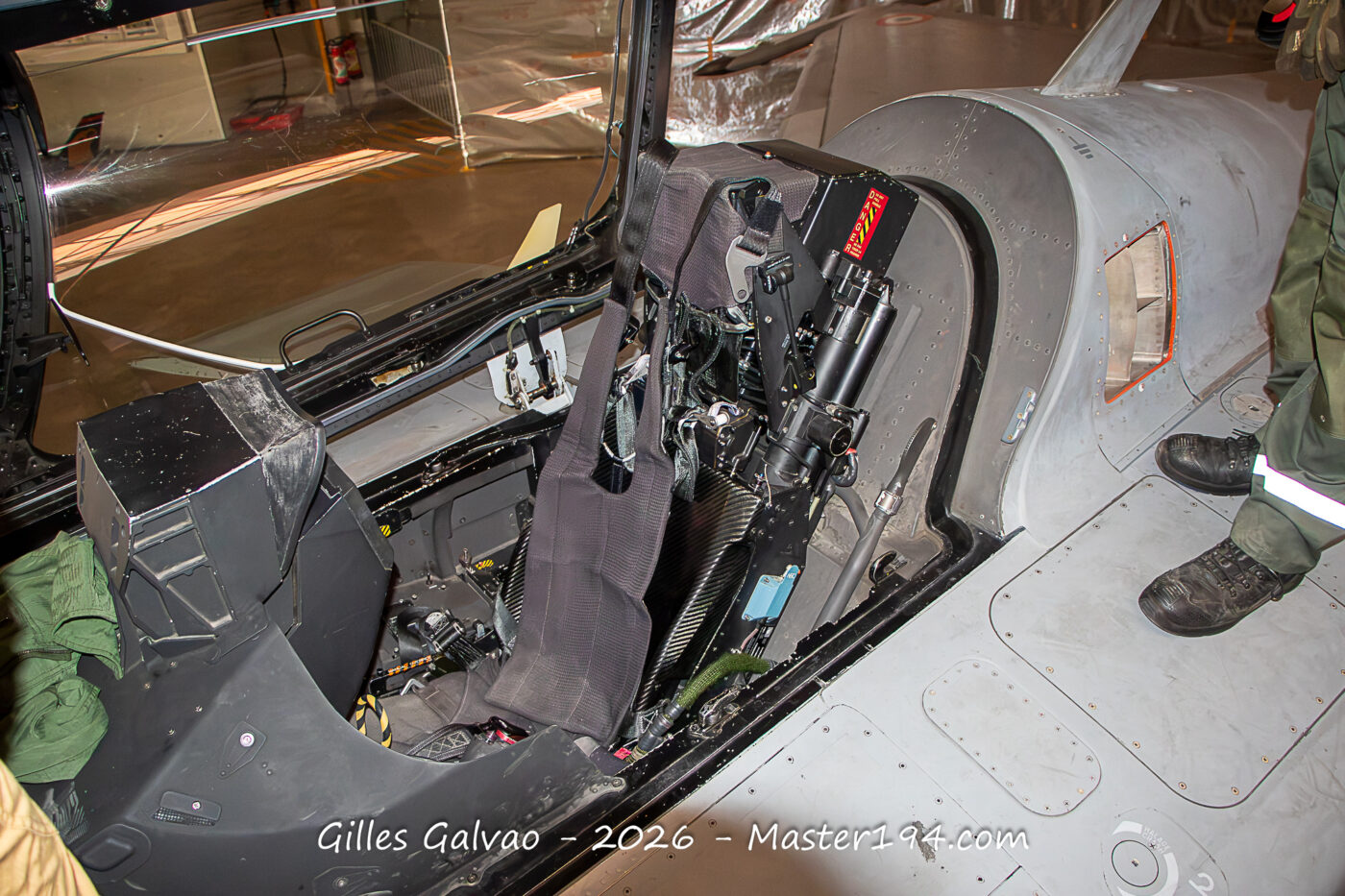
The Rafale exists in three primary operational variants: the single-seat Rafale C for the French Air and Space Force (Armée de l’Air et de l’Espace), the two-seat Rafale B also operated by the French Air Force, and the carrier-capable Rafale M designed for operations from French Navy aircraft carriers.
In addition to these core variants, the aircraft has evolved through a series of incremental capability standards, which have progressively expanded its operational envelope.
Rafale C: Single-Seat Fighter for the Air and Space Force
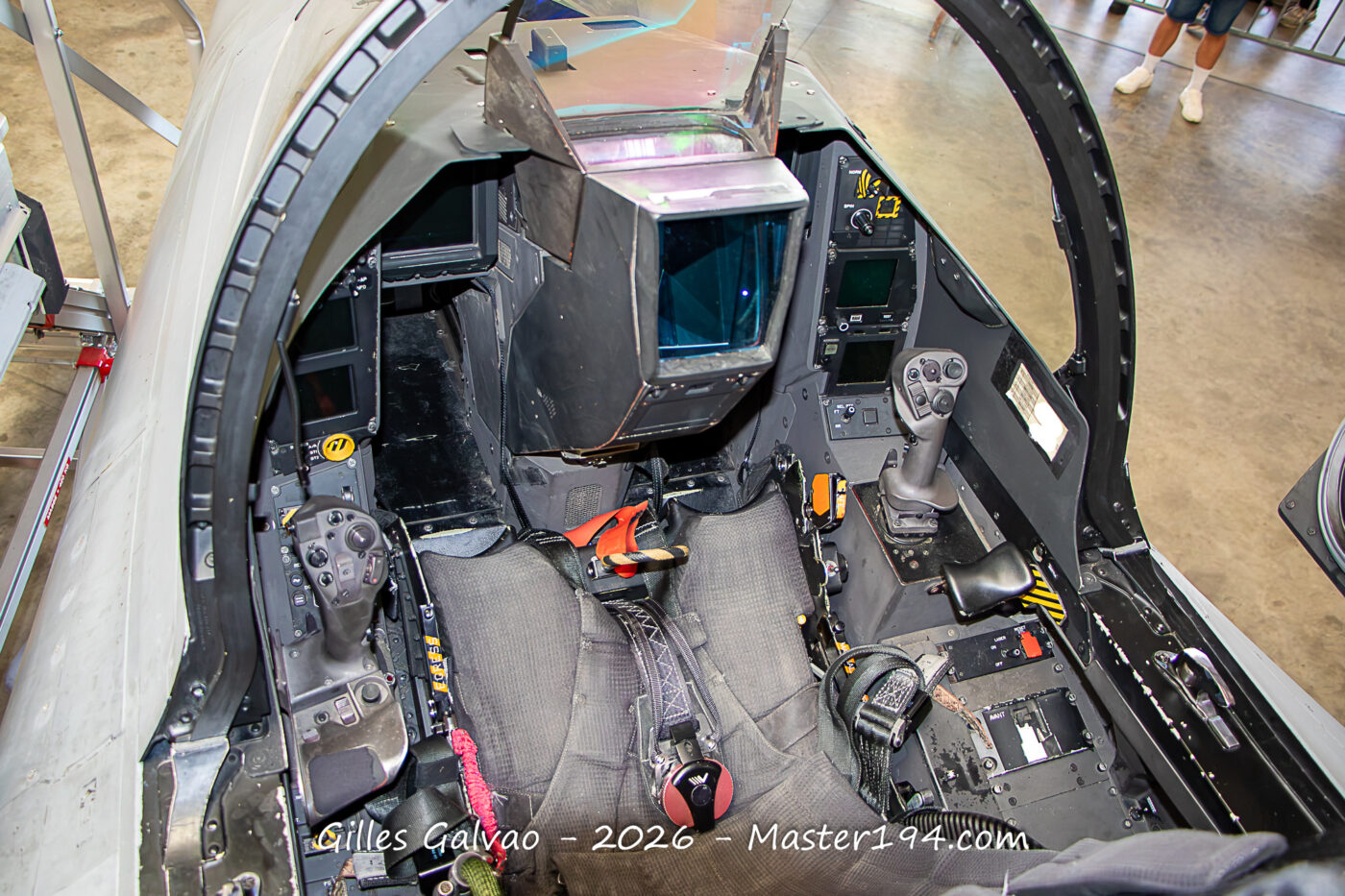
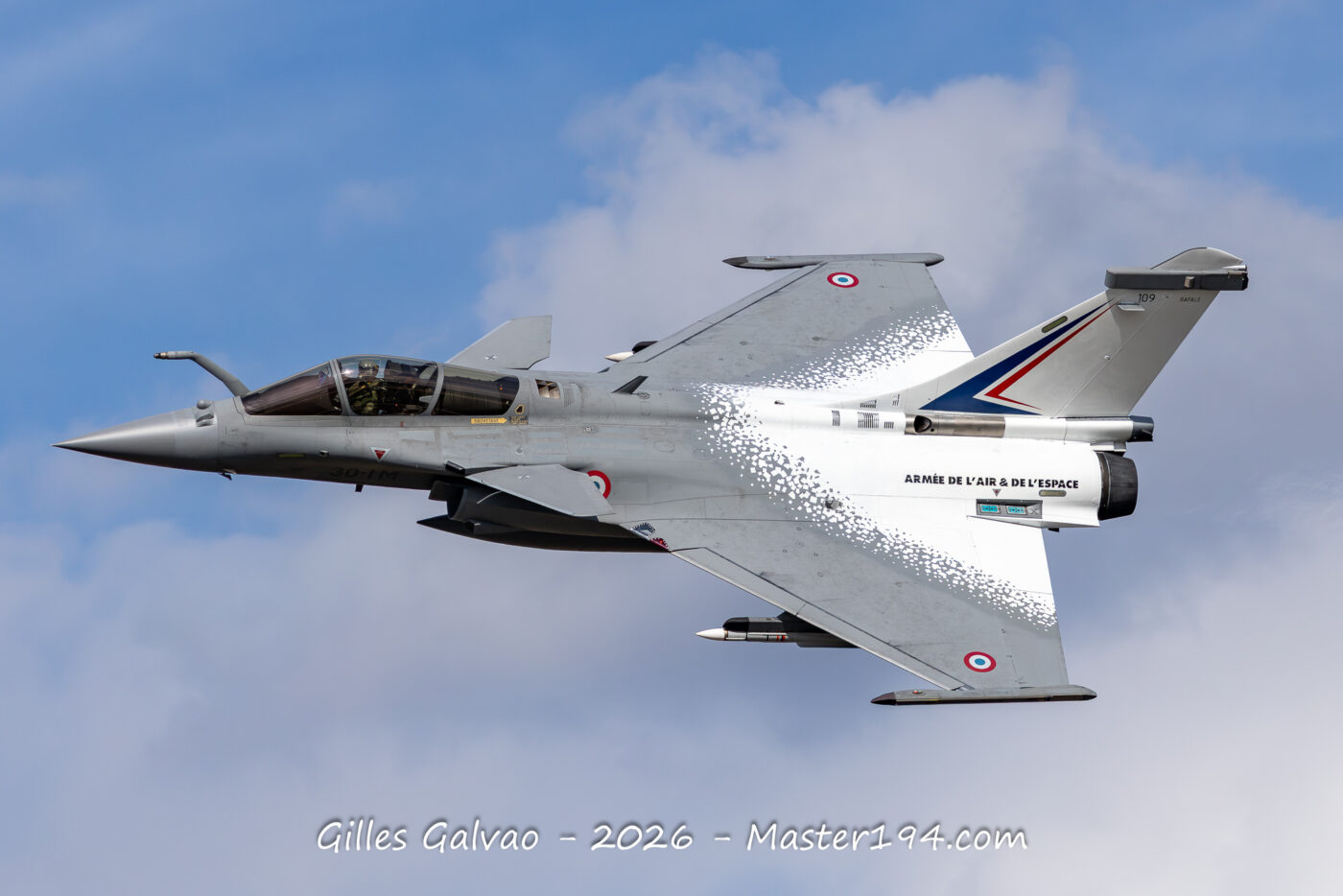
The Rafale C is the single-seat land-based variant fielded by the French Air and Space Force. It forms the backbone of the French fighter fleet, executing both air defense and ground attack missions with equal effectiveness.
Initial airframes were delivered under the F1 standard, which was restricted to air-to-air roles. Subsequent upgrades gradually introduced the full multirole capabilities that define the Rafale today.
Consequently, the Rafale C can deploy a comprehensive suite of air-to-air and air-to-surface precision weaponry, including MICA and Meteor missiles, AASM precision-guided munitions, SCALP-EG cruise missiles, and, for the nuclear deterrence role, the ASMP-A standoff missile.
Rafale B: The Multirole Two-Seater
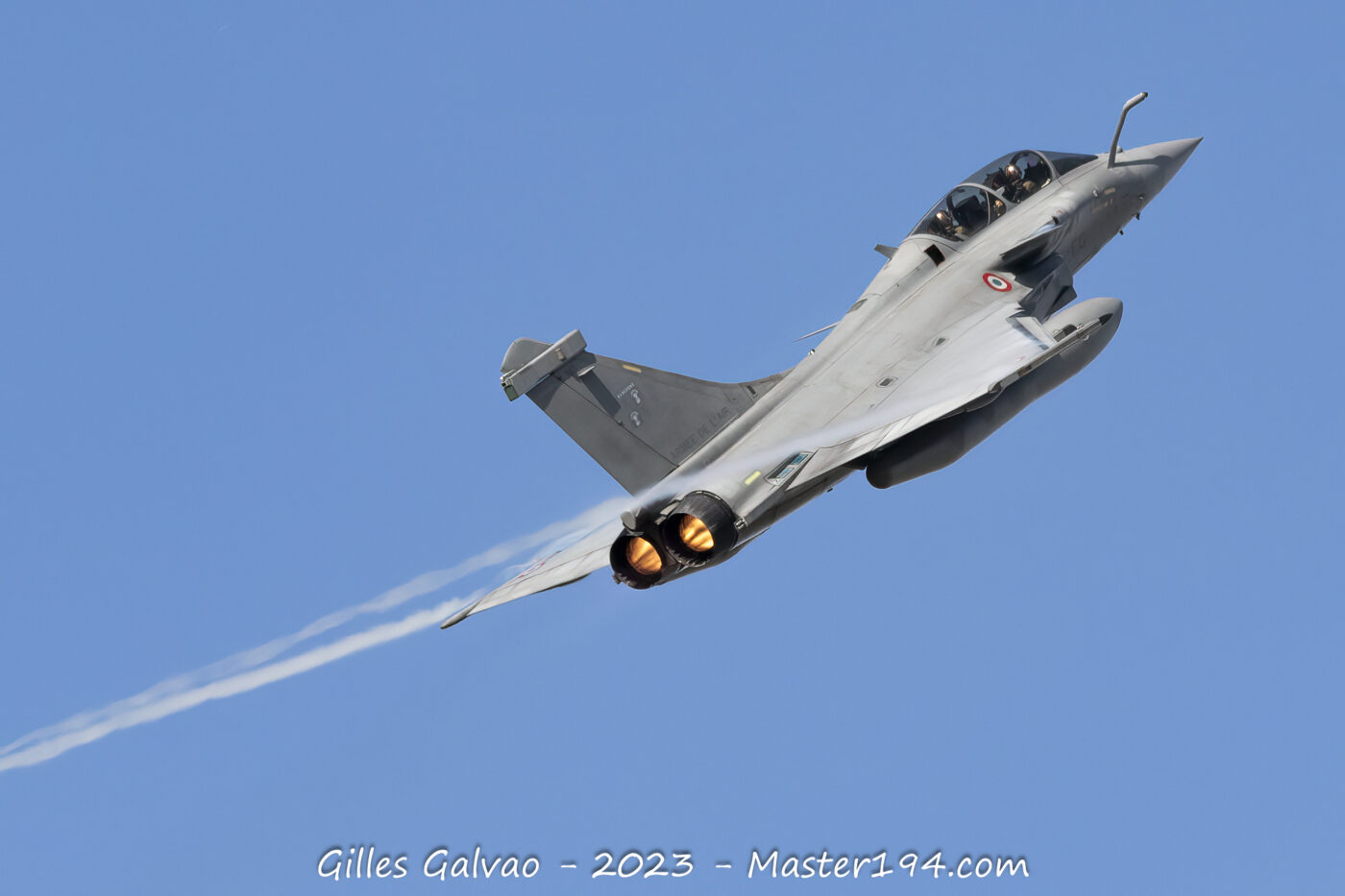
The Rafale B is the two-seat variant operated by the French Air and Space Force (Armée de l’Air et de l’Espace). Initially developed to satisfy operational conversion and pilot training requirements, the two-seater retains virtually all combat capabilities of the single-seat variant.
The presence of a second aircrew member significantly eases workload during complex missions, particularly strike and deep penetration sorties. Consequently, the Rafale B is extensively deployed in front-line combat operations and is by no means limited to crew training.


Rafale M: The Carrier-Borne Variant
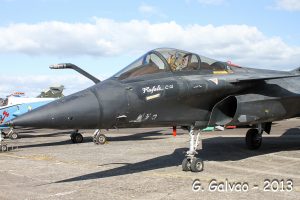
The Rafale M is the navalized variant developed for French Naval Aviation (Aéronautique navale). While sharing the general airframe architecture of the Rafale C, it was extensively re-engineered to withstand the rigorous demands of carrier-based operations.
Its reinforced landing gear, airframe structure stress-engineered for carrier traps (arrested landings), and specialized nose gear enable catapult launches from French aircraft carriers.
Entering service with the French Navy (Marine nationale) in the early 2000s, the Rafale M progressively replaced the Super Étendard fleet, following the retirement of the last F-8 Crusaders a few years prior. It gradually became the cornerstone of French naval aviation, fully capable of executing air defense, ground attack, and deep precision strike missions.

From Standard F1 to Standard F4
One of the defining characteristics of the Rafale is its continuous evolutionary path. Successive capability standards have dramatically expanded the airframe’s operational performance over the years.
Rafale F1: Initial Operational Entry
The F1 standard was the initial operational baseline developed specifically for the French Navy’s Rafale M. Primarily focused on air-to-air defense missions, it allowed French Naval Aviation (Aéronautique navale) to rapidly field a modern carrier-borne fighter.
Early Rafale M airframes were deployed mainly in an air superiority role, prior to subsequent software and hardware upgrades unlocking the full multirole potential of the platform.
F1-standard airframes were subsequently placed in reserve or modernized, with several being retrofitted to later capability standards.
Rafale F2: Transition to Multirole Capabilities
The F2 standard represented the pivotal transition from a point-defense fighter to a true multirole platform, integrating deep strike, tactical reconnaissance, and close air support (CAS) capabilities.
This upgrade allowed the Rafale to begin replacing legacy aircraft across the French armed forces and undertake its first overseas combat operations.
Rafale F3: Achieving Full Omnirole Maturity
Standard F3 introduced expanded mission envelopes, cementing the Rafale’s status as a fully omnirole fighter.
The aircraft could now execute a wide spectrum of missions, including conventional precision strike, reconnaissance, strategic nuclear deterrence, and long-range interdiction.
Key F3 enhancements included the integration of the SCALP-EG cruise missile and, for dedicated strategic squadrons, the ASMP-A airborne nuclear standoff missile. This standard transformed the Rafale into a comprehensive combat platform, effectively replacing several generations of specialized legacy aircraft.
Rafale F3R: A Major Capability Leap
The F3R standard represented a major operational milestone. It enabled full operational integration of the Meteor Beyond-Visual-Range (BVR) air-to-air missile and enhanced detection and tracking capabilities through the RBE2 Active Electronically Scanned Array (AESA) radar.
F3R also introduced modernized laser designator pods and advanced targeting systems. This standard currently serves as the operational baseline for both French forces and international export customers.
Rafale F4: Stepping into Collaborative Warfare
The F4 standard marks another major evolutionary jump, shifting focus from individual airframe performance to networked collaborative warfare.
Core improvements center on secure communications, data link integration, upgraded sensors, onboard AI processing, and enhanced interoperability with joint and allied assets.
Standard F4 ensures the Rafale remains survivable and effective against evolving peer threats while laying the operational foundation for Europe’s Future Combat Air System (FCAS / SCAF).
An Exceptional Operational Track Record
The Rafale entered service in the early 2000s, at a time when French armed forces were heavily committed across multiple overseas theaters. Its multirole architecture enabled it to progressively replace several legacy combat platforms, becoming the centerpiece of France’s power projection capabilities.
Afghanistan: Initial Combat Deployments
The Rafale saw its first operational deployments during the conflict in Afghanistan.
French Navy Rafale M airframes deployed aboard the aircraft carrier Charles de Gaulle to support coalition operations, while French Air Force Rafale fighters operated simultaneously from forward air bases in the region.
Executing tactical reconnaissance, close air support (CAS), and precision strike sorties, the aircraft rapidly demonstrated the operational value of its multirole design. Afghanistan served as the initial proving ground for the Rafale, allowing aircrews and systems to accumulate vital combat experience.
Libya: A Demonstration of Multirole Flexibility
In 2011, the Rafale played a pivotal role in Operation Harmattan, France’s contribution to the international military intervention in Libya.
French aircrews carried out air defense, reconnaissance, and deep strike missions. The campaign highlighted the Rafale’s swing-role capability—executing vastly different mission profiles within a single operational deployment.
Operation Harmattan also demonstrated the aircraft’s ability to operate seamlessly from mainland France, forward operating bases, and the Charles de Gaulle carrier deck.
The Sahel and Operation Barkhane
Starting in 2013, French Rafales were deployed in West Africa for Operation Serval, followed by Operation Barkhane.
Operating alongside ground forces and other air assets, the fighters conducted long-range interdiction and strike missions against armed insurgent groups.
Sorties over the Sahel showcased the Rafale’s long-range endurance and rapid power projection capabilities over vast, austere operational areas far from home bases.
The Middle East: Operation Chammal and the Fight Against ISIS
In 2014, the Rafale was committed to Operation Chammal, targeting Islamic State forces across Iraq and Syria.
French Rafale squadrons flew extensive reconnaissance and precision strike missions, operating from regional land bases as well as from the Charles de Gaulle during its naval deployments.
Deploying a wide array of precision-guided munitions, the aircraft proved its ability to deliver surgical strikes in complex operational environments. The Rafale subsequently became the primary combat aircraft fielded by France in the counter-ISIS air campaign.
A Proven Combat Track Record
Over two decades of continuous operations, the Rafale has compiled an extensive combat record spanning the full spectrum of air warfare: air defense, tactical reconnaissance, precision strike, close air support, and strategic nuclear deterrence.
This combat-proven operational background remains a core selling point on the international market, offering export customers a fully matured platform continuously refined through real-world combat feedback.
International Export Success
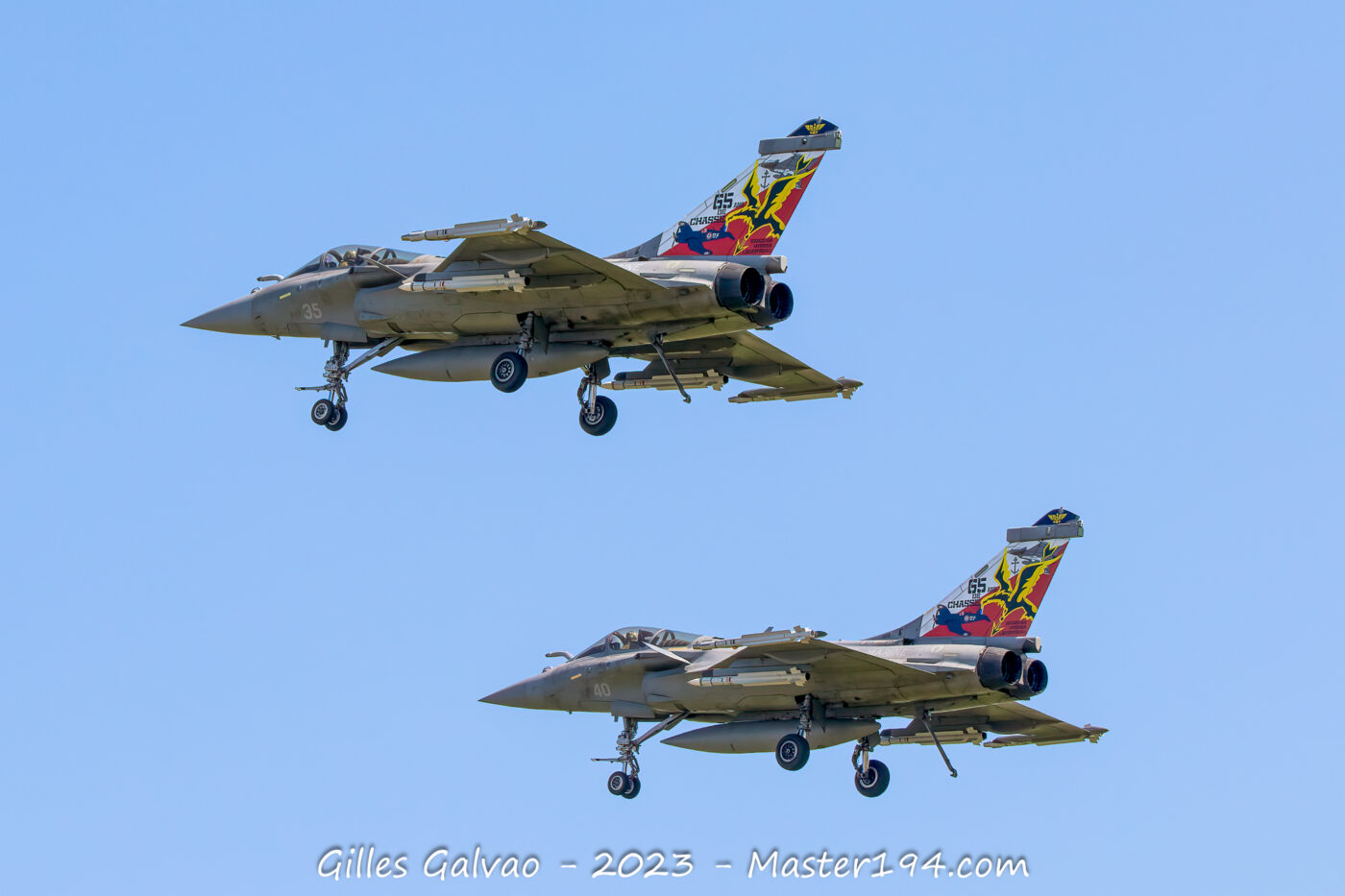
Following a challenging initial commercial rollout, the Rafale achieved remarkable international export success starting in the mid-2010s.
Egypt became the first export customer in 2015. Greece, Croatia, the United Arab Emirates, Indonesia, and Serbia subsequently joined the program, establishing a growing global community of Rafale operators.
Egypt: The Launch Export Customer
In 2015, Egypt became the first foreign nation to order the Rafale.
The Egyptian Air Force initially acquired 24 airframes before placing follow-on orders to strengthen its fleet. Assigned to air defense and precision strike missions, Egyptian Rafales represent a core component of the country’s frontline air power.
Qatar: Expanding Footprint in the Gulf
Qatar subsequently emerged as another major operator in the Persian Gulf. Delivered in modern configurations, Qatari airframes feature advanced systems aligned with the program’s latest operational standards.
The Qatari fleet comprises both single-seat and twin-seat Rafale variants and regularly participates in joint international exercises.
India: Air Force and Carrier Operations
India represents one of the Rafale’s most strategic international markets.
The Indian Air Force ordered 36 Rafales to enhance its air combat posture and replace aging legacy assets. Indian airframes incorporate Country Specific Enhancements (CSE) tailored to regional operational demands.
Furthermore, the Indian Navy selected the Rafale M for carrier-borne operations, solidifying the platform’s presence across the Indo-Pacific.
Greece: French Fighters Return to the Eastern Mediterranean
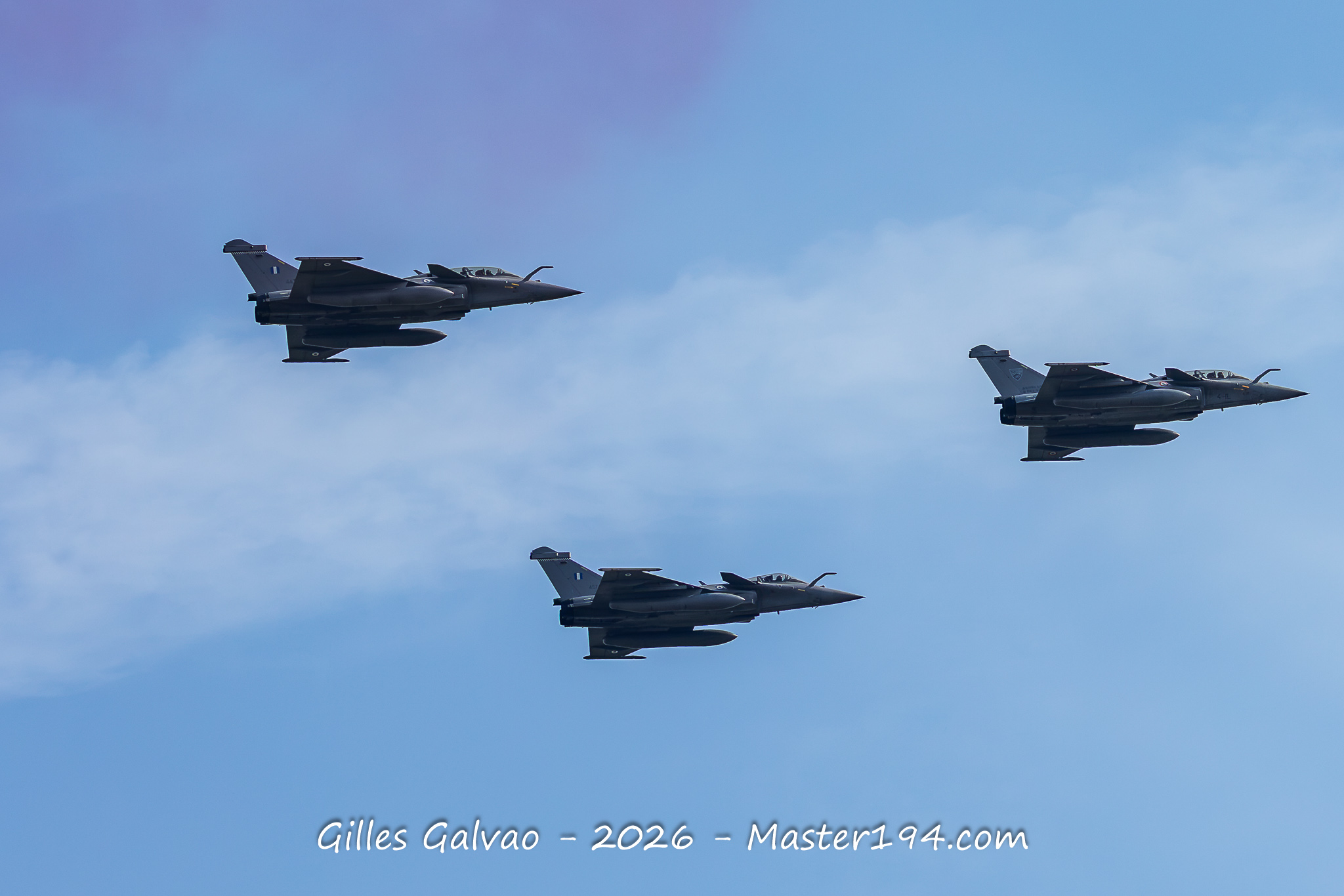
Greece became the first European nation to acquire the Rafale.
The airframes were procured to bolster Hellenic air defense capabilities, operating alongside the existing fleet of Mirage 2000-5s. This joint operation illustrates a seamless generational transition between two eras of Dassault combat aircraft.
Croatia: Replacing the Legacy MiG-21
Croatia selected the Rafale to replace its fleet of legacy MiG-21 fighters.
The procurement represents a major technological leap for the Croatian Air Force, introducing a modern, combat-proven multirole platform into its inventory.
United Arab Emirates: A Landmark Megadeal
The United Arab Emirates became one of the largest international operators of the type, placing a landmark order for 80 Rafale aircraft.
This deal represented a major commercial victory for Dassault Aviation and significantly expanded the aircraft’s operational footprint in the Middle East.
Indonesia and Serbia: Broadening Global Reach
Indonesia joined the community of operators with an order aimed at comprehensively modernizing its combat aviation forces.
Serbia subsequently selected the Rafale, further confirming the platform’s growing appeal across European markets. These export achievements have enabled Dassault Aviation to build a global operator network while securing the long-term industrial viability of the Rafale program.
Modeling the Rafale
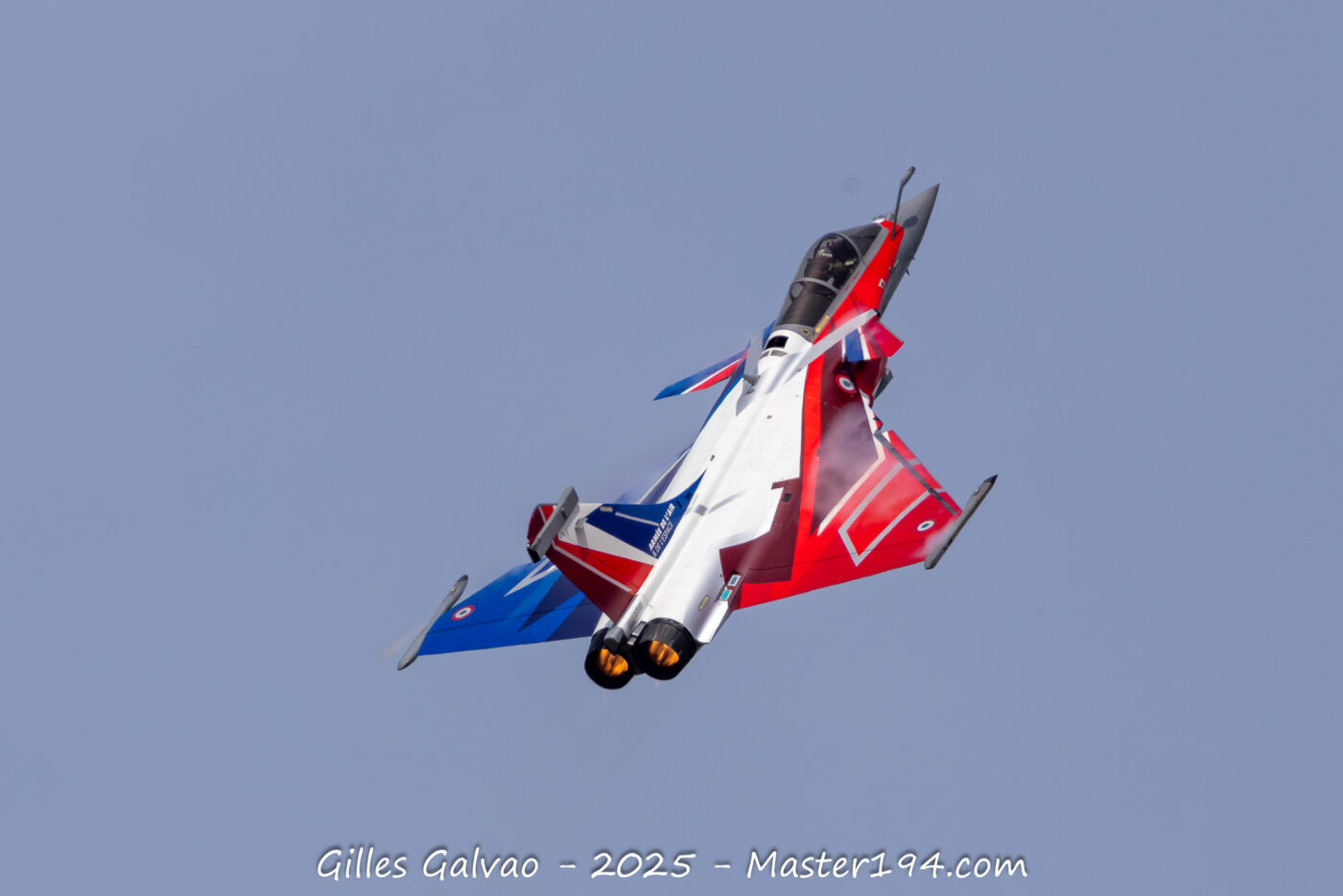
The Rafale has become a must-build subject for scale modelers. Its instantly recognizable silhouette, combined with a wide array of operational variants and weapon configurations, offers extensive build possibilities.
However, key structural and equipment differences—not only between the Rafale C, B, and M variants, but also across capability standards and foreign export operators—make accurate reference documentation essential before starting a build.
Key Rafale Kits by Scale
1/72 Scale : Modelers benefit from a solid selection of 1/72 scale kits. Revell offerings provide an accessible, well-engineered foundation, while more recent tooling from Modelsvit delivers a higher level of surface detail and accuracy. Choosing the ideal kit depends heavily on the specific airframe variant and operational timeframe being depicted.
1/48 Scale : Kits from Revell and Hobby Boss allow modelers to depict various airframe configurations. Special attention must be paid to variant-specific antennas, sensors, and standard-dependent equipment.
In my view, the Revell kit remains the most refined overall. My choice of the Hobby Boss kit was strictly driven by my desire to build the C01 prototype.

1/32 scale : Kit availability remains limited to 3D printing initiatives.
An Aircraft Built to Serve for Decades
More than twenty years after entering operational service, the Rafale has become the backbone of French combat aviation and one of Dassault Aviation’s most vital military aircraft programs.
Both in France and on the export market, its operational capabilities continue to evolve through successive capability standards and the progressive integration of next-generation weaponry and avionics.
The ongoing rollout of the F5 standard for 2030 ensures that the Rafale will remain fully operational for decades to come, while France actively prepares the next generation of air power through the Future Combat Air System (FCAS / SCAF).
The Rafale represents the culmination of decades of Dassault fighter development. As the direct heir to the Mirage lineage, designed to replace multiple generations of specialized airframes, it has conclusively demonstrated that a single platform can seamlessly execute vastly different mission sets—from frontline air defense to strategic nuclear deterrence.
Its legacy is now inseparable from modern French military aviation history. Deployed across numerous combat theaters and adopted by a growing community of international air forces, the Rafale has established itself as one of the few European combat aircraft programs to achieve such sweeping global export success.
Its operational career is far from over: with future standards and continuous technological upgrades, the Rafale will remain at the very center of French and international air warfare for decades to come.