The SEPECAT Jaguar stands as one of the most iconic combat aircraft generated by Anglo-French aerospace cooperation. Originally conceived as an advanced trainer capable of light tactical support, the design evolved into a specialized supersonic attack fighter dedicated to low-level interdiction, close air support, and tactical reconnaissance.
Produced from the early 1970s onward, the Jaguar served frontline operational roles with the French Air Force (Armée de l’Air), the Royal Air Force (RAF), and multiple international export operators. It accumulated a rich operational combat record spanning operations in Chad, the 1991 Gulf War, and peacekeeping missions in the Balkans, alongside decades of continuous modernization with the Indian Air Force.
Featuring compact shoulder-mounted wings, twin Rolls-Royce/Turbomeca Adour turbofans, heavy-duty trailing-link landing gear, and specialized weapons integration, the airframe remains a prime reference subject for military aviation historians and scale modelers.
Here on Master194, explore the complete history of the Jaguar, its French, British, and export variants, alongside technical dossiers, walkaround photo galleries, and scale modeling guides dedicated to this remarkable jet.
AD
Genesis of the Jaguar: An Anglo-French Partnership
In the early 1960s, France and the United Kingdom independently sought a new jet platform to update their training and light attack fleets.
- France: The Air Force required a modern replacement for the Lockheed T-33 and Fouga Magister trainers, while seeking a replacement for the Mystère IV in tactical ground-attack roles.
- United Kingdom: The Royal Air Force sought an advanced supersonic trainer to succeed the Hawker Hunter.
Finding substantial common ground, French and British air staffs began harmonizing requirements in October 1964. In France, after evaluating competitive proposals, the Breguet Br.121 concept was selected in January 1965. On May 17, 1965, a joint memorandum of understanding was signed establishing a collaborative dual-role trainer and tactical support aircraft project.
Breguet partnered with the British Aircraft Corporation (BAC) to form SEPECAT (Société Européenne de Production de l’Avion d’École de Combat et d’Appui Tactique). This represented a major milestone for European aerospace integration, establishing shared engineering and dual assembly lines in France and the UK.
As military requirements escalated, the lightweight trainer concept evolved into a robust frontline strike fighter capable of low-level interdiction, tactical reconnaissance, and nuclear strike missions for both air forces.
First Flight and Production
The initial prototype made its maiden flight on September 8, 1968, at Istres, piloted by chief test pilot Bernard Witt. A dedicated fleet of prototypes followed to validate French and British operational variants.
Initial orders totaled 200 aircraft for each nation. Total serial production reached 605 airframes, including 200 for the French Air Force, 203 for the Royal Air Force, and 202 exported worldwide.
Design Philosophy: Low-Level Penetration
The Jaguar was never intended as an air-superiority fighter. Its core doctrine focused on high-speed, ultra-low-level ingress to bypass enemy radar cover and integrated air defense networks.
Powerplant: Powered by two Rolls-Royce/Turbomeca Adour turbofans. While the twin-engine architecture ensured high survivability over contested territory, total available thrust was modest relative to maximum takeoff weight under heavy ordnance loads—inspiring the famous aircrew joke: “The Jaguar rotates because the Earth is round!”
Airframe & Wing Architecture: A compact wing platform with high wing loading provided exceptional stability in turbulent low-altitude air.
Structural Resilience: Reinforced airframe components and heavy-duty landing gear enabled operations from austere and semi-prepared landing strips.
Distinctive Landing Gear Architecture
The main landing gear features an unusual arrangement, with two wheel wells incorporated into the lower central fuselage. The widely spaced landing gear legs follow a complex retraction sequence: they pivot forwards and inwards, while the wheels rotate to fit into their respective fuselage bays. This configuration helps provide a sufficiently wide wheel track and adequate ground clearance, both valuable features for an aircraft designed to operate from relatively rough airfields.
Ordnance & Stores Payload
Depending on variant and mission profile, external hardpoints carried:
- Conventional and laser-guided bombs (including French BGL precision weapons);
- AS-30L laser-guided missiles;
- Self-defense Air-to-Air Missiles (AAMs);
- Reconnaissance pods and drop tanks.
Le Jaguar français peut notamment utiliser les bombes guidées laser BGL ainsi que le missile air-sol AS-30L.
French Air Force Variants
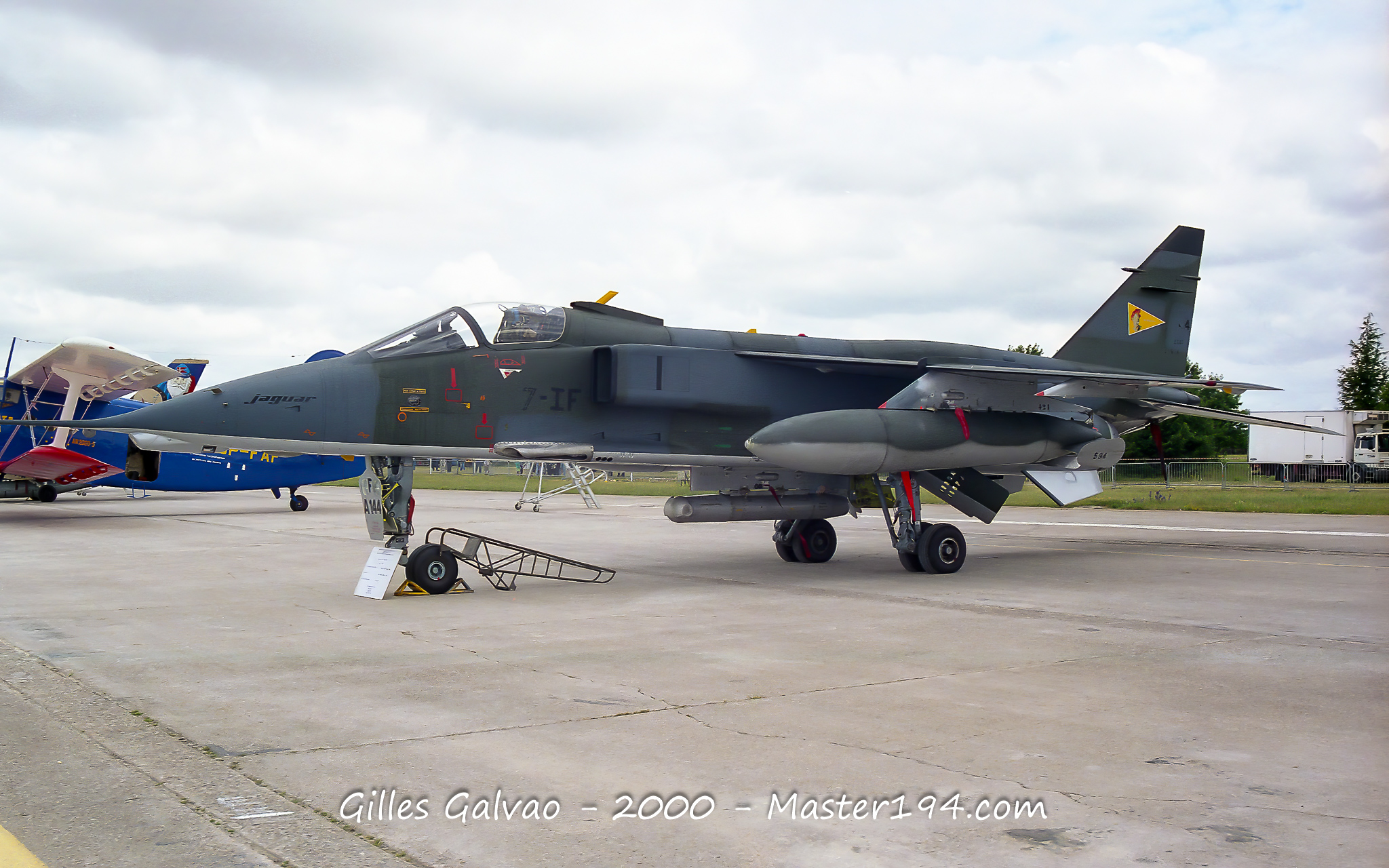
The Armée de l’Air primarily operated two core variants: the single-seat Jaguar A and the two-seat Jaguar E.
Jaguar A
The Jaguar A is the French single-seat variant optimized for tactical support and ground-attack missions.
It is primarily distinguished by a navigation and attack system tailored specifically to French operational requirements, alongside an internal armament consisting of twin 30 mm DEFA revolving cannons.
The Jaguar A carries a versatile range of external stores and weapons systems. Throughout its operational career, it was deployed extensively for tactical air support, battlefield interdiction, tactical reconnaissance, and low-level strike missions.
Its onboard navigation and sighting suite underwent successive upgrades over time, enabling the integration and operational delivery of modern precision-guided weapons, notably laser-guided munitions.
The Jaguar and the French Nuclear Deterrence
The Jaguar A also participated in the French tactical nuclear strike mission. In this configuration, it was capable of carrying the AN-52 tactical nuclear bomb. This mission represents one of the least visible aspects of the Jaguar’s operational career, yet it perfectly illustrates the evolution of the airframe: initially conceived around an advanced trainer program, it matured into a true tactical strike vector.
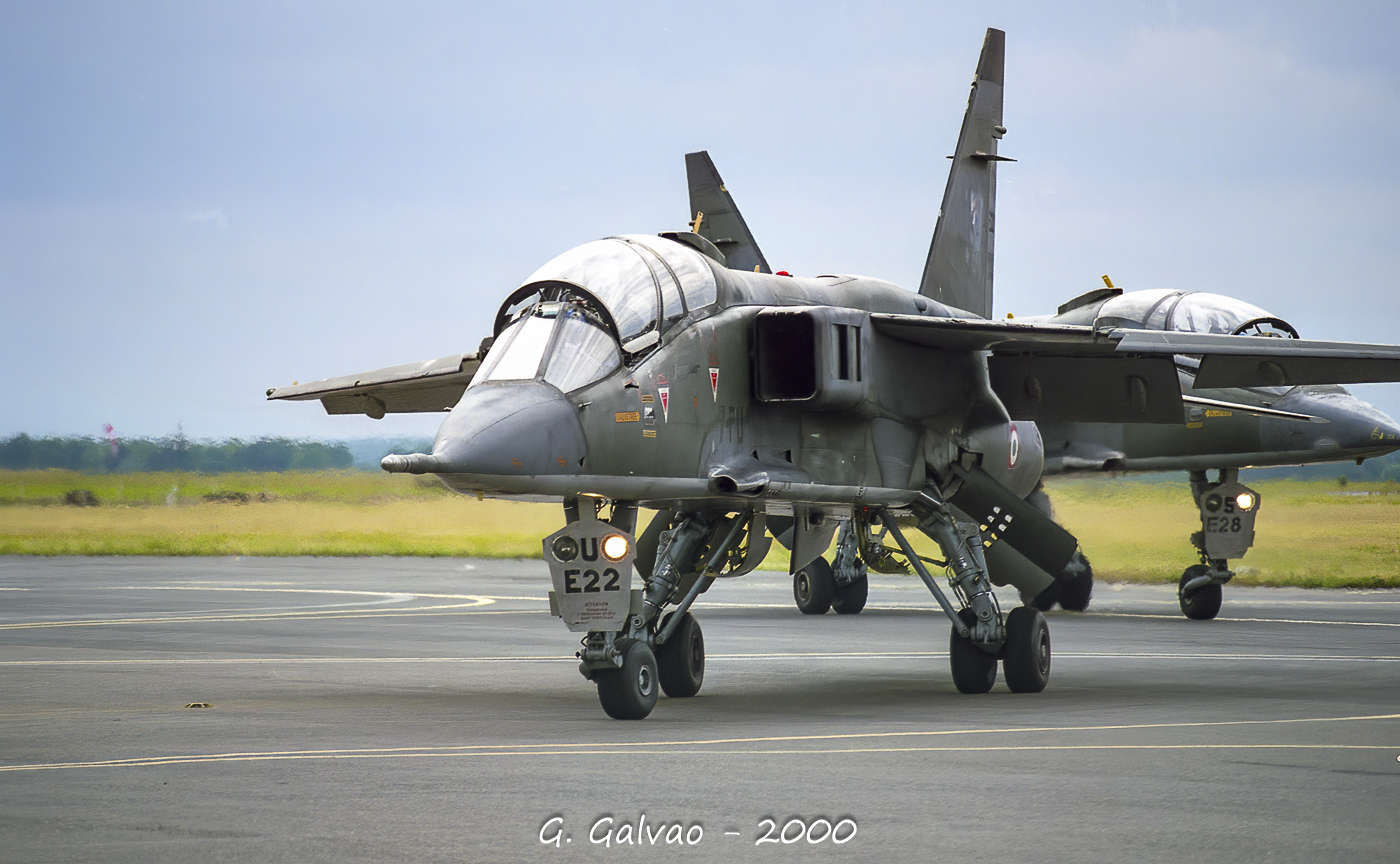
Jaguar E
The Jaguar E is the French two-seat operational training variant.
The instructor/co-pilot is accommodated in a lengthened tandem cockpit relative to the single-seat airframe. Despite its primary training mandate, the Jaguar E retained full secondary operational combat capabilities. Its deployment allowed student pilots to master the unique handling characteristics of the Jaguar and train extensively in low-level penetration profiles.
Royal Air Force British Jaguars
The Royal Air Force operated its own distinct variants of the Jaguar, utilizing designations that differed significantly from those adopted in France.
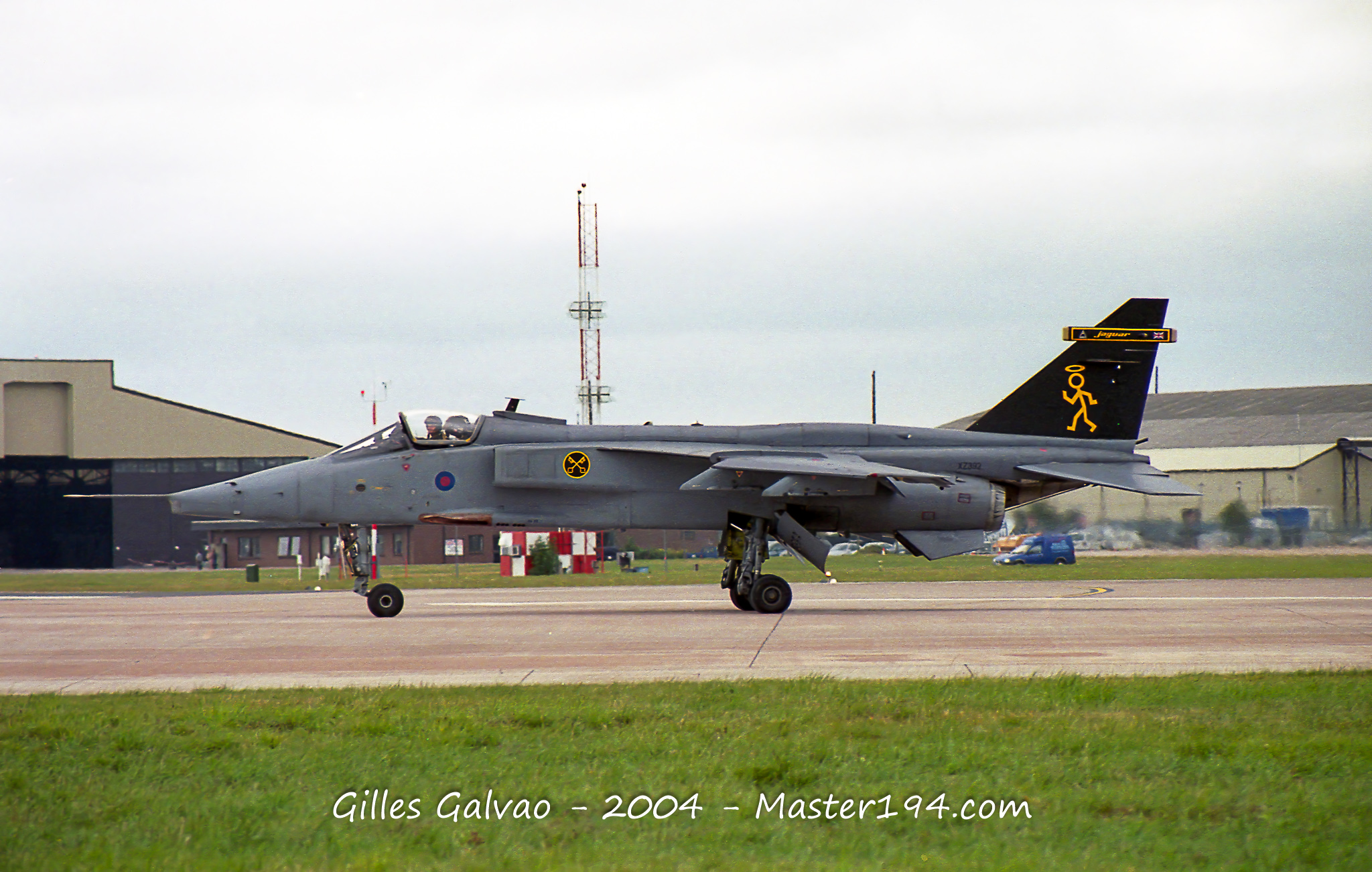
The British single-seat variant was initially designated Jaguar GR.1, while the two-seat operational trainer was designated Jaguar T.2.
British onboard avionics, countermeasures, and specialized equipment differed substantially from their French counterparts. Recognizing these architectural differences is essential when attempting to accurately identify an airframe from external markings and equipment fits.
Jaguar GR.1
The Jaguar GR.1 served as the RAF’s primary tactical strike and interdiction platform throughout the 1970s and 1980s.
It was deployed extensively in West Germany as a core component of NATO’s forward defense posture against Warsaw Pact forces. The RAF operated the Jaguar primarily in high-speed, ultra-low-level strike profiles. Multiple frontline squadrons were forward-deployed in Germany—notably at RAF Bruggen—while additional units maintained operational readiness based in the United Kingdom.
The Jaguar also played a critical role in tactical reconnaissance. During this period, designated RAF Jaguar units were assigned a WE.177 tactical nuclear strike role under NATO operational commitments.
Jaguar GR.1A
The GR.1A designation represented a major avionics and combat capability upgrade applied to the existing Jaguar GR.1 fleet.
Key enhancements included modernized navigation systems, advanced electronic countermeasures (ECM), and integrated chaff/flare decoy dispenser suites. Furthermore, the AIM-9 Sidewinder infrared missile was integrated for self-defense air-to-air engagements.
This upgrade era also introduced the iconic overwing missile pylons, enabling British Jaguars to carry self-defense air-to-air missiles on upper wing stations without sacrificing critical underwing hardpoints reserved for heavy ordnance and fuel tanks. This distinctive configuration remains one of the most recognizable visual signatures of the British Jaguar.
Jaguar GR.3 and GR.3A
Toward the latter half of the British Jaguar’s operational lifecycle, the fleet received an extensive and comprehensive combat upgrade.
The Jaguar 97 modernization program culminated in the GR.3 and subsequent GR.3A standards.
This mid-life transformation introduced a heavily overhauled digital cockpit avionics suite, an improved inertial/GPS navigation system, laser designation capabilities, and integration of advanced digital reconnaissance pods.
The introduction of the TIALD (Thermal Imaging Airborne Laser Designation) pod vastly increased the aircraft’s precision-strike effectiveness with laser-guided munitions. Fully modernized, the Jaguar evolved into an exceptionally versatile day/night tactical strike and reconnaissance asset.
Jaguar T.2, T.2A and T.4
The British two-seat Jaguar variants were primarily tasked with operational conversion training and pilot proficiency missions.
The initial Jaguar T.2 was progressively upgraded to the T.2A standard, with selected airframes subsequently receiving further modernization to become the T.4.
Mirroring the single-seat upgrade path, these conversions focused primarily on enhanced avionics, upgraded navigation suites, and integrated mission systems.
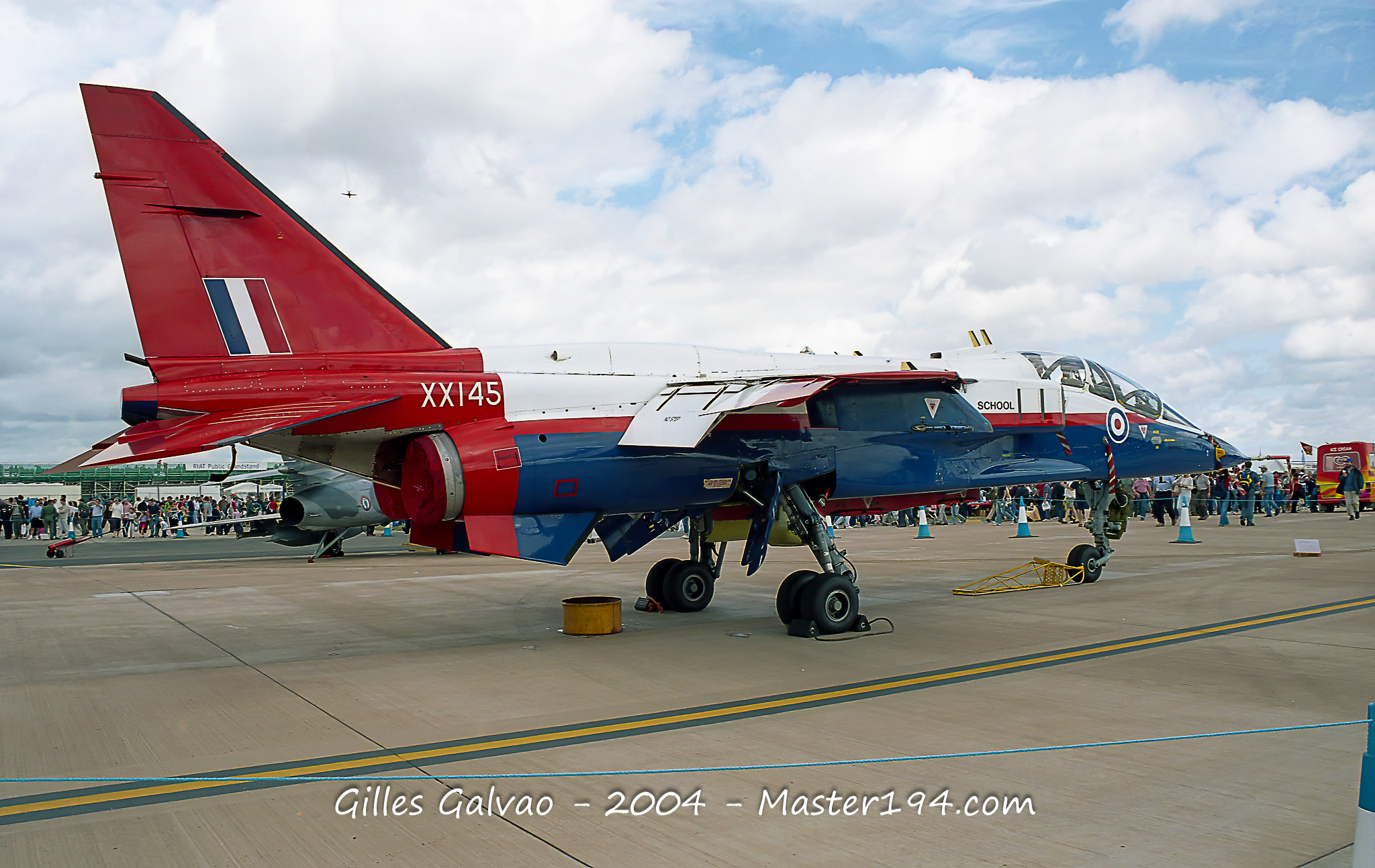
The Jaguar M: The Carrier-Borne Jaguar Variant
One of the most distinctive chapters in the history of the Jaguar is its specialized adaptation for naval aviation and aircraft carrier operations.
At the time, the French Navy (Marine Nationale) was actively seeking a capable successor to its aging Étendard IV M strike fleet.
To meet this requirement, SEPECAT developed a dedicated carrier-capable prototype: the Jaguar M.
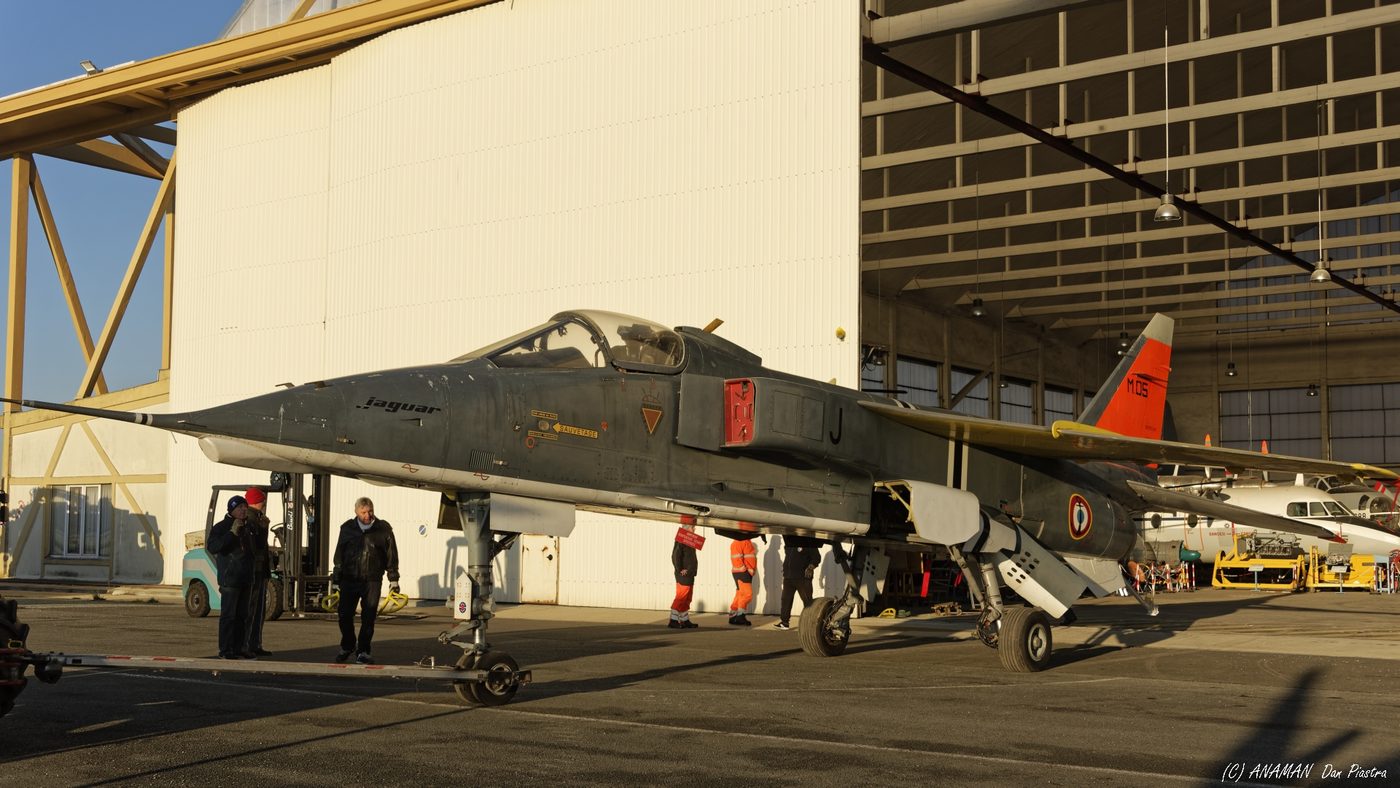
The Jaguar in Combat
The Jaguar accumulated a particularly rich and active combat career.
Its primary operational domain—ultra-low-level strike—saw the type heavily committed across numerous French and British military operations worldwide.
French Jaguars in Africa
French Air Force (Armée de l’Air) Jaguars were deployed repeatedly across the African continent, most notably supporting French military interventions in Chad.
These operational commitments allowed the Jaguar to prove its strike efficiency and its capacity to operate effectively from austere forward operating bases far from mainland France. The aircraft played a central role in operations tied to the French presence in Chad throughout the 1970s and 1980s.
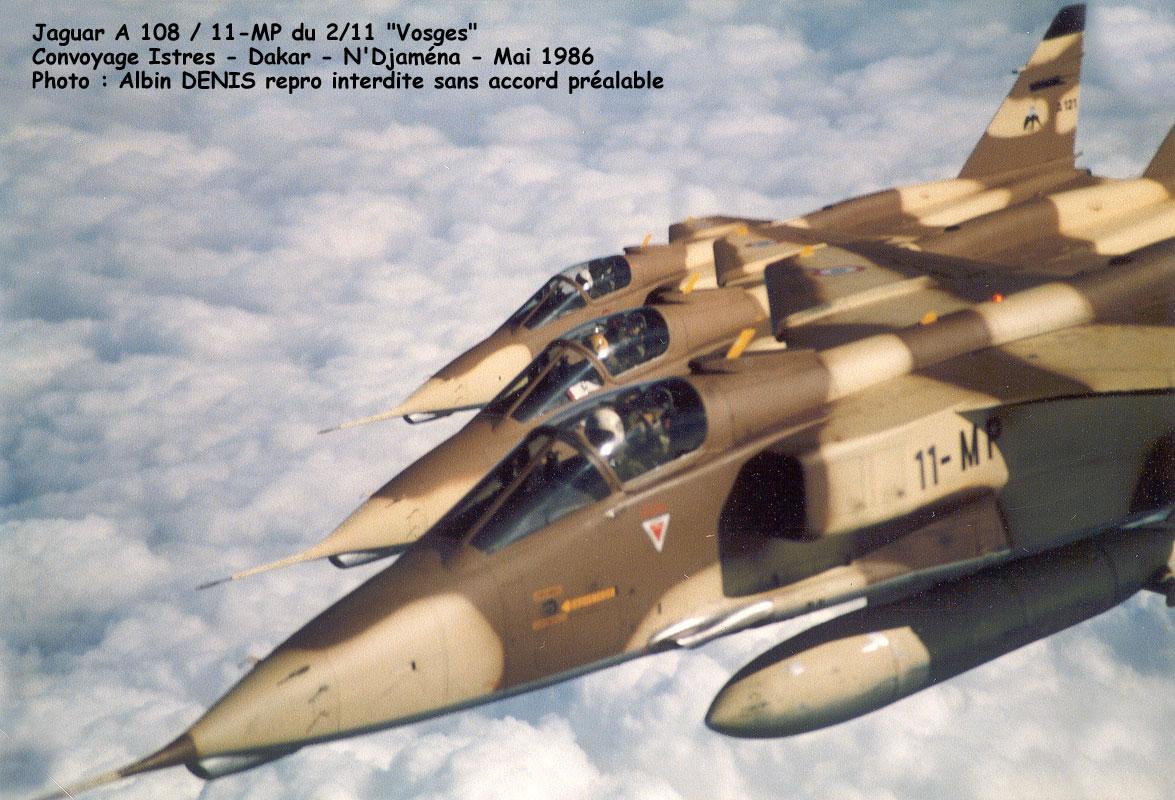
Operation Daguet and the 1991 Gulf War
The 1991 Gulf War represents one of the most prominent combat deployments in the operational history of the French Jaguar. Deployed under Operation Daguet (the French contribution to Coalition operations), French Air Force Jaguars carried out intensive strike missions against Iraqi forces.
This conflict also marked a major turning point in tactical air employment doctrines, highlighting the rapid transition toward precision-guided munitions and operational coordination with specialized target-designation aircraft.
The Royal Air Force also committed a formidable Jaguar force to the region during Operation Granby. The RAF deployed twelve Jaguar GR.1A aircraft, flying over 600 combat sorties targeting Iraqi artillery and missile positions, alongside tactical reconnaissance and anti-shipping strike missions.
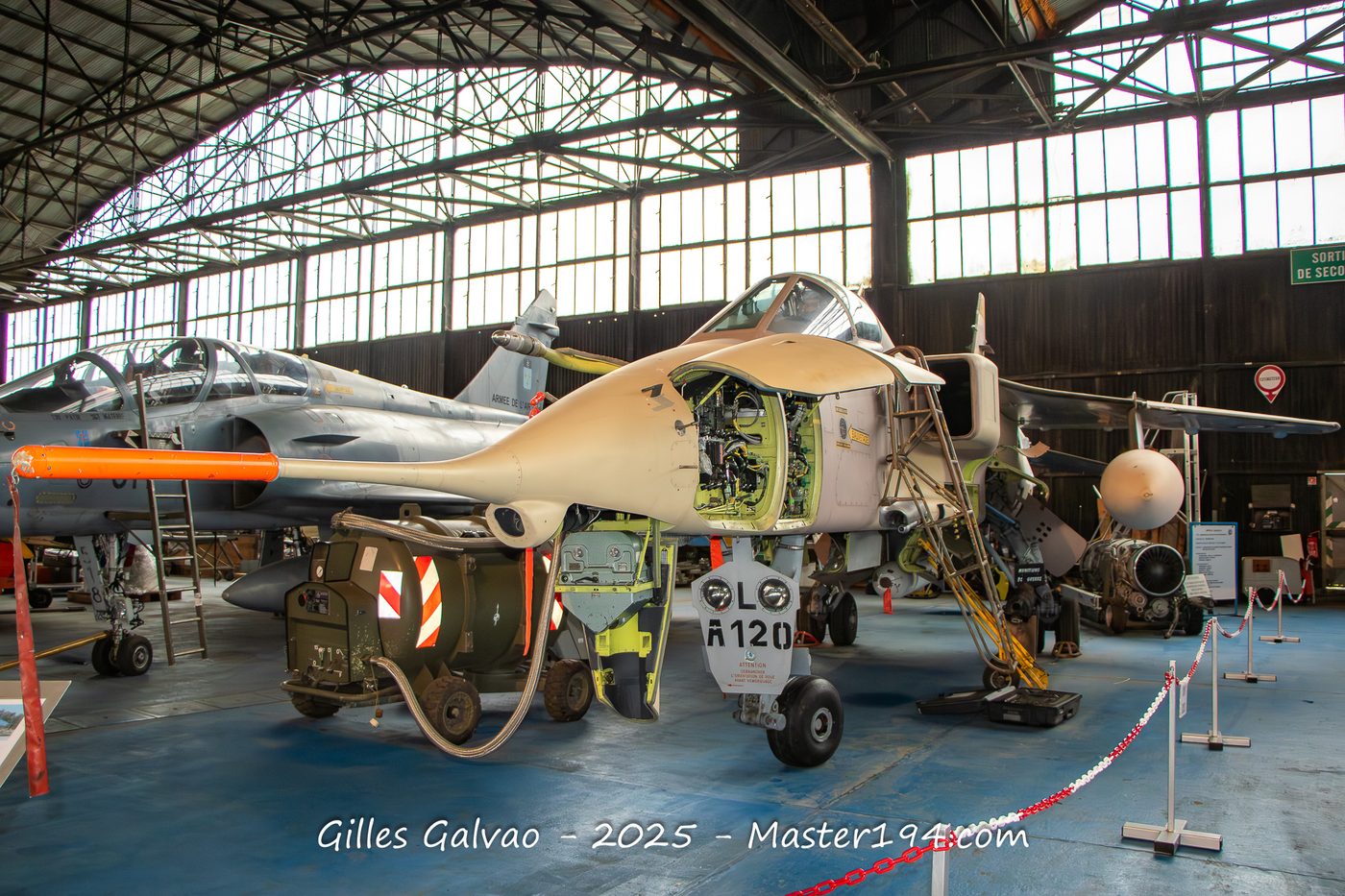
The Balkans and the Post-Cold War Era
Following the end of the Cold War, British Jaguars continued to see active operational deployment across multiple international theaters.
They participated prominently in coalition air operations over the former Yugoslavia (maintaining no-fly zones and conducting strike missions) and enforced post-war no-fly zones over Iraq operating from Turkish airbases.
Despite the introduction of newer generations of multirole combat aircraft, the Jaguar remained a reliable frontline asset well into the 2000s.
The Royal Air Force officially retired its final operational Jaguars on April 30, 2007. In contrast, the French Air Force had withdrawn its own fleet two years earlier, in 2005.
The Jaguar for Export
The Jaguar’s reach extended far beyond France and the United Kingdom. The program ultimately spawned the Jaguar International, specifically tailored for the global export market.
Foreign operators received customized variants tailored to their specific national defense requirements, incorporating distinct avionics suites, countermeasures, and powerplant modifications compared to standard French or British airframes.
Four overseas nations adopted the Jaguar: India, Oman, Ecuador, and Nigeria.
The Indian Jaguar: HAL Shamsher
L’India became by far the largest international export user of the Jaguar. The aircraft was produced under license in-country by Hindustan Aeronautics Limited (HAL) under the local designation Shamsher (“Sword of Justice”).
The Indian Air Force (IAF) fleet encompasses three principal variants:
- Jaguar IS: Single-seat tactical strike variant;
- Jaguar IB: Two-seat operational conversion trainer;
- Jaguar IM: Specialized anti-shipping and maritime attack variant.
Indian Jaguars received uprated Adour powerplants and underwent continuous, highly sophisticated avionics modernization programs.
The Jaguar IM Maritime Strike Variant
The Jaguar IM stands out as one of the most unique and specialized configurations in the global Jaguar family.
Optimized for anti-shipping strike missions, the aircraft features a modified nose radome housing the Thomson-CSF Agave radar (the same radar utilized on French Navy Super Étendards). It is fully integrated to deploy the British Sea Eagle anti-ship missile.
This powerful maritime strike capability endowed the Indian Jaguar with an operational mission profile that neither the French nor British domestic fleets possessed in this exact form.
The DARIN Modernization Programs
The exceptional operational longevity of the Jaguar fleet in Indian service is largely attributed to successive, highly comprehensive avionics upgrade programs known as DARIN (Display And Reconnaissance INavigation).
These incremental upgrades progressively transformed the 1960s-era airframe into a modern precision-strike platform, integrating advanced digital navigation computers, head-up displays (HUD), moving-map systems, and modern weapons delivery operational software.
The Indian Jaguar fleet serves as a textbook engineering case study, demonstrating how a robust airframe conceived in the 1960s can remain frontline-relevant for decades through continuous, spiral avionics and weapons systems modernization.
Omani Jaguars
The Sultanate of Oman operated export Jaguars under the designations Jaguar OS (single-seat strike) and Jaguar OB (two-seat operational trainer).
The initial aircraft deliveries commenced in 1977, followed by supplementary repeat orders that rounded out the Royal Air Force of Oman’s (RAFO) fleet. Omani Jaguars underwent several incremental avionics and weapons upgrades over their lifespan, allowing them to remain in active operational service significantly longer than their French or British domestic counterparts. The final Omani Jaguars were officially retired from service in 2014.
Ecuadorian Jaguars
Ecuador became the sole Latin American operator of the SEPECAT Jaguar.
The Ecuadorian Air Force (Fuerza Aérea Ecuatoriana – FAE) received single-seat Jaguar ES strike variants and two-seat Jaguar EB trainers. Primarily tasked with tactical ground-attack and territorial defense missions, the fleet saw operational employment during the 1991 Cenepa War border conflict against Peru.
Nigerian Jaguars
Nigeria ordered single-seat Jaguar SN and two-seat Jaguar BN variants, with initial deliveries arriving in the mid-1980s. However, the Nigerian Air Force Jaguar career proved relatively short-lived. Severe budgetary and economic constraints eventually led to the progressive grounding and retirement of the fleet, with surviving airframes placed into long-term open storage.
Modeling the SEPECAT Jaguar in Scale
With its angular airframe geometry, intricate landing gear assemblies, diverse ordnance configurations, and extensive variant lineage, the Jaguar represents an exceptional subject for military scale modelers.
However, it is a subject that demands precise attention to variant-specific features. A French Jaguar A cannot be accurately built simply by applying French decals to a British airframe kit. Cannon armaments, nose radome profiles, cockpit avionics fairings, ECM sensors, and underwing store configurations vary substantially between operational users and variants.
Selecting the correct kit tooling must therefore begin with a precise identification of the exact serial number and operational era you intend to replicate.
The Jaguar in 1/72 Scale
The 1/72 scale landscape offers a wide selection of French and British Jaguar kits produced over the decades by manufacturers such as Hasegawa, Airfix, Revell, and Italeri.
Because kit availability, molding accuracy, and surface detail vary considerably across historical releases and tooling generations, this section will be continuously updated with a detailed breakdown of the specific boxings best suited for each operational variant.
The Jaguar in 1/48 Scale
The 1/48 scale format provides an ideal canvas to highlight the aircraft’s signature engineering details—most notably its complex trailing-link landing gear, cockpit canopy framing, intake splitter plates, and external stores pylons.
Several manufacturers have tackled the Jaguar in 1/48, with notable differences in tooling precision, fit, and engineering philosophy:
- Heller & Classic Airfix (Legacy Toolings): For many years, the classic Heller kit served as the primary option for French variants, while vintage Airfix toolings covered British airframes. While reasonably accurate in overall outline, these vintage kits are now considered obsolete in terms of surface detail and fit when compared to modern releases.
- KittyHawk: Released comprehensive modern toolings covering single-seat French (Jaguar A) and British (GR.1/GR.3) variants, alongside British two-seat airframes.
- Airfix (New Toolings): The latest Airfix 1/48 releases have established the definitive modern benchmark for British single-seat and two-seat Jaguars, excelling in both surface detail fidelity and assembly precision.
An Anglo-French Aircraft That Went Global
Ultimately, the SEPECAT Jaguar proved to be much more than just a joint aeronautical development program. It stands as one of the first major milestones of industrial cooperation between France and the United Kingdom in the combat aircraft sector.
Its story began with a relatively modest requirement: acquiring an advanced training aircraft. It culminated in a supersonic strike platform capable of executing ground attack, tactical reconnaissance, nuclear strike missions, and—in specialized configurations—maritime interdiction.
The Jaguar’s operational lifespan also testifies to its remarkable capacity for evolution. Although French and British fleets were retired in the early 2000s, the aircraft continued its active military career in India and across multiple export nations for decades.
With 605 airframes produced, the Jaguar remains one of the most iconic and representative aircraft of European Cold War tactical aviation.