 by
In the late 1960s, the French Navy (Marine Nationale) was actively seeking a replacement for its fleet of Dassault Étendard IV M strike fighters operating aboard the aircraft carriers Clemenceau and Foch. Concurrently, France and the United Kingdom were jointly developing the SEPECAT Jaguar, primarily designed for low-level tactical strike and close air support.
Adapting the new Anglo-French twin-jet to the severe operational constraints of carrier-borne naval aviation appeared highly attractive. A unified airframe serving both the French Air Force (Armée de l’Air) and Naval Aviation (Aéronautique navale) promised substantial manufacturing and logistical rationalization. To evaluate the technical feasibility of carrier operations, a dedicated navalized prototype was ordered and constructed: the Jaguar M 05.
AD
The naval Jaguar program ultimately proved short-lived. Following extensive ground-based simulated carrier landing trials and trials aboard the Clemenceau, the project was officially canceled in January 1973 in favor of a modernized derivative developed by Dassault from the Étendard line: the Super Étendard.
However, the sole Jaguar M 05 prototype did not fade away. Following the cancellation of its naval career, it served for several years as an advanced flight-test bed, notably conducting high-risk spin-recovery flight dynamics research. The airframe logged over 350 experimental test flights before being retired to Rochefort, where it is preserved today at the Musée de l’Aéronautique Navale.
Engineering Genesis: Tailoring a Jaguar for Carrier Decks
Transforming the land-based Jaguar into a carrier-capable aircraft required extensive airframe re-engineering to absorb the extreme mechanical loads imposed by steam catapult launches and arrested landings.
Carrier Landing Guidance Systems: Additional discreet modifications included specialized deck-landing approach signaling receivers and optical landing system interfaces.
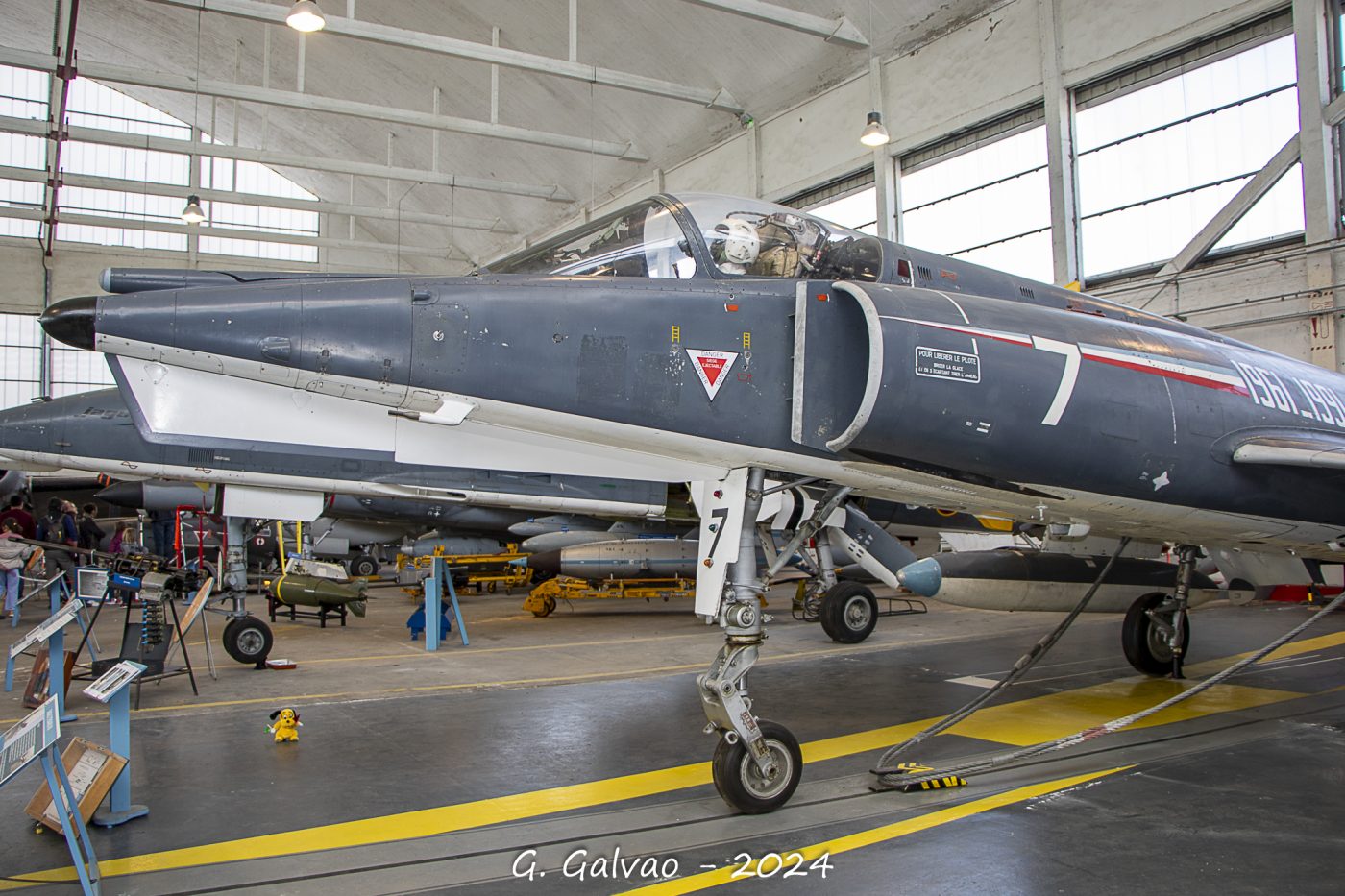
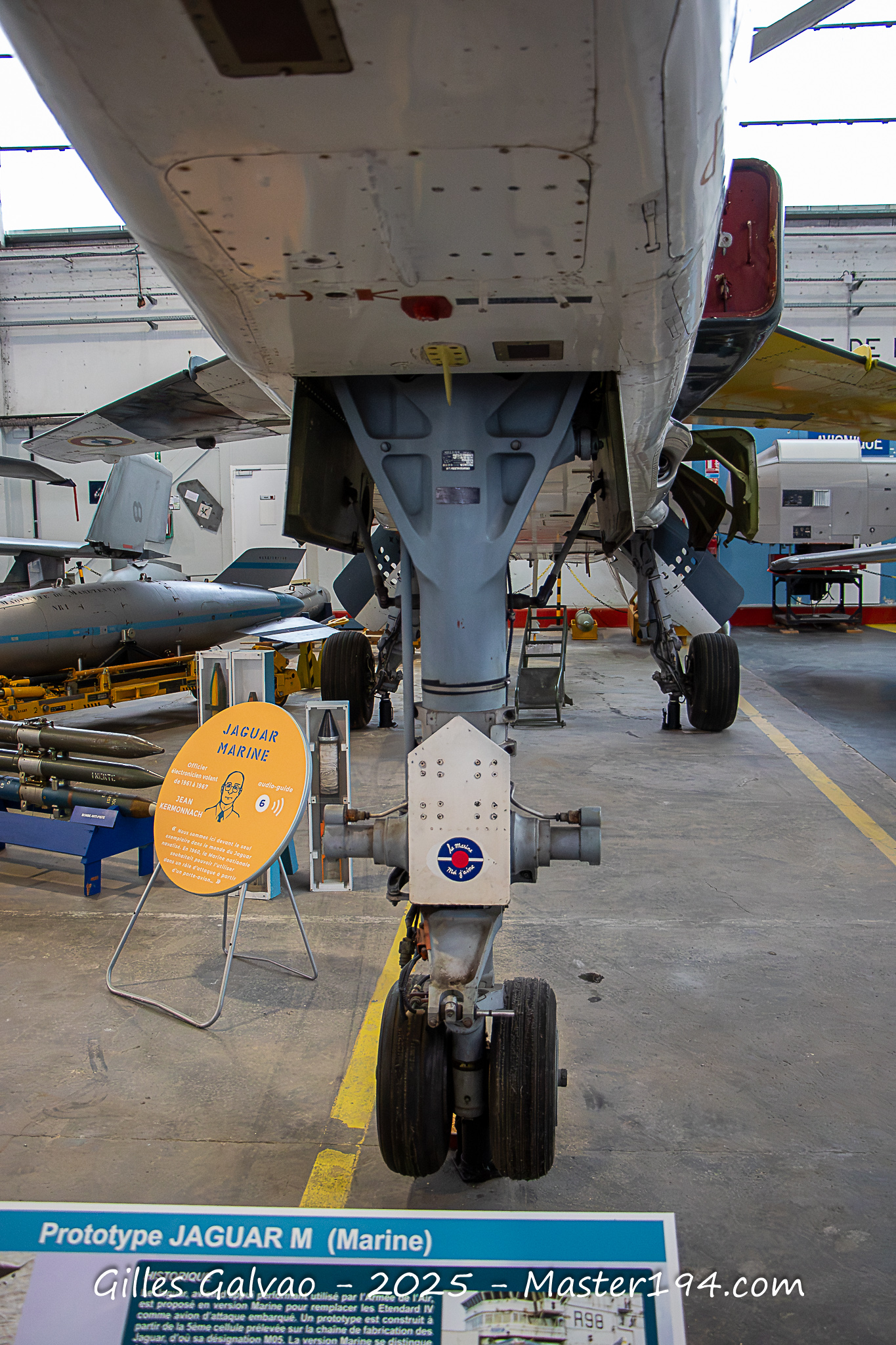
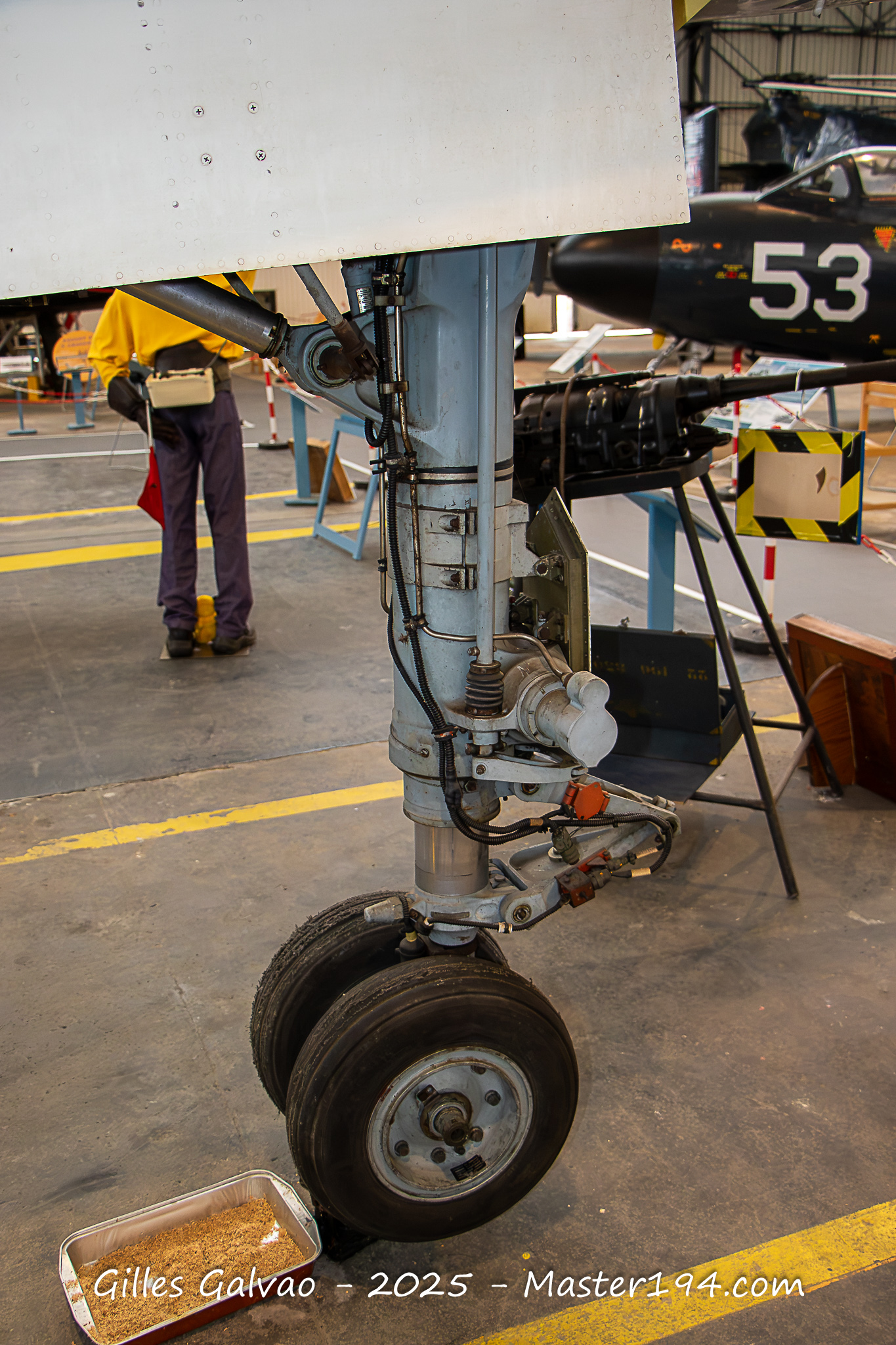
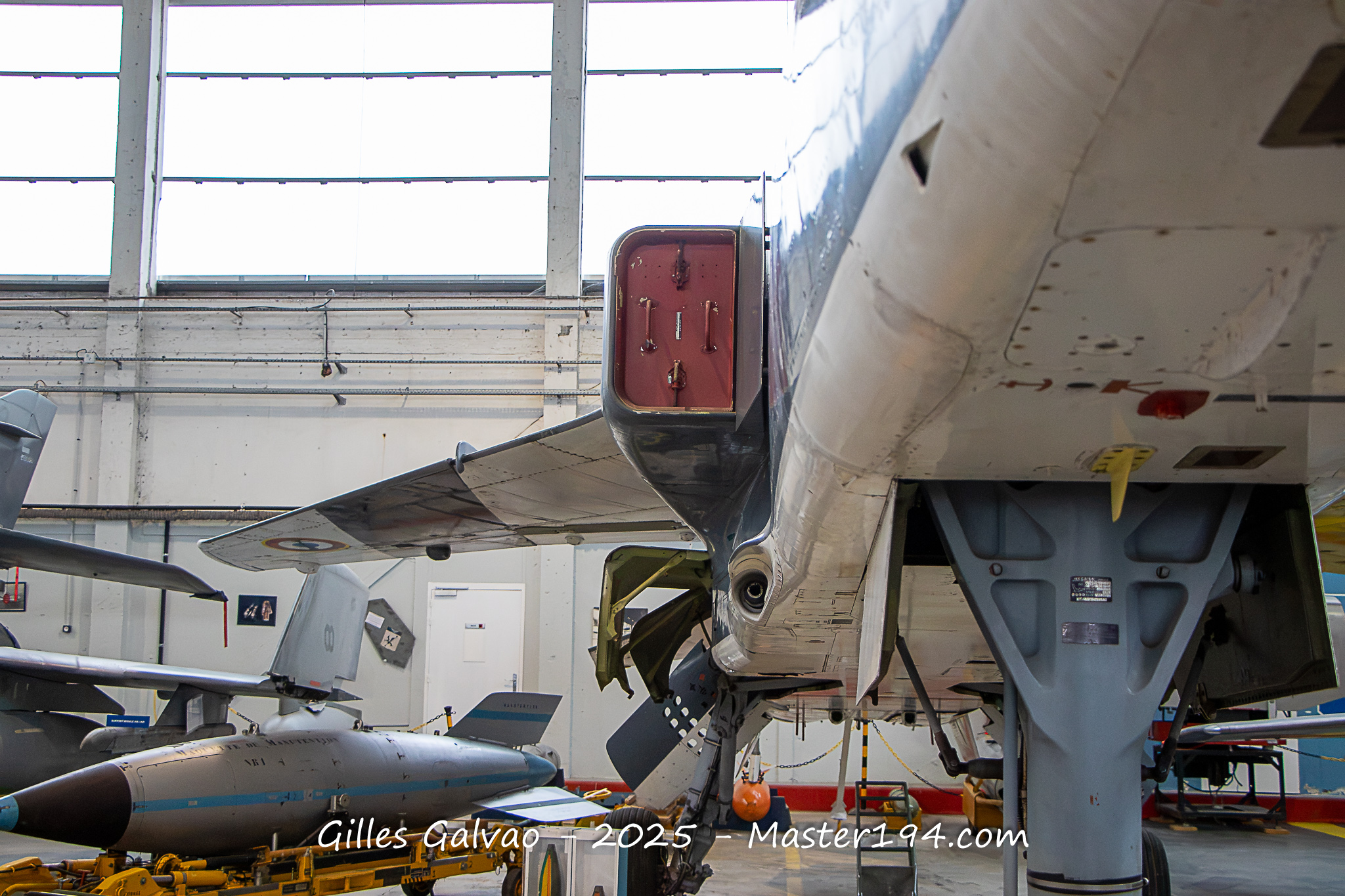
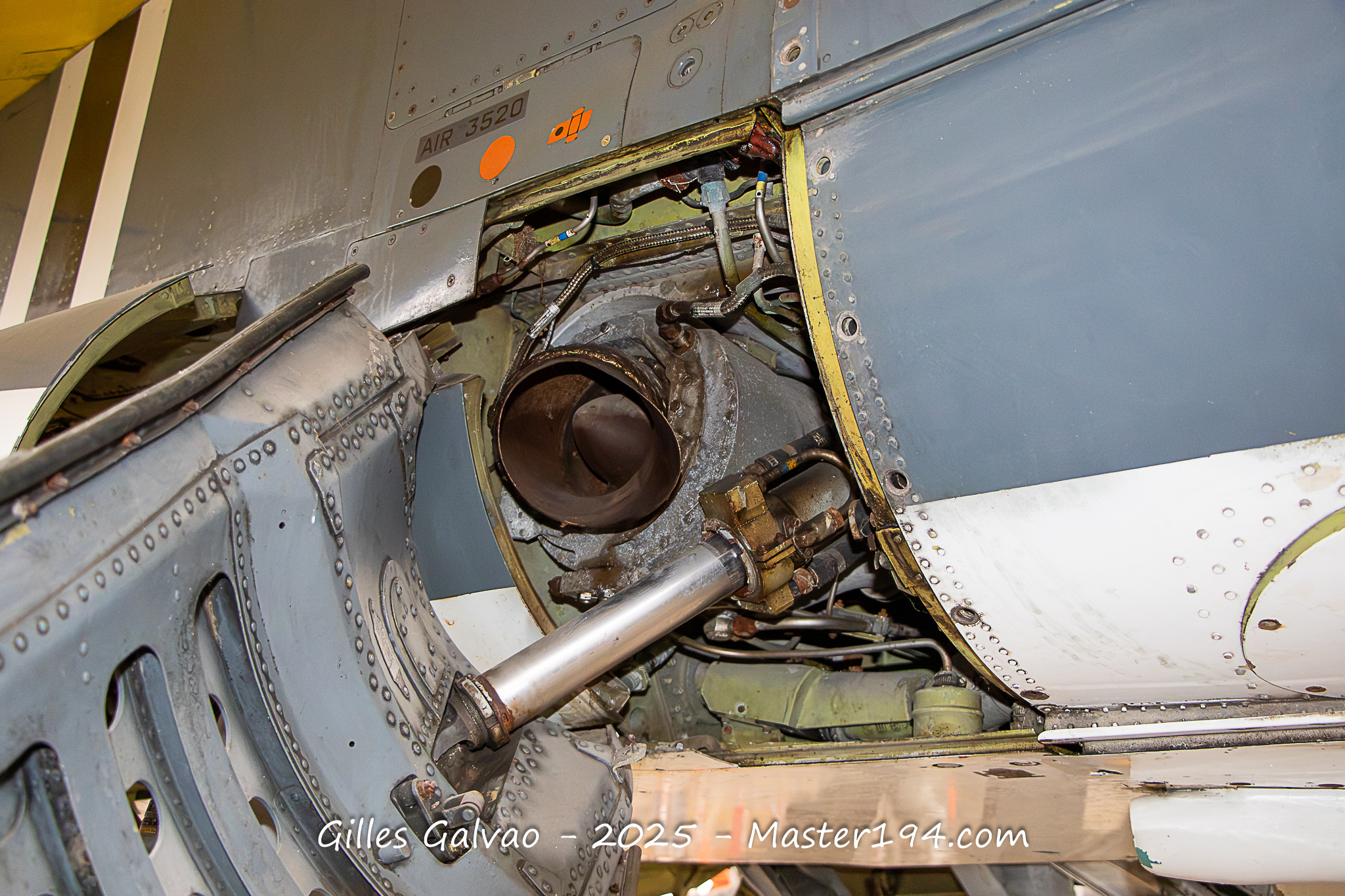
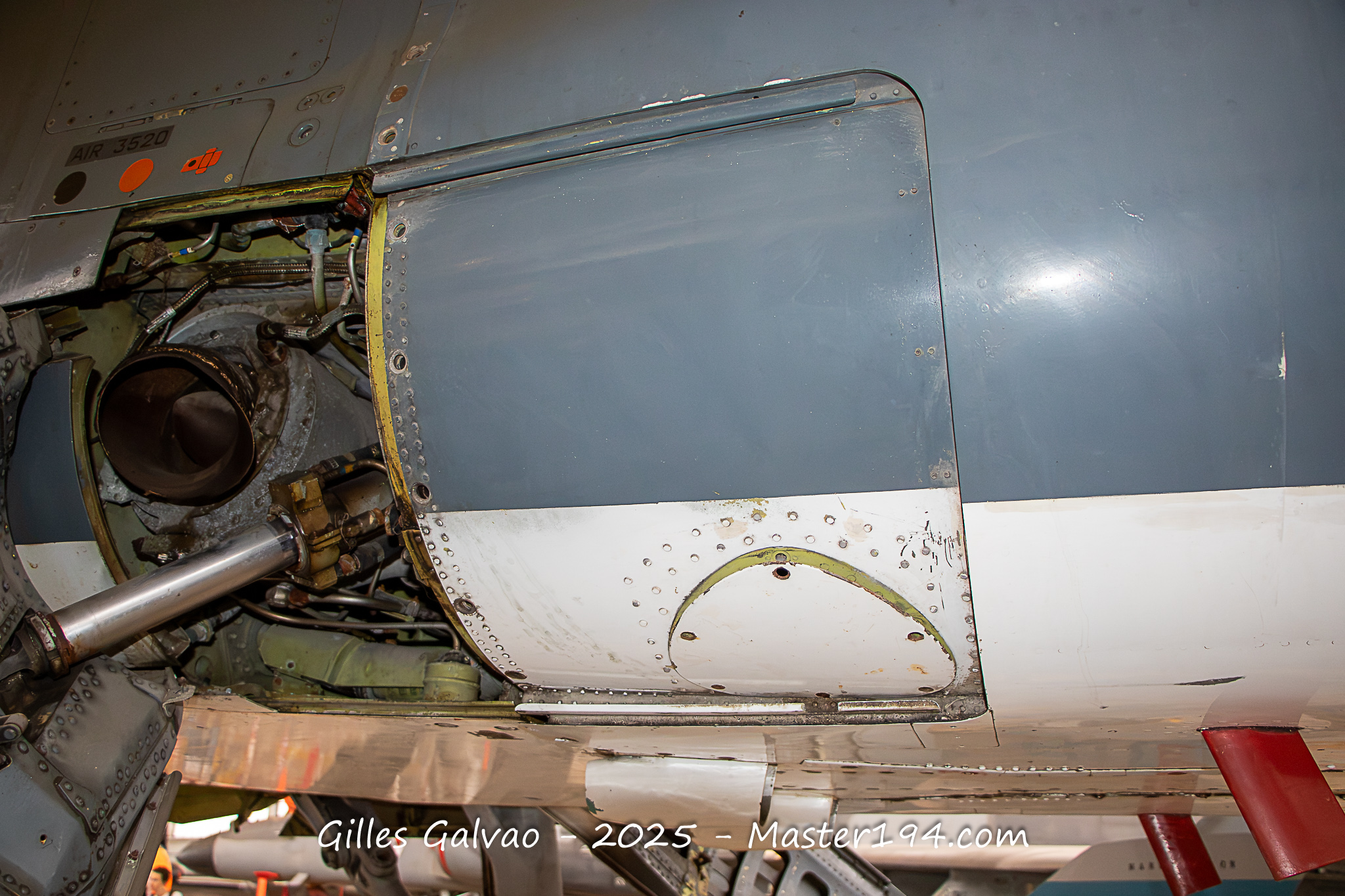
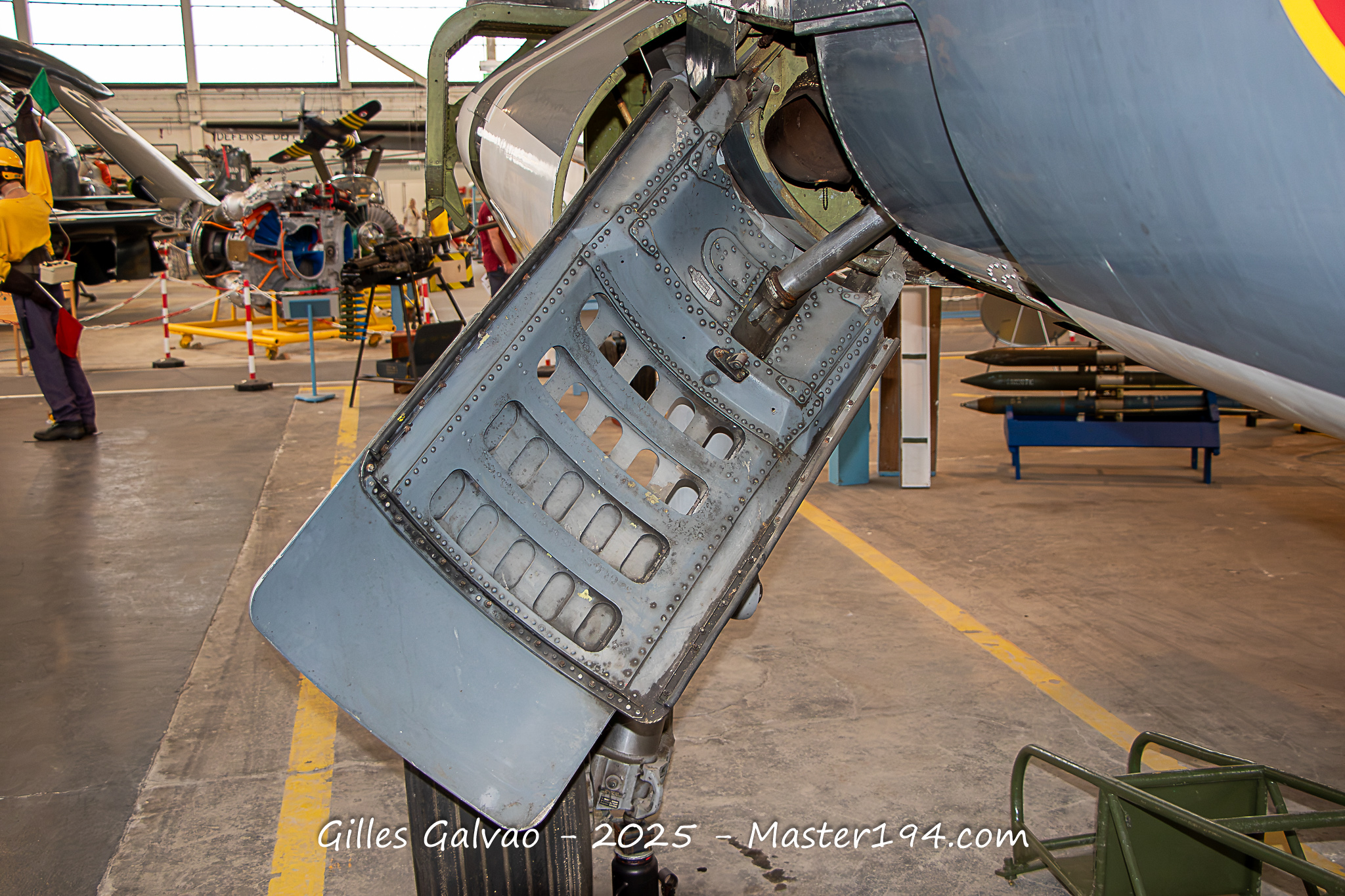
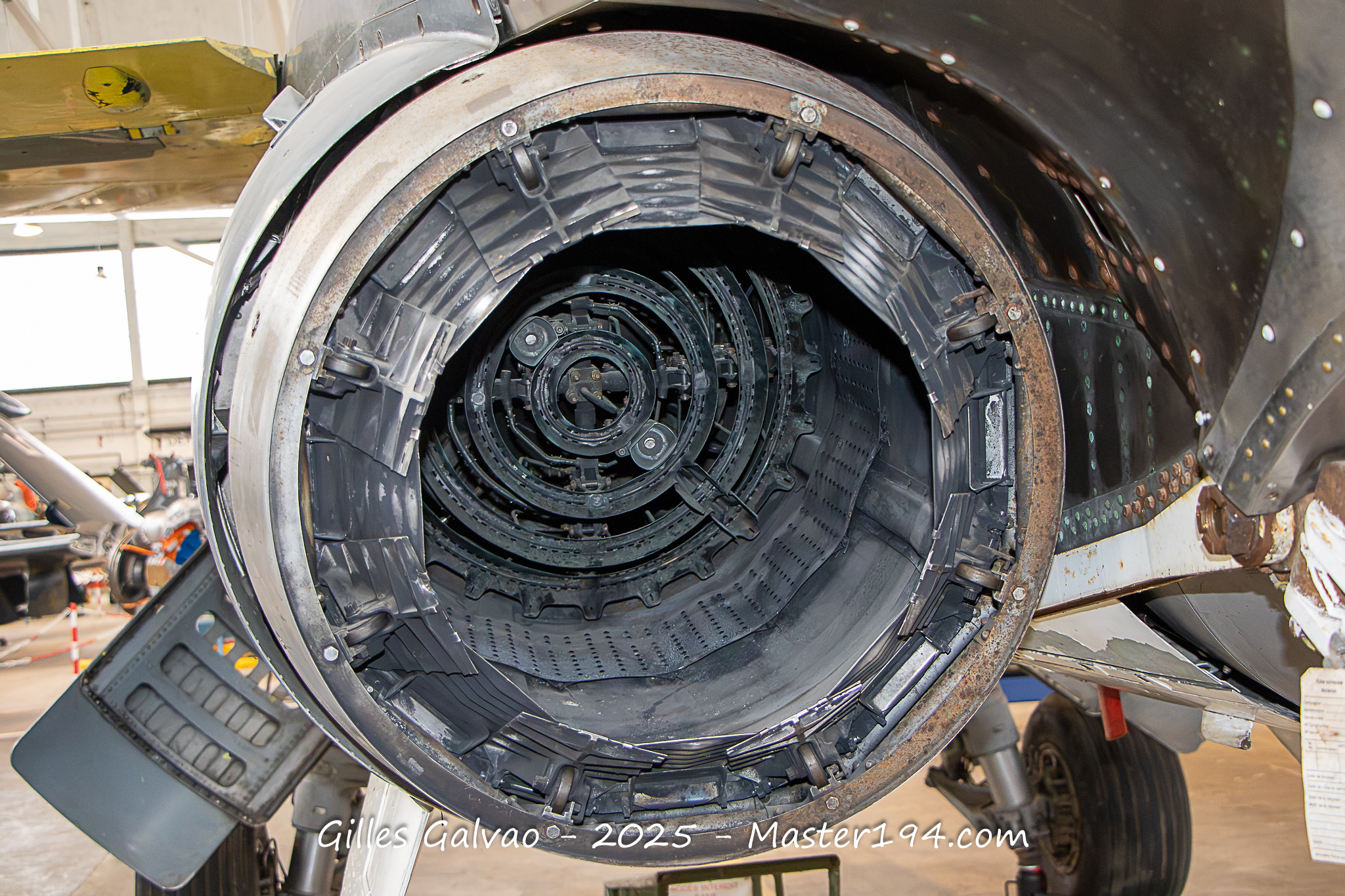
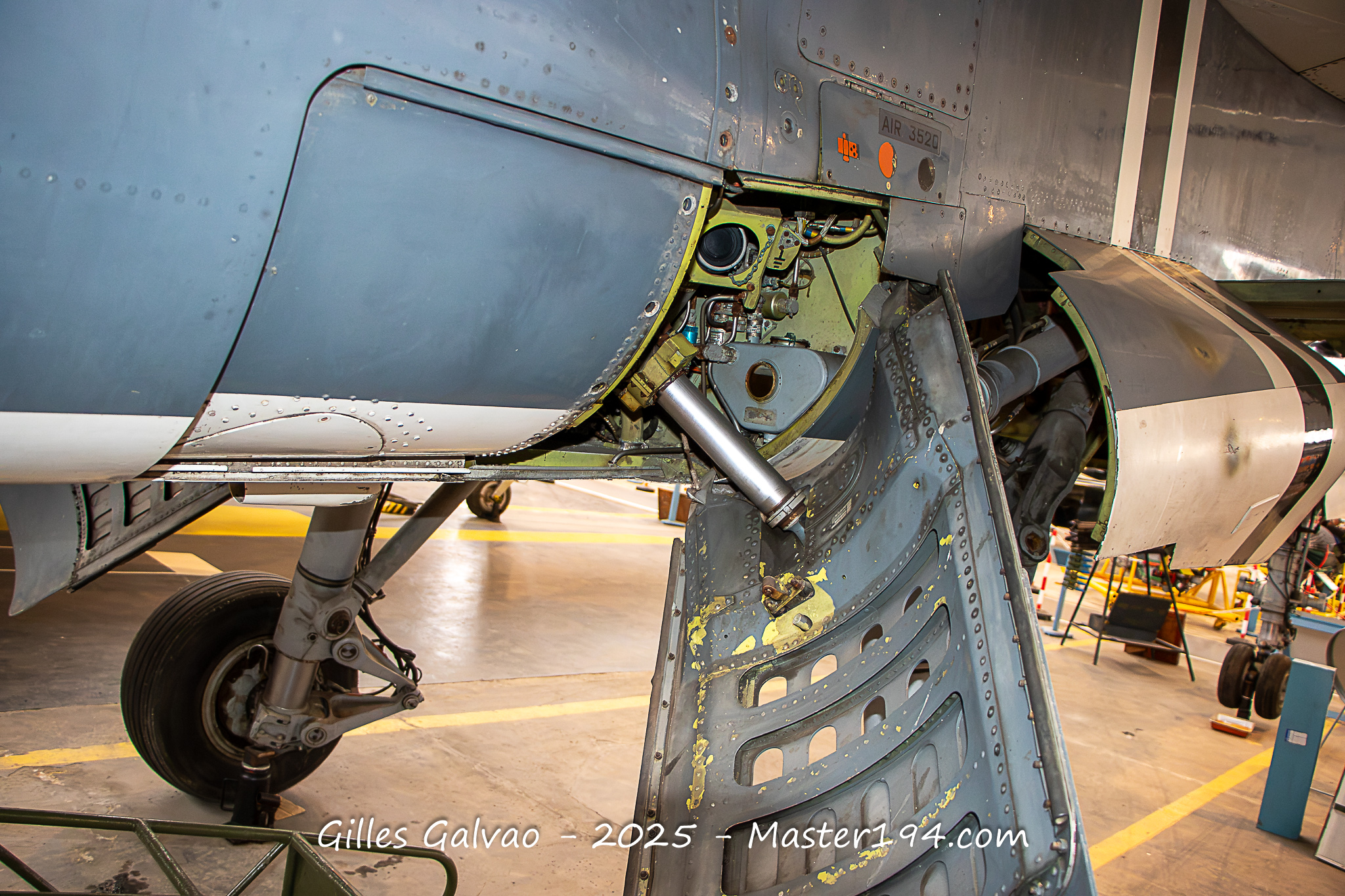
Heavy-Duty Landing Gear Architecture: The main landing gear was reinforced, shifting to a single heavy-duty wheel configuration per leg. The nose gear underwent radical redesign, featuring a substantial oleo-strut extension and dual smaller wheels. This raised the nose attitude on the catapult track to approximately 8 degrees. Consequently, the twin Rolls-Royce/Turbomeca Adour turbofans were canted downward by several degrees to align their thrust vector correctly.
Nose landing gear
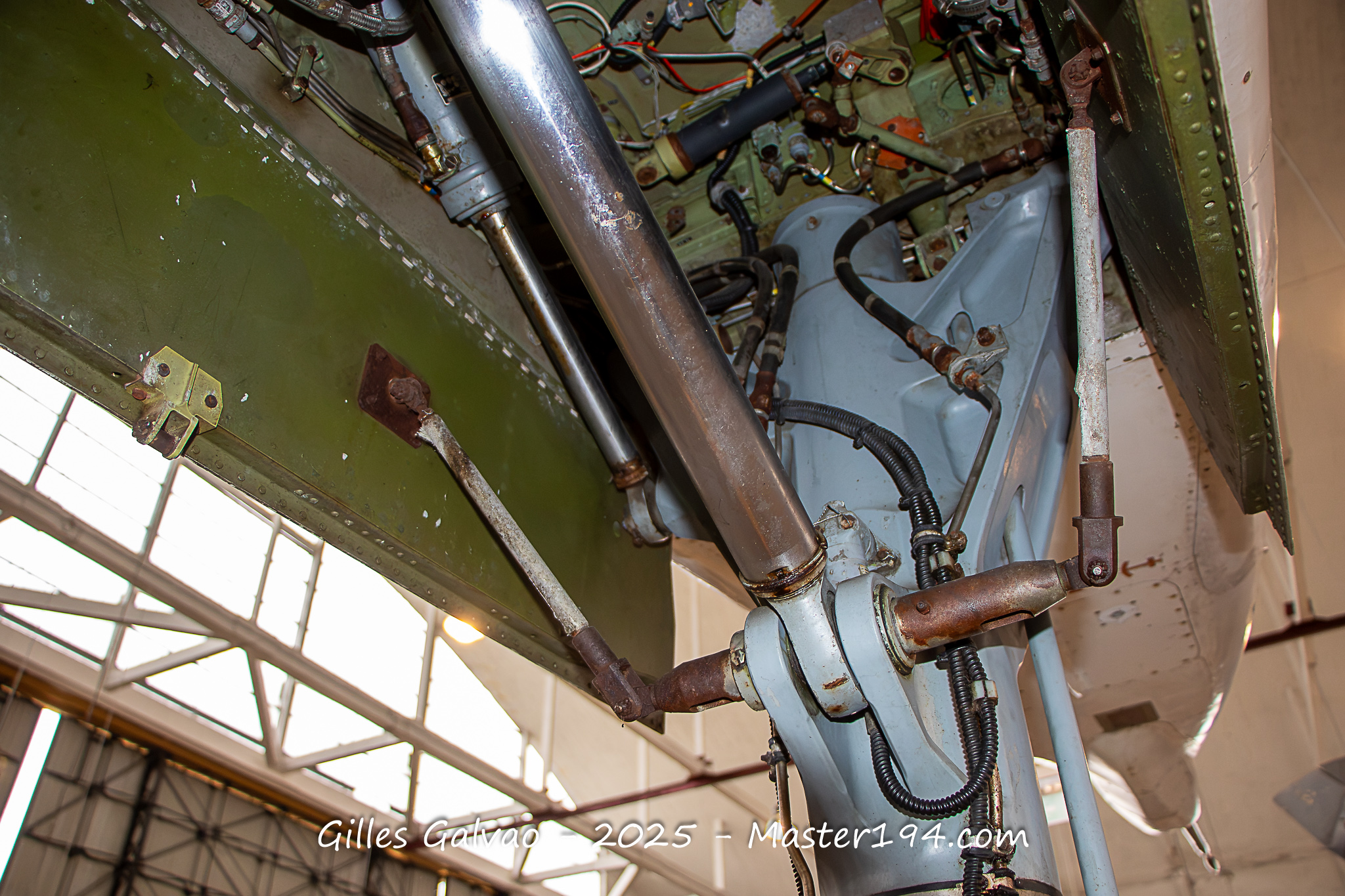
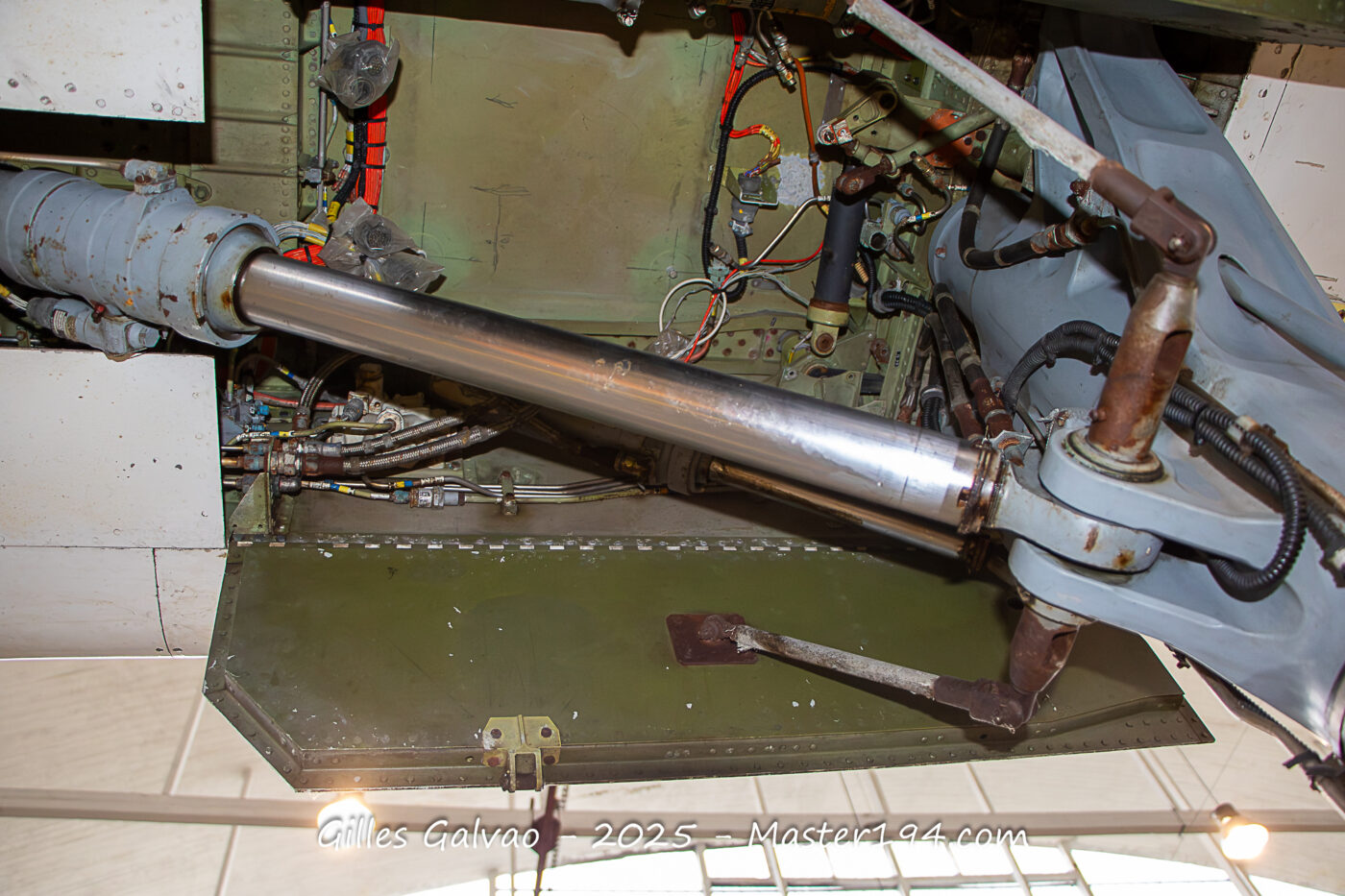
Main landing gear
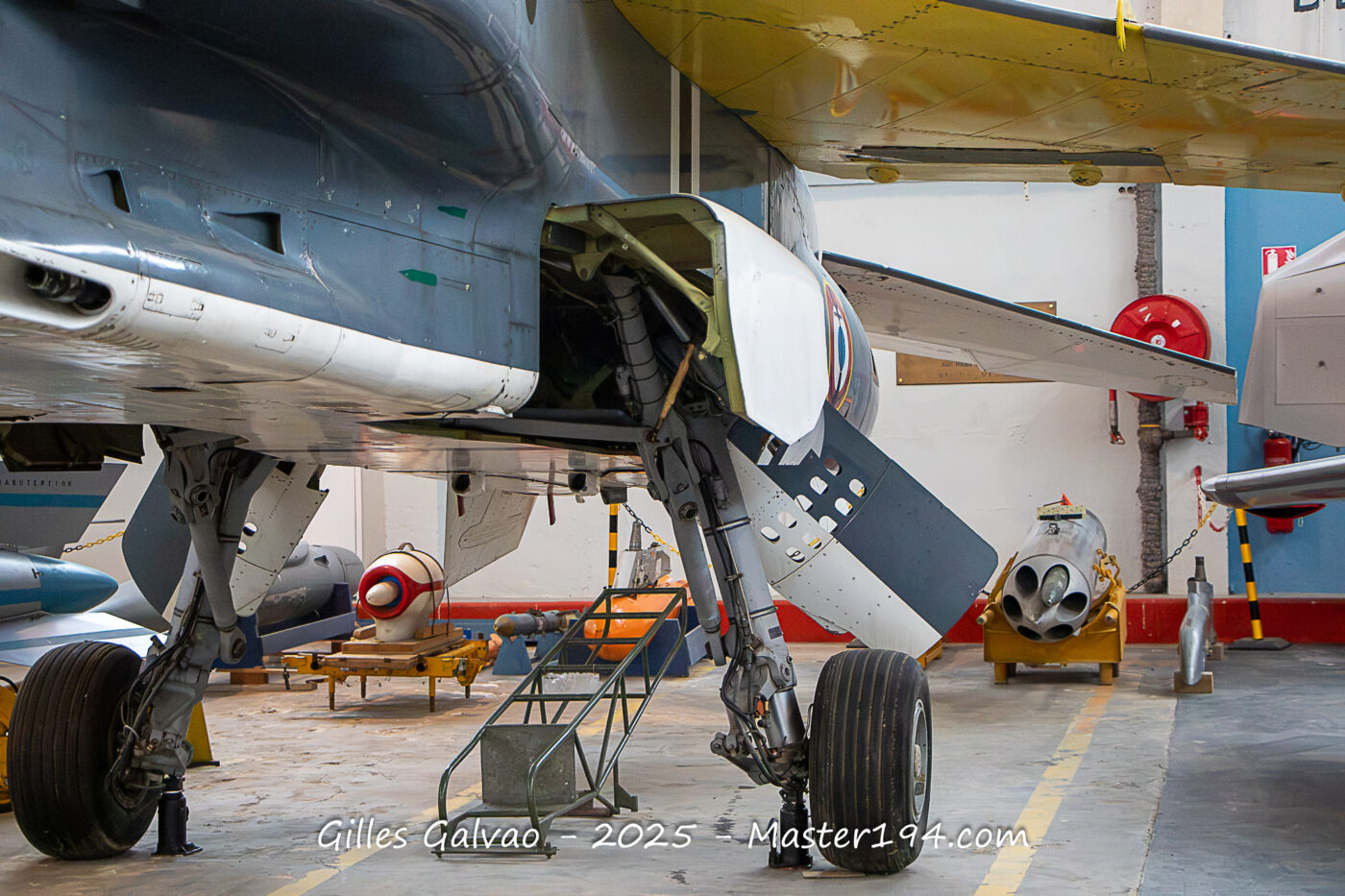
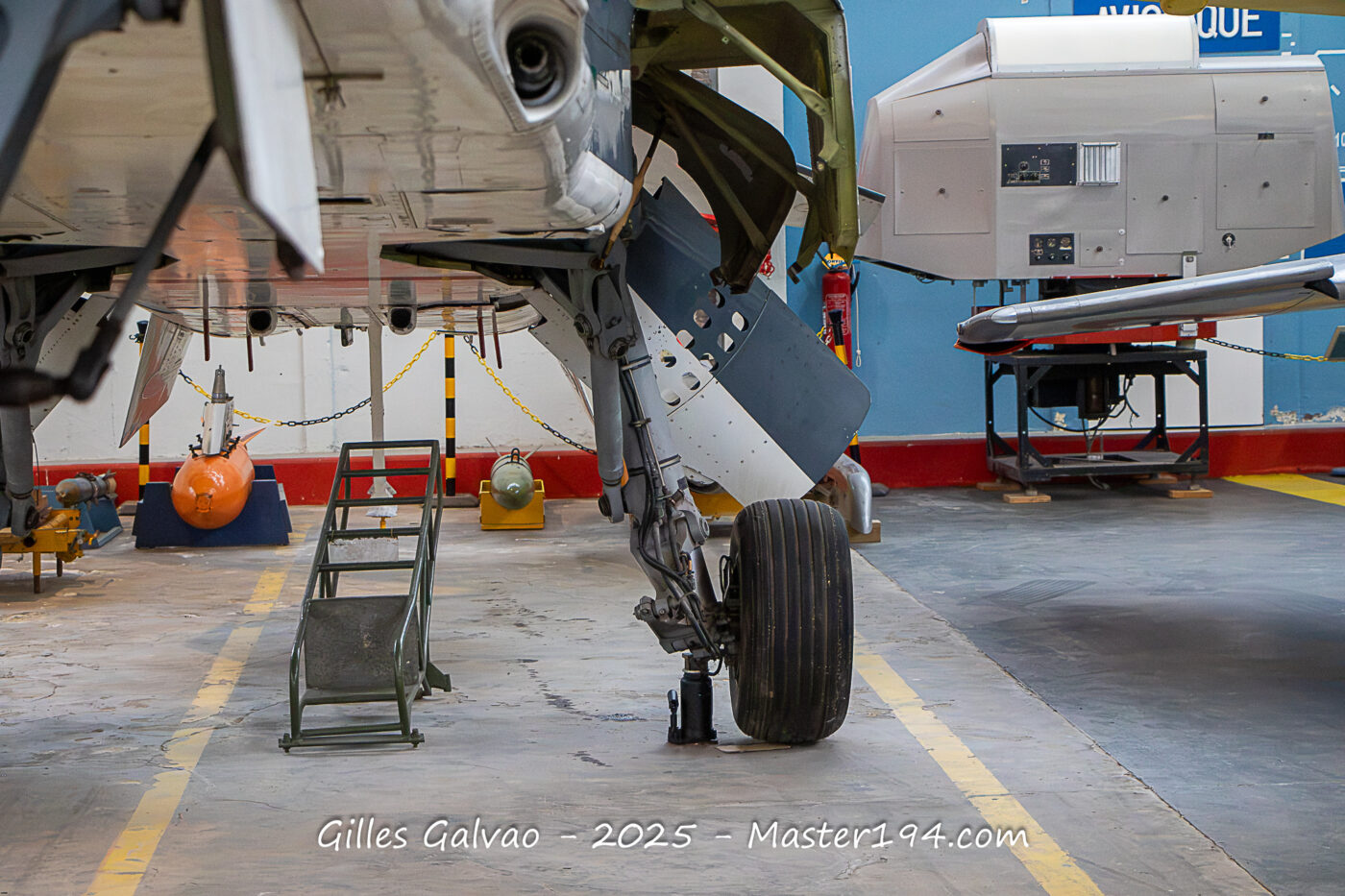
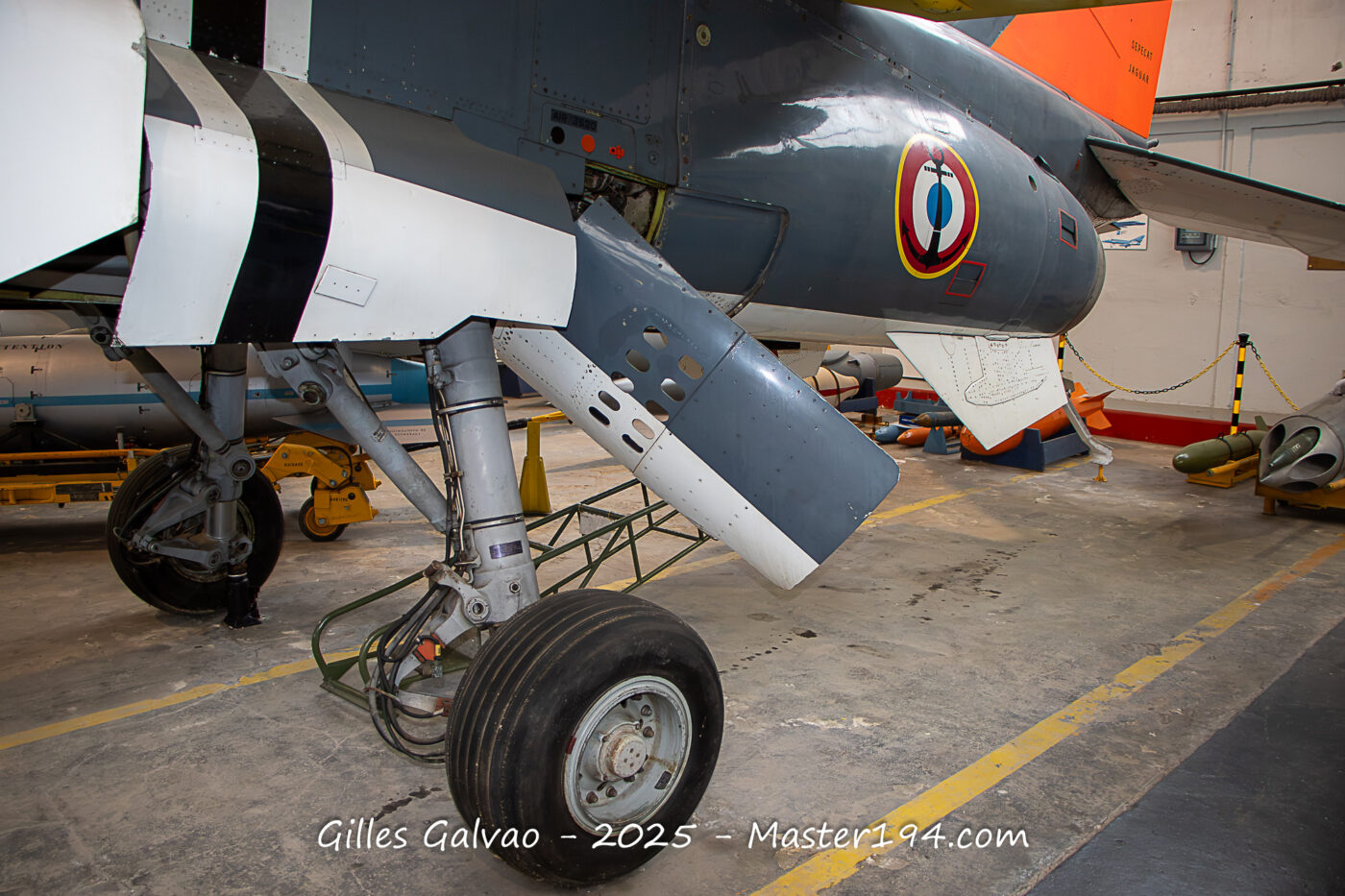
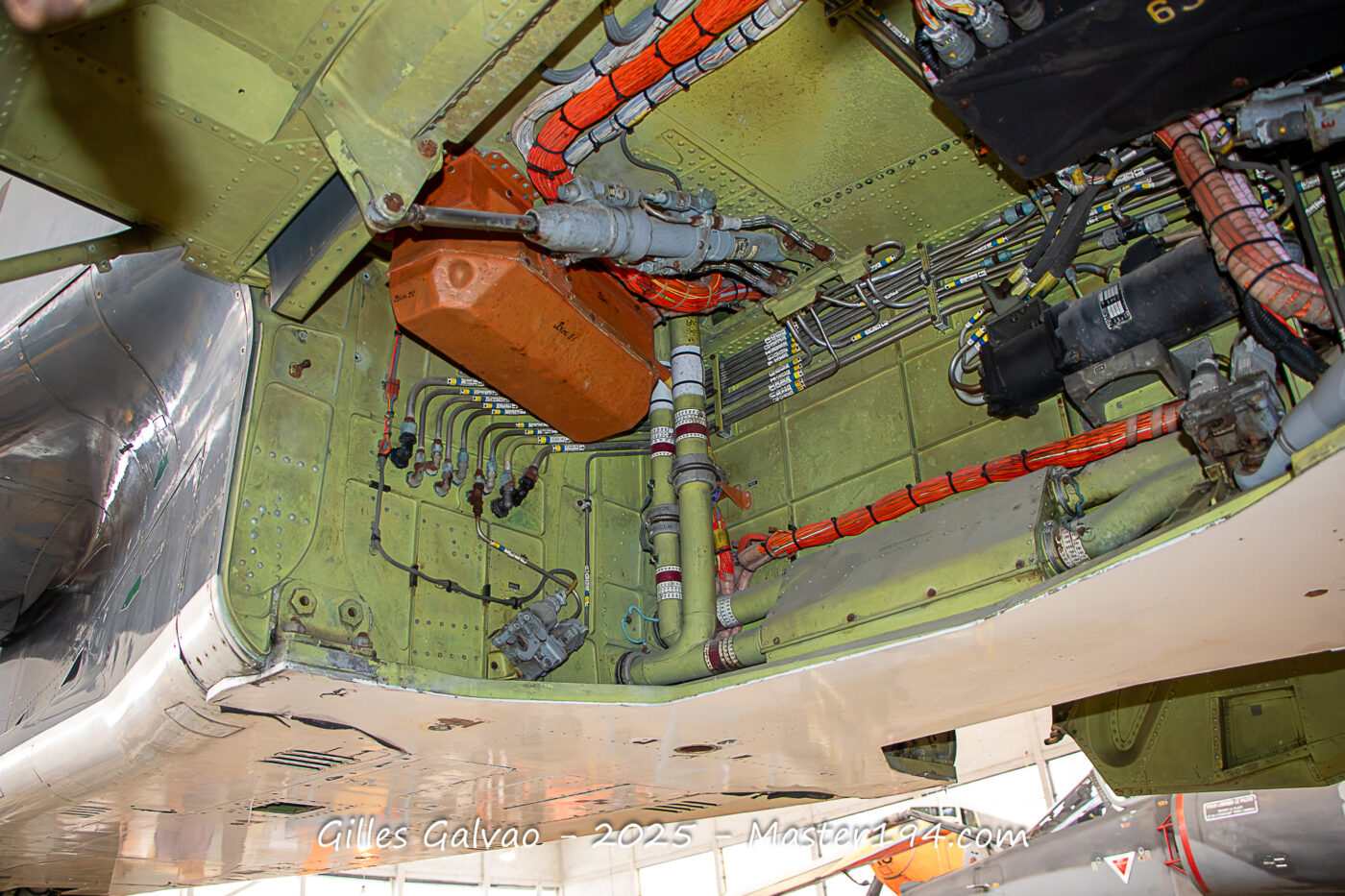
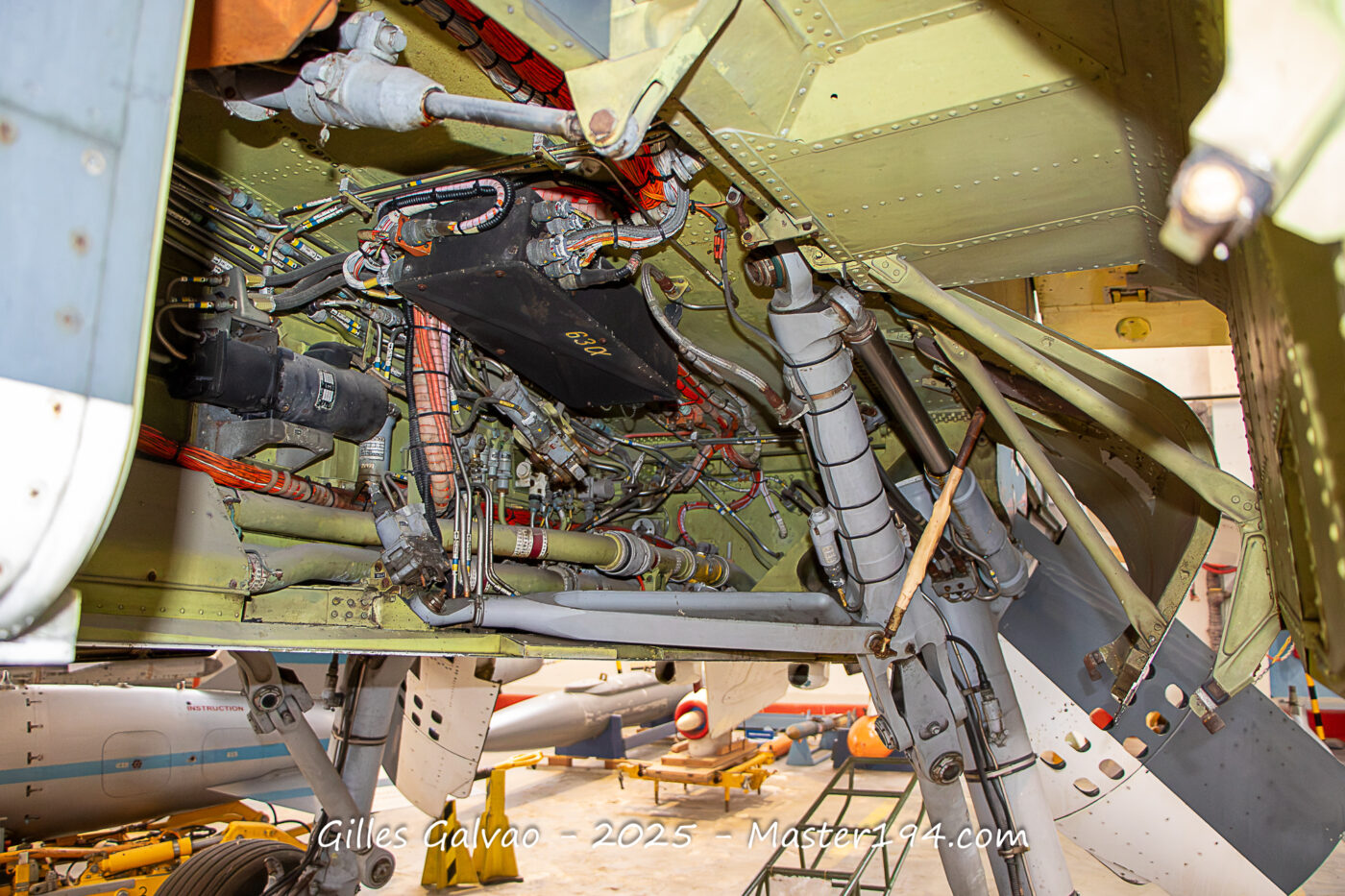
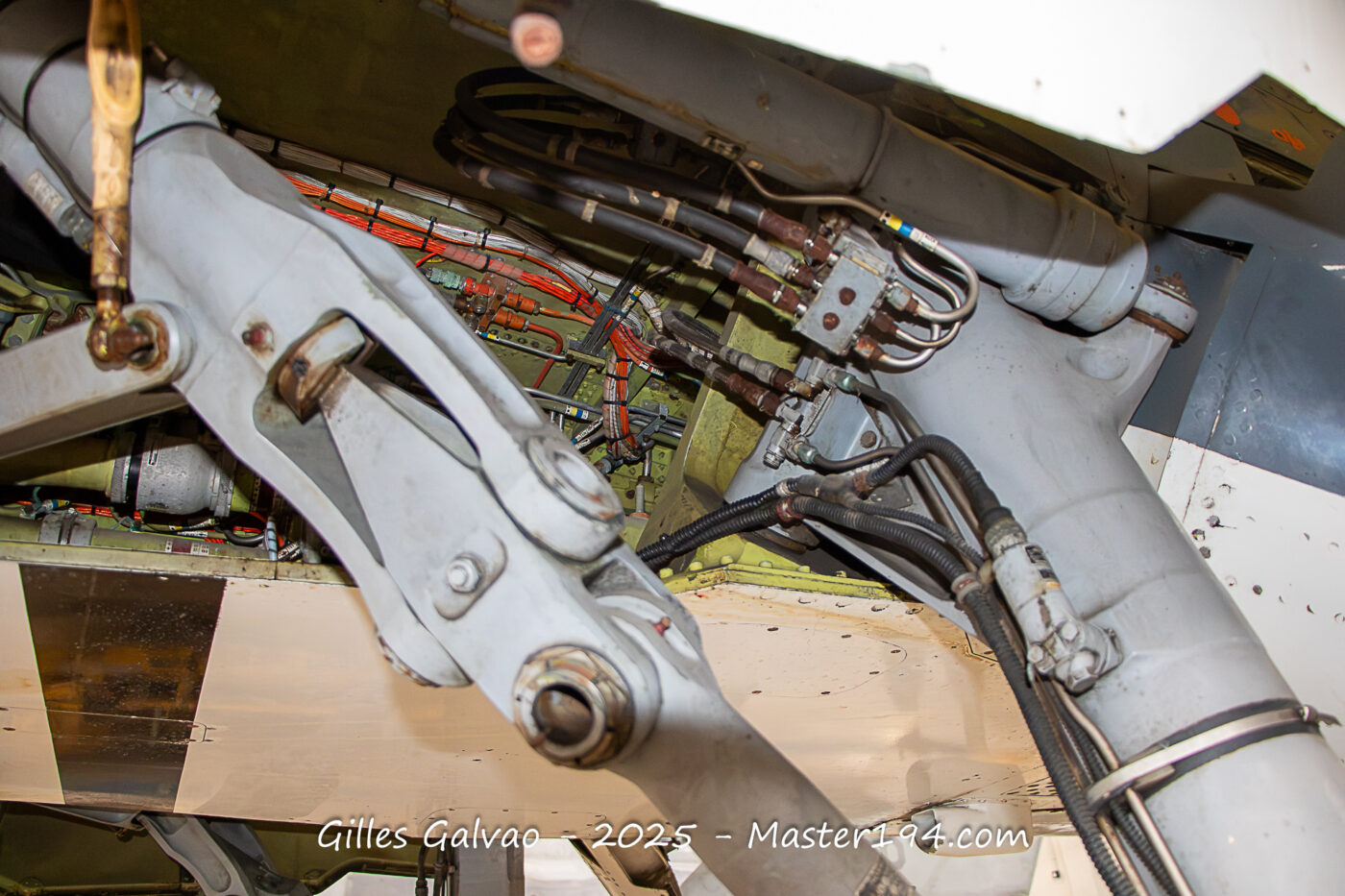
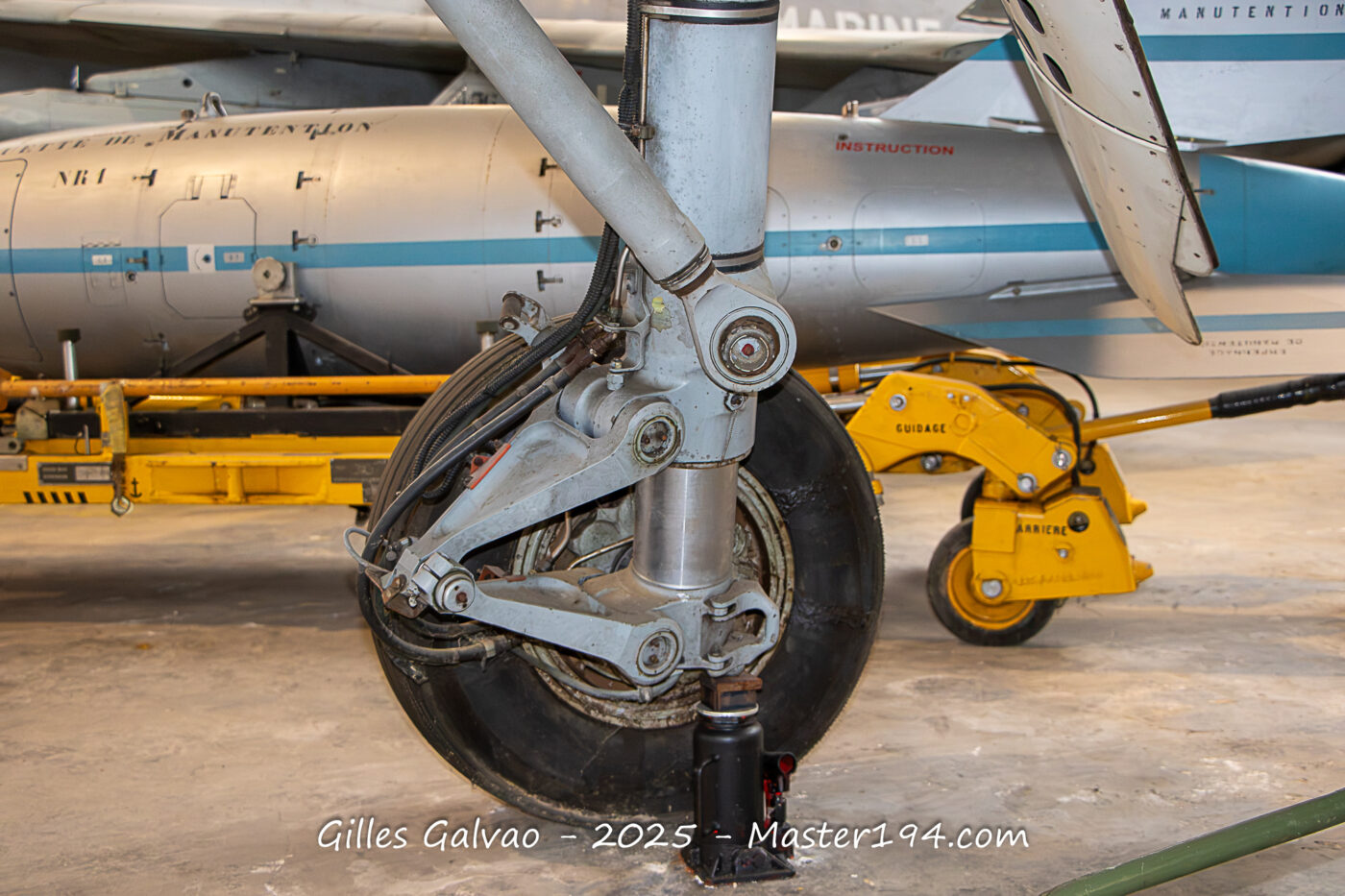
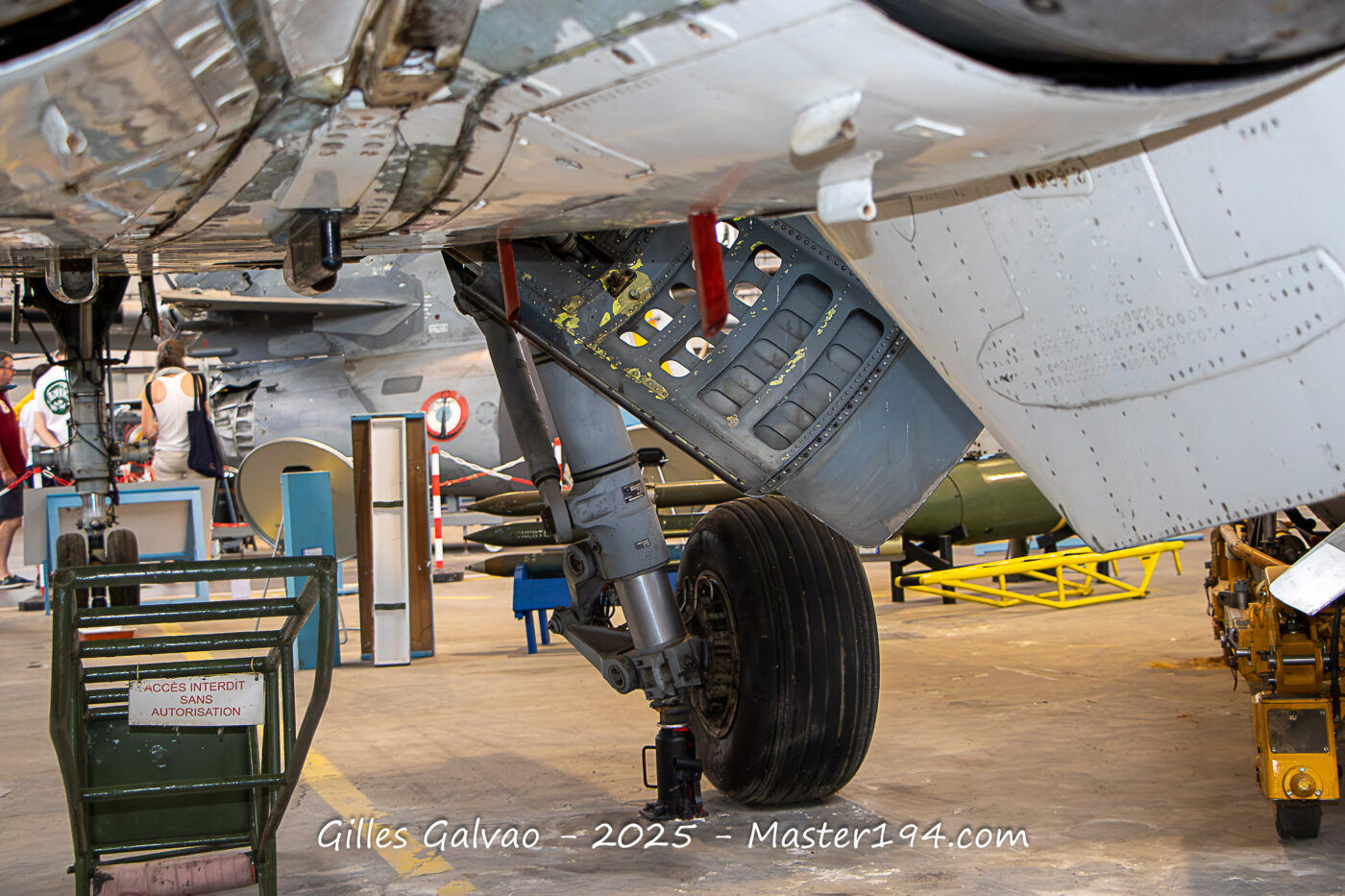
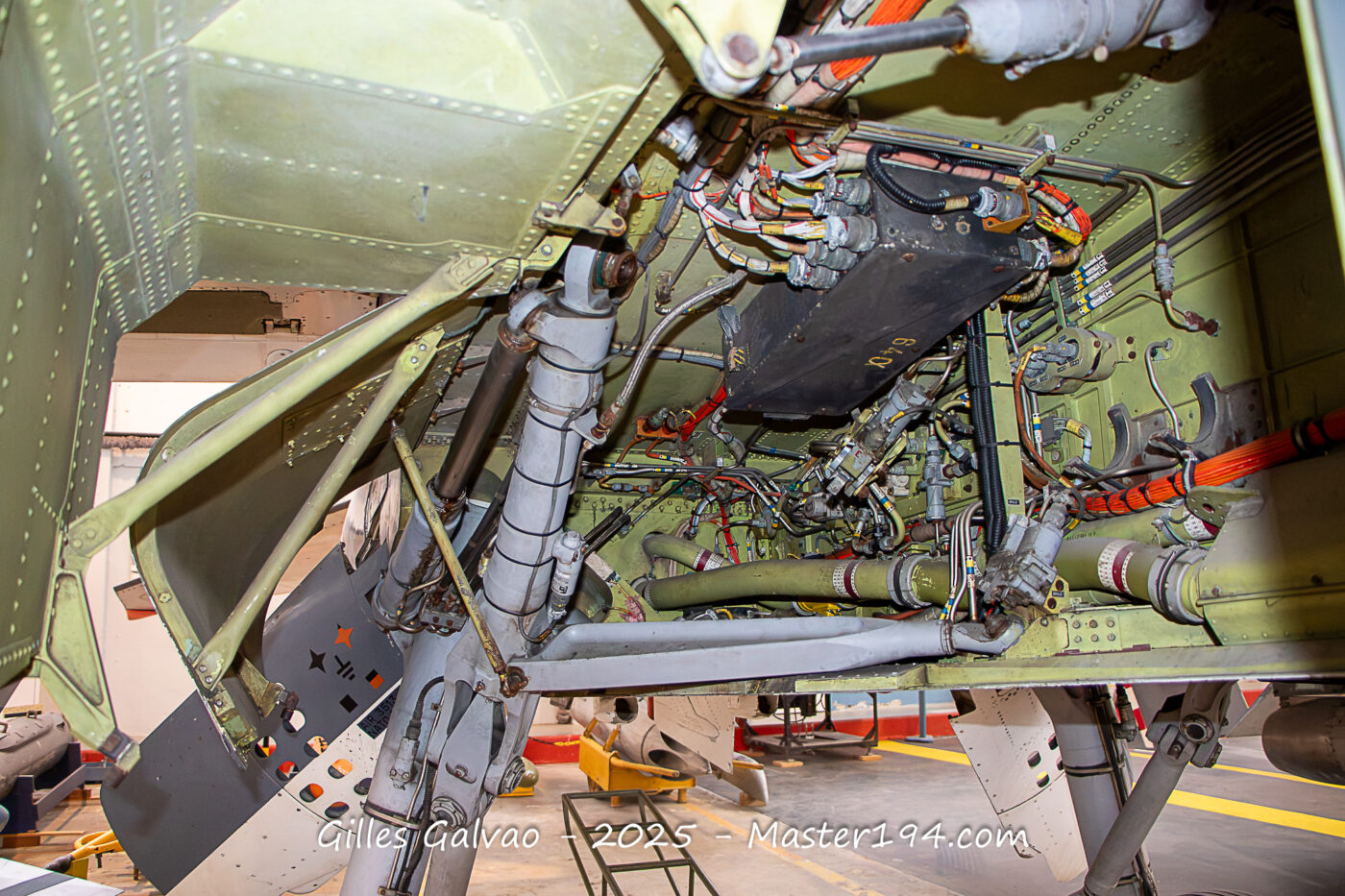
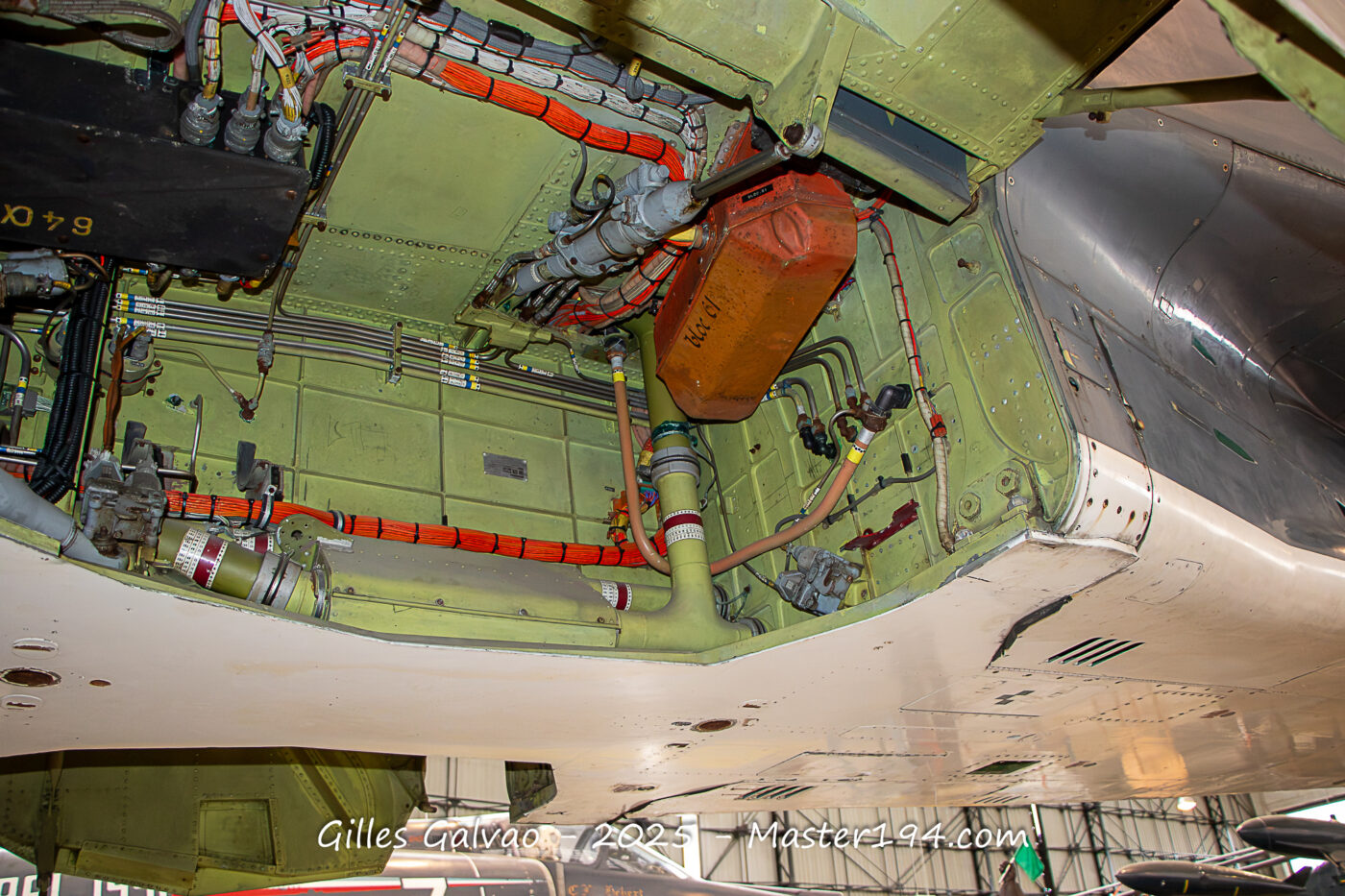
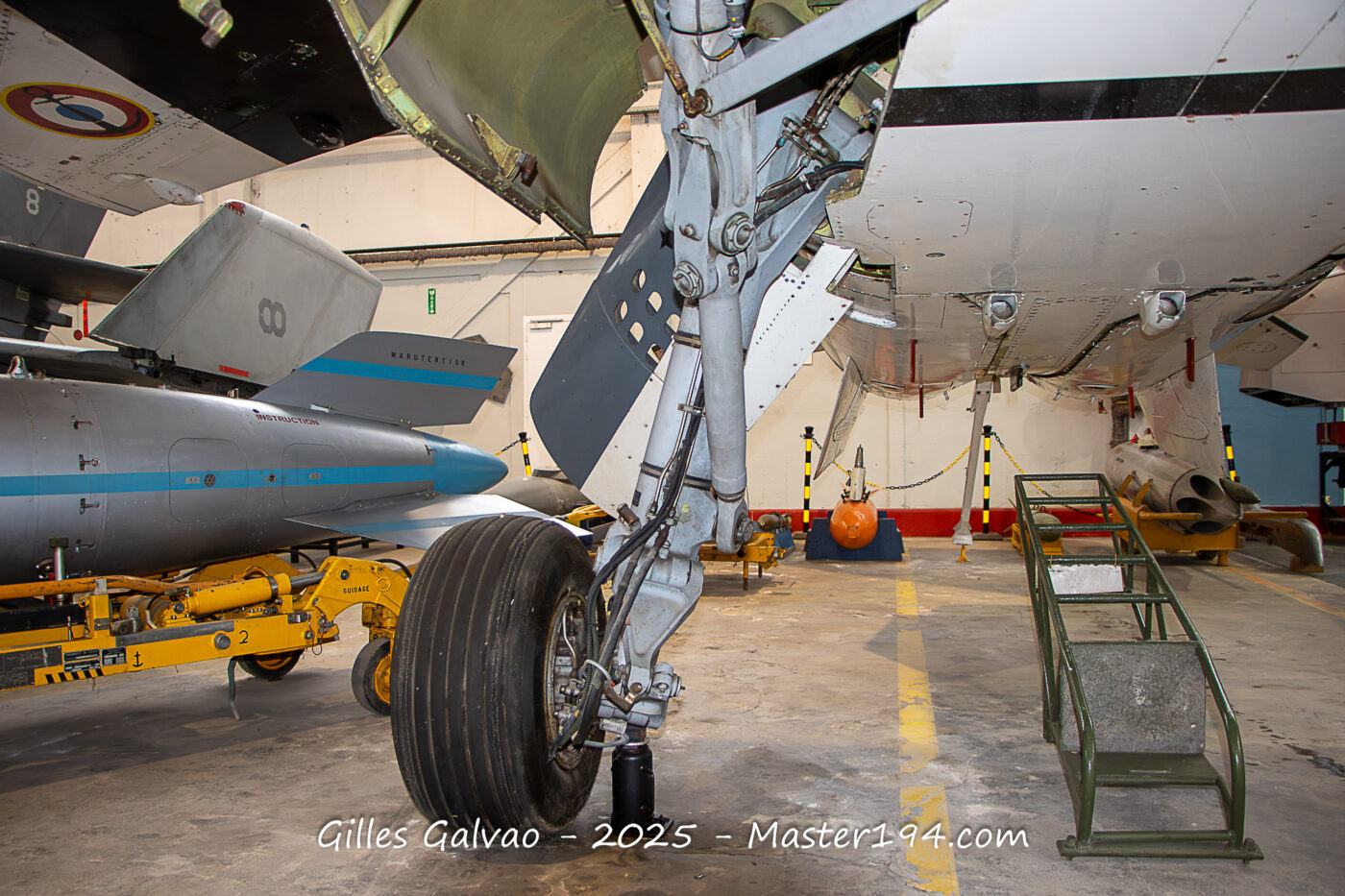
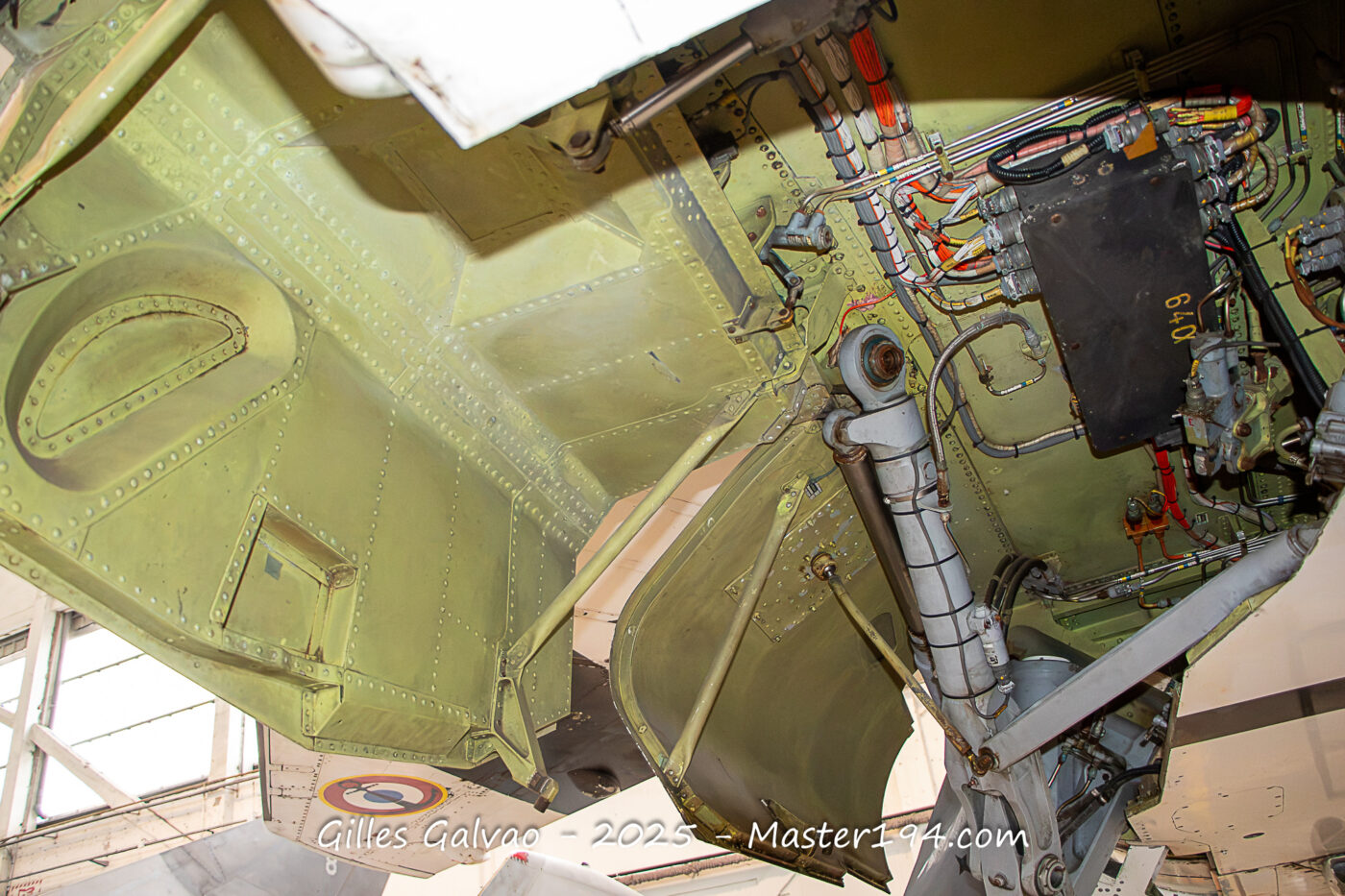
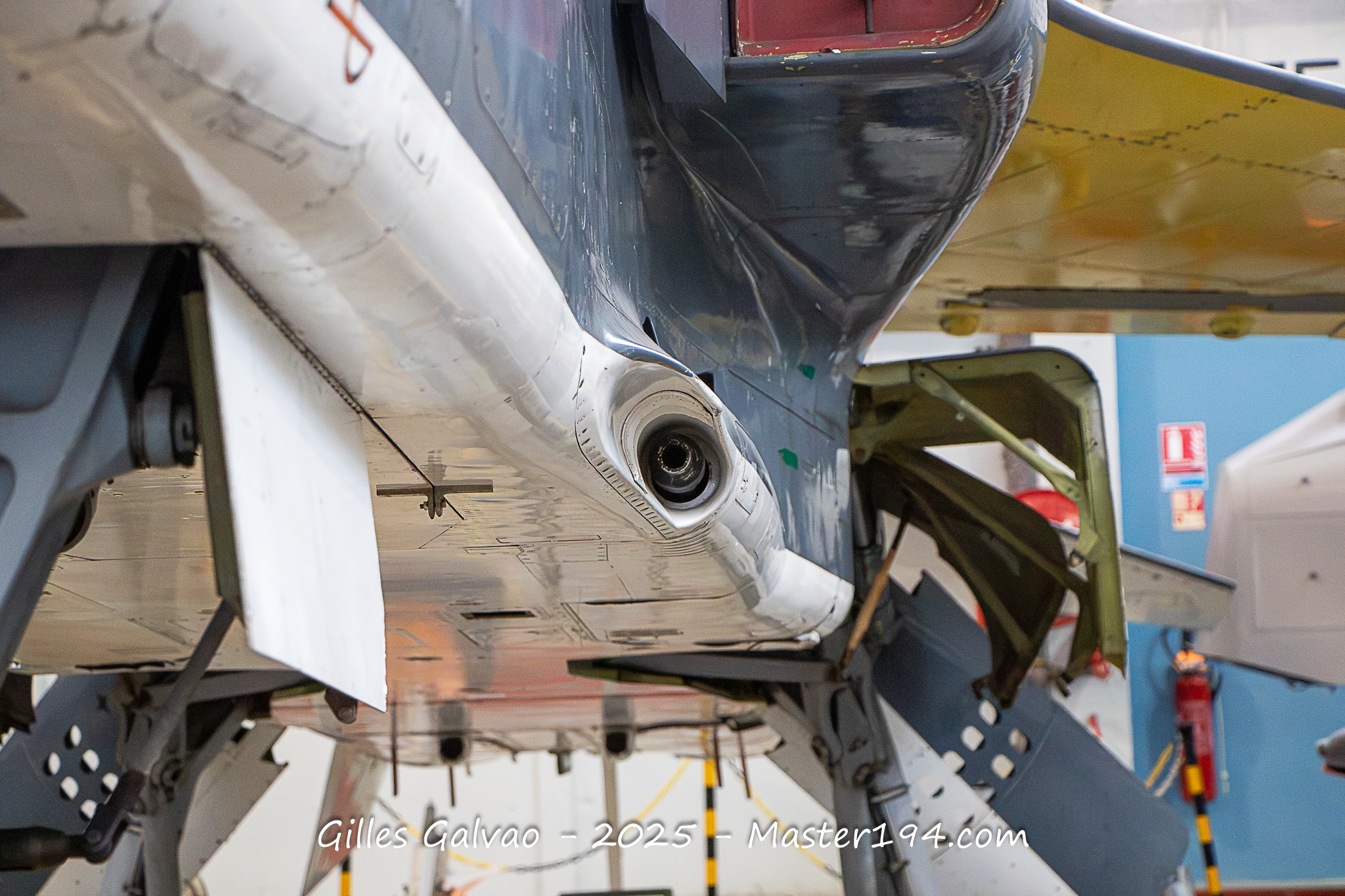
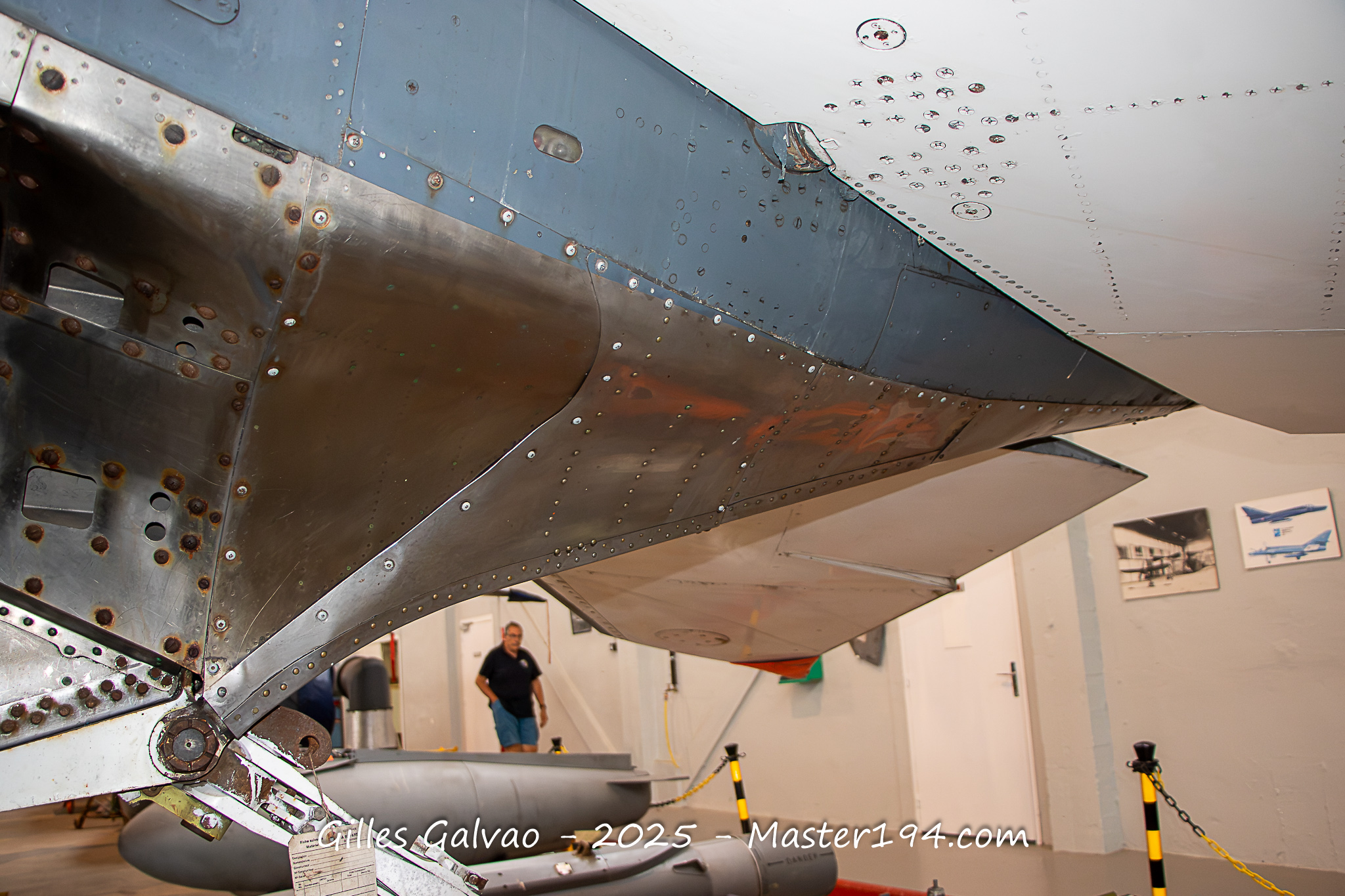
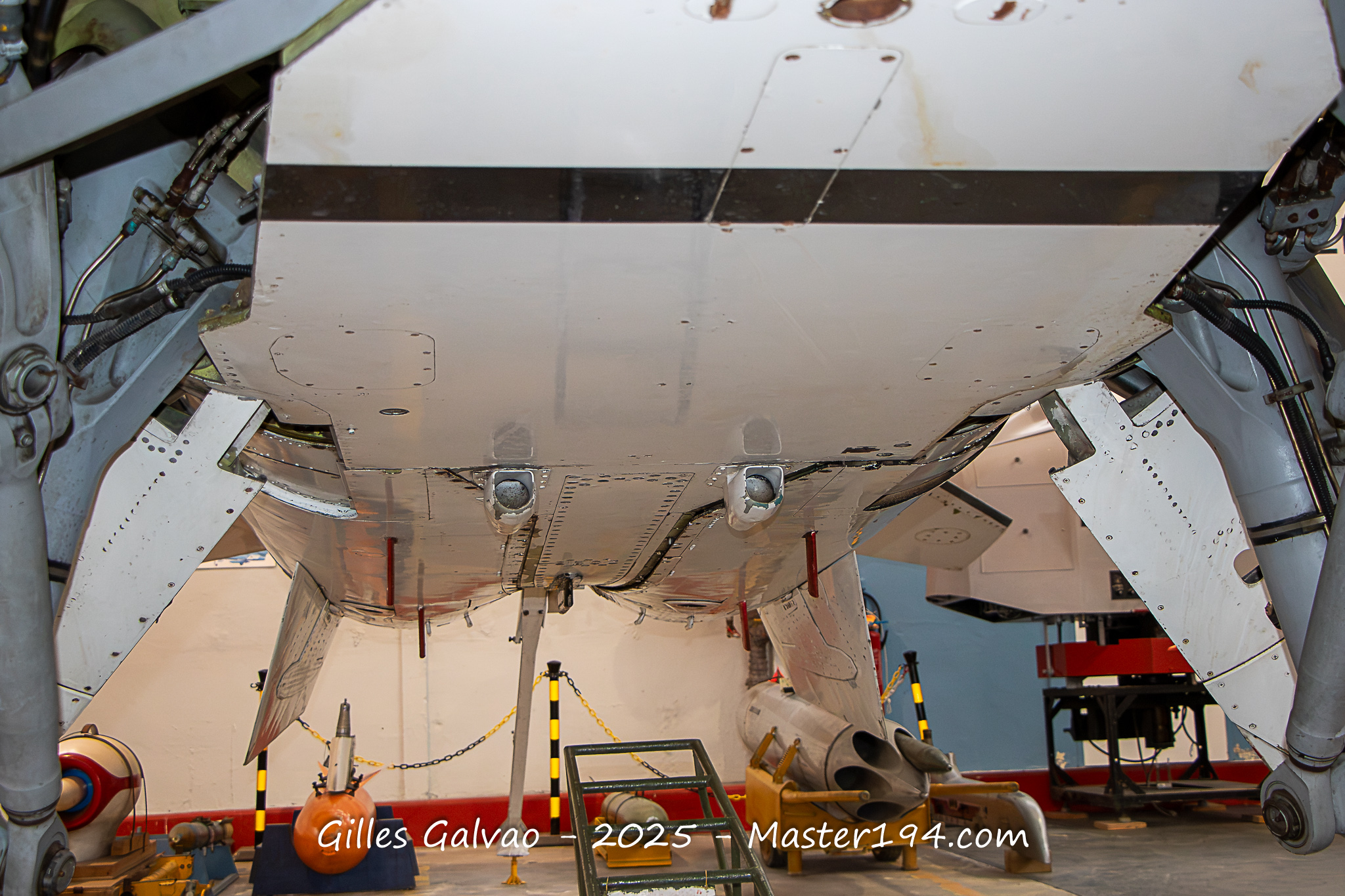
Structural Carrier Modifications: The lower fuselage received heavy catapult bridle hooks alongside a heavy-duty arrestor hook designed to absorb violent deceleration forces during wire engagement. High-lift wing devices were modified to improve low-speed handling and lower approach speeds.
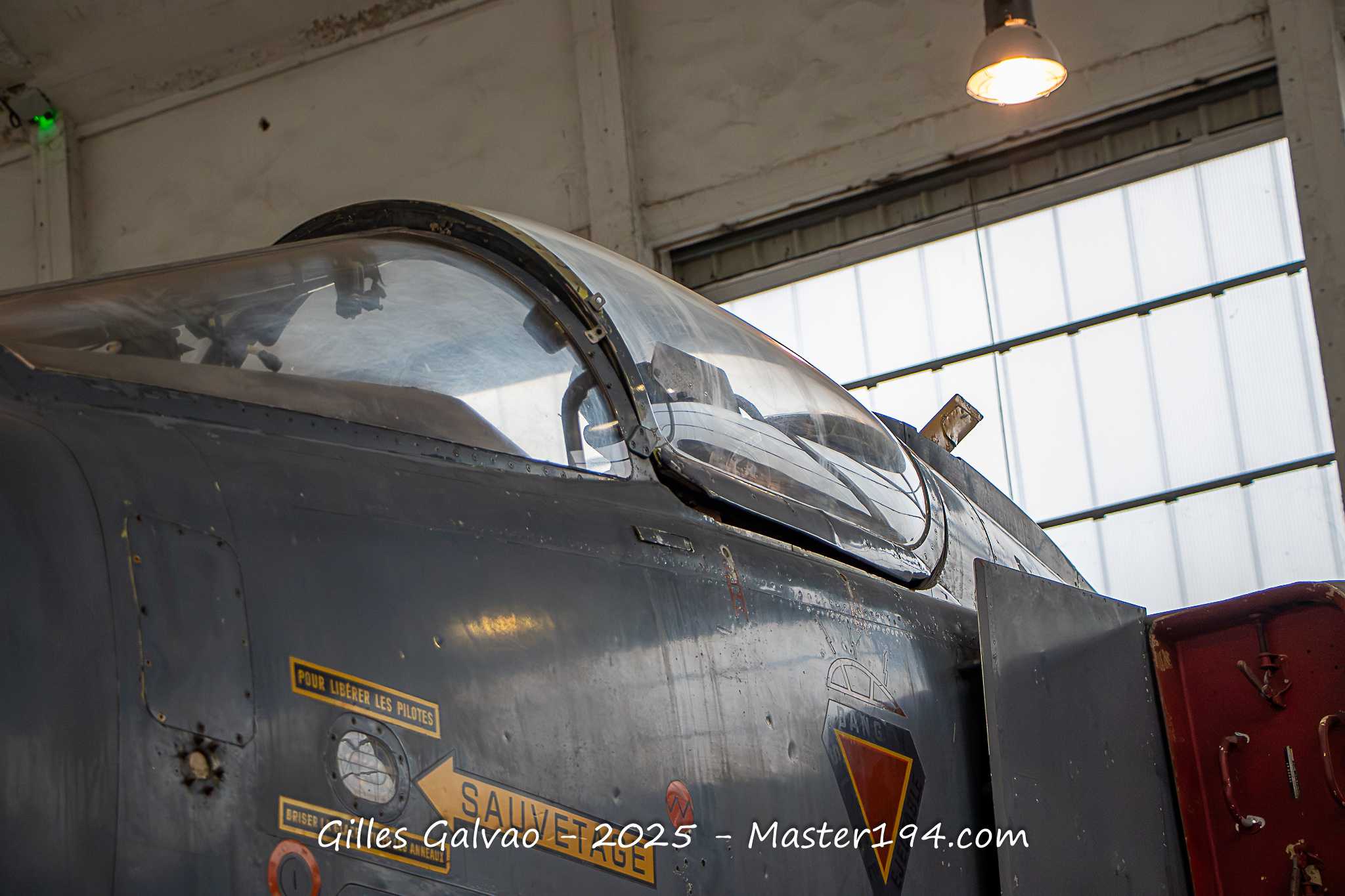
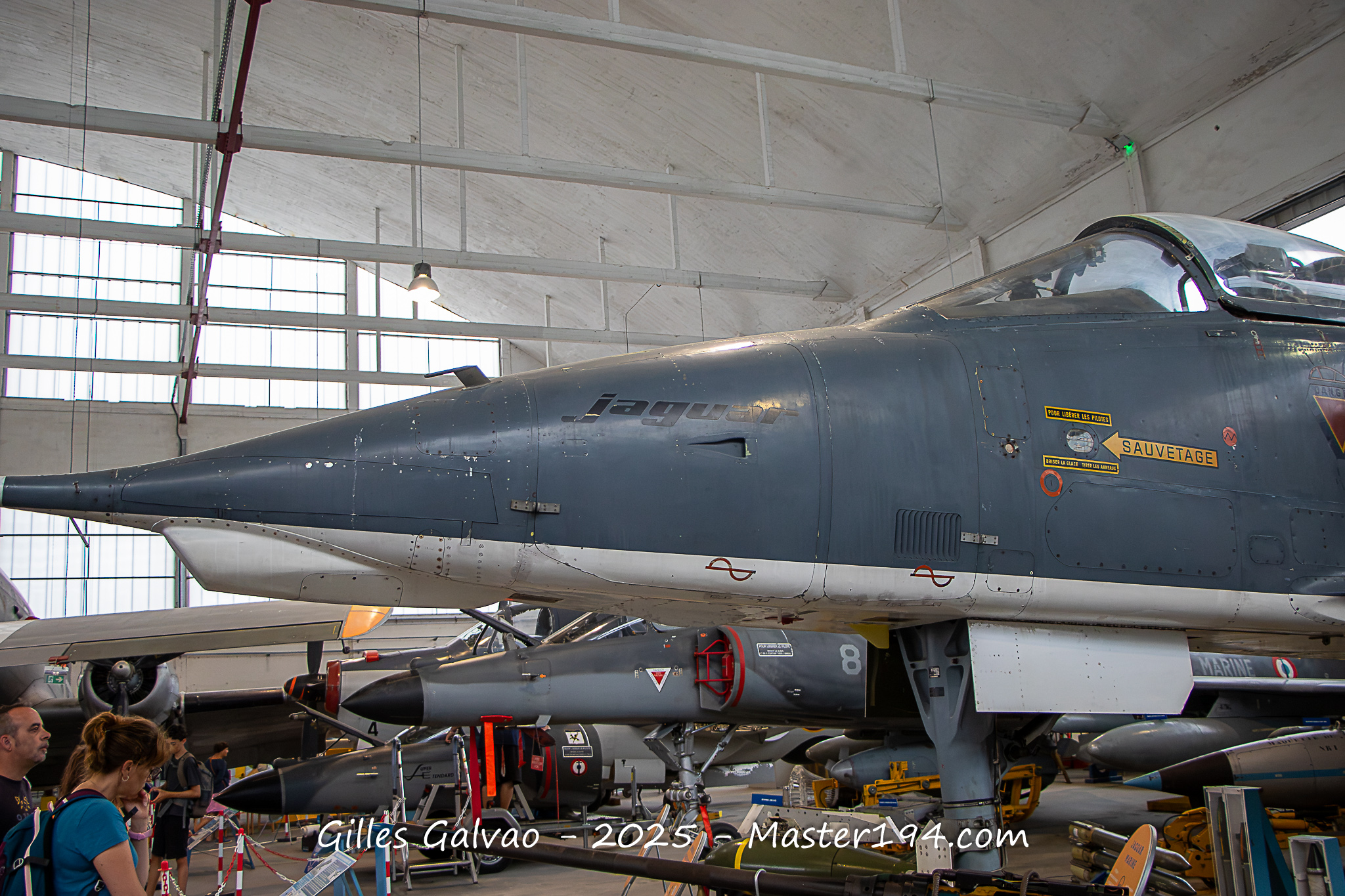
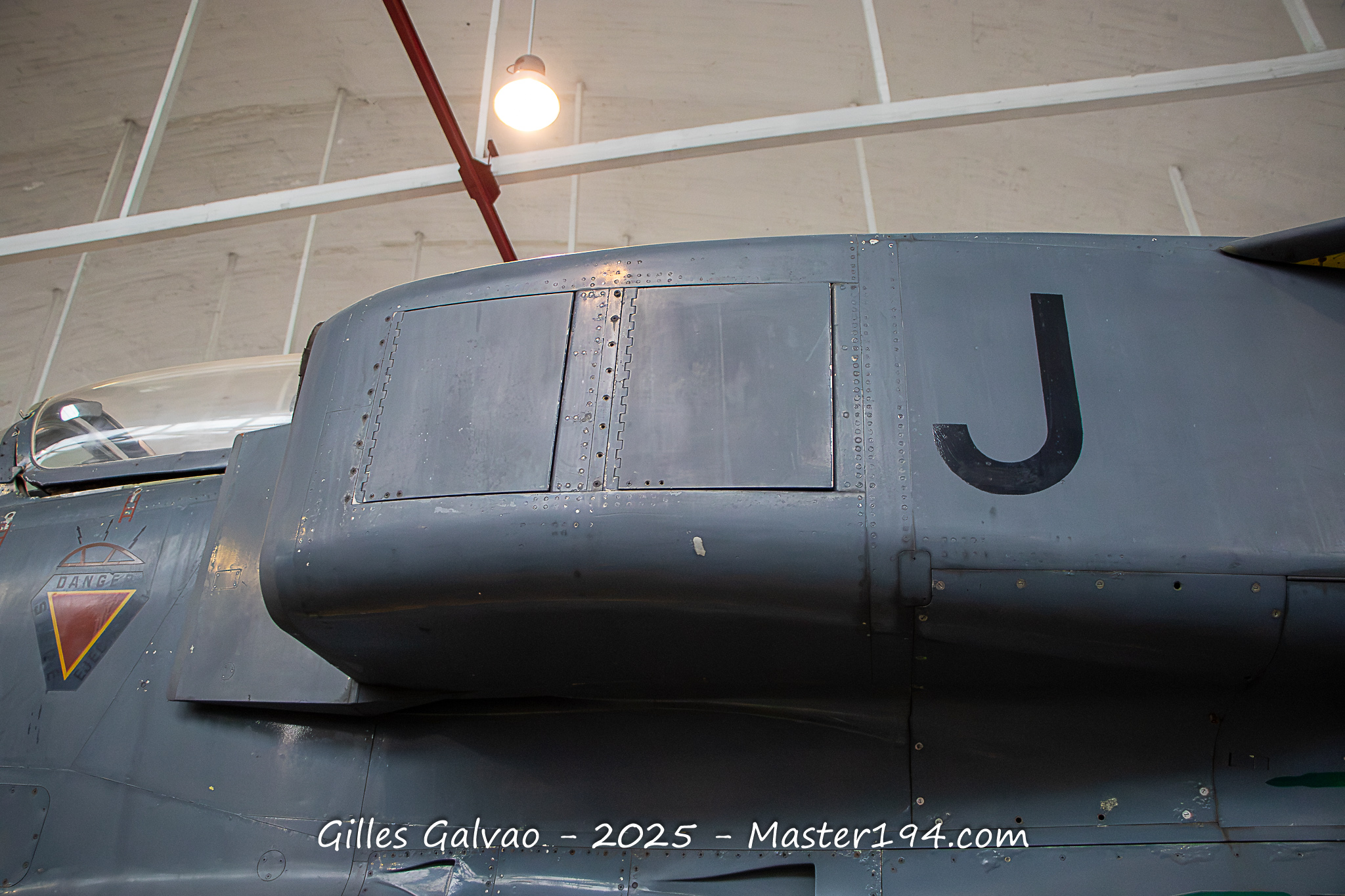
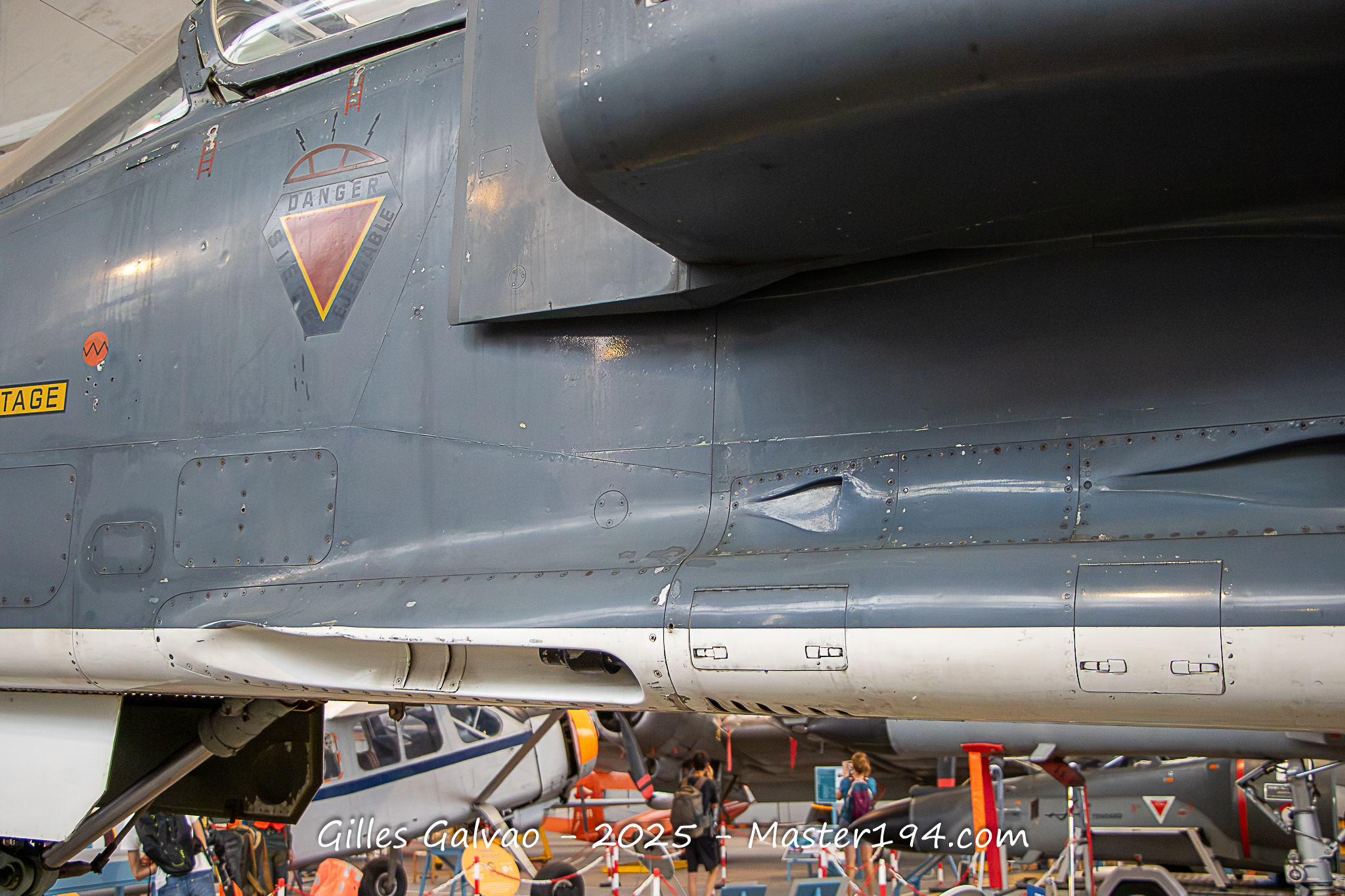
Ejection Seat Upgrade: The cockpit was fitted with a Martin-Baker Mk 9 Zero-Zero ejection seat, tailored for low-altitude carrier deck operations. This marked a key upgrade over early production land-based Jaguar A airframes, which initially carried the Martin-Baker Mk 4 seat.
Avionics & Sensor Testing: The M 05 was fitted with a TAV-38 laser rangefinder in the nose cone. While not exclusive to the naval variant, this sensor was evaluated on early prototypes before being standardized on production French Jaguar A fighters starting from airframe A085.
Carrier Landing Guidance Systems: Additional discreet modifications included specialized deck-landing approach signaling receivers and optical landing system interfaces.
Arresting hook
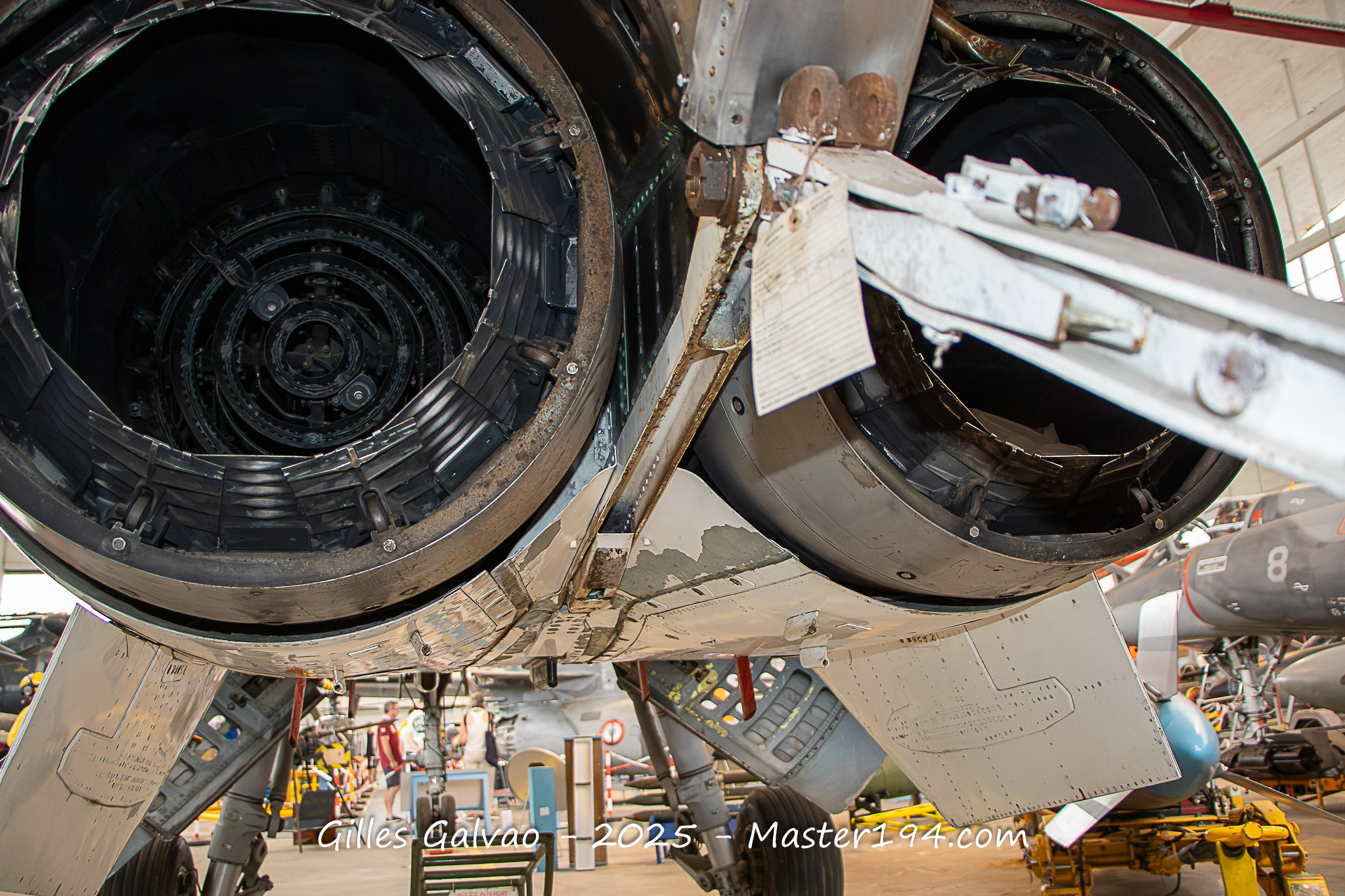
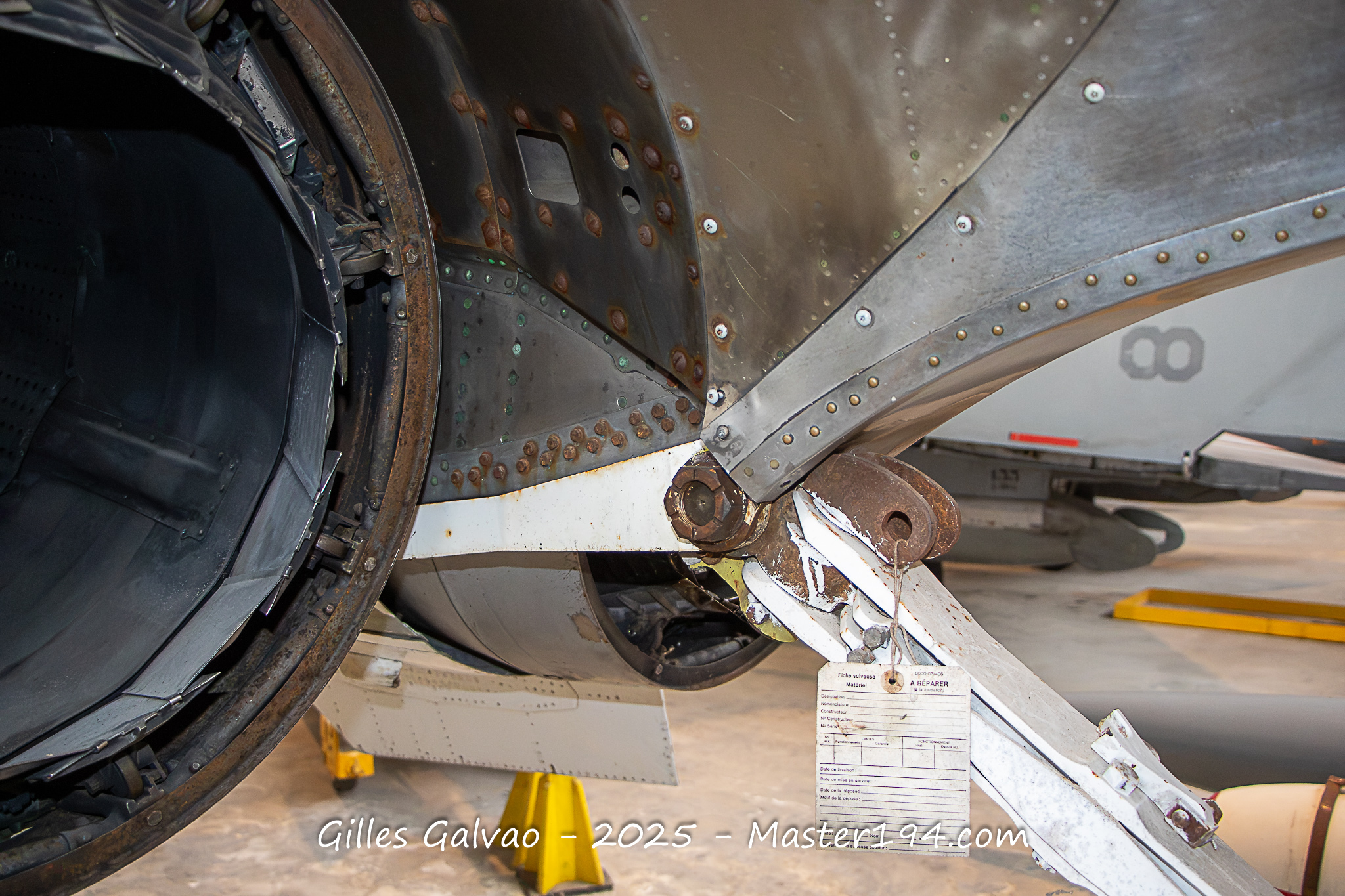
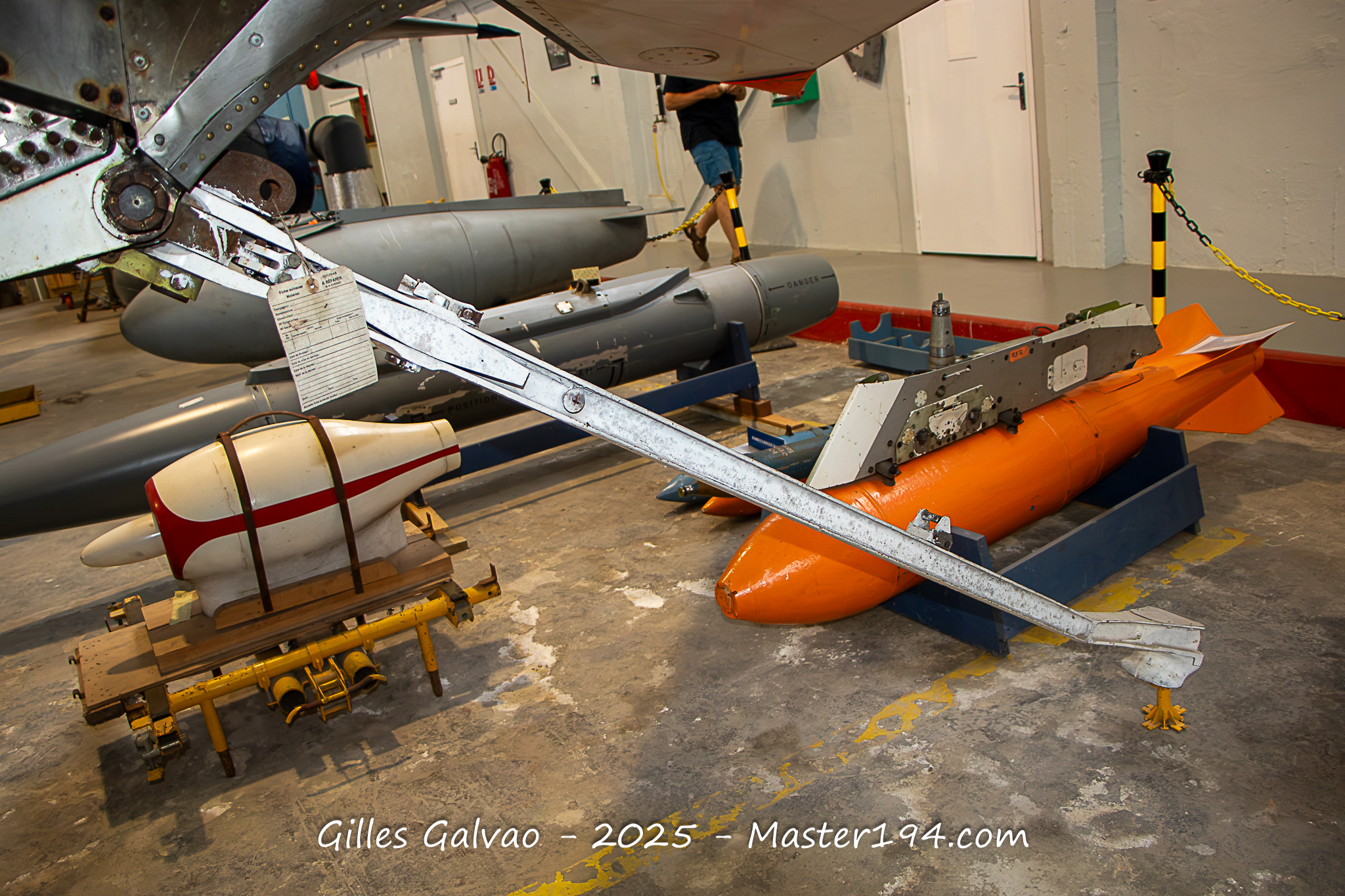
Equipped with a dedicated heavy arrestor hook, the resulting Jaguar M 05 retained the twin-engine silhouette of the terrestrial prototypes while concealing a thoroughly reinforced structural core engineered for aircraft carrier flight decks.
Maiden Flight and Aerodynamic Modifications
The Jaguar M 05 (registered F-ZWRJ) executed its maiden flight on November 14, 1969, at Melun-Villaroche, piloted by test pilot Jacques Jesberger.
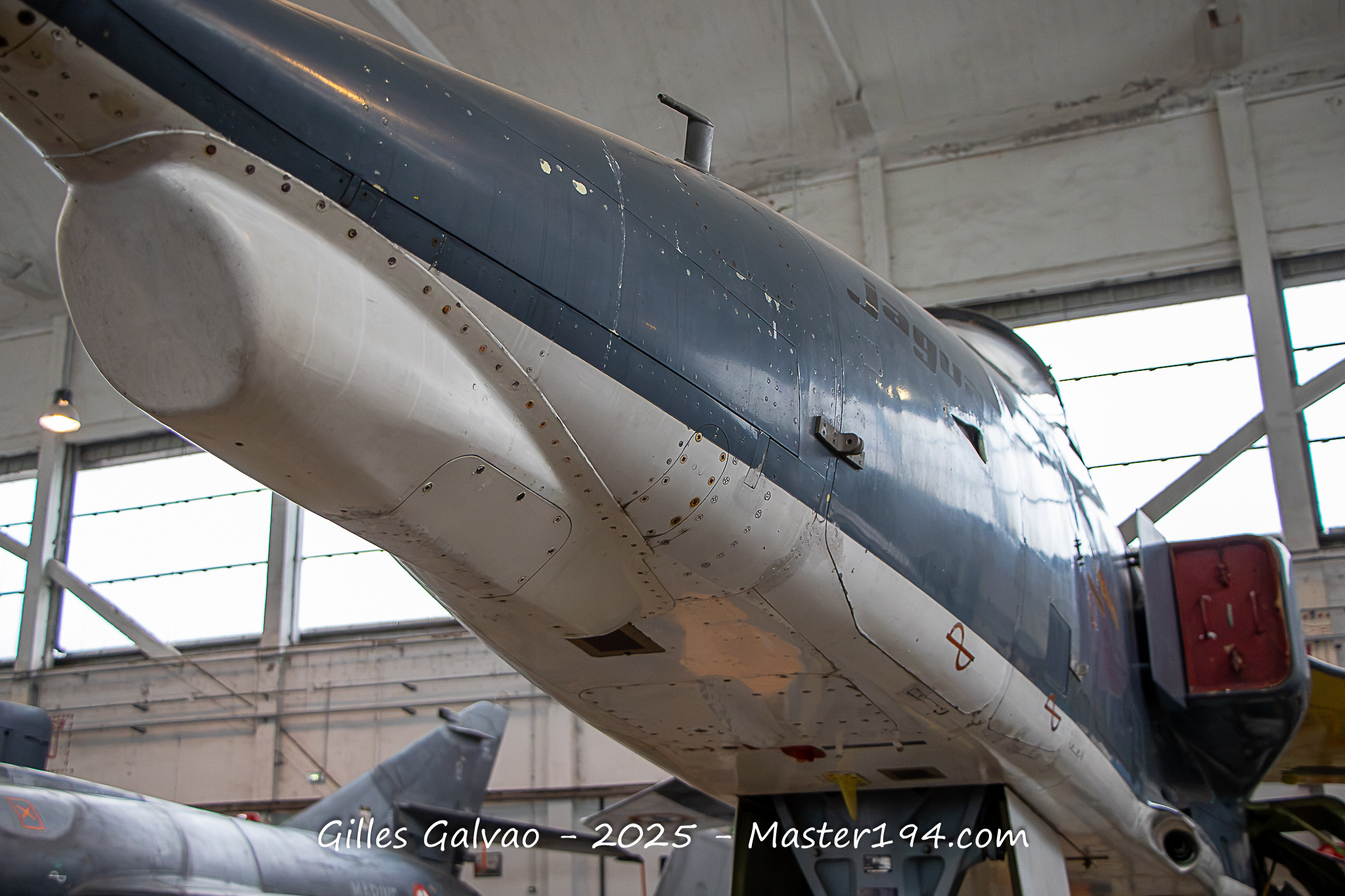
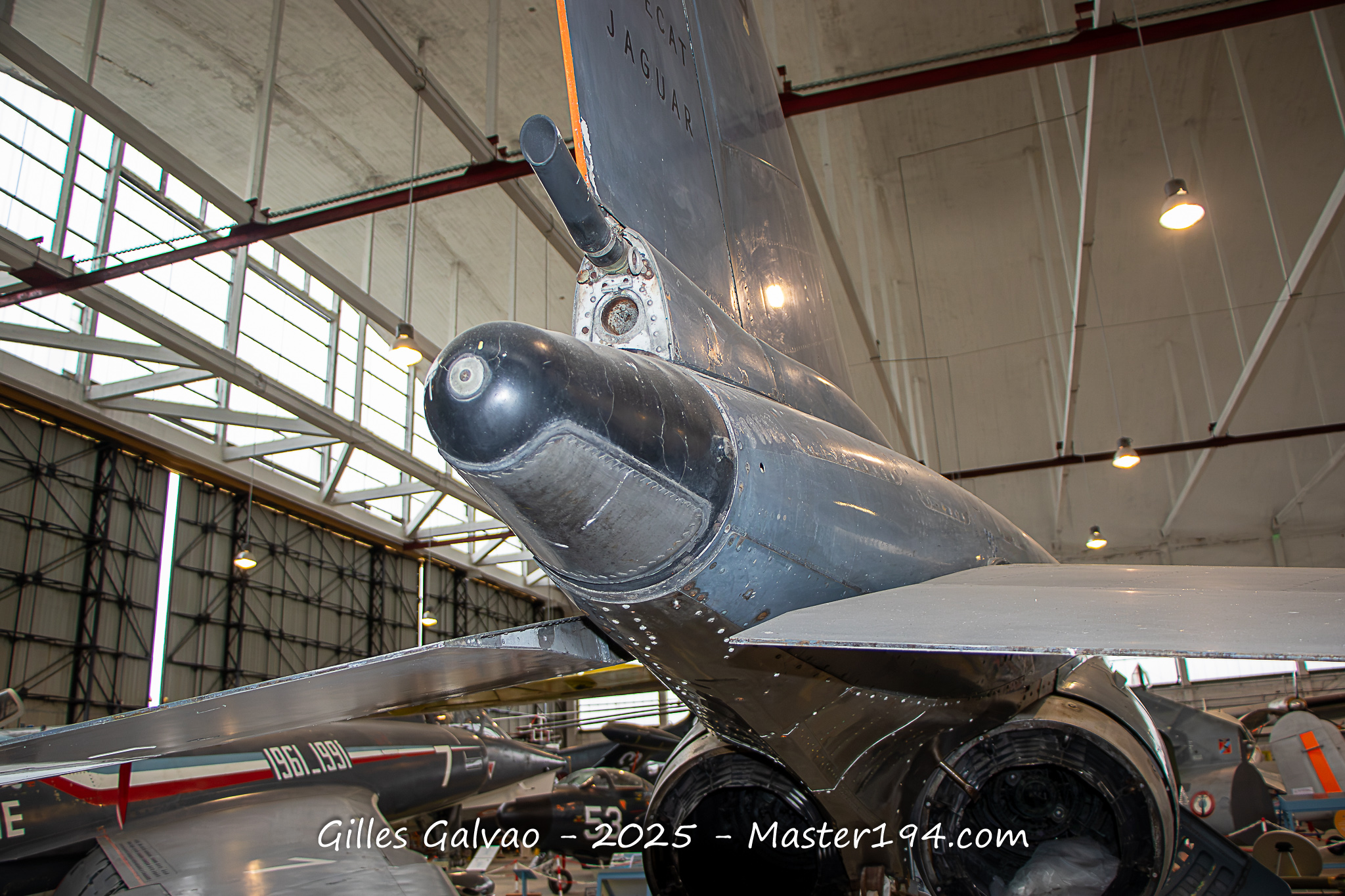
Initial flight testing quickly revealed handling deficiencies and directional instability at high angles of attack ($AoA$). The aircraft returned to the factory for aerodynamic refinements. Two prominent ventral fins were installed under the aft fuselage, complemented by wing fences.
These modifications significantly enhanced directional stability. Far from remaining exclusive to the naval prototype, the twin ventral fins subsequently became a hallmark design feature of all production Jaguars to ensure stability across asymmetric heavy external store configurations.
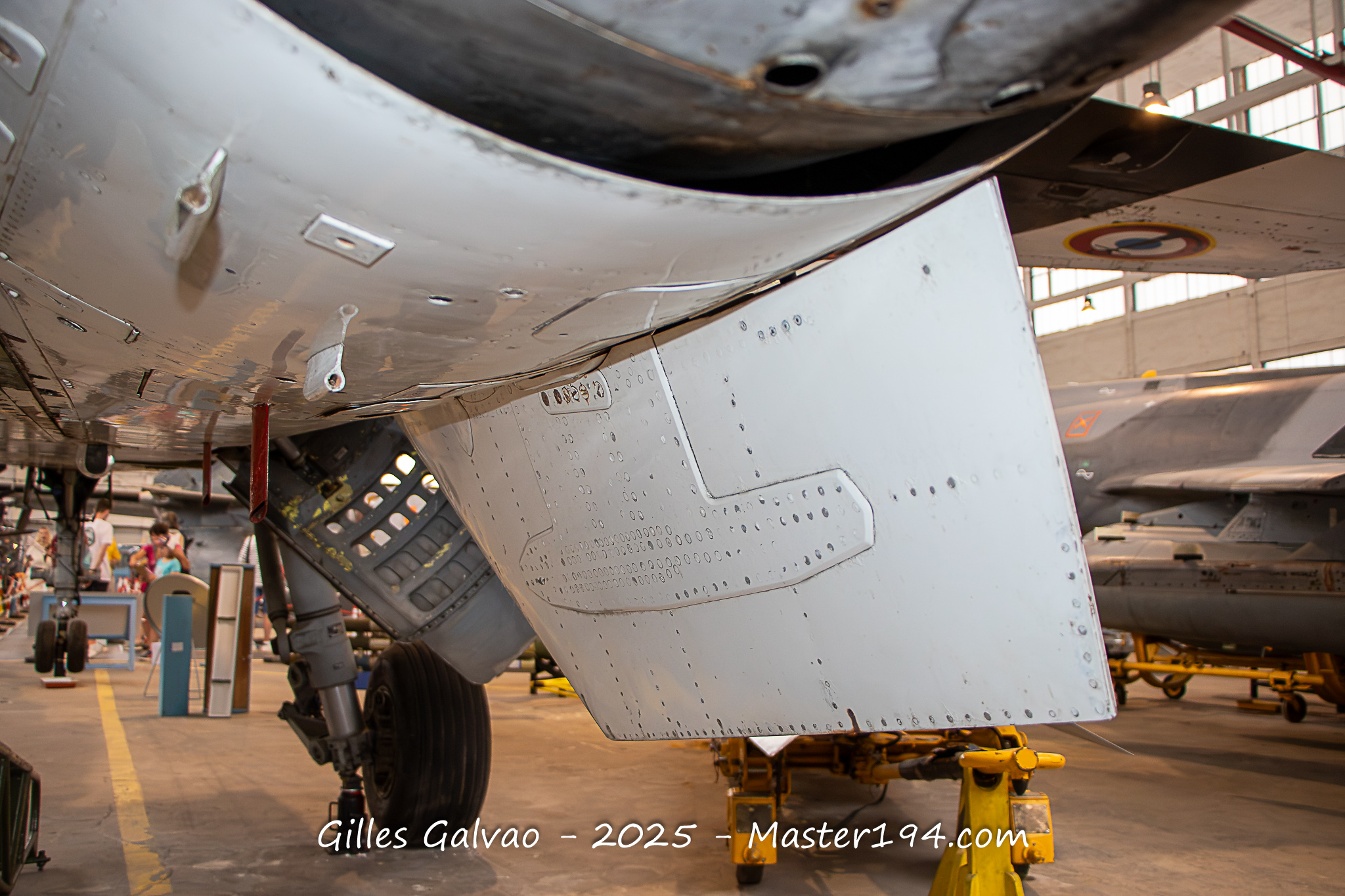
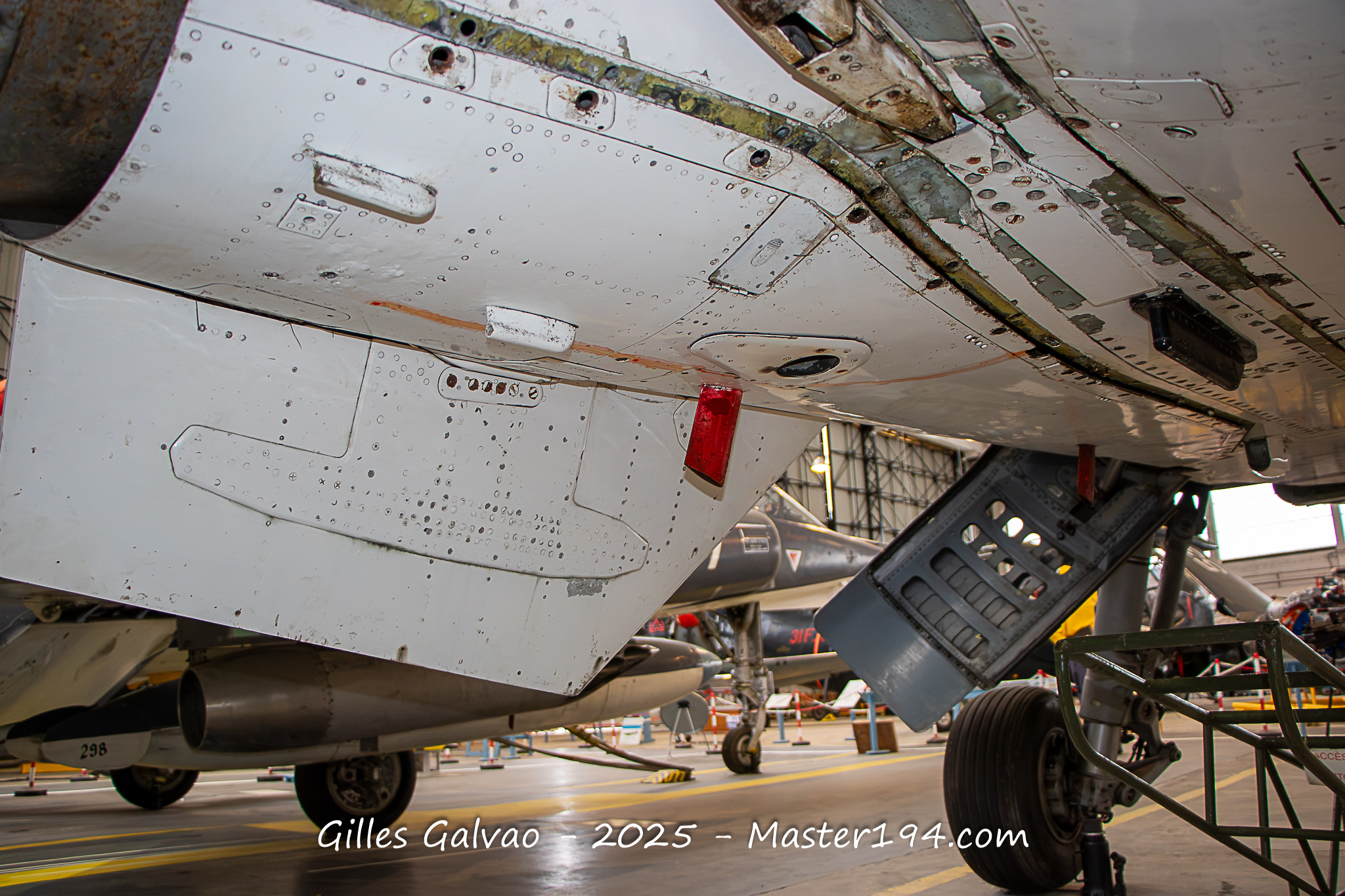
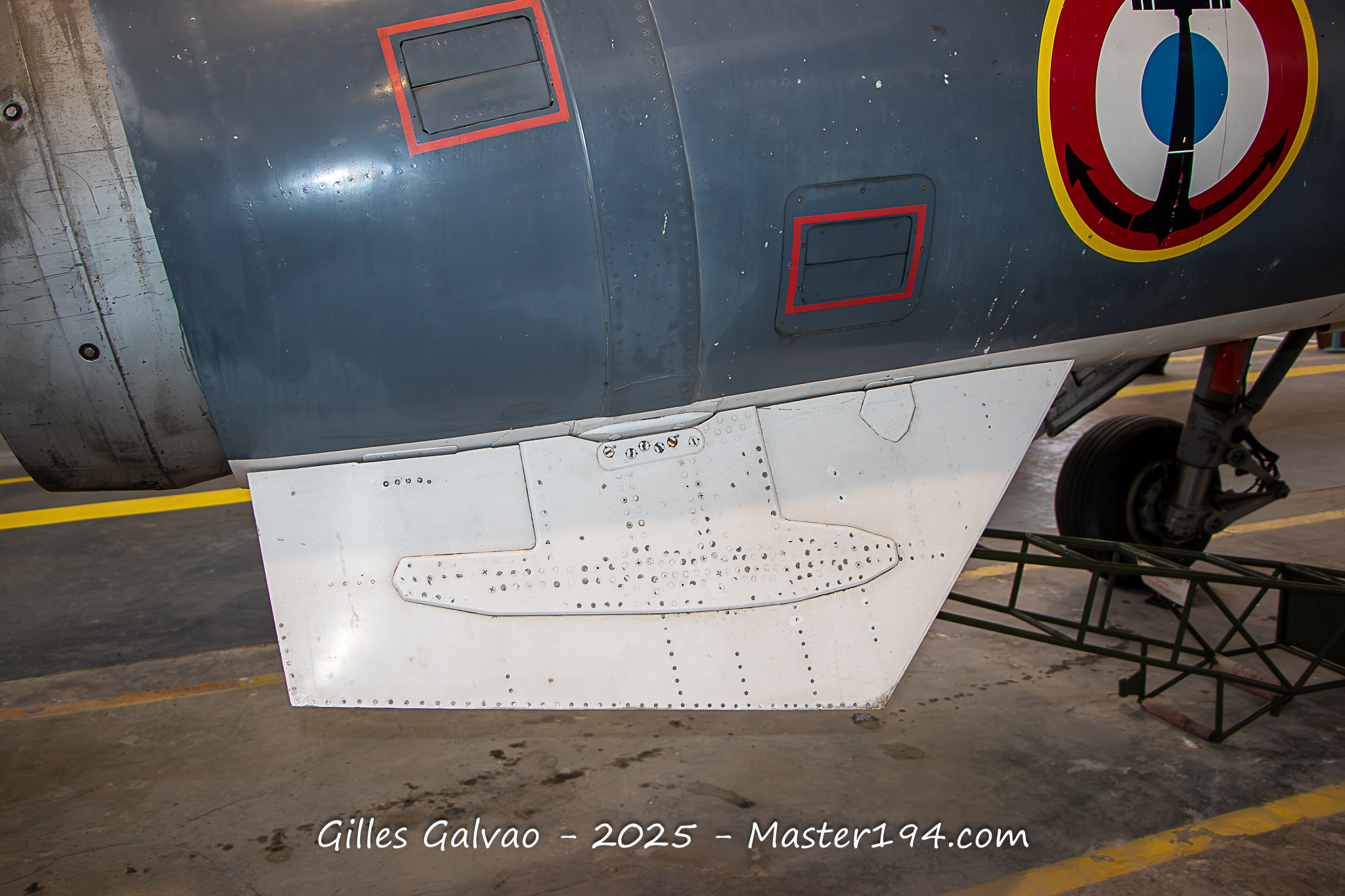
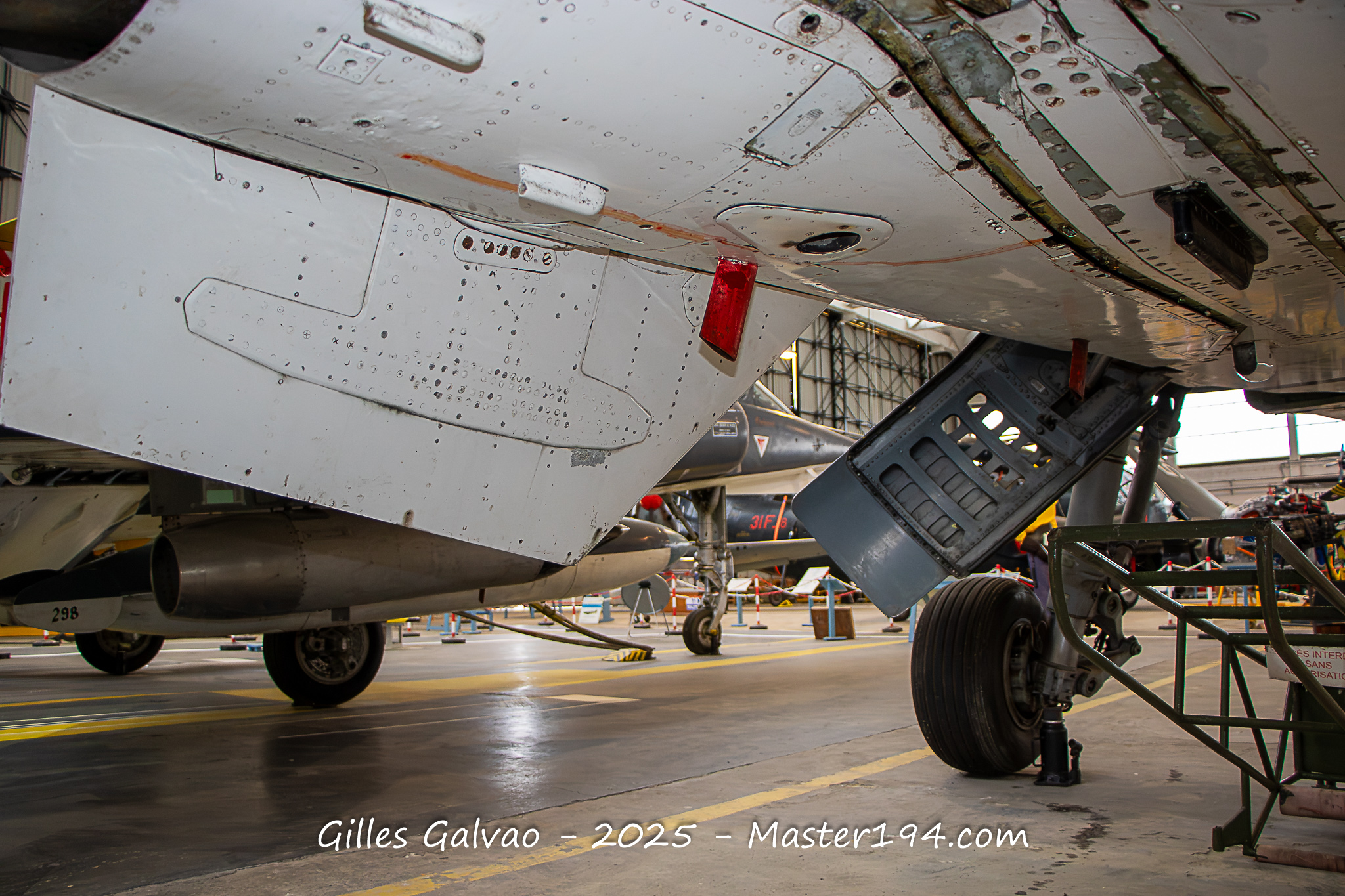
Subsequent test phases took place at Istres and Nîmes-Garons, focusing extensively on low-speed handling characteristics and flight envelope configurations required for aircraft carrier approaches. This progression enabled engineers to fine-tune the Jaguar M’s aerodynamic layout and prepare for catapult launch trials.
A pivotal milestone occurred in April 1970, when the M 05 airframe deployed to the Royal Aircraft Establishment (RAE) at Bedford, United Kingdom. At the time, Bedford operated the only land-based European test facility capable of replicating the violent mechanical loads of carrier catapult launches. The Jaguar M underwent rigorous launch-parameter testing to establish its minimum catapult launch speed ($V_{\text{min}}$) and structural acceleration tolerances.
Land-based catapult launches and simulated arrested landings yielded highly promising results, clearing the way for initial sea trials. Flap configurations were further refined to optimize low-speed handling dynamics, validated during intensive spring and summer flight testing at Istres in 1970 prior to carrier embarkation.
From Istres to Bedford
A pivotal milestone occurred in April 1970, when the M 05 airframe deployed to the Royal Aircraft Establishment (RAE) at Bedford, United Kingdom. At the time, Bedford operated the only land-based European test facility capable of replicating the violent mechanical loads of carrier catapult launches. The Jaguar M underwent rigorous launch-parameter testing to establish its minimum catapult launch speed ($V_{\text{min}}$) and structural acceleration tolerances.
Land-based catapult launches and simulated arrested landings yielded highly promising results, clearing the way for initial sea trials. Flap configurations were further refined to optimize low-speed handling dynamics, validated during intensive spring and summer flight testing at Istres in 1970 prior to carrier embarkation.
Sea Trials Aboard the Clemenceau
The program reached its defining moment in July 1970 when the M 05 embarked aboard the aircraft carrier Clemenceau for its initial sea-trial campaign, officially transforming the Jaguar into a carrier-borne asset.
This first deployment encompassed actual catapult launches and arrested landings. The overall results were highly encouraging, validating the fundamental viability of the navalized Jaguar airframe. The test team demonstrated conclusively that a heavy twin-jet of this baseline family could be launched via steam catapult and safely arrested on a French aircraft carrier flight deck.
However, evaluating the airframe under representative combat operational scenarios remained mandatory.
The Second Campaign: Operational Limitations Emerge
Following additional land-based testing (including further trials at Bedford), the M 05 returned to the Clemenceau in October 1971. This second campaign evaluated airframe performance with external underwing stores, closely simulating operational mission profiles. Across all navalization trials, the M 05 logged dozens of catapult launches and arrested deck recoveries.
It was during these loaded trials that critical performance limits surfaced:
Safety Envelope: The core issue was not merely overall “under-powering,” but rather the dangerous intersection of high gross weight, heavy store drag, low approach speeds ($V_{\text{app}}$), and minimal safety margins during a bolter or wave-off on a single engine.
Single-Engine Approach Margin: The most severe safety issue concerned single-engine approach performance (One Engine Inoperative — OEI) during arrested landings, particularly when carrying heavy external stores.
Thrust Response Deficit: The combined thrust of the twin Rolls-Royce/Turbomeca Adour turbofans proved marginal in critical deck-recovery scenarios, where rapid engine spool-up and power response were vital.
Engineering Solutions Evaluated
The Jaguar M program was not abandoned due to an irredeemable airframe. On the contrary, multiple engineering solutions were actively pursued:
- Modulated Afterburner System: A fine-tuned, Continuously Variable Afterburner (CVA) system was developed to provide precise thrust control during low-speed single-engine approaches. Installed on the M 05, this system underwent land-based flight testing at Istres in October 1972.
- Redesigned High-Lift Wing: A redesigned wing section—featuring increased surface area and thickness—was planned to drastically improve low-speed lift and lower touch-down speeds. However, this high-lift wing was never flight-tested on the M 05.
Ultimately, challenges extended beyond the aircraft itself. Necessary carrier modifications—including upgrading steam catapult capacity and adding flight deck heat-deflection armor—added substantial financial and logistical weight to the program. The navalized Jaguar progressively transformed into a complex, cost-prohibitive solution for the French Naval Aviation’s operational needs.
The Cancellation of the Jaguar M
In January 1973, the official decision was taken to cancel the Jaguar Marine program.
Sea trials aboard the Clemenceau conclusively highlighted the airframe’s operational limitations—most notably its marginal thrust safety envelope during single-engine deck landings (One Engine Inoperative — OEI) under heavy store configurations, as well as the cascading weight penalties imposed by navalization modifications.
An additional, critical operational constraint was combat radius and fuel endurance: full-afterburner catapult launches consumed excessive fuel reserves, severely curtailing mission loiter time over maritime operational theaters.
Deploying an operational Jaguar M would have mandated extensive, costly redesigns of both the airframe (including a new high-lift wing) and aircraft carrier steam catapult infrastructure, precisely as a far more streamlined, cost-effective alternative emerged.
The Super Étendard Takes over the Operational Reins
To replace the aging Étendard IV M fleet, Dassault proposed a radically modernized derivative of the proven Étendard airframe.
The prospective Super Étendard retained the aerodynamic baseline of its predecessor while integrating a non-afterburning SNECMA Atar 8K50 turbojet, an optimized high-lift wing, and an advanced avionics suite anchored by the Agave radar.
This approach offered the French Naval Aviation (Aéronautique navale) a mature, familiar airframe with significantly enhanced strike capabilities, drastically lower development risks, and seamless carrier deck integration.
The adoption of the Super Étendard definitively sealed the fate of the navalized Jaguar. Entering active service in the late 1970s, the Super Étendard became the backbone of French carrier strike aviation, serving with distinction through 2016 (Super Étendard Modernisé — SEM).
A Second Career for the M 05
The story of the M 05 might have ended with the cancellation of the Jaguar Marine program.
Instead, in the summer of 1973, the prototype was repurposed for an extensive flight-test envelope supporting standard land-based Jaguar variants. It was notably tasked with high-risk spin-recovery flight dynamics research (Spin-Recovery Flight Testing).
For this new mission, the M 05 was retrofitted closer to standard land-based Jaguar configurations. However, it retained its heavy-duty naval landing gear assembly—constituting its primary external visual differentiator compared to other spin-test airframes.
Selecting this specific prototype was a calculated operational choice: following the termination of the naval program, the M 05 carried no remaining fleet or operational constraints, making it an ideal candidate for high-risk test regimes.
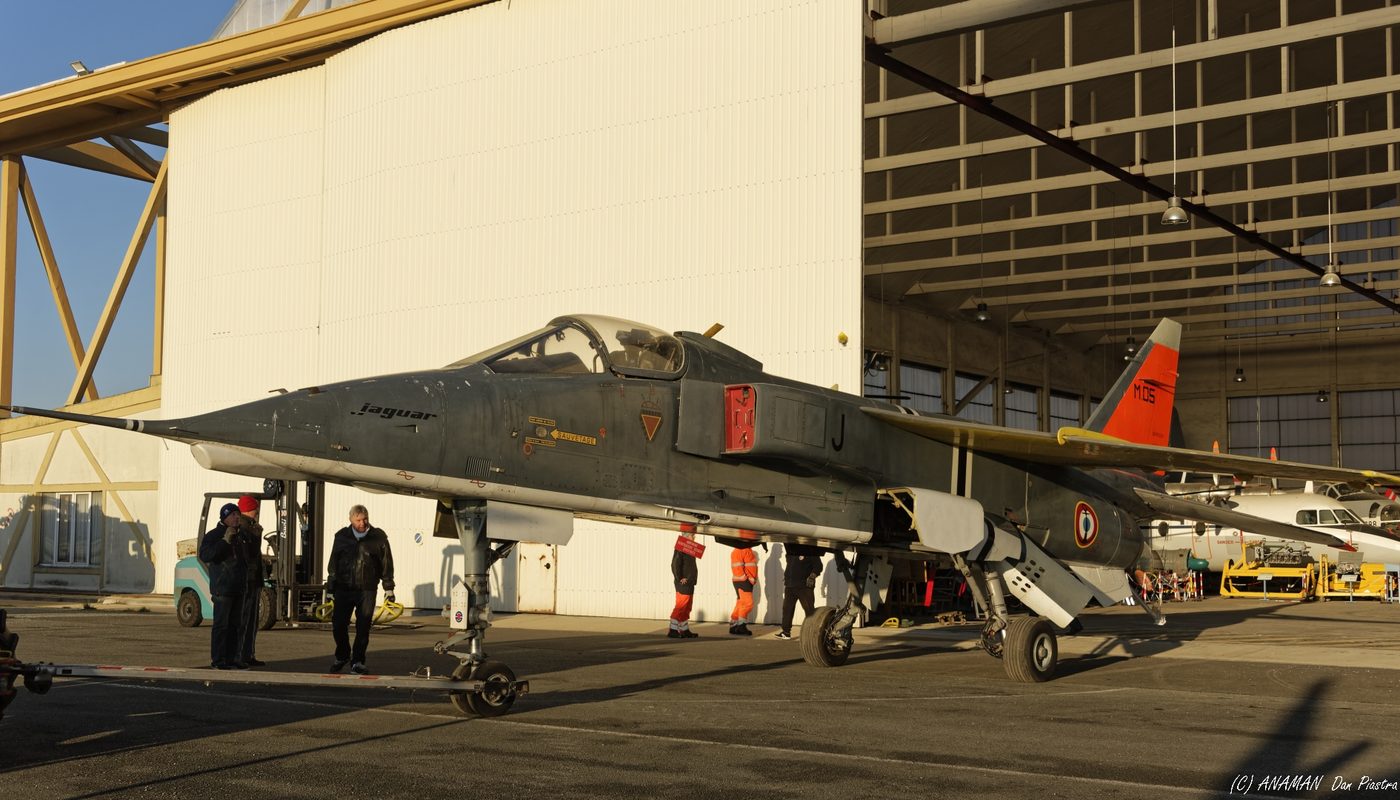
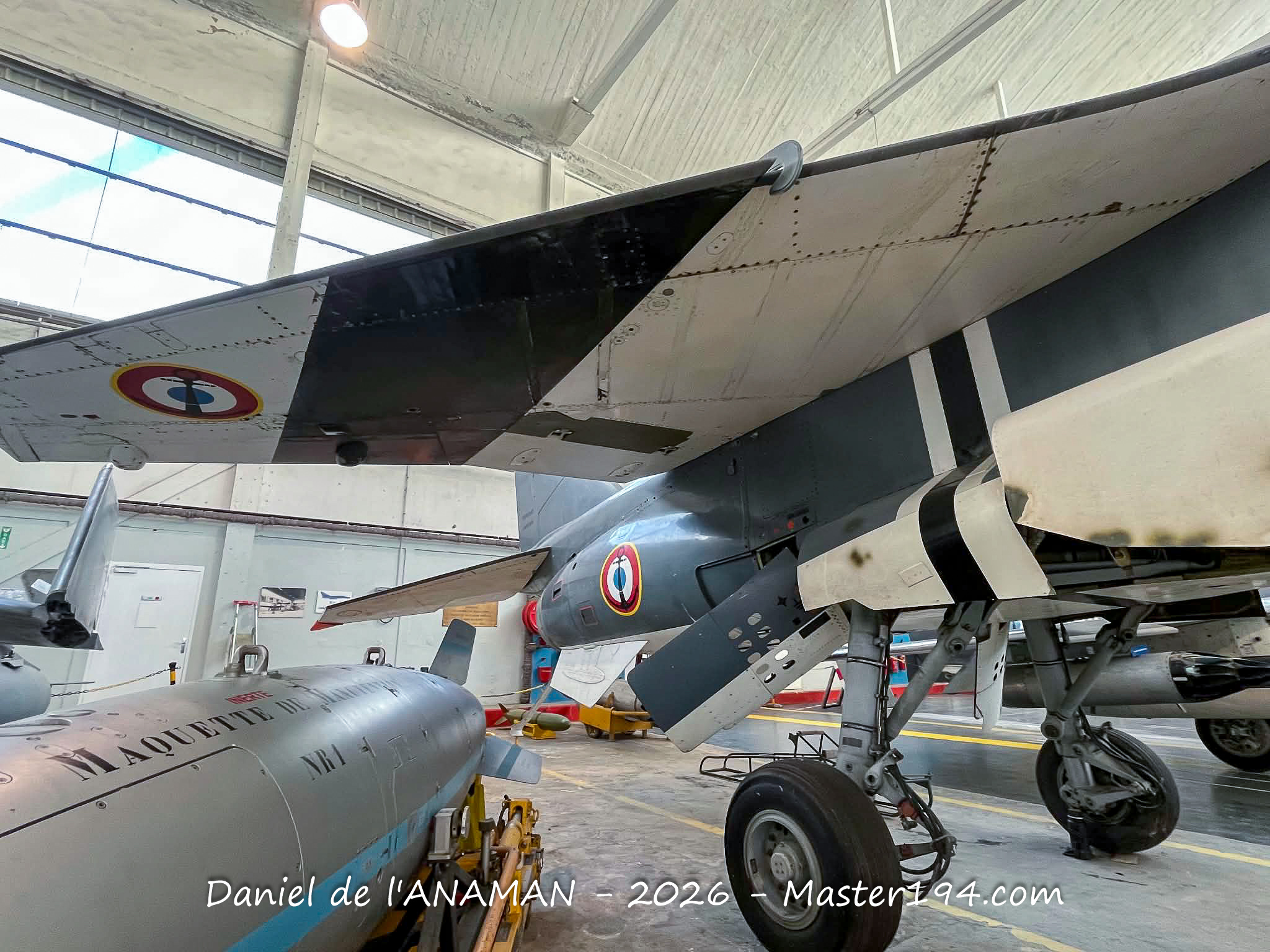
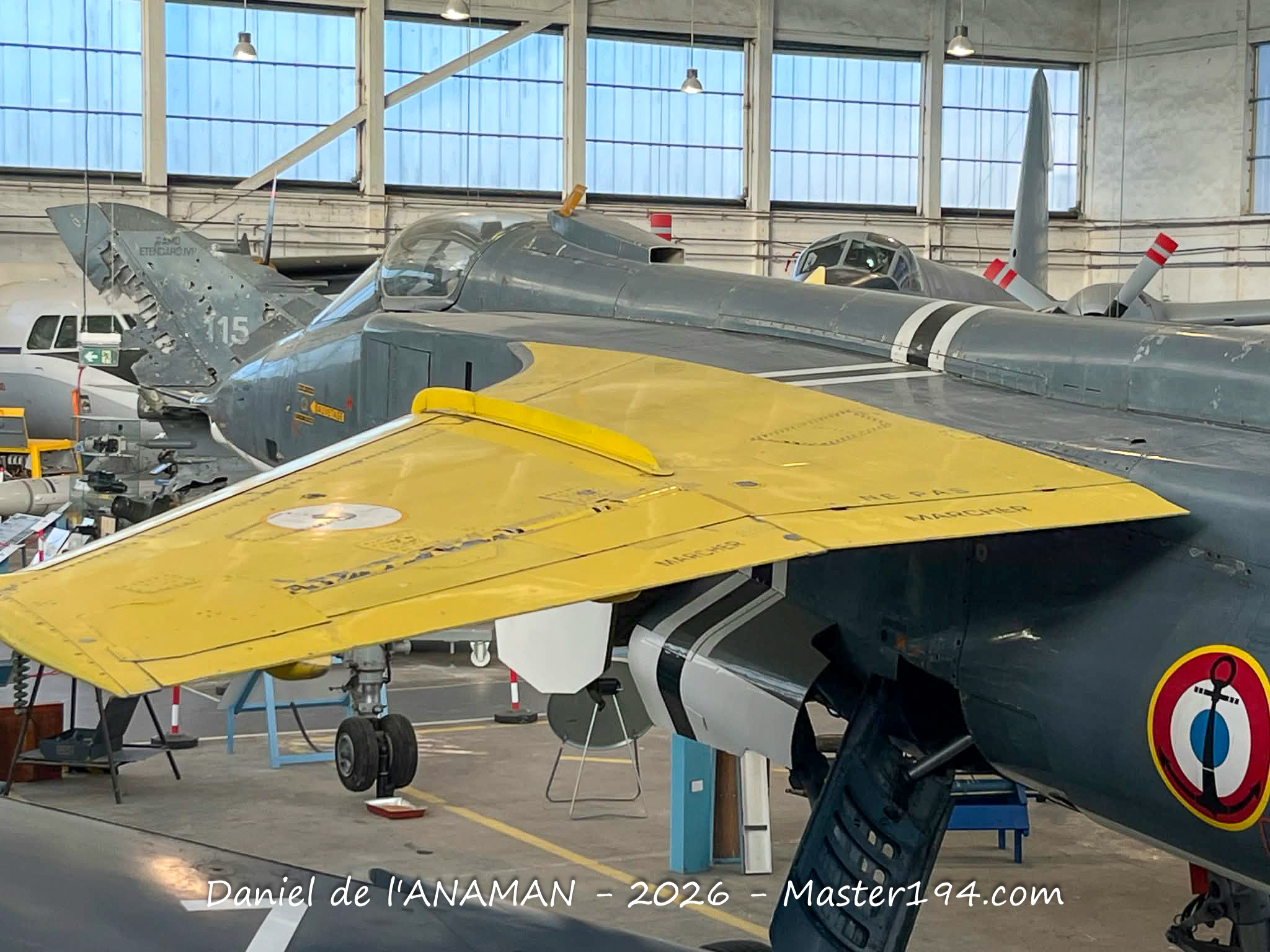
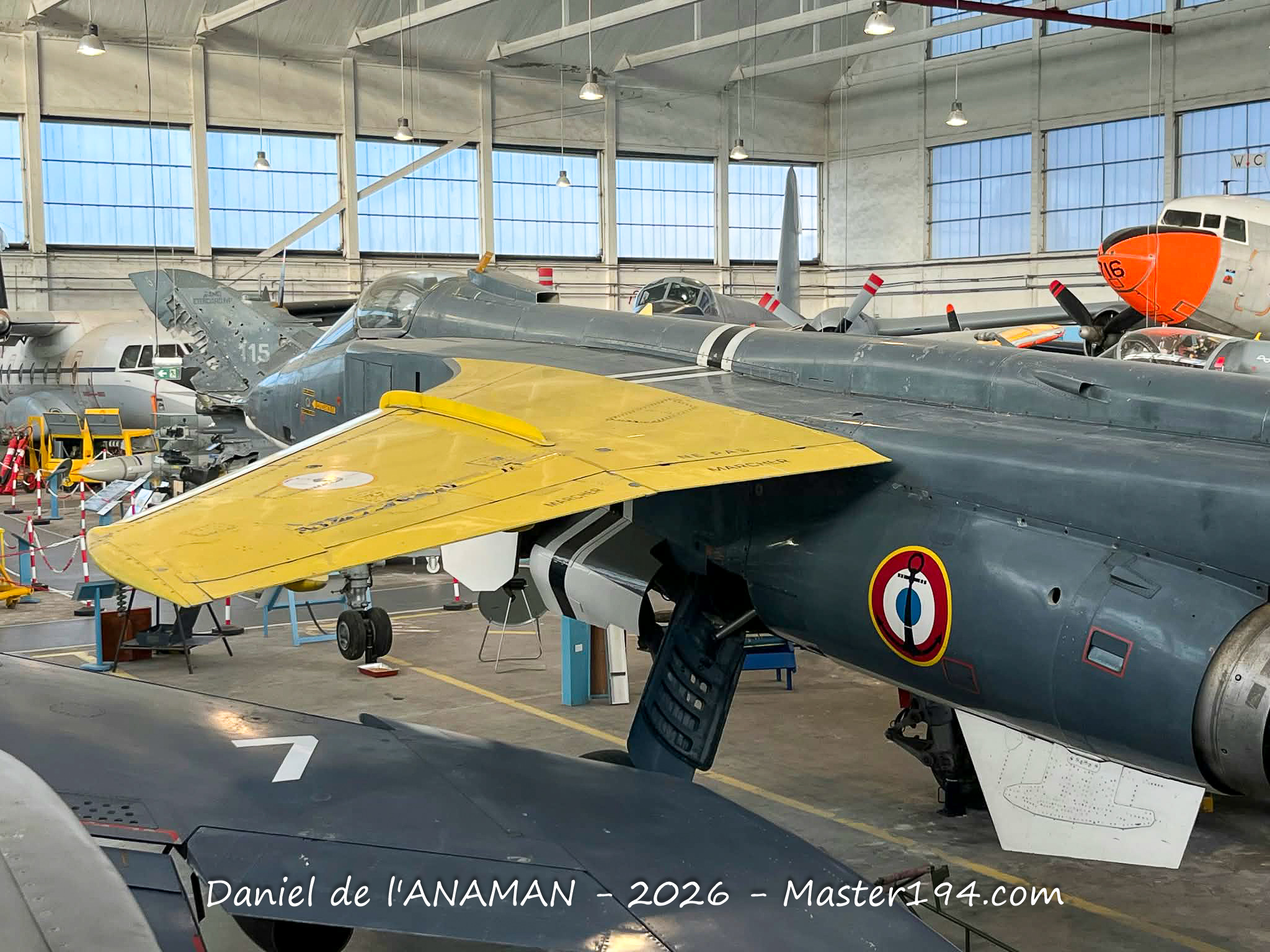
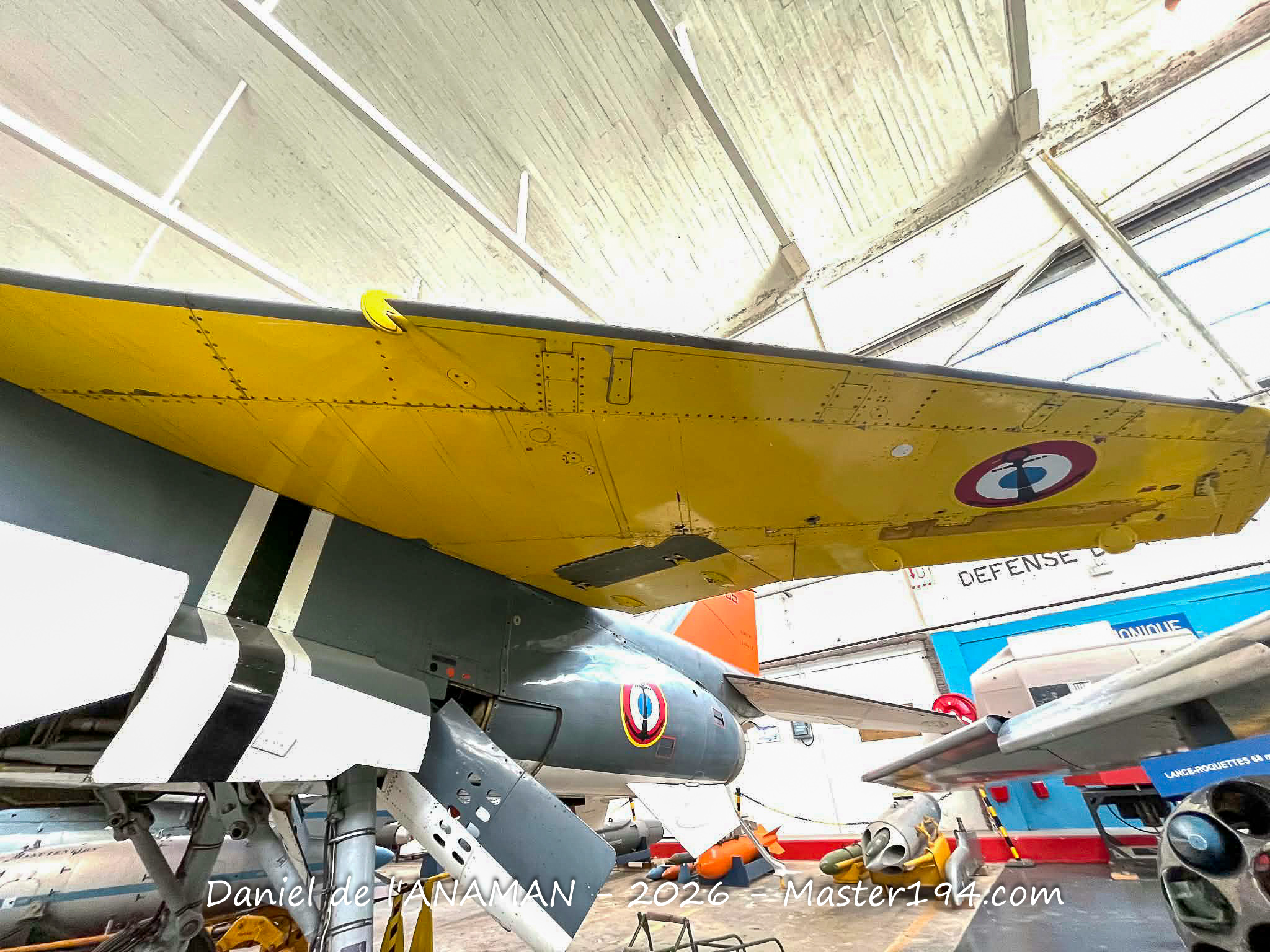
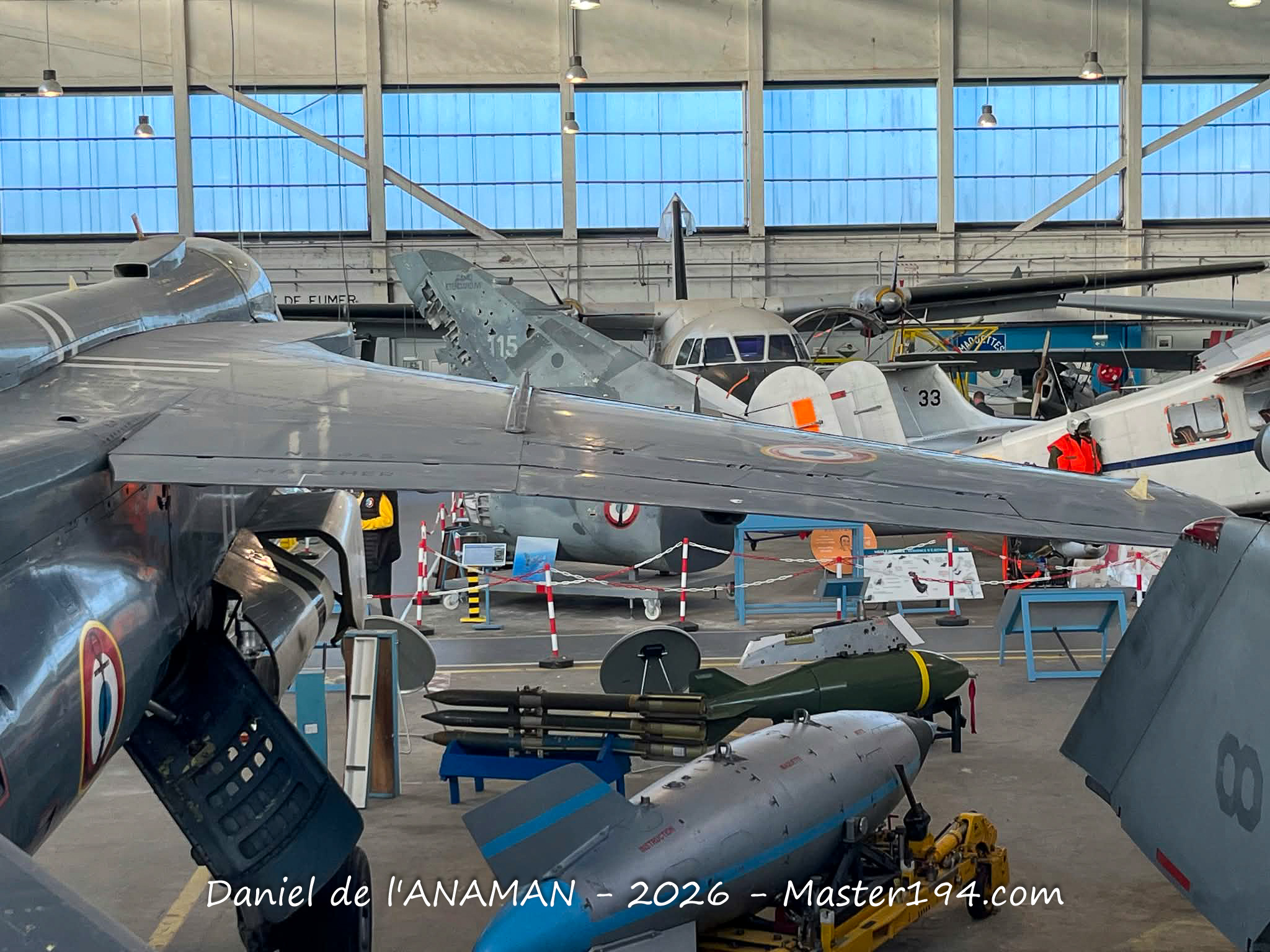
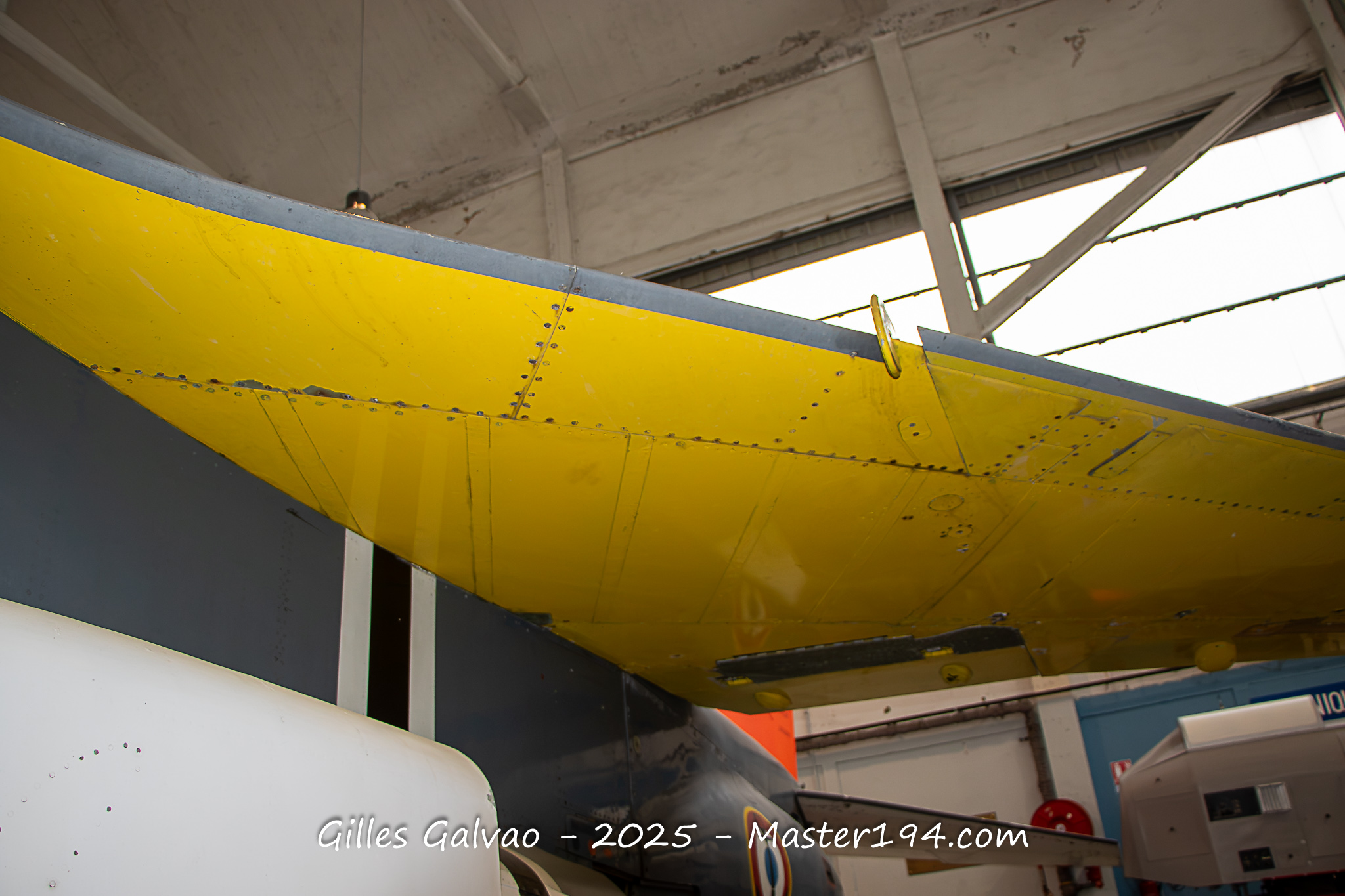
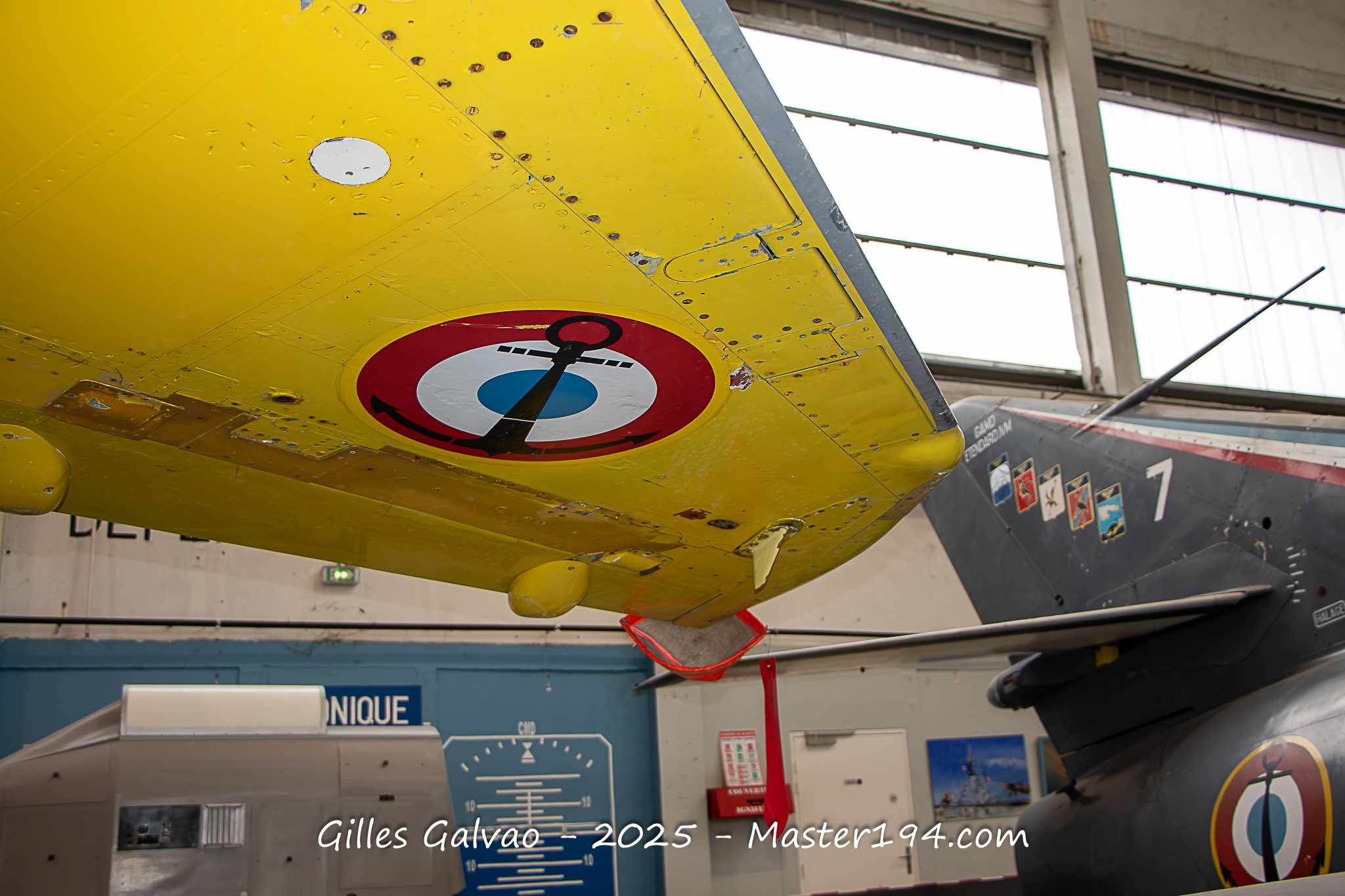
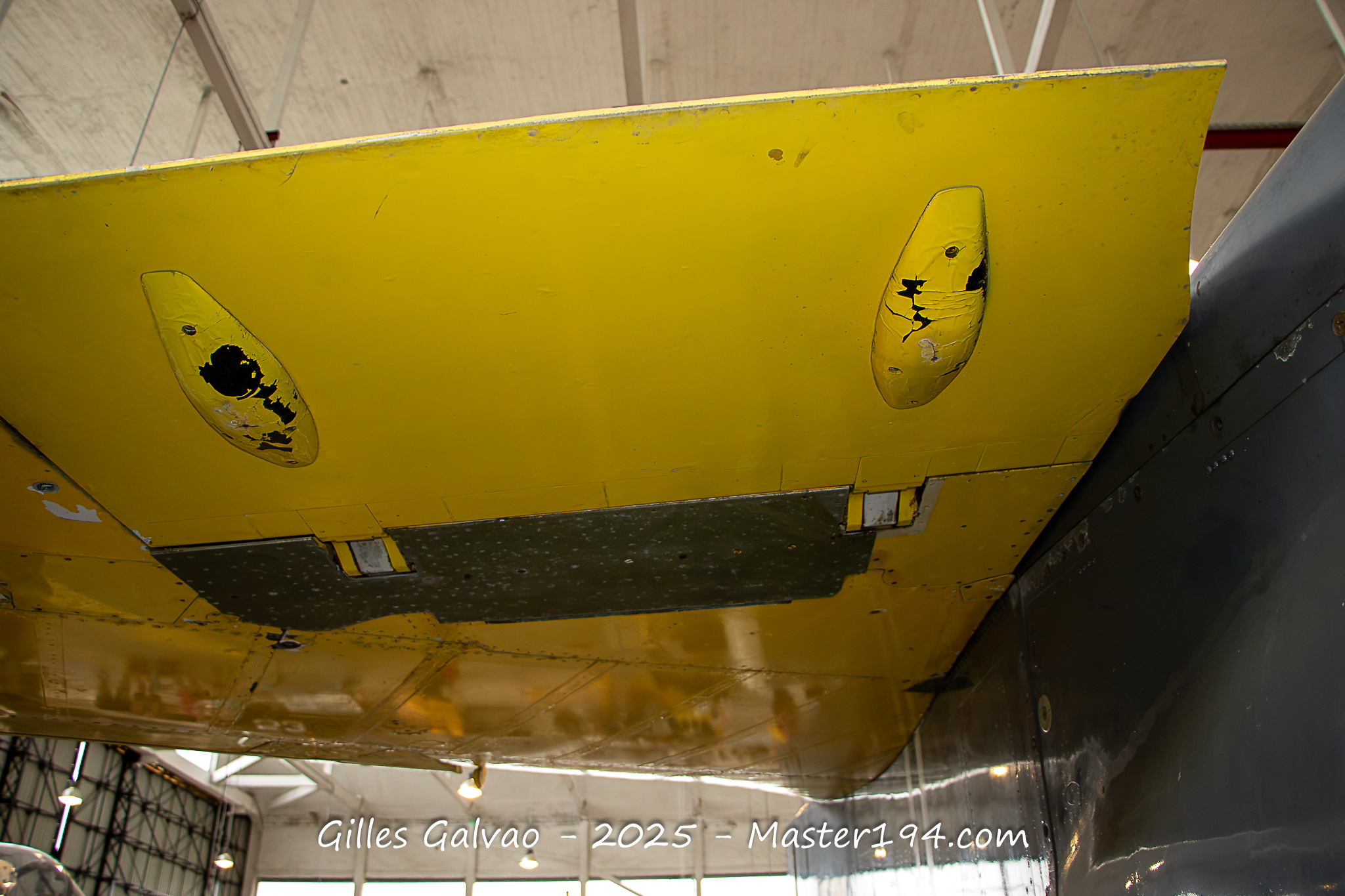
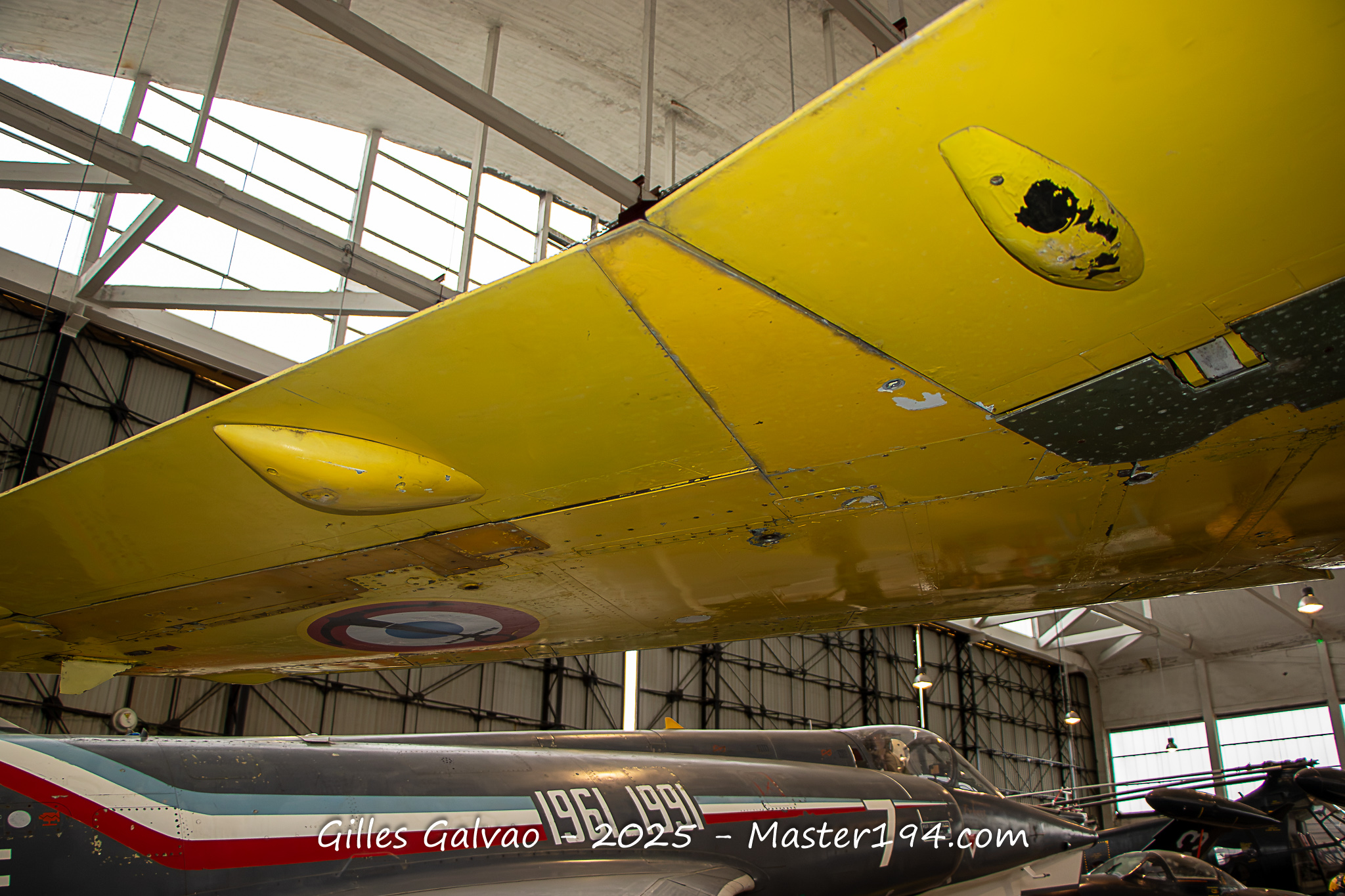
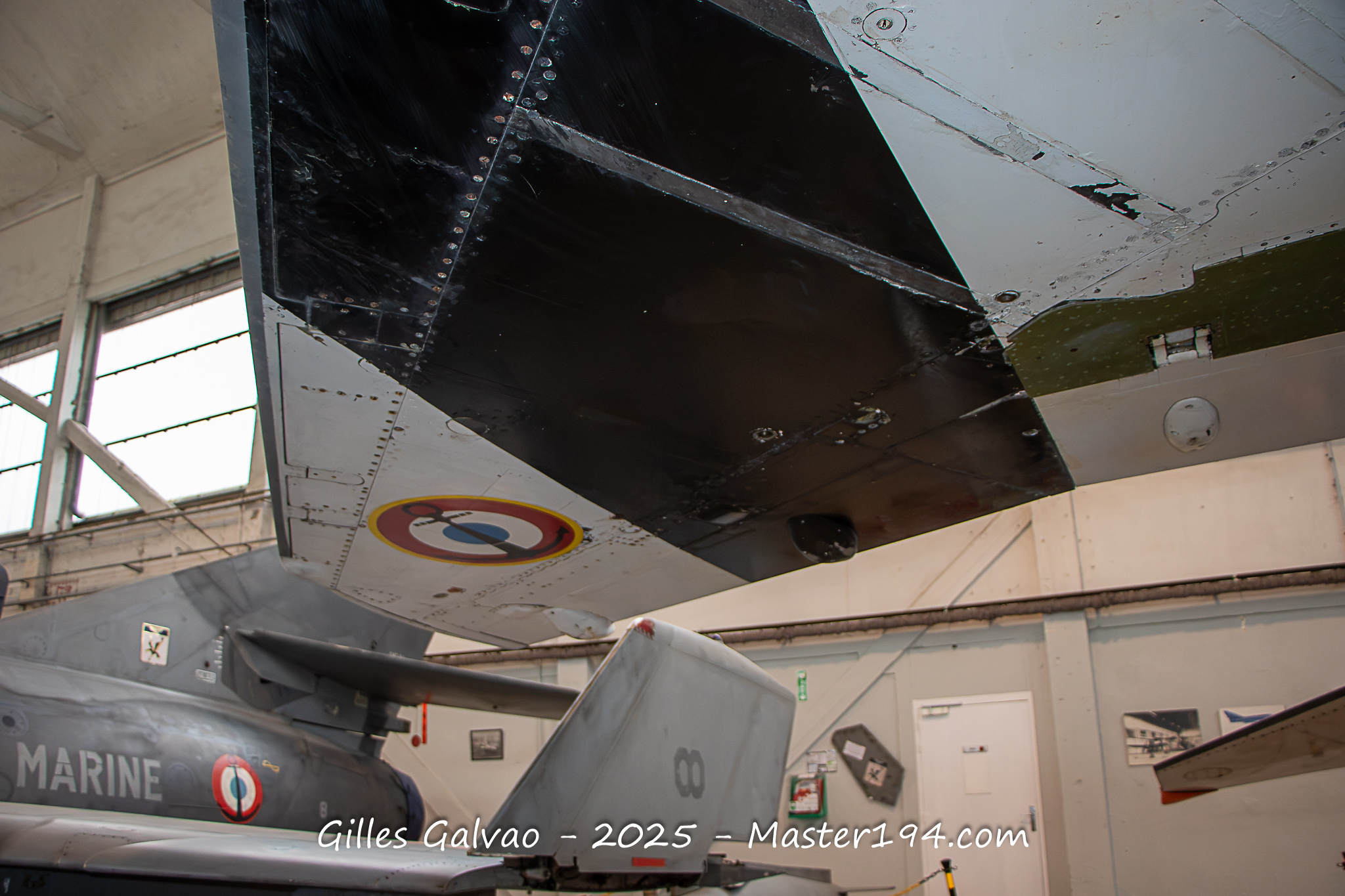
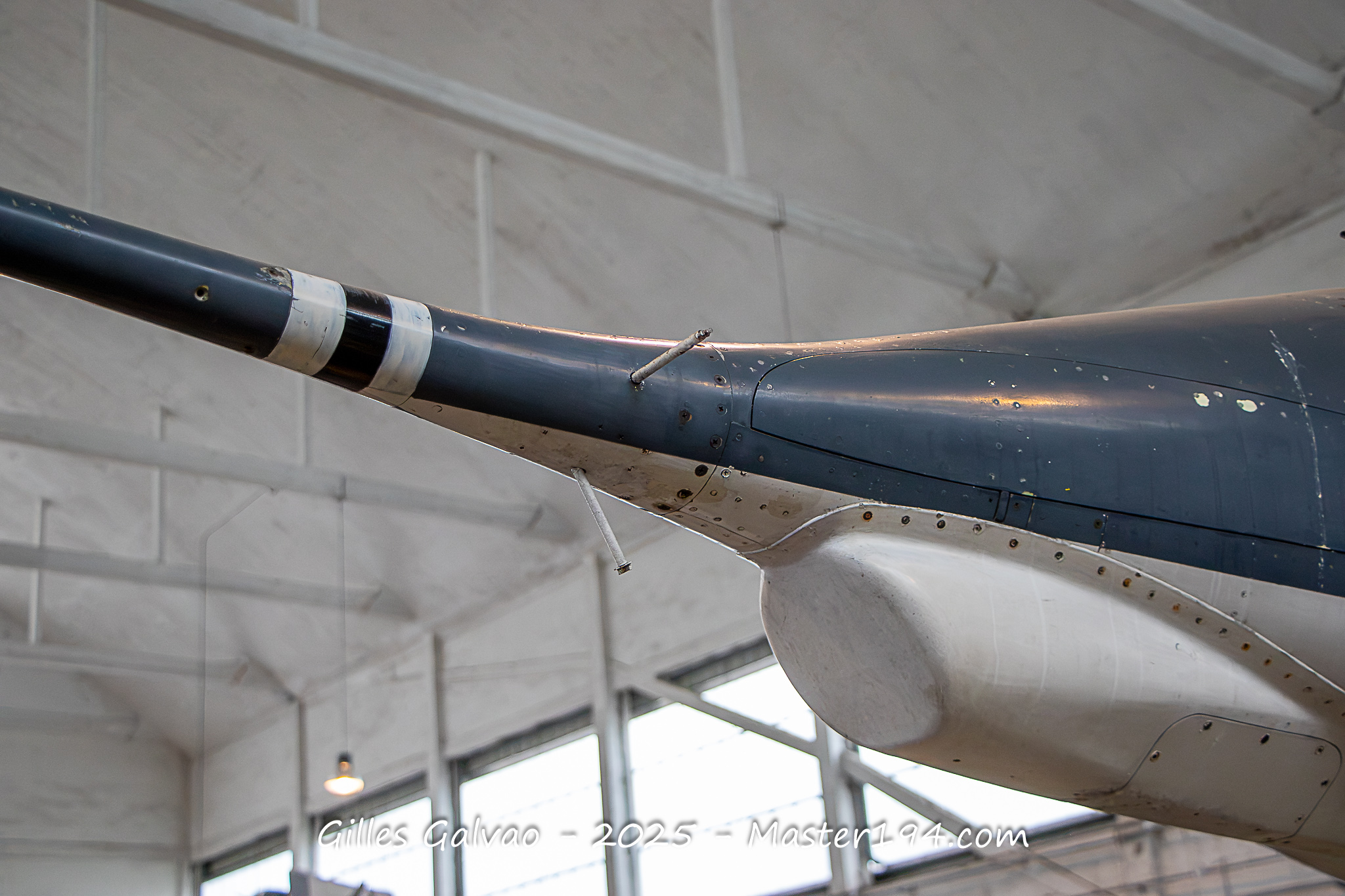
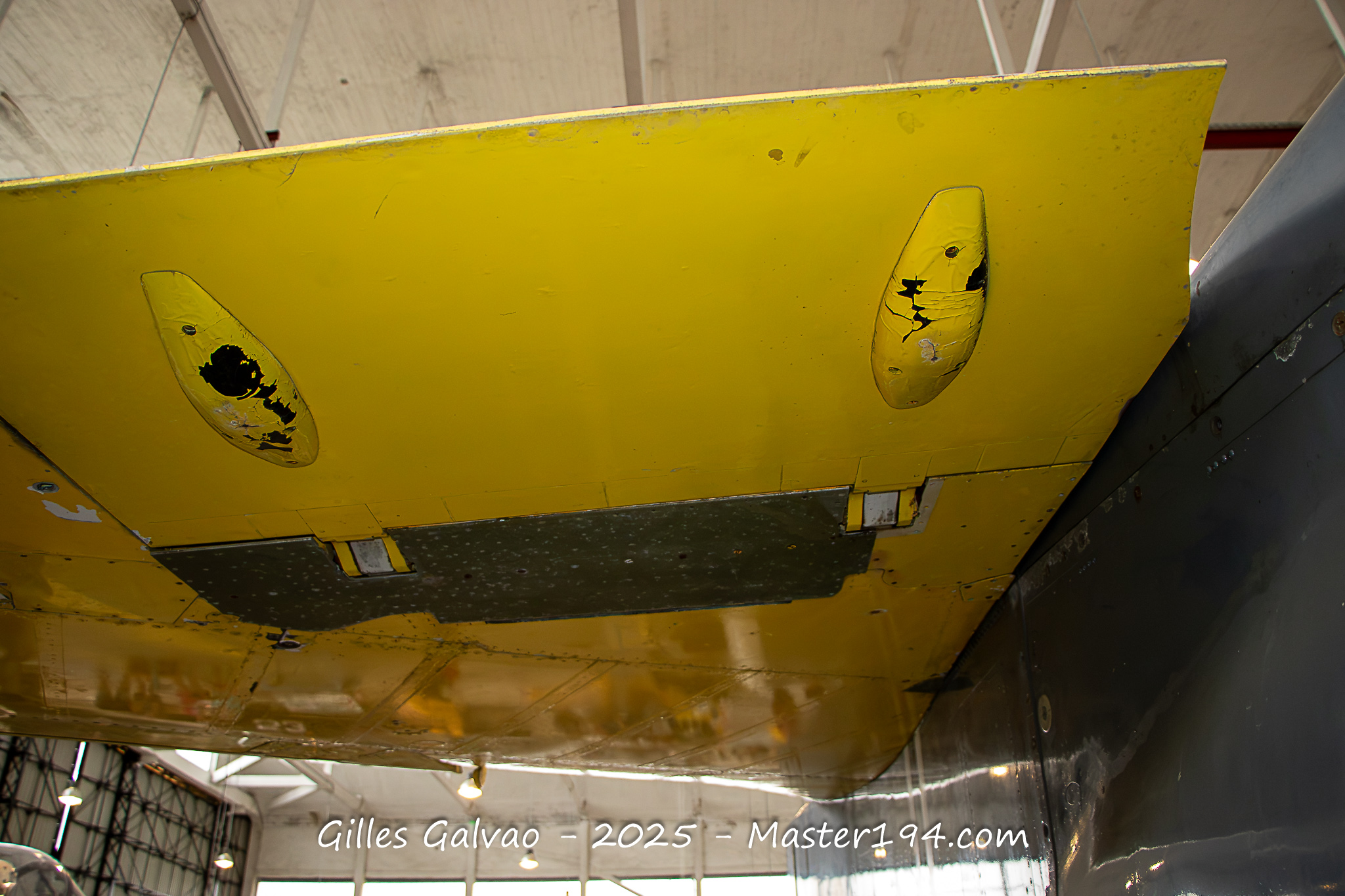
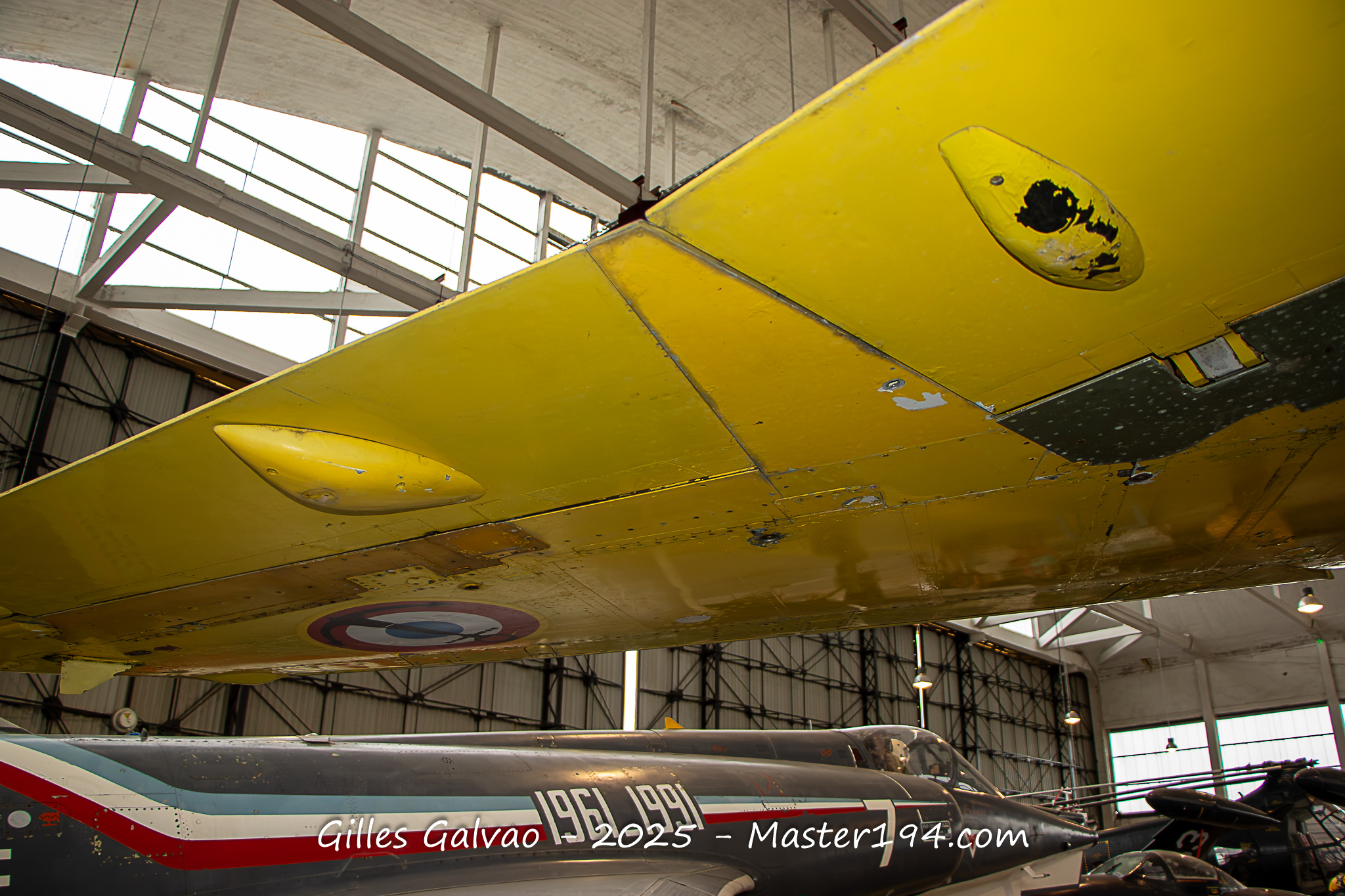
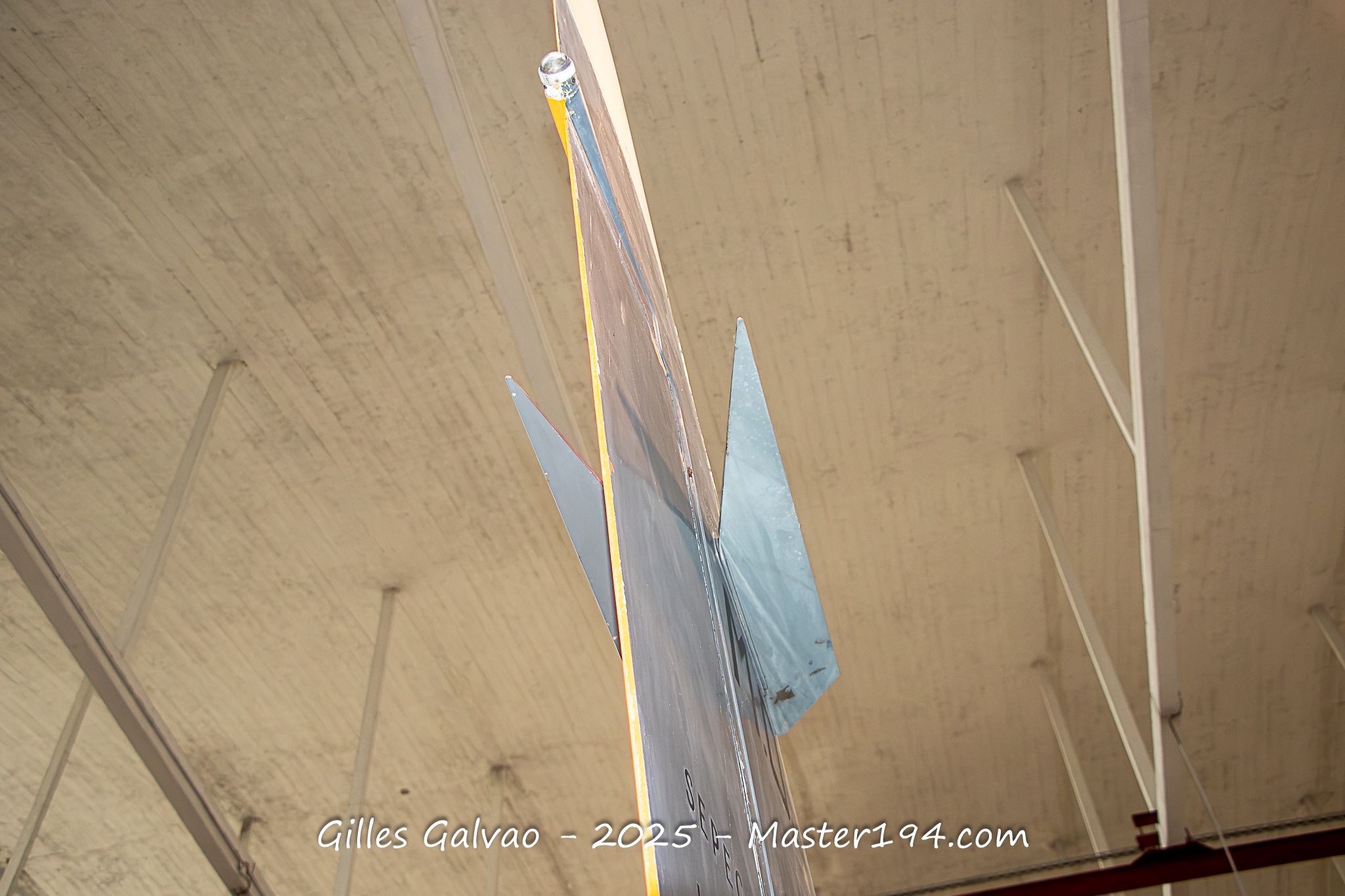
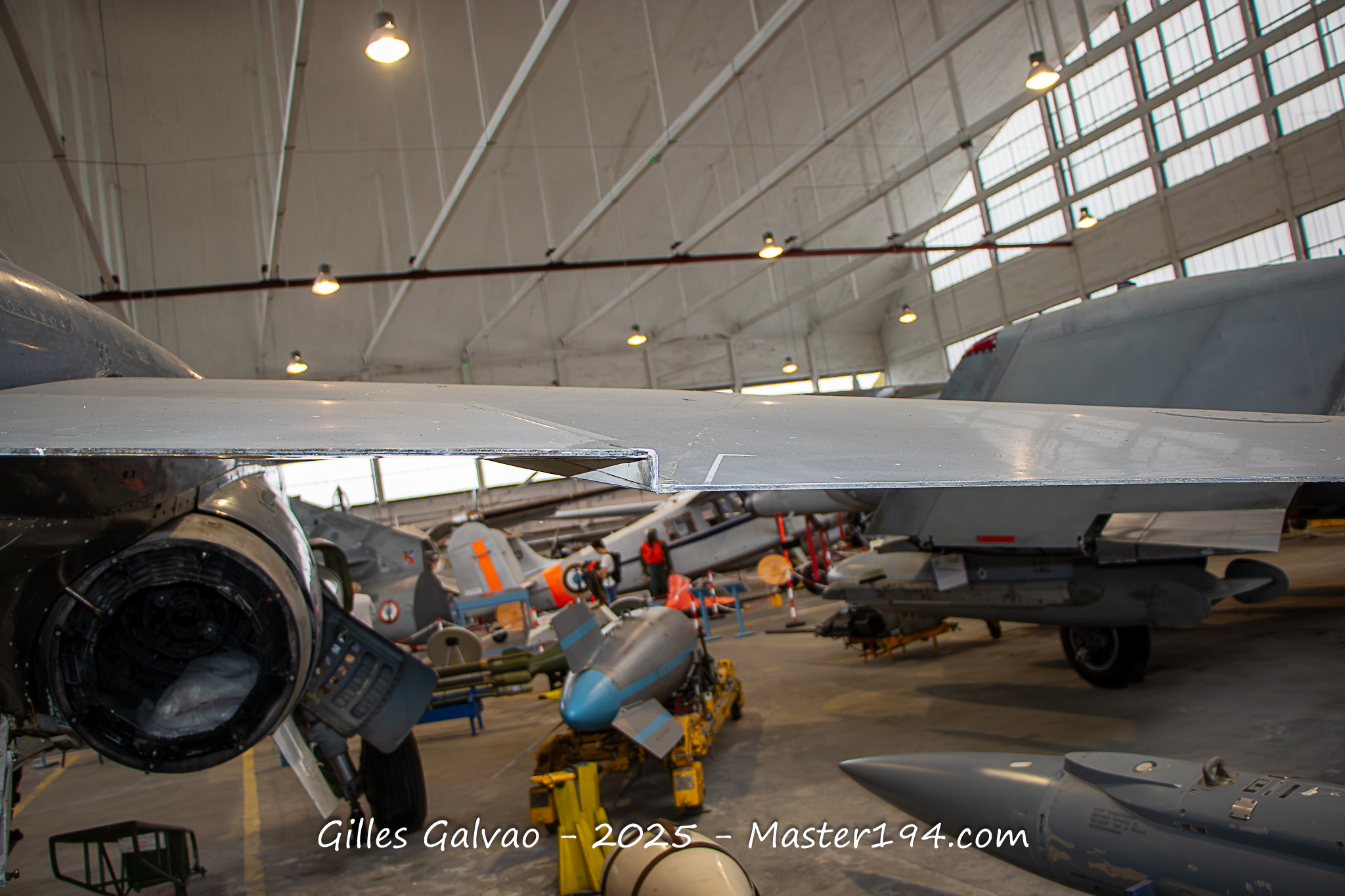
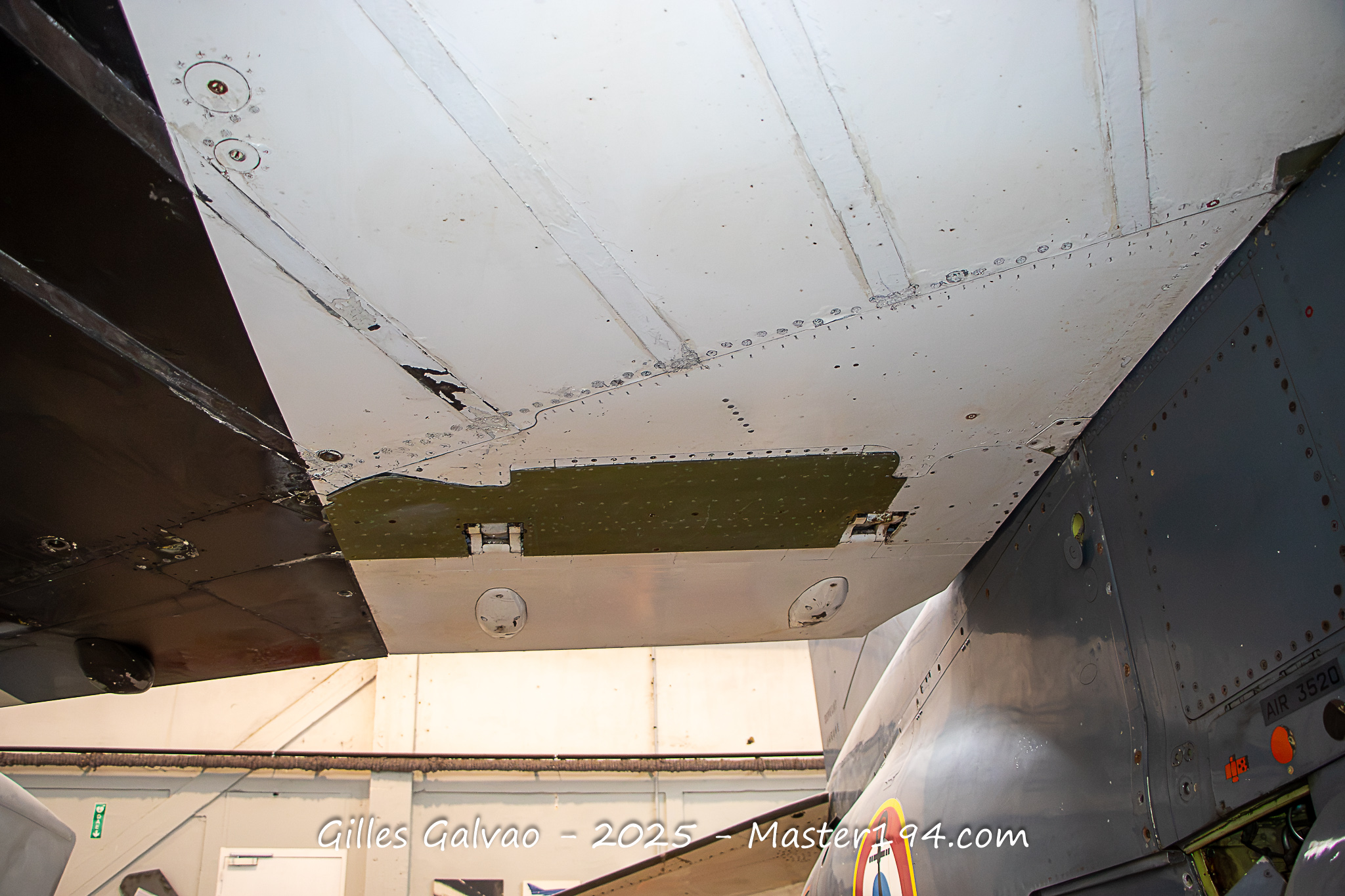
Renowned test pilot Jean-Marie Saget participated in this campaign, supported by specialized flight-test instrumentation to record flight parameters. The prototype received a striking, high-visibility calibration livery: yellow left wing upper and lower surfaces, vibrant orange port vertical stabilizer, alongside high-contrast black-and-white optical tracking bands under the starboard wing and fuselage. This high-contrast paint scheme facilitated real-time optical tracking analysis from ground-based telemetry cameras to determine airframe attitude during spin entry and recovery.
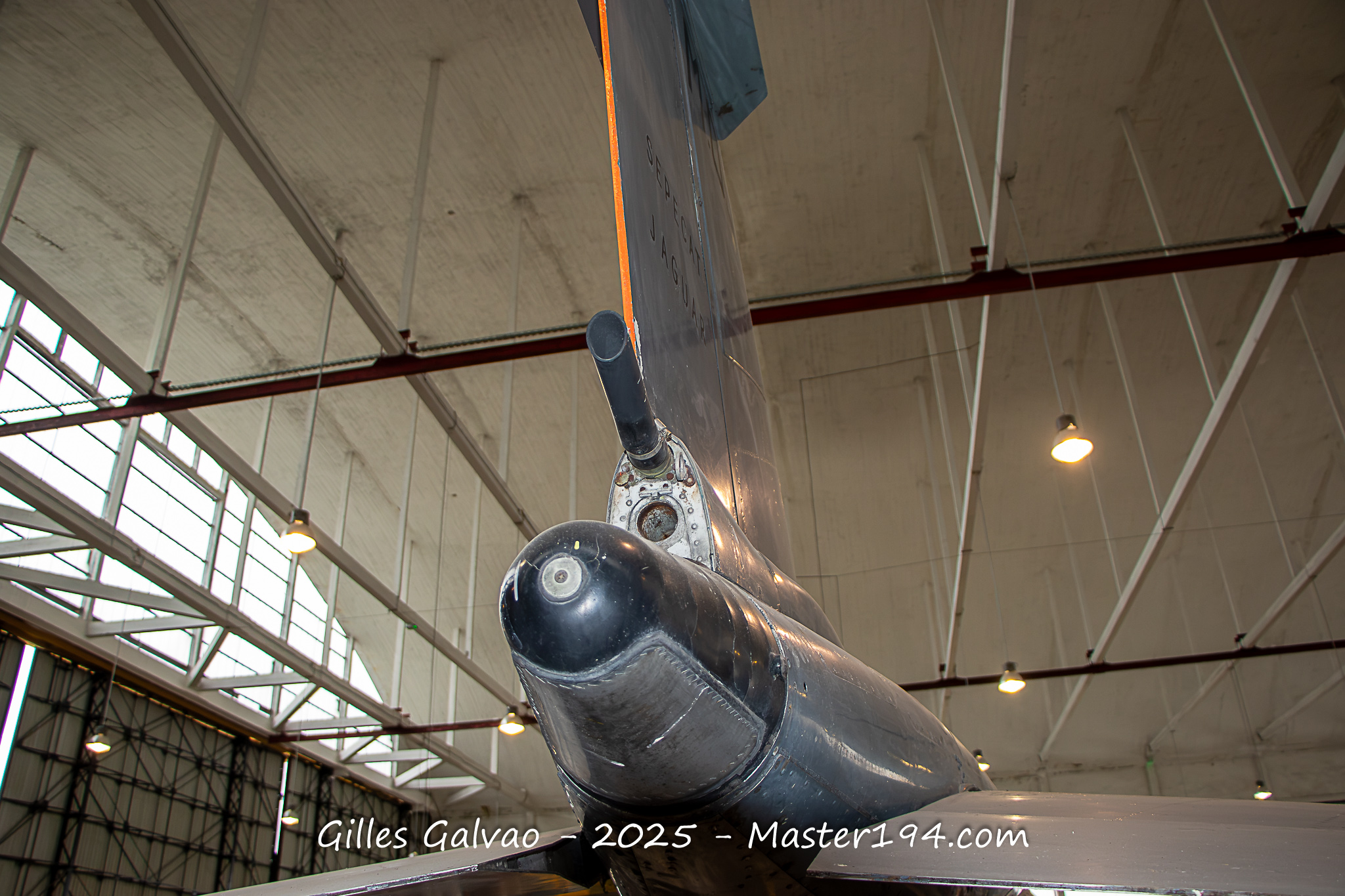
Emergency recovery equipment was also installed, including a tail-mounted spin-recovery chute engineered to force the nose down and restore airflow in out-of-control conditions.
The M 05 thus sustained an active experimental testing career long after the cancellation of the Jaguar Marine program. Its final flight occurred on December 12, 1975, piloted one last time by test pilot Jacques Jesberger. Between November 1969 and December 1975, the naval prototype logged over 350 experimental test flights.
Wings and high-contrast optical tracking markings from the spin-recovery flight test campaign.
The Jaguar M 05 Preservation at Rochefort
Following the conclusion of its flight-test career, the M 05 prototype was transferred in November 1978 to Air Base 721 (Base Aérienne 721) at Rochefort-sur-Mer, located on the Saint-Agnant site.
In 1986, the airframe was handed over to the Naval Aviation Training Center (CEAN — Centre École de l’Aéronautique Navale). The unique naval prototype was ultimately preserved and joined the static exhibits at the Musée de l’Aéronautique Navale de Rochefort, where it stands today as a tangible testament to a unique Anglo-French aerospace venture.
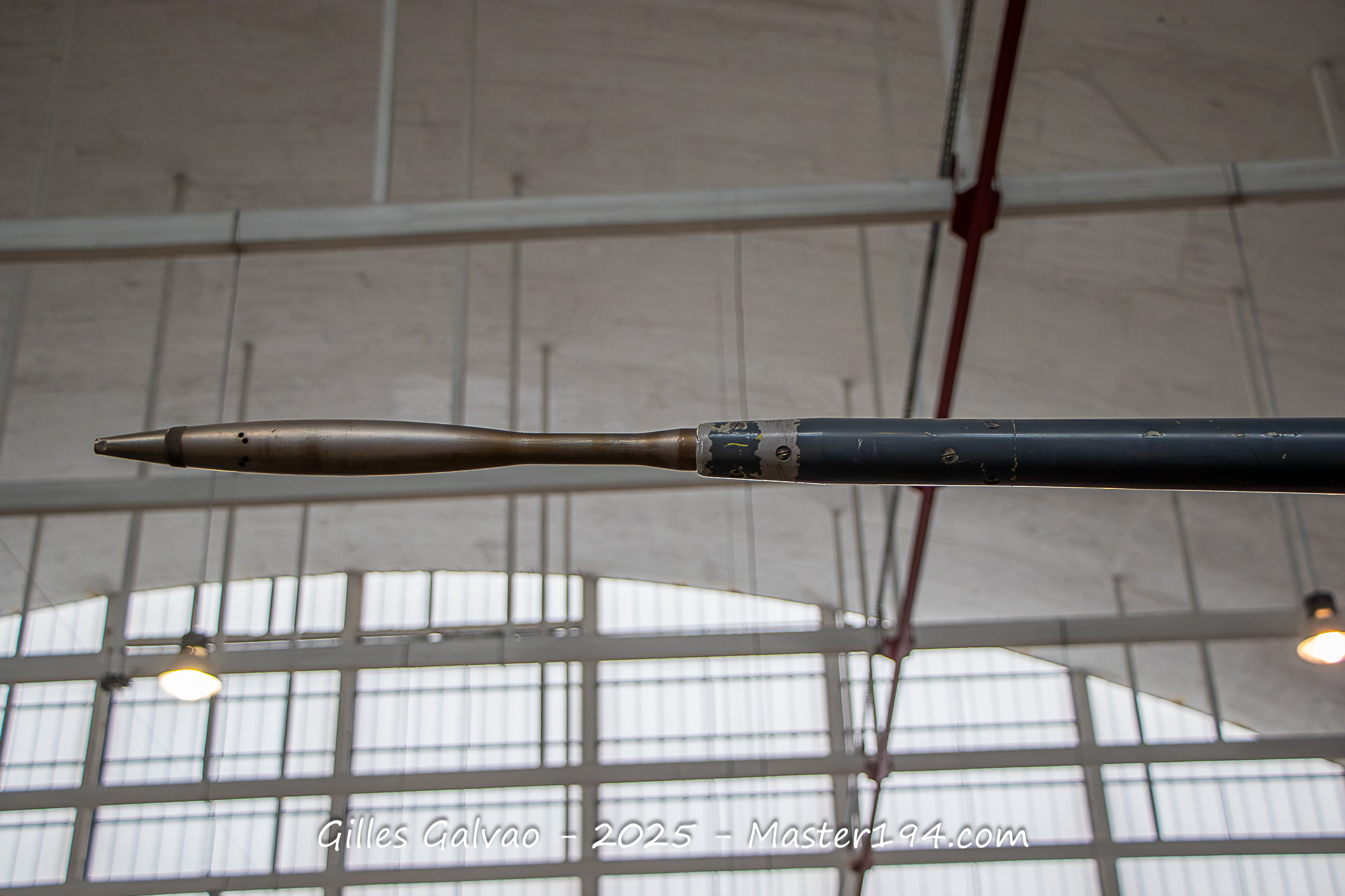
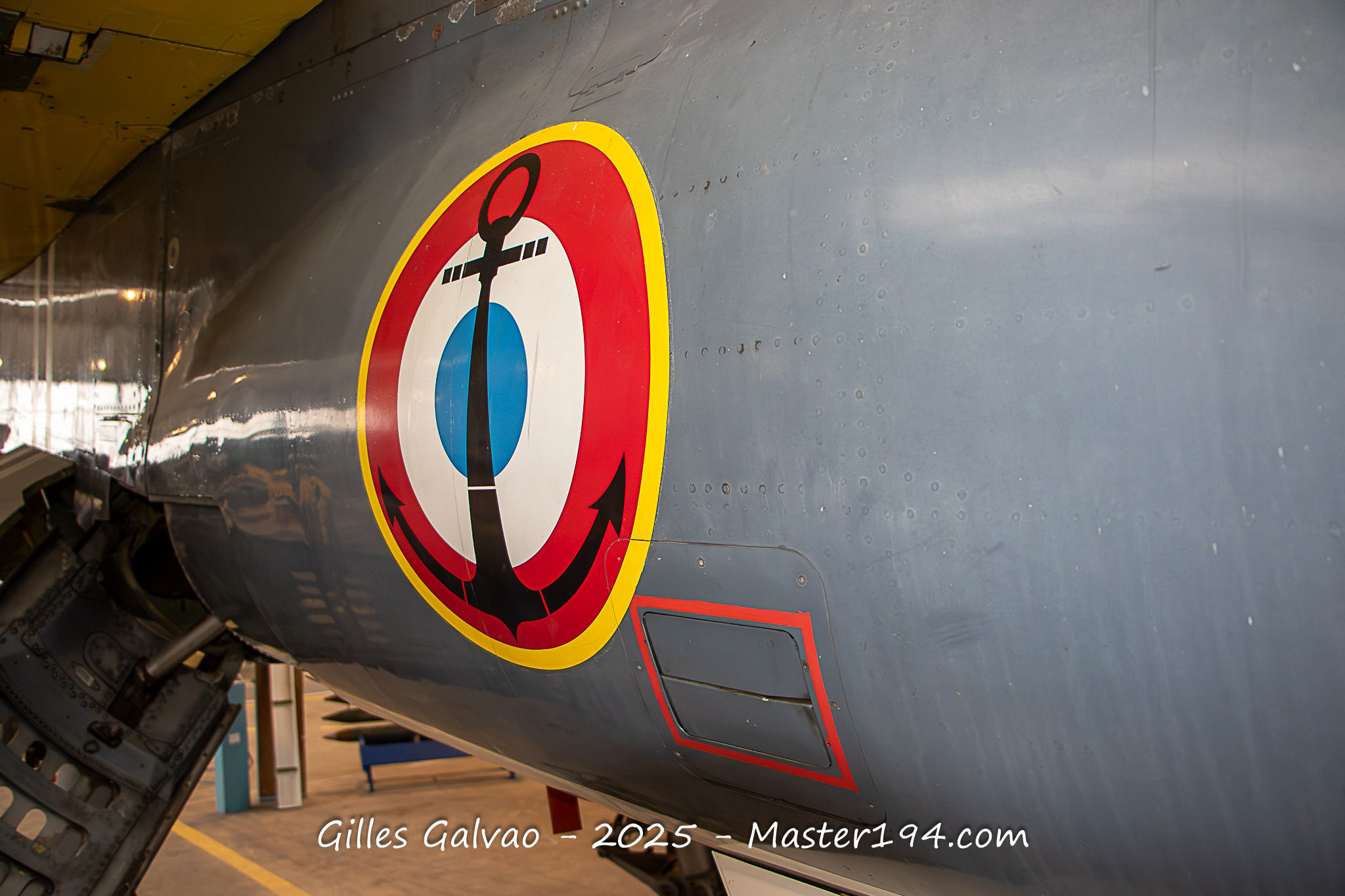
Its present preservation paint scheme directly reflects its final experimental flight-test configuration: the vibrant tracking colors do not depict its carrier-sea-trial phase aboard the Clemenceau, but rather its specialized spin-recovery flight research campaign.
Meanwhile, the prominent heavy-duty arrestor hook—clearly visible on the preserved museum airframe—serves as an enduring reminder of its remarkable naval carrier-borne origins.
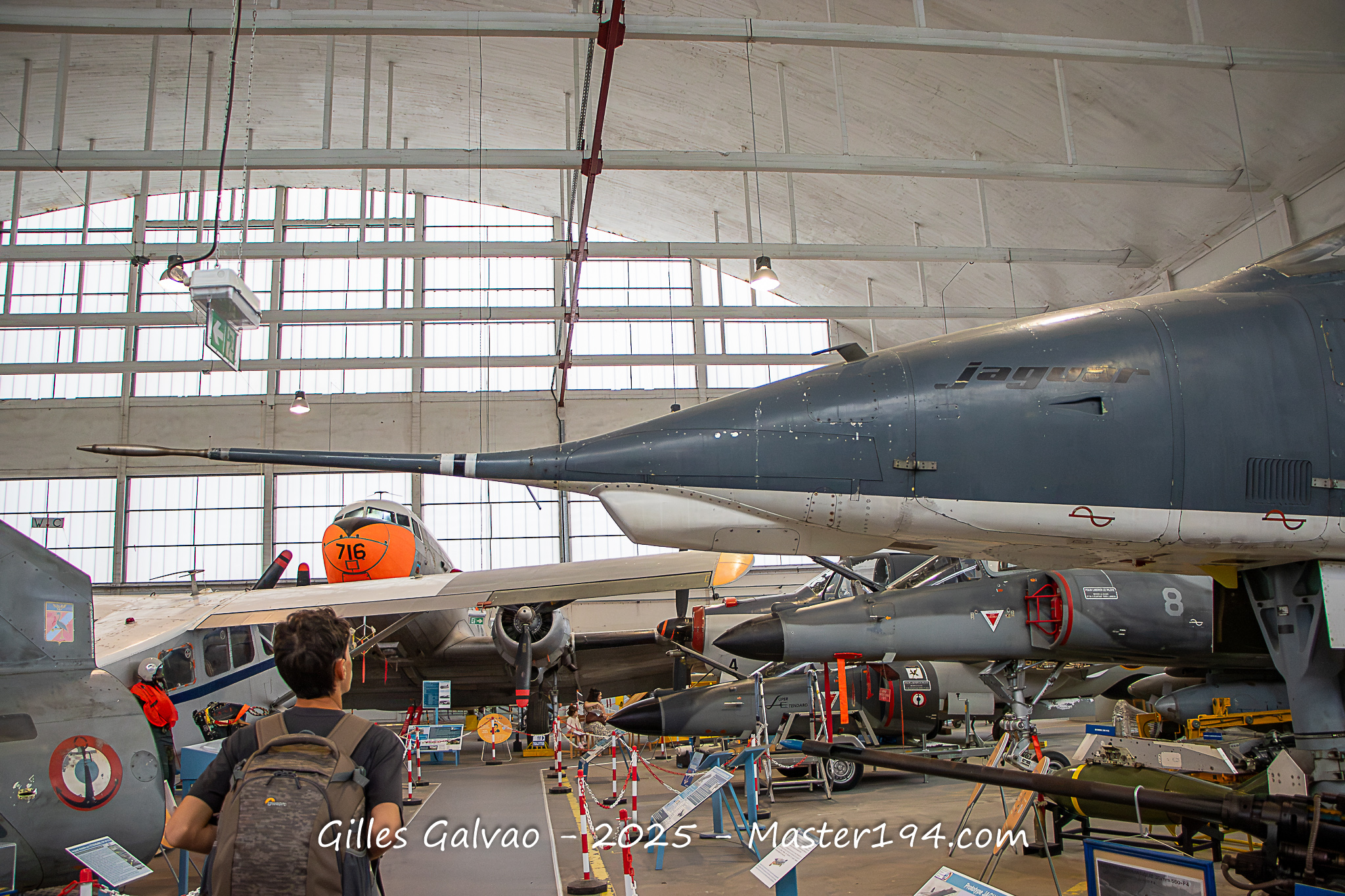
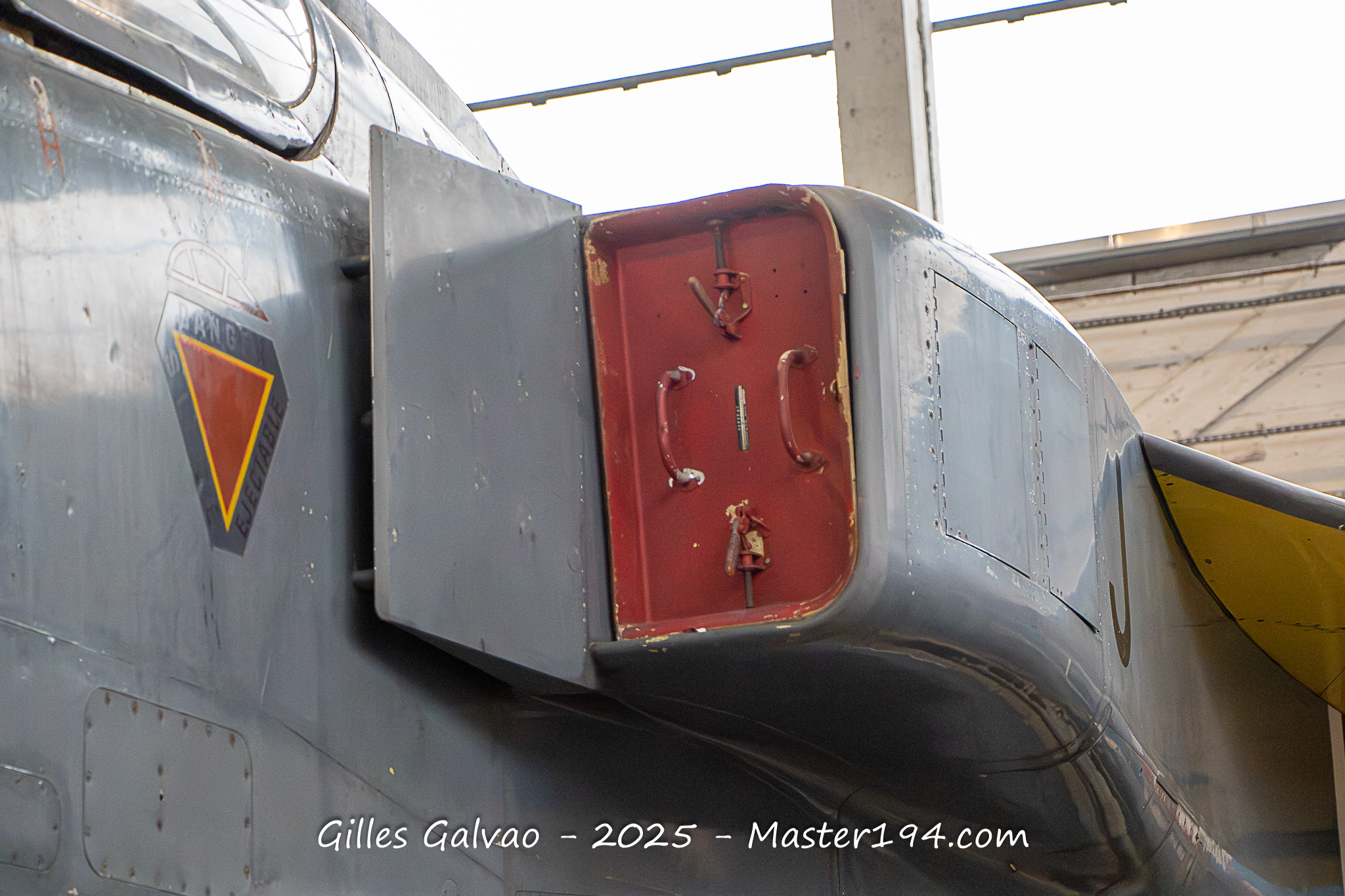
Walkaround
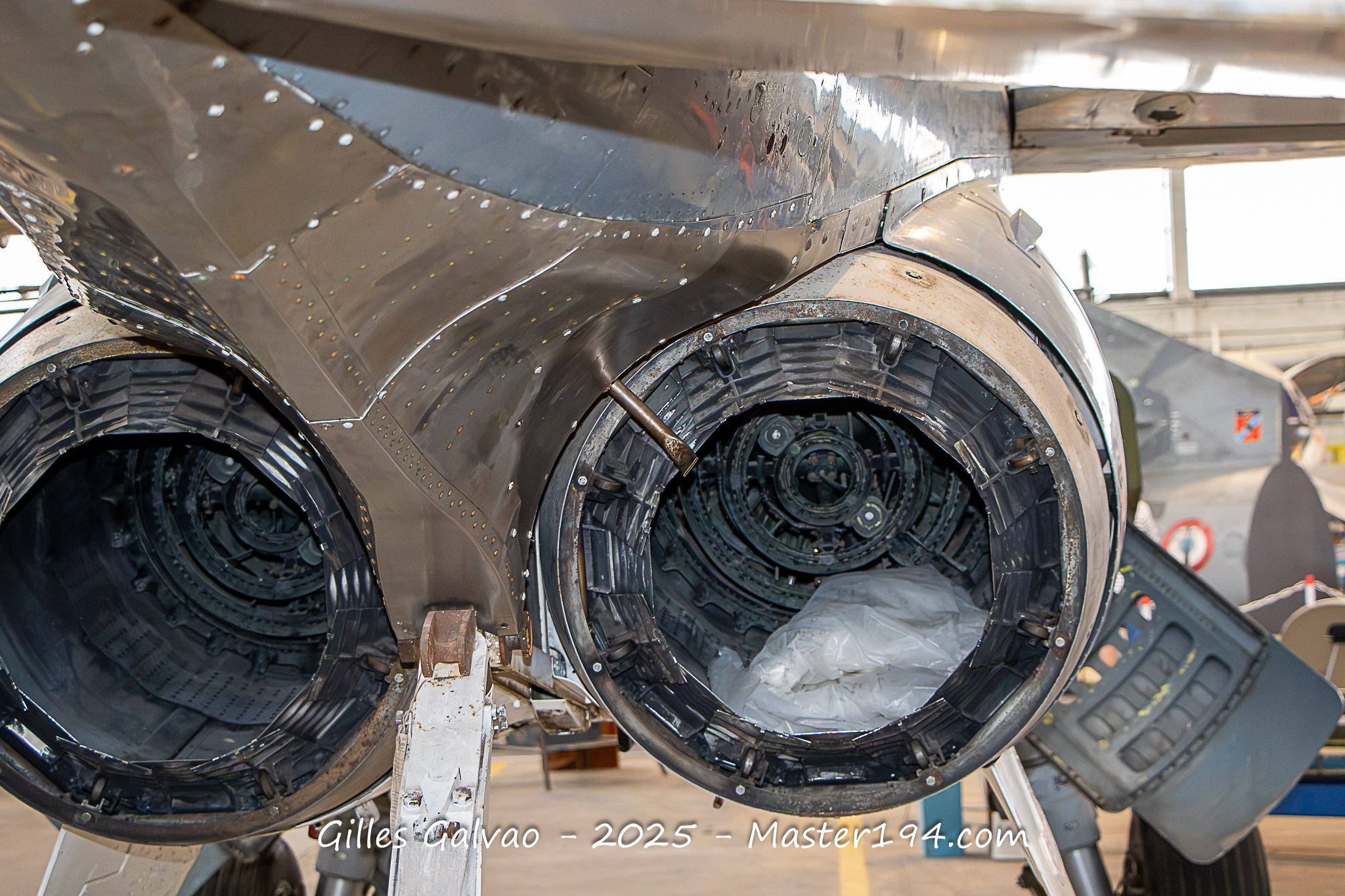
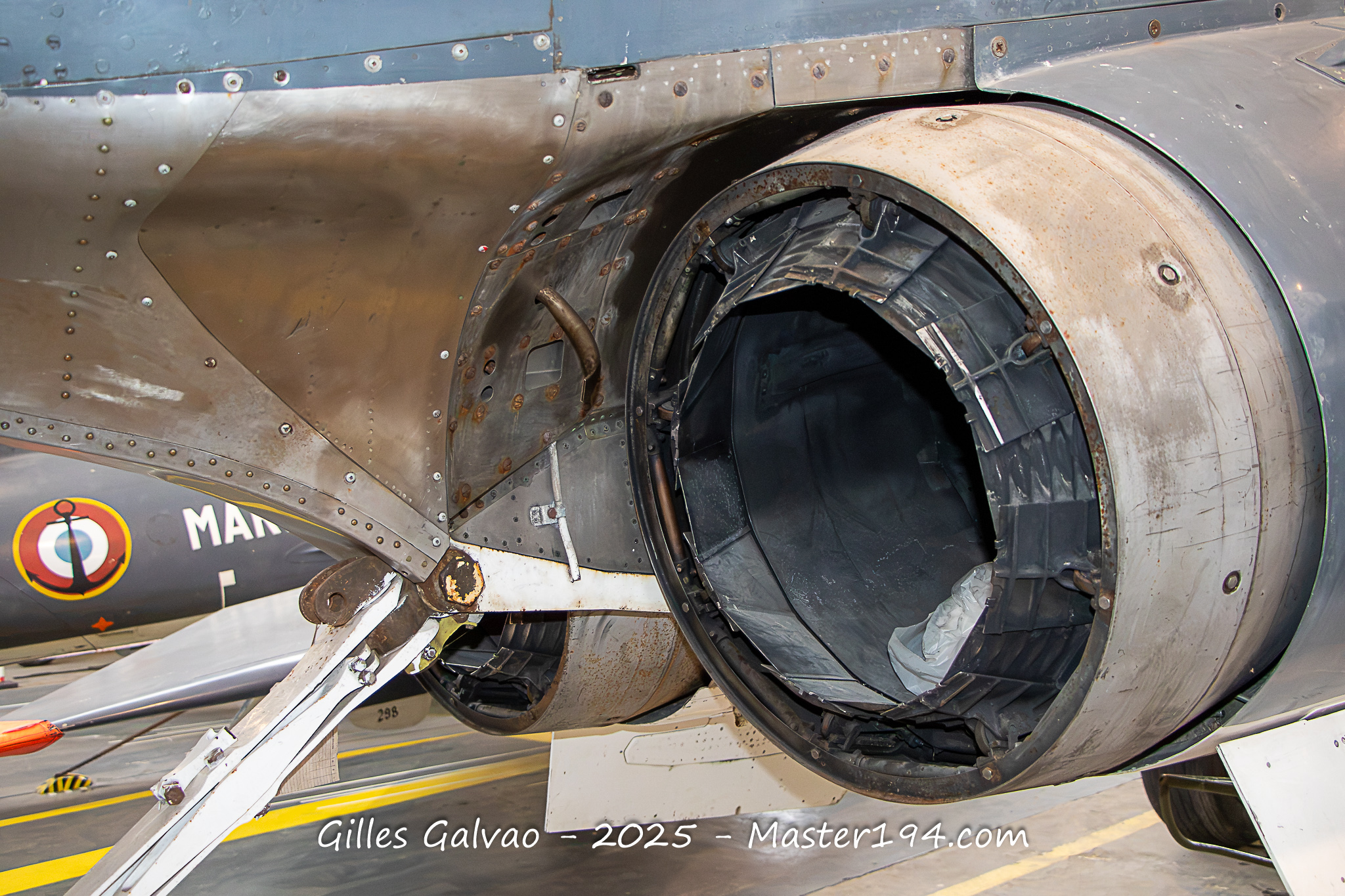
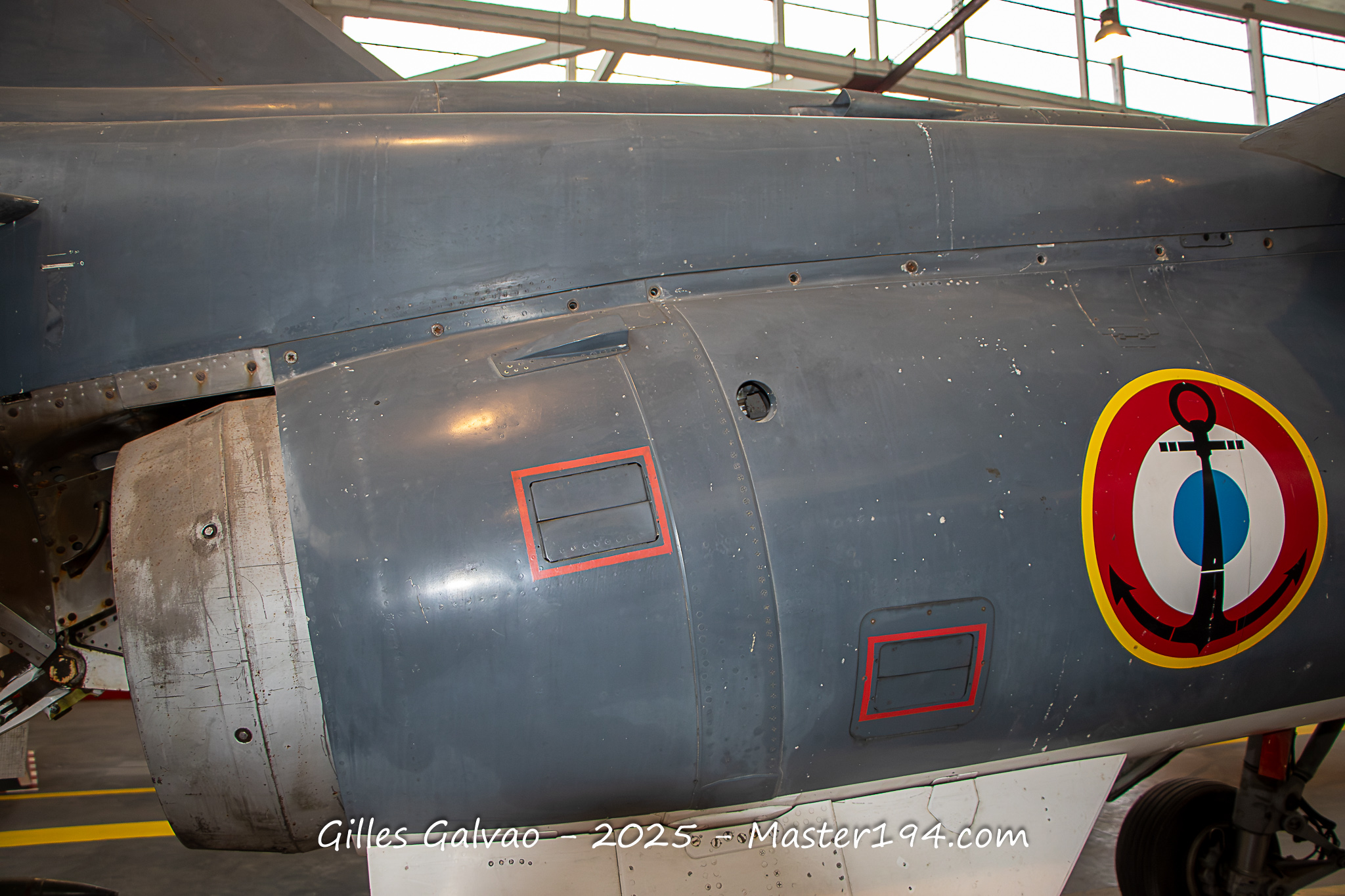
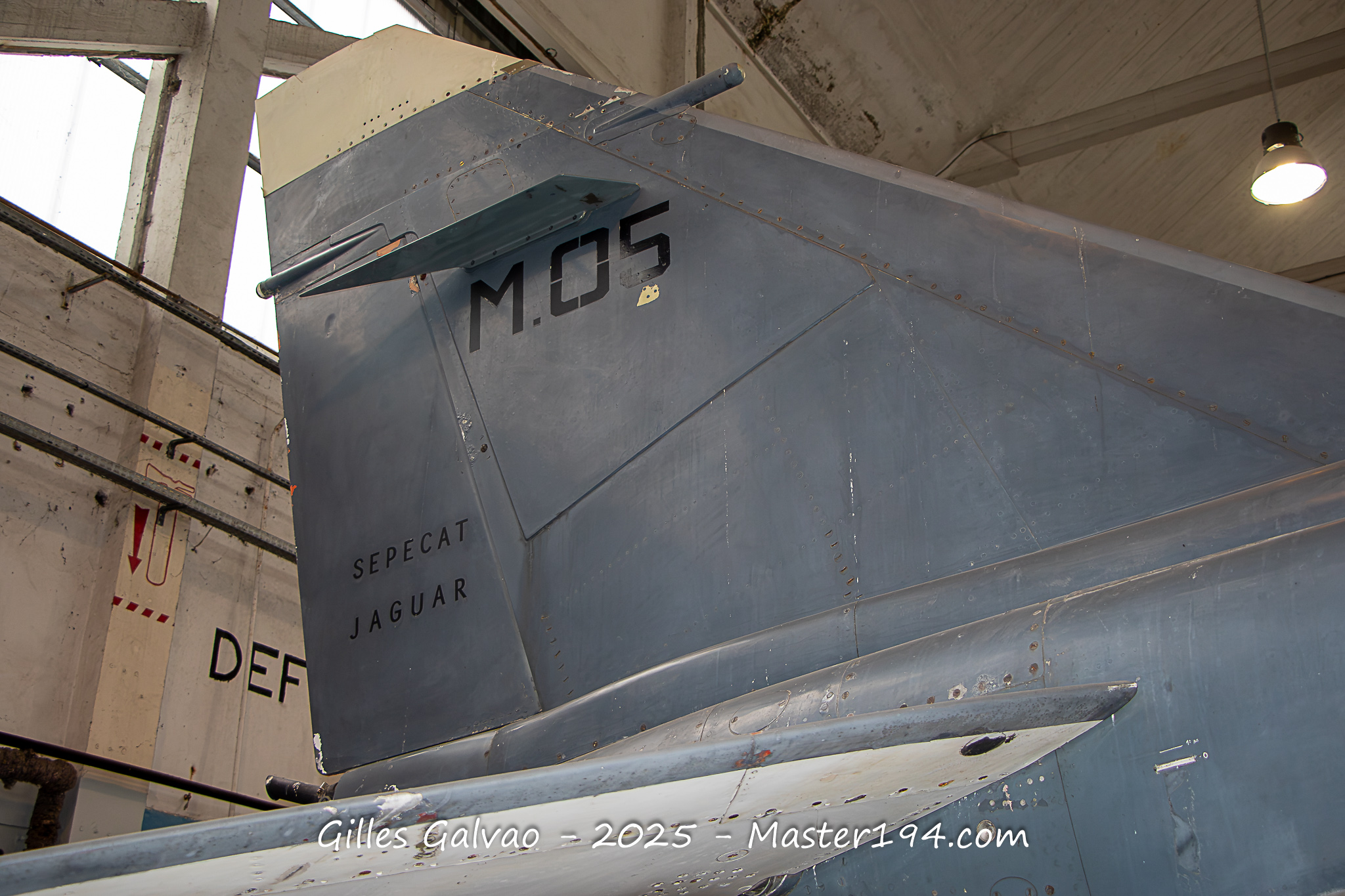
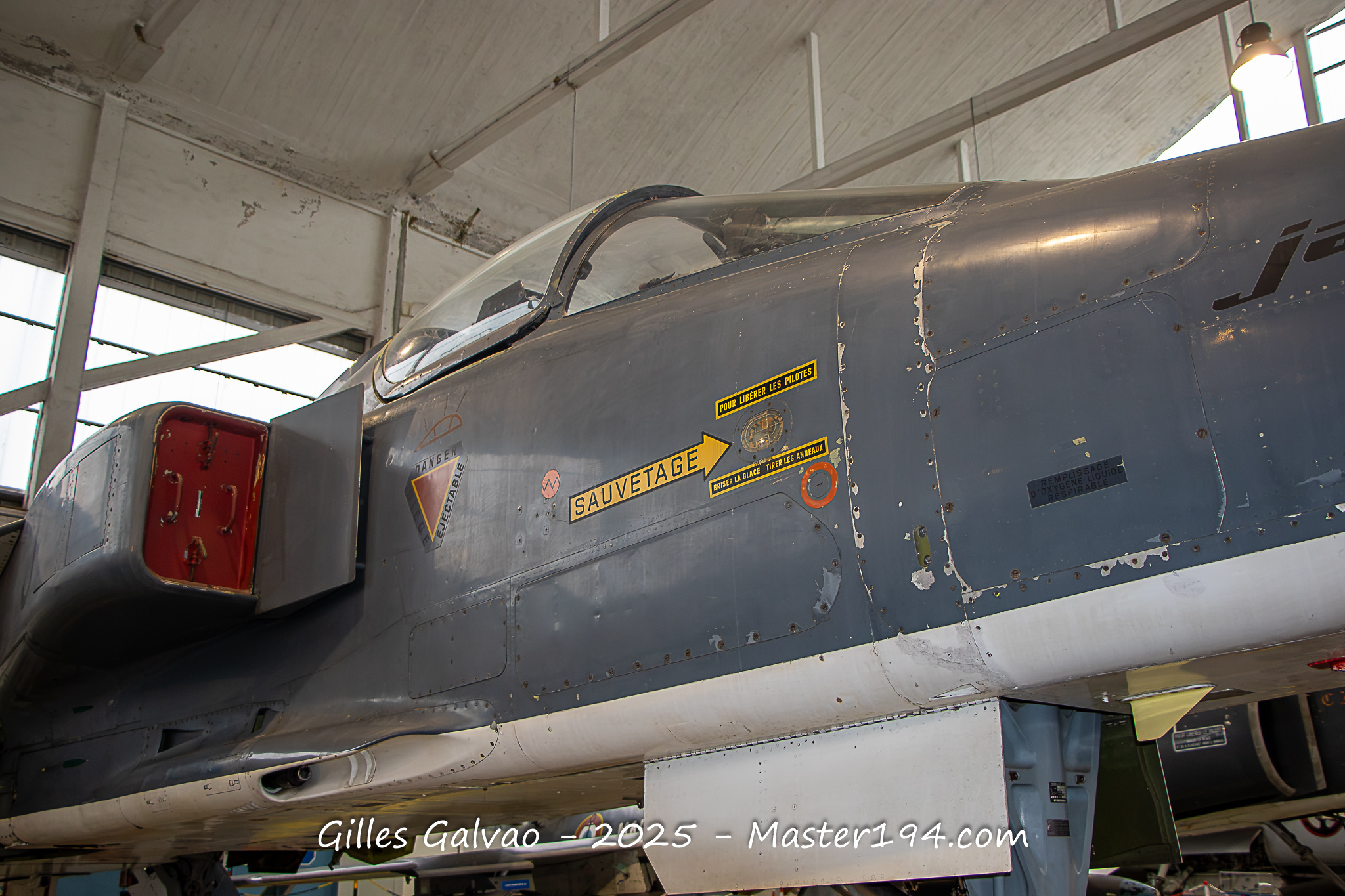
The Jaguar M 05: A Singular Legacy
he Jaguar M 05 never equipped an active operational squadron of the French Naval Aviation (Aéronautique navale), nor did it replace the Étendard IV M fleet aboard the aircraft carriers Clemenceau and Foch.
Yet its trajectory extends far beyond that of an aborted testbed. Over more than six years, this unique airframe enabled engineers and test pilots to rigorously evaluate the navalization of the Anglo-French twin-jet—progressing from simulated land-based carrier recoveries to actual catapult launches and arrested landings at sea. The technical insights gained from these trials directly advanced the broader Jaguar family, notably driving the development of the Continuously Variable Afterburner (CVA) system.
Following the termination of the naval program, the same airframe was reassigned to another high-risk experimental regime: spin-recovery flight research.
The Jaguar M 05 thus stands as a unique witness to the history of the French Jaguar program: an airframe engineered for aircraft carriers, proven under real sea conditions, repurposed as an advanced flight-test bed, and preserved today at Rochefort. A sea cat that never secured a permanent spot on the flight deck, yet played a far more vital role in aerospace history than its single prototype status suggests.

My sincere thanks to JEX and Daniel Piastra for providing additional photographs, as well as to the entire ANAMAN team (Musée de l’Aéronautique Navale de Rochefort) for their customary and outstanding hospitality!