
 by
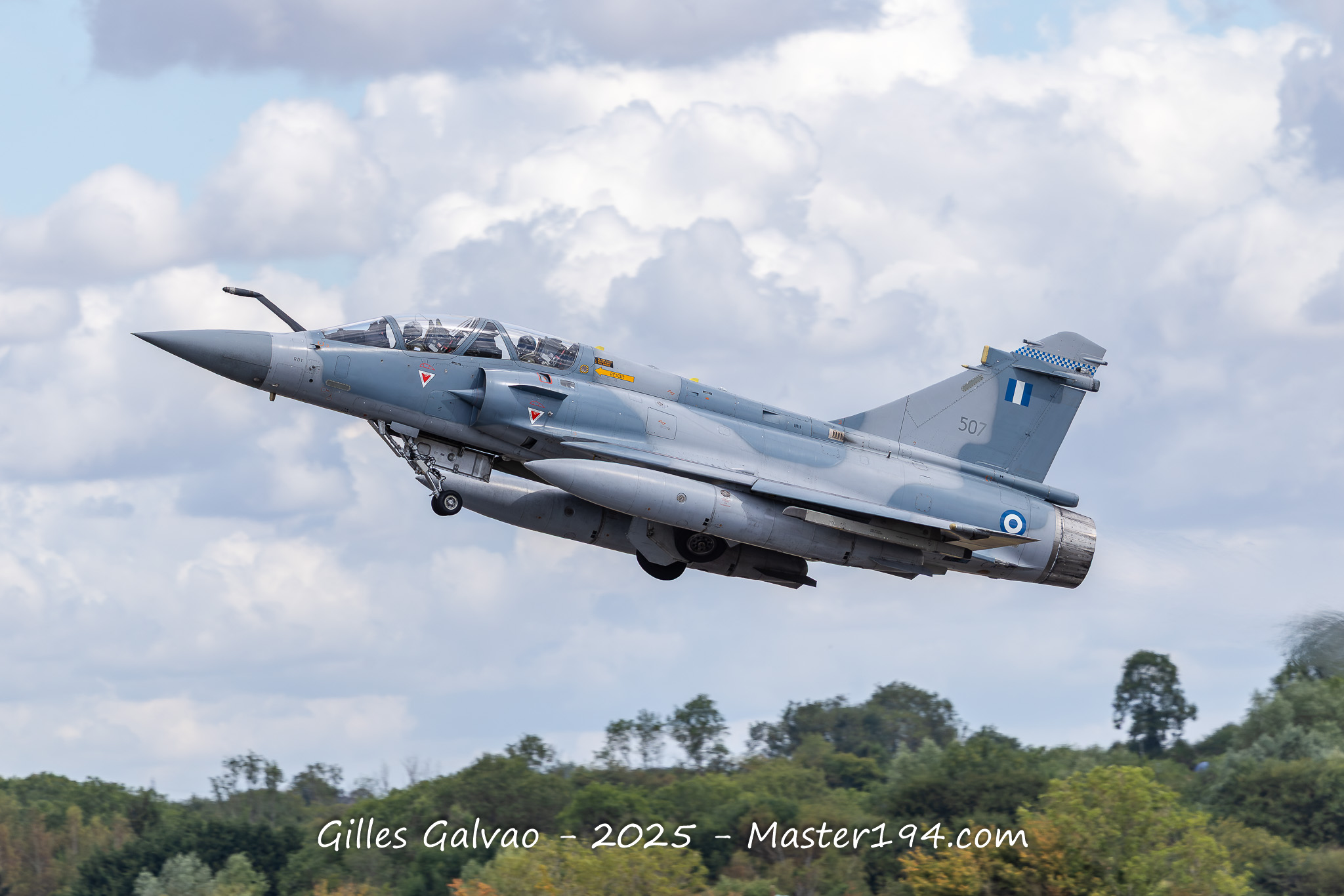
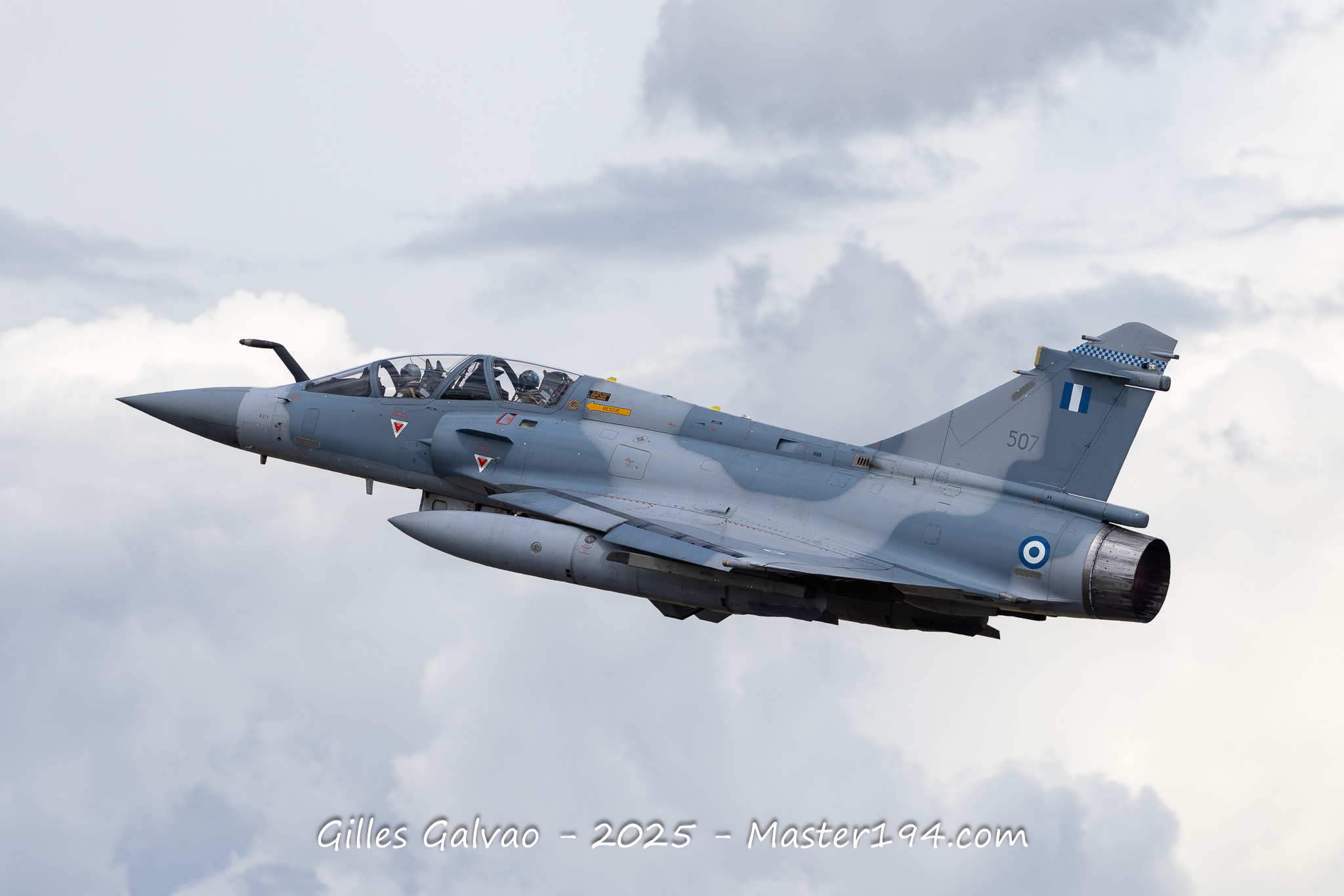
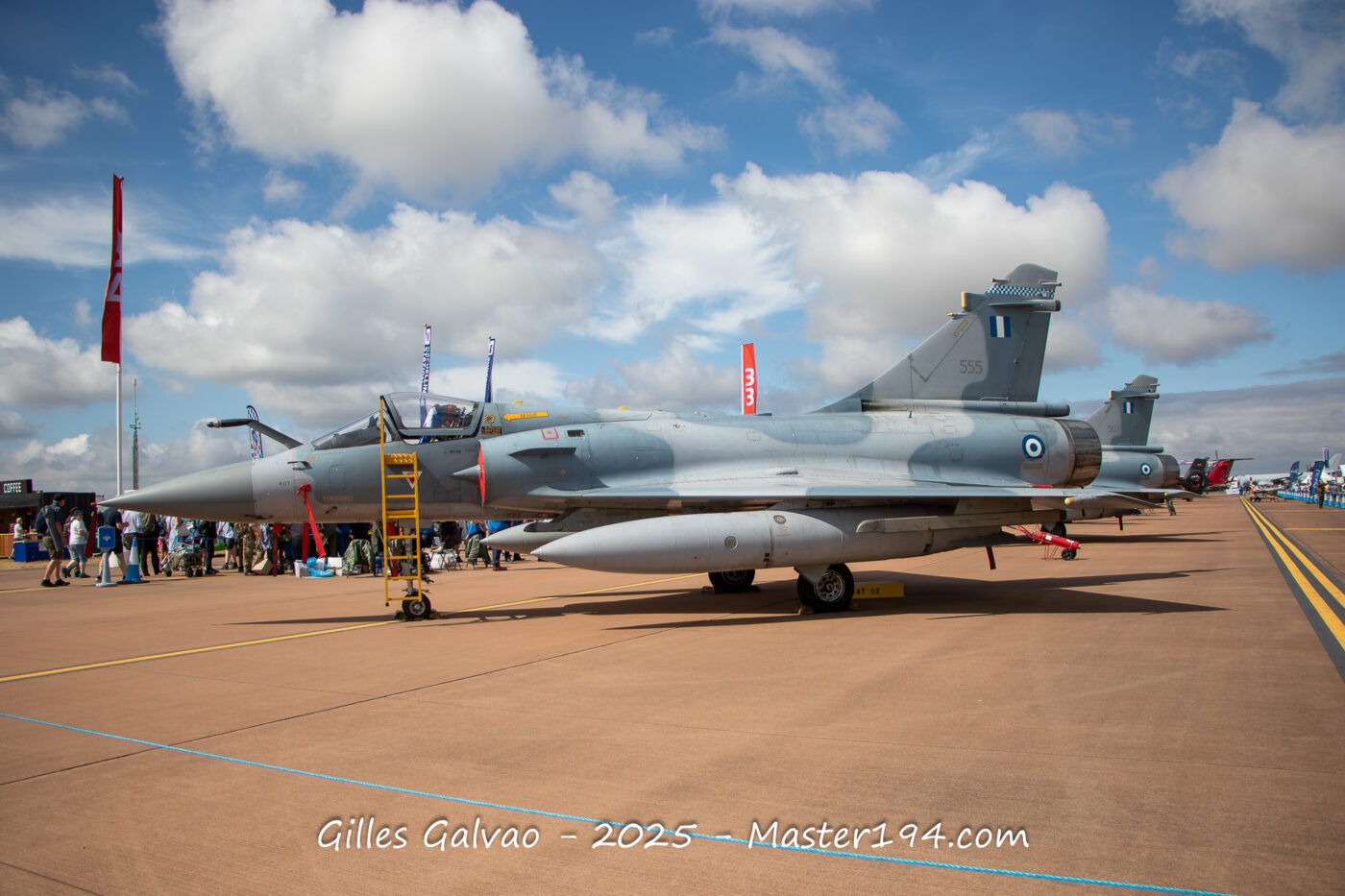
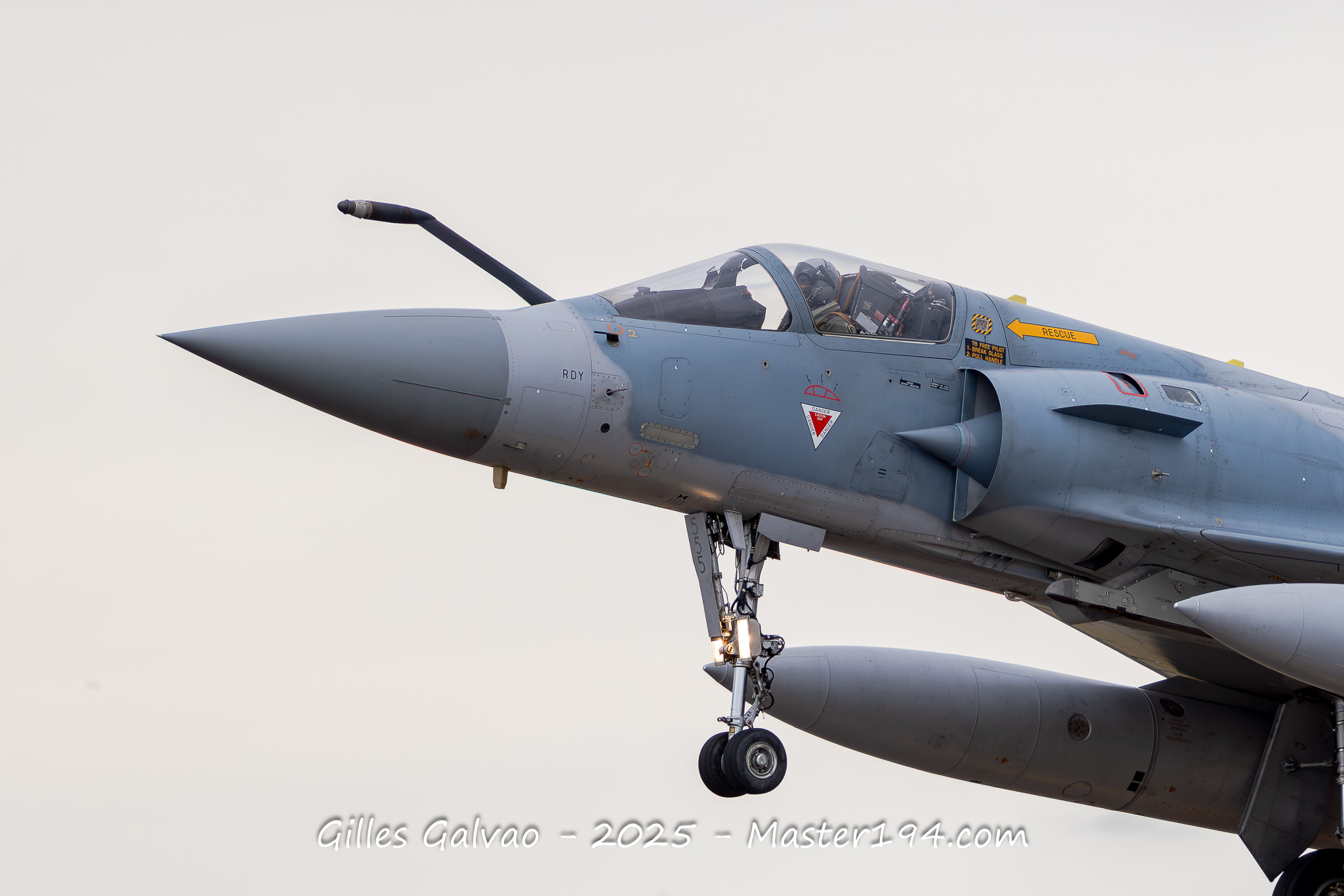
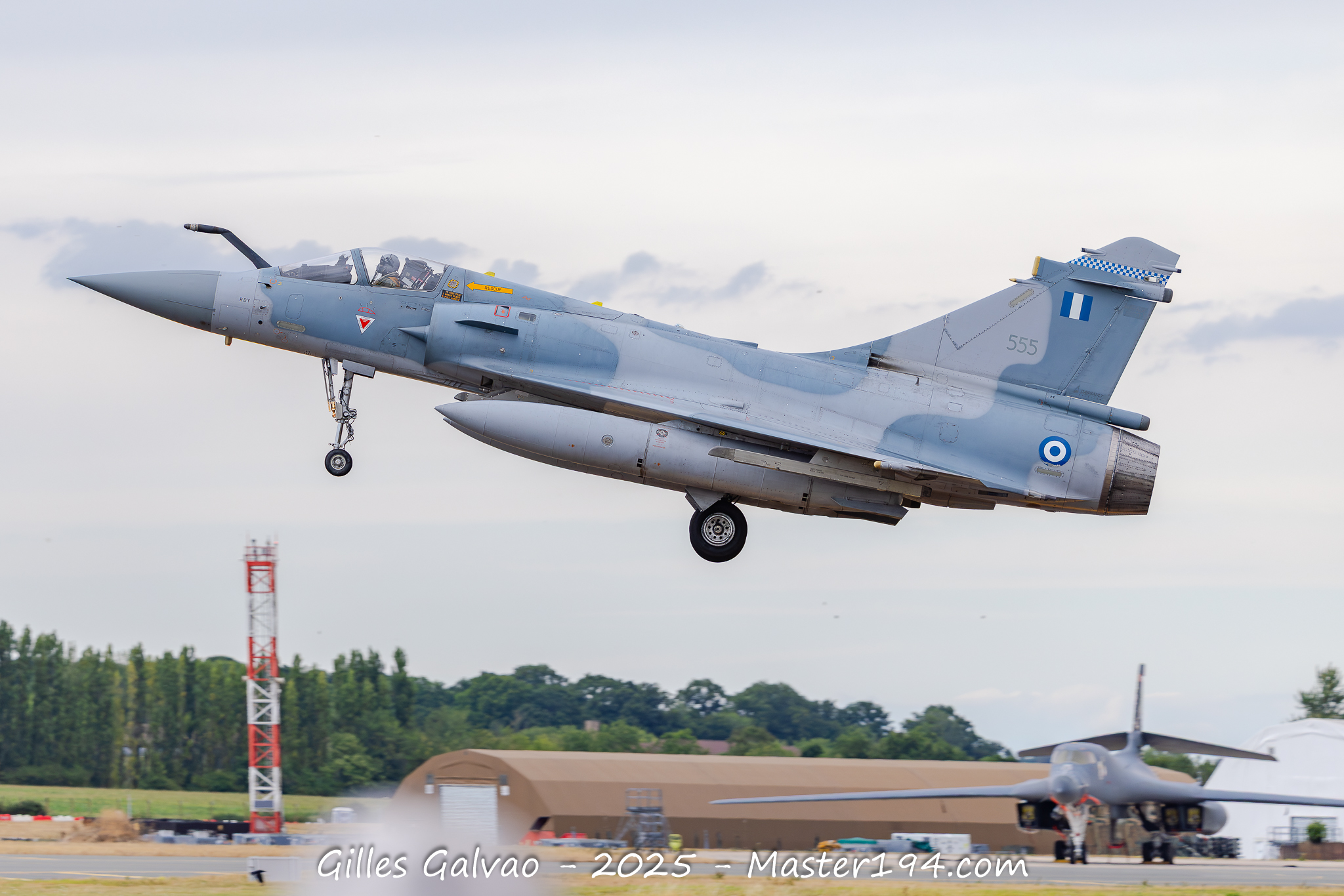
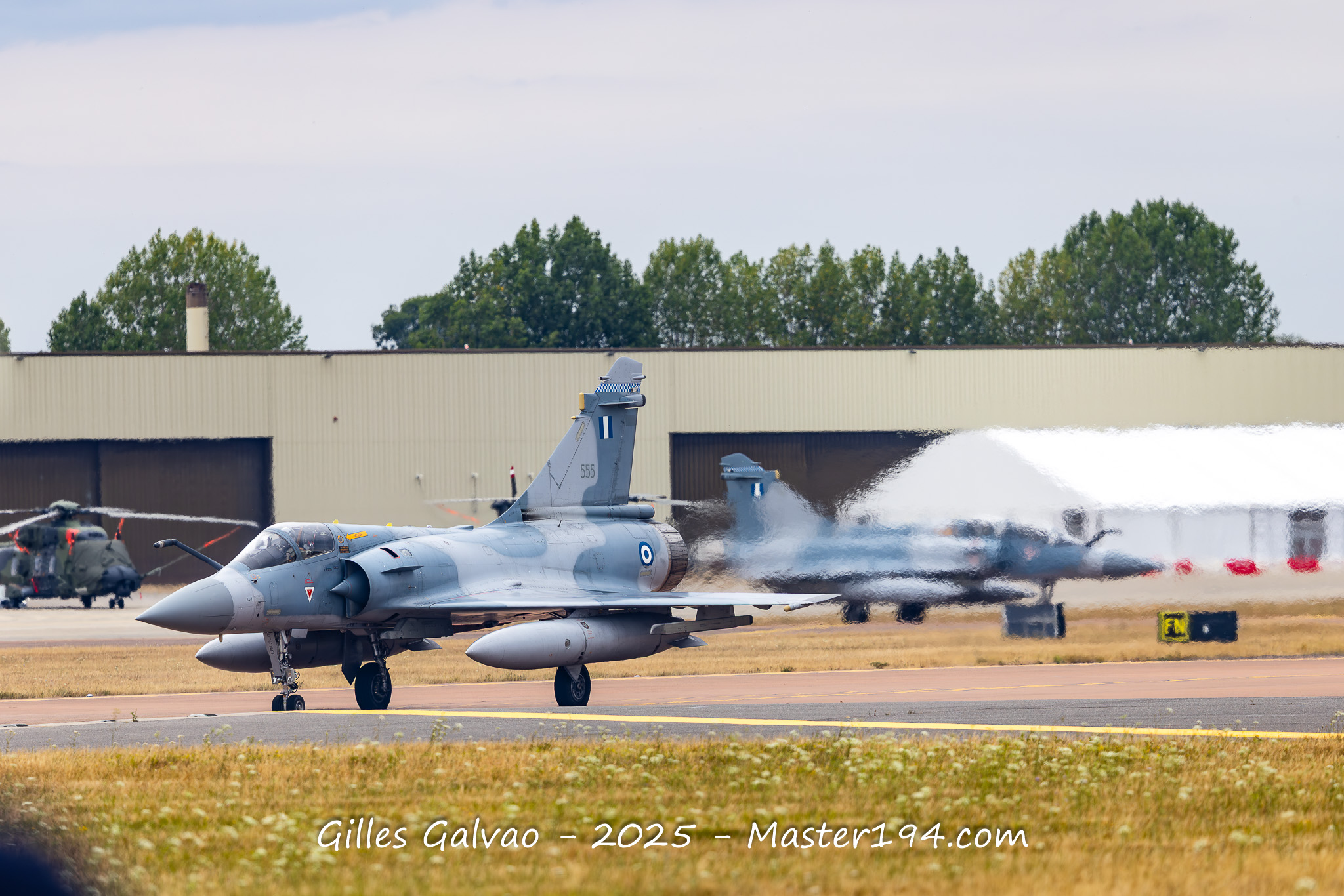
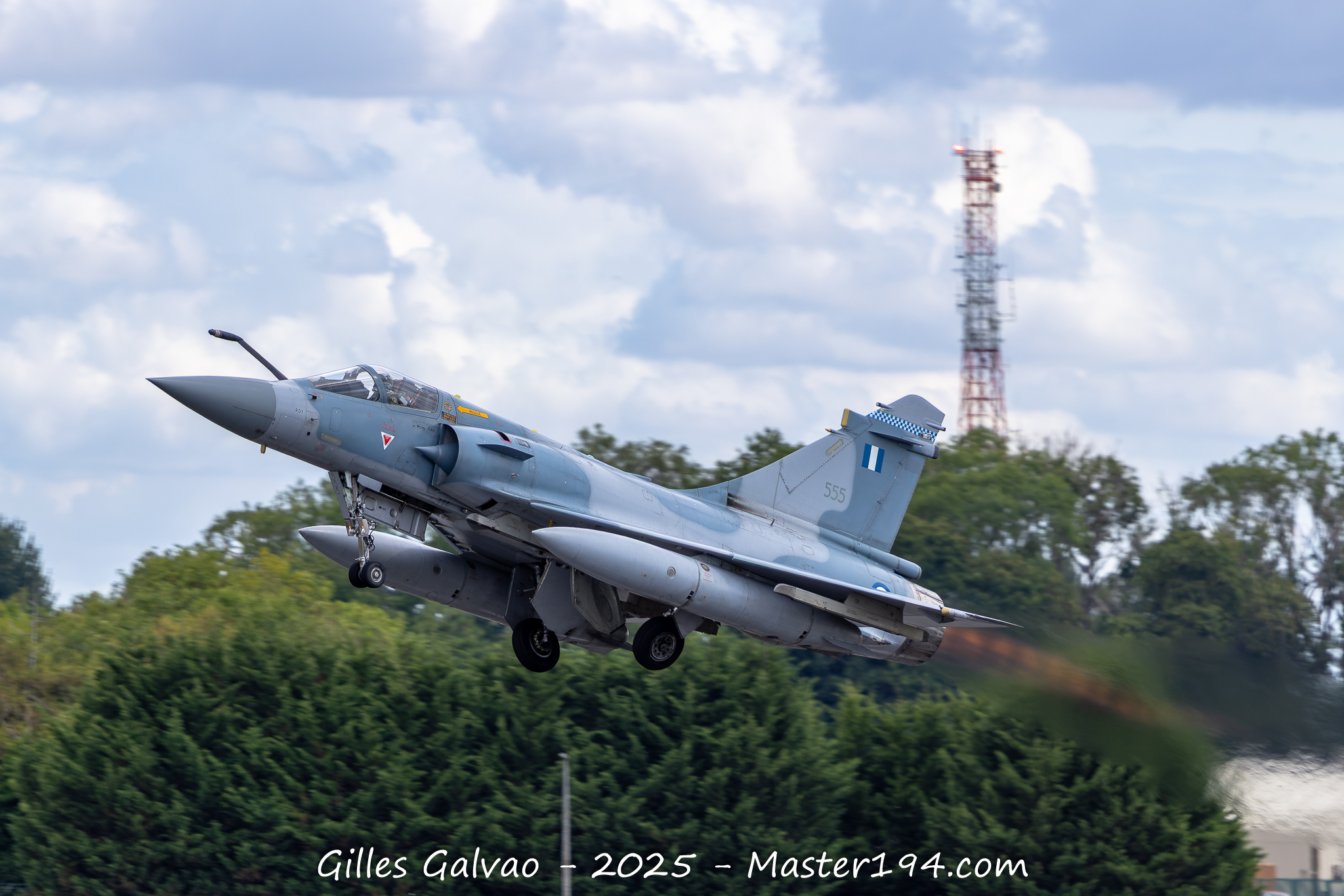
Among all export users of the Dassault Mirage 2000, Greece holds a special place. Few countries have operated as many variants of the famous French fighter, while developing around it a doctrine that blends interception, maritime strike, and strategic attack. At RIAT 2025, Greece presented two aircraft on static display: Mirage 2000-5EG number 555 and Mirage 2000-5BG number 507. This was, of course, a perfect opportunity to take photos, but also to look back at the unique history of the HAF’s Mirage 2000 fleet.
Between brand-new aircraft, successive modernizations, and retrofits to the Mirage 2000-5 Mk2 standard, the Hellenic Air Force’s Mirages have marked more than three decades of operations over the Aegean Sea.
The “Talos” Program
In the early 1980s, Greece sought to rapidly modernize its fighter fleet to maintain the strategic balance against Turkey. Athens then launched the “Talos” program, which led to an order for Mirage 2000s from Dassault in 1985.
The contract covered:
- 36 single-seat Mirage 2000EGs;
- 4 two-seat Mirage 2000BGs (plus an option for 4 additional aircraft).
The aircraft were delivered between 1988 and 1989.
These Mirages already differed significantly from the French Mirage 2000Cs. While they retained the Thomson-CSF RDM radar and the SNECMA M53-P2 engine, they also received an ICMS electronic warfare suite that was particularly advanced for its time.
In terms of armament, the aircraft initially carried Magic 2 missiles for close combat and the Super 530F, followed by the Super 530D introduced later during modernizations.
However, the major Greek specificity lay above all in the integration of the AM39 Exocet anti-ship missile. Greece thus became one of the few Mirage 2000 operators to develop a genuine maritime strike doctrine around the famous French missile, against a backdrop of permanent tensions in the Aegean Sea.
The Modernization of the Mirage 2000EG/BG
During the 1990s, the Greek fleet benefited from a major modernization program carried out alongside Dassault, Thomson-CSF, and the Hellenic Aerospace Industry (HAI).
While some sources also use the term ‘Talos’ to refer to this entire upgrade program, the HAF clearly attributes it to the initial acquisition contract signed in 1985:
‘Mirage 2000 entered service with the HAF in 1988, when 40 aircraft were controversially purchased under the “Talos” contract.’ (source : https://www.haf.gr/en/history/historical-aircraft/mirage-2000/ )
The aircraft received several upgrades:
- Upgraded RDM radar;
- Improved electronic warfare capabilities;
- Expanded compatibility with the Super 530D;
- Optimized Exocet anti-ship capabilities.
Following this modernization, the aircraft were redesignated as:
- Mirage 2000EGM;
- Mirage 2000BGM.
These upgraded versions then became true specialists in air defense and maritime strike missions
The Mirage 2000-5 Mk2 Turning Point
At the turn of the 2000s, Athens decided to deeply modernize its Mirage fleet. In August 2000, a contract was signed for the acquisition of the Mirage 2000-5 Mk2 standard.
The order was structured around two parts:
- 15 brand-new aircraft built by Dassault: 10 single-seaters and 5 two-seaters;
- 10 monoplaces ;
- 5 biplaces ;
- The retrofit of 10 existing Mirage 2000EGM/BGM airframes to the -5 Mk2 standard.
The Greek fleet then adopted a highly unique configuration, mixing brand-new airframes and retrofitted aircraft under the exact same operational standard.
In the -5 Mk2 standard delivered by Dassault, the Greek two-seat Mirage 2000s retained all the capabilities of the single-seaters, with the difference being essentially limited to mission management and workload distribution.

A Particularly Comprehensive Standard
The Greek Mirage 2000-5 Mk2s are among the most advanced versions of the Mirage 2000 ever developed.
The aircraft notably received:
- The RDY-2 multi-target radar;
- A fully modernized “glass” cockpit with color displays;
- A Totem 3000 inertial navigation system;
- An ICMS Mk3 electronic warfare suite;
- A tactical data link;
- A new mission computer.
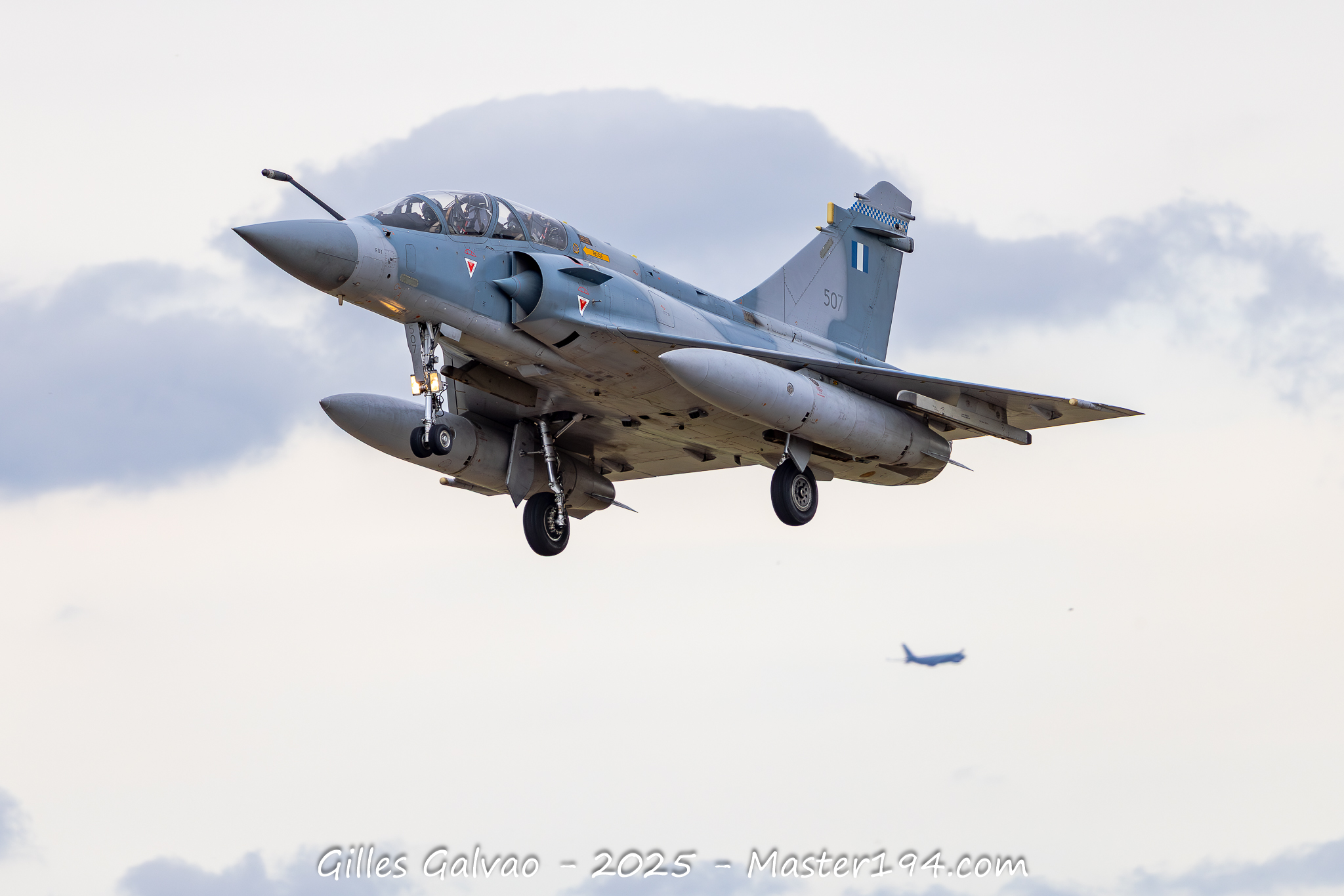
The armament also underwent a profound evolution. The older Super 530s were phased out in favor of MICA EM (radar-guided) and MICA IR (infrared-guided) missiles, offering significantly superior BVR (Beyond Visual Range) combat capabilities.
Most importantly, the Greek Mirages gained the capability to carry the SCALP-EG cruise missile, providing Greece with a genuine strategic deep-strike capability.
The aircraft also retained their AM39 Exocet carrying capability, making the Greek Mirage 2000-5 Mk2 a remarkably versatile multirole platform.

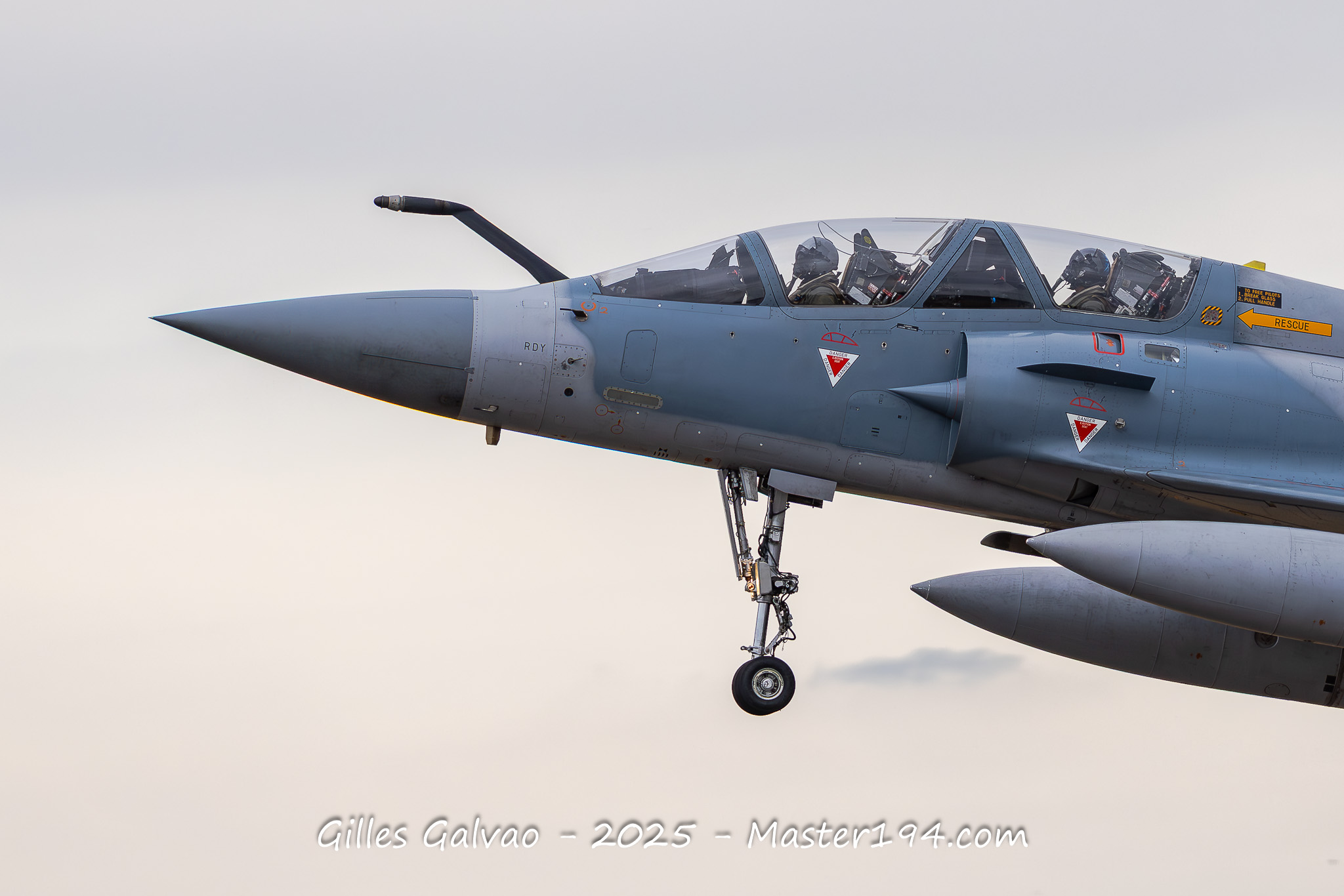
Greek Mirages Today
With the recent arrival of the Rafale F3R within the Polemikí Aeroporía, the older Mirage 2000EGM/BGM airframes still operating at the RDM standard were progressively retired from service starting in 2021–2022.
In contrast, the Mirage 2000-5 Mk2s remain fully operational and continue to fly air defense missions alongside Greece’s Rafales and F-16s.
This transition perfectly illustrates the privileged relationship between Greece and Dassault Aviation. From the Mirage F1CG to the Rafale F3R, including every iteration of the Mirage 2000, the Greek fighter fleet has long stood as one of the most loyal operators of French combat aircraft.
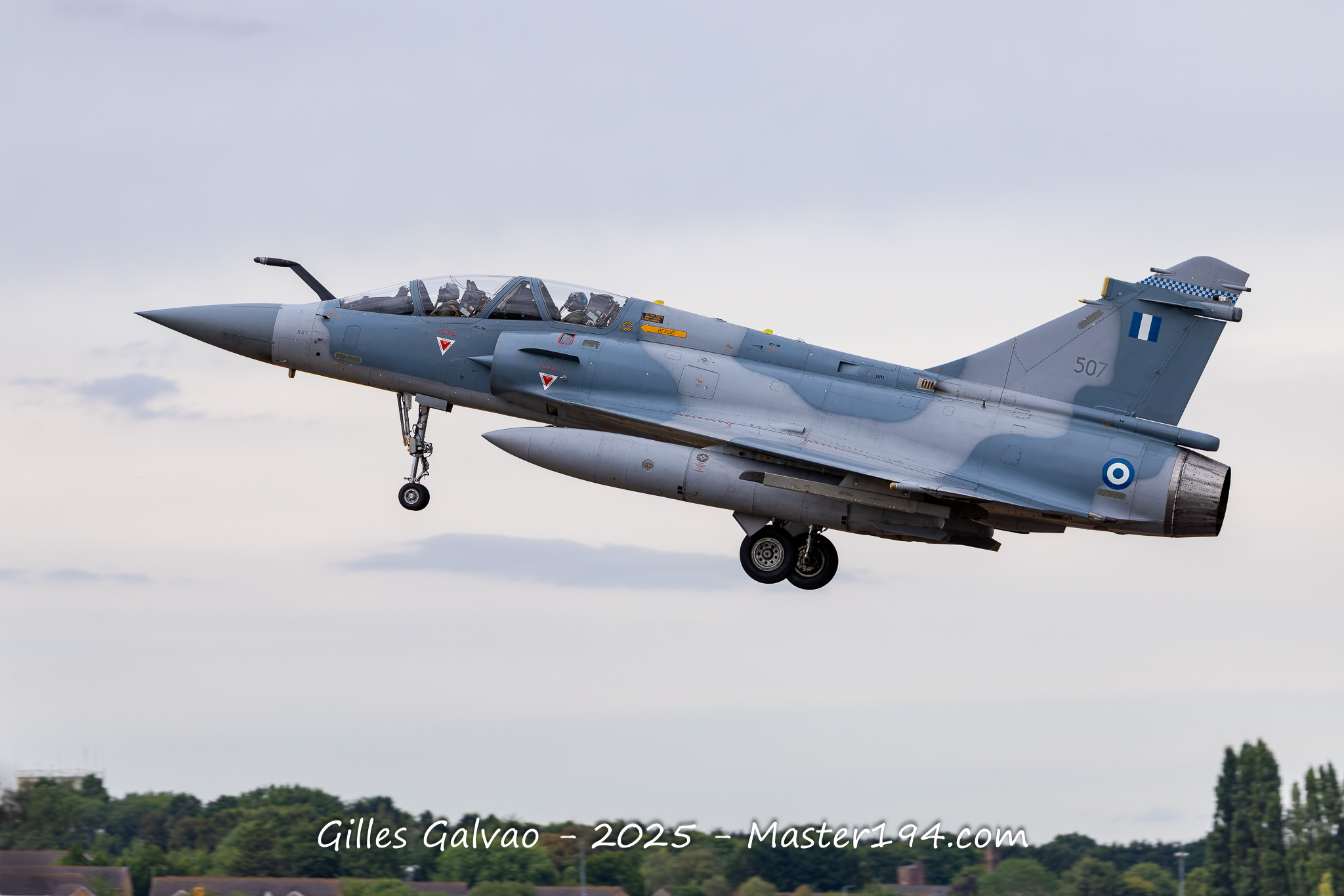
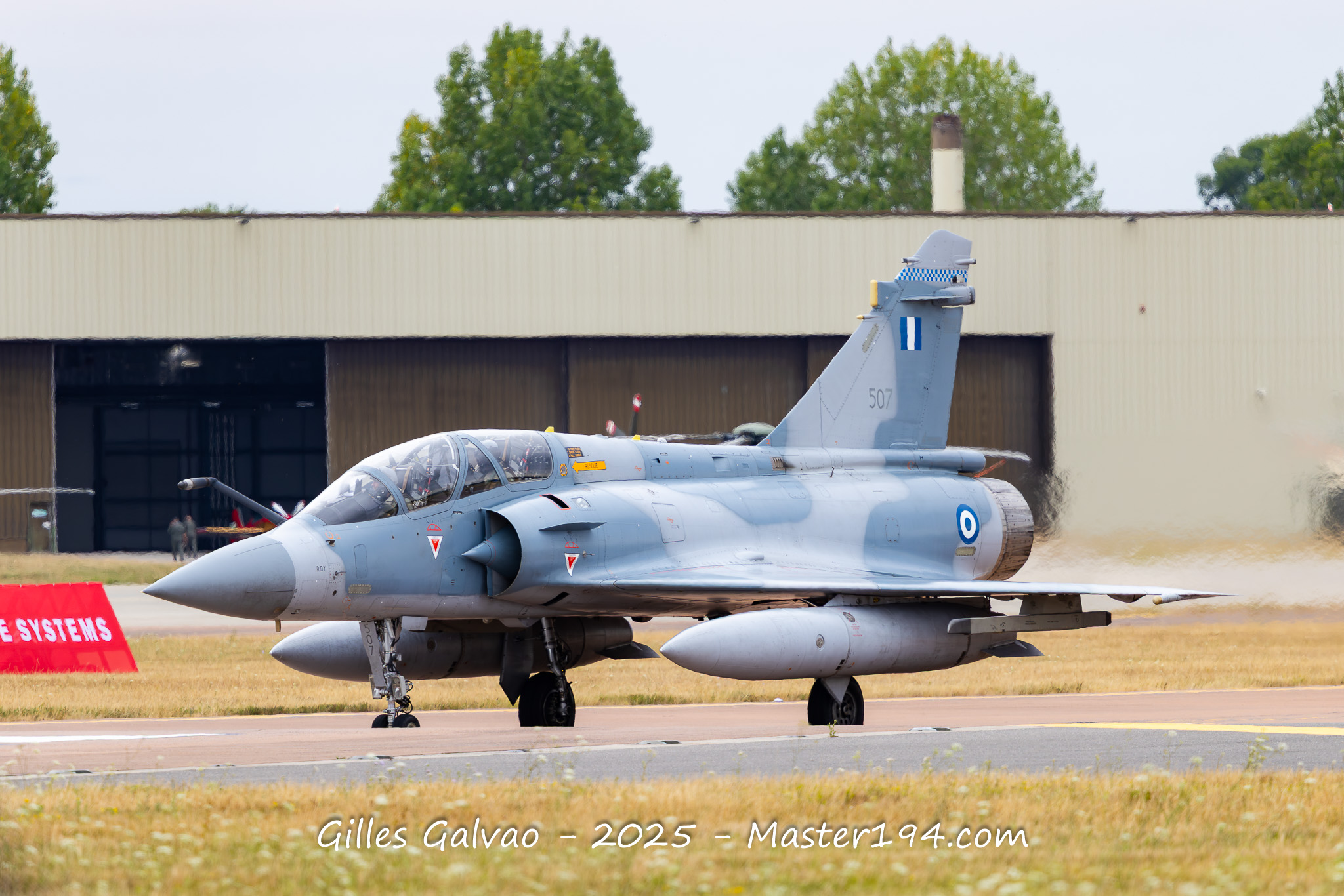
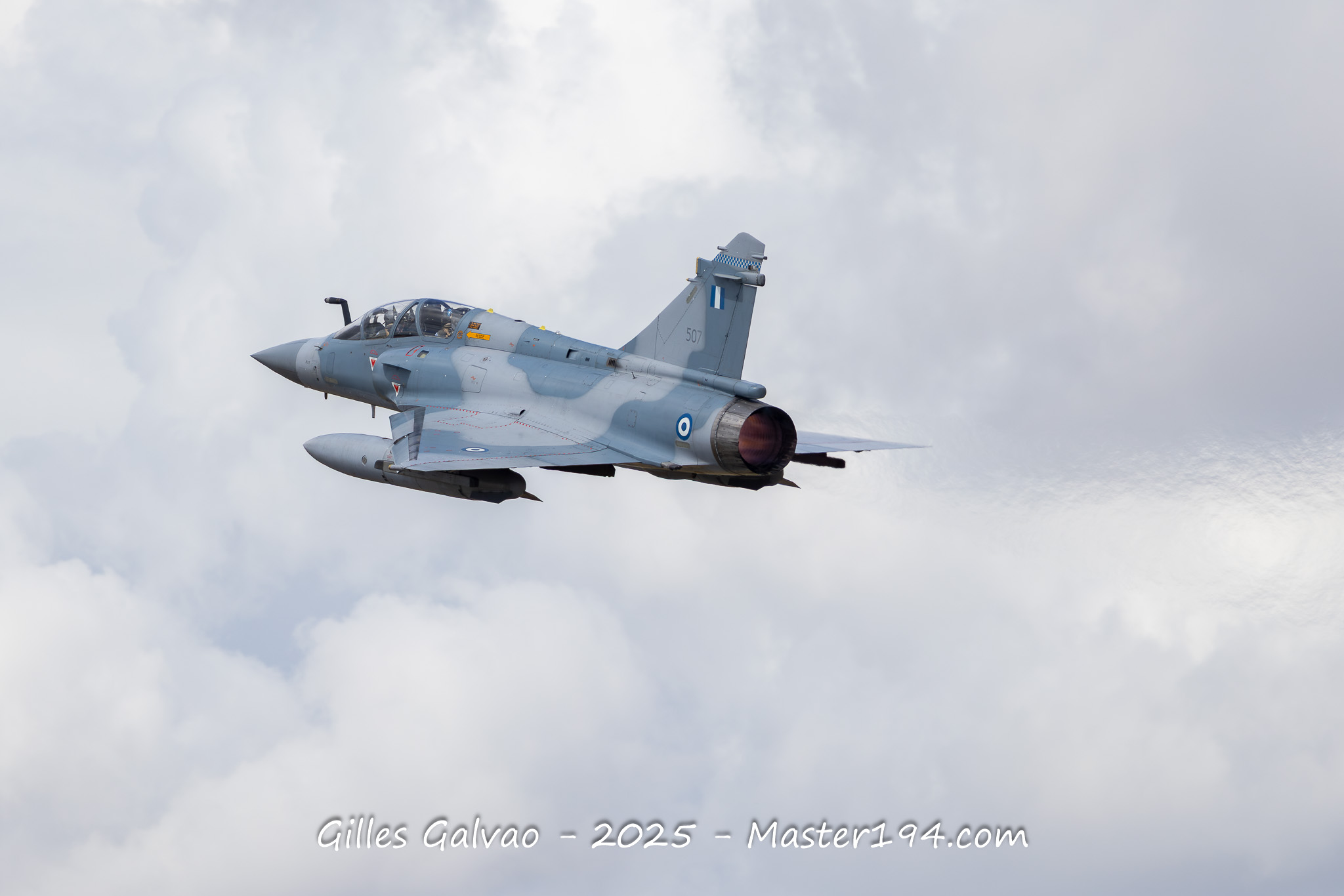
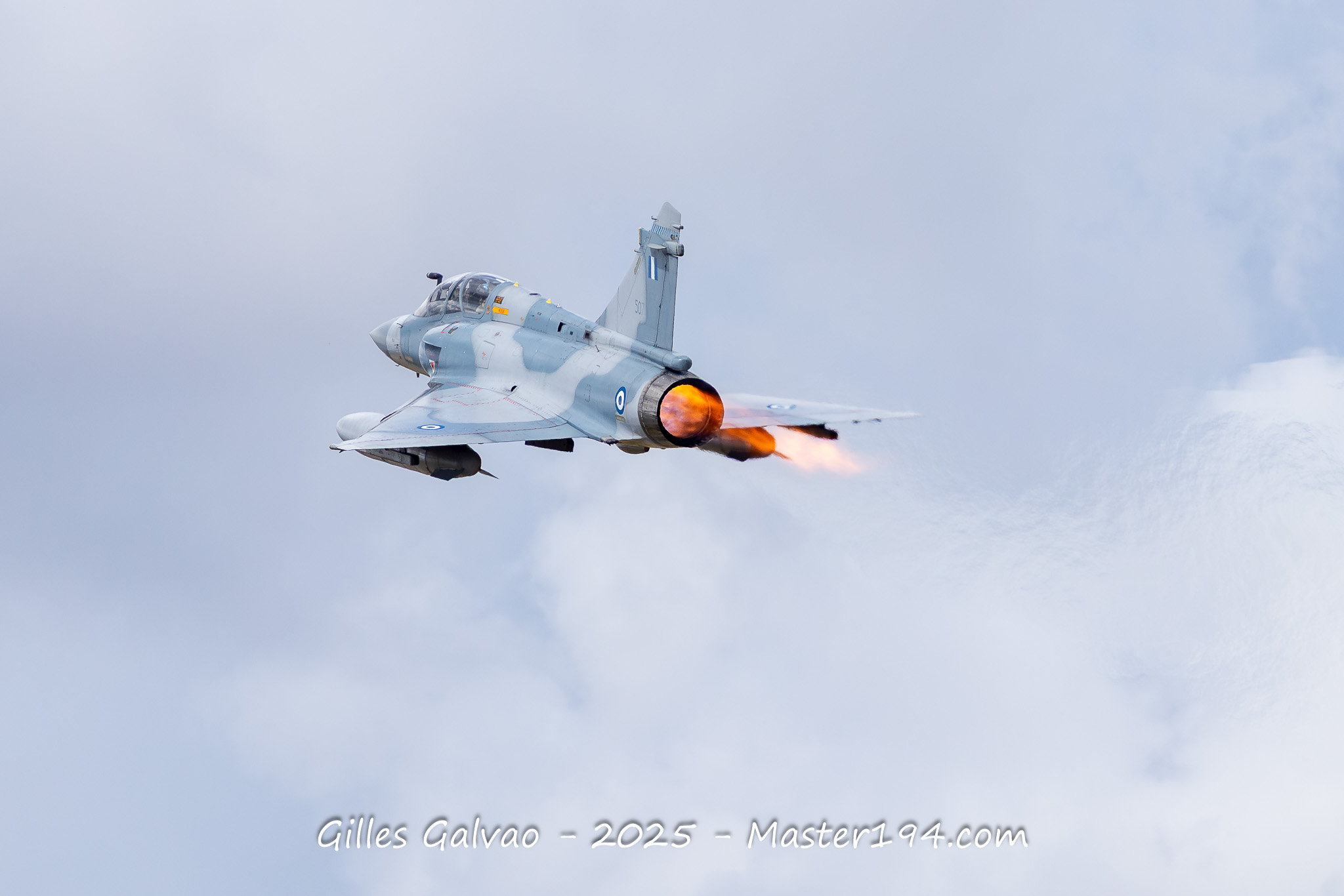
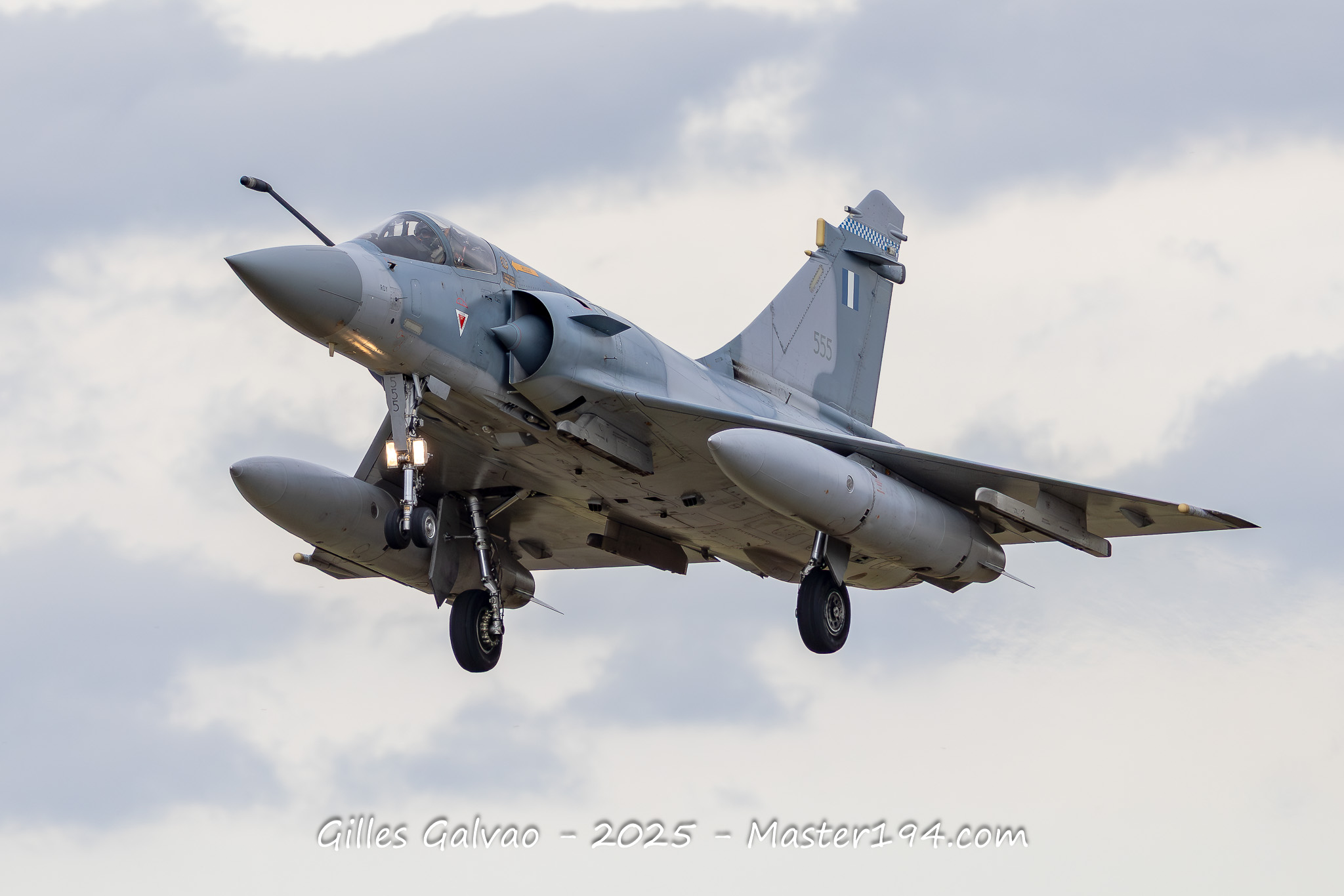
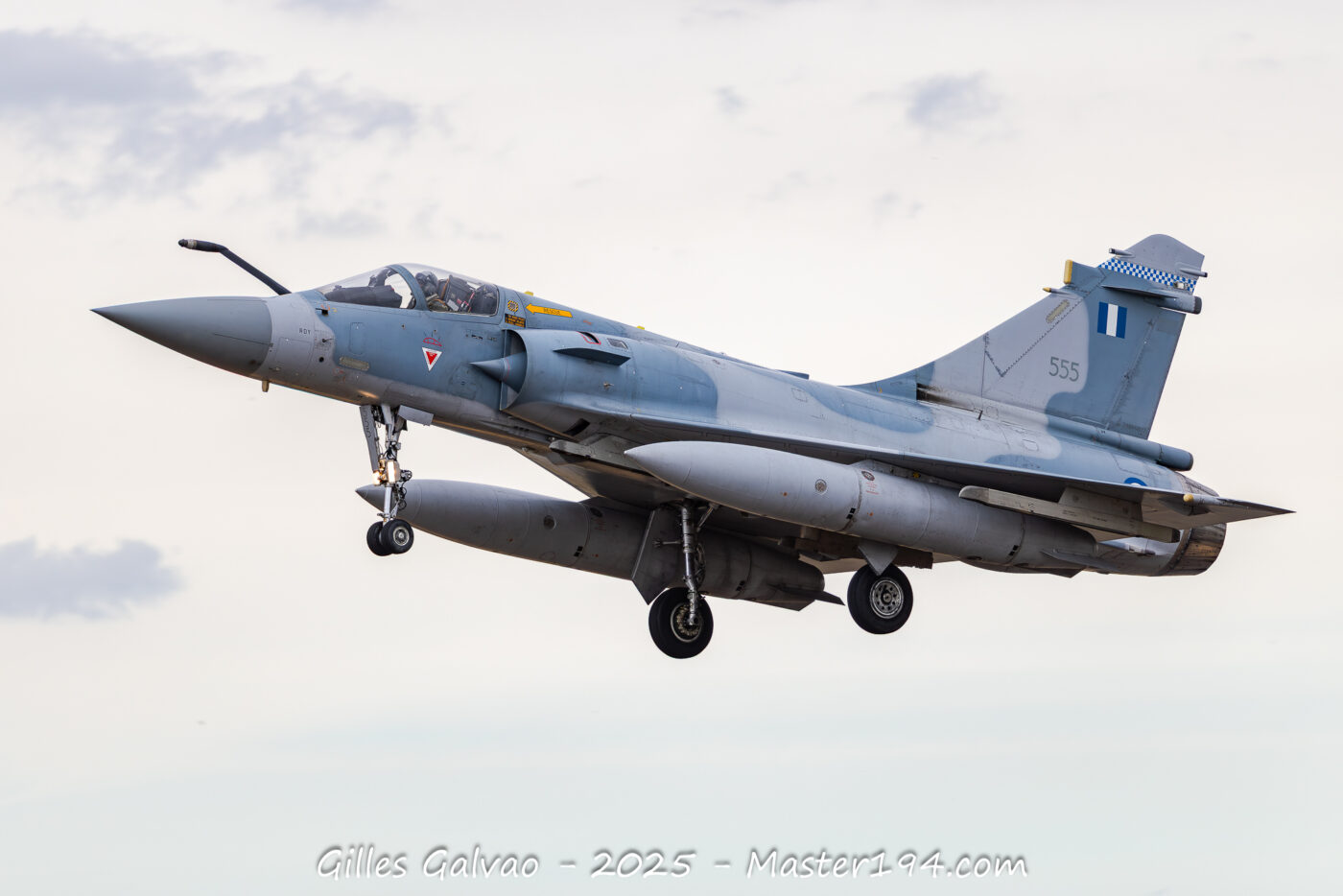
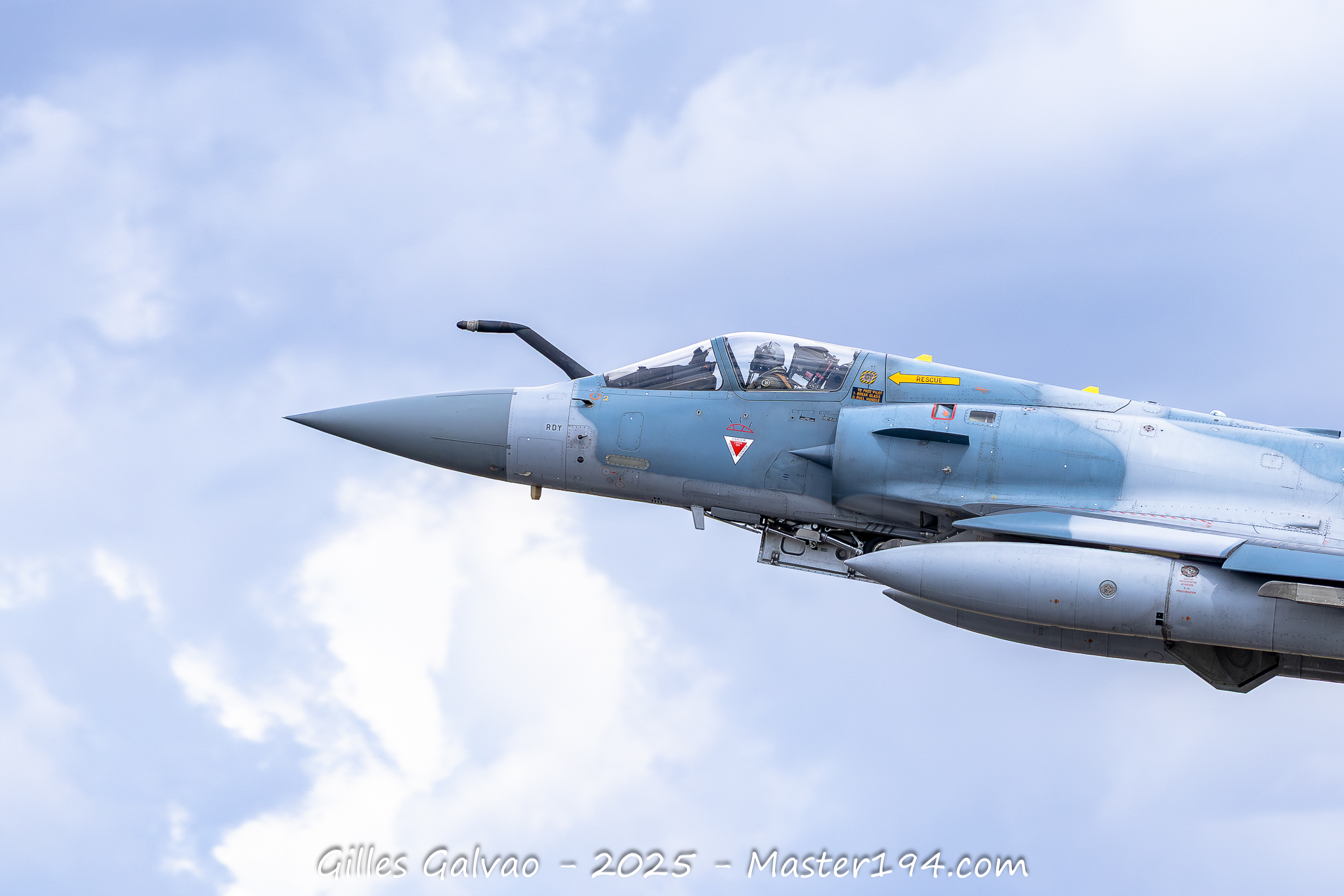
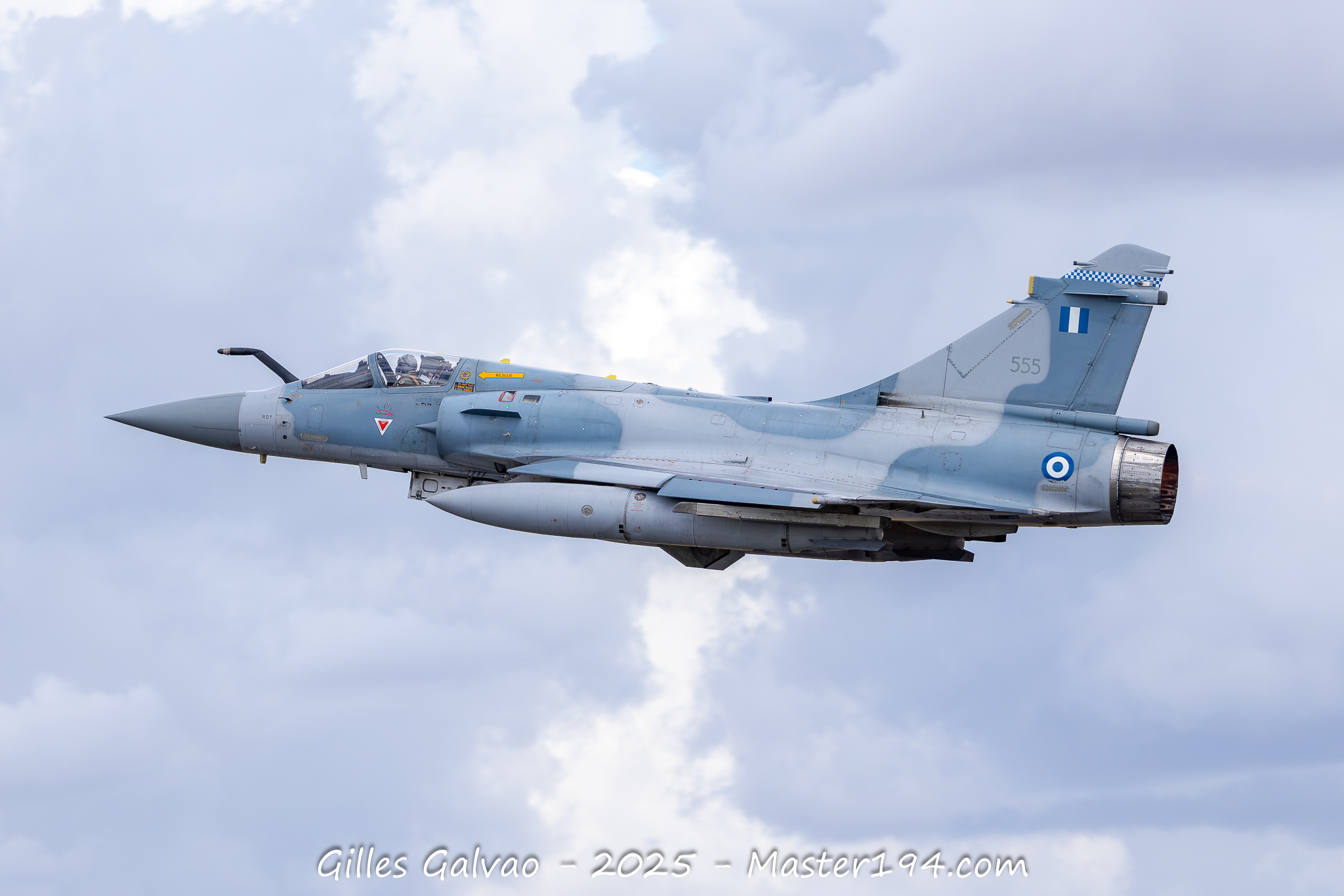
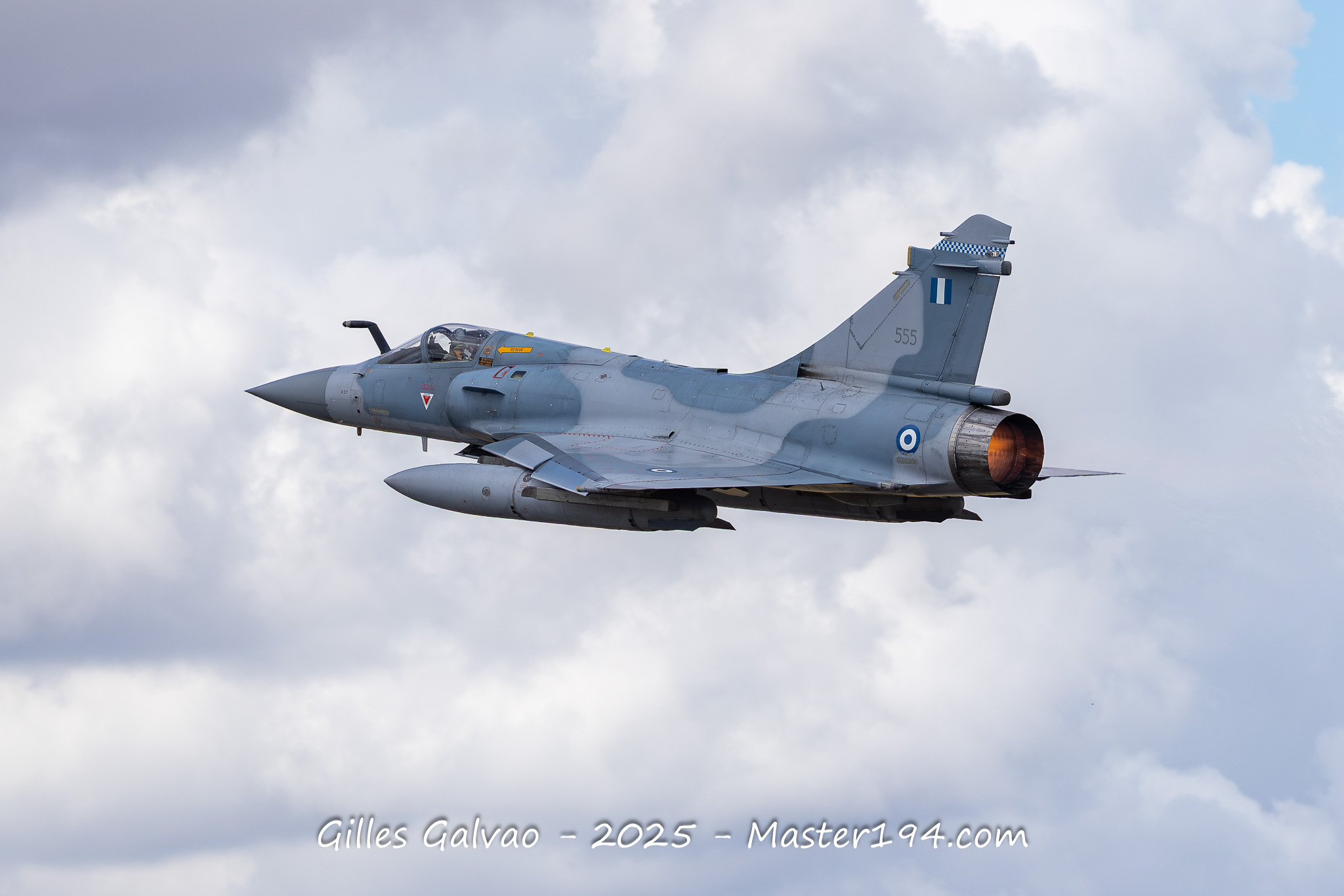
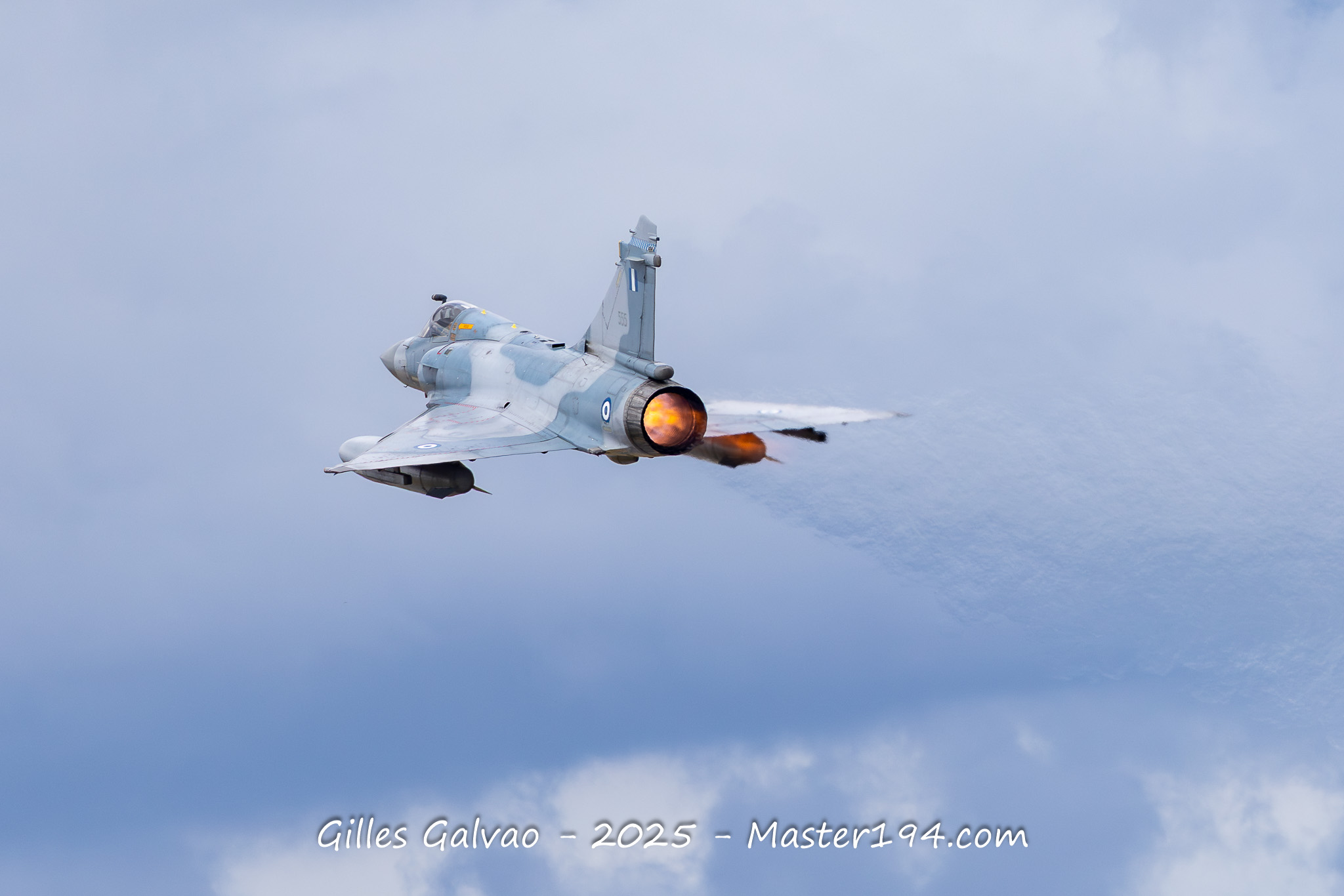
Arrival of the two Mirage 2000 at RIAT 2025.
Mirage 2000-5EG Number 555
The single-seat Mirage 2000 registered as 555 belongs to the famous 331 Mira “Thisseas” based at Tanagra. This aircraft is, quite simply, the very last brand-new Mirage 2000 to roll off the Dassault assembly lines for Greece.
Mirage 2000-5BG Number 507
The perfect complement to 555 on the RIAT tarmac, number 507 is a Mirage 2000-5BG Mk2 built brand-new by Dassault for 331 Mira.