
Nicknamed “Rhino”, “Old Smokey”, or “Spook”, the McDonnell Douglas F-4 Phantom II is far more than just a Cold War fighter. Operating as a heavy fighter, interceptor, bomber, reconnaissance platform, and electronic warfare aircraft, it stands as one of the most iconic combat aircraft in military aviation history. Originally designed for the US Navy, the Phantom rapidly established itself as a versatile multirole asset capable of operating seamlessly from aircraft carriers and land bases alike.
Heavily engaged during the Vietnam War, and subsequently across numerous conflicts in the Middle East and worldwide, the Phantom enjoyed an extraordinary operational career. It served under the roundels of many air forces—from the United States and Germany to Israel, the United Kingdom, Japan, Greece, Turkey, South Korea, and Iran.
More than six decades after its maiden flight, the Phantom remains one of the most recognizable combat aircraft of the Cold War era. Its outer wing panels tilted sharply upward and its dropped tailplanes give it an instantly identifiable silhouette, complemented by twin massive engines and an impressive payload capability. This unique visual personality has contributed significantly to making the Phantom a true icon of military aviation.
Whether you are an aviation history enthusiast or a scale modeler seeking precise technical references, this page centralizes all our resources dedicated to the F-4 Phantom II: program history, variants, operational service, foreign operators, high-definition walkarounds, photo reports, and scale model builds.
This page is designed to expand continuously over time. Numerous photographs, archives, and technical documents covering the Phantom are yet to be published and will progressively enrich this guide.
Origins and Concept of the McDonnell Douglas F-4 Phantom II
In the late 1940s and early 1950s, the US Navy sought to develop new combat aircraft capable of operating from aircraft carriers to counter rapidly evolving aerial threats.
McDonnell Aircraft Corporation submitted a proposal for a heavy, powerful aircraft initially tailored to US Navy requirements. The design evolved rapidly into a twin-engine, two-seat platform built for high supersonic performance and heavy payload capacity.
The XF4H-1 prototype made its maiden flight on May 27, 1958. Entering service with the US Navy in 1961, the Phantom quickly established itself as a mainstay of American air power.
The Phantom was immediately distinguished by its massive airframe and twin General Electric J79 turbojets. Originally designed as a fleet defense interceptor, it was rapidly adapted to perform a wide spectrum of missions.
The aircraft accommodated a crew of two: the pilot in the front cockpit and the radar intercept officer (RIO) or weapon systems officer (WSO) in the rear. This tandem arrangement allowed the aircrew to effectively manage increasingly complex navigation, radar, and weapon systems.
Another defining design feature was that early Phantom variants were built without an internal cannon, reflecting the doctrine of the time that air-to-air missiles had rendered internal guns obsolete. However, combat experience over Vietnam demonstrated the limits of this concept, prompting the integration of an internal M61 Vulcan cannon on the F-4E.
The Phantom was also engineered to deliver a formidable offensive loadout. Its multiple hardpoints enabled it to carry air-to-air missiles, unguided bombs, rockets, and, depending on the variant and operator, a broad array of specialized munitions.
This versatility largely accounts for the Phantom’s exceptional success. Originally conceived for naval air warfare, the F-4 progressively evolved into a true multirole combat aircraft—excelling in interception, air superiority, ground attack, reconnaissance, and electronic warfare.
Main Variants of the F-4 Phantom II
Throughout its extended operational lifespan, the Phantom underwent continuous modernization and structural evolution. While specific variants were developed to meet US military requirements, others were tailored to the distinct operational needs of international operators.
F-4B, F-4J, and F-4S: The US Navy and Marine Corps Phantoms
The initial production variants of the Phantom were built for the US Navy and US Marine Corps.
The F-4B entered service as one of the earliest full-scale production variants and saw heavy action during the opening stages of the Vietnam War. It was followed by the further refined F-4J, which incorporated upgraded avionics, improved pulse-Doppler radar, and enhanced carrier-handling characteristics.
The F-4S represented the ultimate carrier-capable evolution of the Phantom. Converted from existing airframes, it featured key structural reinforcements, modernized electronics, and leading-edge slats to improve low-speed maneuverability before its gradual retirement from US naval service.

F-4C, F-4D, and F-4E: The US Air Force Workhorses
Recognizing the platform’s multirole potential, the US Air Force rapidly adopted the Phantom, making it a cornerstone of its tactical air power throughout the Vietnam Conflict.
The F-4C and subsequent F-4D were extensively deployed in air-to-air interception and strike roles over Southeast Asia. The F-4E introduced a decisive evolutionary step by integrating an internal M61 Vulcan rotary cannon in a redesigned nose section—directly addressing key air combat lessons learned in Vietnam.
The F-4E became the most widely produced and exported variant of the Phantom. Serving under numerous international flags, it underwent multiple life-extension programs (LEP) and avionics upgrades over the years.
RF-4C: Tactical Reconnaissance
The Phantom platform was also extensively adapted for high-speed tactical reconnaissance missions.
Developed for the US Air Force, the RF-4C substituted the aircraft’s offensive armament for an array of optical cameras, infrared sensors, and side-looking radar systems within a lengthened nose cone.
Actively deployed during the Vietnam War and subsequent regional conflicts, the RF-4C remained a core asset of American tactical reconnaissance prior to the introduction of advanced electronic reconnaissance platforms.
F-4G Wild Weasel: Suppressing Enemy Air Defenses (SEAD)
The F-4G represents one of the most specialized iterations of the Phantom airframe.
Converted from F-4E airframes, it was heavily modified to execute SEAD (Suppression of Enemy Air Defenses) missions—detecting, locating, and destroying hostile radar networks and surface-to-air missile (SAM) sites. The internal nose cannon was removed to accommodate the specialized APR-38/47 radar homing and warning system (RHAW).
The F-4G Wild Weasel gained operational renown during the 1991 Gulf War, spearheading coalition air strikes by neutralizing Iraqi air defense infrastructure.
The dangerous nature of these missions was encapsulated in the famous Wild Weasel motto:
“First In, Last Out”
These specialized electronic warfare platforms remained on active duty well into the 1990s, demonstrating the remarkable adaptability of a design originally drafted in the 1950s.
F-4EJ: The Japanese Phantom
Japan emerged as one of the primary international operators of the Phantom, acquiring the F-4EJ—a dedicated variant derived from the F-4E and built largely under license by Mitsubishi Heavy Industries.
Japanese Phantoms underwent major operational mid-life upgrades, culminating in the F-4EJ Kai standard, allowing them to remain in frontline service with the Japan Air Self-Defense Force (JASDF) for over four decades.
F-4K and F-4M: The British Phantoms
The United Kingdom acquired customized versions of the Phantom for both the Royal Navy and the Royal Air Force.
The F-4K (designated Phantom FG.1) was adapted specifically for British aircraft carrier operations, while the F-4M (Phantom FGR.2) was deployed primarily by the RAF in air defense and strike roles.

British Phantoms were notably distinguished by their replacement of the standard J79 engines with turbofan Rolls-Royce Spey engines, providing increased thrust but requiring significant airframe modifications, including widened rear fuselages and enlarged air intakes.
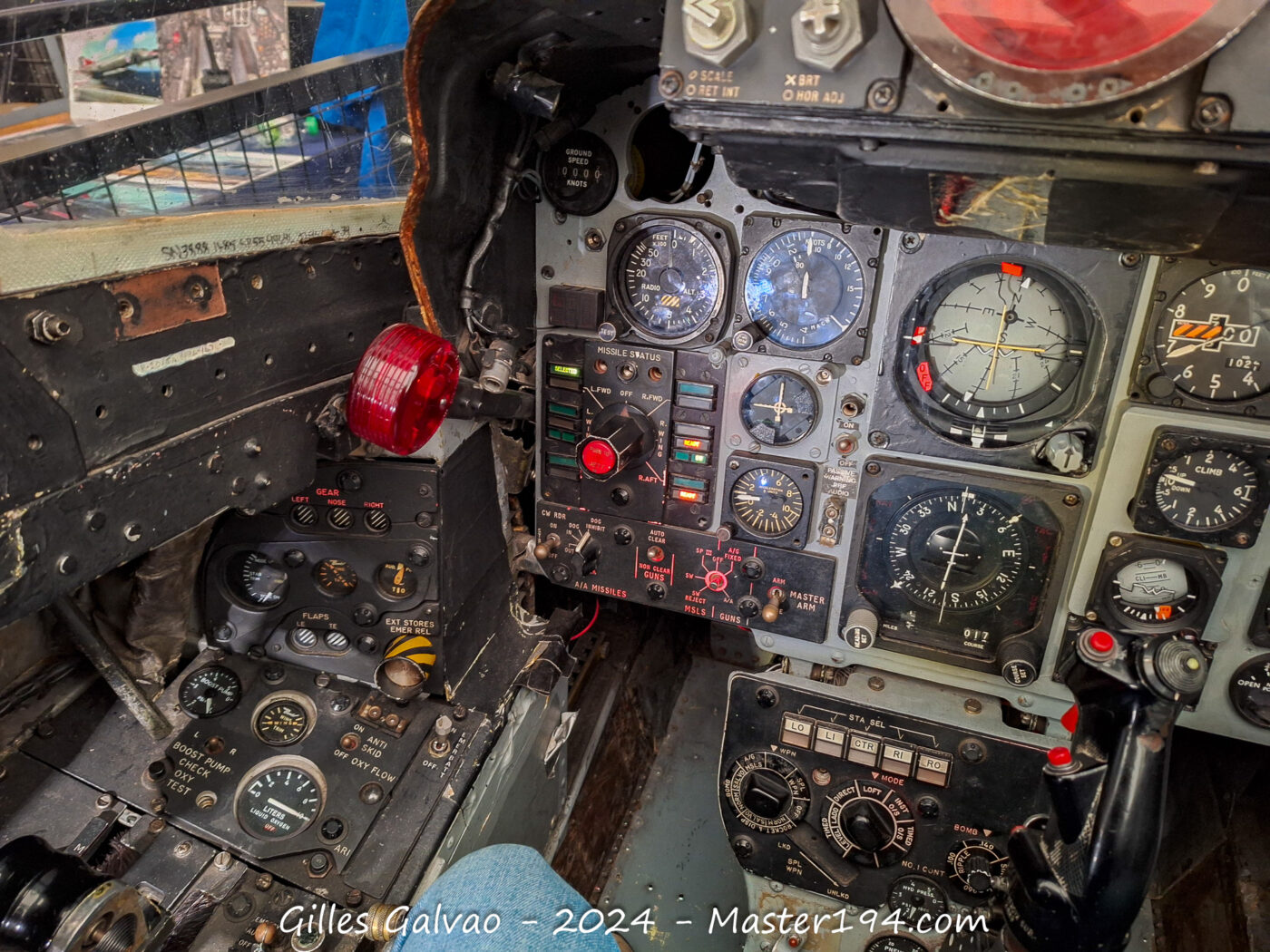
McDonnell Douglas Phantom FG.1 (XV591) front cockpit: Technical Walkaround
UAn Exceptional Operational Career
The operational record of the F-4 Phantom II is among the most extensive in modern military aviation history. Originally engineered for US fleet air defense, the F-4 rapidly transformed into a versatile multirole platform engaged in some of the most critical conflicts of the second half of the 20th century.
The Vietnam War: Baptism of Fire
The Phantom experienced its first major combat deployment during the Vietnam Conflict, where it was heavily committed by the US Navy, the US Marine Corps, and the US Air Force.
Beginning in the mid-1960s, F-4 formations executed fighter escort, air superiority, interception, and ground-attack sorties across North and South Vietnam. Operating over hostile territory, Phantom aircrews confronted a complex integrated air defense network alongside agile North Vietnamese MiG-17 and MiG-21 fighters.
Air-to-air engagements over Southeast Asia quickly exposed the flaws of early 1960s American doctrine, which was predicated on the belief that guided air-to-air missiles had rendered within-visual-range dogfighting obsolete. Forced to adapt to demanding aerial warfare conditions, Phantom crews refined tactics—insights that profoundly reshaped US fighter development, doctrine, and weapons training programs (such as TOPGUN) for subsequent generations.
The Middle East: Israeli Kurnass Operations
The Phantom also forged an intense combat legacy in the Middle East.
Israel emerged as one of the primary export operators of the F-4E, locally designated the Kurnass (Sledgehammer). Israeli Phantoms were central to major regional conflicts, performing frontline duties during the War of Attrition and the 1973 Yom Kippur War.
Deployed in both strategic strike and air superiority roles, IAF Phantoms logged high sortie rates against enemy air forces and surface-to-air missile batteries. Israel’s extensive combat feedback contributed directly to tailored airframe modifications, localized weapons integration, and avionics enhancements.
Iran: Phantoms Before and After the Revolution
Under the Imperial Iranian Air Force (IIAF), Iran acquired substantial fleets of F-4D and F-4E variants prior to the 1979 revolution.
Following the establishment of the Islamic Republic, a significant portion of the fleet remained operational and bore the brunt of tactical flight operations during the 1980–1988 Iran-Iraq War.
Despite strict arms embargoes, supply chain disruptions, and critical spare parts shortages, Iranian Phantoms were continuously launched on long-range interdiction, close air support, and interception missions, playing a vital role throughout the conflict.
The Gulf War: The Final American Combat Deployment
In 1991, the Phantom saw its last major combat commitment with the United States military during Operation Desert Storm.
US Air Force F-4G Wild Weasels spearheaded suppression of enemy air defenses (SEAD) missions to pave the way for coalition strike packages, while RF-4C platforms conducted critical tactical reconnaissance sorties over Iraqi positions.
The Gulf War marked the operational swansong for US frontline combat Phantoms, illustrating the enduring utility of the platform over three decades after its first flight.
Global Service Under Foreign Flags
Beyond American service, the Phantom enjoyed a prolonged career across numerous international air arms.
West Germany—and subsequently unified Germany—operated the F-4F and RF-4E for decades under the Luftwaffe.

Greece and Turkey modernized their respective F-4E fleets to maintain frontline combat relevance well into the 21st century, while the Republic of Korea Air Force (ROKAF) similarly maintained an extensive Phantom force over several decades.

F-4E Phantom II Turkish Air Force and walkaround

F-4E Phantom II Hellenic Air Force and walkaround
Saudi Arabia also operated the F-4E, while Spain deployed F-4C and RF-4C variants. Countries such as Israel, Iran, and several other nations operated the Phantom across a broad spectrum of missions.
This extraordinary global footprint explains why the F-4 was involved in so many distinct military operations and conflicts, frequently continuing to fly front-line duties long after its official retirement from primary United States armed forces inventories.
Retirement and the Final Operators
Within the United States military, active-duty Phantoms were progressively phased out beginning in the 1990s, yet the platform’s operational service extended for decades under international flags.
Japan officially retired its final F-4EJ airframes in 2021, closing over half a century of continuous Phantom service with the Japan Air Self-Defense Force (JASDF).
Nations such as Greece, Turkey, and Iran kept the Phantom in frontline combat service well into the 21st century. Thanks to extensive modernization programs—such as the Greek Peace Icarus 2000 upgrade or the Turkish Phantom 2000 Terminator program—this rugged airframe was integrated with modern guided weaponry and laser targeting pods. These updates proved that its robust airframe and raw engine power remained formidable assets, even in the digital warfare era.
Consequently, the Phantom remained active for nearly seven decades after its initial flight—an exceptional legacy for a combat aircraft of its era.

Greek RF-4E Phantom II 7487: 50th Anniversary Special Livery in Flight
Modeling the F-4 Phantom II
The Phantom is an enduring favorite among aviation scale modelers. Its prolonged career, vast array of variants, and diverse global operators offer an exceptional range of finishing options. A single base kit concept can be rendered in the colors of the US Navy, US Air Force, Luftwaffe, Israeli Air Force, JASDF, Hellenic Air Force, or numerous other operators.
The primary challenge lies in accurately identifying the specific variant and airframe configuration. Structural, avionics, and weapon differences between the F-4B, C, D, E, J, K, M, RF-4, and F-4G are significant, while mid-life upgrades continuously altered the external features of operational aircraft.
Main Phantom Kits by Scale
1/72 Scale Options
Selecting a 1/72 F-4 Phantom kit depends primarily on the target variant and the desired level of detail.
- The Current Benchmark: FineMolds leads the 1/72 market with exceptionally crisp panel line engraving and precise parts fit. Their lineup covers several major Phantom variants, making it the top choice for a modern, highly detailed build. Note that ordnance must usually be sourced separately depending on the boxing.
- Comprehensive Variant Coverage: Hasegawa remains an essential reference for modelers targeting specific or obscure sub-variants. The Japanese manufacturer’s expansive catalog allows builders to recreate nearly any branch of the Phantom family tree across various international users.
- Spey-Powered British Phantoms: Fujimi and Airfix offer dedicated solutions for UK variants. Despite aging tooling, Fujimi kits are still valued for their fine surface detail, whereas Airfix provides a more contemporary, well-detailed alternative for building Royal Navy and RAF Phantoms.
- Budget and Accessibility: Academy and Revell offer accessible entry points. Academy provides user-friendly, straightforward assemblies, while Revell offers a cost-effective alternative, despite a few shape inaccuracies, particularly around the radome profile.
1/48 Scale: A Rich and Modernized Market
The 1/48 scale landscape for the F-4 Phantom II is exceptionally competitive, benefiting from both classic legacy toolings covering niche variants and modern engineering releases that have elevated industry standards.
Hasegawa (Legacy Catalog): For decades, Hasegawa was the definitive 1/48 Phantom reference. While their vast tooling catalog still covers niche international marking options, these 1980s and 1990s molds show their age alongside modern tooling from Tamiya, Zoukei-Mura, Meng, and Academy. However, for UK Spey-powered variants (FG.1 / FGR.2), Hasegawa remains a common option, though upcoming tooling releases from manufacturers like Airfix offer modern alternatives.
Tamiya (Engineering Excellence): The Tamiya F-4B (Ref. 61121) set a new benchmark in scale modeling engineering and part fit. Its cleverly planned breakdown minimizes visible seam lines along challenging areas such as the fuselage spine and engine intakes. Detail execution across the cockpit, landing gear bays, and exhaust nozzles is outstanding. The primary limitation remains its current availability in a single variant—the naval F-4B.
Zoukei-Mura / SWS (Internal Detail & Complexity): Zoukei-Mura offers an ambitious 1/48 Super Detail line covering major airframes, including the F-4C, F-4D, F-4J, F-4S, F-4E, F-4EJ, and F-4G Wild Weasel. The Super Wing Series (SWS) emphasizes full internal airframe structures, radar bays, detailed cockpits, and internal systems. While providing exceptional fidelity, these high-part-count kits require meticulous dry-fitting and advanced assembly skills, accompanied by a premium price point.
Meng Model (The Long-Nose Reference): Meng has established itself as a top choice for late-variant “long-nose” Phantoms (F-4E and F-4G). Featuring modern tool design, delicate recessed panel lines, and single-piece upper fuselage moldings, these kits eliminate difficult seam-filling along the spine, offering a user-friendly assembly process.
Academy (Price-to-Precision Ratio): Academy’s modern tooling line covers the F-4B, F-4C/D, F-4J, and F-4N. Featuring fine recessed panel lines and clean engineering, these kits offer solid detail and value, though cockpits and ejection seats may benefit from aftermarket upgrades compared to Tamiya or Zoukei-Mura releases.

JASDF RF-4E Phantom II « Ocean Blue » – 1/48 Hasegawa Masterclass
1/32 Scale Options: A Focused Market Dominated by Tamiya
In 1/32 scale, the selection for the F-4 Phantom II is considerably more limited than in smaller scales. Modelers essentially choose between a few core releases, with a clear preference for Tamiya’s modern toolings.
Tamiya: The Definitive Benchmark
Tamiya kits serve as the undisputed reference for building a Phantom in 1/32 scale. The manufacturer offers key variants, including the F-4C/D and F-4E, featuring sophisticated engineering, outstanding accuracy, and exceptional surface detail. The parts fit lives up to Tamiya’s reputation, allowing modelers to achieve a impressive large-scale replica without the tedious alignment issues common to older large-scale kits.
As with any Phantom build, the primary factor to monitor is verifying the correct variant and period-specific features, making accurate technical documentation essential.
Revell: An Older, Budget-Friendly Alternative
Revell also provides 1/32 Phantom kits, notably covering the F-4F and F-4E. Developed from older tooling generations, these kits are significantly less refined than Tamiya’s offerings. However, they remain viable budget-friendly alternatives and cover specific operational versions not directly addressed by the Japanese manufacturer. Building a Revell kit requires extra preparation, surface refinement, and potentially aftermarket accessories to achieve modern detail standards.
In 1/32 scale, the decision is straightforward: choose Tamiya for ultimate quality and precision, or Revell for affordability and specific sub-variants.
Ultimately, the Phantom’s enduring appeal in scale modeling stems from both kit variety and the sheer diversity of camouflage schemes and operational configurations. Individual airframes evolved dramatically throughout their service life, making archival photographs and period documentation indispensable tools for an accurate build.
A Flying Legend
The F-4 Phantom II is far more than a Cold War combat aircraft. Originally engineered as a fleet defense interceptor for the US Navy, it evolved into a multirole platform capable of air superiority, ground attack, tactical reconnaissance, and electronic warfare.
Deployed over Vietnam, the Middle East, and numerous global battlefields, it saw action under dozens of air arm roundels during an extraordinary operational career. Its longevity, heavy payload capacity, and structural adaptability enabled the Phantom to maintain frontline relevance for decades, serving alongside multiple generations of newer fighter platforms.