 by
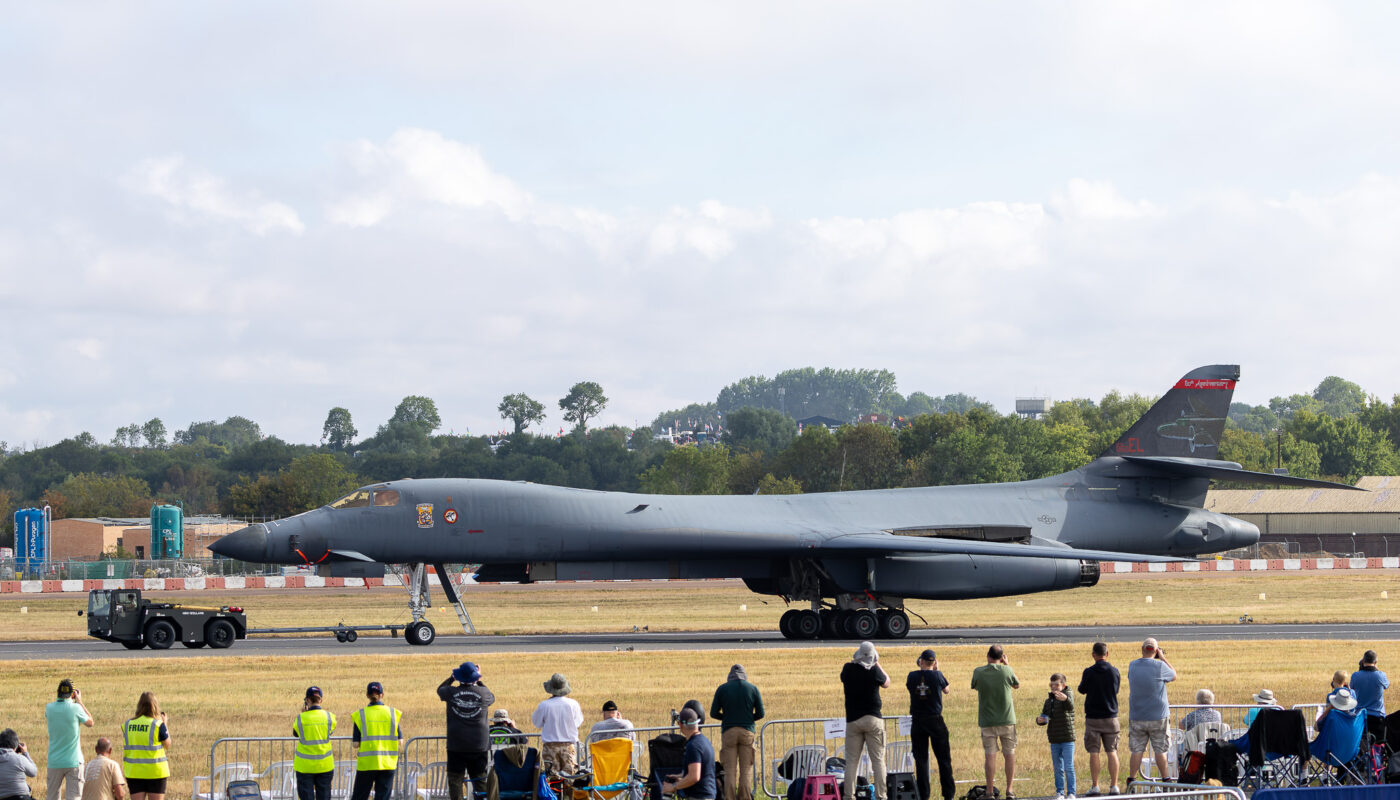
The Rockwell B-1B Lancer occupies a unique place in military aviation history. Both a direct heir to Cold War ambitions and a modernized survivor of an outdated doctrine, it embodies a critical transition: from strategic nuclear bombardment to long-range, conventional precision strikes.
Nicknamed the “Bone” (a phonetic play on B-One), the B-1B is as impressive for its aggressive silhouette as it is for its extraordinary payload capacity. Yet, behind this supersonic brute lies a complex history of political shifts, technical compromises, and successive adaptations..
Born from the Cold War
The history of the B-1 began in the 1960s, at a time when the United States was seeking a replacement for the venerable B-52 Stratofortress, which was already considered aging yet remained indispensable.
The US Air Force envisioned a bomber capable of deep penetration into Soviet airspace at high speeds, by combining:
- Sustained supersonic speed,
- Low-altitude penetration capability,
- And long-range intercontinental endurance.
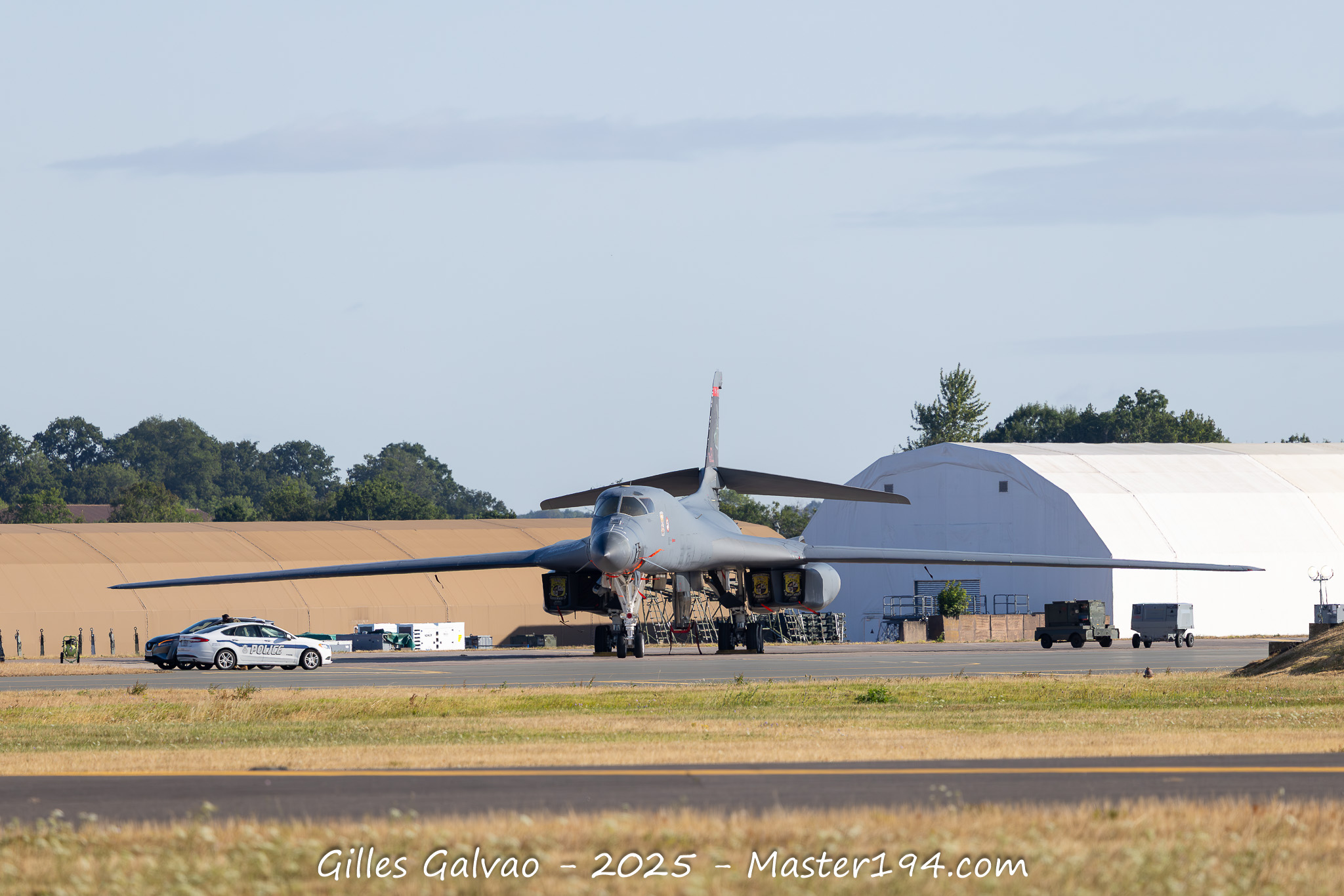
This initial concept gave birth to the B-1A program, an ambitious aircraft capable of reaching Mach 2 at high altitude. However, the political landscape shifted rapidly. The emergence of cruise missiles combined with budgetary constraints led to its cancellation in the late 1970s.
A few years later, under the Reagan administration, the program was revived in a profoundly modified form: the B-1B Lancer. This version prioritized low-altitude penetration and the reduction of its radar signature (RCS), at the expense of pure top speed.

A Completely Redefined Design Philosophy
The transition from the B-1A to the B-1B was not a mere evolution, but a total overhaul of the aircraft’s core philosophy.
The B-1B traded away:
- Part of its maximum speed (from Mach 2 to approximately Mach 1.25),
- High-altitude performance,
- And some of its initial multi-role potential.
In exchange, it gained:
- A significant reduction in its radar cross-section (RCS),
- Enhanced survivability during low-level flight,
- And an exceptional payload capacity.
As a result, this version became a dedicated low-altitude penetration bomber, designed to breach Soviet defenses by hugging the terrain at high speeds (terrain-masking).
An Architecture Tailored for the Mission
The B-1B is built upon a highly sophisticated aerodynamic configuration.
Variable-Sweep Wings
SoIts most iconic feature remains the variable-geometry wing (swing-wing). This allows the wing configuration to be adapted for every phase of flight:
- Fully extended for takeoff and low-speed flight,
- Intermediate sweep for cruise,
- Fully swept for supersonic speeds.
This system grants the aircraft a level of versatility rarely seen in an airframe of this size.
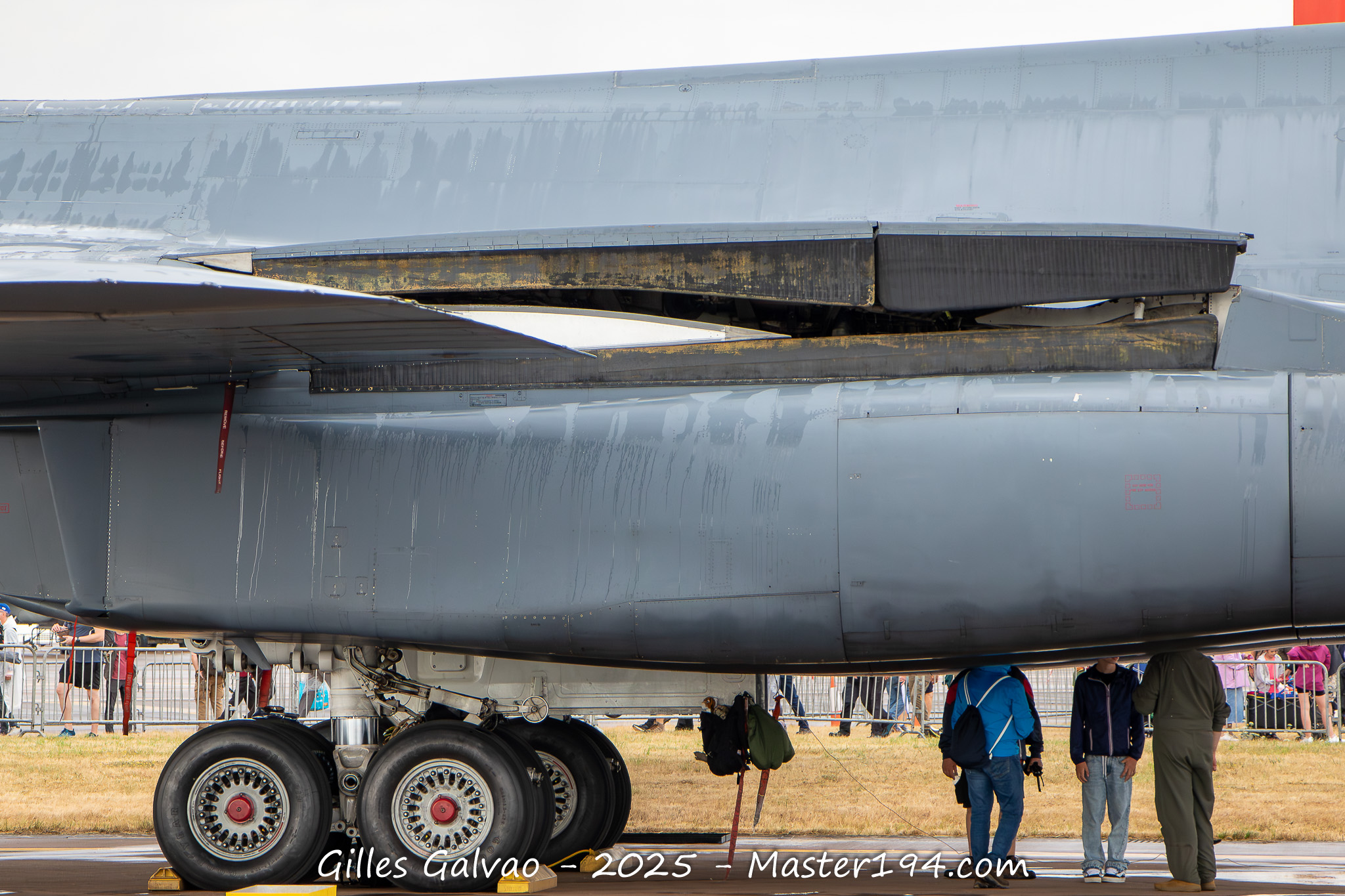
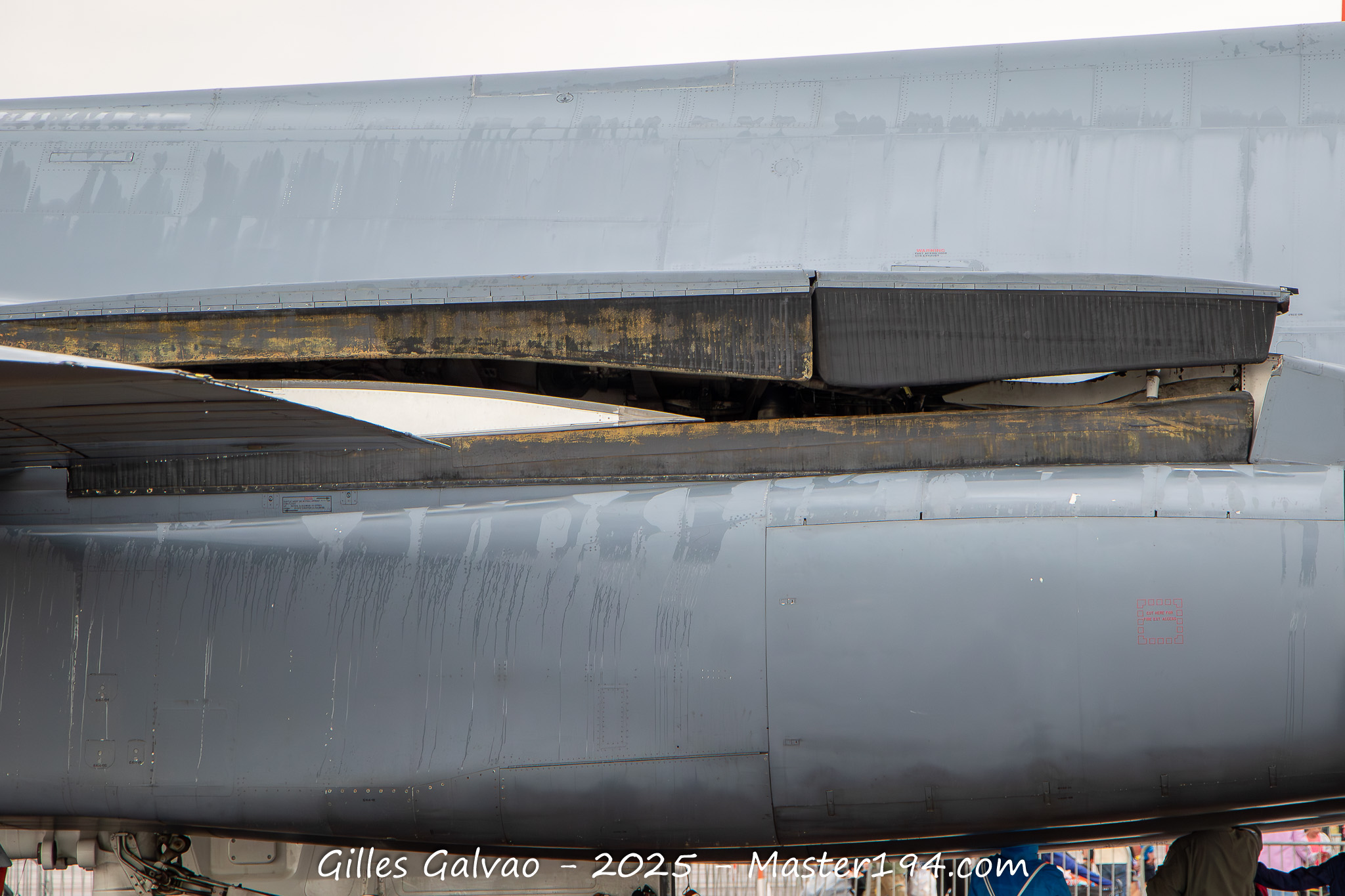
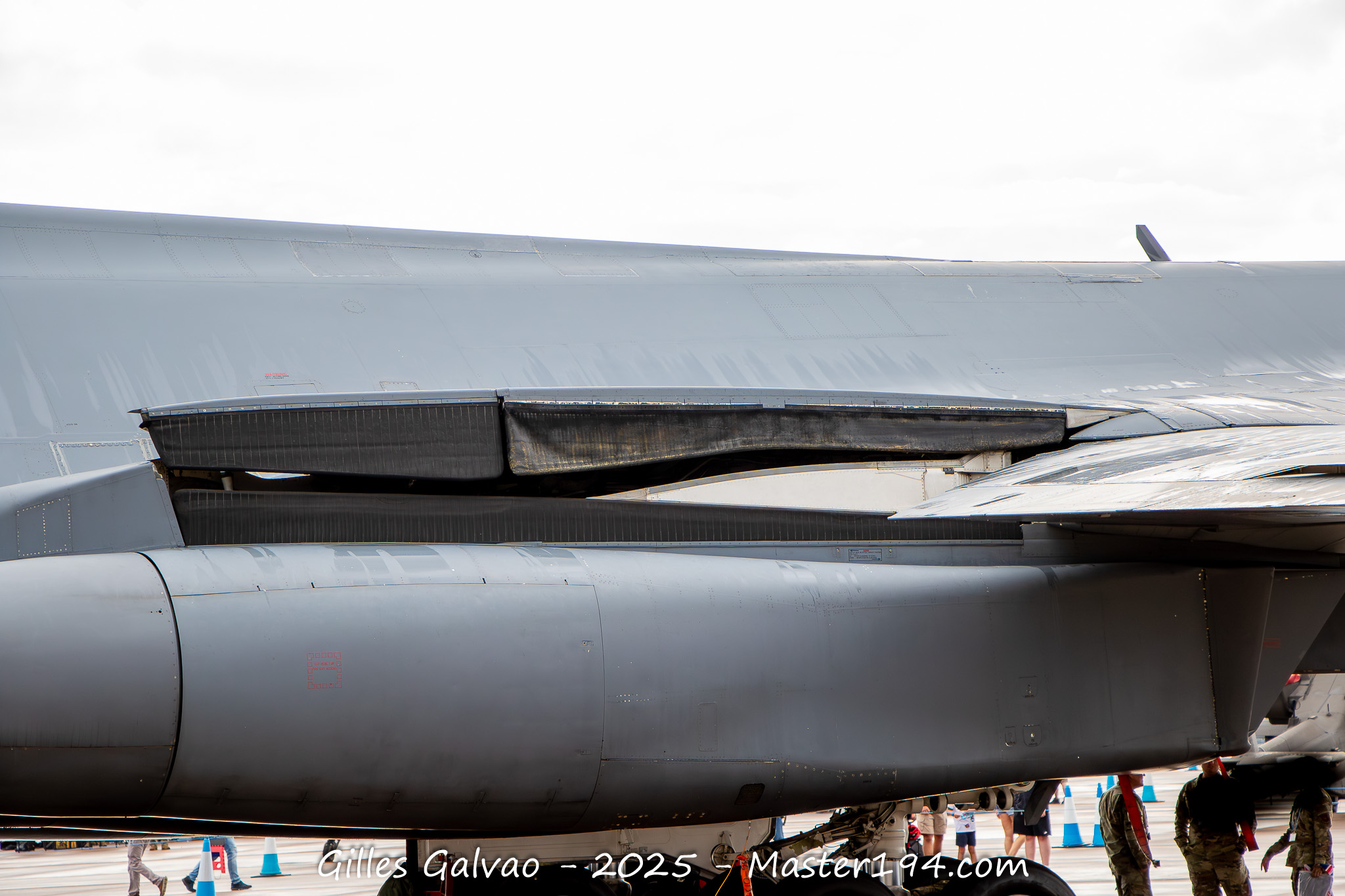
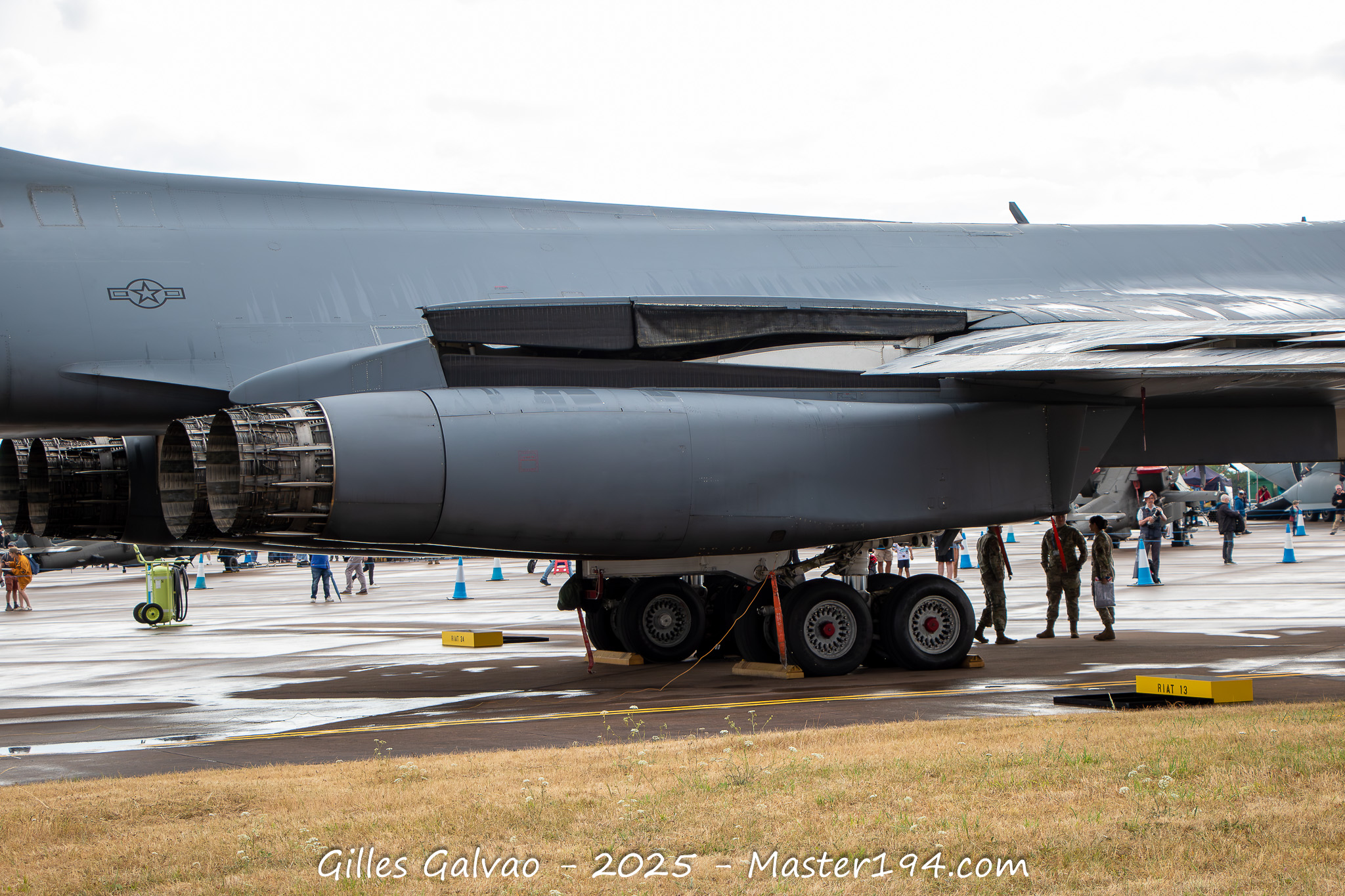
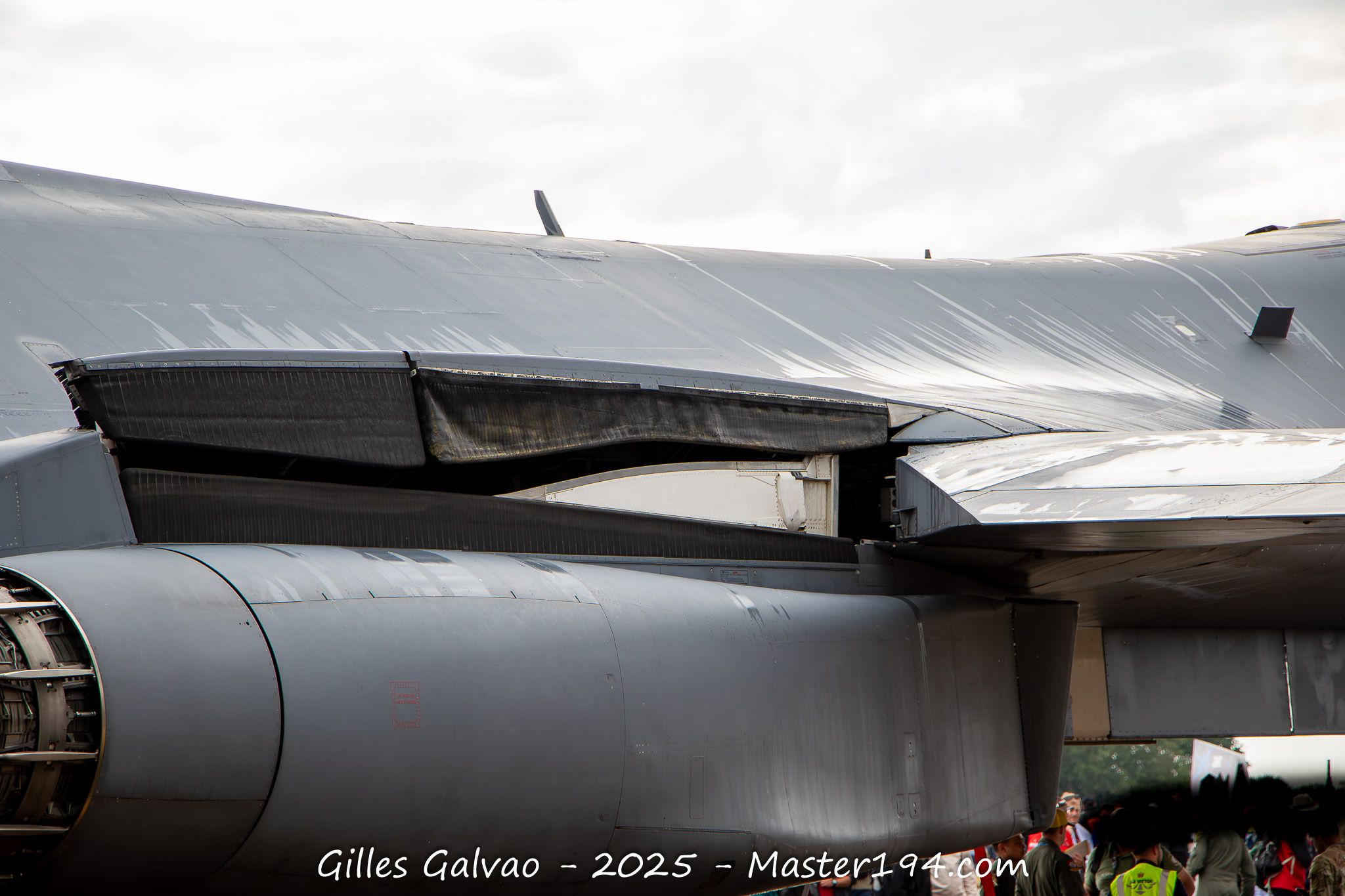
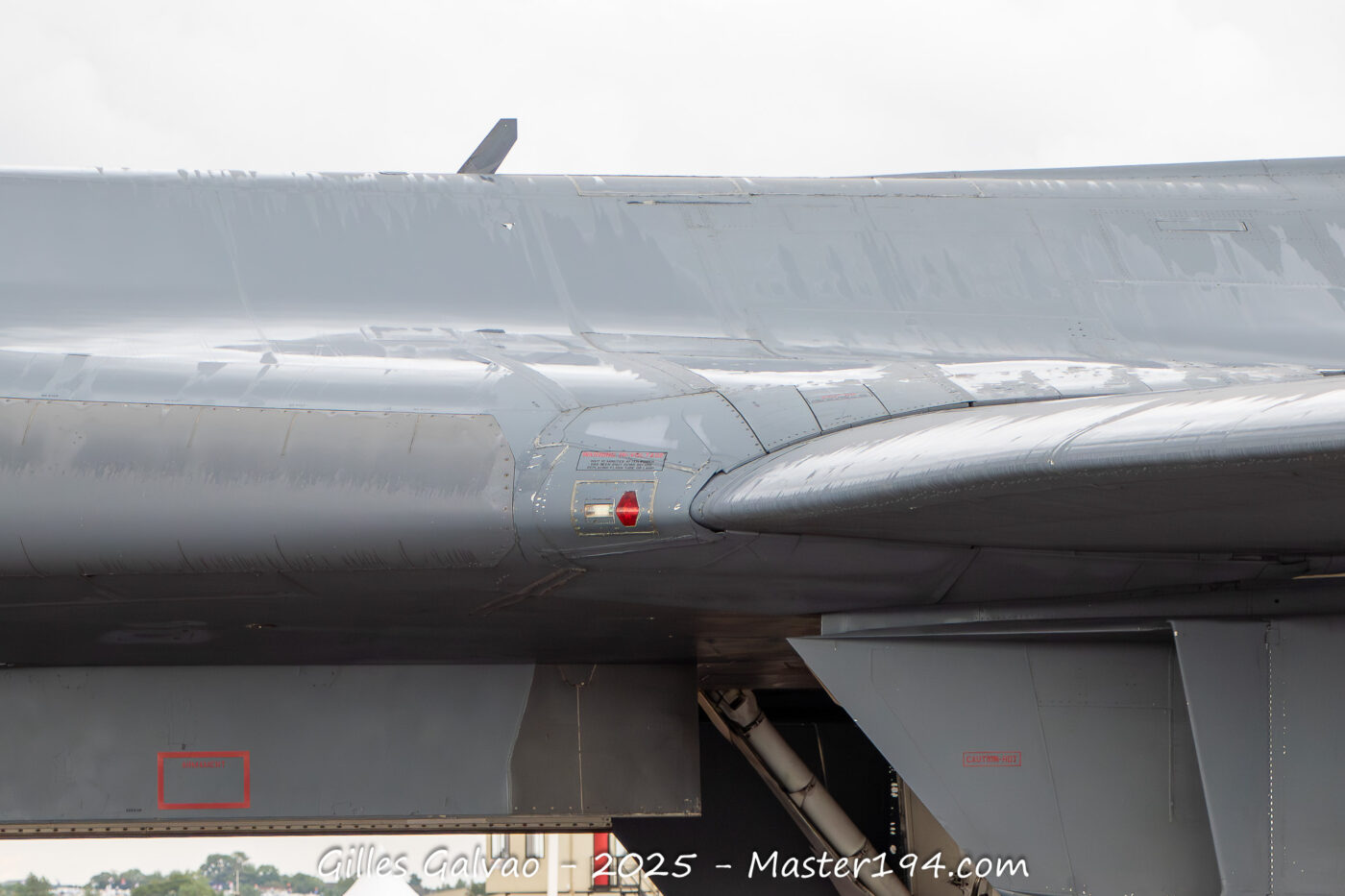
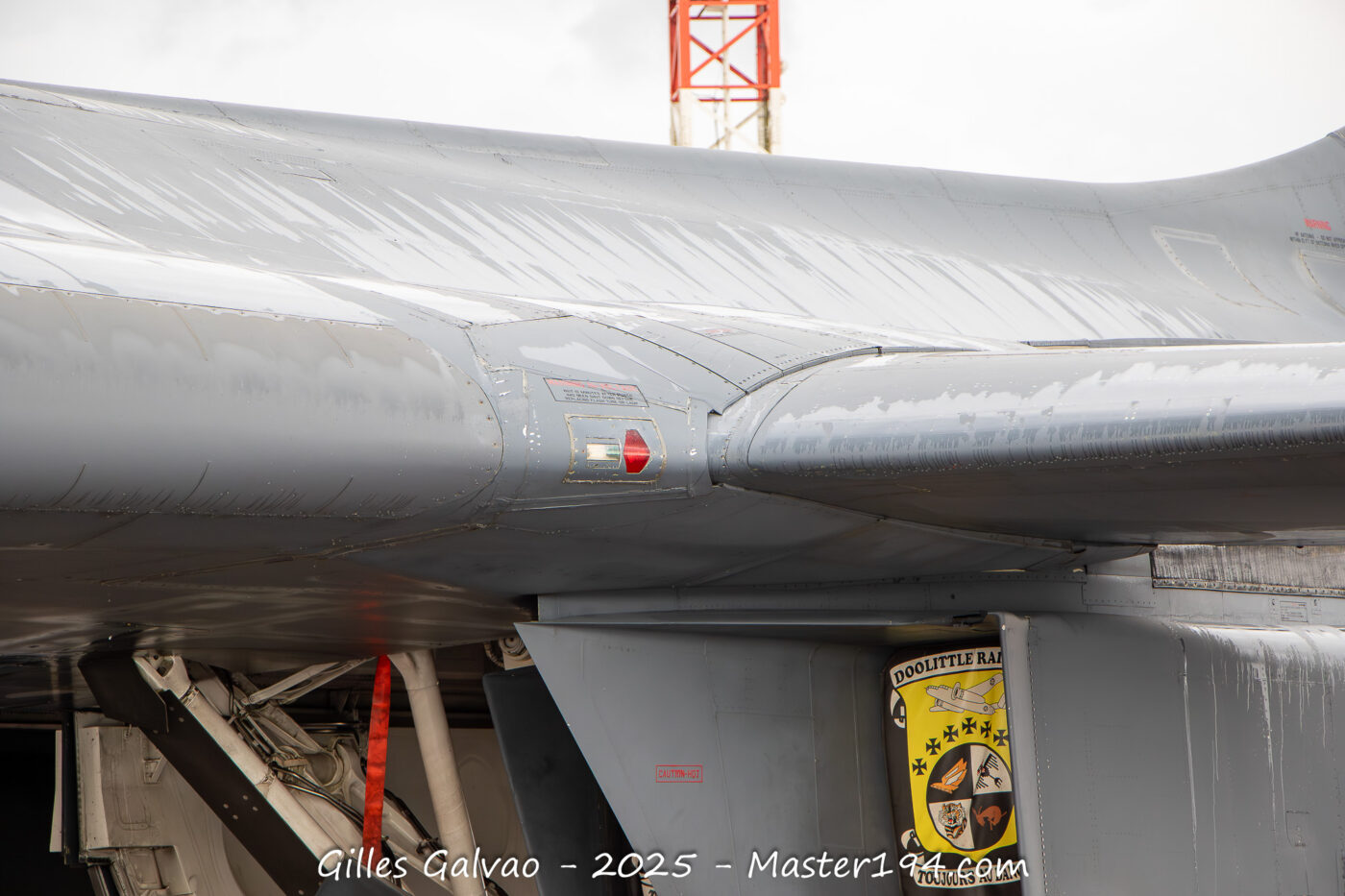
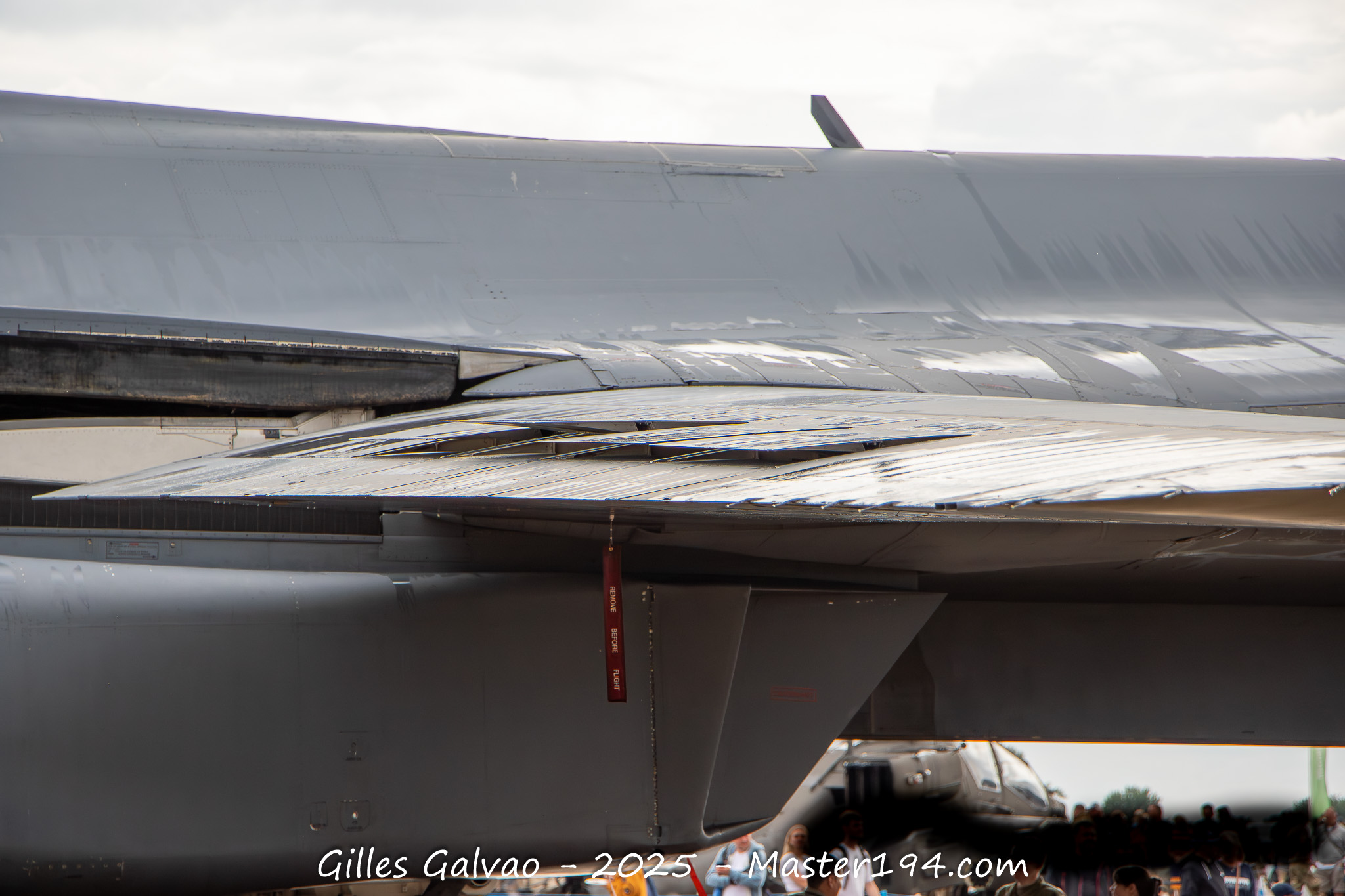
Wing glove and pivot details: the area where the wing enters the fuselage at maximum sweep, left side:
Right side:
Propulsion
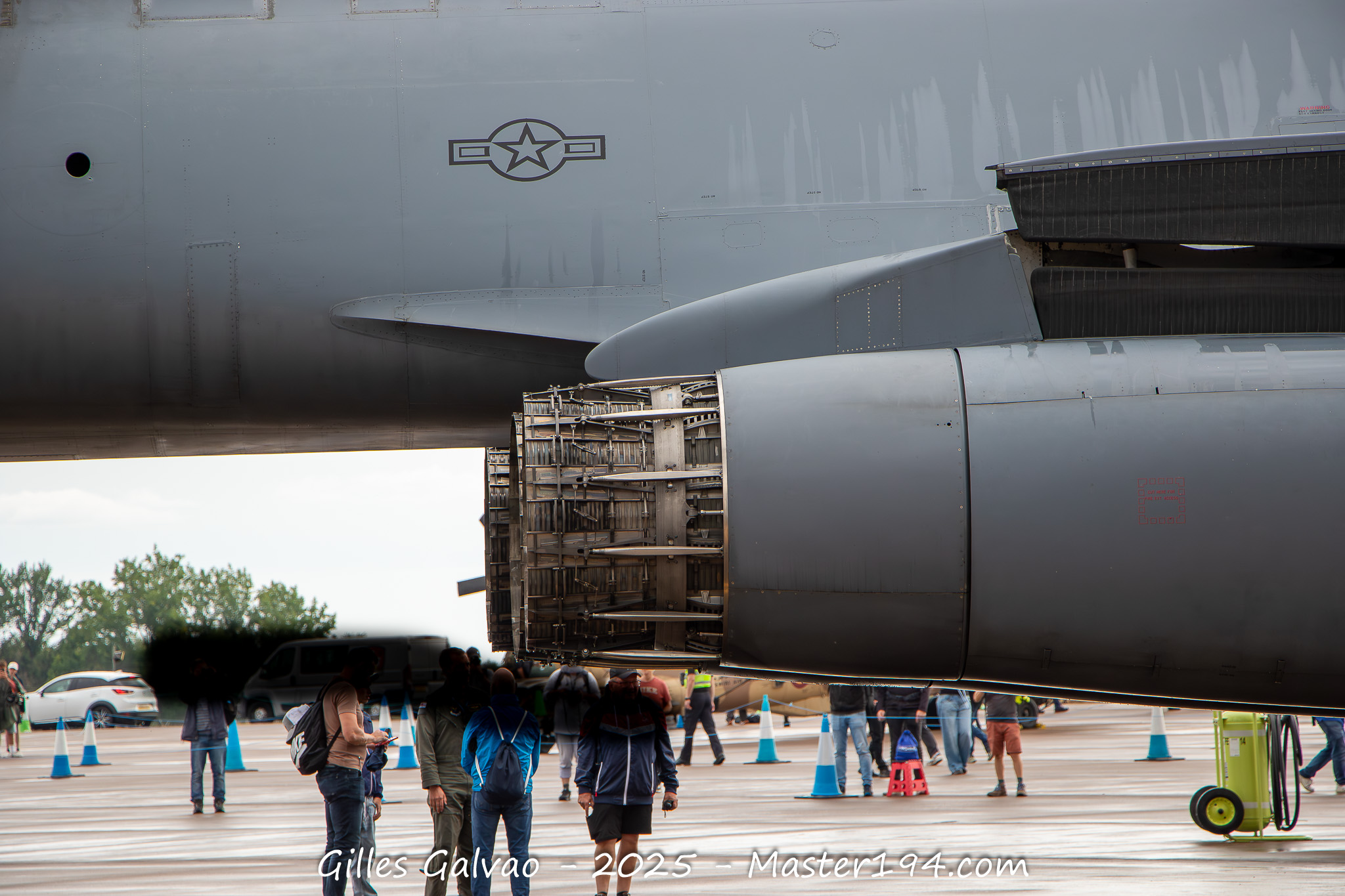
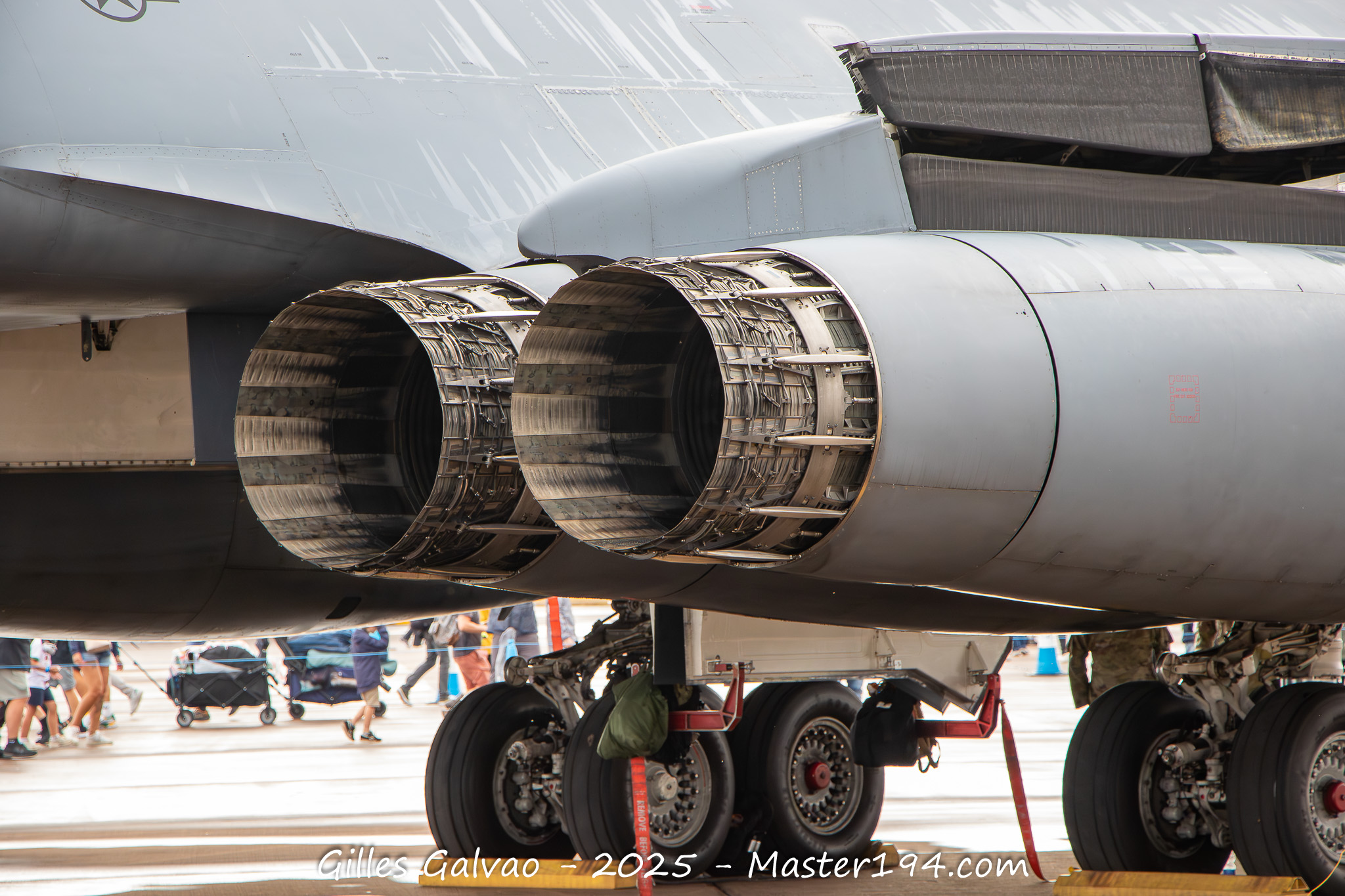
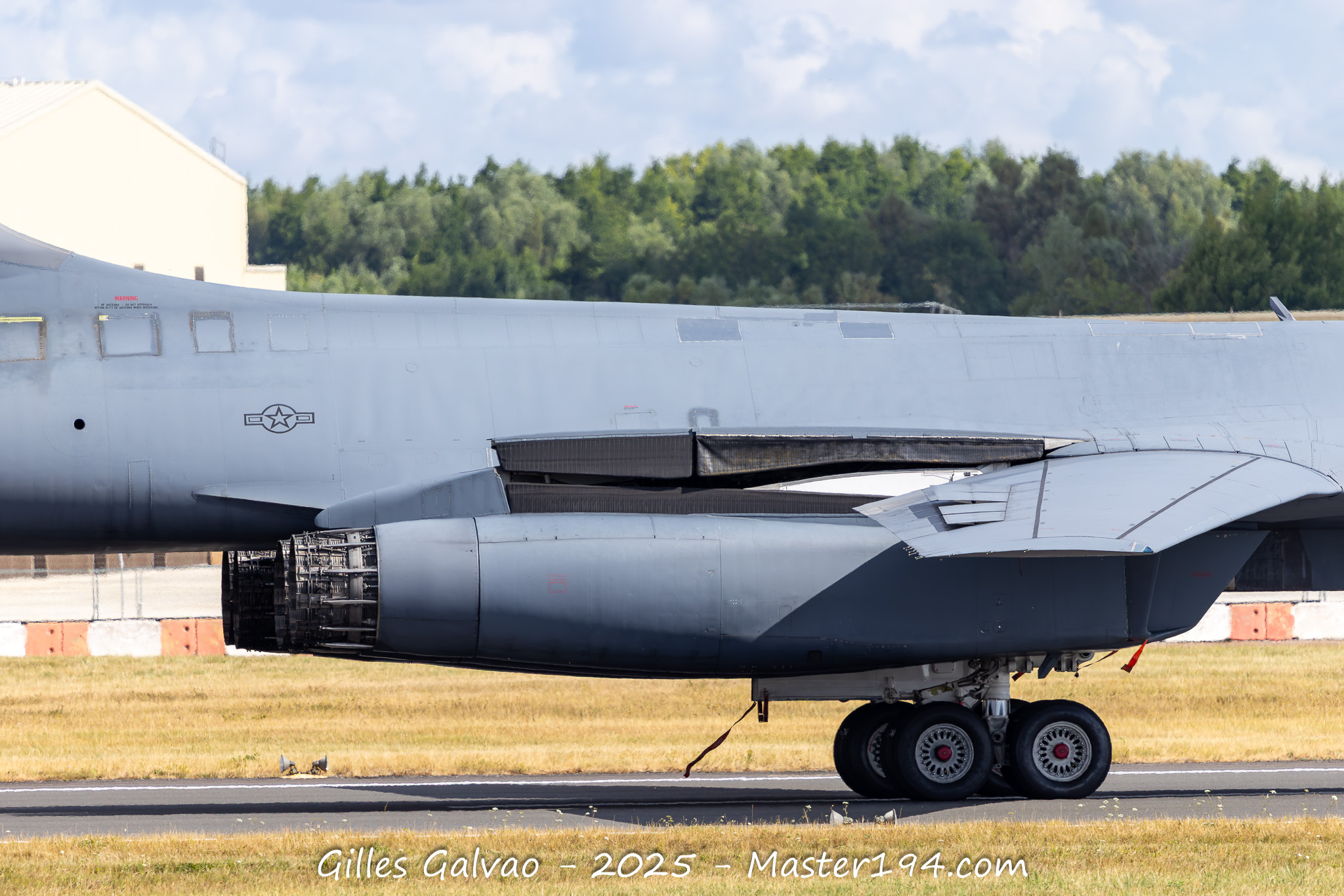
The B-1B is powered by four General Electric F101-GE-102 afterburning turbofans, specifically developed for this airframe.
- Unit Thrust: Approximately 30,000 lbf (≈ 133 to 140 kN) per engine.
- Total Thrust: Approximately 120,000 lbf (≈ 530 kN) for the entire aircraft.
These engines were engineered to meet a very demanding set of specifications:
- High thermal resistance during high-speed, low-level “contour-following” flight.
- Consistent performance at low altitude and high airspeed.
- Capability to sustain prolonged supersonic regimes.
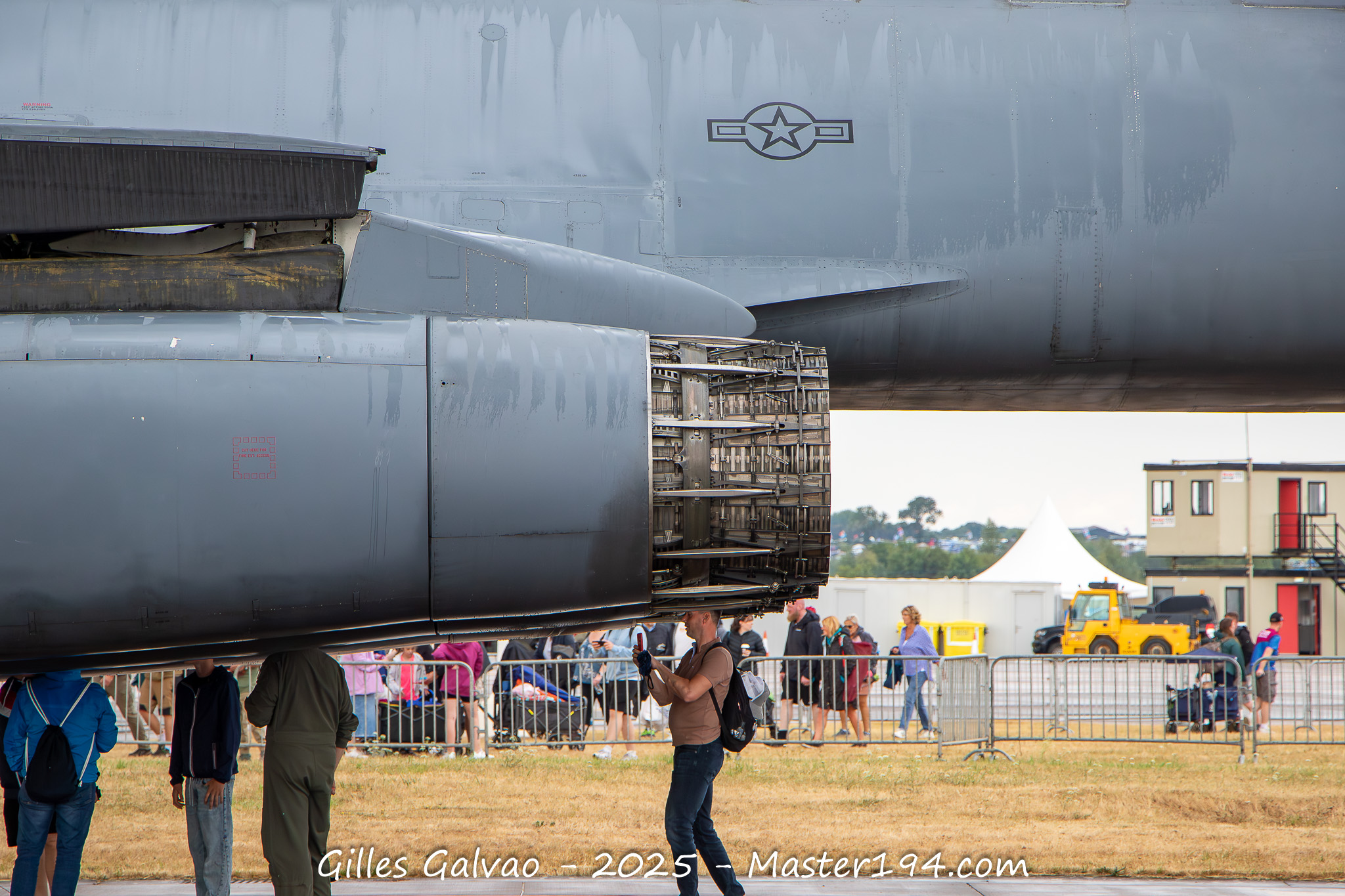
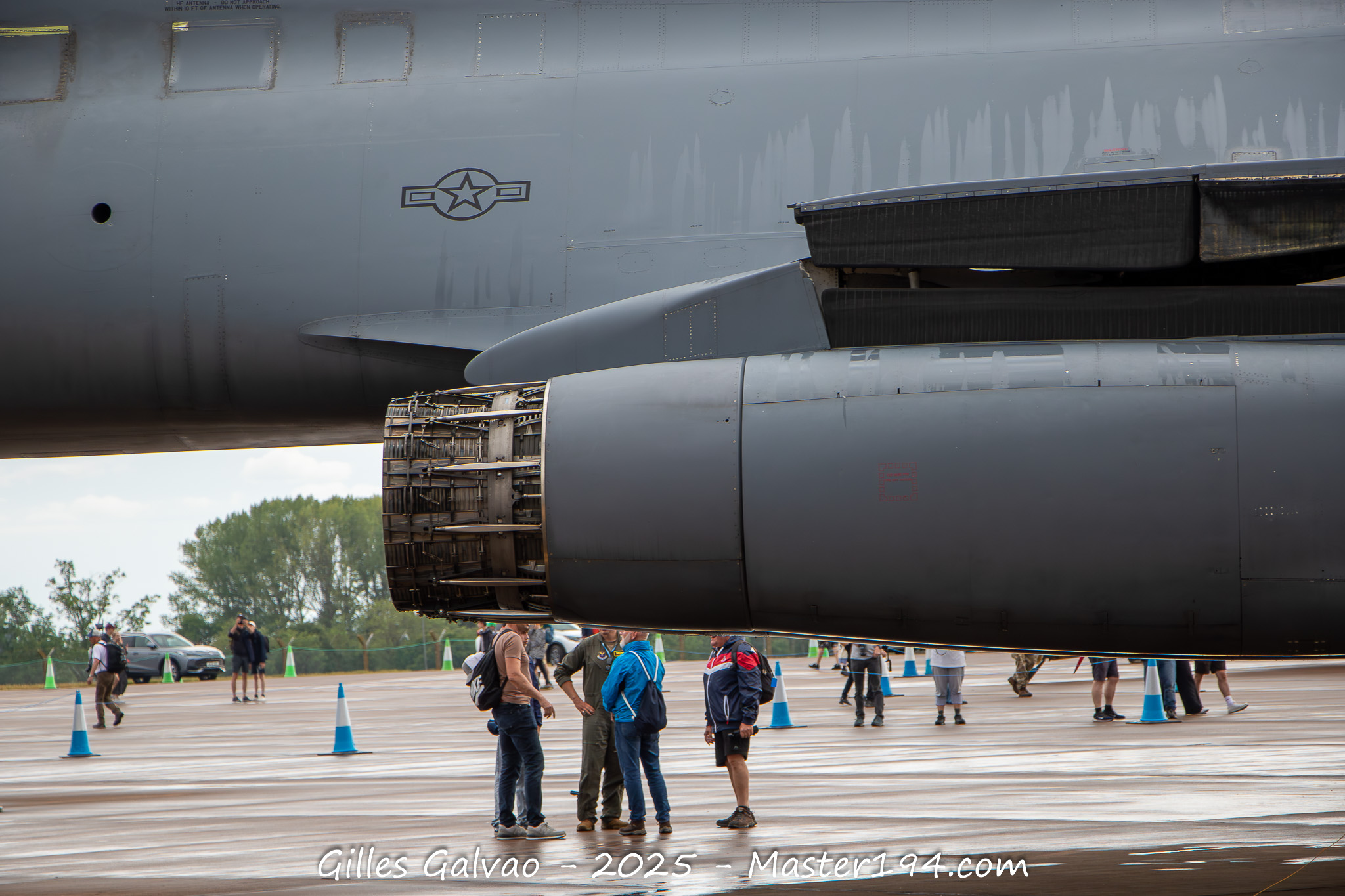
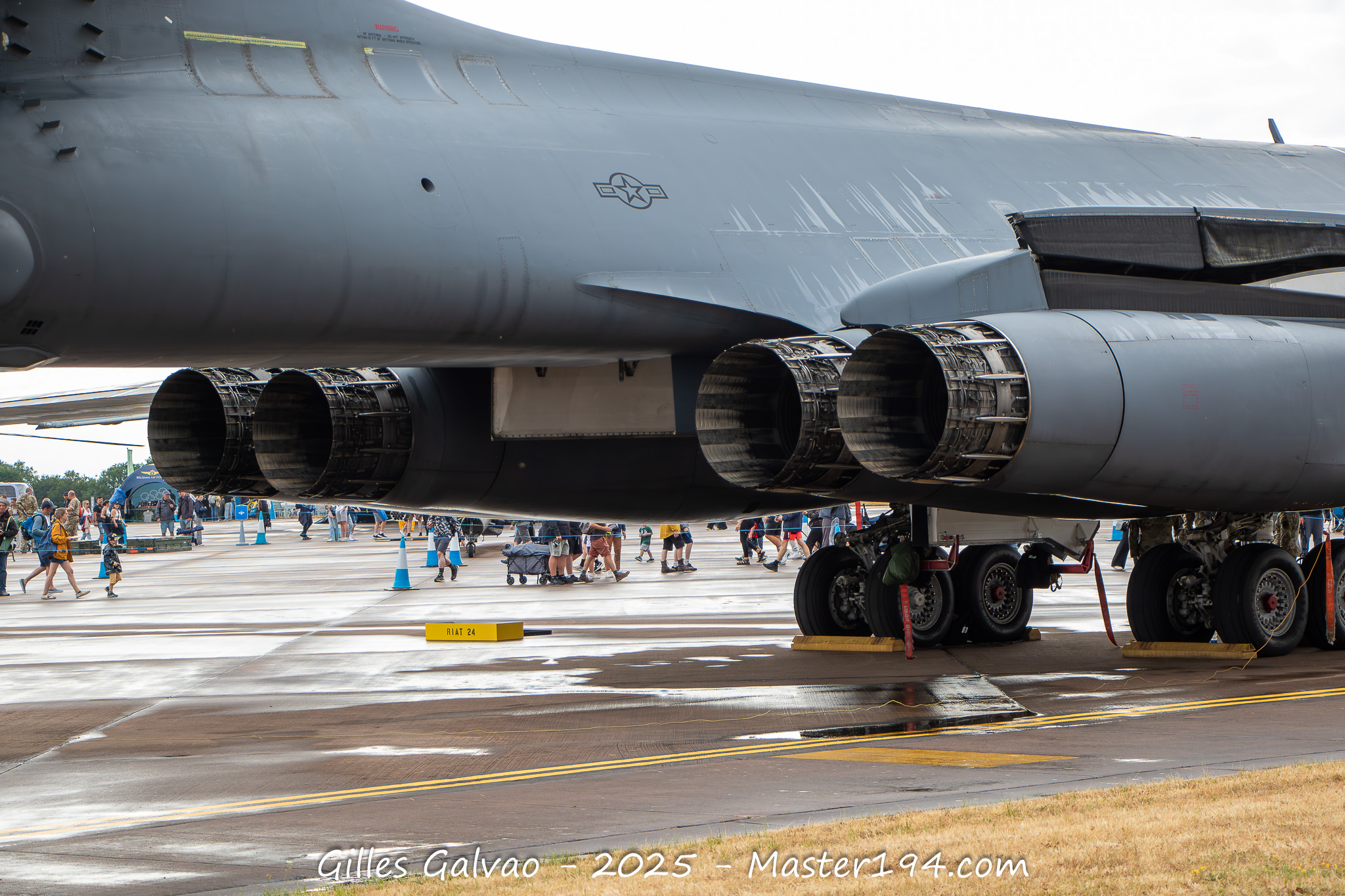
Nacelle and exhaust nozzle details:
Airframe and Structure
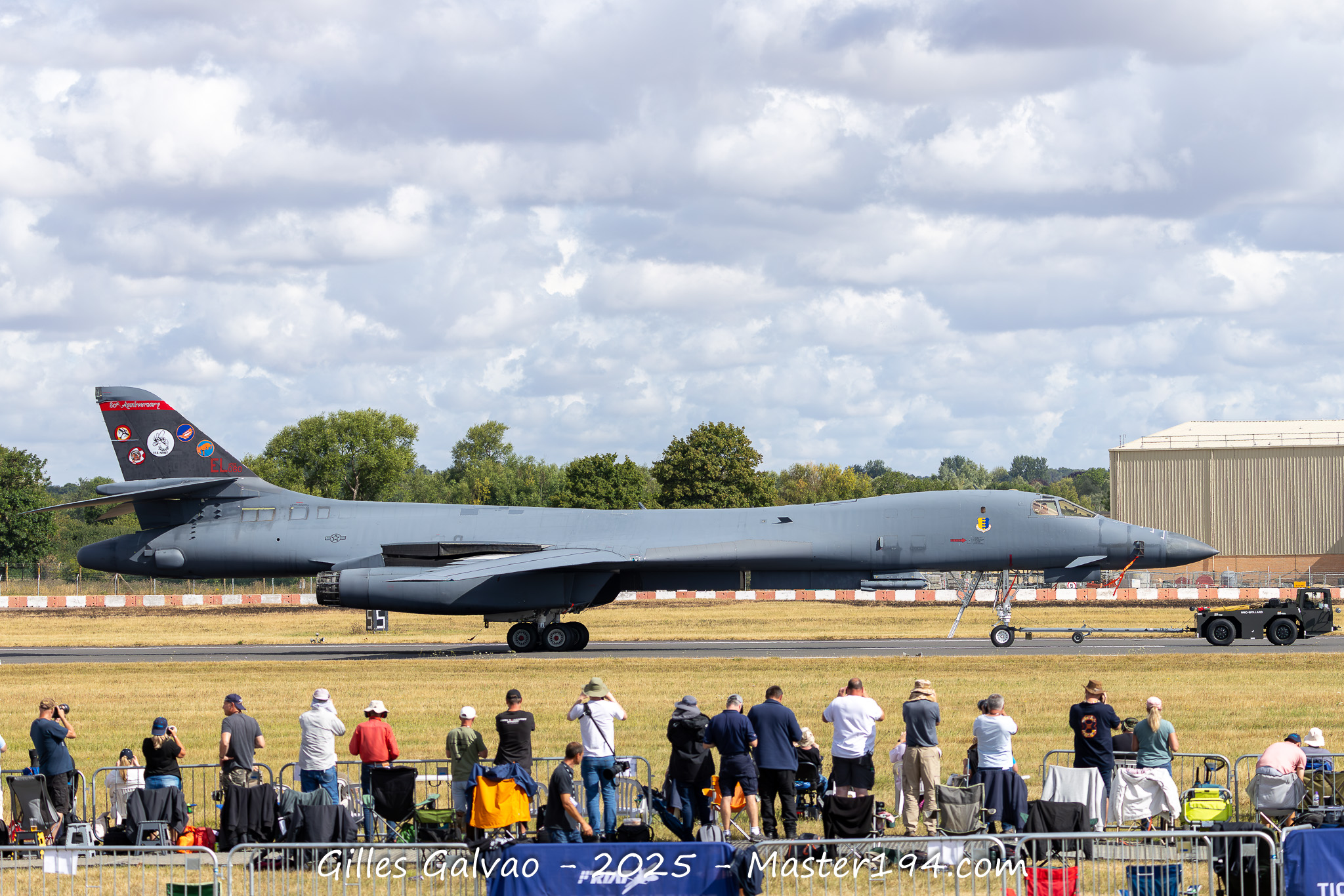
The B-1B’s fuselage is optimized for rapid penetration into hostile environments. Its blended wing-body design reduces turbulence and enhances stability. The airframe is reinforced to withstand the extreme structural loads and stress of high-speed, low-level flight.

Weapons Bay
Le BThe B-1B features a massive internal weapons bay capable of carrying a heavy load of conventional ordnance. Rotary launchers allow for various configurations of both guided and unguided munitions.
The B-1B’s maximum payload capacity is approximately 34 tonnes (75,000 lbs).
Typical Loadout Examples:
- Mixed Loads: For instance, a combination of JDAMs, JASSMs, and small-diameter bombs depending on the mission profile.
- 84x Mk-82 500 lb (227 kg) Bombs: For saturation bombing or area denial scenarios.
- 24x GBU-31 JDAM 2,000 lb Guided Bombs: For heavy precision strikes against hardened targets.
- 24x AGM-158 JASSM Cruise Missiles: For long-range standoff attacks against strategic targets.
This flexibility makes the “Bone” a true heavy multi-role strike platform, capable of shifting from carpet bombing to surgical strikes within a single configuration.
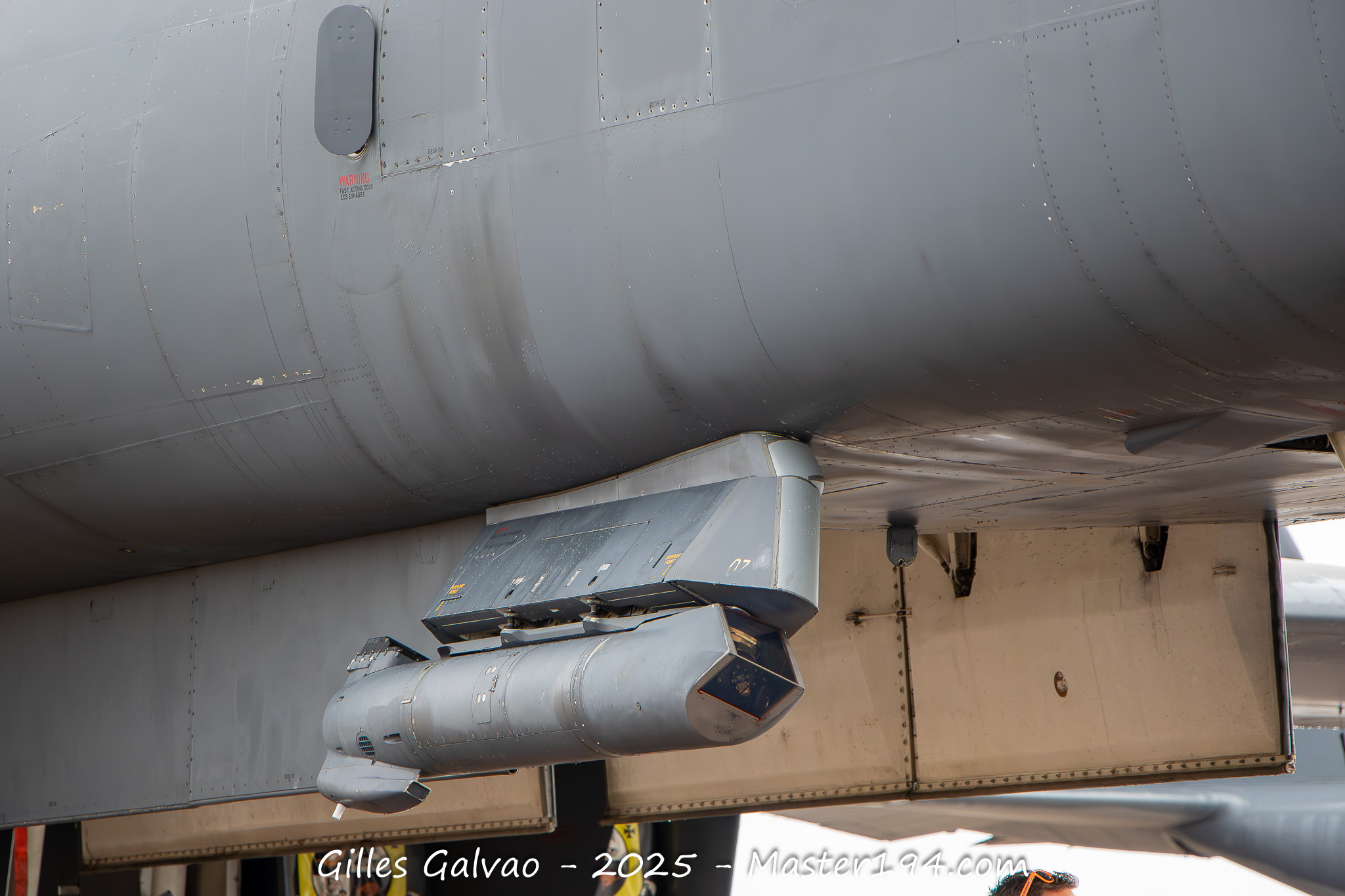
The only external “payload” is the Sniper Pod:
Performance and Capabilities
Despite its design compromises, the B-1B remains one of the most powerful bombers ever built.
Flight Performance
- Maximum Speed: Approximately Mach 1.2
- Range: Intercontinental without refueling (depending on specific mission profiles).
- Low-Level Capability: High-speed, very low-altitude flight (terrain-following).
Combat Load
It can carry up to approximately 34 tonnes (75,000 lbs) of ordnance, making it one of the heaviest combat aircraft in terms of offensive capacity.
Initially designed for nuclear delivery, its role was entirely converted to conventional operations following the end of the Cold War.
A Pillar of Modern Conflicts
The B-1B saw no combat during the Cold War, as its initial strategic role was rendered obsolete before any real engagement occurred. It finally entered active combat in the 1990s and has been used extensively throughout 21st-century conflicts:
- Operation Desert Fox (1998)
- Kosovo (1999)
- The War in Afghanistan
- The Iraq War
- Operations against ISIS (Daesh)
In these theaters, it established itself as a long-endurance strike platform, capable of loitering on station for several hours and delivering massive precision strikes. Its doctrinal transformation is absolute: evolving from a strategic nuclear penetrator into a conventional precision-strike and close air support powerhouse.cision massives.
Continuous Modernization
Despite entering service in the 1980s, the B-1B remains a platform in a state of constant modernization. Its evolutions primarily focus on:
- Digital avionics,
- Advanced communication systems,
- Targeting capabilities,
- And the integration of modern guided munitions (JDAM, JASSM, etc.).
These upgrades ensure the aircraft remains relevant, even with the arrival of more advanced platforms like the upcoming B-21 Raider.
Walkaround
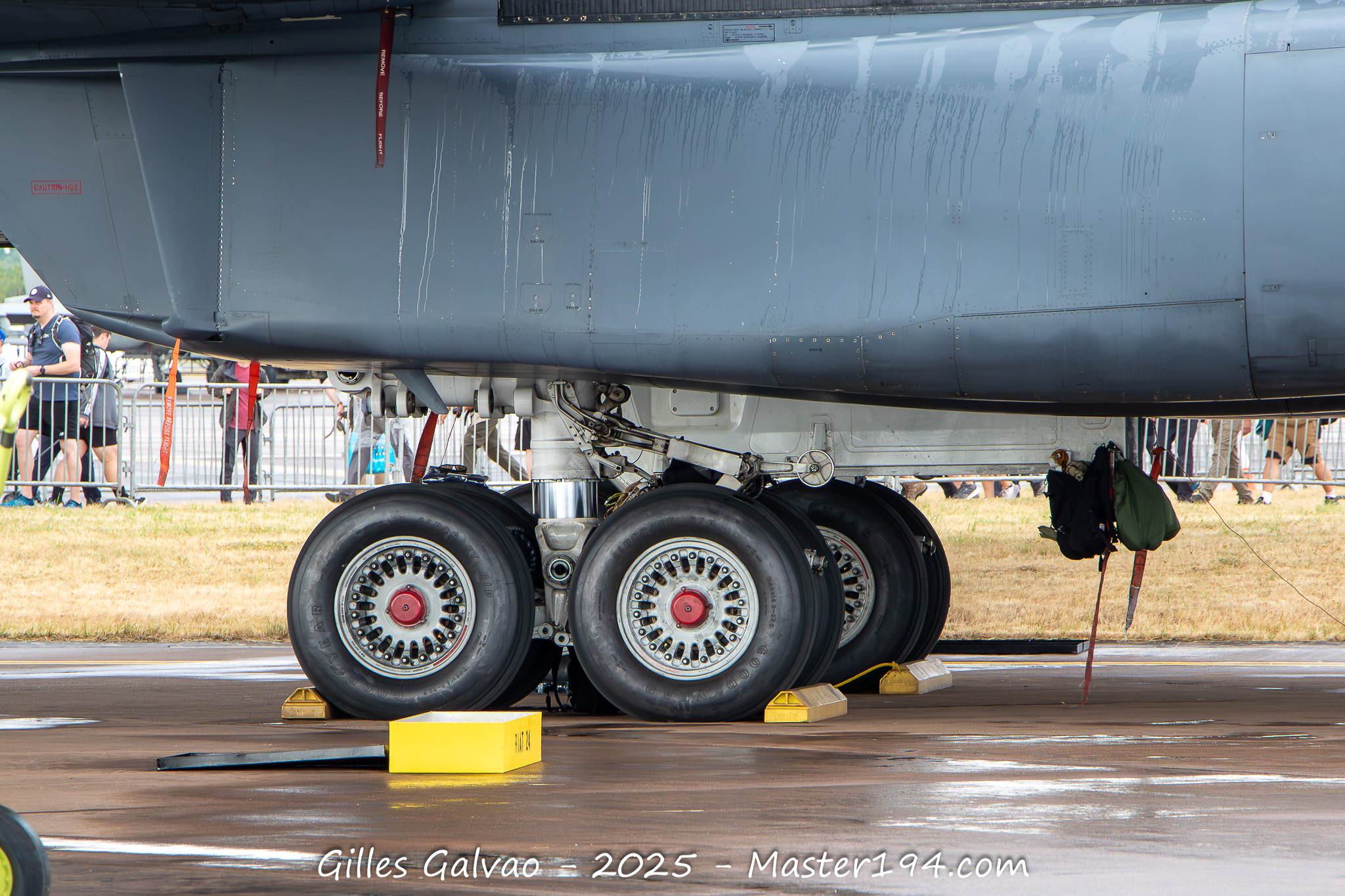
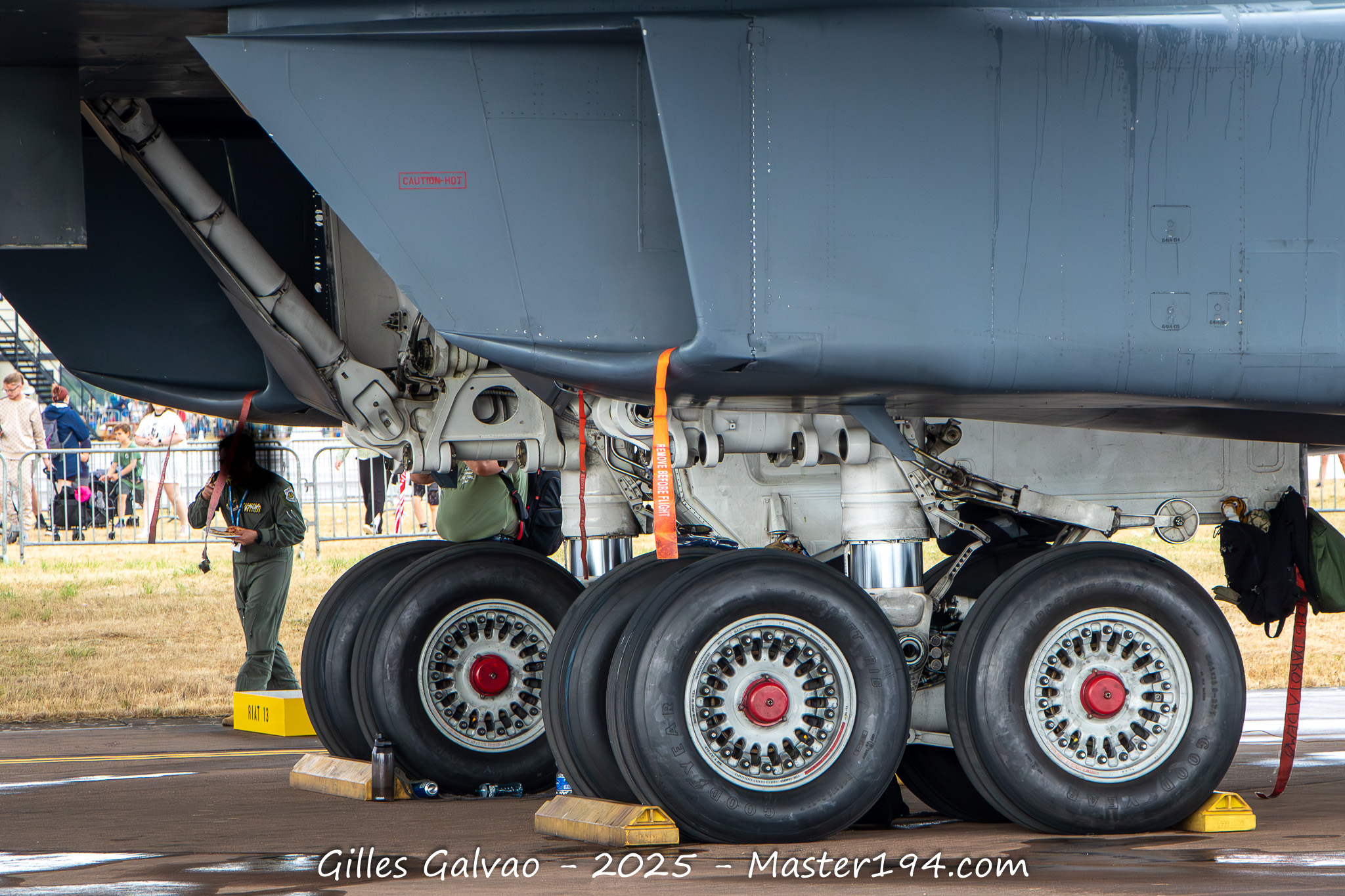
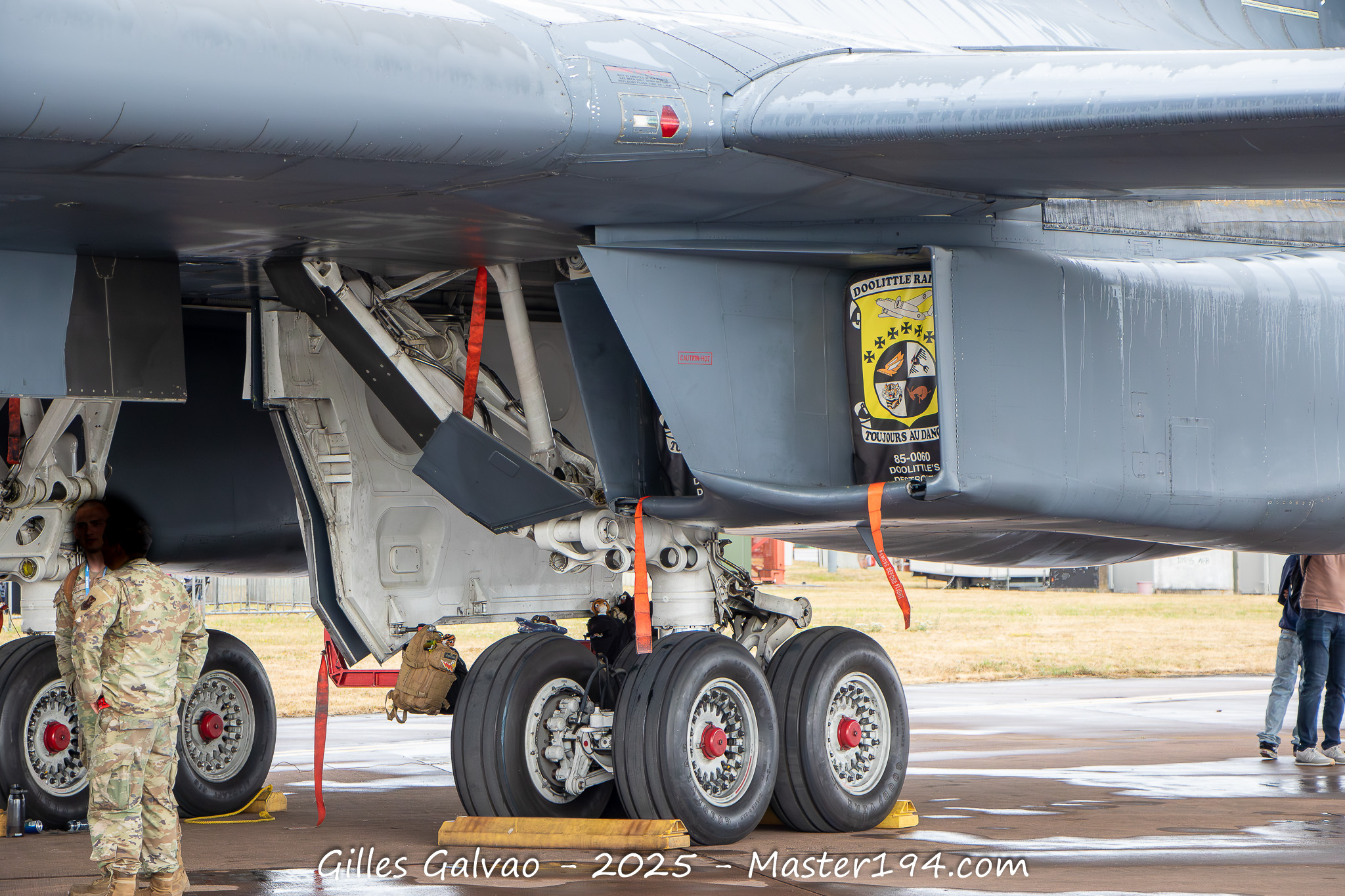
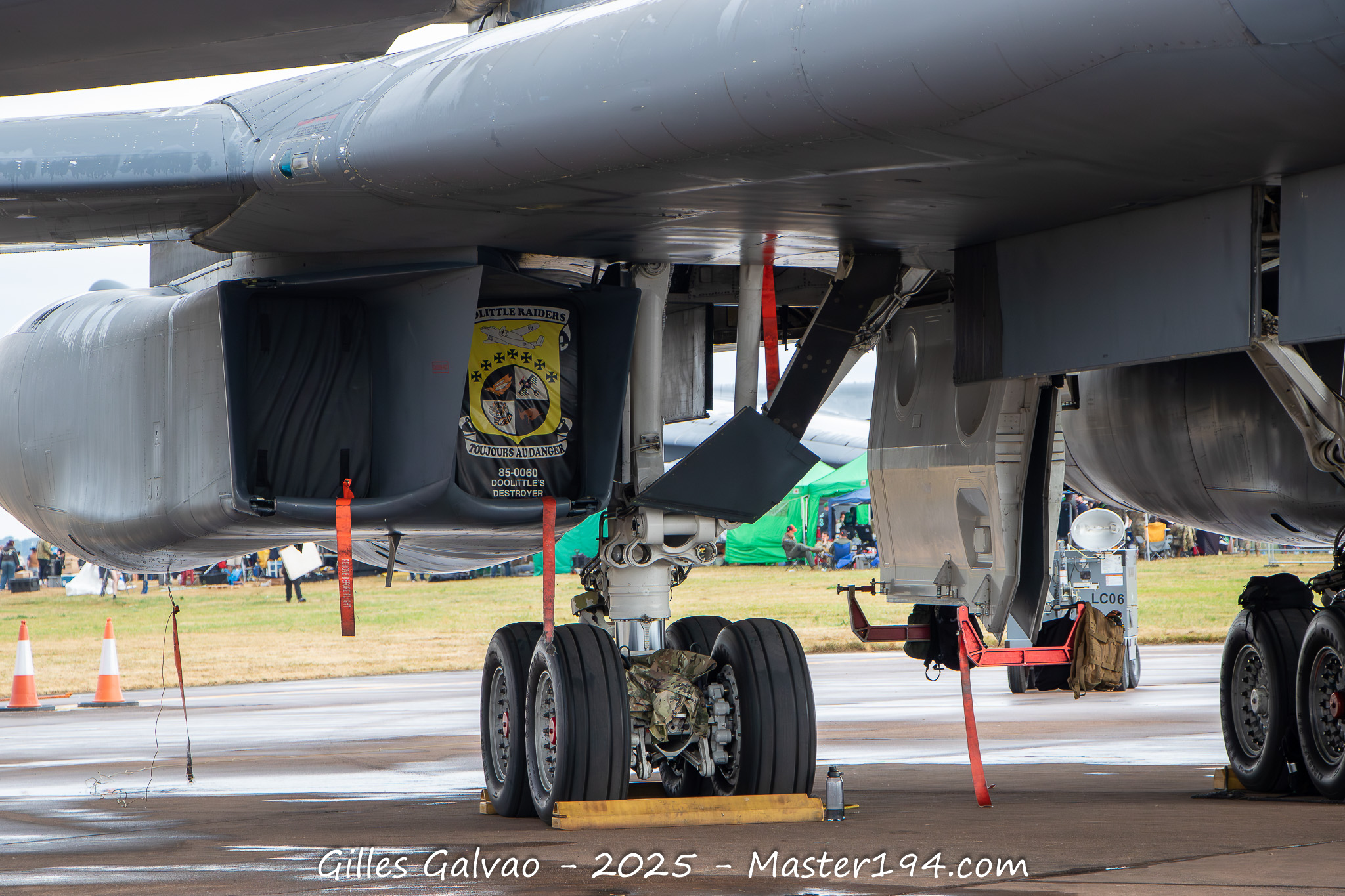
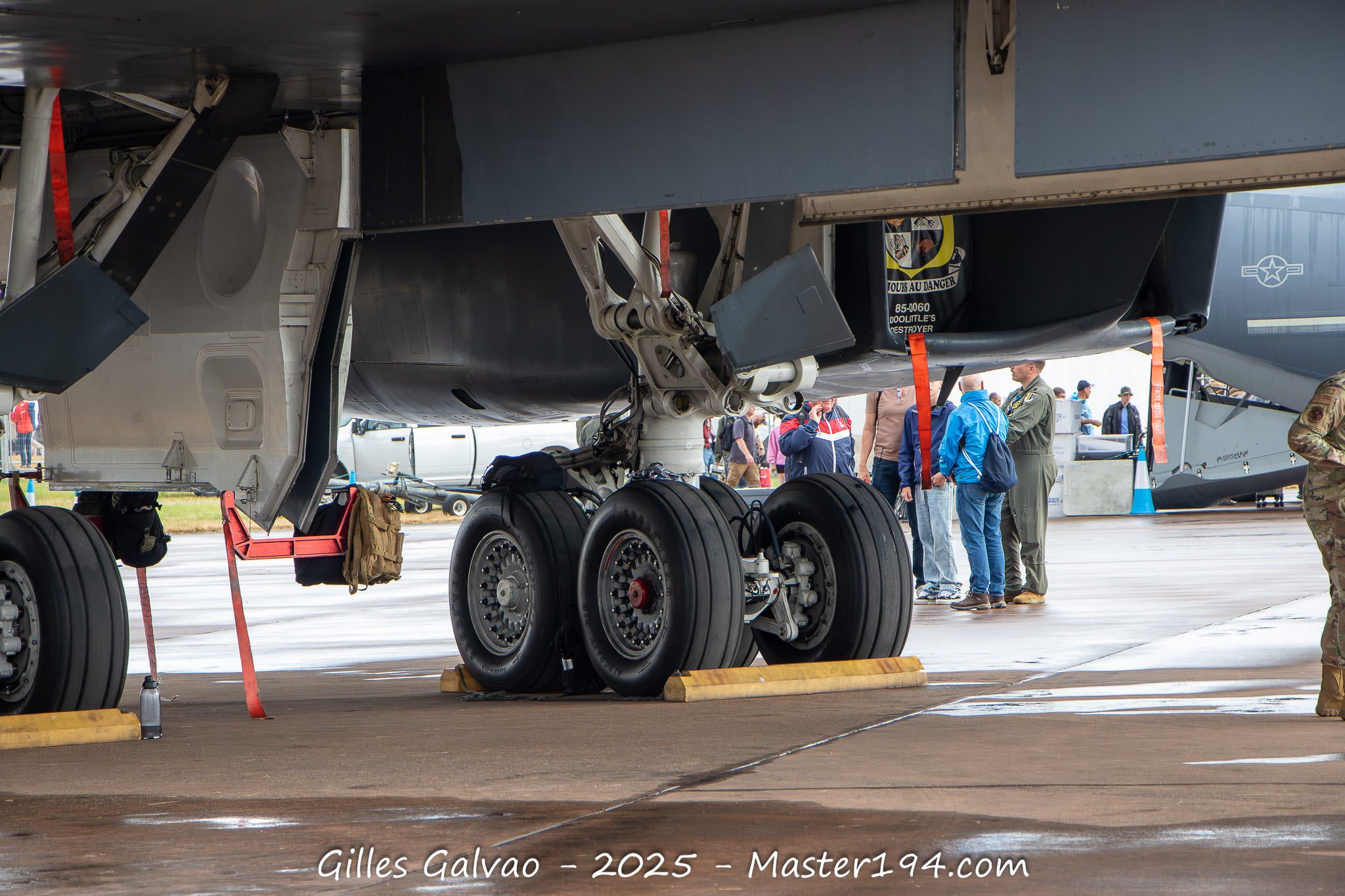
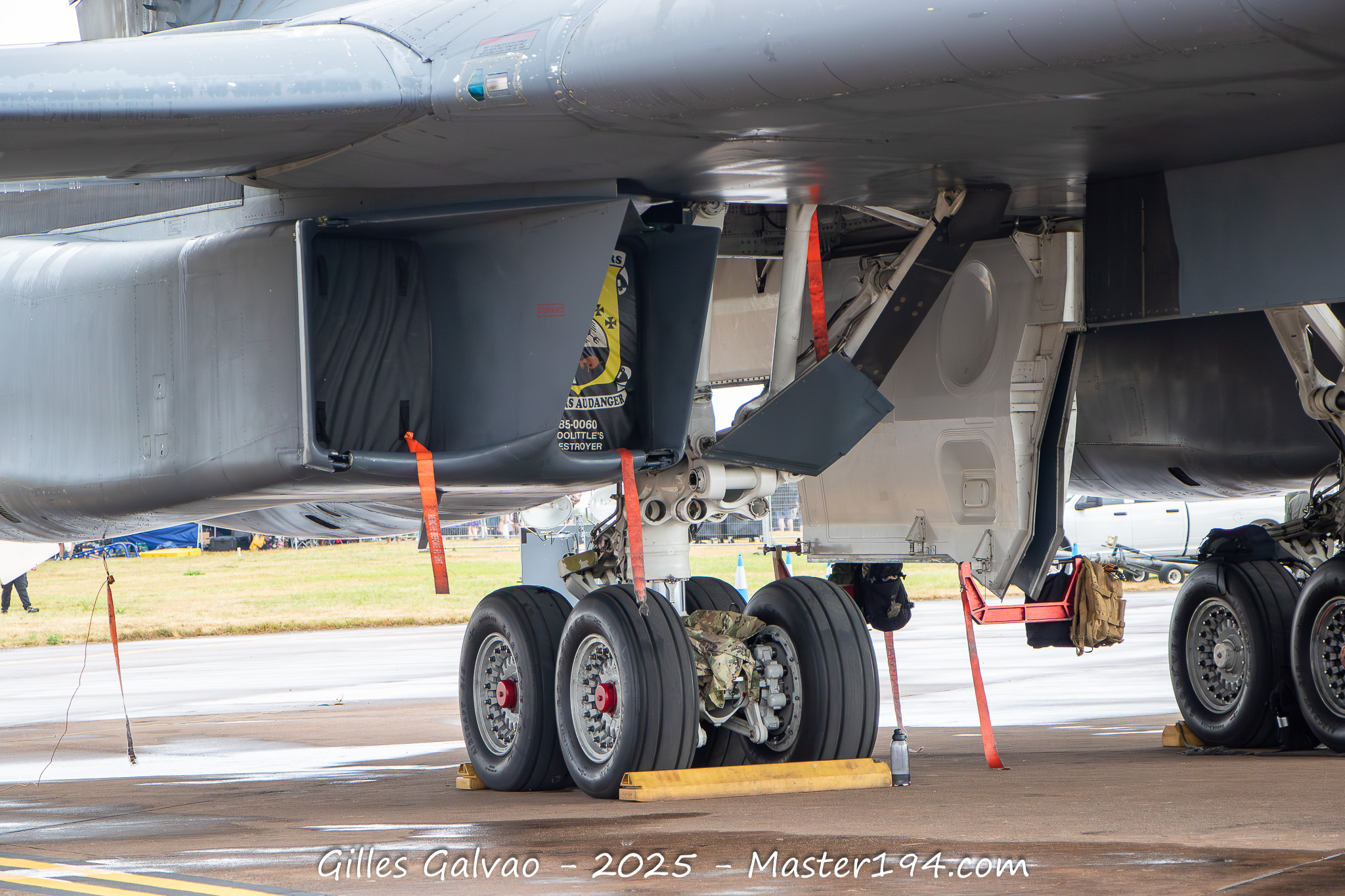
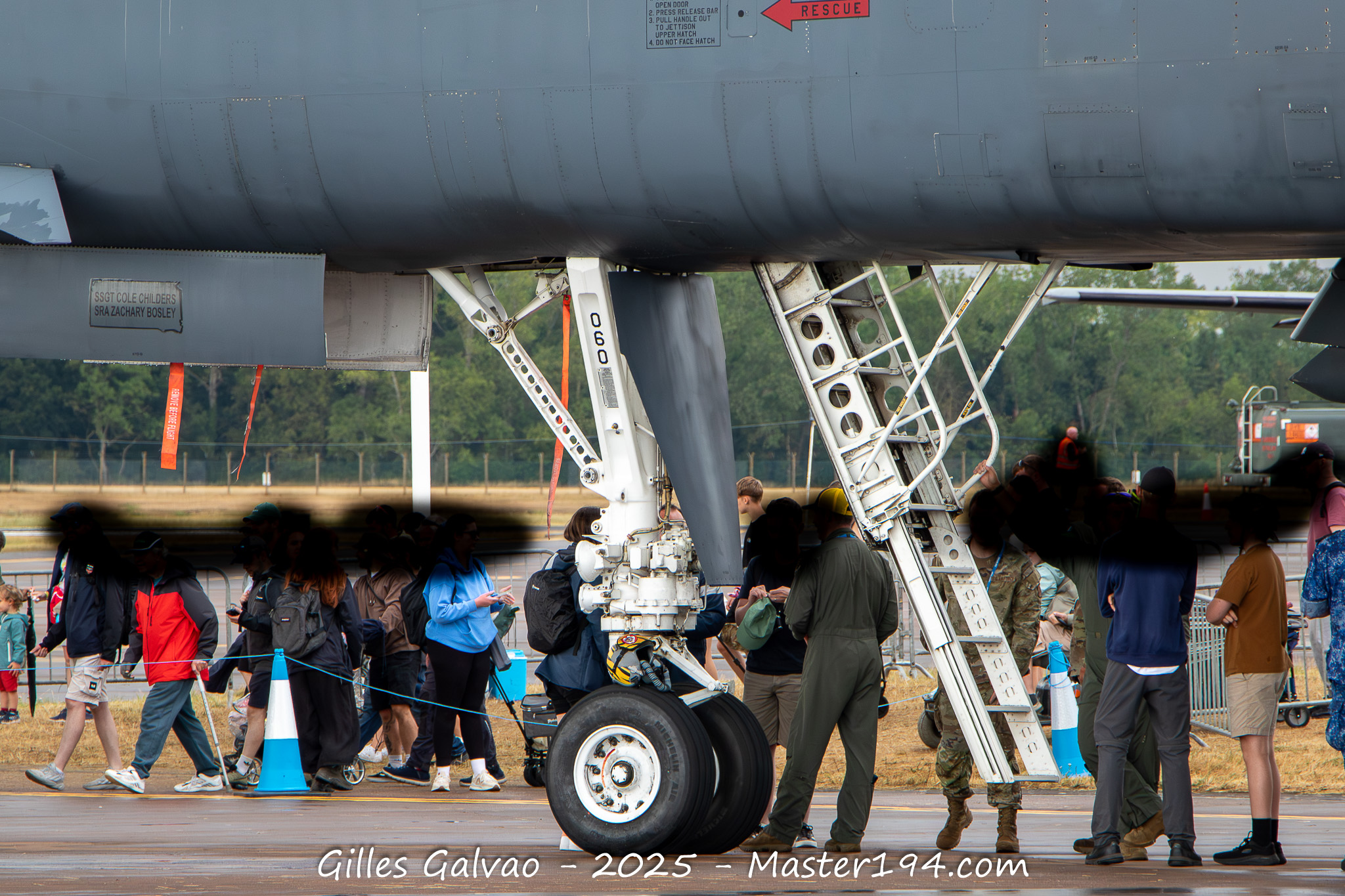
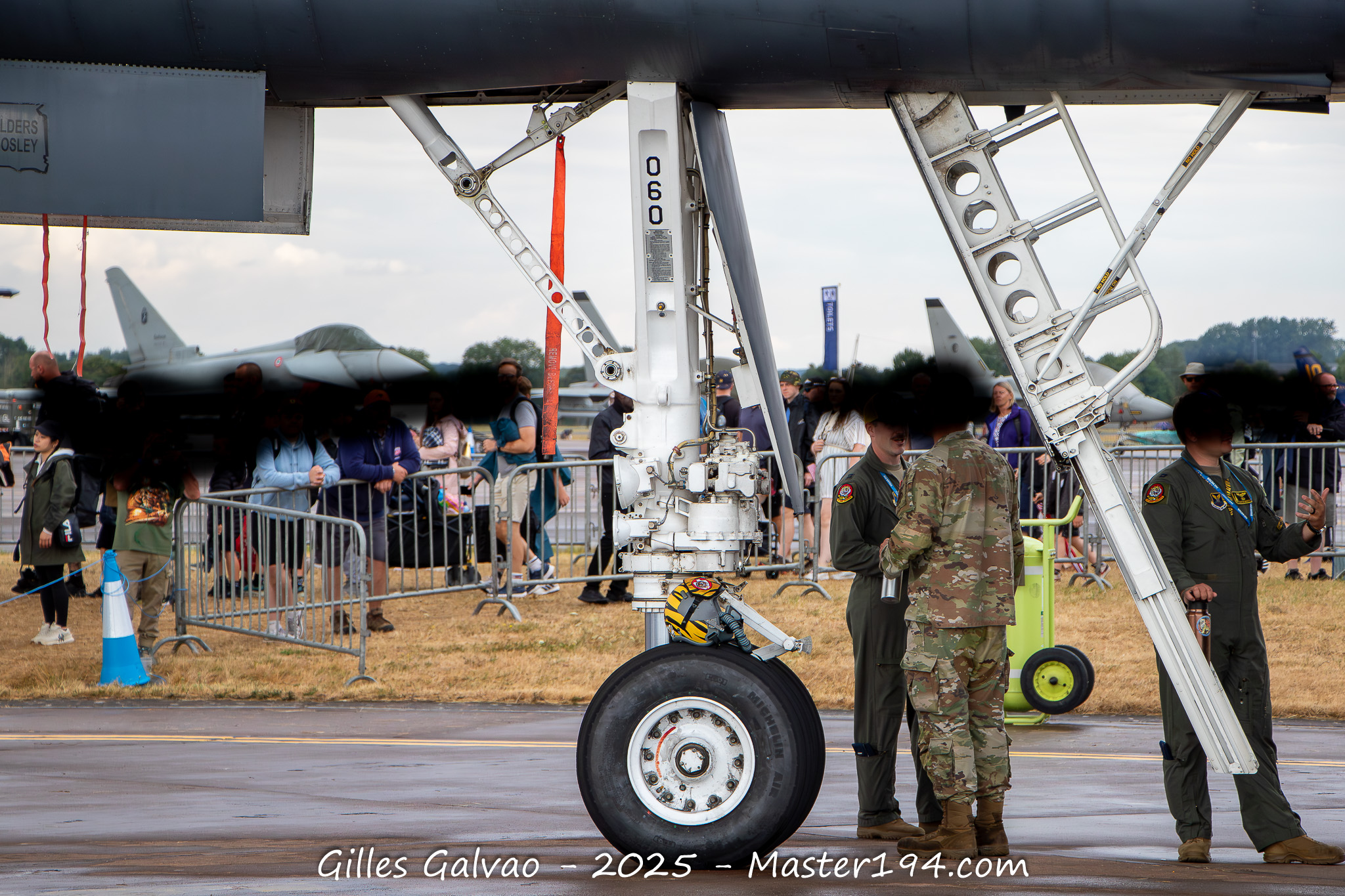
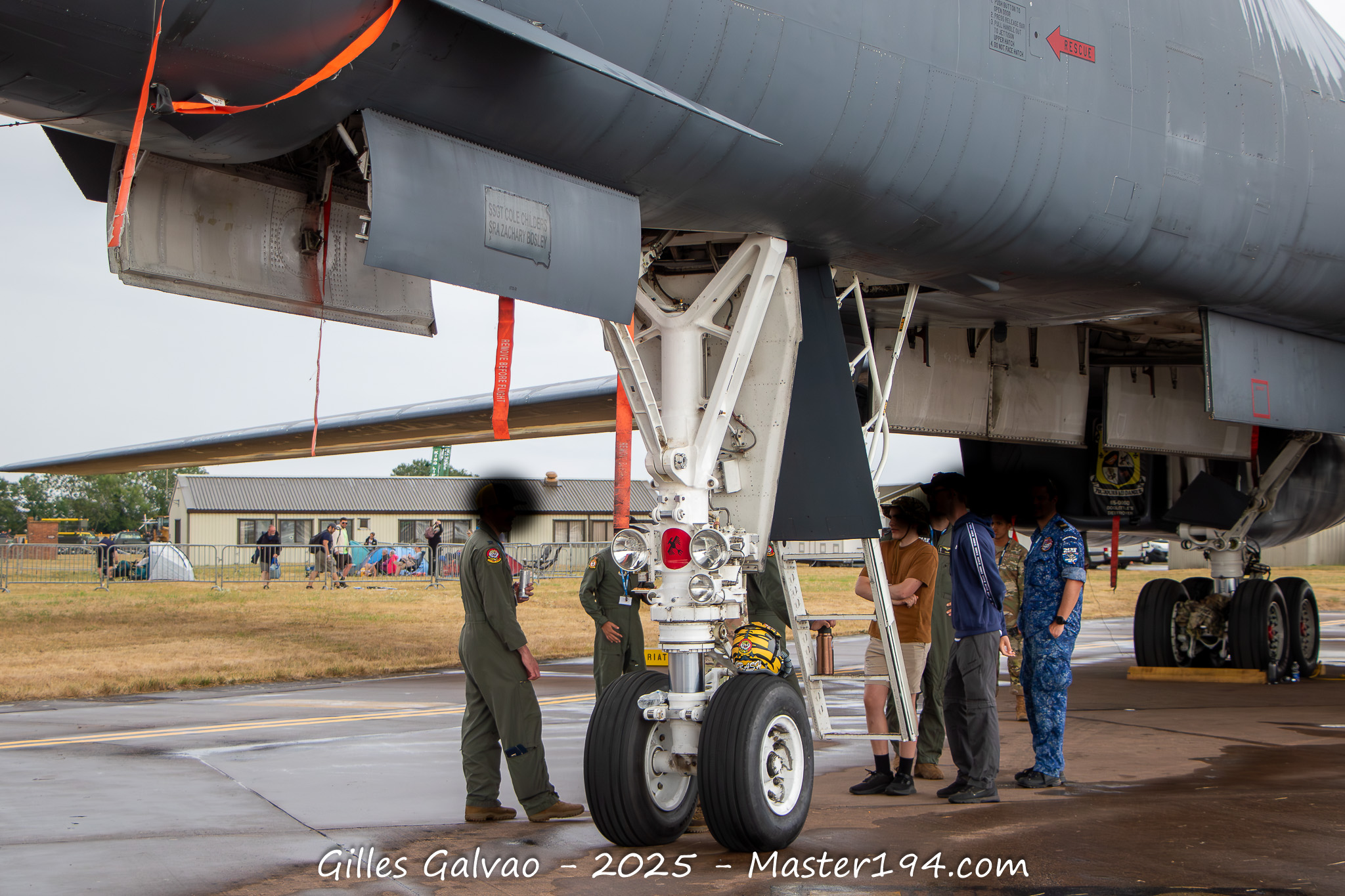
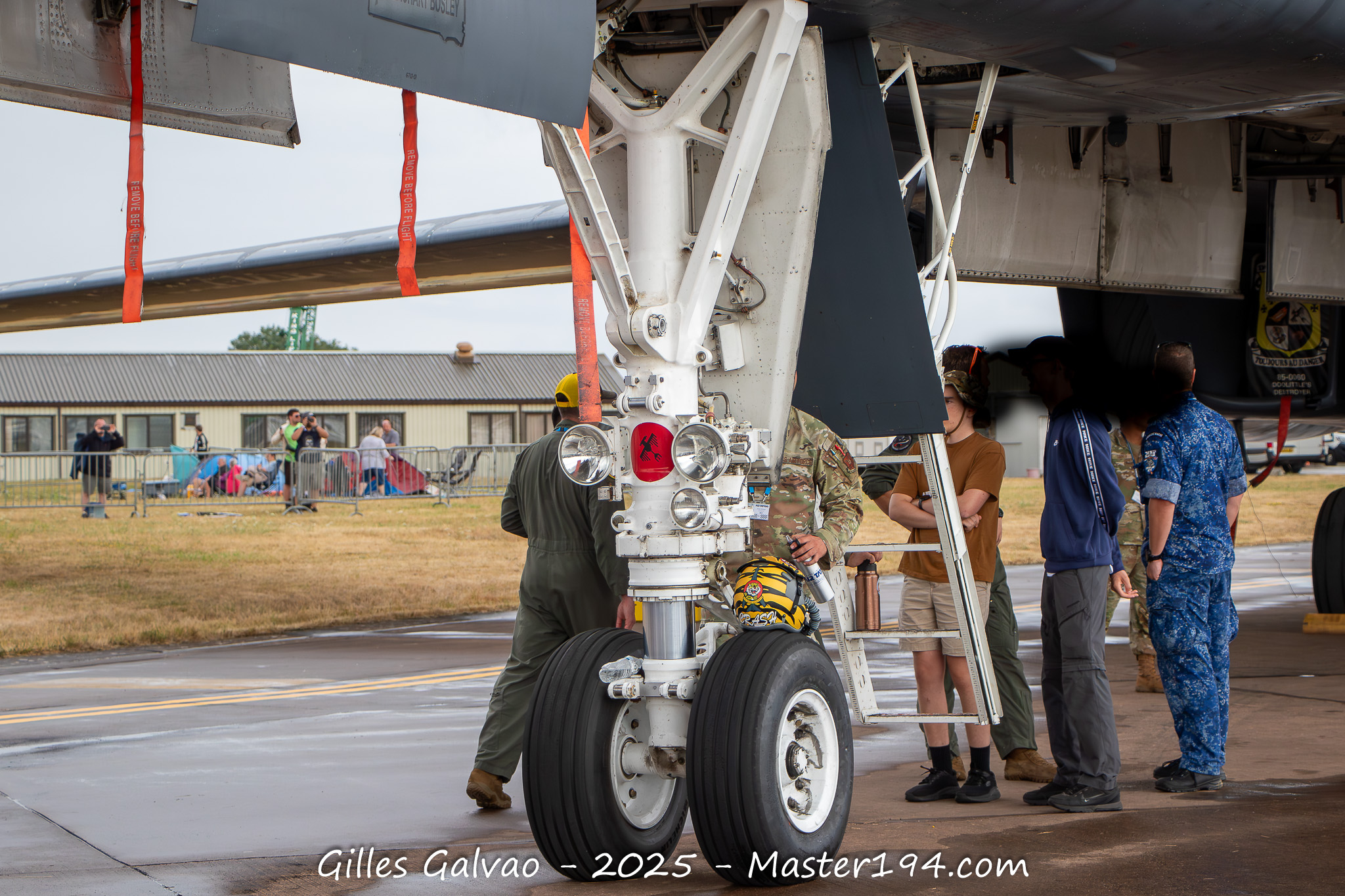
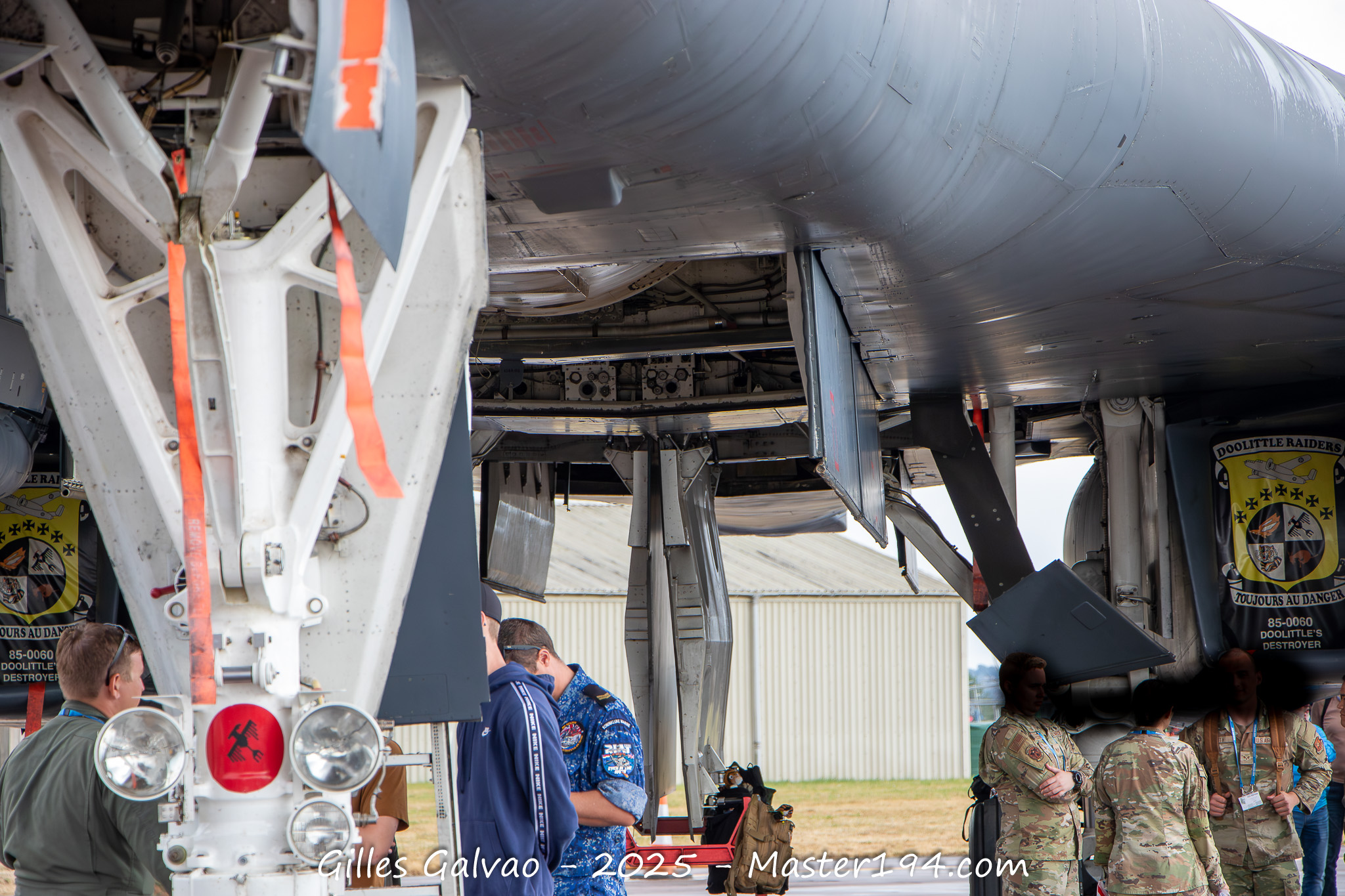
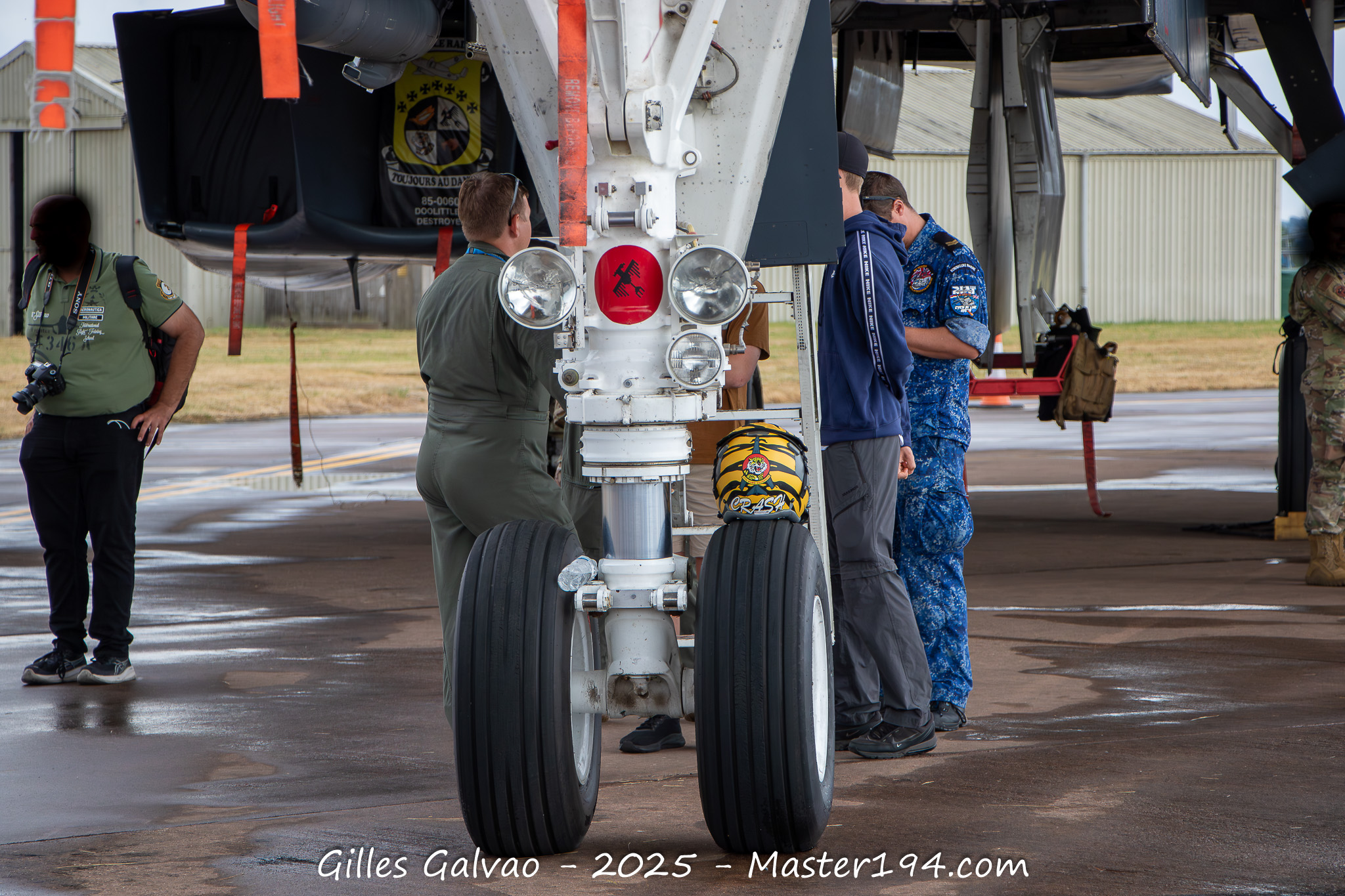
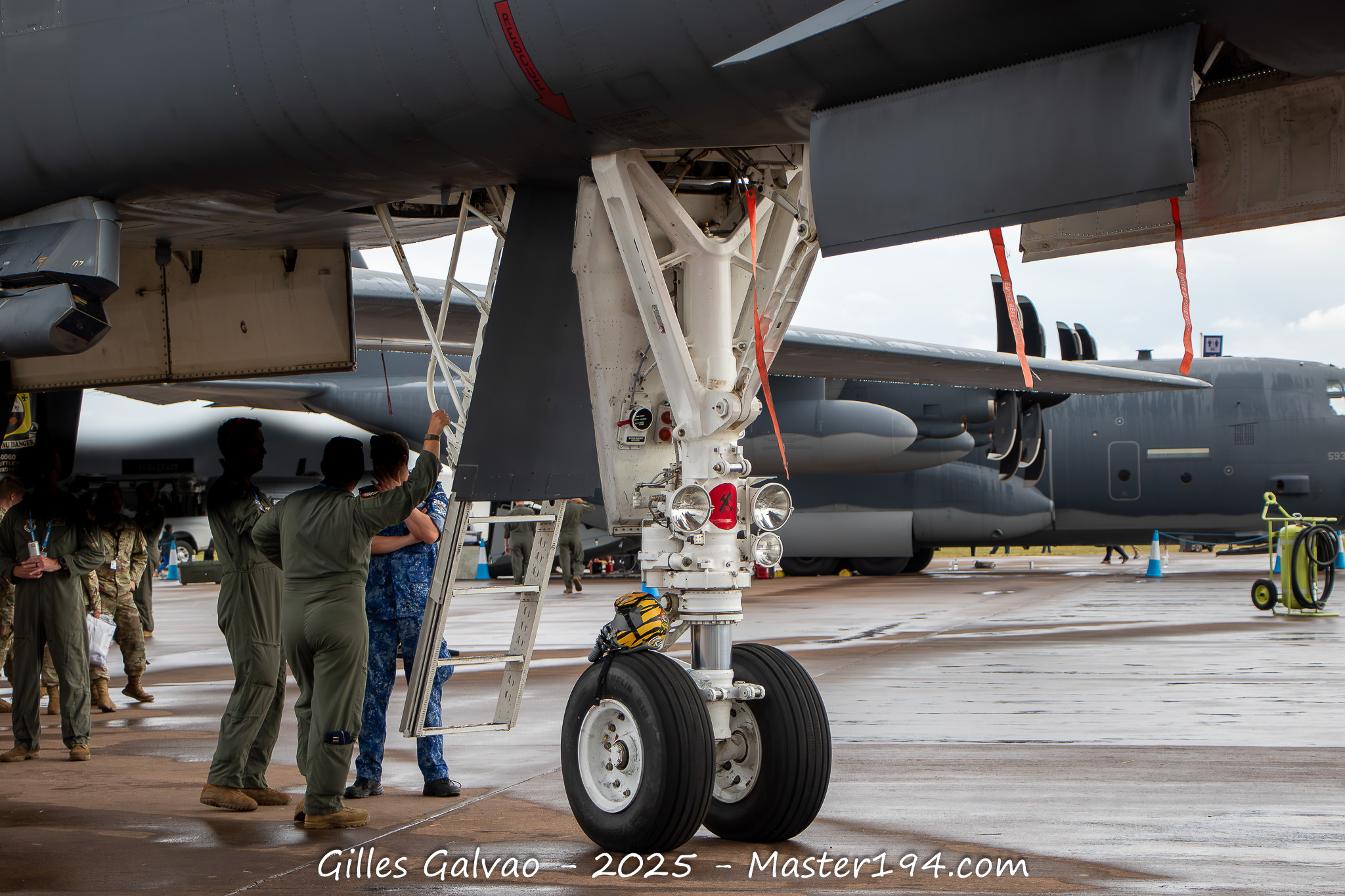
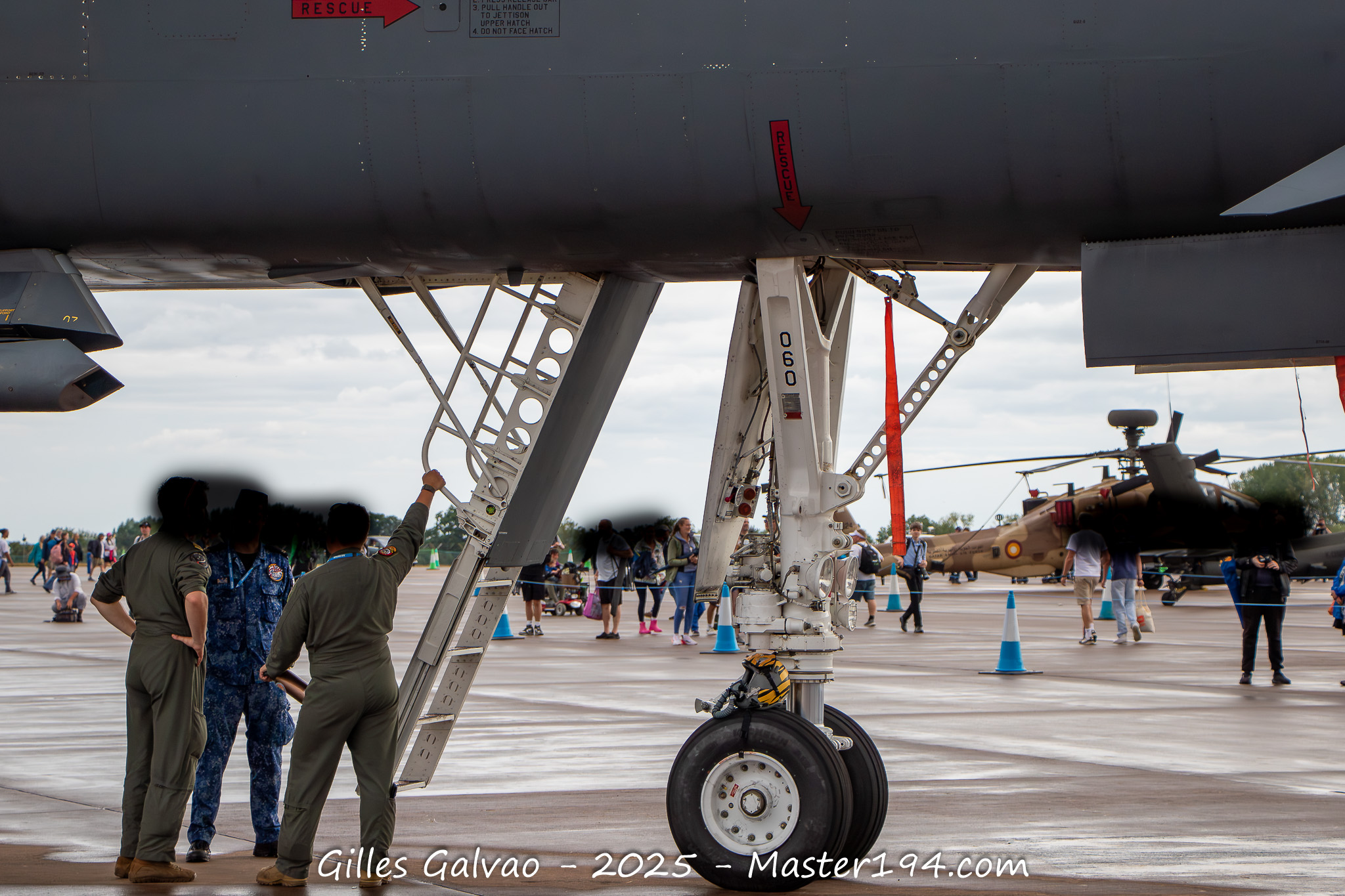
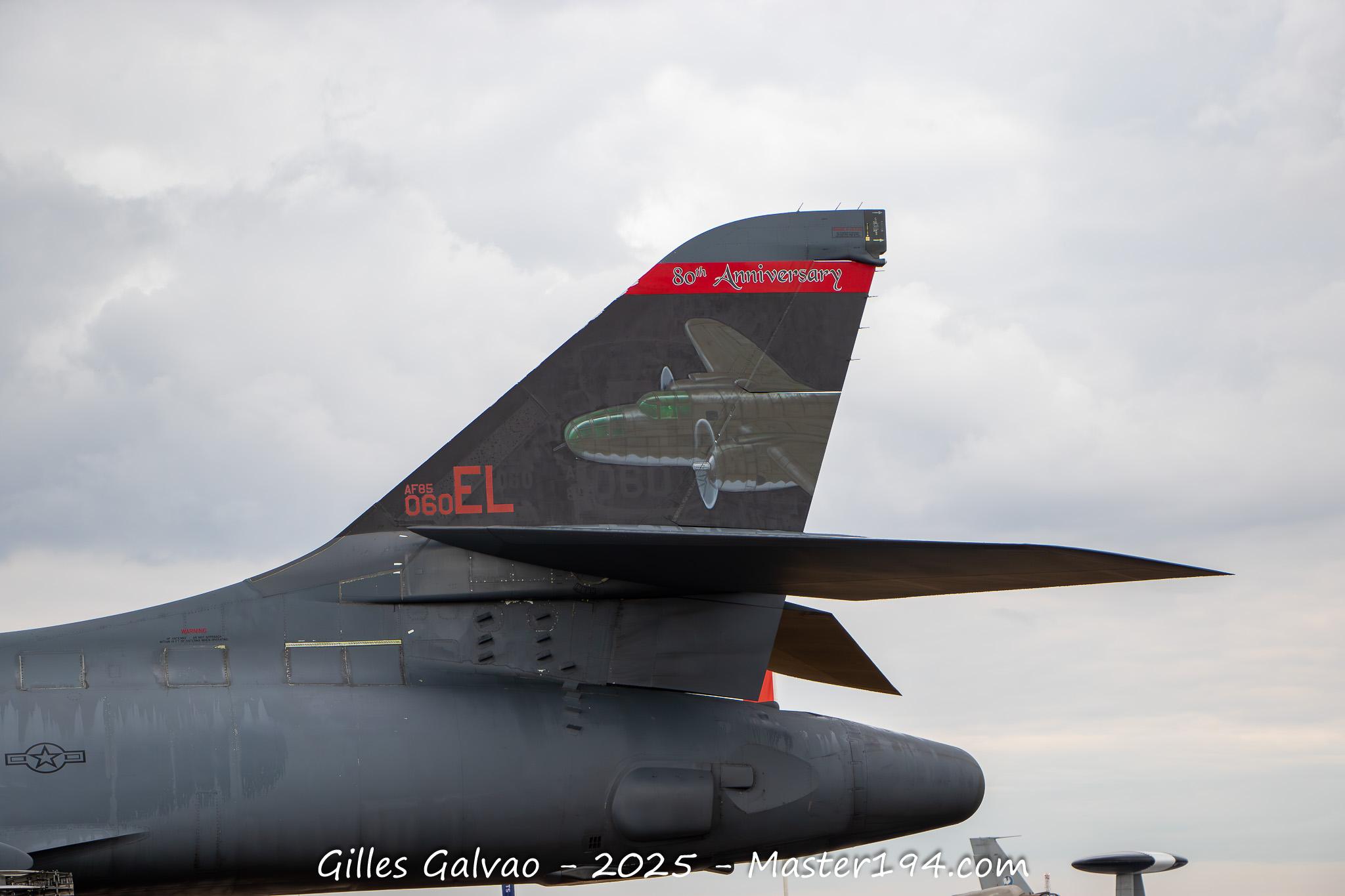
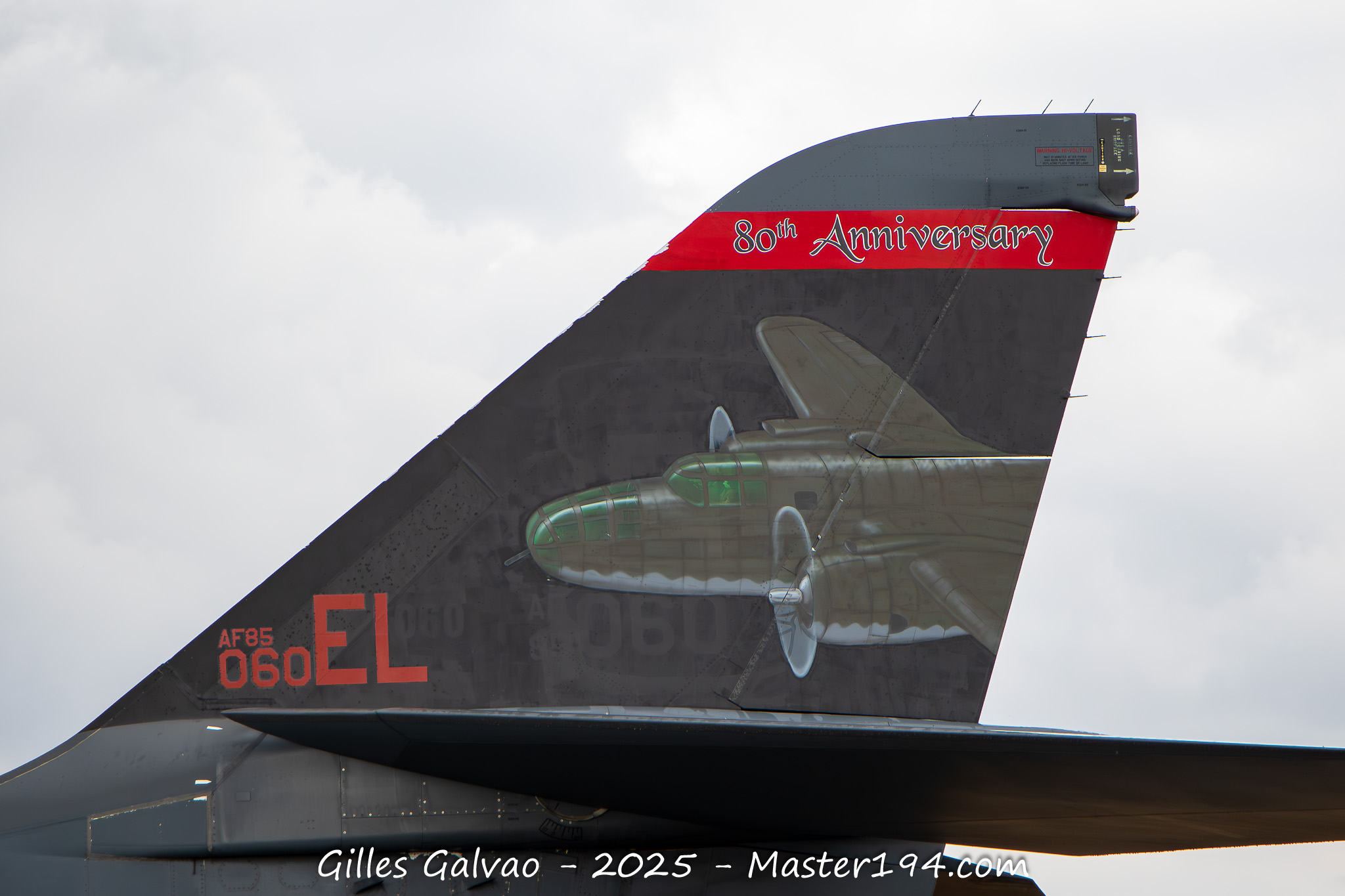
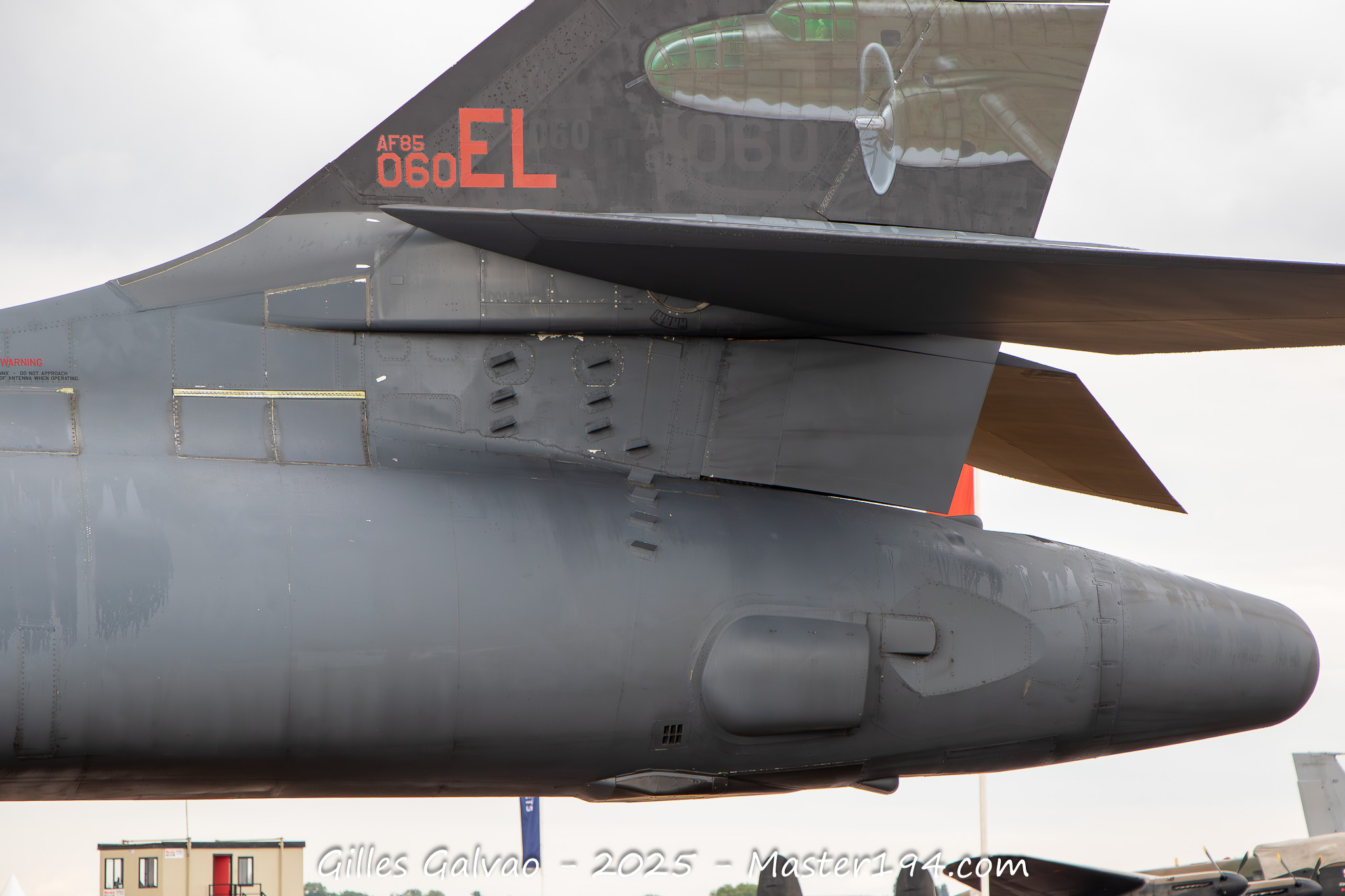
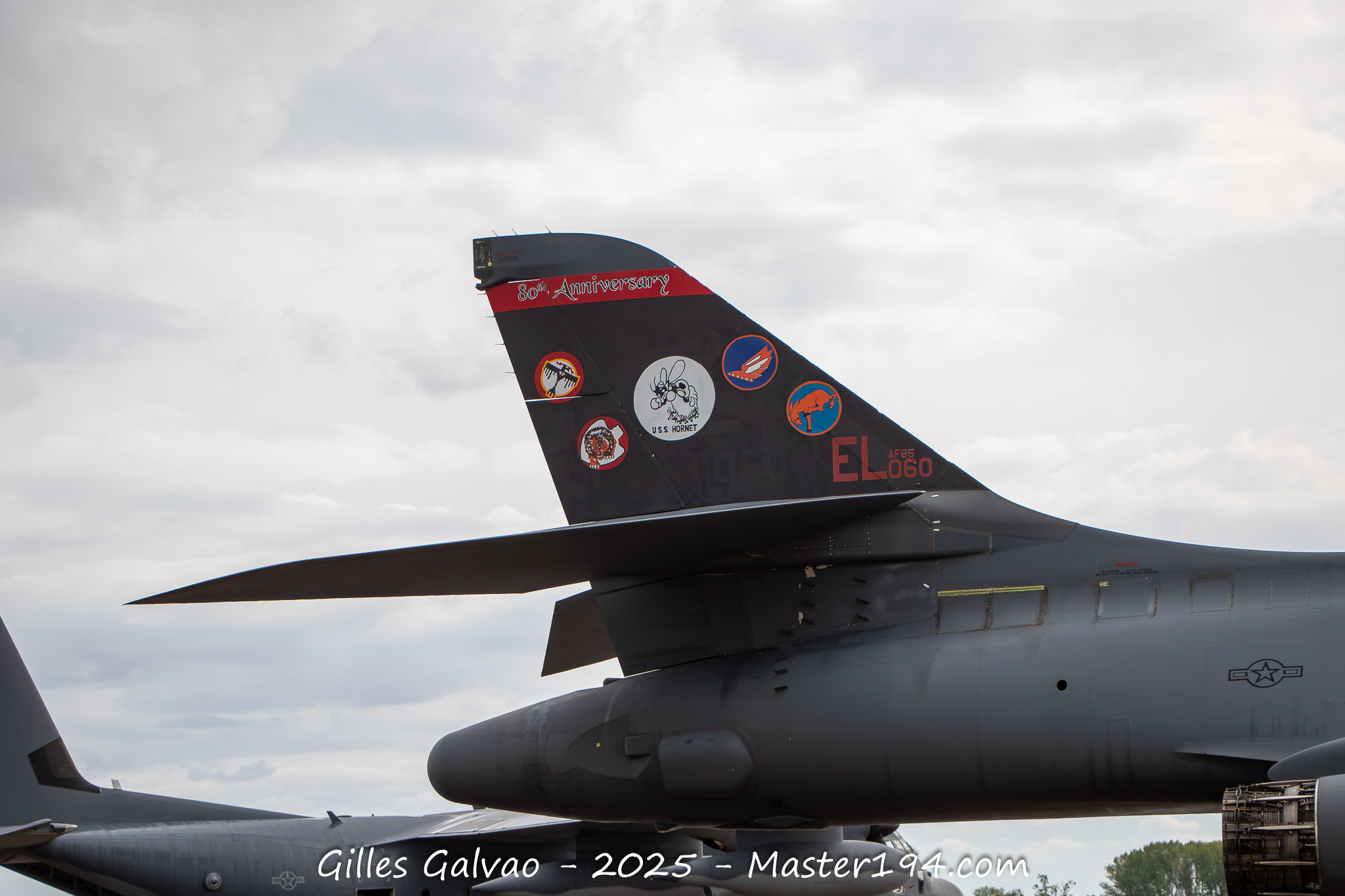
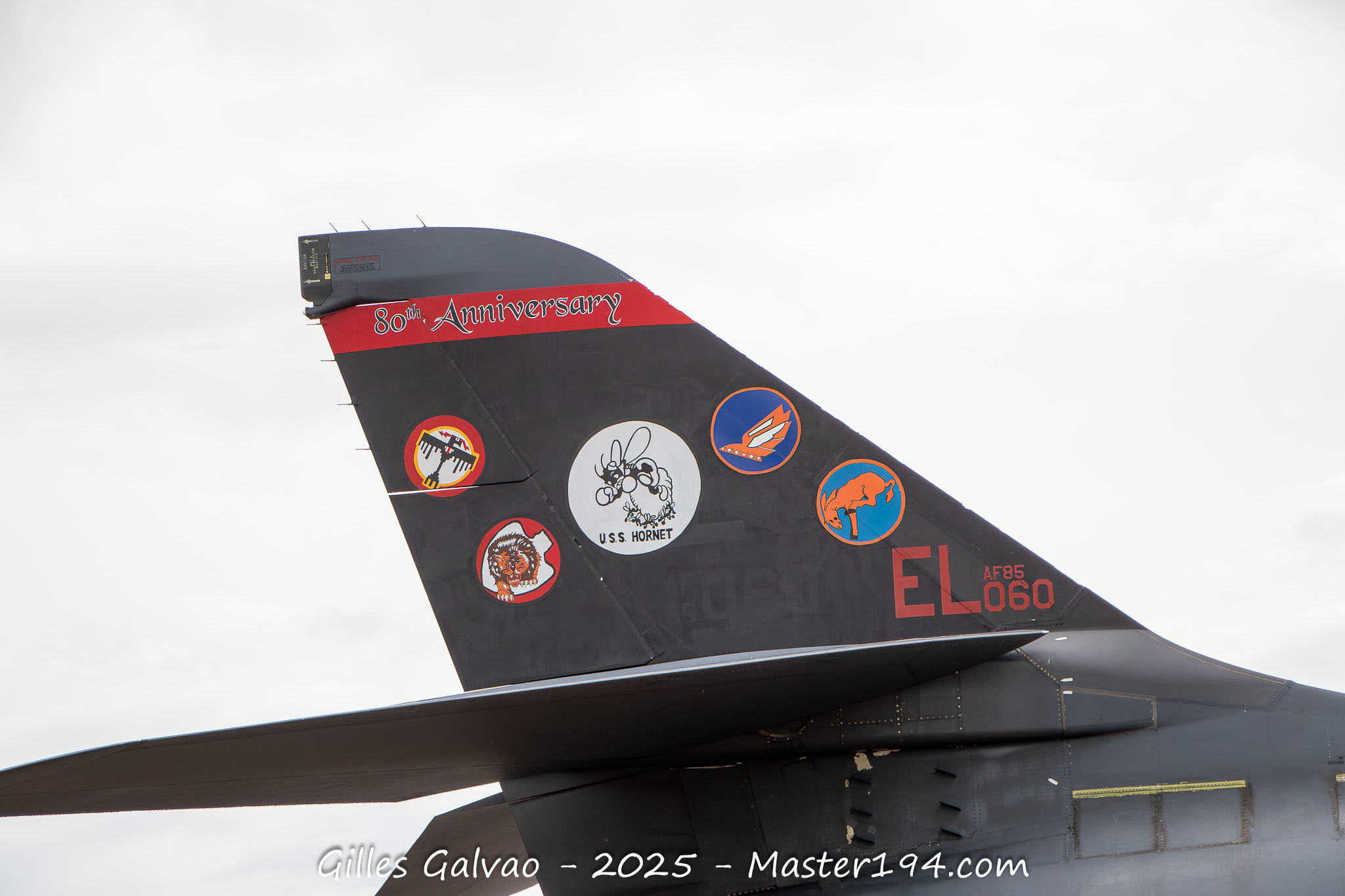
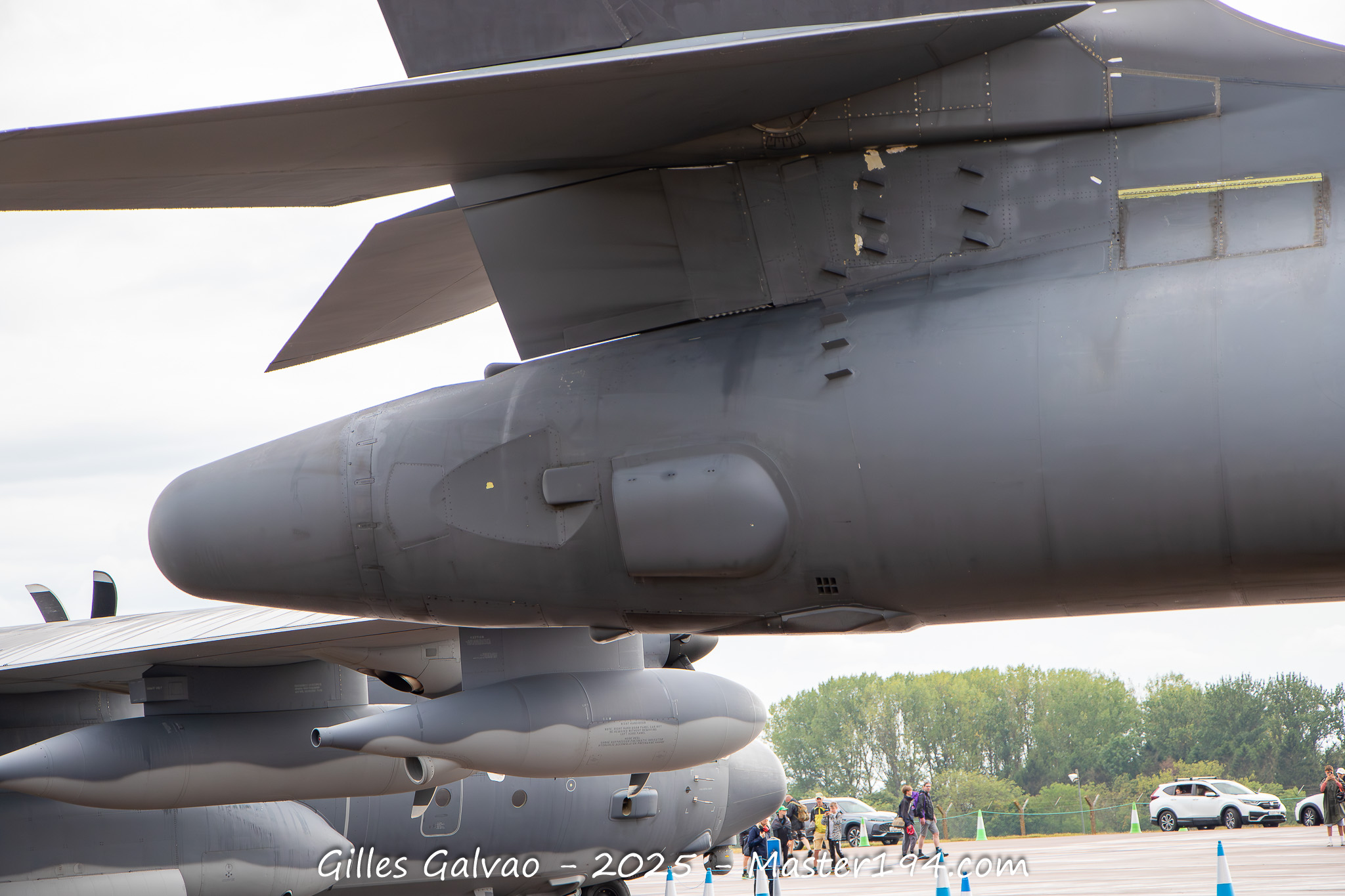
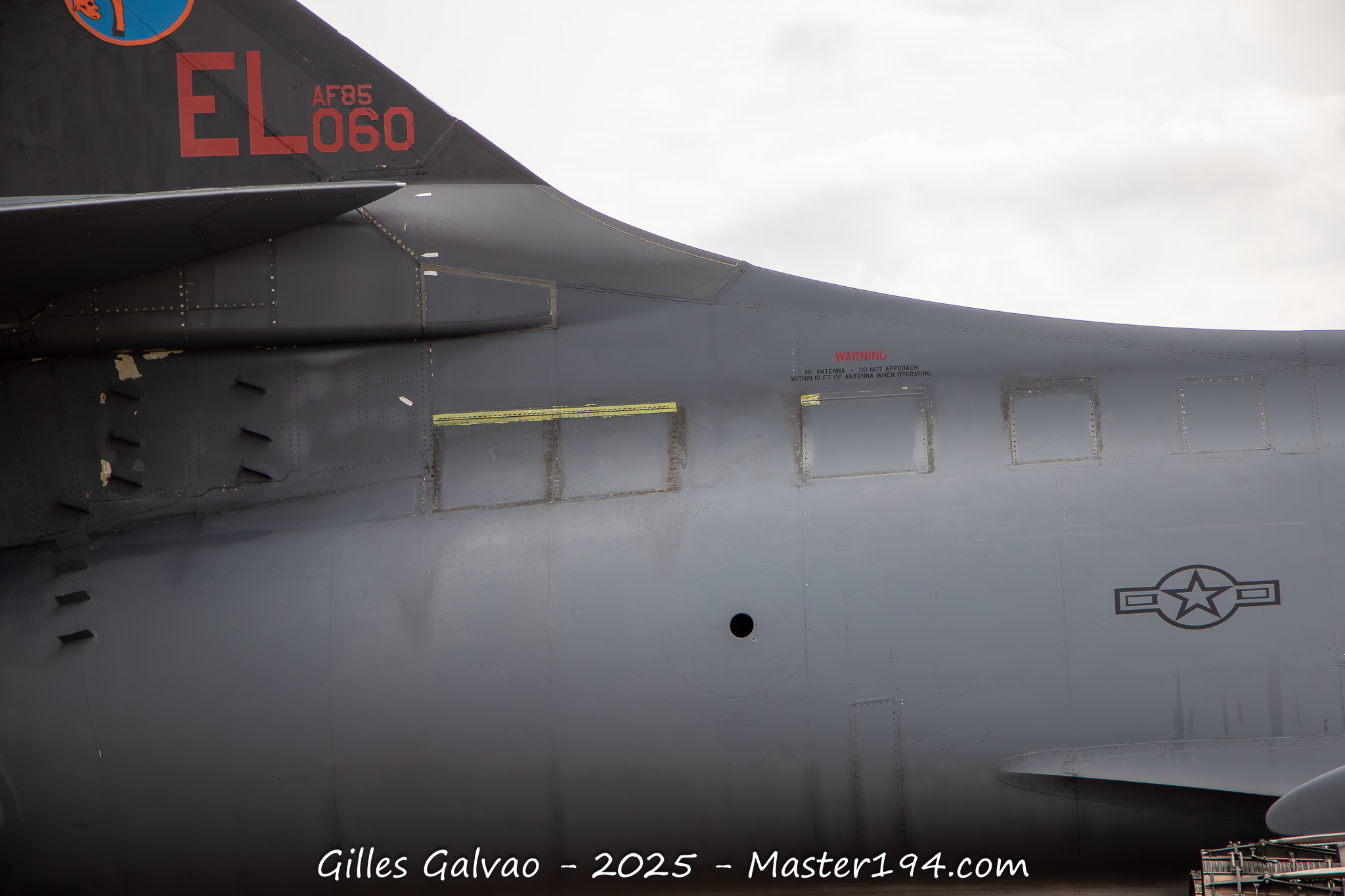
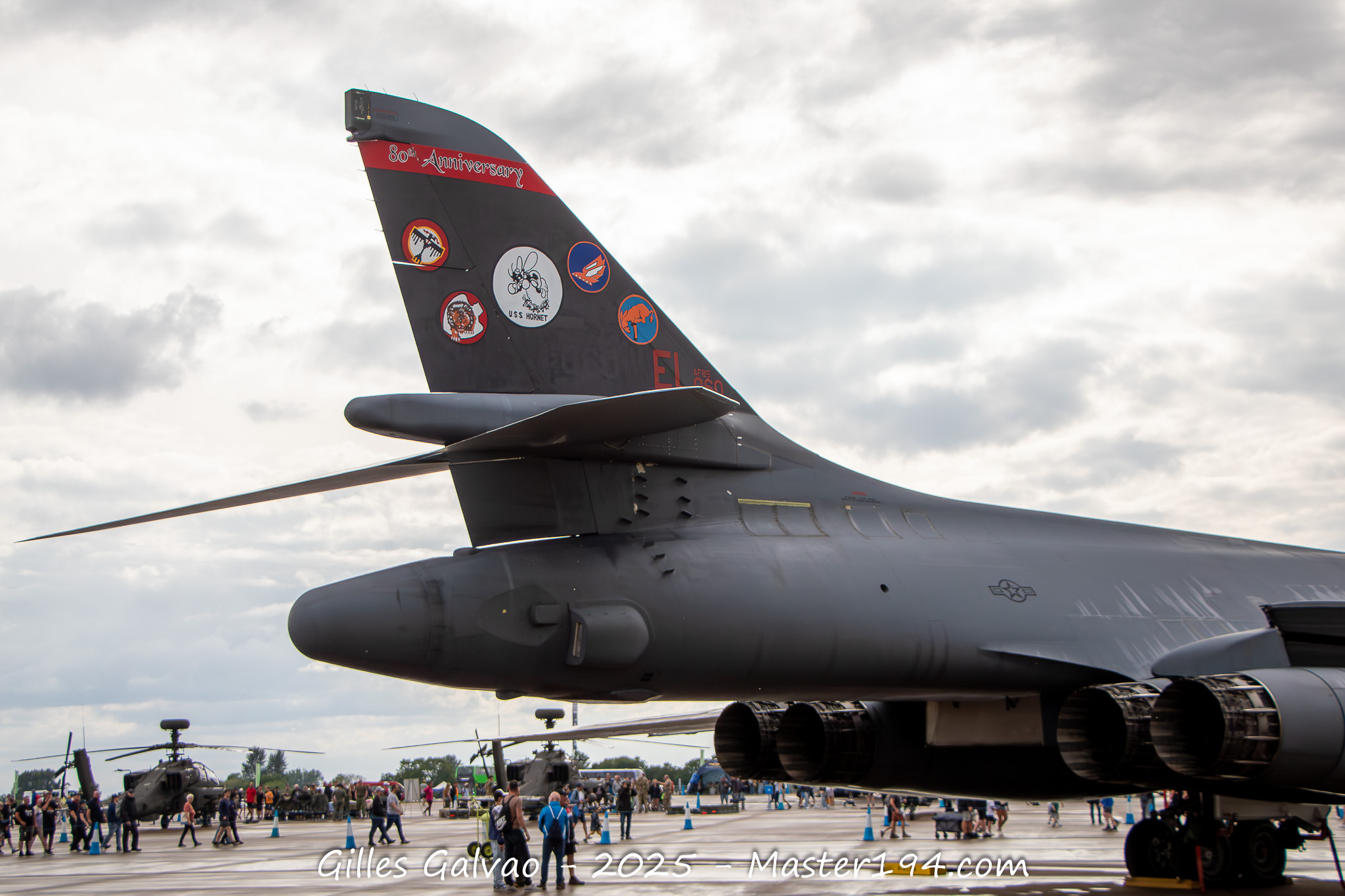
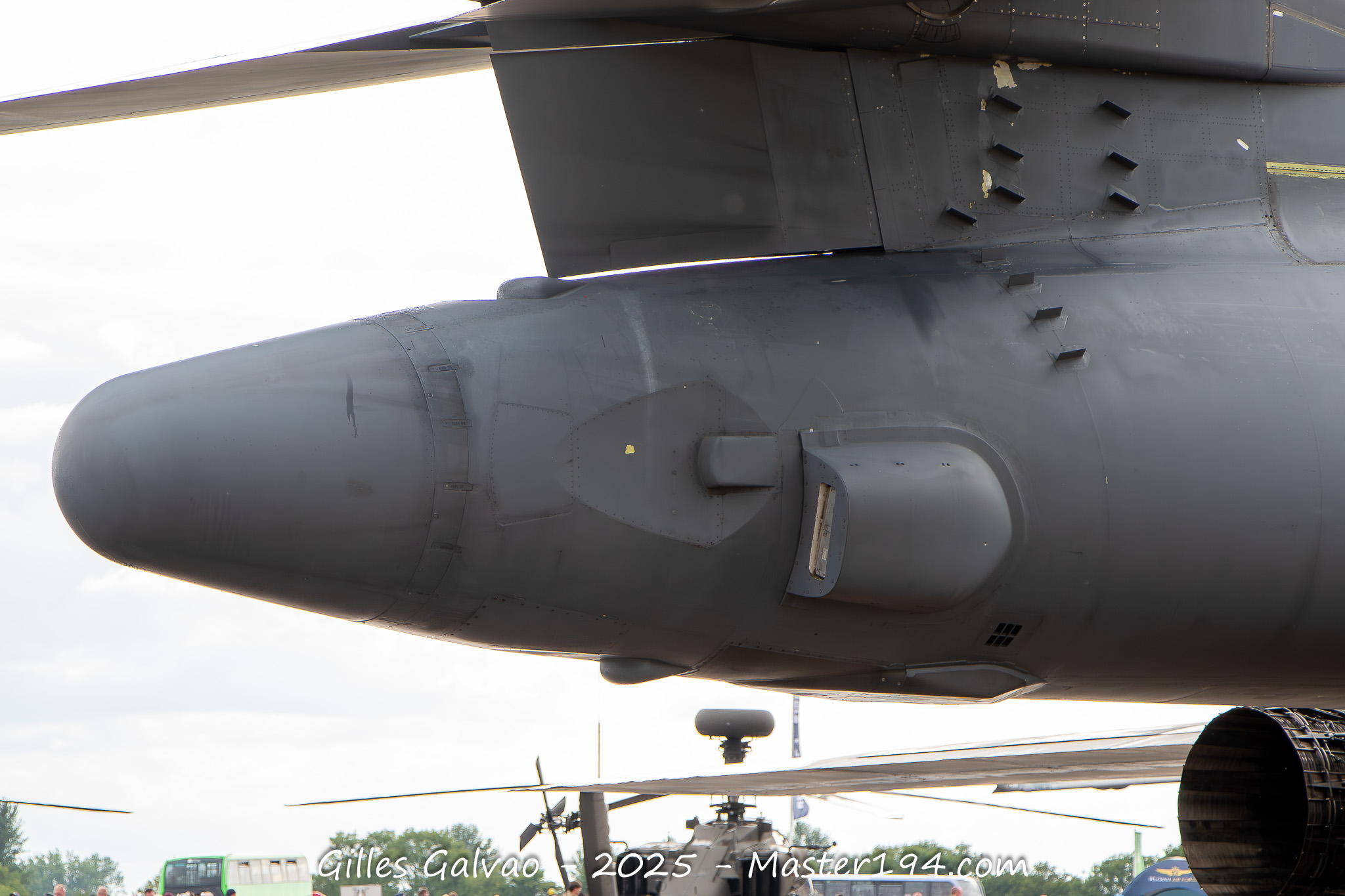
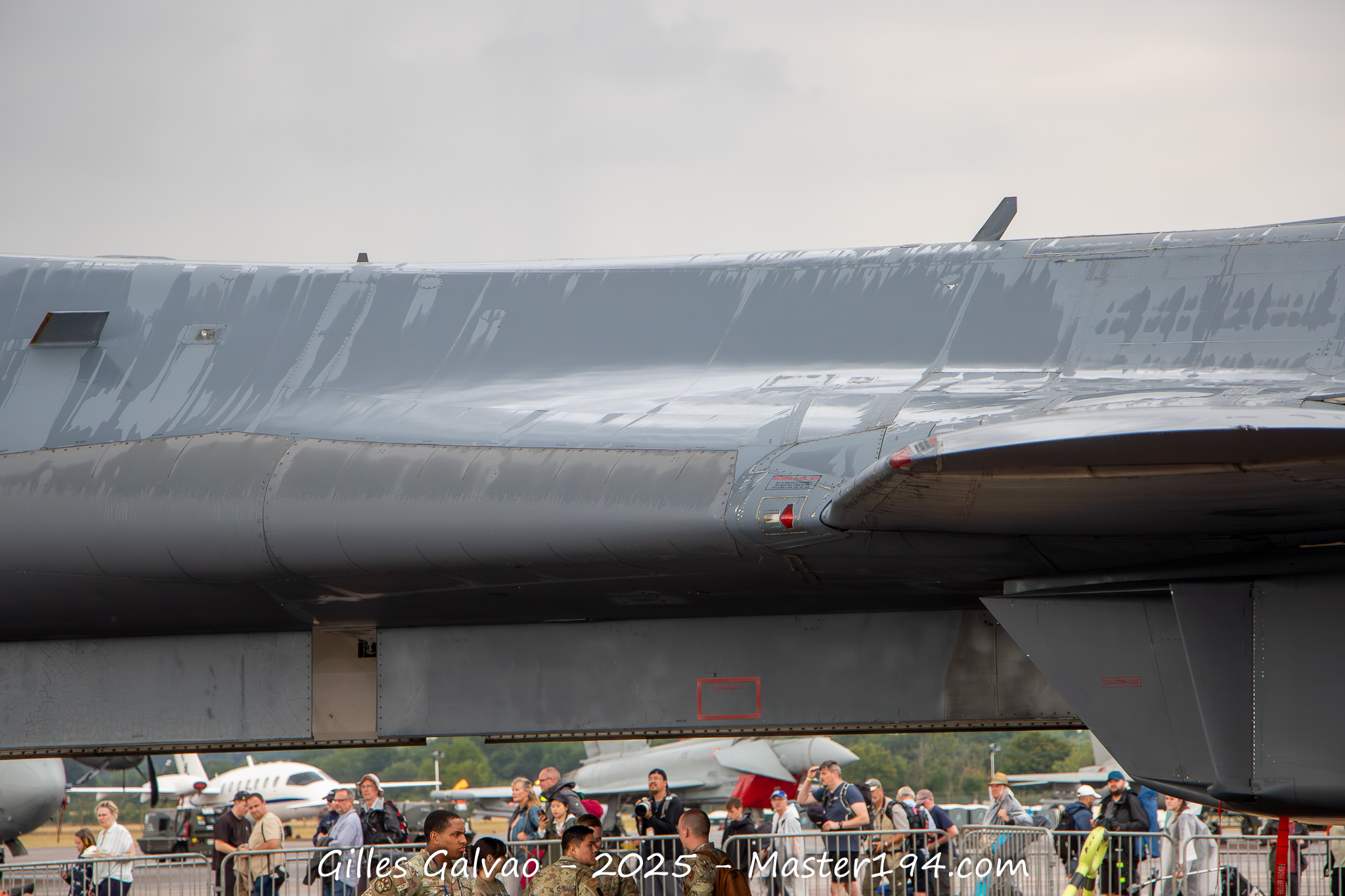
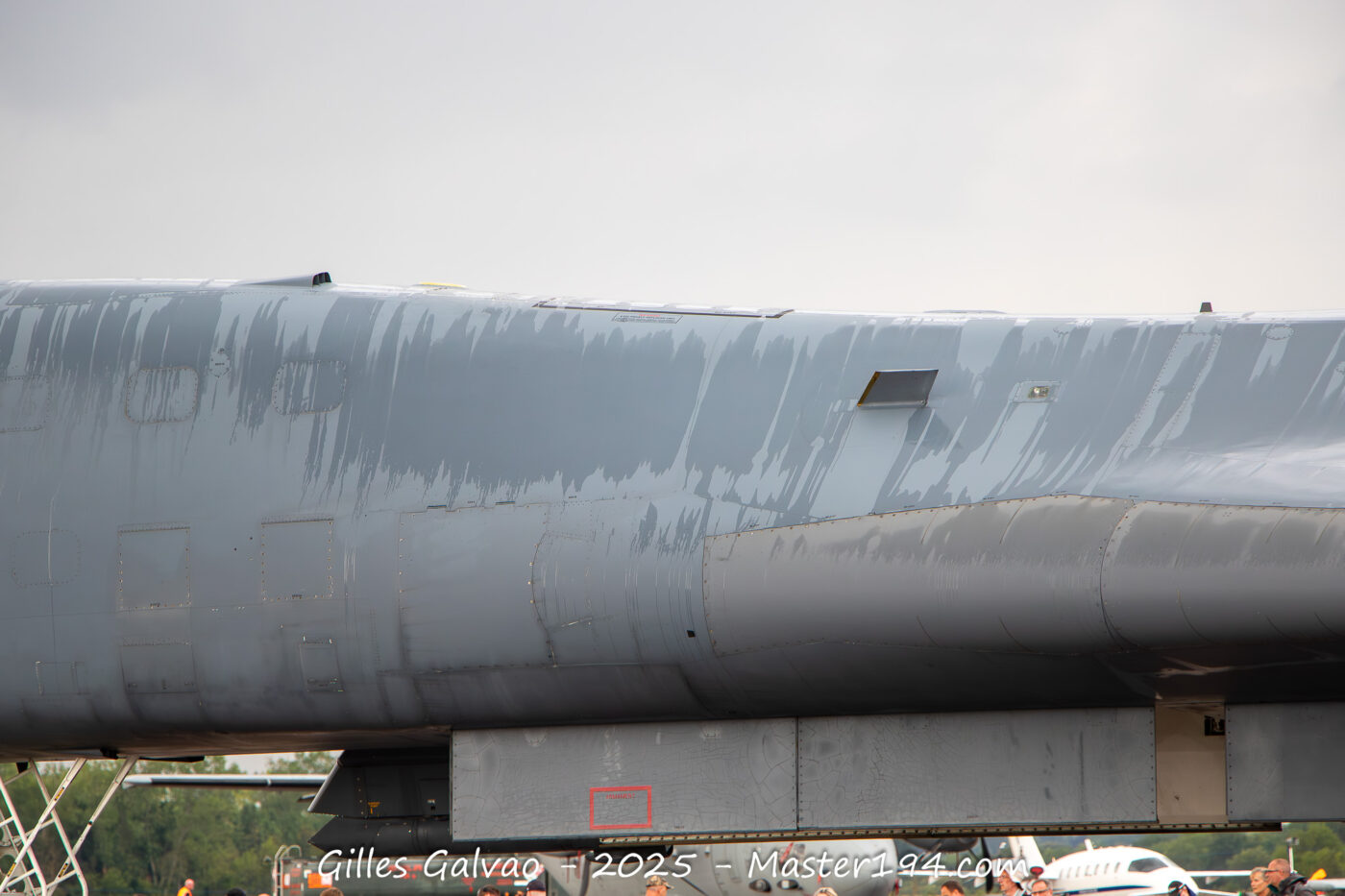
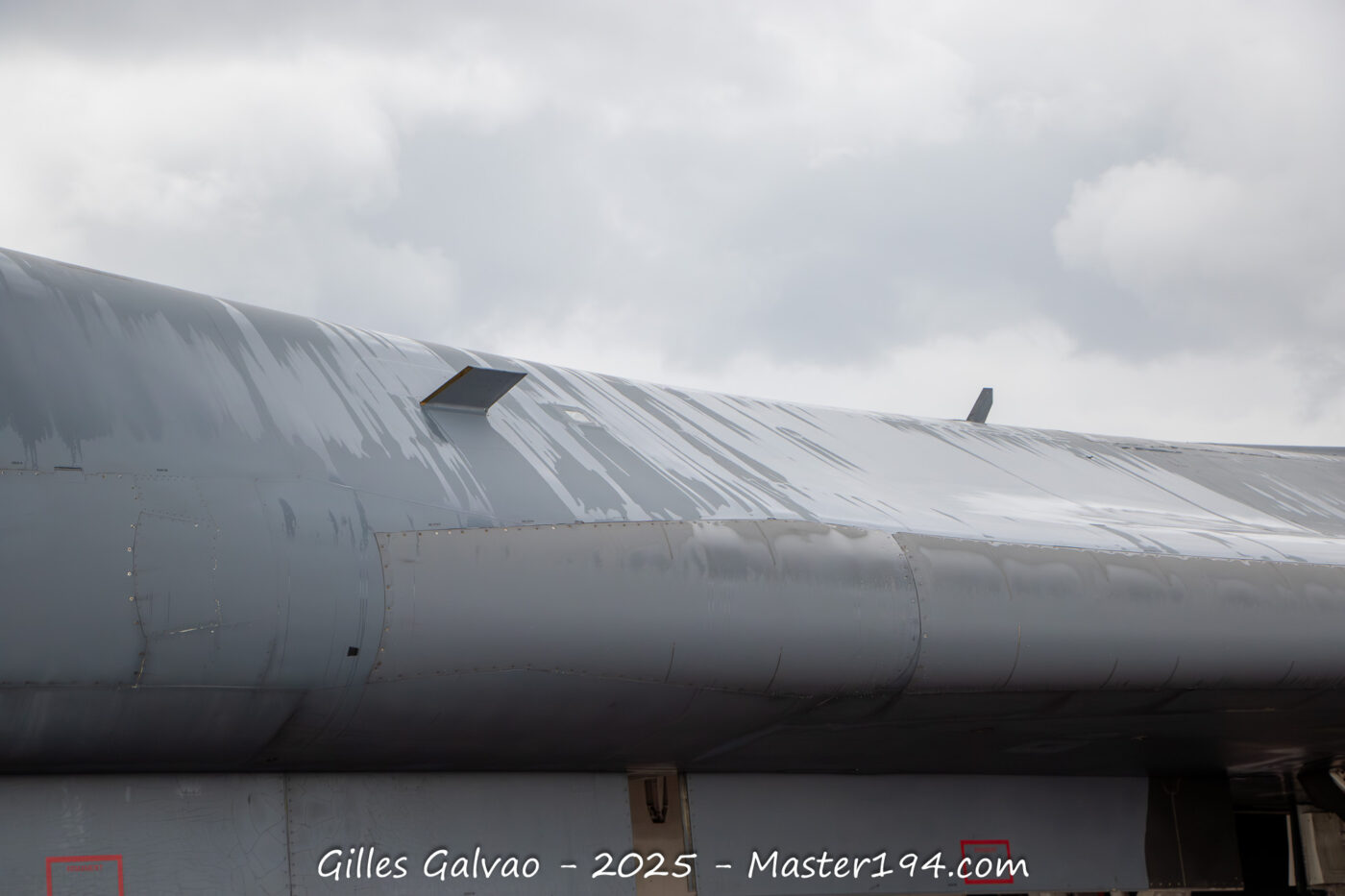
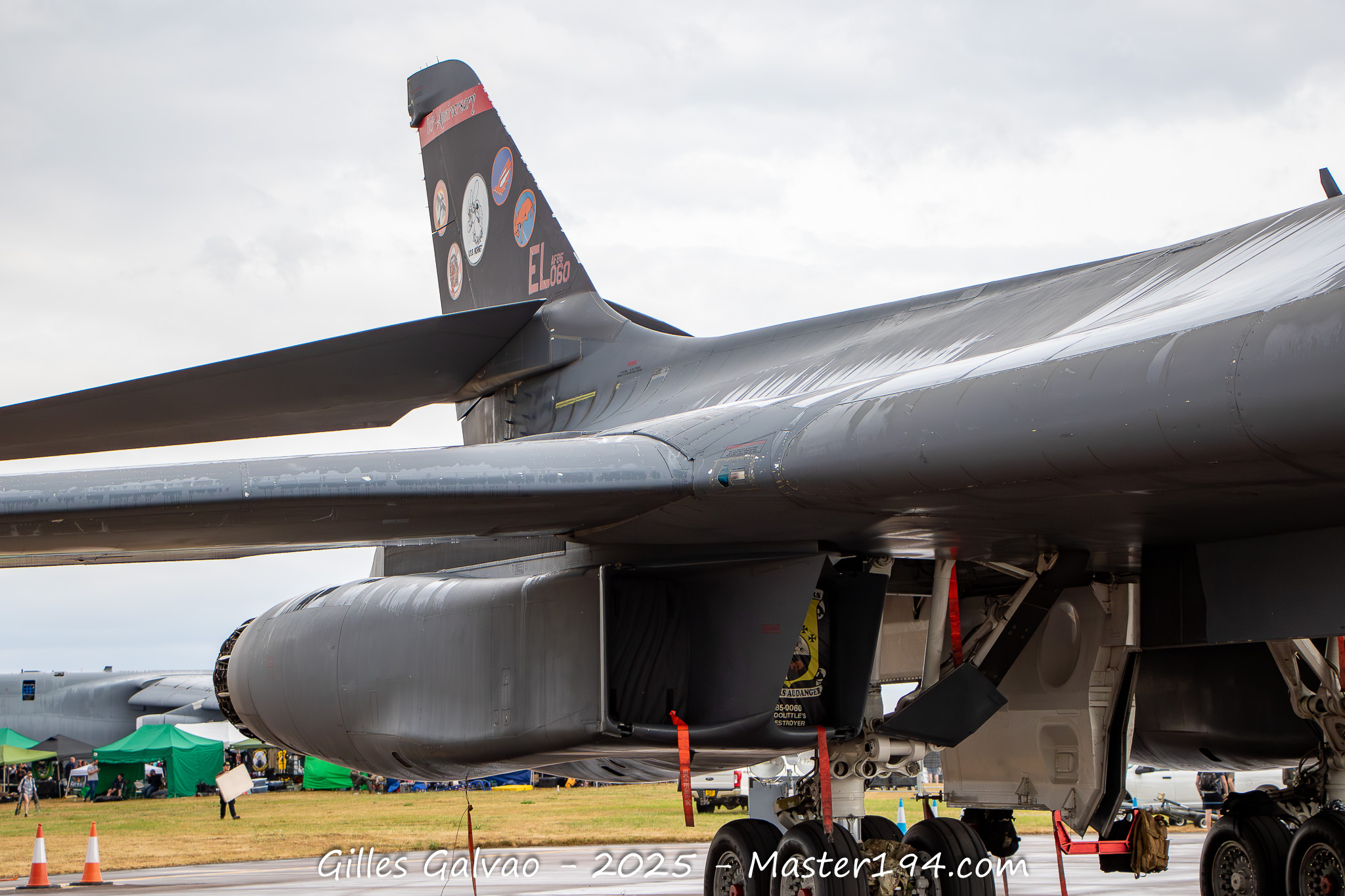
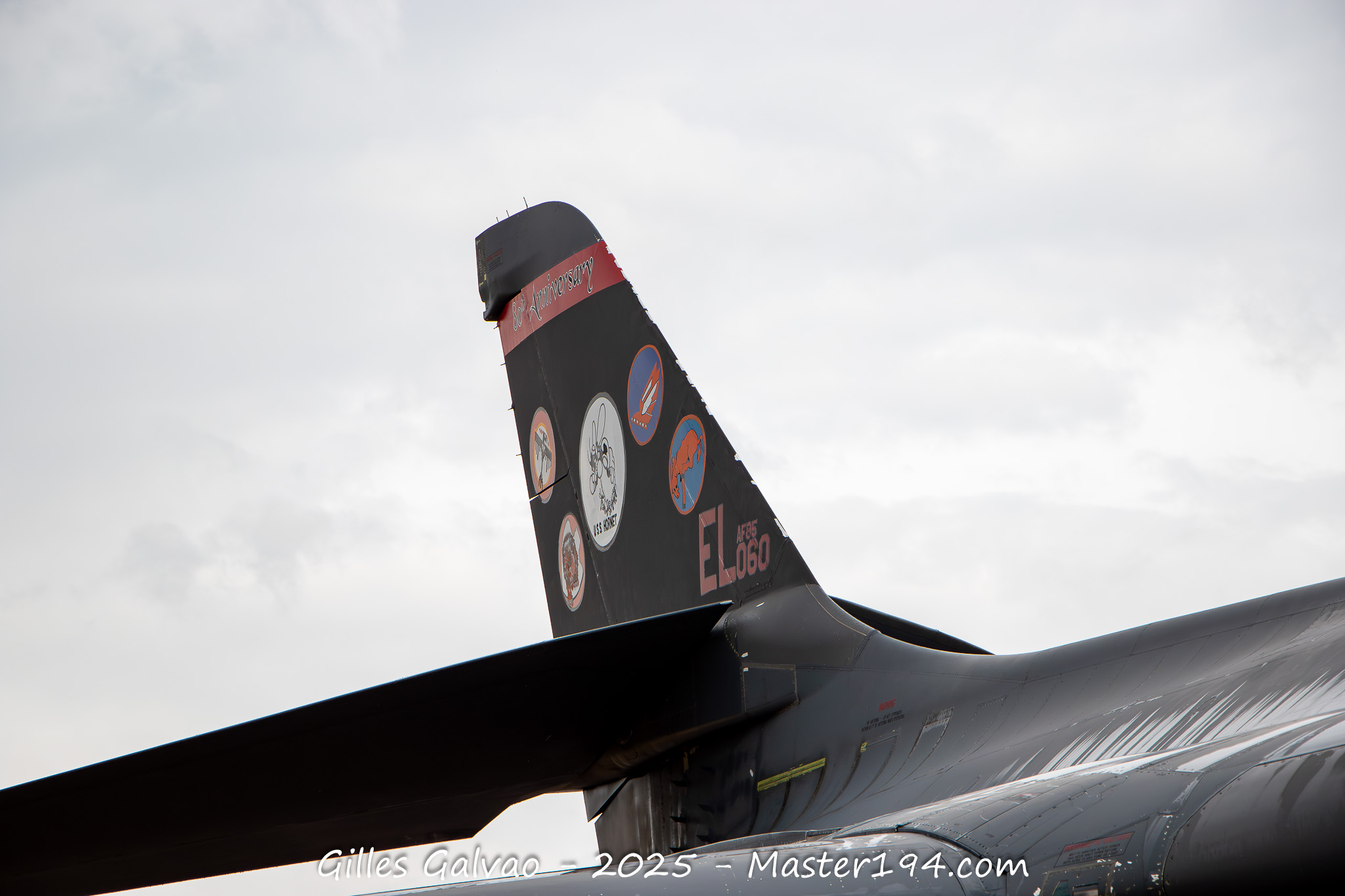
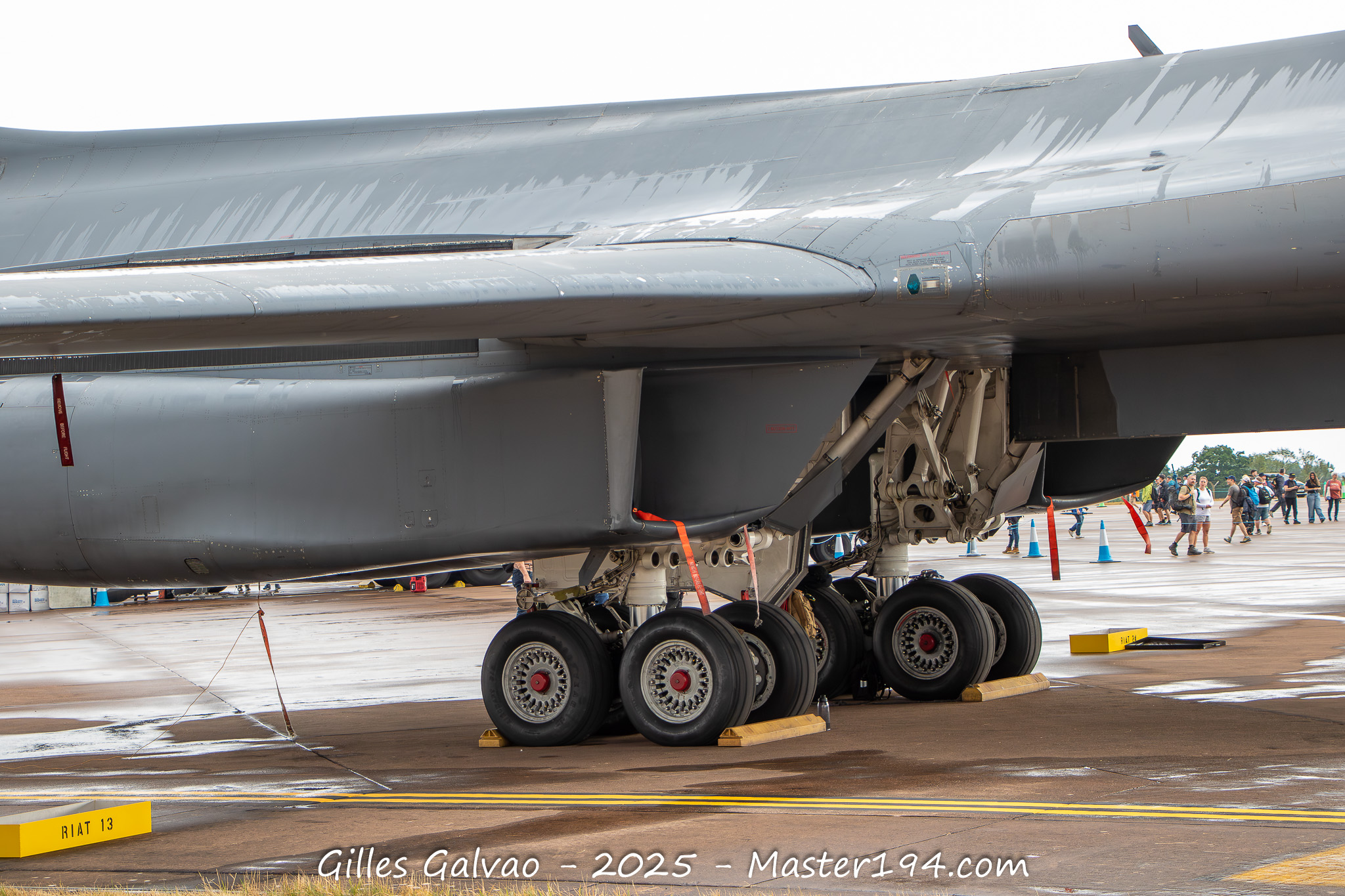
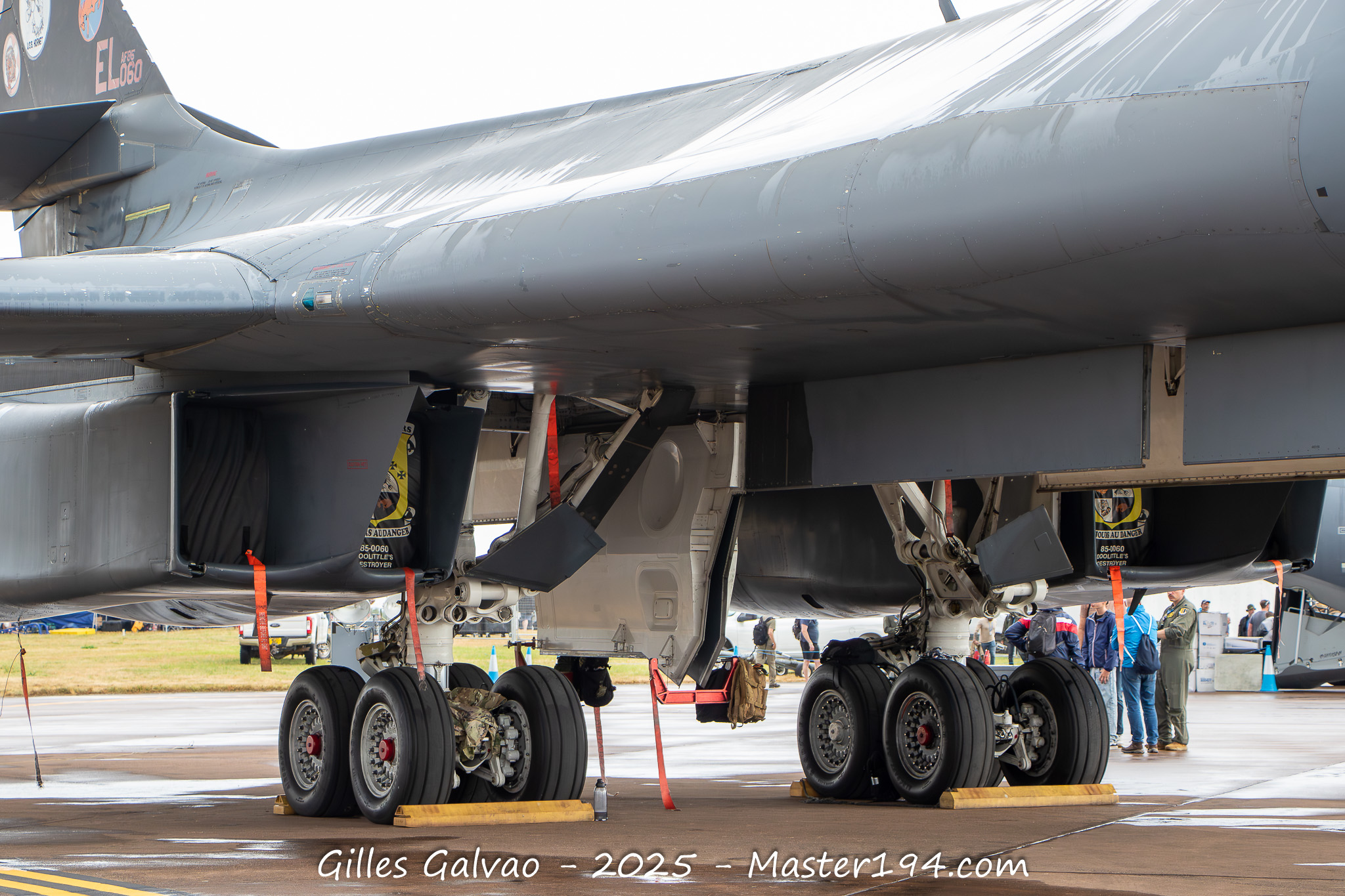
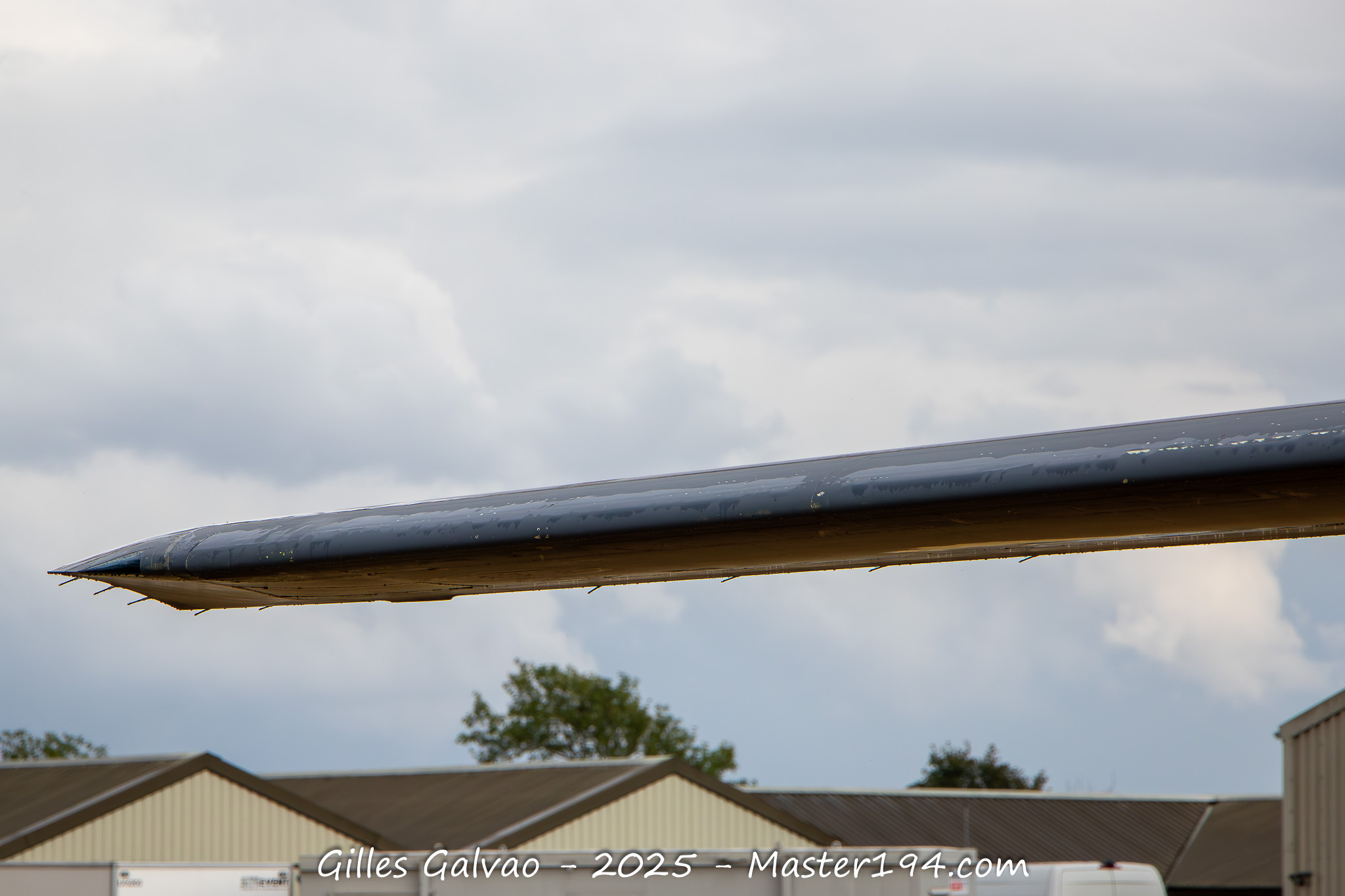
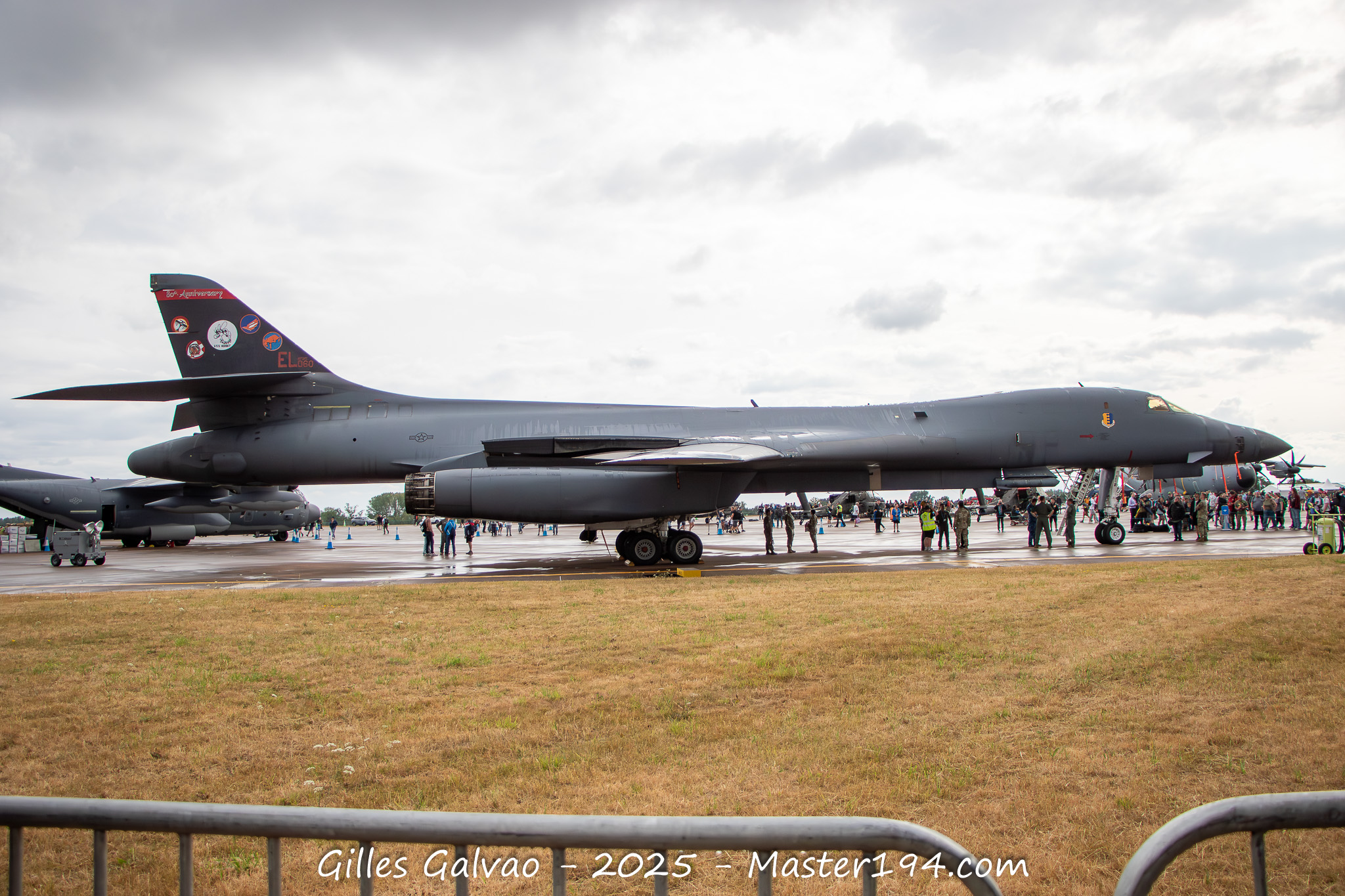
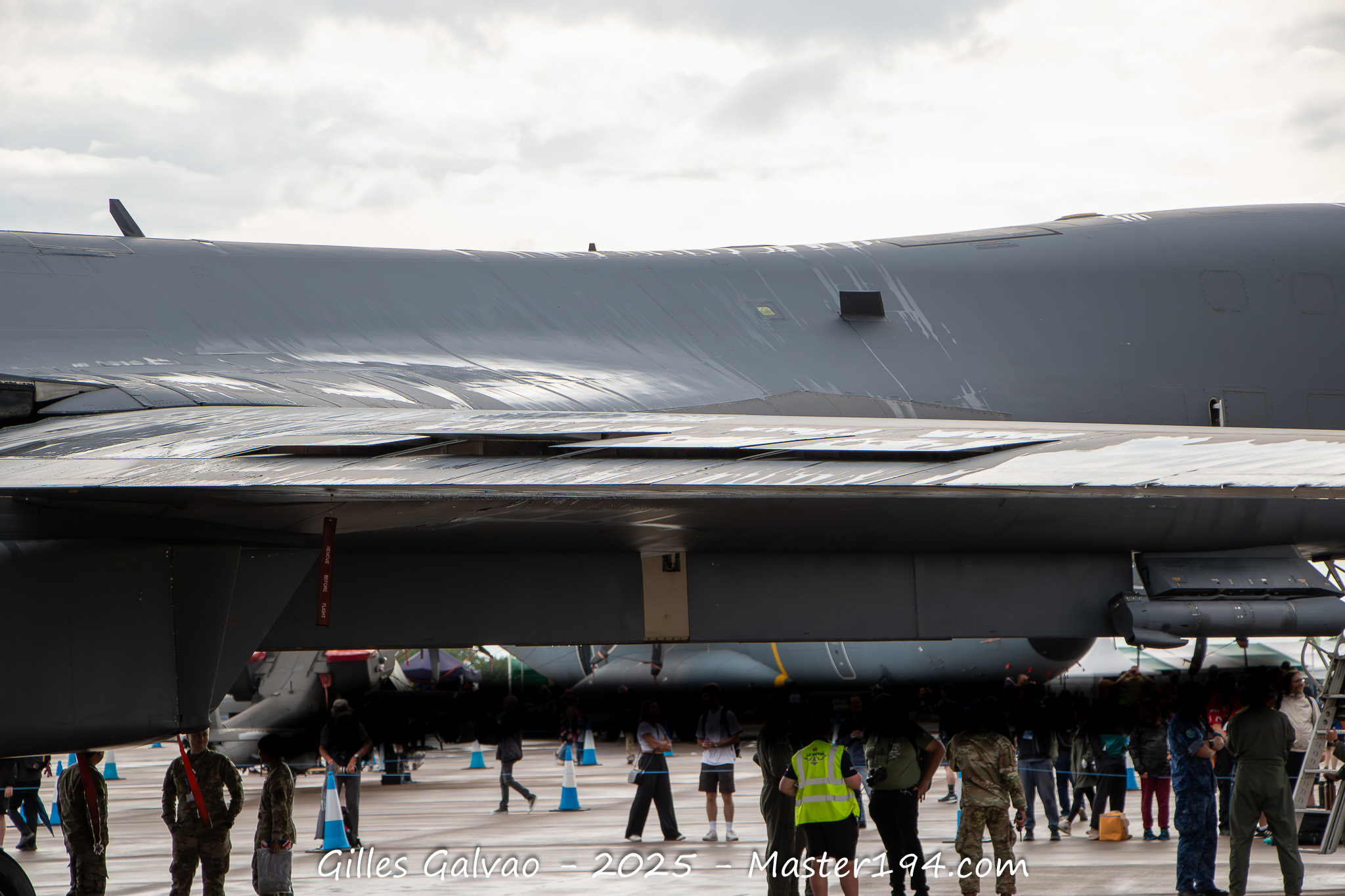
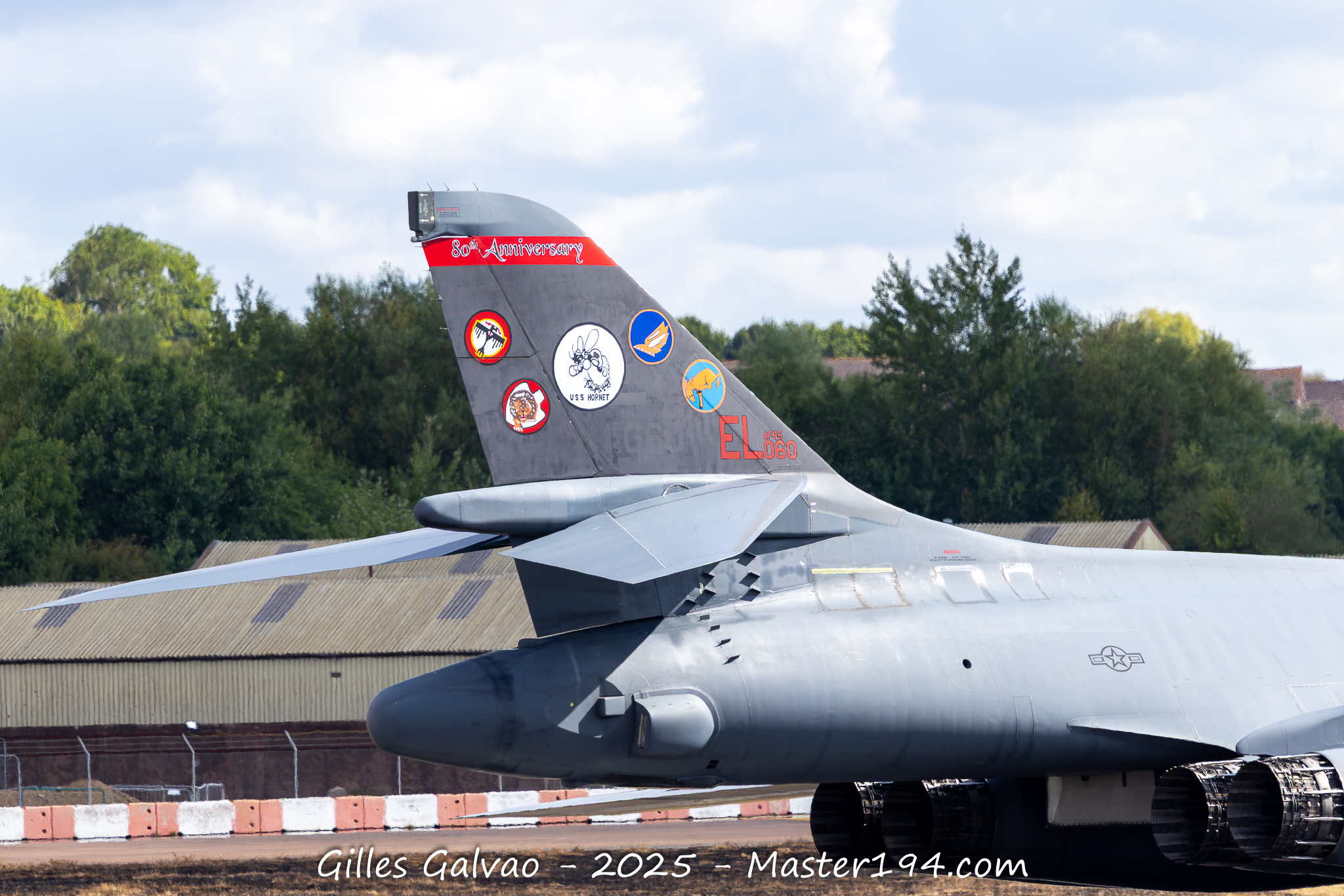
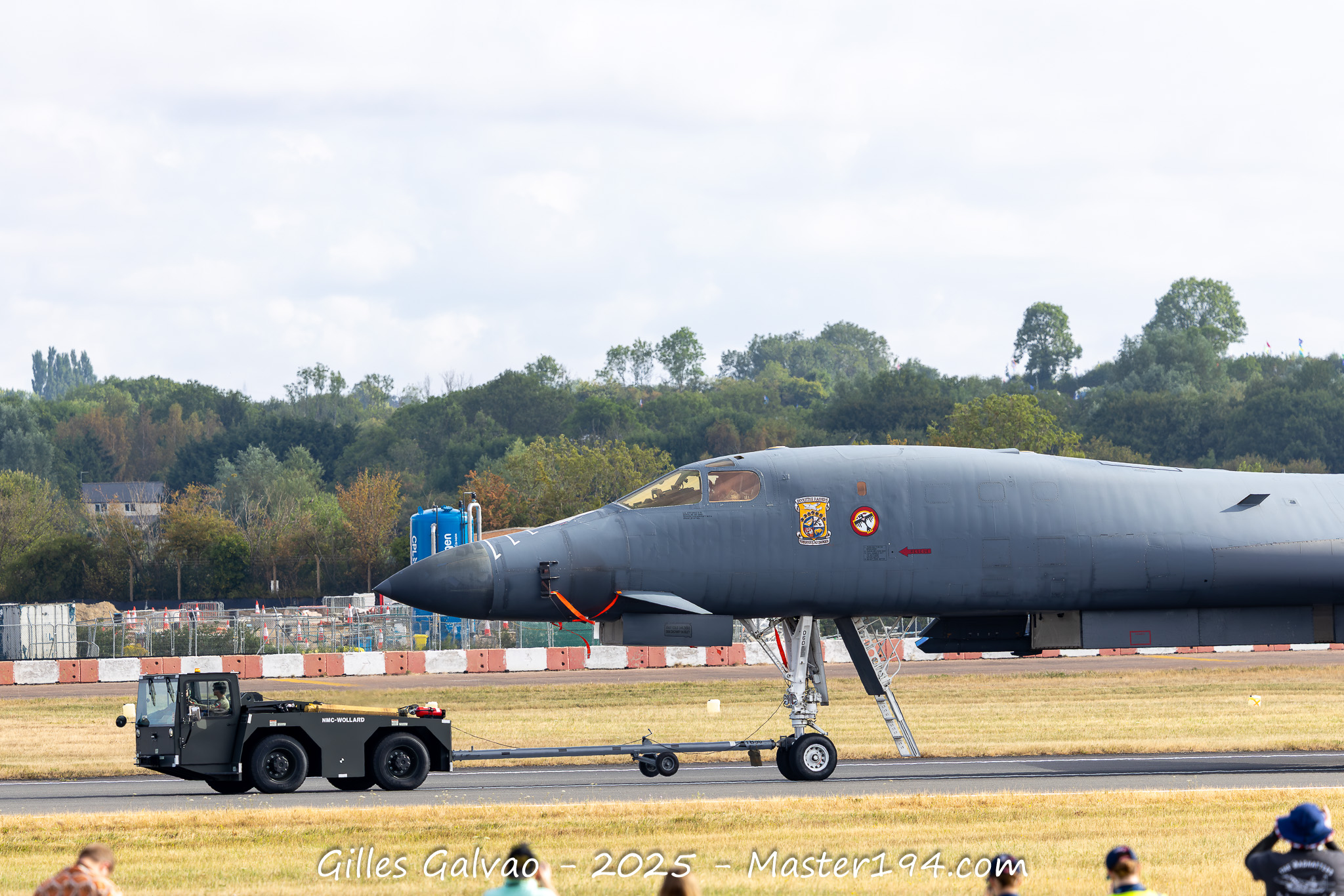
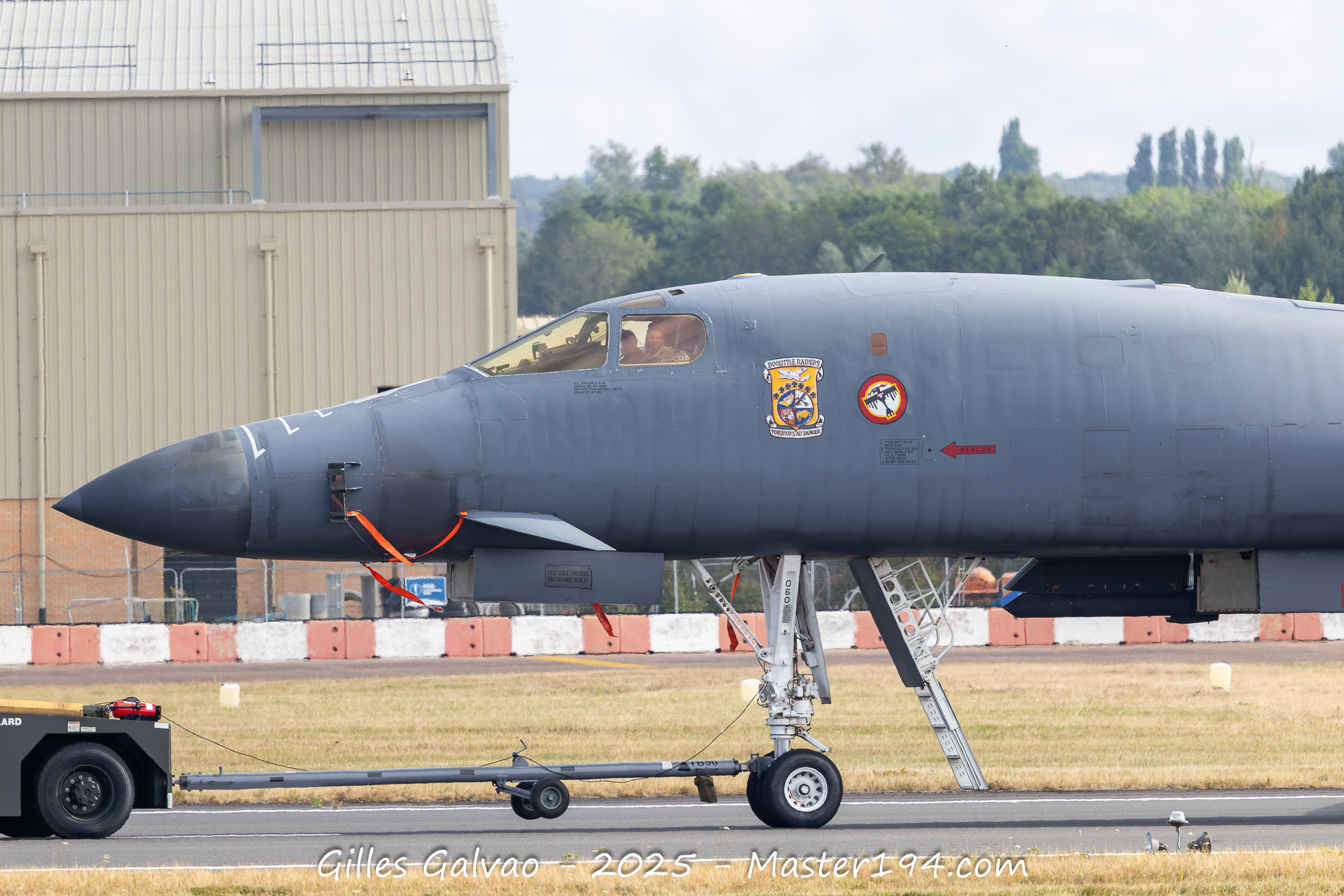
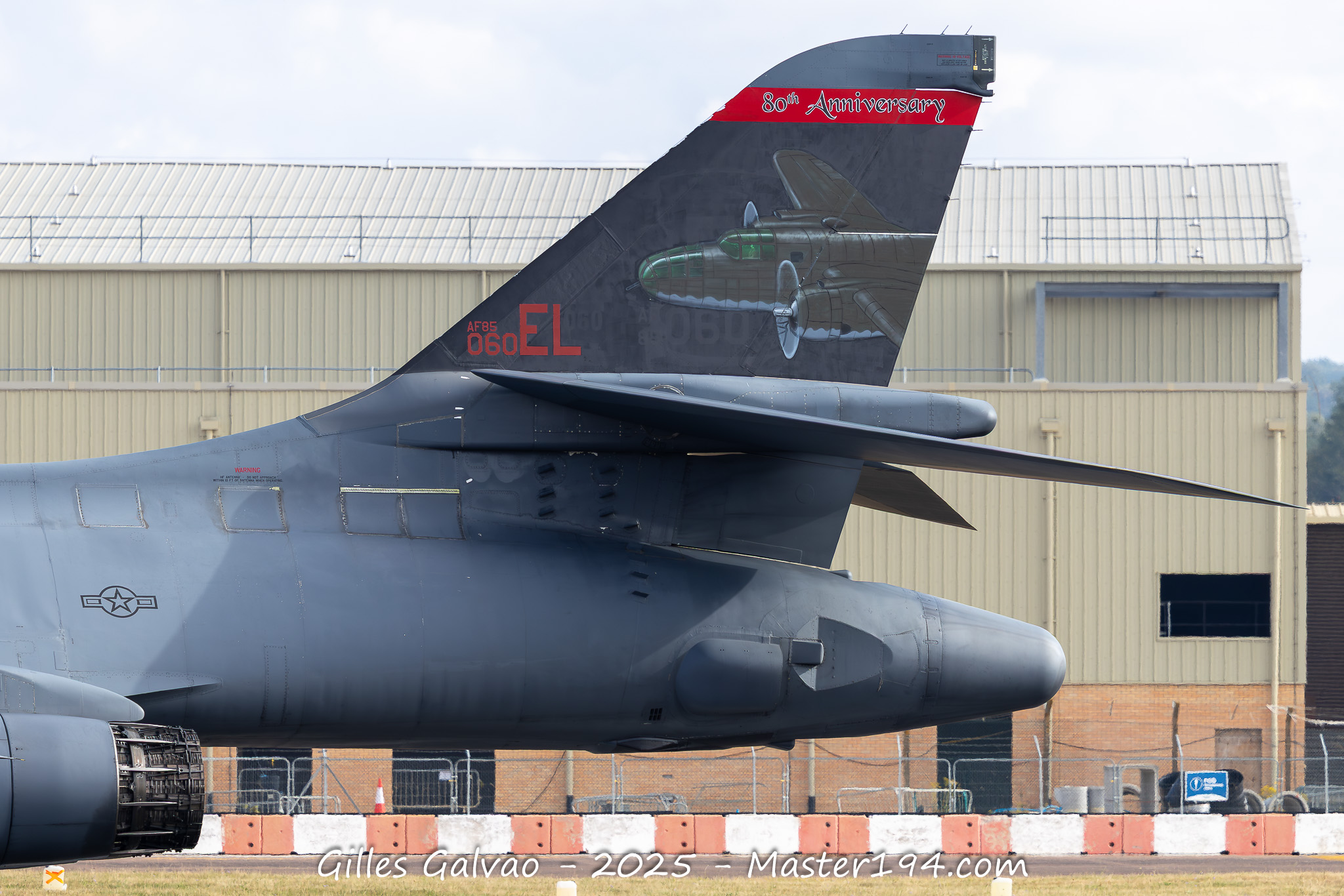
All previous and upcoming photos feature B-1B Lancer 85-0060, which was on static display at RIAT 2025.
Landing gear
Aft Fuselage Details
Mid-Fuselage Details
Left side
Right side
Forward Fuselage
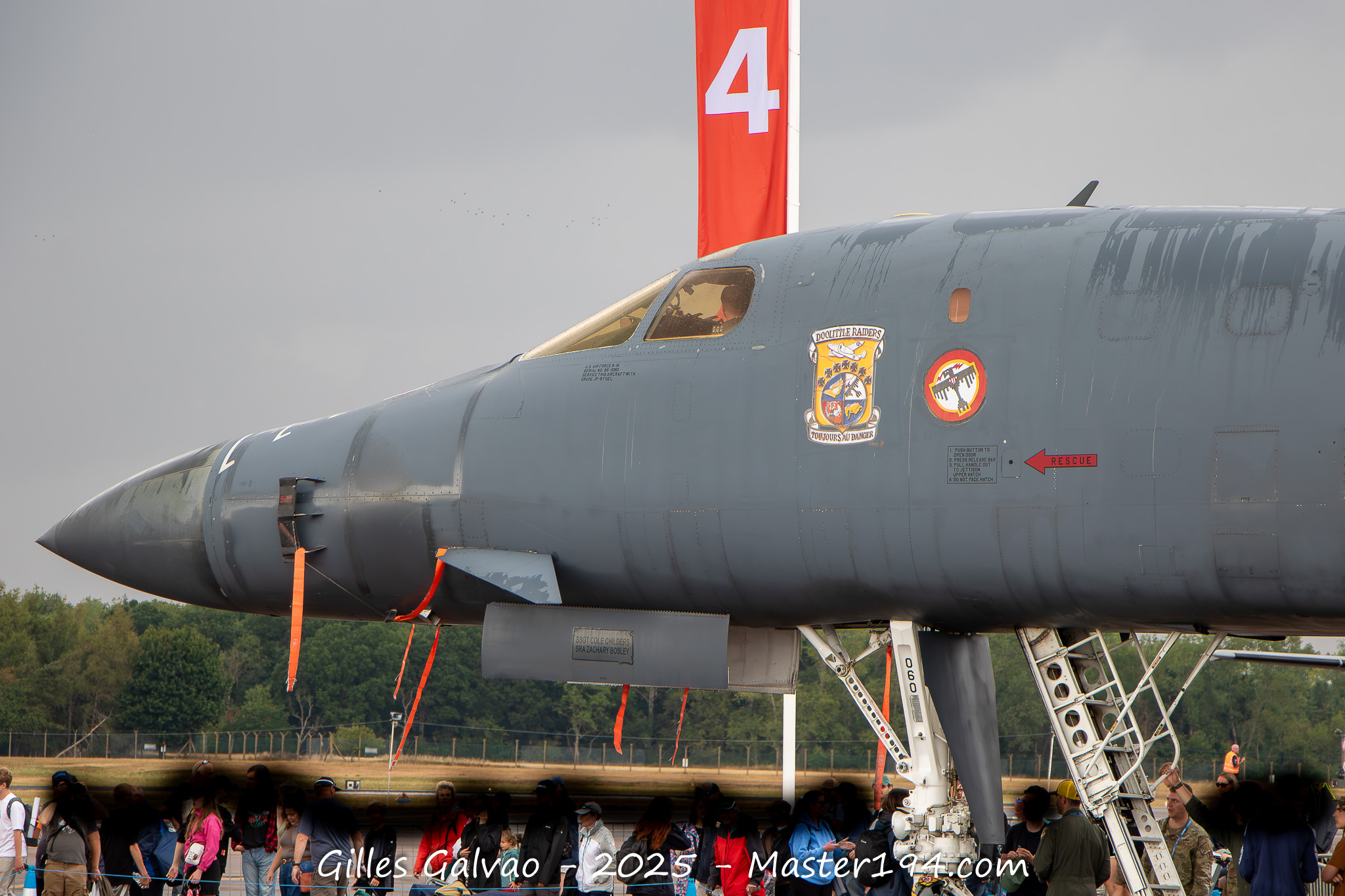
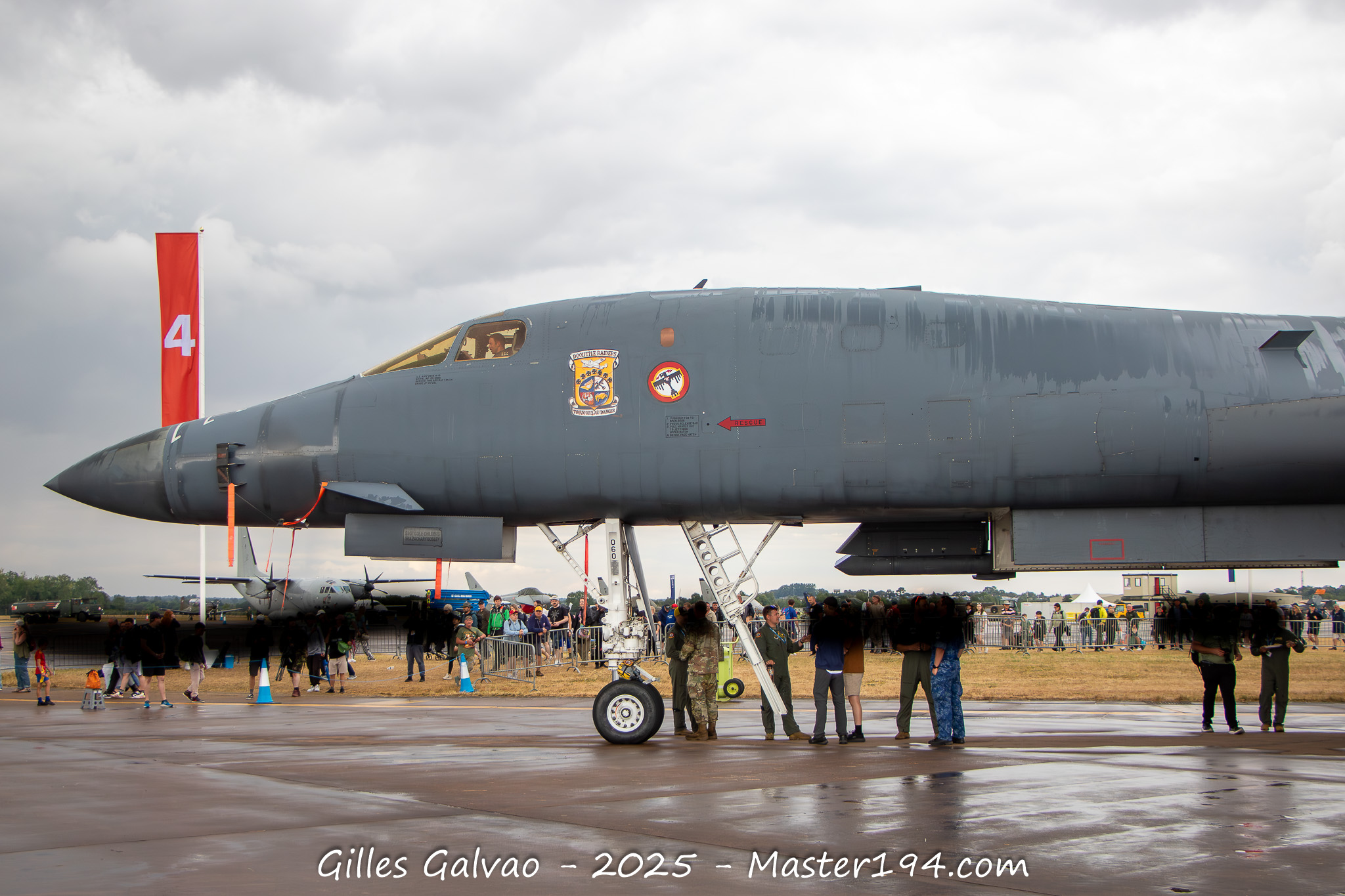

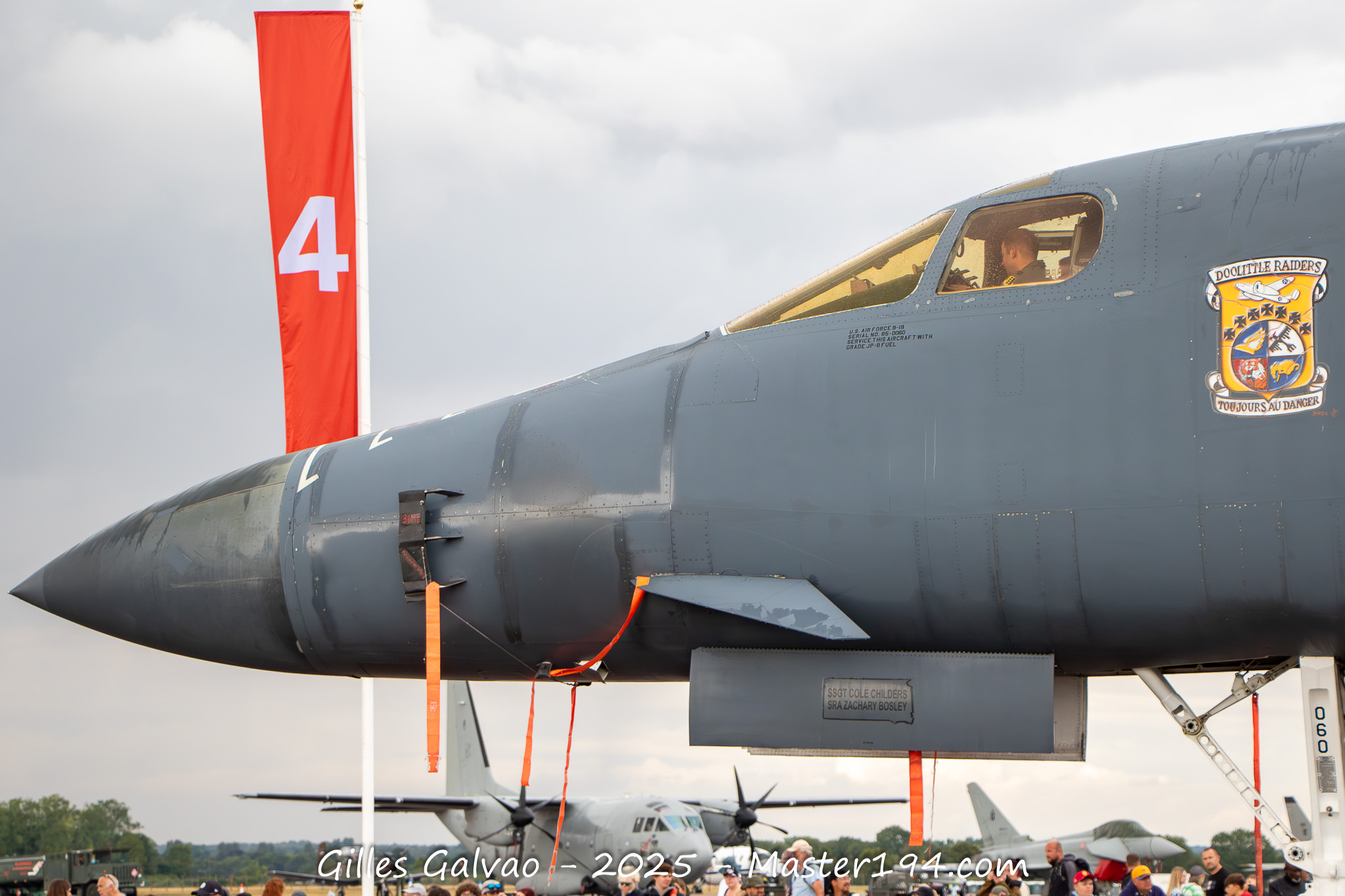
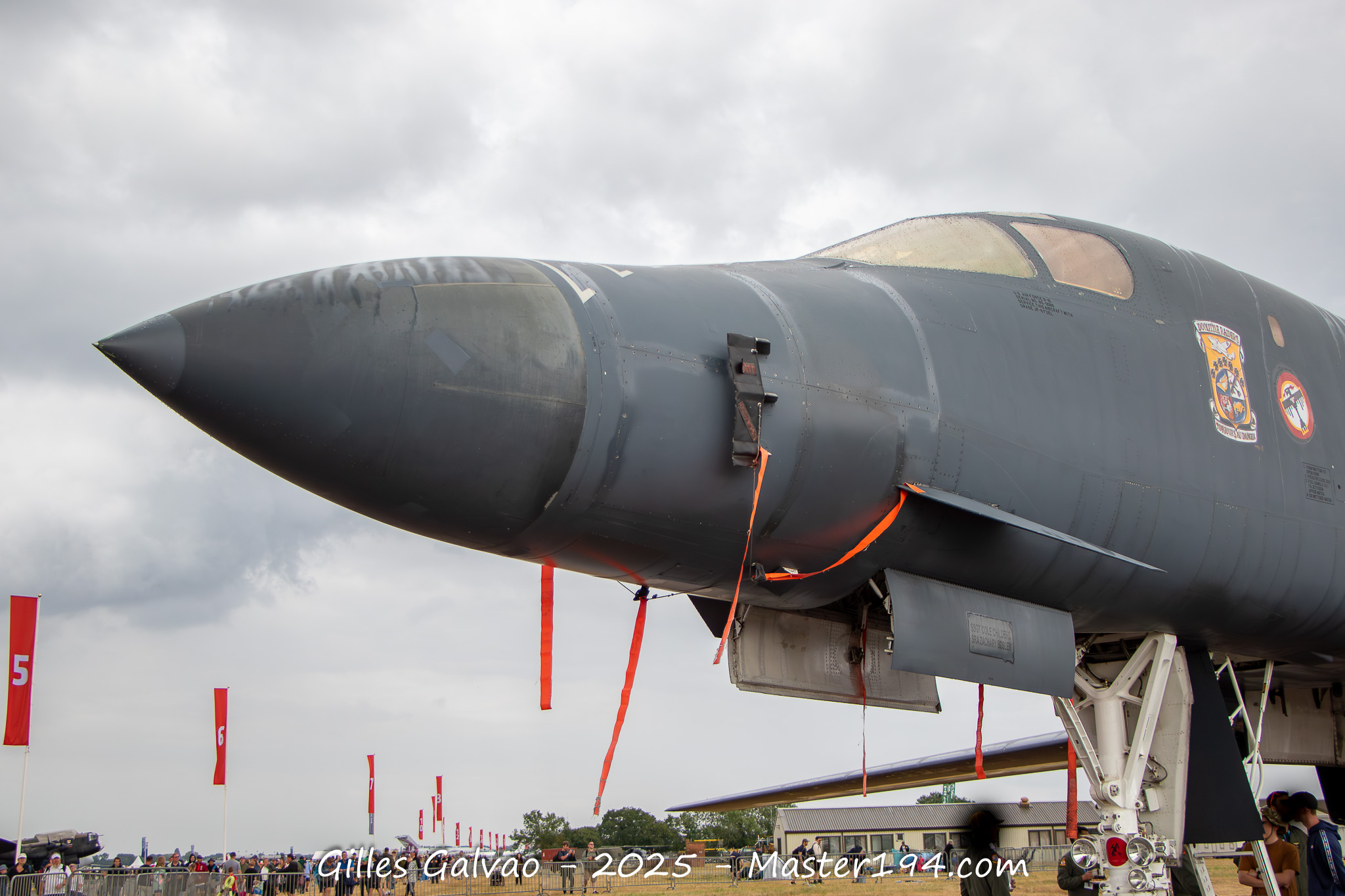
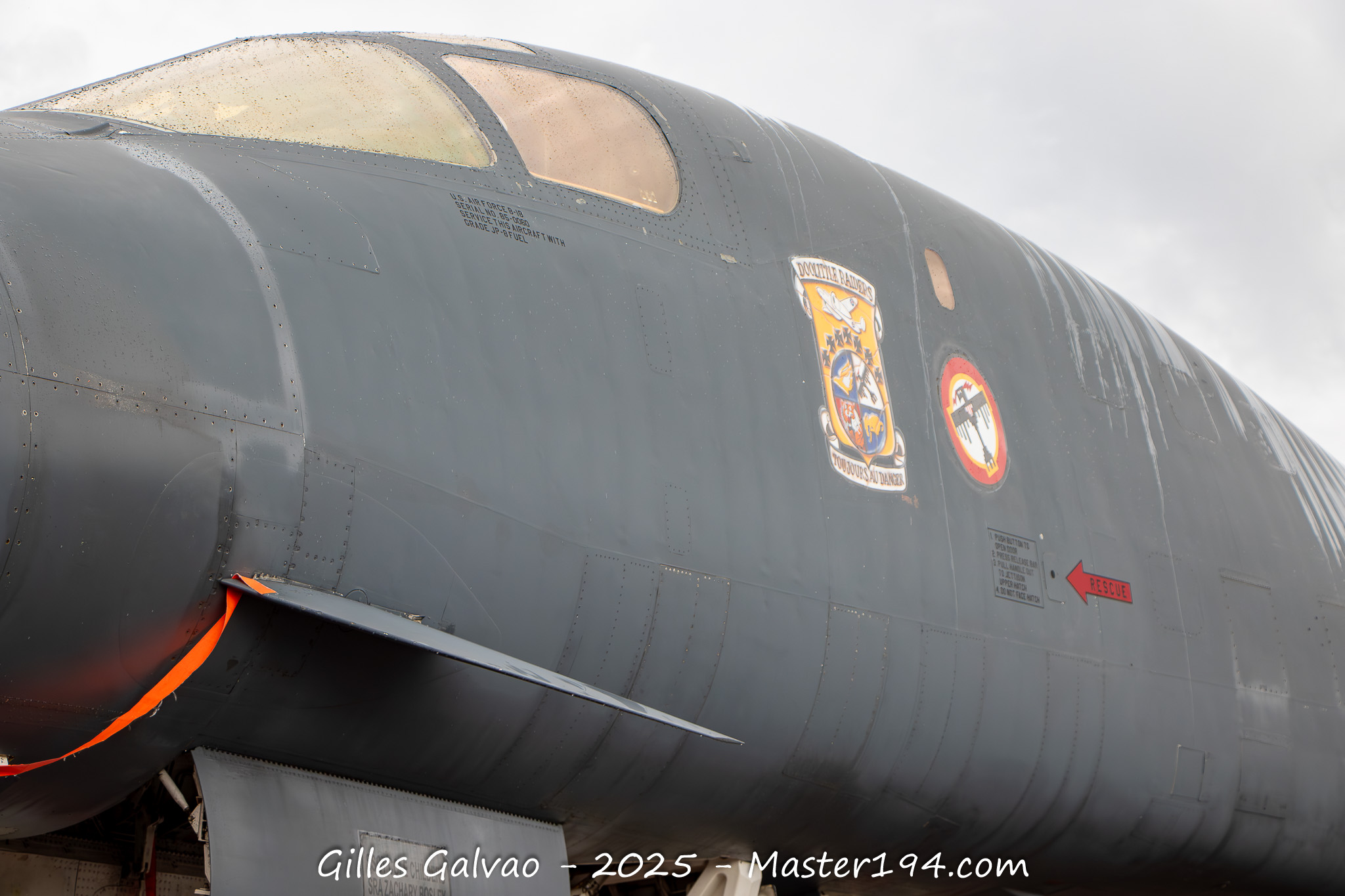
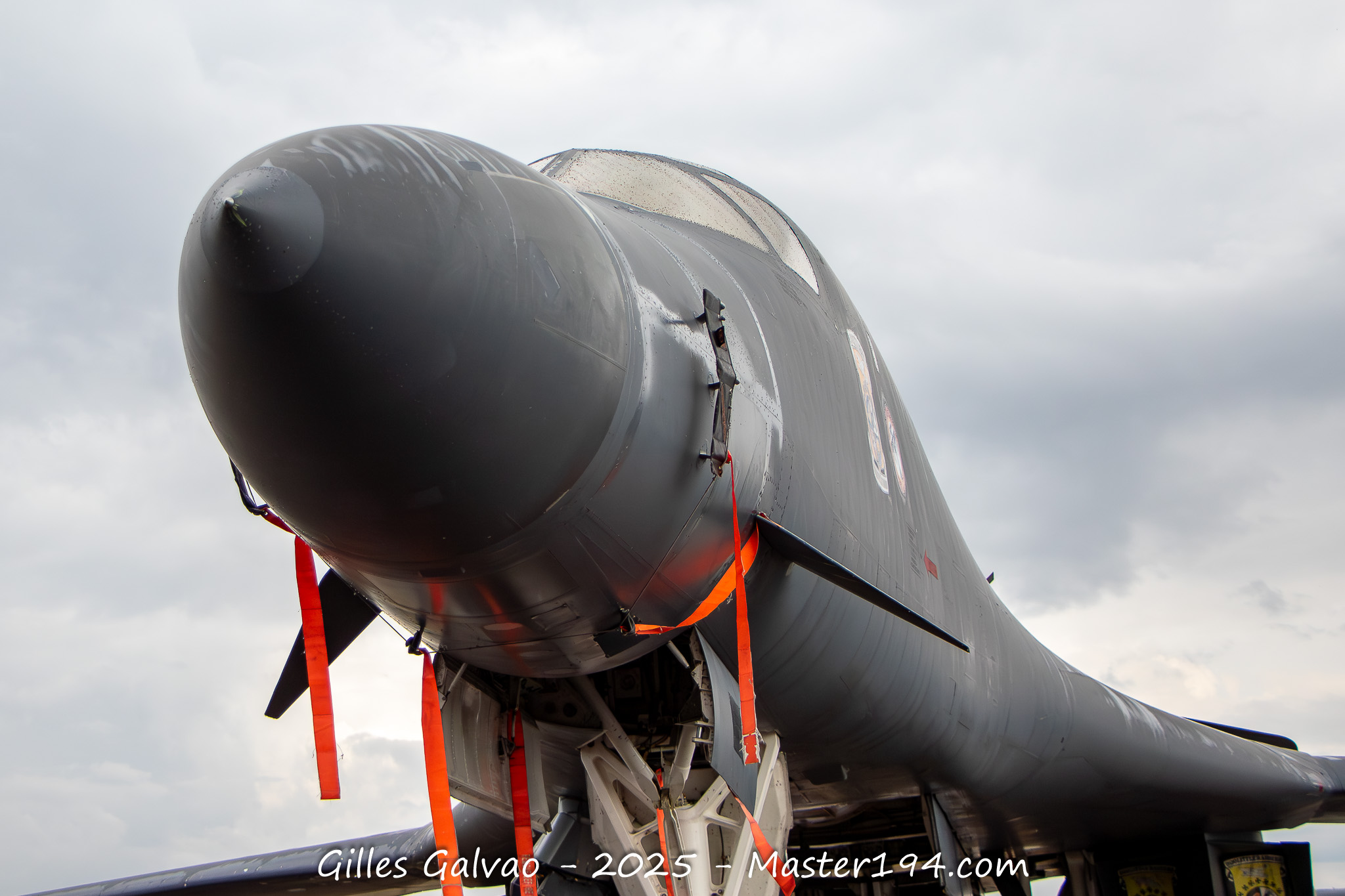
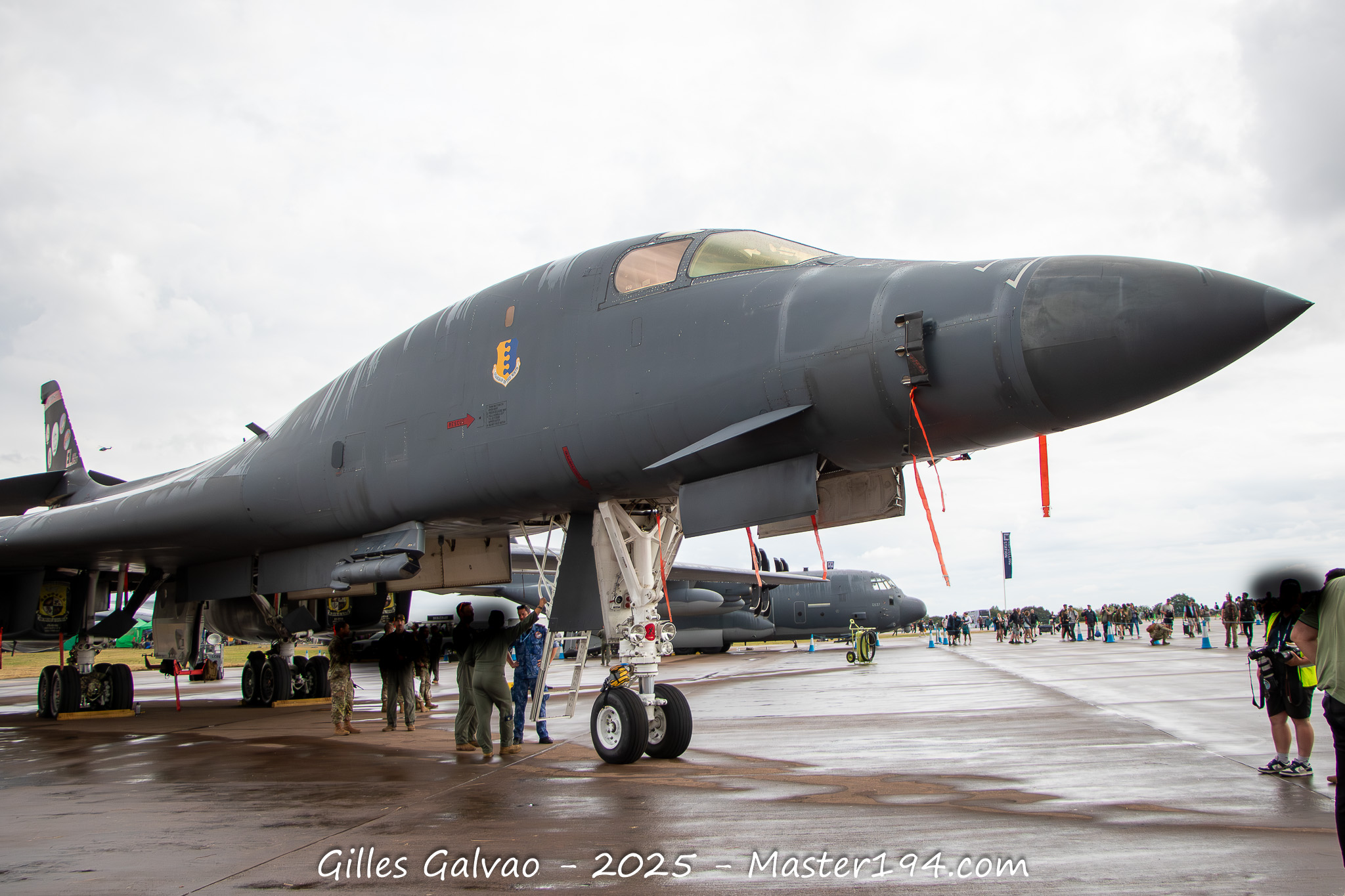
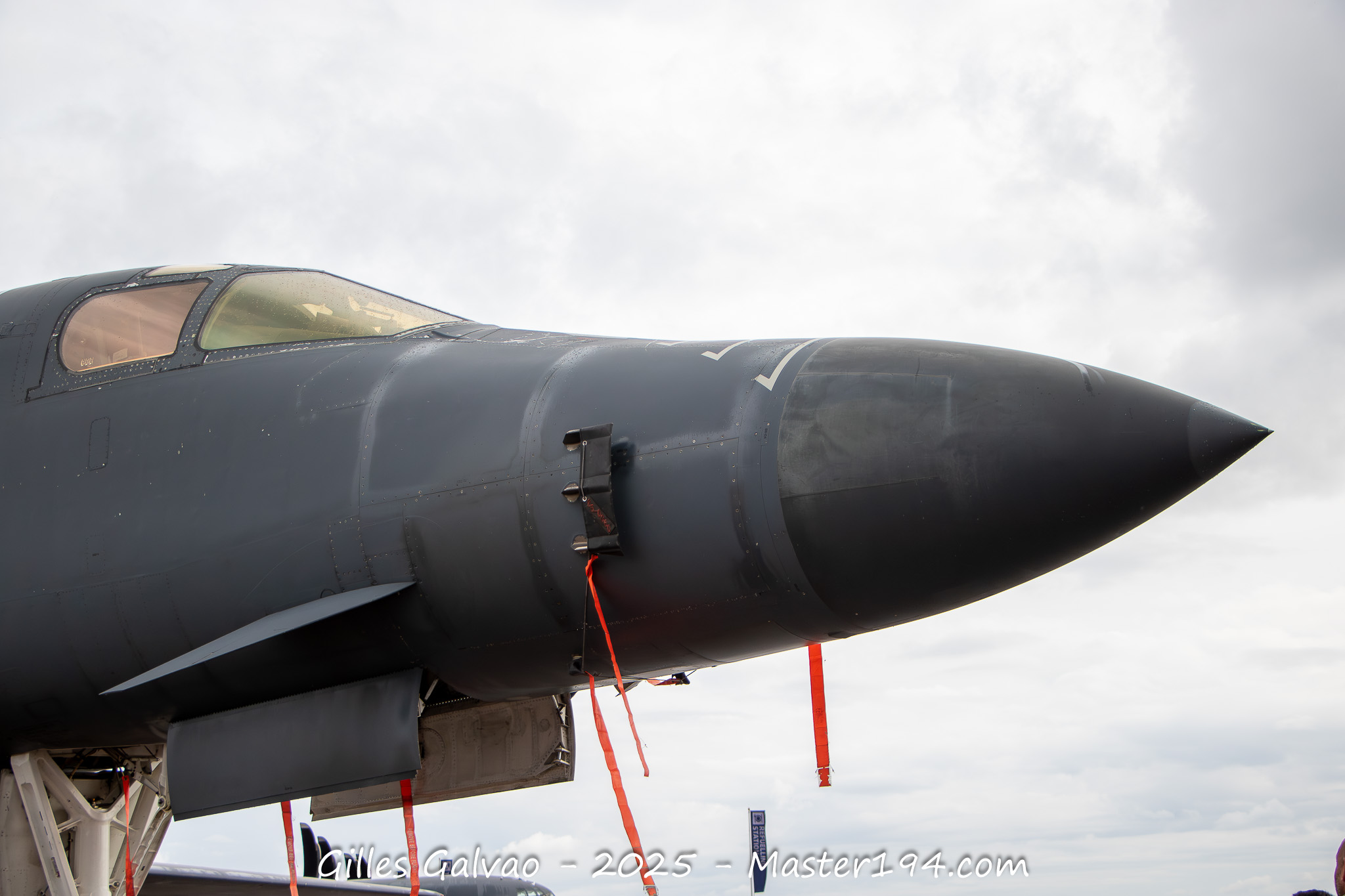
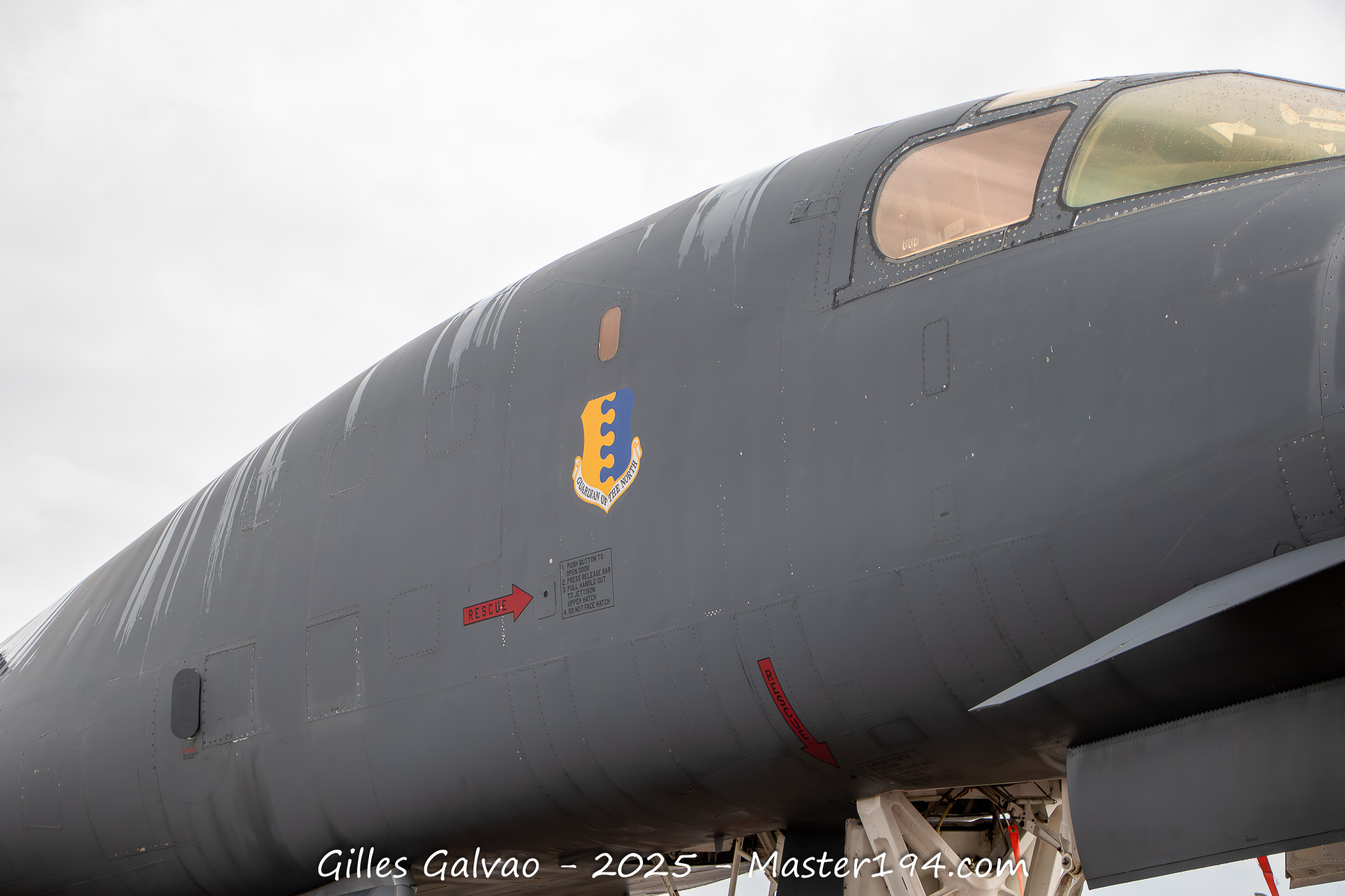
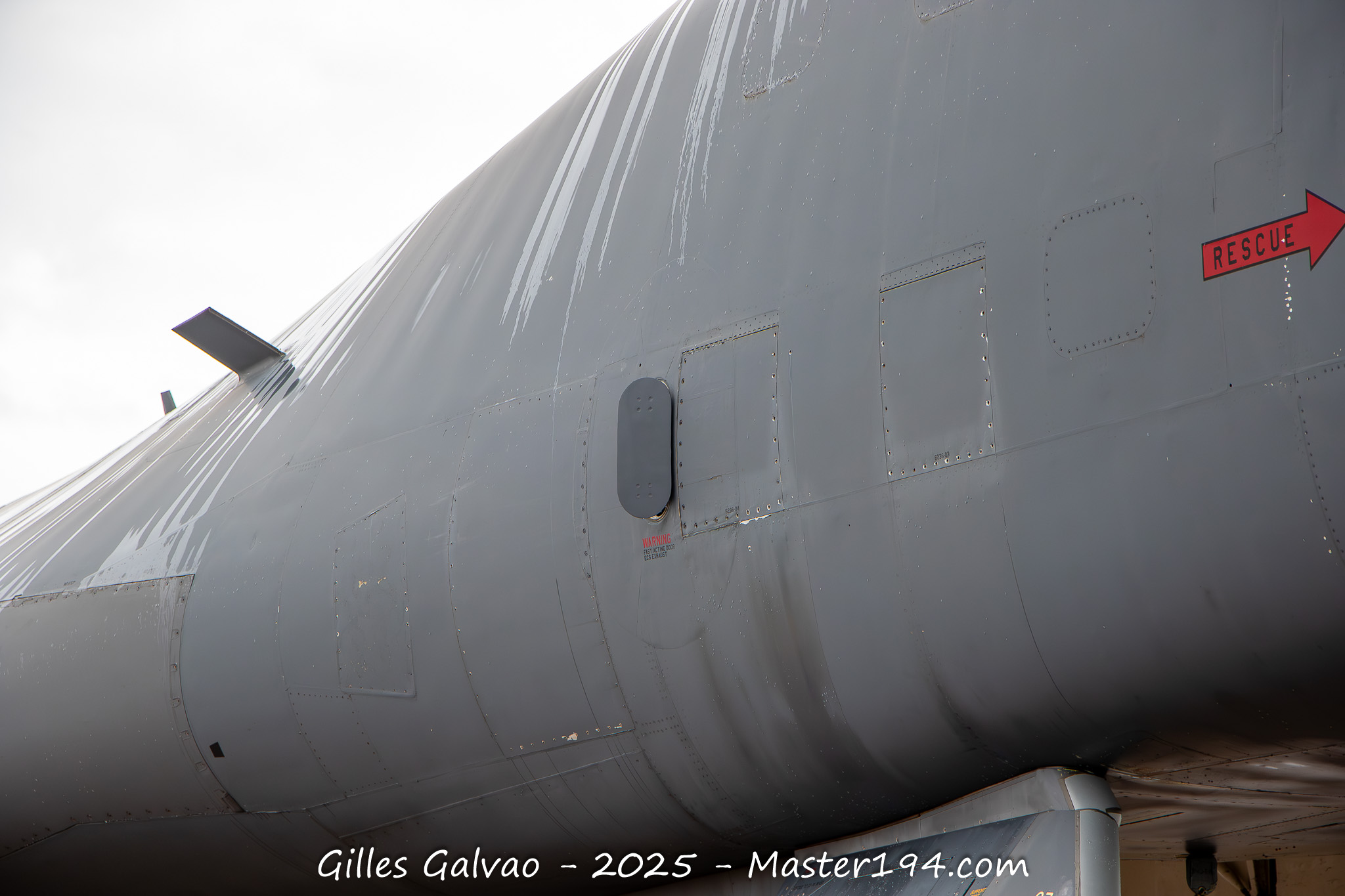
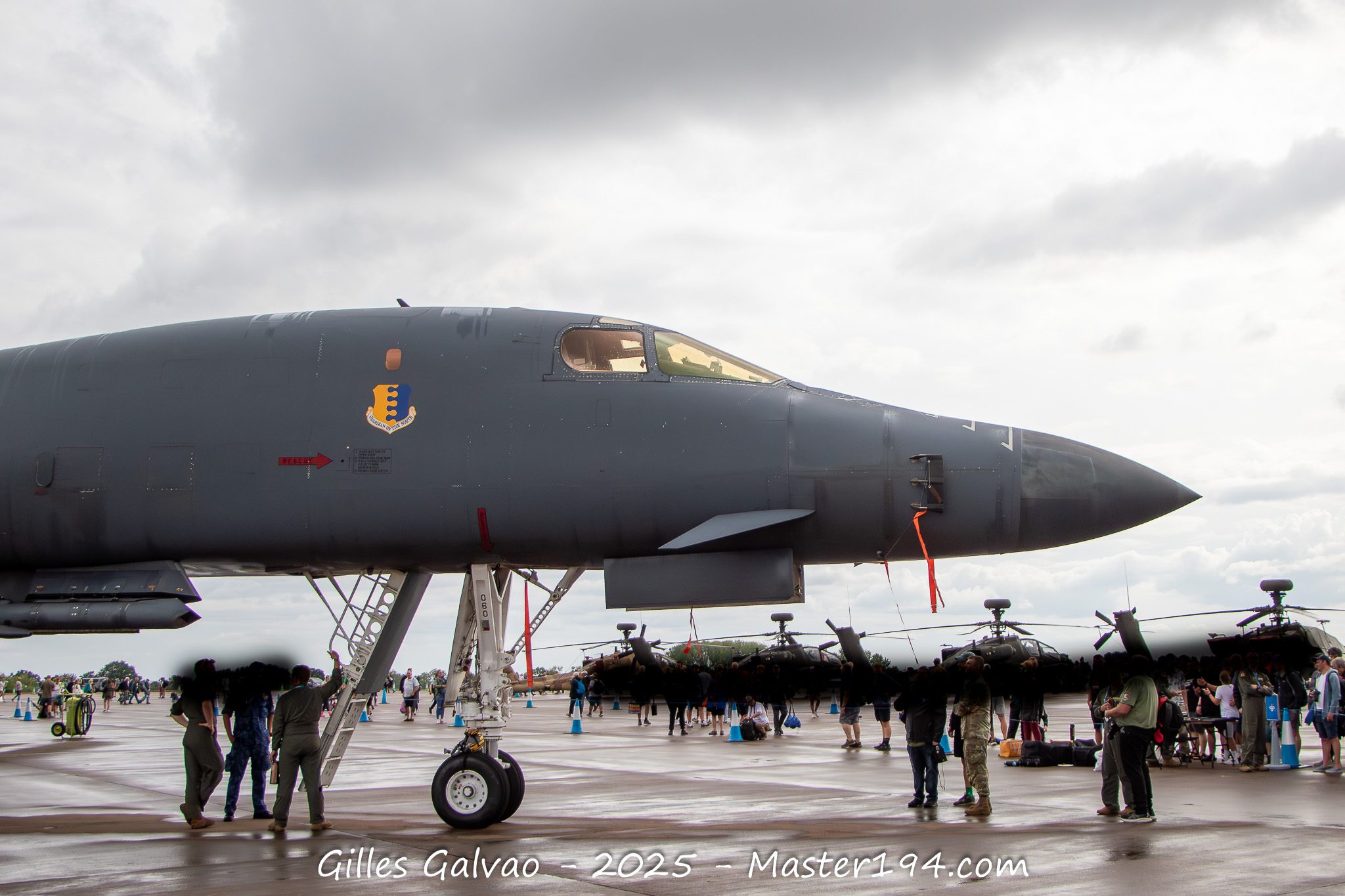
Others details
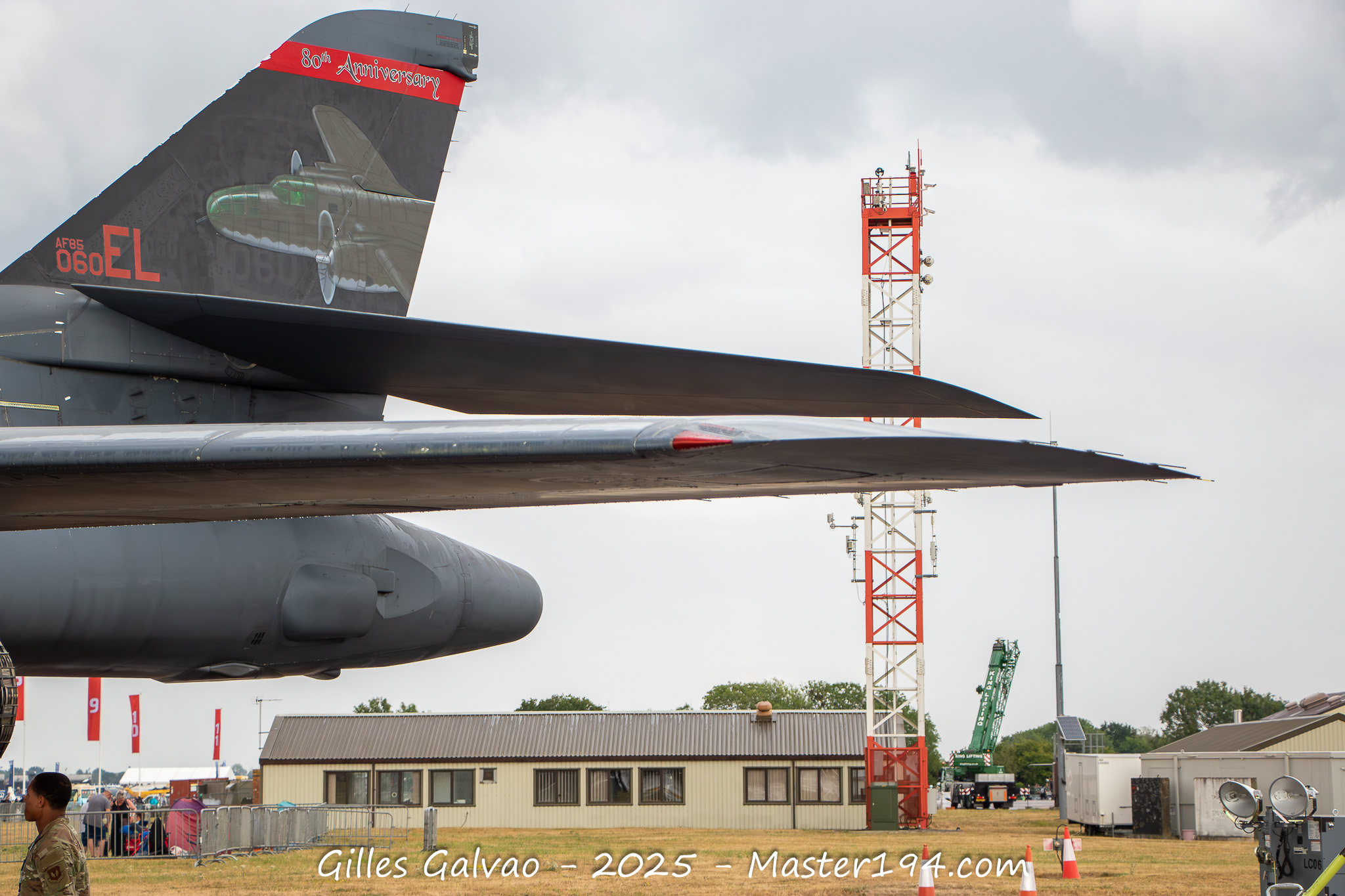
A Future in Transition
The B-1B was never intended to be a long-service aircraft; yet, it has far exceeded its original operational goals.
Several evolutionary paths were studied, including advanced modernization concepts sometimes referred to as the B-1R, though none were ever adopted. Today, its designated successor is the future stealth bomber, the B-21 Raider, which is set to progressively take over the mission in the coming decade.
Conclusion
The B-1B Lancer is a flying paradox. Designed for a war that never happened, it found its true purpose in conflicts entirely different from those imagined during its conception.
A machine of compromise that evolved into a fearsome and effective strike platform, it stands as a symbol of the continuous adaptation within American military aviation. Neither fully stealthy nor purely supersonic, the “Bone” remains one of the most impressive bombers ever built—a bridge between two eras of aerial warfare.