
 by
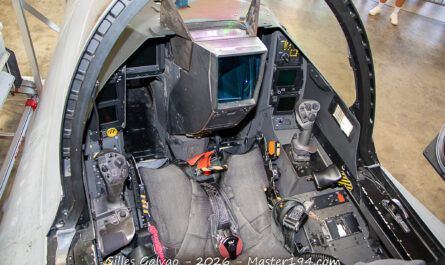
The F-8 Crusader cockpit belongs to a transitional generation: modern enough to operate at supersonic speeds and fire guided missiles, yet still deeply rooted in ‘analog’ aviation.
Facing the pilot, there are no multi-function displays or digital interfaces like on modern fighters. The layout relies entirely on a myriad of dial instruments, switches, and indicator lights spread around the main panel. Every piece of information — airspeed, altitude, engine parameters, navigation, or weapon systems — has its own dedicated instrument.

For the pilot, this meant a heavy workload, particularly during critical phases like interceptions or carrier landings.
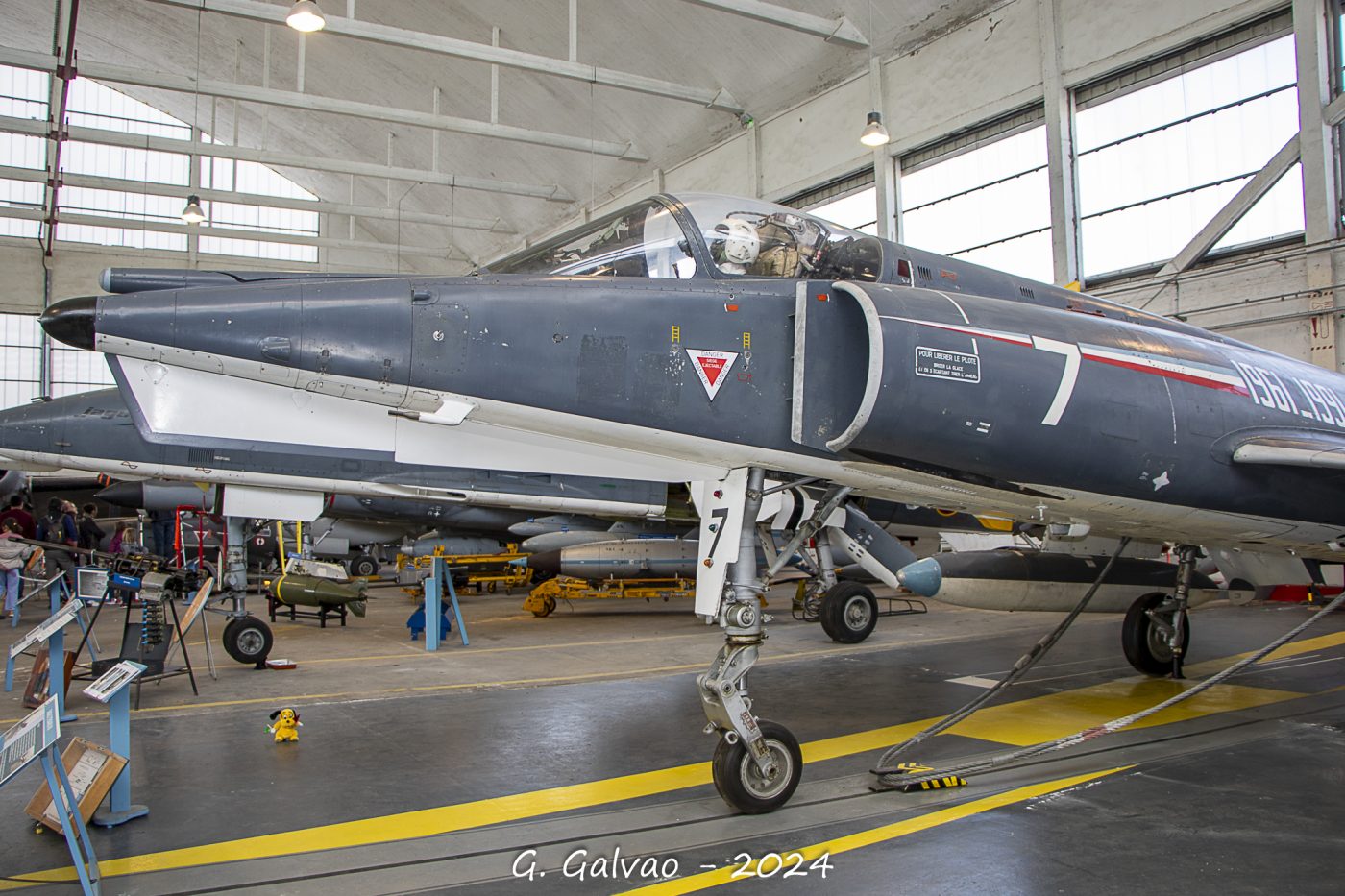
Also discover an external walkaround of this Crusader #11 here
F-8 Crusader No. 11: The Legendary « Crouze » of Flottille 12F in Rochefort
A wing designed for carrier operations
The Crusader stands out due to a particularly unique technical feature: its variable-incidence wing. During landing phases, the pilot could raise the wing by several degrees to increase its angle of attack without having to excessively pitch up the entire aircraft.
Improved handling at low speeds;


This system offered several key advantages for carrier operations:
- Better forward visibility during approaches;
- Improved handling at low speeds;
- Greater control of the aircraft during landing phases.
This technical solution, which became one of the F-8 Crusader’s signatures, perfectly illustrates the challenges faced by the engineers of early supersonic carrier-based fighters.
La console droite :


The cockpit of a transitional fighter
The Crusader’s cockpit perfectly reflects a pivotal era in the history of aerial combat. Designed in the late 1950s, the F-8 belongs to a generation of fighters where the internal cannon was still considered vital, despite the arrival of the first guided air-to-air missiles.
As a result, the pilot faces a highly dense array of controls dedicated to navigation, radar, weaponry, and fire control systems. The cockpit environment clearly illustrates the growing complexity of carrier-based fighters of that period, while retaining a very “mechanical” layout, a far cry from modern digital cockpits.
This combination of 20mm cannons, missiles, and onboard radar would ultimately earn the Crusader its famous nickname: The Last of the Gunfighters.


Between modernization and heritage: the F-8P
In the case of aircraft number 11, there is an interesting point: the French Crusaders ended their service life under the F-8P standard, which introduced various avionic upgrades designed to extend their operational lifespan.
Despite these upgrades, the cockpit retains a layout very characteristic of the 1960s.


ANAMAN and the Rochefort Naval Aviation Museum Without the dedication of the ANAMAN volunteers, we probably wouldn’t have the chance to admire this aircraft today. A huge thank you to them for their hard work, for sharing their passion, and for their warm welcome!