 by
Among the defining moments of French Naval Aviation in the former Yugoslavia, the incident involving Étendard IVP No. 115 remains one of the most spectacular. Hit by a surface-to-air missile during a reconnaissance mission over Bosnia, the aircraft nevertheless managed to limp back to the aircraft carrier Clemenceau and land in a severely degraded configuration.
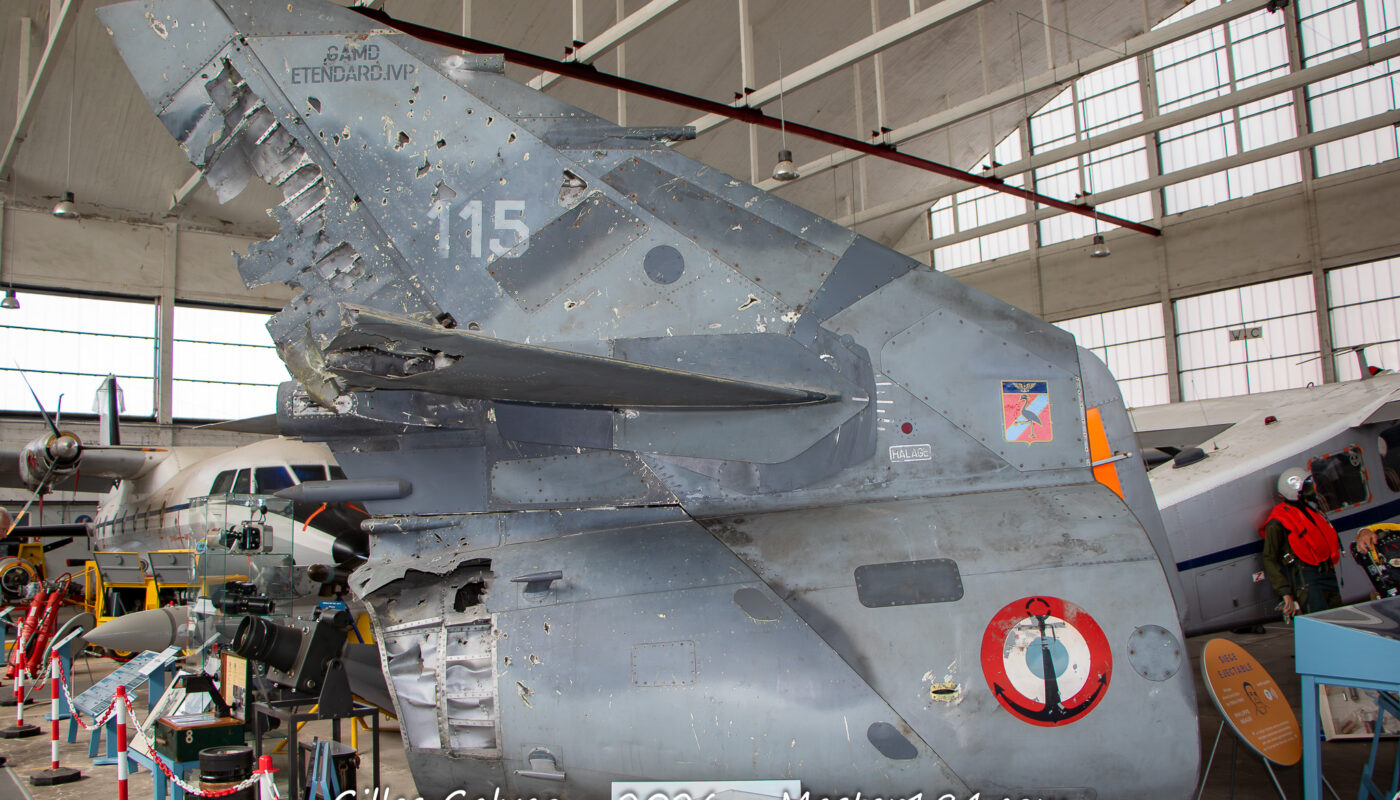
Discover the account of this extraordinary flight and explore our detailed photo walkaround of the aircraft’s tail section.
In 1994, Flottille 16F deployed its Étendard IVPs as part of NATO operations over the former Yugoslavia. The pace of missions was intense, and imagery intelligence remained a critical asset in a conflict where frontlines shifted rapidly, sometimes in a matter of hours.
April 15, 1994: A new reconnaissance mission
In the early afternoon of April 15, 1994, the briefing is over. Two Étendard IVPs are tasked with an intelligence-gathering mission over three targets: Sarajevo, Rogatica, and Goražde. The latter is considered a priority, as the situation on the ground there is particularly volatile, with an urgent need for updates on troop and artillery movements.
At the controls of No. 115 is Lieutenant Commander Pierre Clary. This marks the pilot’s 55th mission over war-torn Bosnia, and the 115th flight for Étendard IVP No. 115 itself. His wingman, “Jim”, is flying Étendard IVP No. 102.
In support, a Super Étendard is also deployed to provide aerial refueling once the formation climbs to 20,000 feet, allowing the two IVPs to enter the operational zone with full tanks. Since high-speed fuel consumption is extremely high on this type of mission profile, this phase is critical to the success of the operation.
Once refueling is complete, the mission begins in total radio silence. The two Étendards fly abreast, separated by about 1.5 km, maintaining mutual tactical surveillance.
Missile launch!
With Sarajevo and Rogatica already behind them, the two aircraft are flying at an altitude of 1,500 meters and a speed of 920 km/h. As they approach within a few nautical miles of Goražde around 3:30 PM, everything changes in an instant.
Jim spots a plume of smoke rising from the ground and immediately alerts: “Missile launch!”
Moments later, Pierre Clary feels a jolt ripple through the airframe—moderate but unmistakable. The aircraft has just been hit by a SAM-7. He immediately executes emergency procedures: climbing to 4,000 meters, altering heading to egress the “hot” zone, and analyzing the caution panel and flight parameters:
- The caution panel is clear
- Hydraulic pressure is normal
- Atar 8C engine parameters are normal
- No airspeed indication—the pitot tube located on the vertical stabilizer is no longer functioning
- Sluggish response to pitch inputs on the control stick indicates that the tail section is damaged
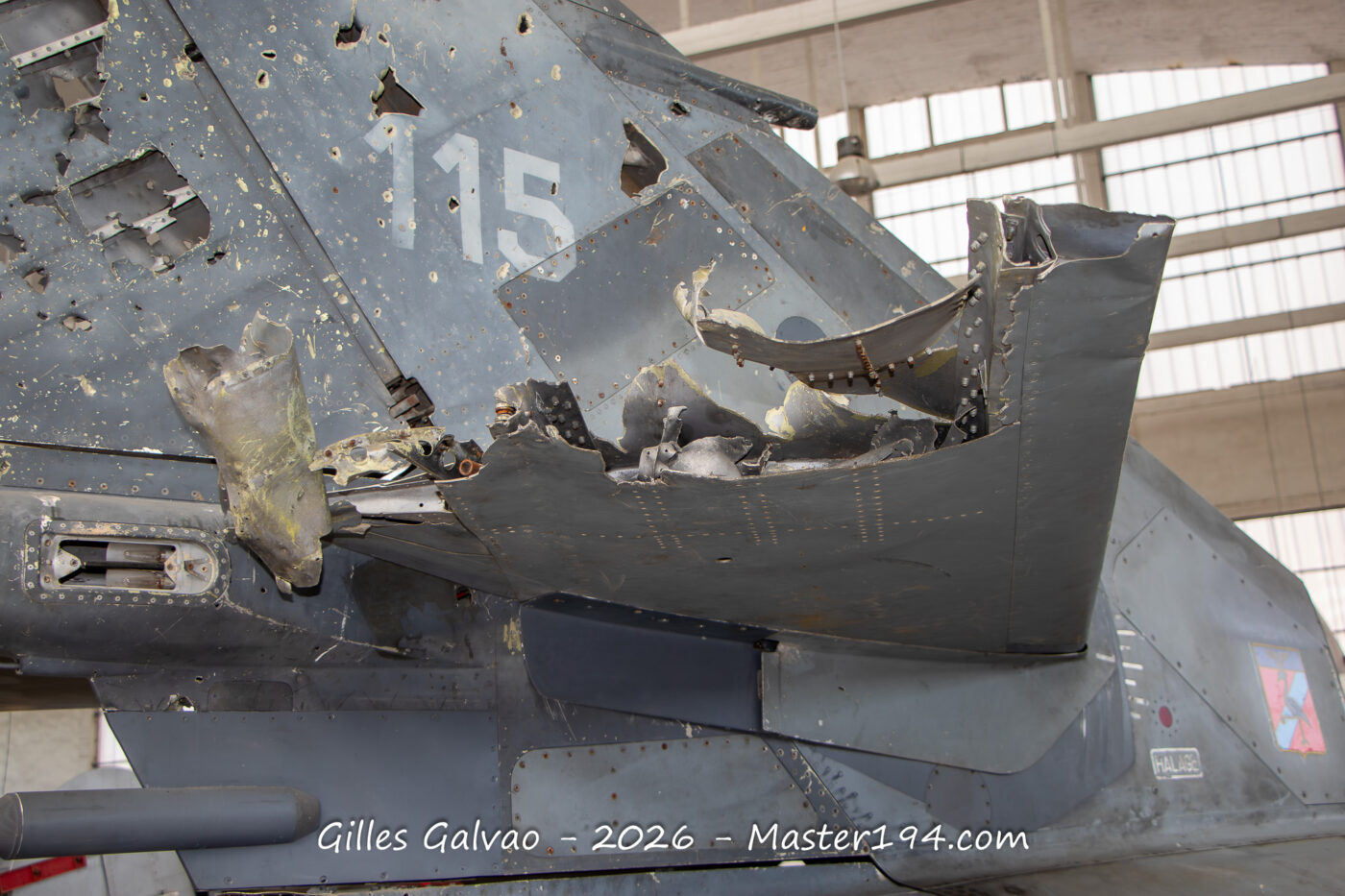
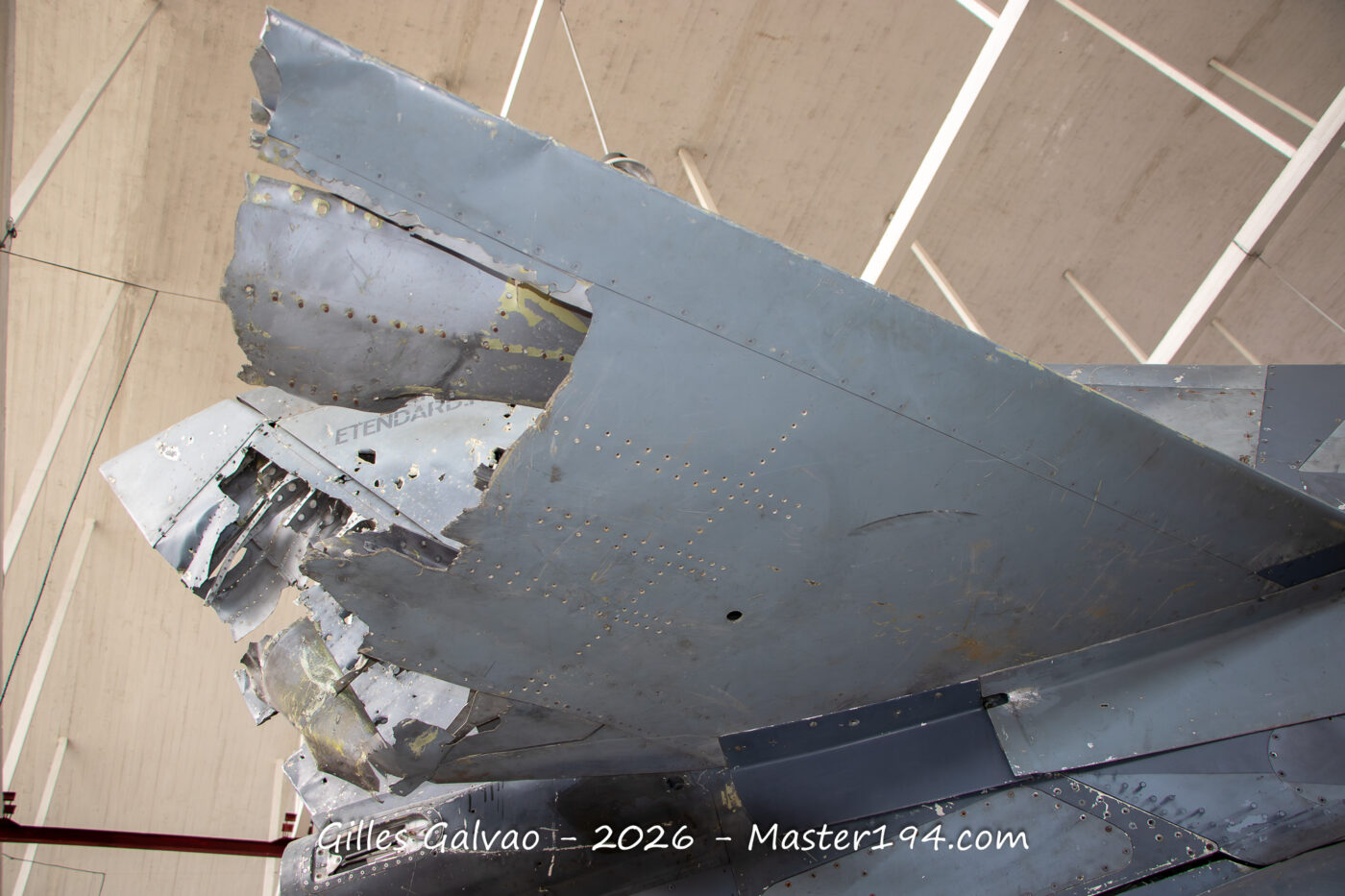
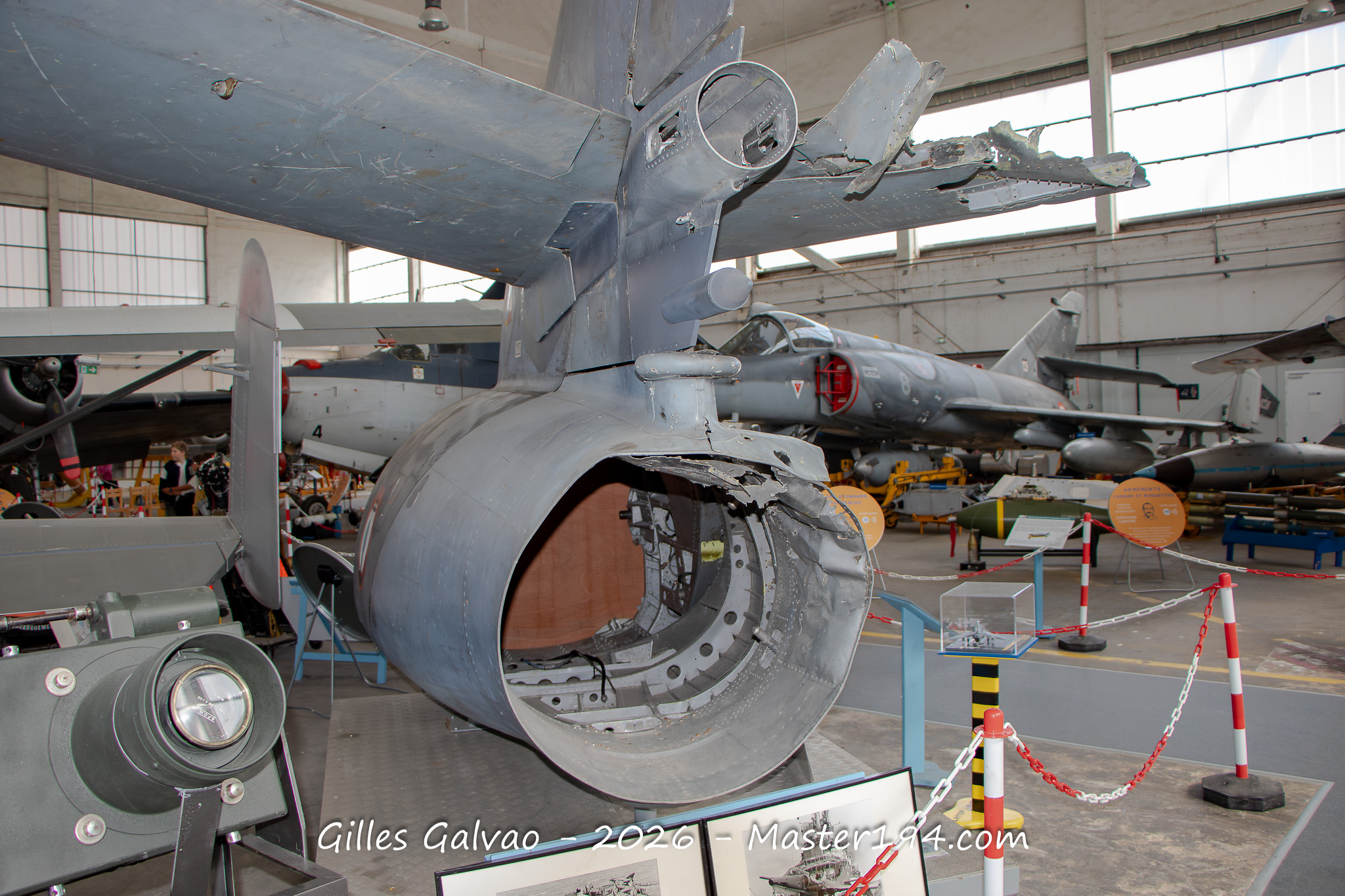
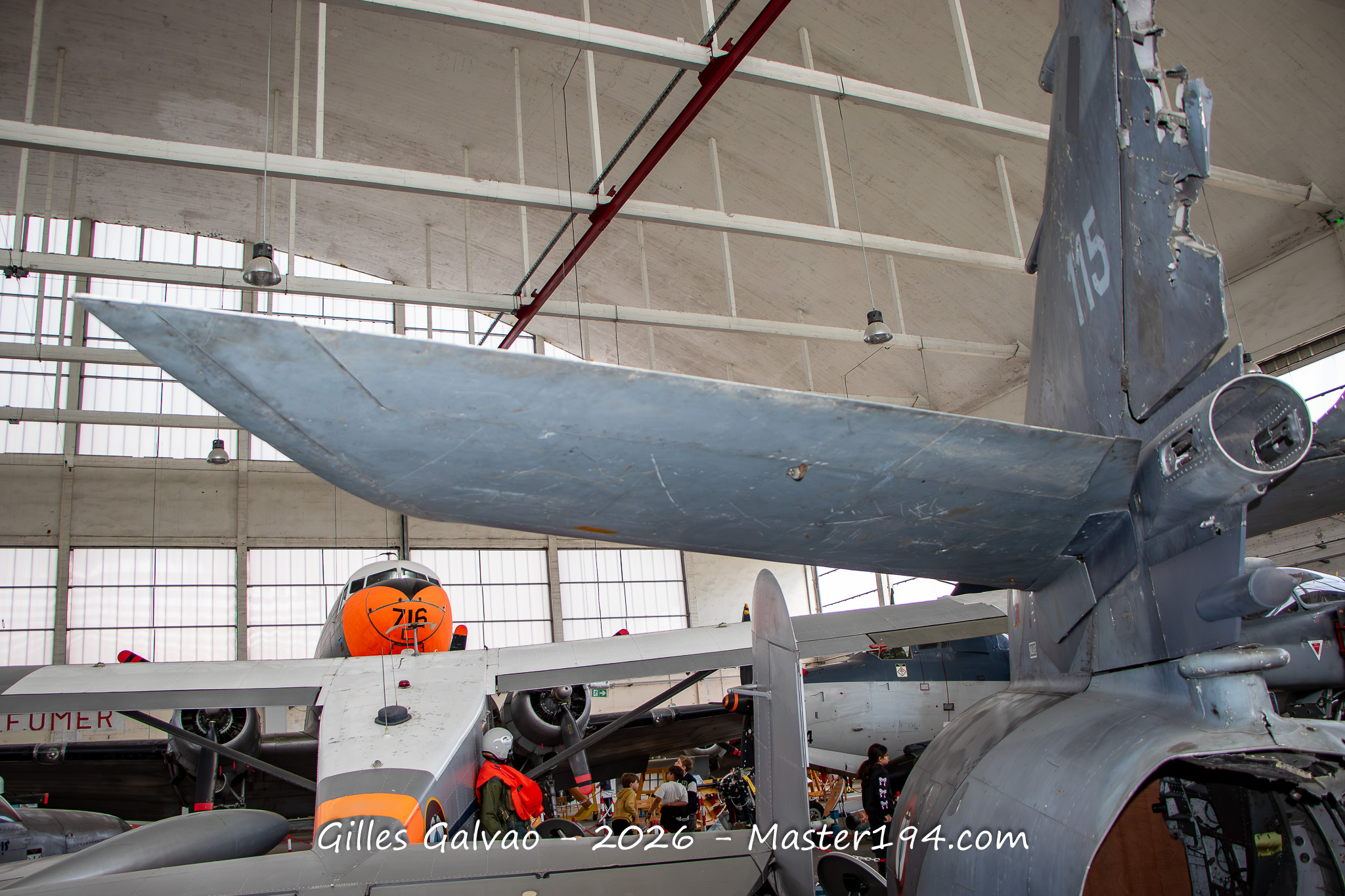
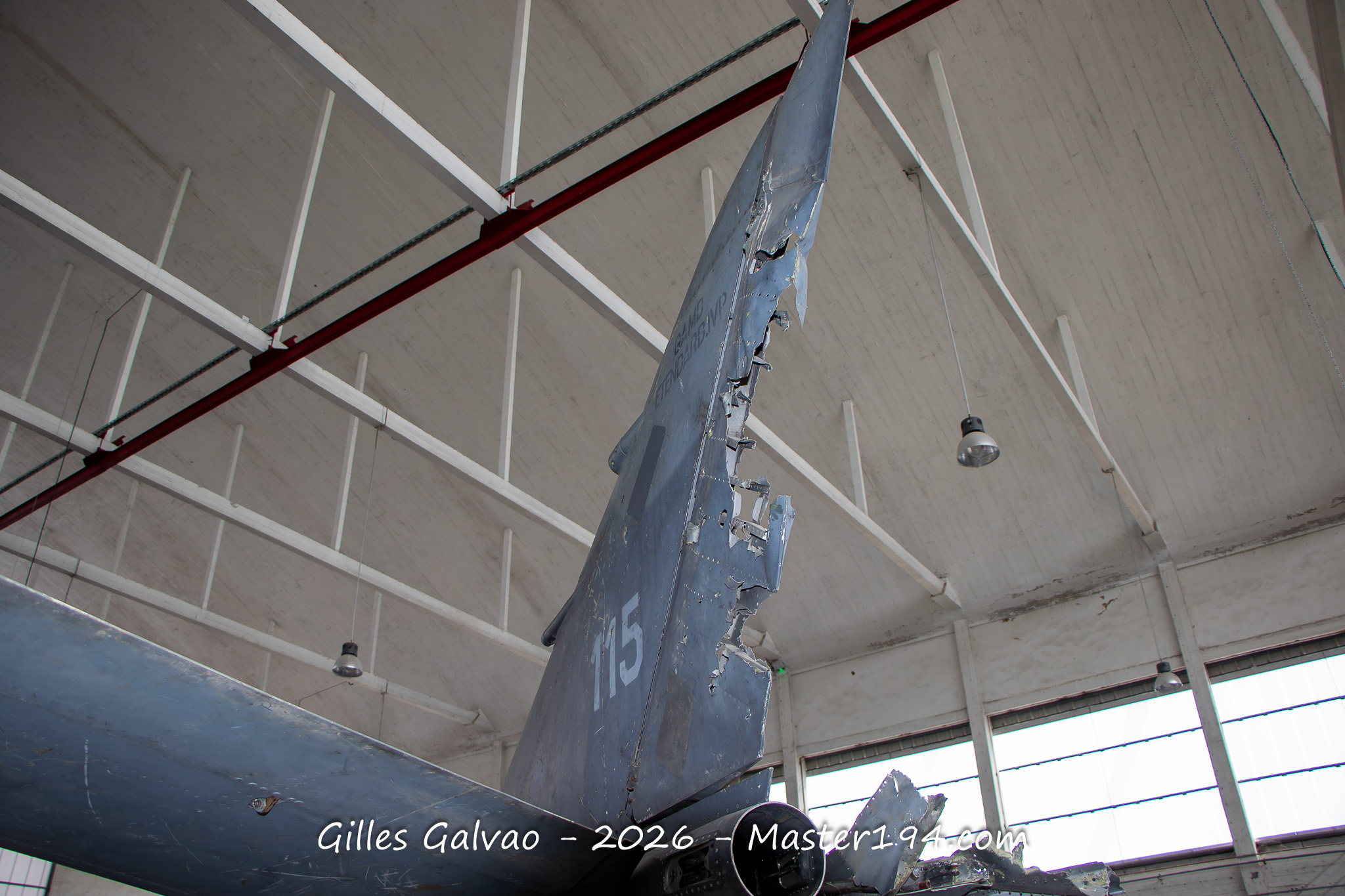
“Jim” closes in to conduct a visual inspection of No. 115. He reports the damage to his leader, careful not to cause unnecessary alarm… but the reality is bleak: the right elevator is almost entirely torn away, the tail fin and fuselage are riddled with shrapnel, and the right wingtip has also taken hits. On the plus side, there is no fire and no visible leaks, and the aircraft remains controllable. There will be no immediate ejection over hostile territory—it’s time to head home as fast as possible.
The transit to the aircraft carrier is flown at around 300 knots, keeping the engine power setting completely steady. The objective is simple: preserve what can be preserved. The engine must stay alive until the very end.
The “external” communications radio is also compromised; Pierre Clary’s only link is via the “private” intra-flight radio, solely with his wingman. As a result, it falls to “Jim” to sound the alarm and coordinate the shortest possible emergency recovery corridor with the various command agencies.
Slowly, the land fades away, replaced by the open sea. With it comes a sense of relative relief: if he has to eject, at least it won’t be over hostile territory. Meanwhile, the aircraft carrier and the task force steam toward the crippled jets, still unsure if a carrier landing is even possible.
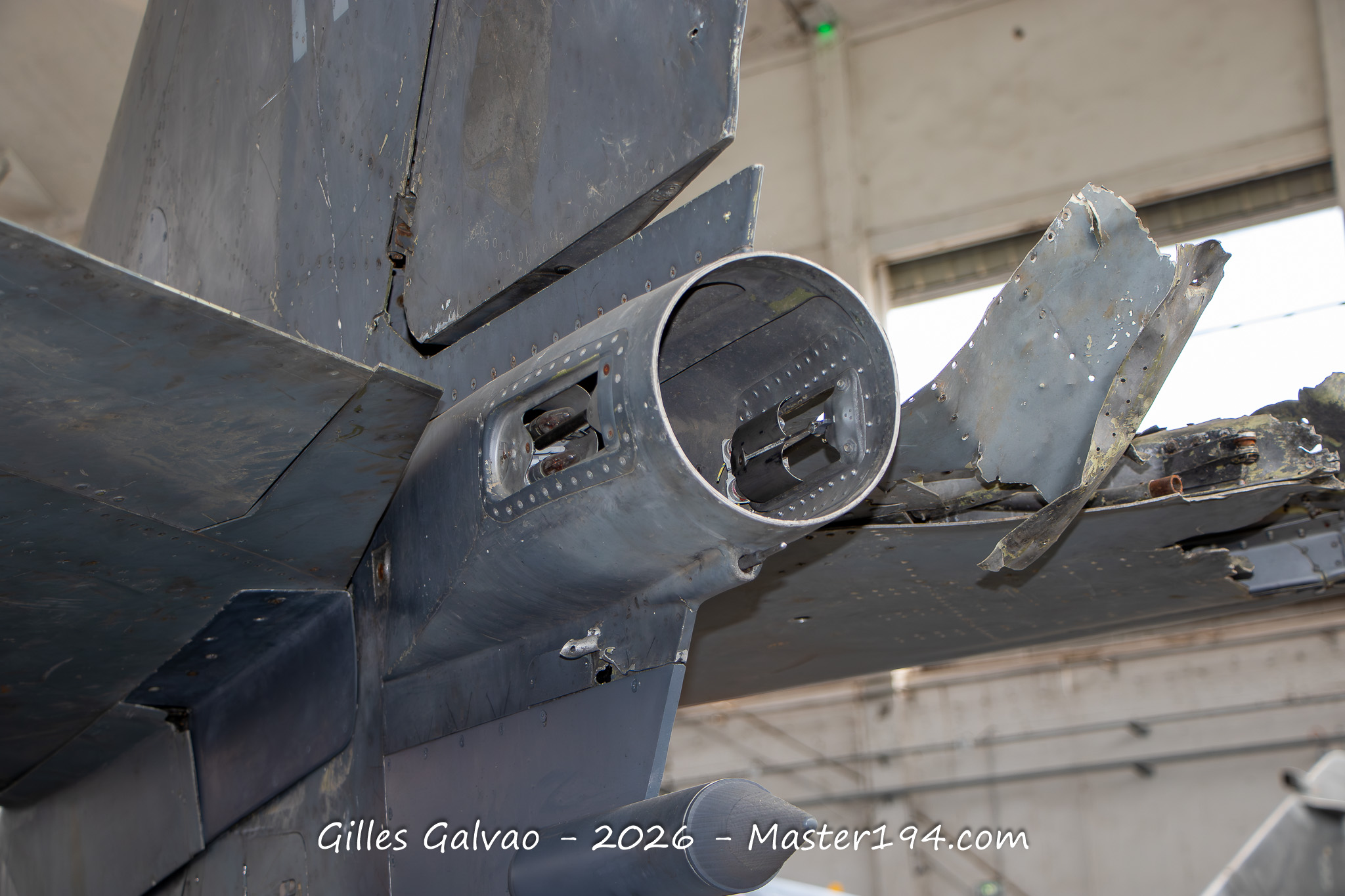
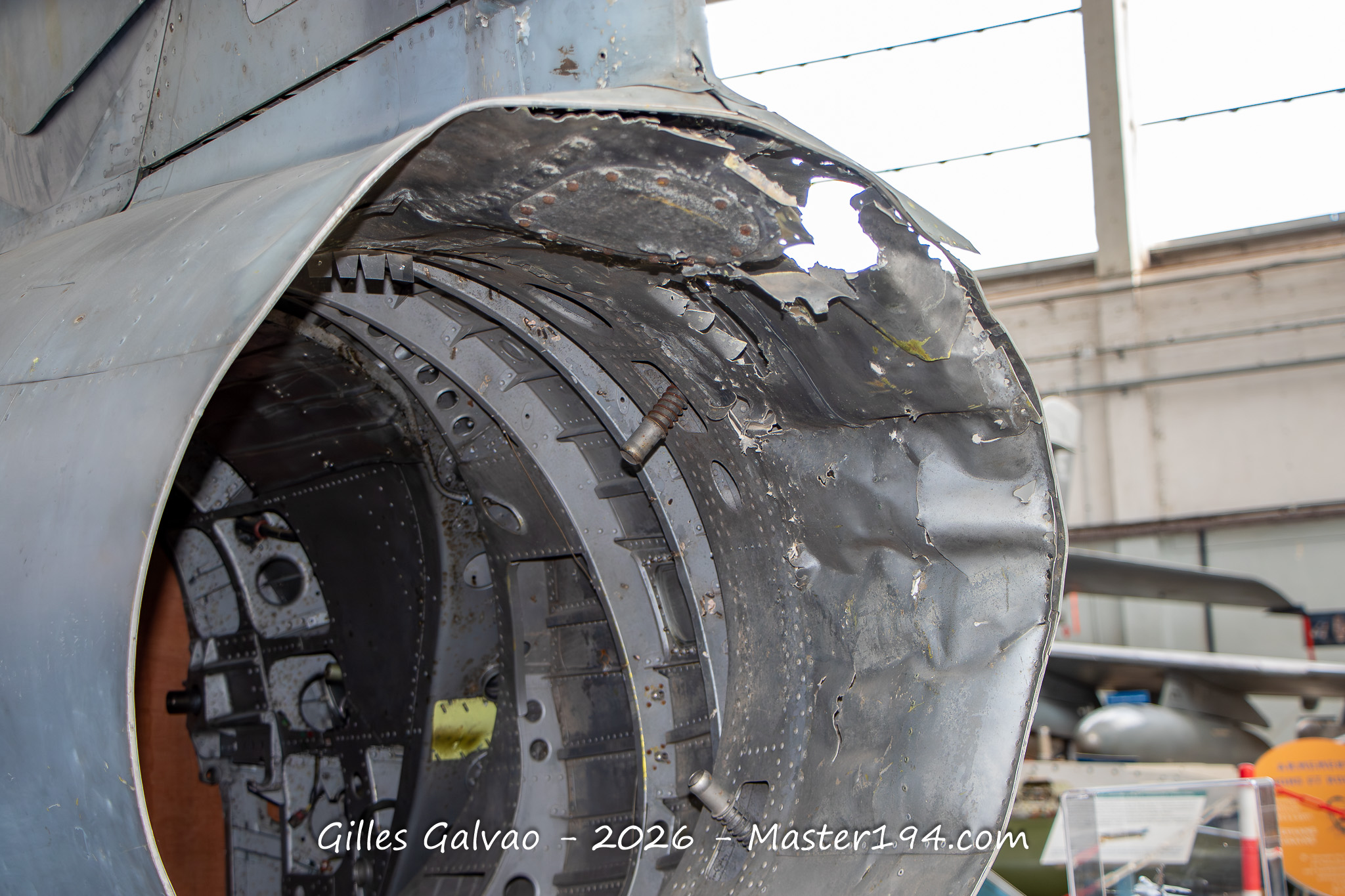
The challenge of a carrier landing with a damaged aircraft
Before considering a carrier landing, a series of checks is initiated to determine if the aircraft can be safely recovered:
- The landing gear extends normally
- The tailhook lowers correctly
- But there is still no airspeed indication
- And when the flaps are deployed, things get even more complicated…
The damage to the tail section means that extending the flaps forces the aircraft into a pronounced nose-down pitch, causing a loss of altitude that is extremely difficult to counteract. If a carrier landing is to be attempted, it must be a no-flap landing. This means a much higher approach speed, which must be offset by a lower aircraft weight to remain within the safe structural limits of the arresting wires.
By 4:30 PM, the target weight is reached and the aircraft remains sufficiently controllable: the Commanding Officer gives the green light for recovery!
The final approach is anything but standard. The aircraft is stable but flying far outside its normal flight envelope, and control stick responses remain incredibly sluggish. The jet will come in much faster than normal: 295 km/h, which is 55 km/h above the standard speed. The final approach is flown tight on his wingman’s wing, using him as a speed visual reference.
The deck of the Clemenceau is moving, as always, but this time the margin for error is razor-thin.
Étendard IVP No. 115 lines up perfectly and snags the number three wire!
Only after climbing out of the cockpit would Lieutenant Commander Clary discover the full extent of the damage. Unshaken, he would fly again the very next day for his 56th mission.
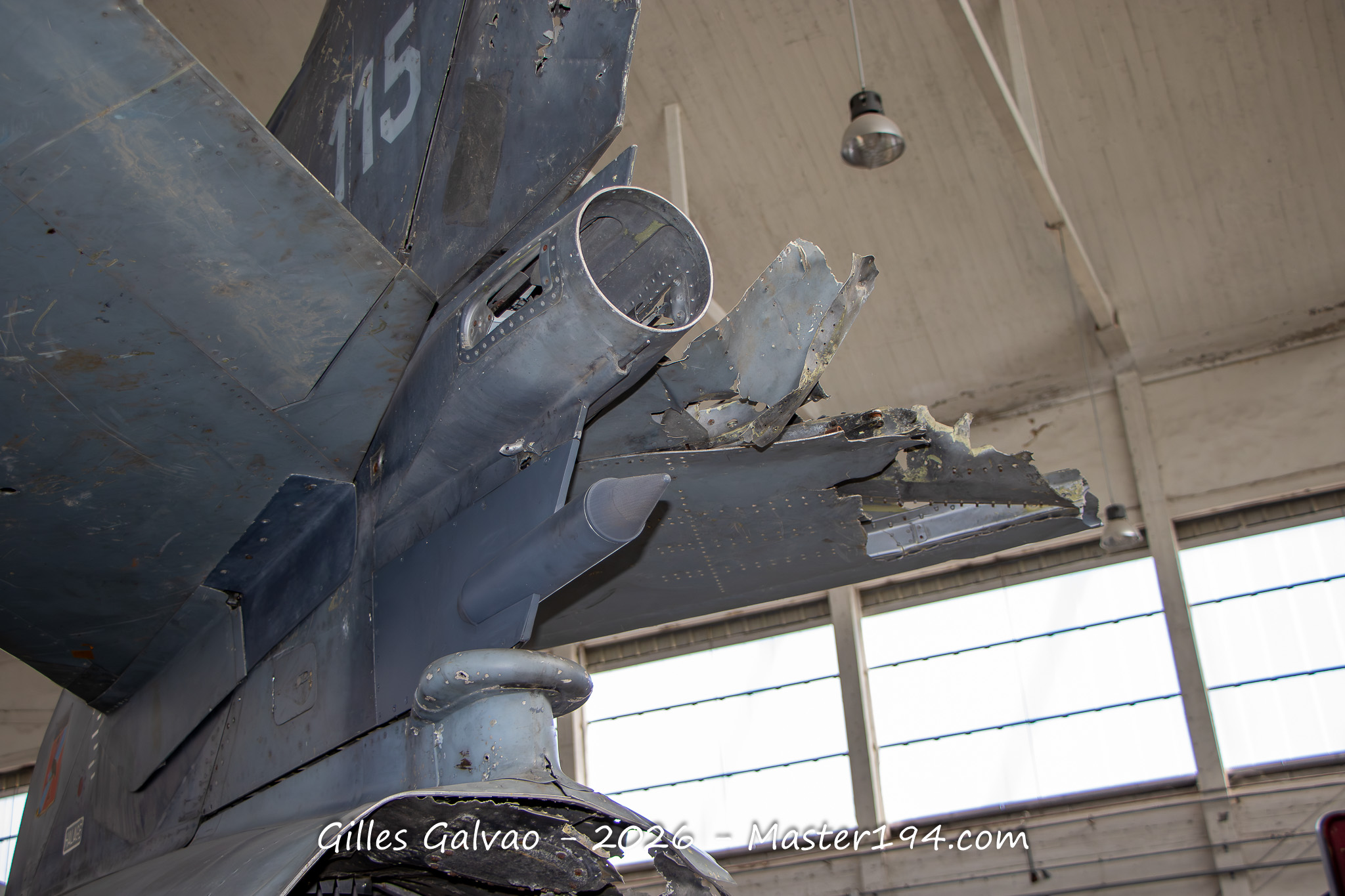
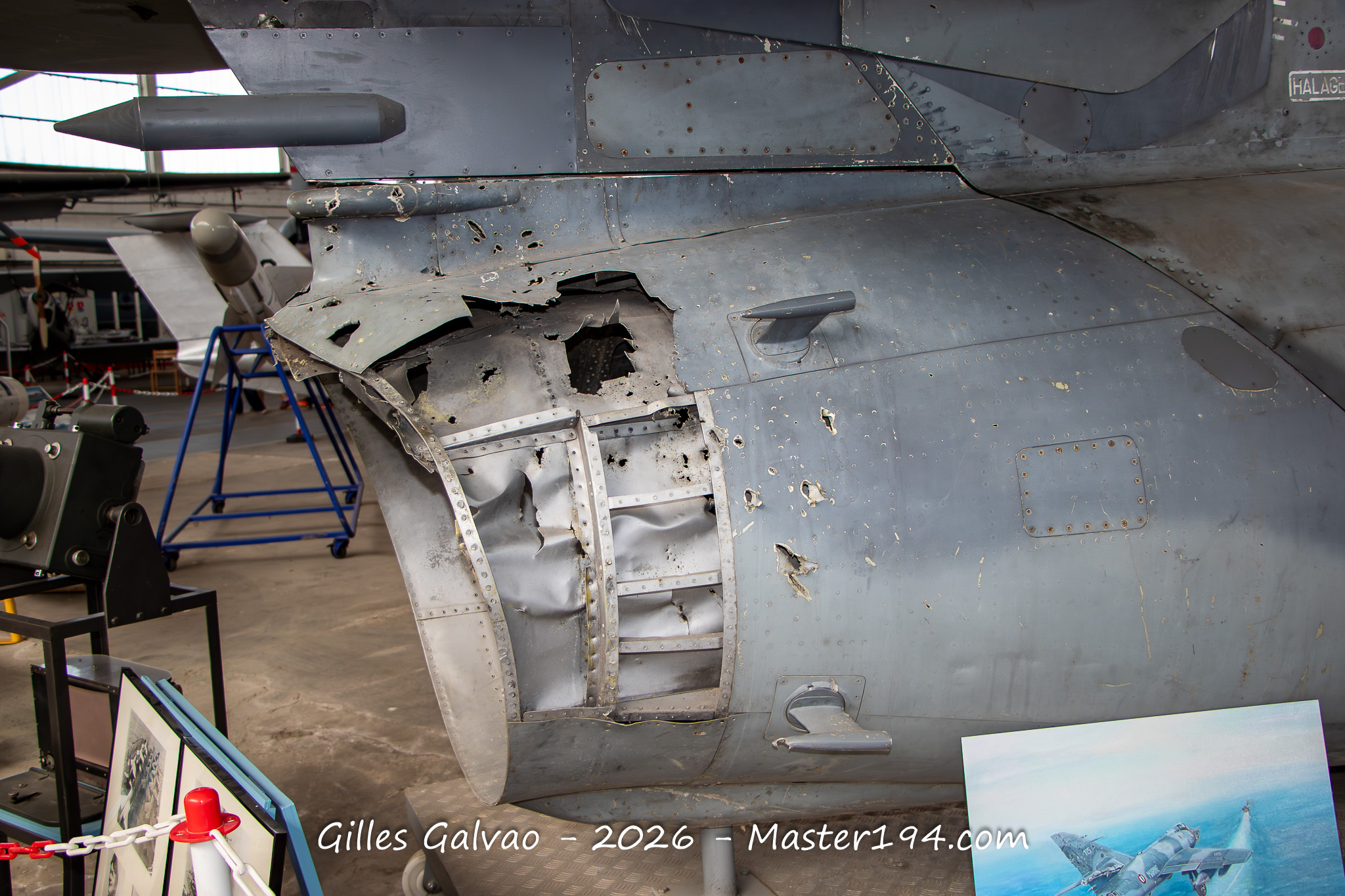
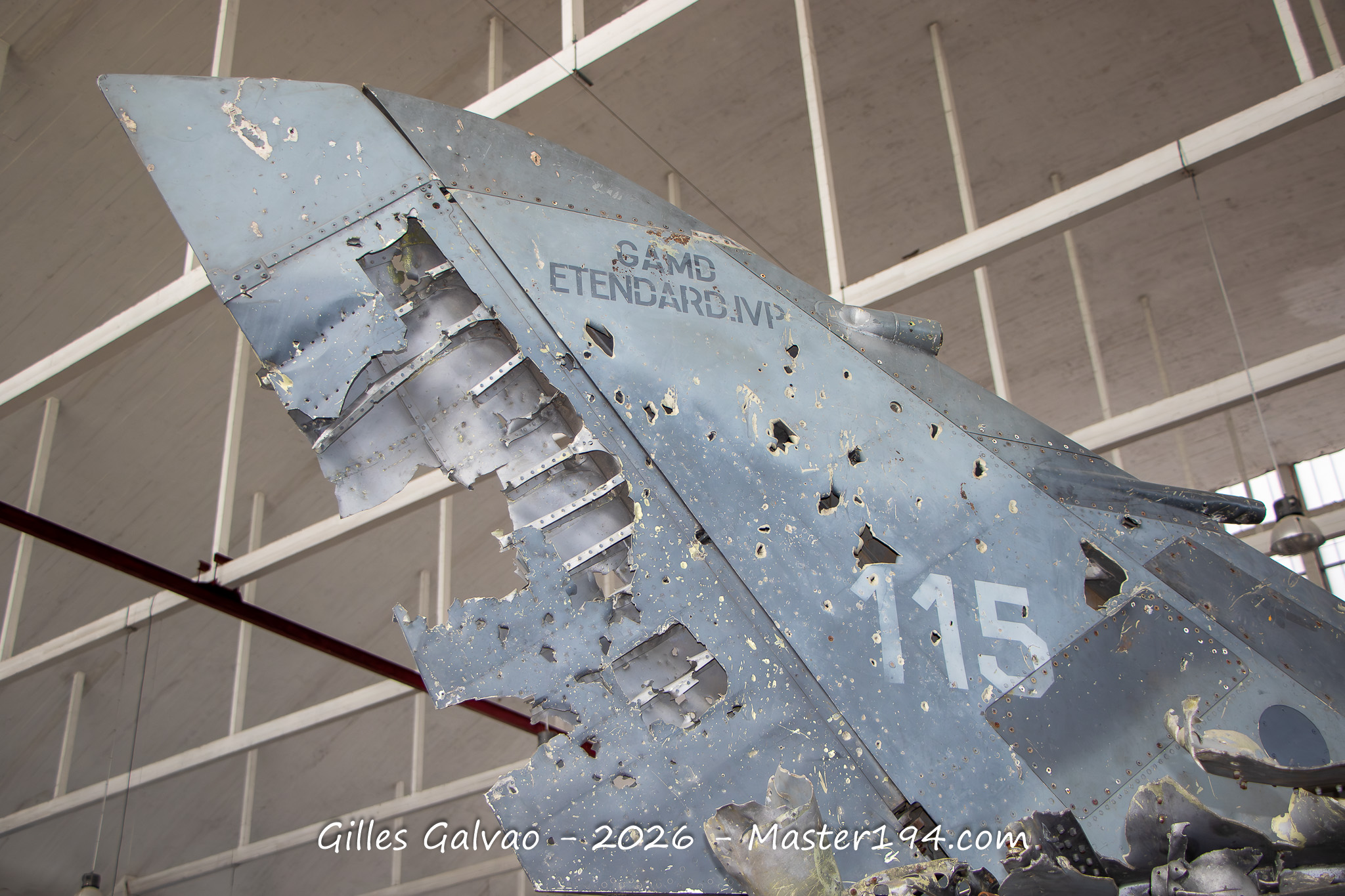
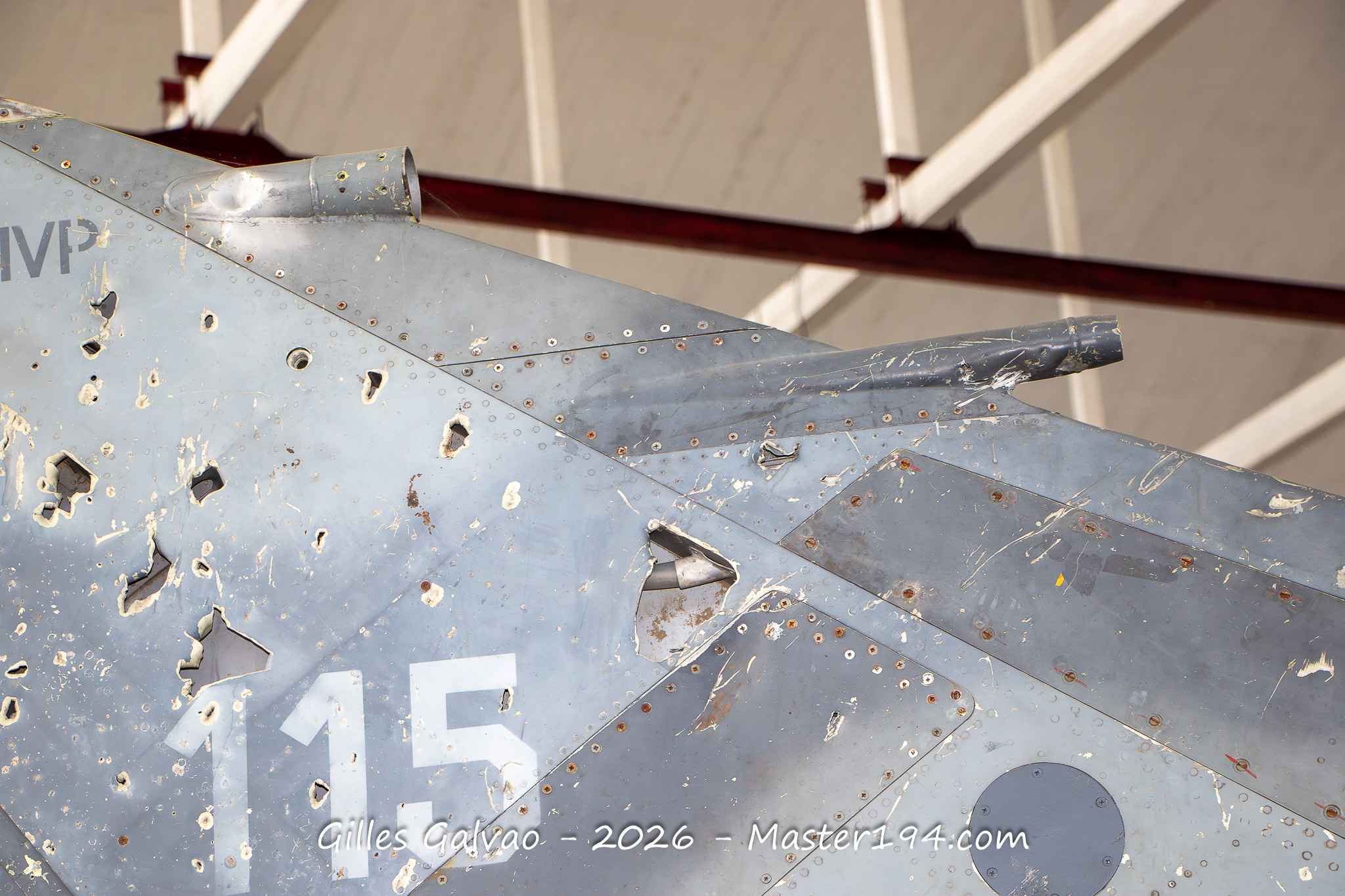
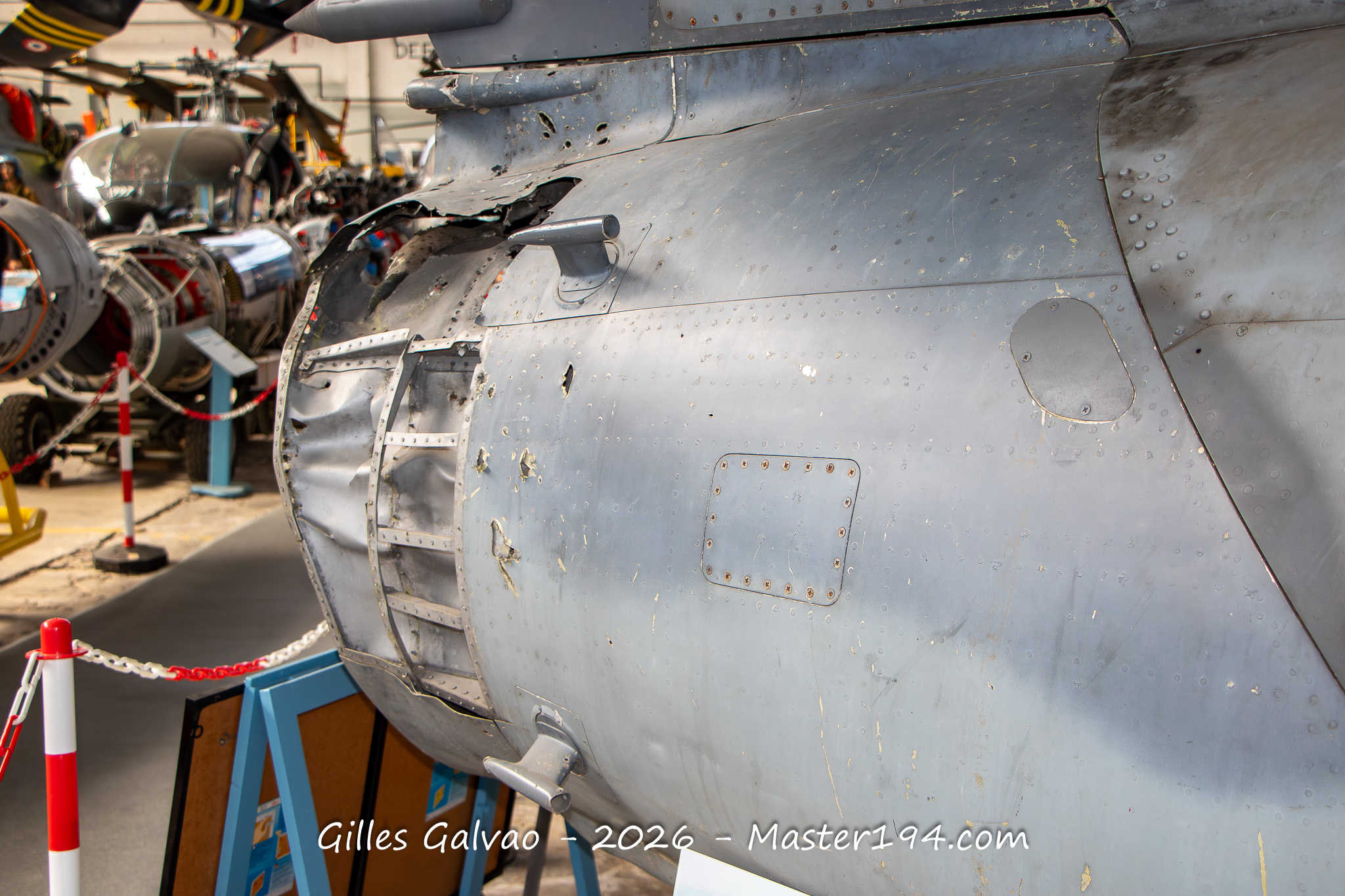
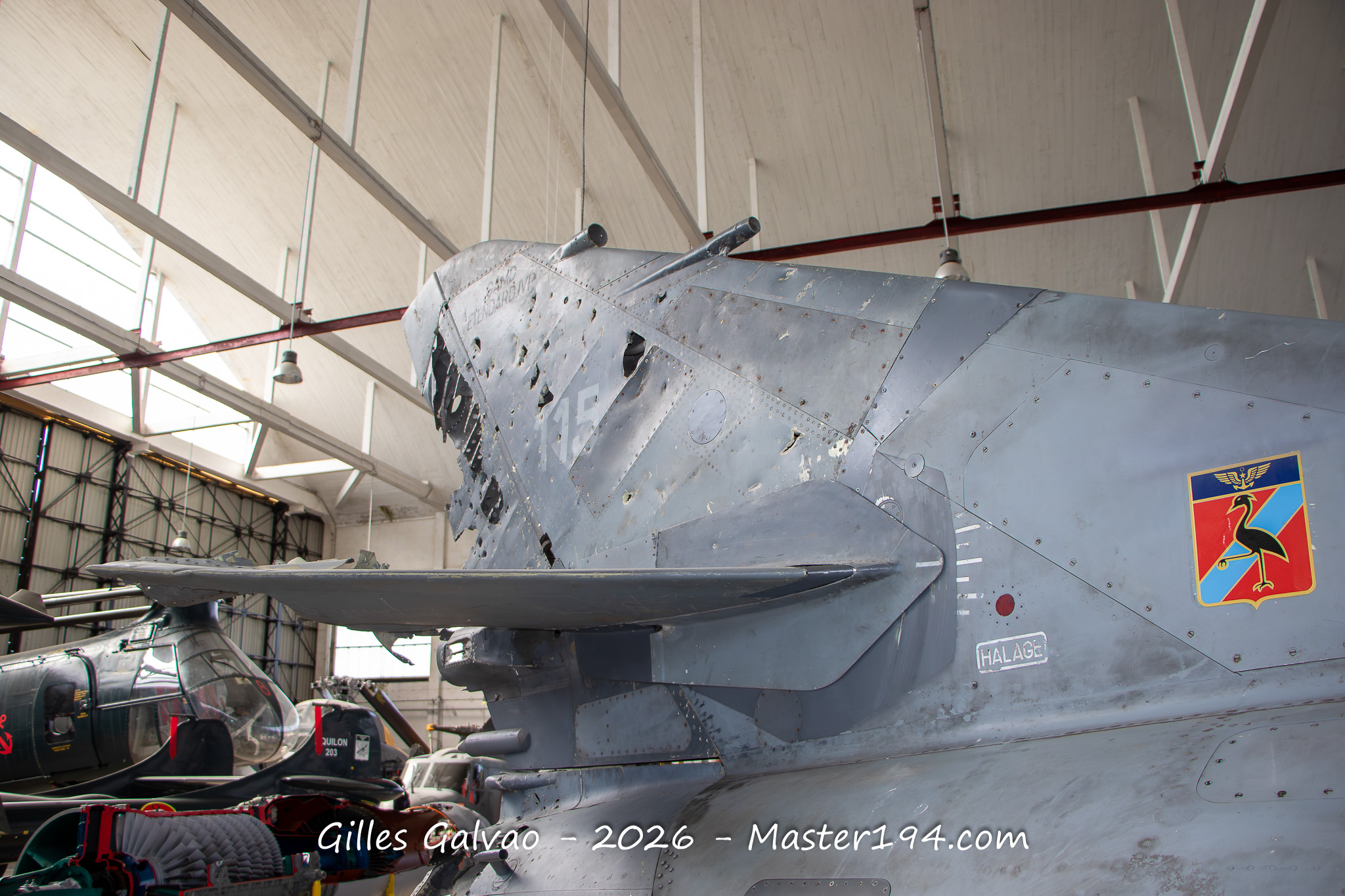
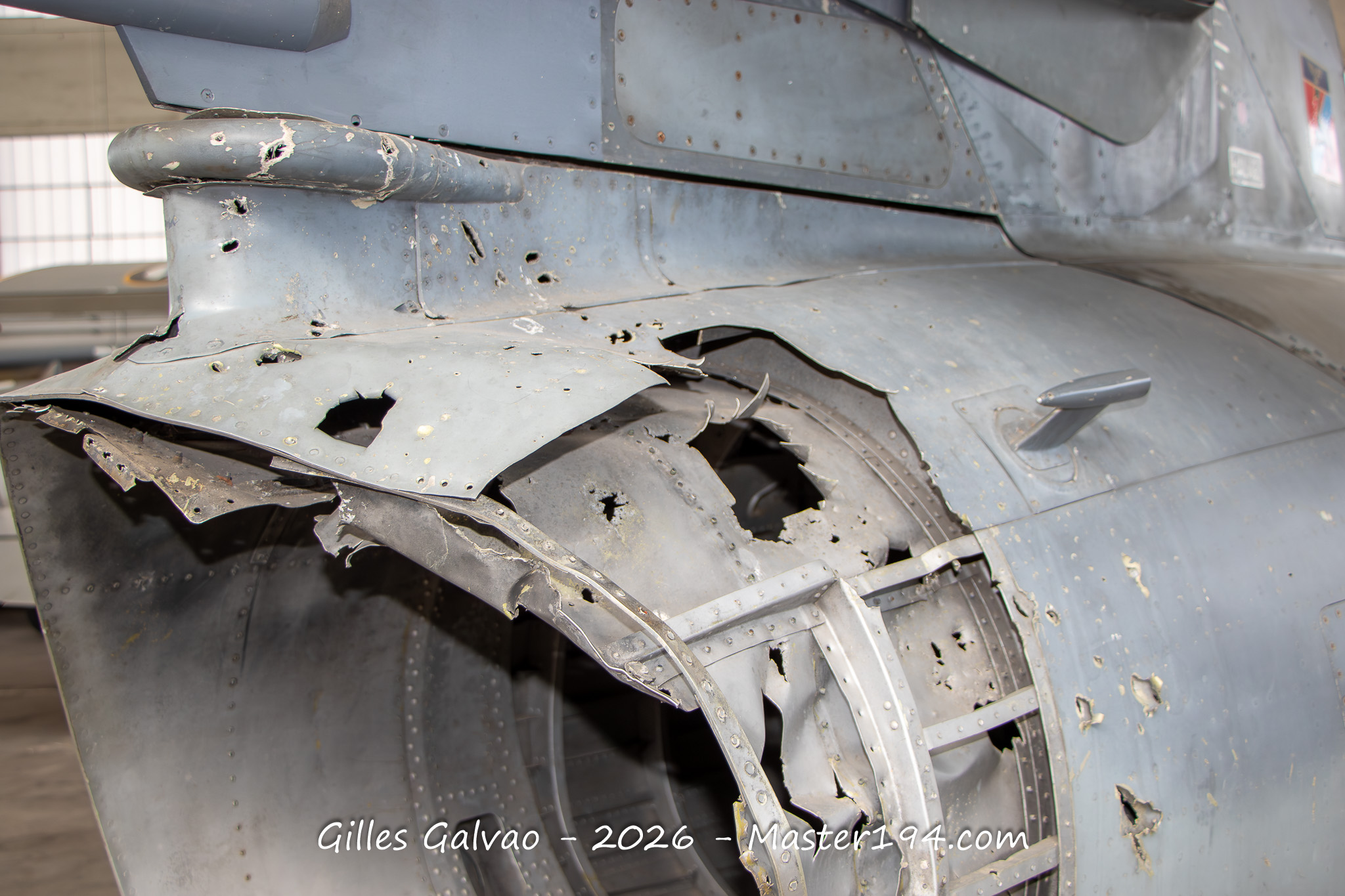
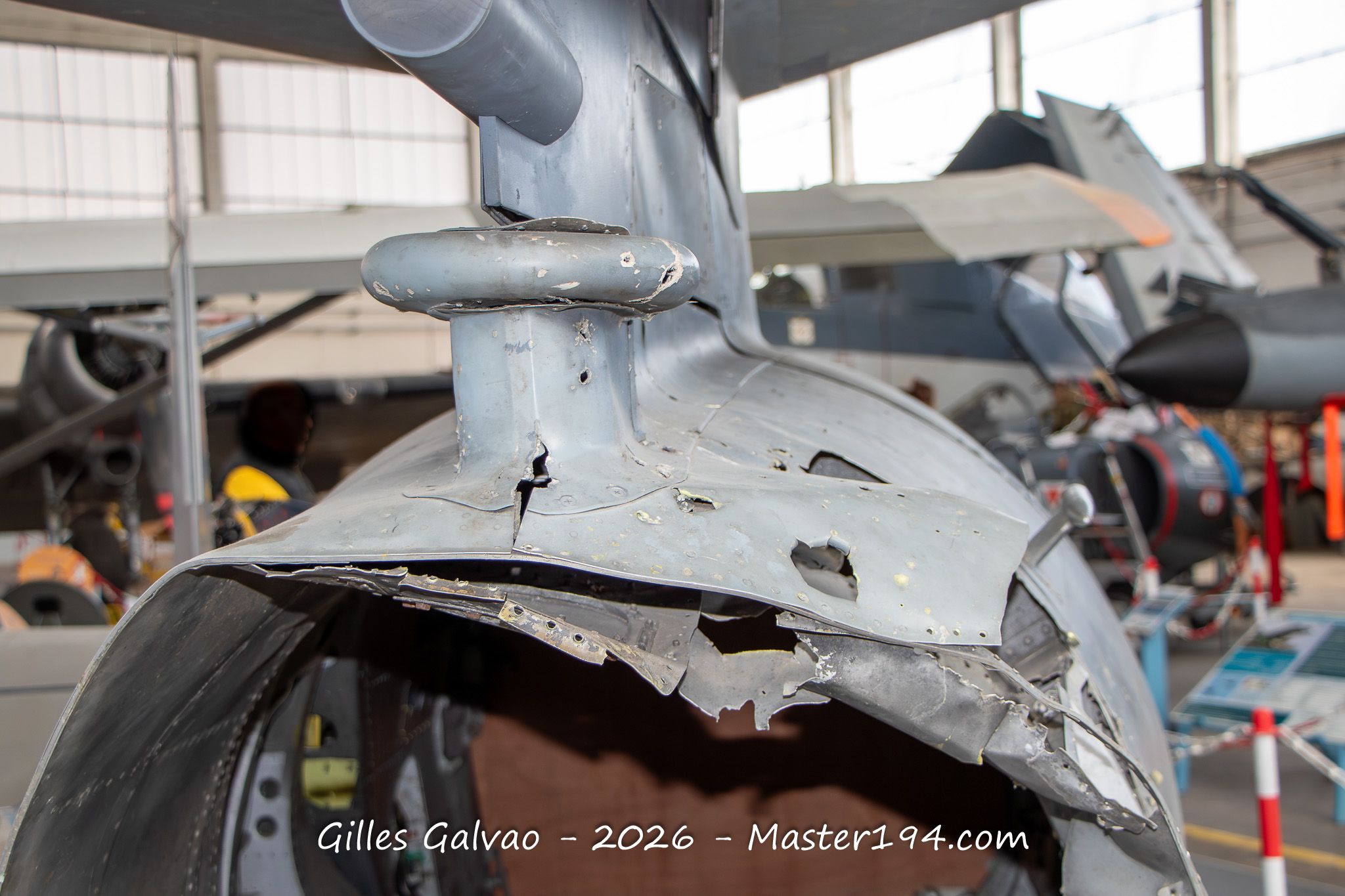
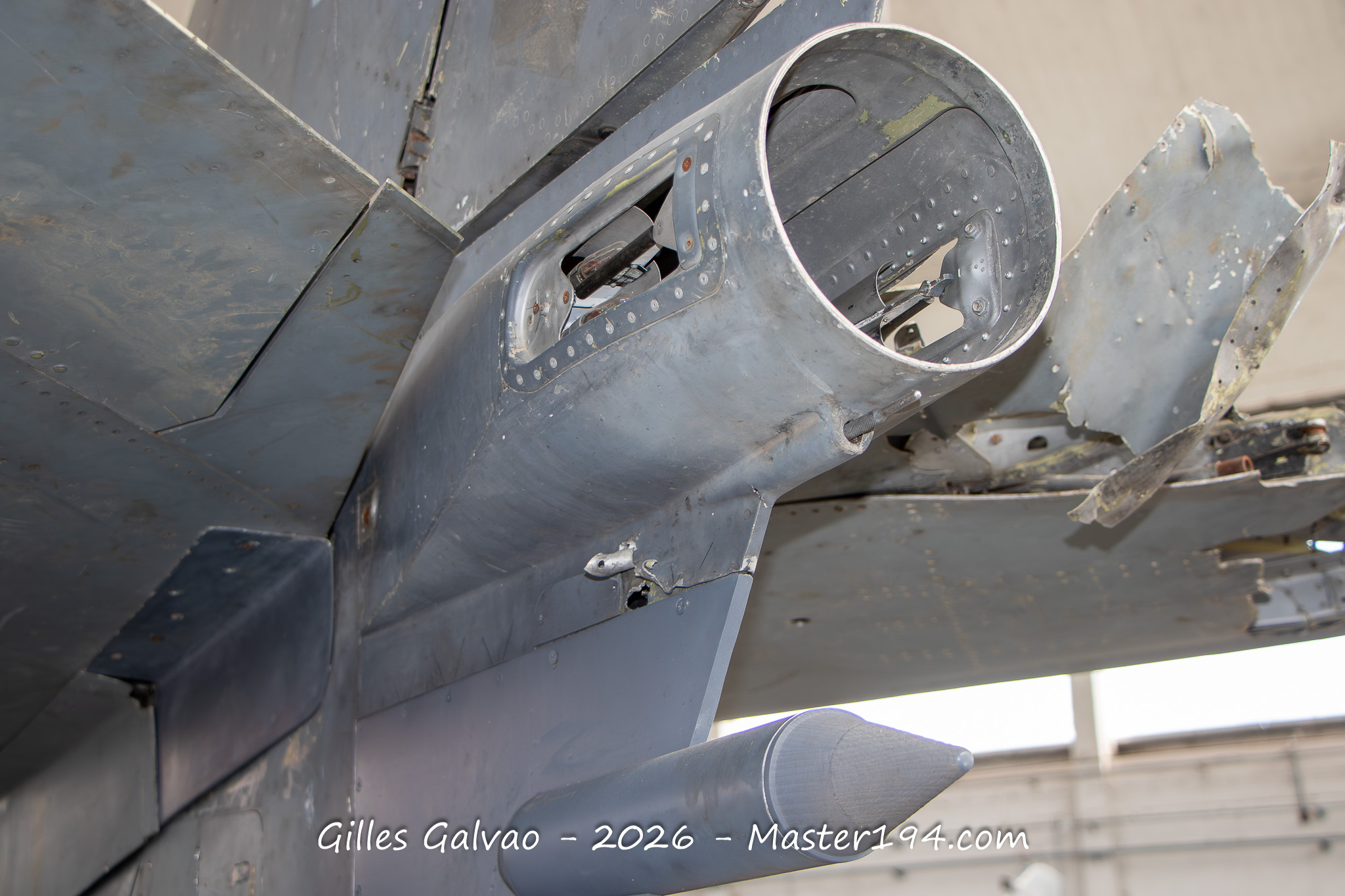
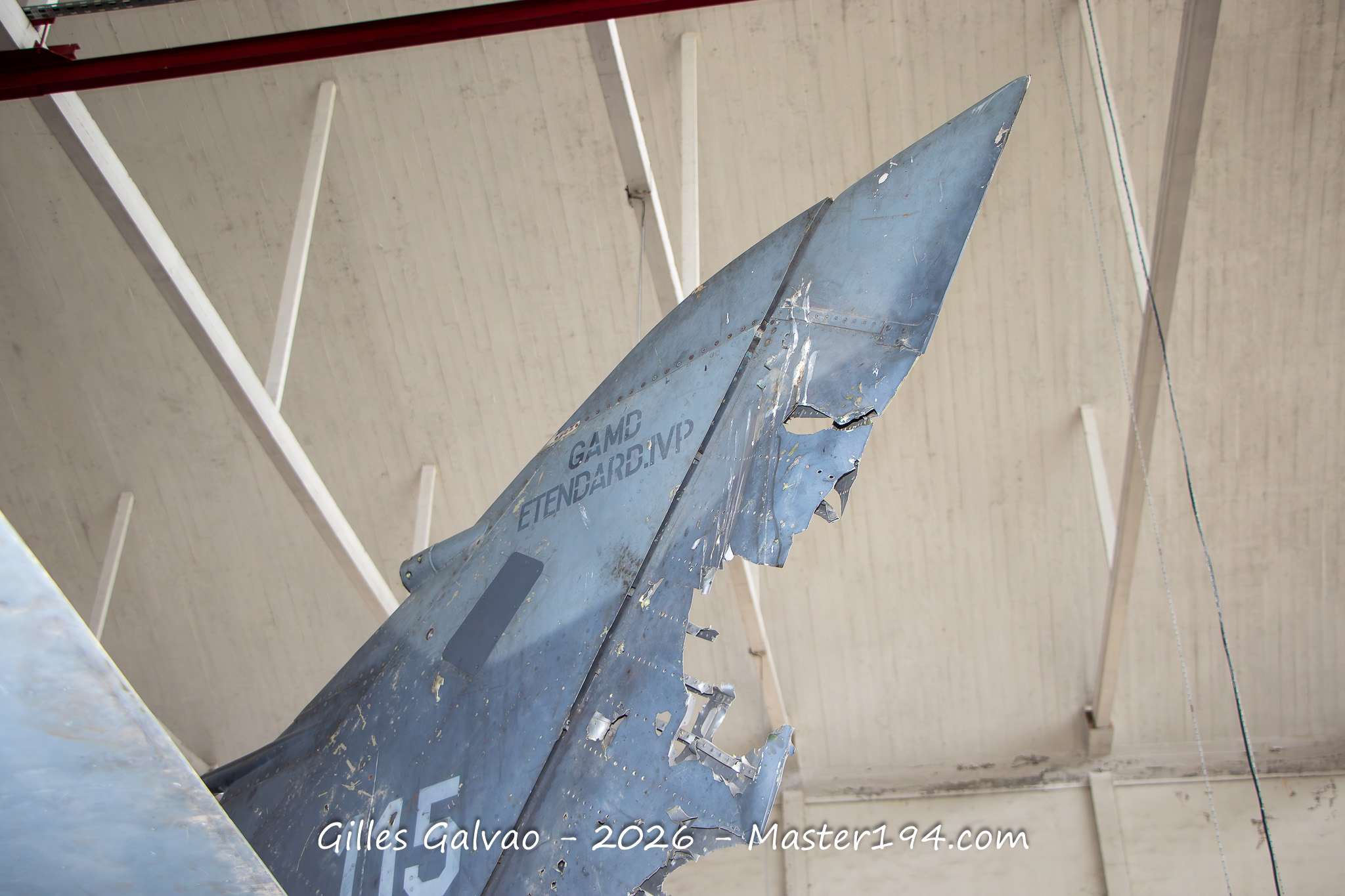
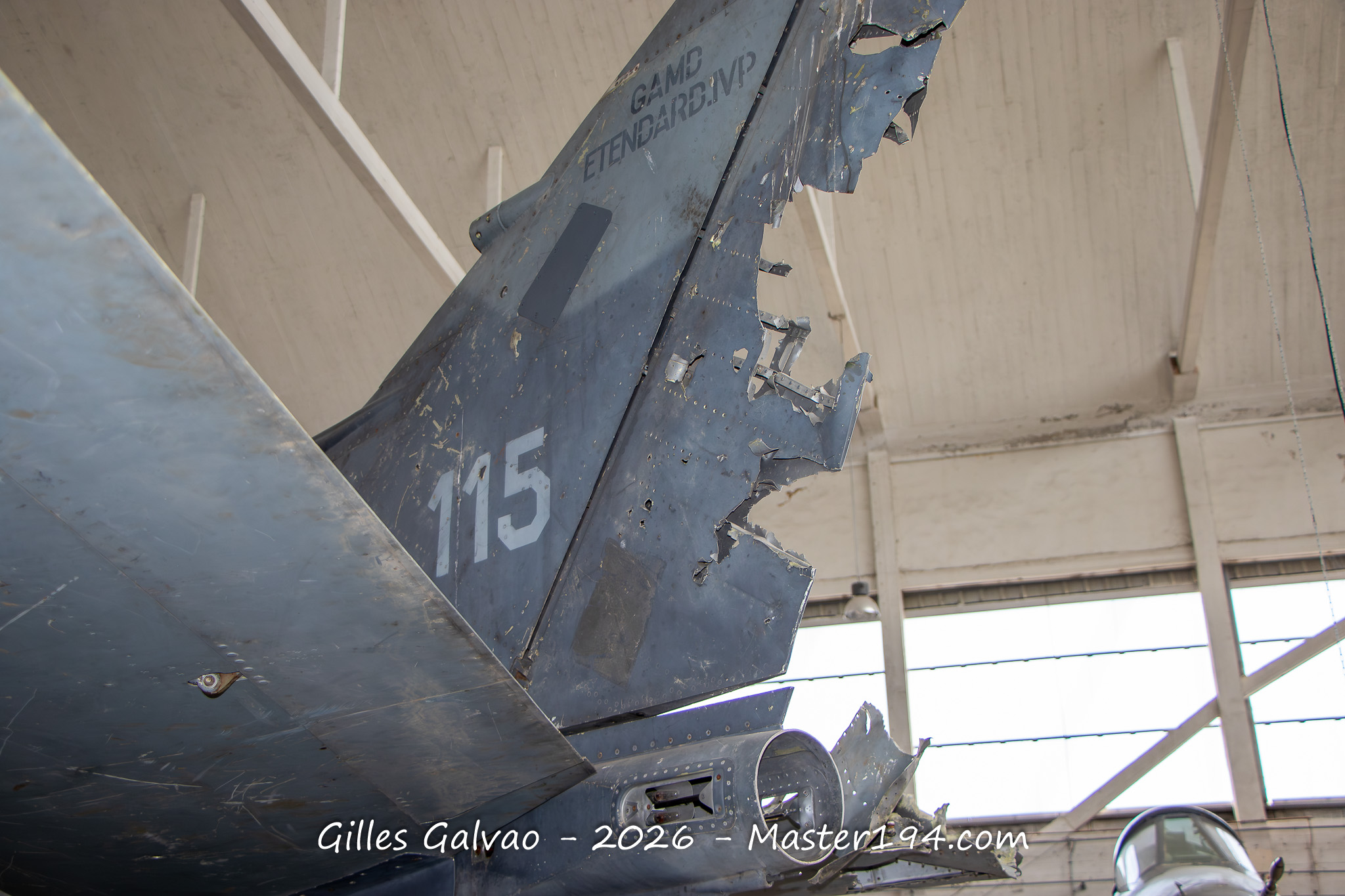
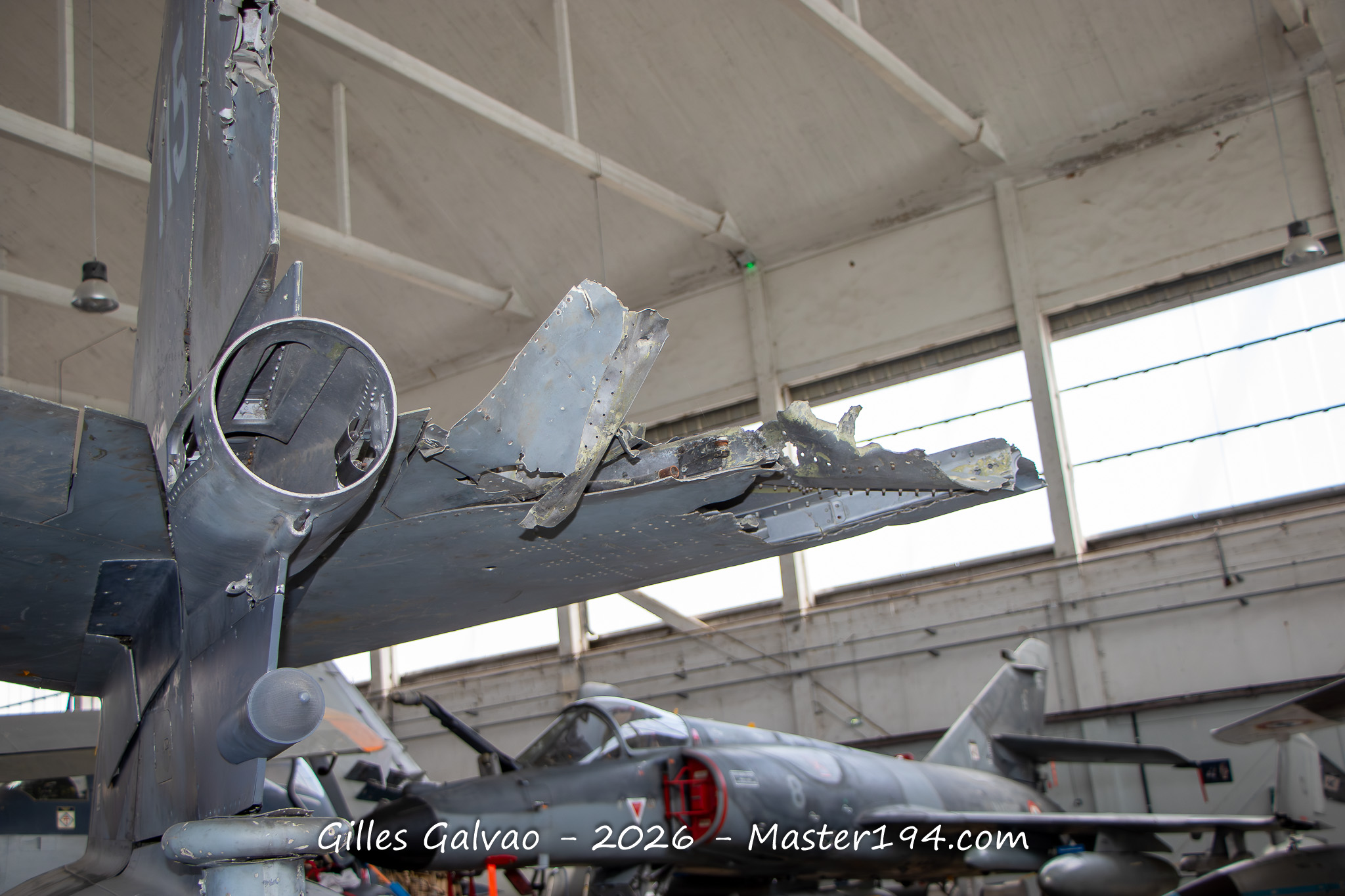
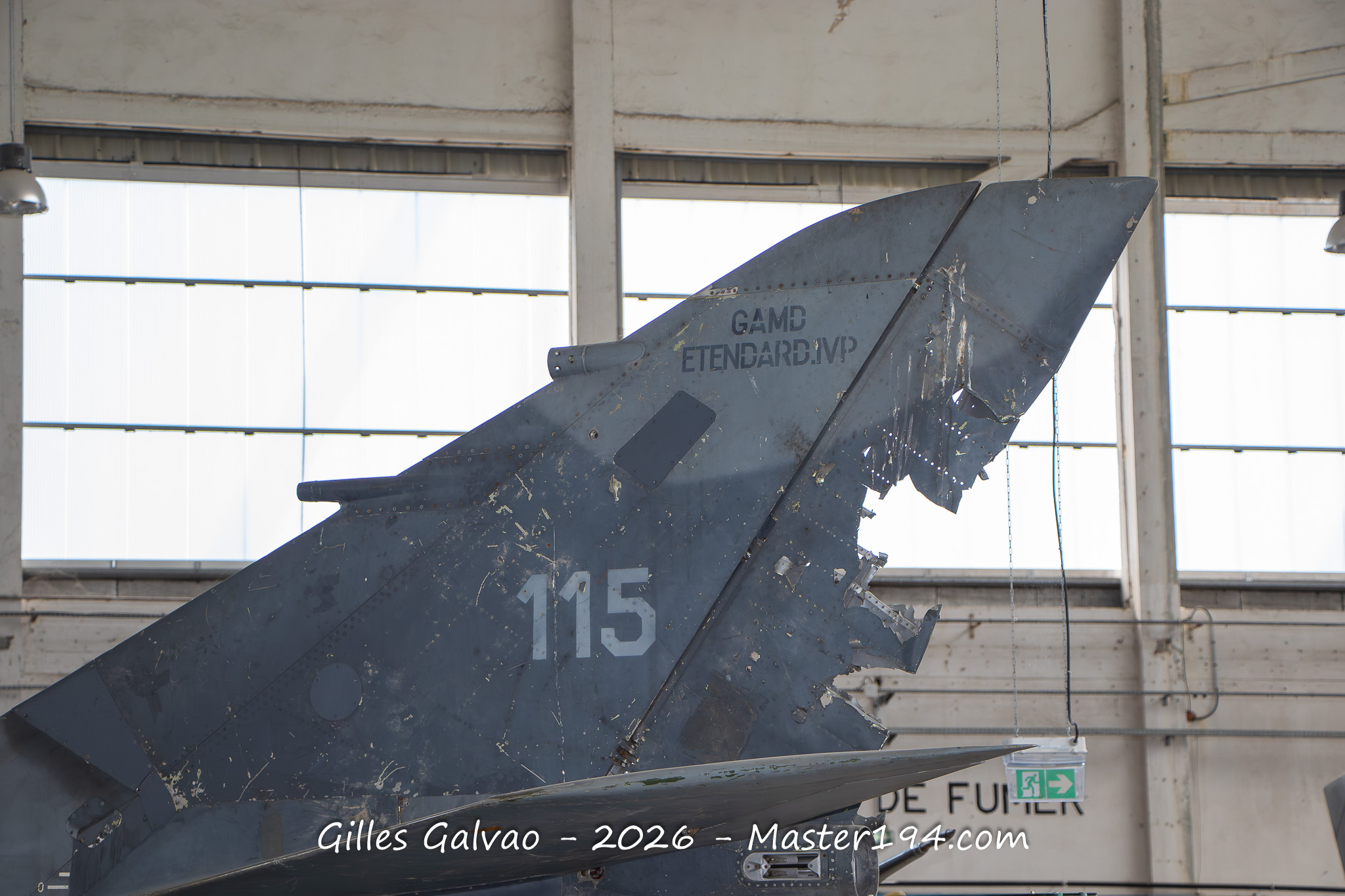
Étendard IVP No. 115 underwent a month and a half of repairs at the Cuers workshops before returning to the skies, flying until 2020. The damaged tail section was left unrepaired and was preserved. It can now be seen at the Musée de l’Aéronautique Navale (Naval Aviation Museum) in Rochefort, where all of these photos were taken.
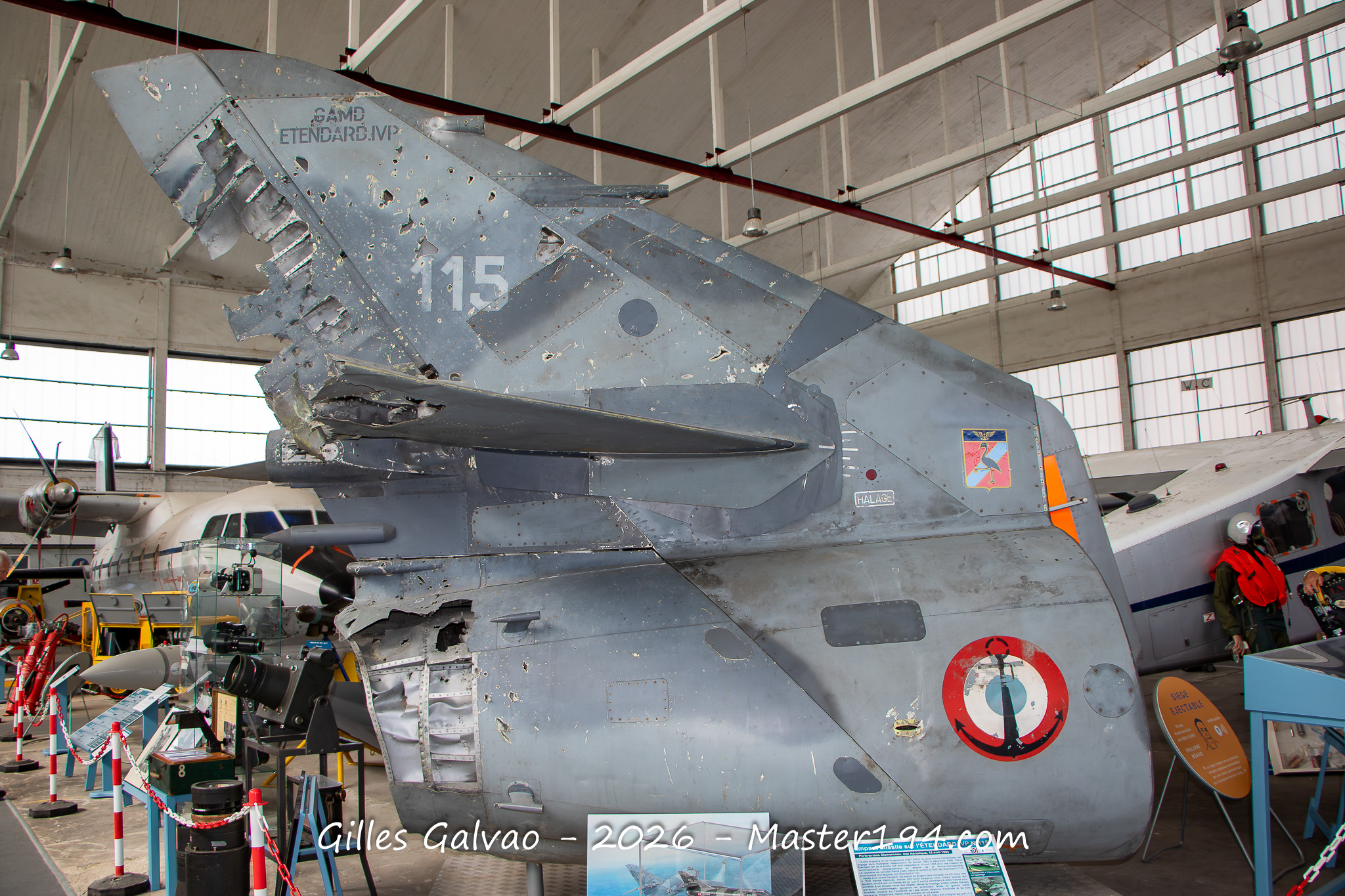
Many thanks to JEX and the entire ANAMAN team for their warm welcome!